
This lesson details the specific technical characteristics that define vehicles within the AM licence category, such as mopeds, scooters, and light quadricycles. By understanding these legal and mechanical definitions, you will be better prepared to identify class-compliant vehicles and satisfy core theory test requirements in Germany.

Lesson content overview
Operating vehicles in the AM licence class requires a thorough understanding of their specific technical characteristics. These specifications are not arbitrary; they directly influence a vehicle's handling, performance, safety, and legal operation on German roads. This lesson delves into the design limits, engine capabilities, and mandatory safety features that define mopeds, scooters, and light quadricycles, as regulated under the German driving theory course for AM licence holders. Mastering these technical aspects is fundamental for safe vehicle control, proper maintenance, and compliance with the Straßenverkehrs-Ordnung (StVO).
The AM driving licence in Germany permits the operation of several distinct categories of motor vehicles, each with precise technical limitations. These classifications ensure that riders are equipped with appropriate skills for the vehicle's capabilities and that the vehicles themselves meet essential safety standards. Beyond just understanding the basic definition of an AM licence, it is crucial to grasp the technical nuances that differentiate these vehicles. This includes their maximum design speed, engine capacity, power output, and even specific braking or lighting requirements. Understanding these differences allows riders to make informed decisions about vehicle use and maintenance, thereby enhancing road safety.
Vehicles in the AM class are legally defined by a combination of engine specifications, speed capabilities, and weight considerations. These technical criteria are not merely academic; they dictate how and where these vehicles can be operated, and what legal responsibilities their drivers bear. Adhering to these specifications is a cornerstone of safe and legal participation in road traffic.
Engine displacement, often measured in cubic centimeters (cc), refers to the total volume swept by the pistons in an engine's cylinders. Power output, measured in kilowatts (kW), indicates the engine's ability to perform work, directly influencing acceleration and overall performance. For AM-class vehicles, these metrics are strictly regulated to categorize them and ensure they fall within the licence's scope.
It is a common misunderstanding to confuse engine displacement directly with power output. While larger displacement generally correlates with more power, the actual power output in kW is the definitive limit for AM vehicles. Exceeding these limits, for instance by modifying an engine, renders the vehicle illegal for an AM licence and can lead to severe penalties, including driving without a valid licence and insurance issues.
The maximum design speed is the highest speed a vehicle is constructed to achieve under optimal conditions. This is a critical regulatory factor for AM vehicles in Germany, distinguishing between different types and dictating their legal use. It is important to note that the design speed is not merely a recommendation but a legal limit that must not be exceeded through vehicle modification or reckless driving.
Operating an AM vehicle beyond its design speed, even if the engine is capable, constitutes a violation. This is particularly relevant when considering modifications to increase speed, which can lead to legal issues such as driving without a licence (if the vehicle no longer fits the AM class) and invalid insurance coverage.
For light quadricycles, weight is a significant technical characteristic alongside power output. These vehicles are designed to be lightweight, influencing their handling, fuel efficiency, and overall safety profile.
Beyond engine and speed limits, specific safety systems and components are mandatory for AM vehicles to ensure their roadworthiness and the safety of their occupants and other road users. These systems are crucial for visibility, effective stopping, and overall stability. Regular inspection and maintenance of these components are not just good practice but a legal requirement under German traffic law.
Proper lighting is paramount for visibility, allowing riders to see the road ahead and, crucially, allowing other road users to see the AM vehicle. All AM-class vehicles must be equipped with specific lighting systems that are functional and correctly maintained according to StVO regulations.
Neglecting to check all lights before riding is a common mistake that can lead to dangerous situations and legal penalties. A non-functional light significantly increases the risk of being overlooked by other drivers, particularly at dusk, dawn, or in adverse weather conditions.
Effective braking systems are non-negotiable for safe vehicle operation. All AM vehicles must have reliable brakes capable of bringing the vehicle to a controlled stop within prescribed distances.
Insufficient braking power, often resulting from poor maintenance (worn brake pads, low fluid, stretched cables), is a critical safety hazard. Regular checks of brake fluid levels, pad wear, and cable tension are essential.
The wheels and tires are the vehicle's only contact points with the road, making their condition and specifications vital for safety, stability, and handling.
The operation of AM-class vehicles in Germany is strictly governed by the Straßenverkehrs-Ordnung (StVO) and related technical regulations. Understanding and complying with these laws is not merely about avoiding fines; it is fundamental to road safety and ensuring that all vehicles on public roads are safe to operate.
The StVO outlines the general rules of road traffic, including specific provisions for vehicle equipment and operation.
Compliance with these regulations is not just about the vehicle's initial condition; it also pertains to its ongoing maintenance. A vehicle that was once road-legal can become illegal if its essential safety components (like brakes or lights) fall into disrepair.
Several technical violations are frequently encountered with AM vehicles, often due to a lack of awareness or deliberate modification. These violations carry legal consequences and significantly compromise safety.
The technical specifications of AM vehicles have a direct and significant impact on their day-to-day operation. Understanding these cause-and-effect relationships is crucial for safe riding and adapting to varying conditions.
Technical characteristics interact with environmental and operational conditions, demanding adaptive riding behavior.
Understanding the technical characteristics of AM-class vehicles is fundamental for anyone pursuing the German Driving Theory Course for AM Licence. These vehicles, encompassing mopeds, scooters, and light quadricycles, are rigorously defined by their maximum design speed, engine displacement, power output, and for quadricycles, their weight-to-power ratio. Beyond these core specifications, essential safety systems like lighting, braking mechanisms, and tire standards are legally mandated and critical for safe operation. Compliance with German regulations, particularly the StVO, is not just about avoiding penalties but ensuring the predictability, safety, and reliability of the vehicle on the road. Familiarity with these technical details enables responsible riding, effective maintenance, and informed decision-making in various traffic and environmental conditions.
This lesson covers the technical specifications that legally define AM-class vehicles in Germany, including mopeds (max 25 km/h), scooters, and light quadricycles (max 45 km/h), all limited to 4 kW power output. Key technical distinctions include the additional weight limits for quadricycles (350 kg max) and their required hand-operated rear brake. Mandatory safety systems include specific lighting equipment and reliable braking systems meeting StVO requirements. Understanding these technical parameters ensures learners can correctly categorize vehicles, maintain compliance, and ride safely on German roads.
A short set of high-value points that capture the most important learning from this lesson.
AM class vehicles are defined by strict limits: mopeds max 25 km/h design speed, scooters and light quadricycles max 45 km/h
All AM vehicles share a maximum power output of 4 kW, with two-wheeled vehicles limited to 50 cc engine displacement
Light quadricycles have additional requirements: max 350 kg unladen weight and power-to-weight ratio not exceeding 10 kW per 1000 kg
Mandatory lighting systems for all AM vehicles include headlights, taillights, brake lights, and orange turn signals at front and rear
Technical compliance affects real-world safety: correct specs ensure predictable handling, optimal braking distances, and proper visibility
Explore all units and lessons included in this driving theory course.
Design speed (Konstruktionstempo) is a legal limit, not a recommendation—exceeding it through modification invalidates the vehicle's operating permit
Power output measured in kW is the definitive regulatory limit for AM classification, not engine displacement alone
Light quadricycles require a hand-operated rear brake in addition to foot brakes—a unique requirement not shared by two-wheeled AM vehicles
Minimum tire tread depth of 1.6 mm applies to two-wheeled AM vehicles under German law
Modifications that increase speed or power beyond legal limits void both the Betriebserlaubnis (operating permit) and insurance coverage
Confusing engine displacement with power output—while related, the kW limit is what legally defines AM-class compliance
Failing to check that all lights function before riding, especially brake lights and turn signals, which are critical for visibility
Not using the hand-operated rear brake on light quadricycles, which is a specific legal and safety requirement
Neglecting regular tire pressure checks, leading to poor handling, increased braking distances, and accelerated tire wear
Modifying vehicles to exceed design speed, which reclassifies the vehicle and results in driving without a valid licence and insurance
Lesson content overview
A short set of high-value points that capture the most important learning from this lesson.
AM class vehicles are defined by strict limits: mopeds max 25 km/h design speed, scooters and light quadricycles max 45 km/h
All AM vehicles share a maximum power output of 4 kW, with two-wheeled vehicles limited to 50 cc engine displacement
Light quadricycles have additional requirements: max 350 kg unladen weight and power-to-weight ratio not exceeding 10 kW per 1000 kg
Mandatory lighting systems for all AM vehicles include headlights, taillights, brake lights, and orange turn signals at front and rear
Technical compliance affects real-world safety: correct specs ensure predictable handling, optimal braking distances, and proper visibility
Explore all units and lessons included in this driving theory course.
Design speed (Konstruktionstempo) is a legal limit, not a recommendation—exceeding it through modification invalidates the vehicle's operating permit
Power output measured in kW is the definitive regulatory limit for AM classification, not engine displacement alone
Light quadricycles require a hand-operated rear brake in addition to foot brakes—a unique requirement not shared by two-wheeled AM vehicles
Minimum tire tread depth of 1.6 mm applies to two-wheeled AM vehicles under German law
Modifications that increase speed or power beyond legal limits void both the Betriebserlaubnis (operating permit) and insurance coverage
Confusing engine displacement with power output—while related, the kW limit is what legally defines AM-class compliance
Failing to check that all lights function before riding, especially brake lights and turn signals, which are critical for visibility
Not using the hand-operated rear brake on light quadricycles, which is a specific legal and safety requirement
Neglecting regular tire pressure checks, leading to poor handling, increased braking distances, and accelerated tire wear
Modifying vehicles to exceed design speed, which reclassifies the vehicle and results in driving without a valid licence and insurance
Explore search topics learners often look for when studying Types of AM Vehicles and Their Technical Characteristics. These topics reflect common questions about road rules, driving situations, safety guidance, and lesson level theory preparation for learners in Germany.
Browse additional driving theory lessons that cover connected traffic rules, road signs, and common driving situations related to this topic. Improve your understanding of how different rules interact across everyday traffic scenarios.
Understand the specific technical requirements for vehicles in the AM licence category according to German traffic law. This lesson covers engine types, braking systems, lighting, and other critical specifications for mopeds and light quadricycles.

This lesson provides a detailed overview of the legal framework governing the AM licence in Germany. It explains the classification of vehicles like mopeds and scooters based on engine displacement, power output, and weight. Learners will understand the official age requirements, licensing procedures, and fundamental StVO regulations.

This lesson clarifies the distinctions between AM-class vehicles and motorcycles in higher licence categories (A1, A2, A). It focuses on the specific limits related to engine capacity, maximum speed, and vehicle dimensions that define the AM category. Learners will also understand differences in training requirements and road usage restrictions.

This lesson covers the lighting and reflector requirements for heavy vehicles, including headlamps, side markers, and brake lights. It explains the function of these systems and the necessity of underrun protection to safeguard other road users. The content also discusses regulations governing lighting systems and their importance for safety in all conditions.
This lesson teaches riders how to conduct a simple but crucial pre-ride inspection of their vehicle. It provides step-by-step guidance on checking tyre pressure and tread depth, verifying brake function, and ensuring all lights are operational. Regular maintenance is presented as a fundamental responsibility for every rider.

This lesson provides a comprehensive guide to a vehicle's lighting systems, explaining the purpose and correct usage of each type of light. It covers dipped and main beam headlights, fog lights, and the legally required use of lights during the day or in poor visibility. You will also review the function of brake lights, indicators, and hazard warning lights for communication and safety.

This lesson outlines the legal requirements for vehicle roadworthiness, including mandatory periodic inspections (TÜV) and the issuance of safety certificates. It explains the standards for emissions, safety devices, and the proper documentation of defects. The content underscores the importance of complying with inspection intervals and addressing repair obligations promptly.
This lesson details the importance of personal protective equipment for rider safety. It covers the legal standards for helmets in Germany, the benefits of wearing abrasion-resistant jackets and gloves, and the value of high-visibility clothing. It also explains the proper use of vehicle lighting systems to ensure visibility to others.
Explore the distinctions in design and handling between different AM-class vehicles such as mopeds, scooters, and light quadricycles. Learn how technical variations impact safe operation and basic vehicle control as per German driving theory.
This lesson clarifies the distinctions between AM-class vehicles and motorcycles in higher licence categories (A1, A2, A). It focuses on the specific limits related to engine capacity, maximum speed, and vehicle dimensions that define the AM category. Learners will also understand differences in training requirements and road usage restrictions.
This lesson provides a detailed overview of the legal framework governing the AM licence in Germany. It explains the classification of vehicles like mopeds and scooters based on engine displacement, power output, and weight. Learners will understand the official age requirements, licensing procedures, and fundamental StVO regulations.
This lesson addresses the challenges of operating a small AM vehicle in dense, mixed traffic. It provides strategies for increasing visibility to other drivers, positioning oneself defensively, and safely sharing lanes with cyclists. The content emphasizes awareness of larger vehicles' blind spots and maintaining a safe space cushion.

This lesson addresses the critical skill of safely interacting with other road users, particularly vulnerable ones like pedestrians and cyclists. It covers rules for yielding at crosswalks, maintaining a safe passing distance, and being aware of the limited visibility of a moped to car drivers. The focus is on fostering a defensive and cooperative mindset in mixed traffic.
This lesson details the legal obligations every AM licence holder must follow. It emphasizes compliance with the Straßenverkehrs-Ordnung (StVO), including mandatory helmet use and maintaining vehicle roadworthiness. The content covers insurance requirements, accident reporting procedures, and the legal consequences of non-compliance.
This lesson teaches riders how to conduct a simple but crucial pre-ride inspection of their vehicle. It provides step-by-step guidance on checking tyre pressure and tread depth, verifying brake function, and ensuring all lights are operational. Regular maintenance is presented as a fundamental responsibility for every rider.

This lesson delves into the principles of vehicle dynamics that govern two-wheeled vehicles. It explains the importance of balance, the concept of counter-steering for initiating turns, and how body position influences handling. Understanding these physical forces allows for smoother, safer, and more confident control of the vehicle.
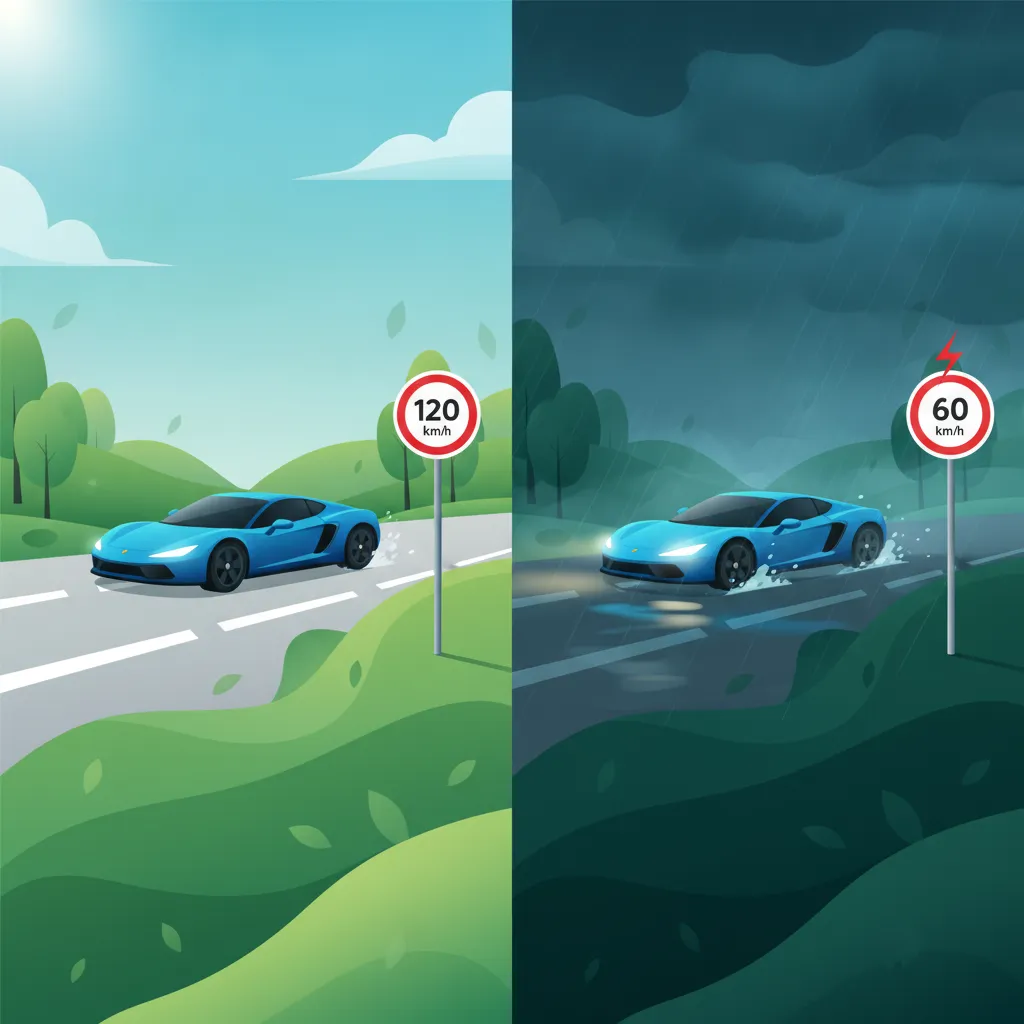
This lesson details the various speed limits applicable in Germany, from urban zones to rural roads. It emphasizes the critical skill of adapting speed to prevailing conditions such as rain, fog, or poor road surfaces. The content explains how external factors significantly impact vehicle handling and stopping distances.
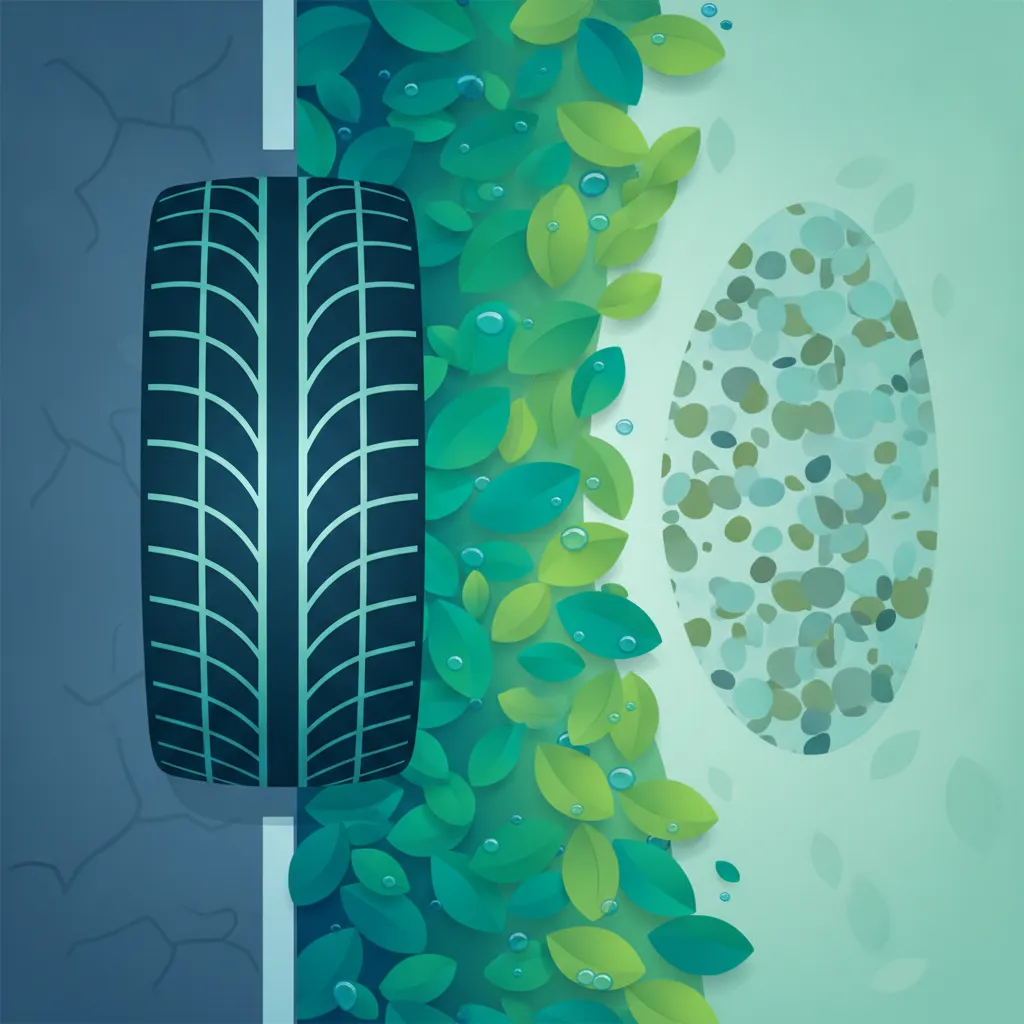
This lesson focuses on identifying and safely managing various road surface imperfections and hazards. It provides techniques for riding over loose surfaces like gravel, dealing with the low traction of wet leaves or manhole covers, and safely crossing tram tracks. The key is to recognize these hazards early and adjust technique accordingly.
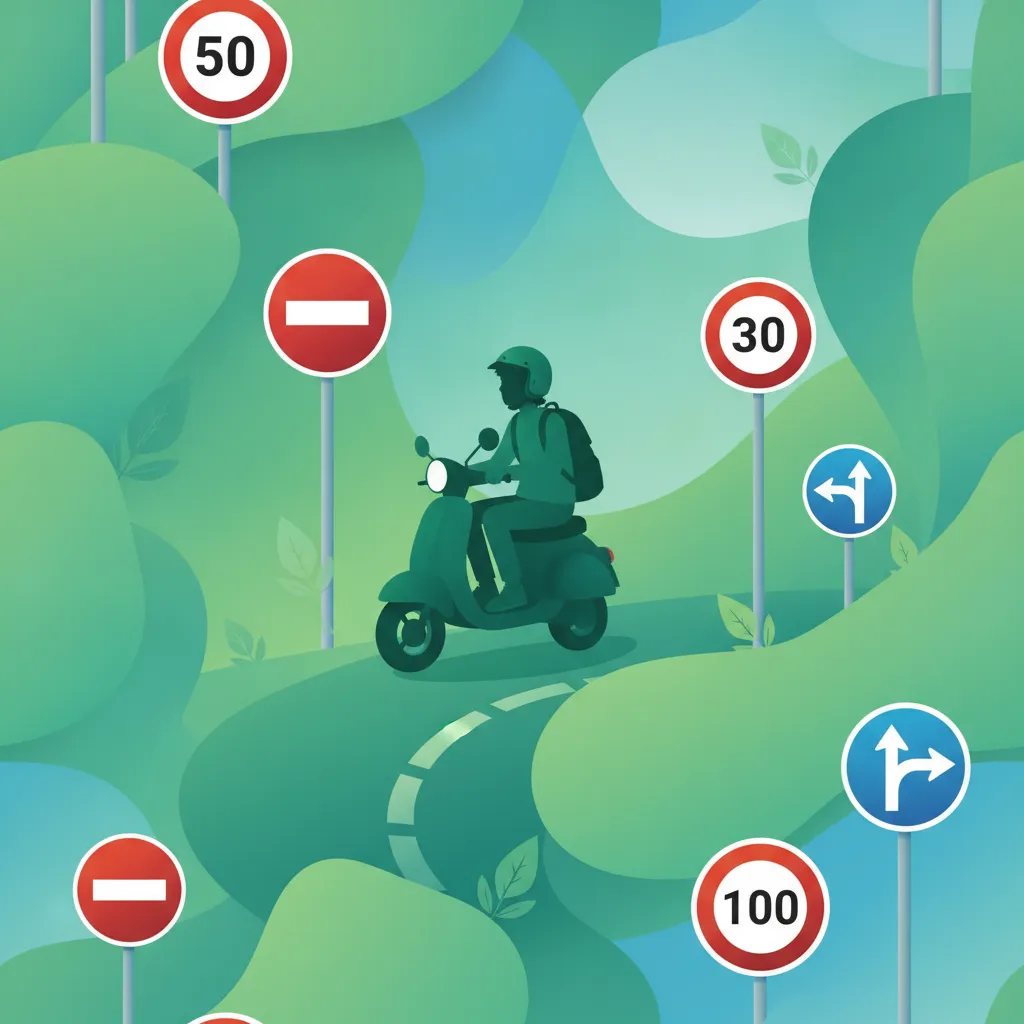
This lesson introduces the various categories of German road signs, focusing on their meaning and application for AM riders. It covers regulatory signs like speed limits, warning signs for hazards, and informational signs for guidance. Learners will be ableto identify signs by their shape, color, and symbols, ensuring correct interpretation while riding.
Find clear answers to common questions learners have about Types of AM Vehicles and Their Technical Characteristics. Learn how the lesson is structured, which driving theory objectives it supports, and how it fits into the overall learning path of units and curriculum progression in Germany. These explanations help you understand key concepts, lesson flow, and exam focused study goals.
In Germany, an AM-licence moped must have a maximum design speed not exceeding 45 km/h. Exceeding this limit would classify the vehicle in a different licence category.
Yes, the AM licence covers light quadricycles with a maximum design speed of up to 45 km/h, provided they meet specific weight and power output criteria as defined in the StVO.
Yes, for electric vehicles in the AM category, the continuous rated power must not exceed 4 kW. Always check the registration document to ensure the vehicle complies with your licence.
The theory exam often presents scenarios regarding vehicle registration, insurance, and road usage. Knowing if your vehicle is legally an AM-class vehicle is fundamental to answering questions about where you are allowed to ride.
Begin your targeted revision now. Use our practice search to quickly find specific German driving theory questions. Filter by StVO rules, road signs, or hazard perception to create your focused study plan. Master challenging areas and prepare confidently for your theoretical driving test.