
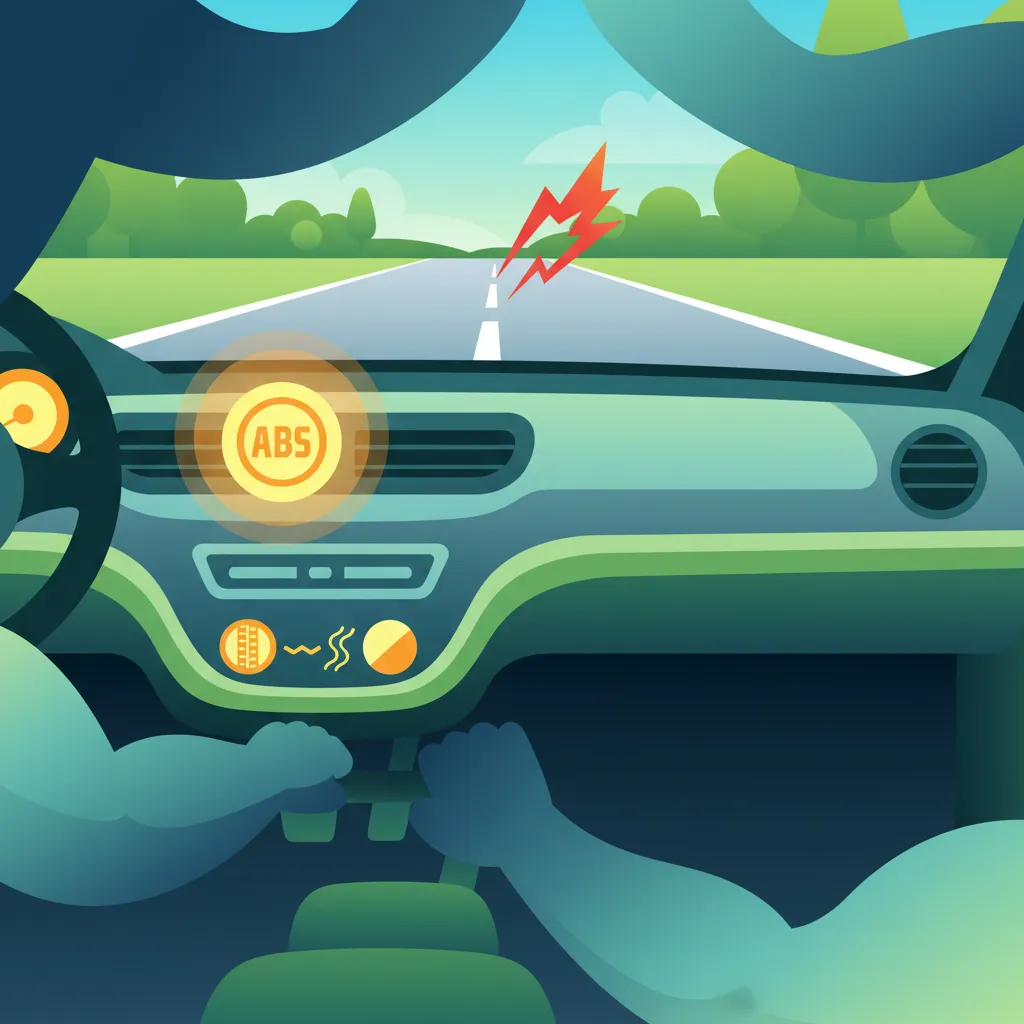
Emergency braking refers to the rapid and forceful application of your vehicle's brakes when an immediate, unforeseen hazard demands you stop as quickly as possible. This decisive action is crucial in Dutch traffic scenarios where sudden obstacles or changes require instant stopping power. Understanding the proper technique, especially with modern safety features like ABS, is vital for both your theory exam and real-world safety.
Theory topic content overview
Read the full theory topic guide for Emergency Braking Guide with structured, easy-to-scan content built for learners in the Netherlands. This detailed section explains the exact rule, meaning, traffic context, comparison points, and exam logic behind this Dutch driving theory topic so you can study faster, understand the concept more clearly, and avoid common interpretation mistakes on the theory test.
Emergency braking is the immediate and forceful application of your vehicle's brakes to achieve the shortest possible stopping distance when faced with a sudden, unforeseen hazard. It is a critical, defensive driving manoeuvre designed to avoid or significantly mitigate a collision in situations where a normal, gradual stop is insufficient.
Unlike routine braking, which is controlled and modulated, emergency braking demands a swift, decisive, and maximum effort response. It's about bringing your vehicle to a complete stop as quickly and safely as possible.
In the dense and dynamic traffic environment of the Netherlands, understanding and mastering emergency braking is not just a theoretical concept—it's a vital safety skill.
Reglement verkeersregels en verkeerstekens (RVV) (Traffic Rules and Traffic Signs Regulations), drivers are expected to drive in a way that allows them to stop within a distance that ensures the safety of others and themselves.The technique for emergency braking depends significantly on whether your vehicle is equipped with an Anti-lock Braking System (ABS), which is standard in most modern cars in the Netherlands.
When your vehicle has ABS, the procedure is straightforward and demands continuous, firm pressure:
During ABS activation, you may feel a pulsing or vibrating sensation through the brake pedal and hear a grinding noise. This is completely normal and indicates that the system is working as intended. Do not ease off the pedal when this happens.
For vehicles without ABS, the technique requires more modulation to prevent wheel lock-up and maintain steering control:
Several factors dictate how effectively your vehicle can stop in an emergency:
The core difference lies in intent and application:
While related, it's crucial to understand the difference for your CBR exam:
Imagine these common Dutch traffic situations where emergency braking might be required:
Learners in the Netherlands often make these mistakes regarding emergency braking:
RVV implicitly requires adjusting your driving to be able to stop in view.Emergency braking is a crucial skill that demands decisive action and confidence in your vehicle's capabilities. For your Dutch driving license theory and practical exams, remember:
volgafstand) in Dutch traffic, allowing more time to react to unforeseen events.Practicing emergency braking in a safe, controlled environment can build muscle memory and confidence, preparing you for critical moments on the road.
Emergency braking is the immediate, maximum application of braking force to achieve the shortest possible stopping distance when faced with a sudden, unforeseen hazard. For modern vehicles equipped with ABS, the correct technique is to press the brake pedal firmly and continuously without pumping, allowing the system to prevent wheel lock-up while maintaining steering control. Factors such as driver reaction time, vehicle speed, road surface conditions, and vehicle weight all significantly influence stopping distance. For the CBR theory exam, remember that hesitation is rarely correct—decisive immediate braking is almost always the required response in hazard perception scenarios.
A short set of high-value points that capture the most important ideas from this theory explanation.
Emergency braking requires immediate, maximum braking force to achieve the shortest possible stopping distance in sudden hazard situations
With ABS-equipped vehicles, press the brake pedal firmly and continuously throughout the entire braking process without pumping
ABS prevents wheel lock-up, allowing you to retain steering control while braking at maximum force
Emergency braking differs from normal braking in intent and intensity—it is a decisive, maximum-effort response, not gradual deceleration
Maintain safe following distance in Dutch traffic to reduce the likelihood of needing emergency braking
The ABS procedure is: Stomp (apply maximum force quickly), Stay (keep pedal pressed firmly), Steer (use steering wheel to avoid if safe path exists)
During ABS activation, a pulsing or vibrating pedal and grinding noise are normal—do not ease off the pedal
On vehicles without ABS, use cadence braking (threshold braking) to prevent wheel lock-up while maximizing deceleration
Stopping distance increases with speed exponentially and is dramatically affected by road surface, tire condition, and brake condition
Under the Dutch RVV, drivers must drive in a way that allows them to stop within a safe distance to ensure safety of others
Hesitating or delaying the decision to brake—every fraction of a second lost significantly increases stopping distance
Applying insufficient brake pressure, not realizing how much force is actually needed for maximum braking
Pumping the brakes on an ABS-equipped vehicle, which negates the system's ability to manage wheel lock-up and increases stopping distance
Focusing solely on braking without scanning for escape routes—ABS allows simultaneous braking and steering
Failing to adjust speed for adverse conditions (rain, fog, ice) where emergency braking becomes even more challenging
Start with a short, direct summary of Emergency Braking Guide before reading the full explanation below.
Emergency braking is the act of applying maximum braking force quickly and decisively to stop your vehicle as fast as possible when faced with an immediate hazard. It differs from normal braking by the intensity and speed of application. In modern vehicles equipped with ABS (Anti-lock Braking System), drivers should press the brake pedal firmly and continuously, without releasing, to maintain steering control and achieve the shortest possible stopping distance.
Review the most important terms, rule signals, and traffic concepts linked to Emergency Braking Guide.
Explore related theory topic pages connected to Emergency Braking Guide and continue with the next useful rule explanation.
See the common search queries learners use when trying to understand Emergency Braking Guide in the Netherlands.

Ready to deepen your understanding? Browse our comprehensive library of Dutch driving theory topics, rules, and concepts. Each section offers detailed explanations to help you solidify your knowledge and prepare thoroughly for your upcoming CBR driving theory examination.
Explore Driving Theory TopicsTheory topic content overview
A short set of high-value points that capture the most important ideas from this theory explanation.
Emergency braking requires immediate, maximum braking force to achieve the shortest possible stopping distance in sudden hazard situations
With ABS-equipped vehicles, press the brake pedal firmly and continuously throughout the entire braking process without pumping
ABS prevents wheel lock-up, allowing you to retain steering control while braking at maximum force
Emergency braking differs from normal braking in intent and intensity—it is a decisive, maximum-effort response, not gradual deceleration
Maintain safe following distance in Dutch traffic to reduce the likelihood of needing emergency braking
The ABS procedure is: Stomp (apply maximum force quickly), Stay (keep pedal pressed firmly), Steer (use steering wheel to avoid if safe path exists)
During ABS activation, a pulsing or vibrating pedal and grinding noise are normal—do not ease off the pedal
On vehicles without ABS, use cadence braking (threshold braking) to prevent wheel lock-up while maximizing deceleration
Stopping distance increases with speed exponentially and is dramatically affected by road surface, tire condition, and brake condition
Under the Dutch RVV, drivers must drive in a way that allows them to stop within a safe distance to ensure safety of others
Hesitating or delaying the decision to brake—every fraction of a second lost significantly increases stopping distance
Applying insufficient brake pressure, not realizing how much force is actually needed for maximum braking
Pumping the brakes on an ABS-equipped vehicle, which negates the system's ability to manage wheel lock-up and increases stopping distance
Focusing solely on braking without scanning for escape routes—ABS allows simultaneous braking and steering
Failing to adjust speed for adverse conditions (rain, fog, ice) where emergency braking becomes even more challenging
Start with a short, direct summary of Emergency Braking Guide before reading the full explanation below.
Emergency braking is the act of applying maximum braking force quickly and decisively to stop your vehicle as fast as possible when faced with an immediate hazard. It differs from normal braking by the intensity and speed of application. In modern vehicles equipped with ABS (Anti-lock Braking System), drivers should press the brake pedal firmly and continuously, without releasing, to maintain steering control and achieve the shortest possible stopping distance.
Review the most important terms, rule signals, and traffic concepts linked to Emergency Braking Guide.
Explore related theory topic pages connected to Emergency Braking Guide and continue with the next useful rule explanation.
See the common search queries learners use when trying to understand Emergency Braking Guide in the Netherlands.
Ready to deepen your understanding? Browse our comprehensive library of Dutch driving theory topics, rules, and concepts. Each section offers detailed explanations to help you solidify your knowledge and prepare thoroughly for your upcoming CBR driving theory examination.
Explore Driving Theory TopicsUse this exam-focused revision tip to understand how Emergency Braking Guide is likely to appear in theory questions for learners in the Netherlands. This section helps you identify the most testable part of the rule, avoid common traps, and remember the concept more effectively during Dutch driving theory exam preparation.
In your CBR theory exam, pay close attention to hazard perception questions involving sudden dangers. The correct response almost always involves immediate and maximum braking, not hesitation. Remember that ABS allows continuous firm pressure, and you should not pump the brakes during an emergency stop.
Read direct answers to the most common learner questions about Emergency Braking Guide in the Netherlands. This FAQ focuses on rule confusion, practical meaning, comparison with similar concepts, and the exact uncertainties that appear most often in Dutch driving theory revision and exam preparation.
Emergency braking is the immediate and full application of your vehicle's brakes to achieve the maximum possible deceleration, aiming to stop in the shortest distance to avoid a collision or mitigate its severity.
The key difference is the speed and force of application. Normal braking is gradual and controlled, while emergency braking is abrupt and involves applying the greatest possible pressure to the brake pedal instantly to respond to a sudden, critical hazard.
No. In modern vehicles equipped with ABS (Anti-lock Braking System), you should press the brake pedal firmly and continuously. Pumping the brakes would defeat the purpose of ABS, which is designed to prevent wheel lock-up automatically.
ABS (Anti-lock Braking System) prevents the wheels from locking during heavy braking. This allows the driver to maintain steering control while braking hard, helping to maneuver around an obstacle if necessary. You might feel a vibration in the pedal when ABS activates, which is normal – do not release the pedal.
Emergency braking should be used only when there is an immediate and unavoidable danger that requires you to stop your vehicle as quickly as possible to prevent an accident. Examples include a child running into the road, another vehicle braking abruptly in front of you, or a sudden obstacle appearing.
Emergency braking with proper technique (especially with ABS) aims for the shortest possible stopping distance. However, factors like road conditions (wet, icy), tire quality, vehicle speed, and the vehicle's condition can still affect the actual stopping distance.
Reaction time is crucial. Any delay in recognizing a hazard and initiating emergency braking means the vehicle travels further before deceleration begins. This significantly increases the overall stopping distance, making quick and decisive action paramount.
Leverage the targeted practice search to find questions that challenge your understanding of specific Dutch traffic rules or road signs. Focus your study efforts on areas where you need improvement and build a solid foundation for passing your CBR driving theory exam with confidence.