
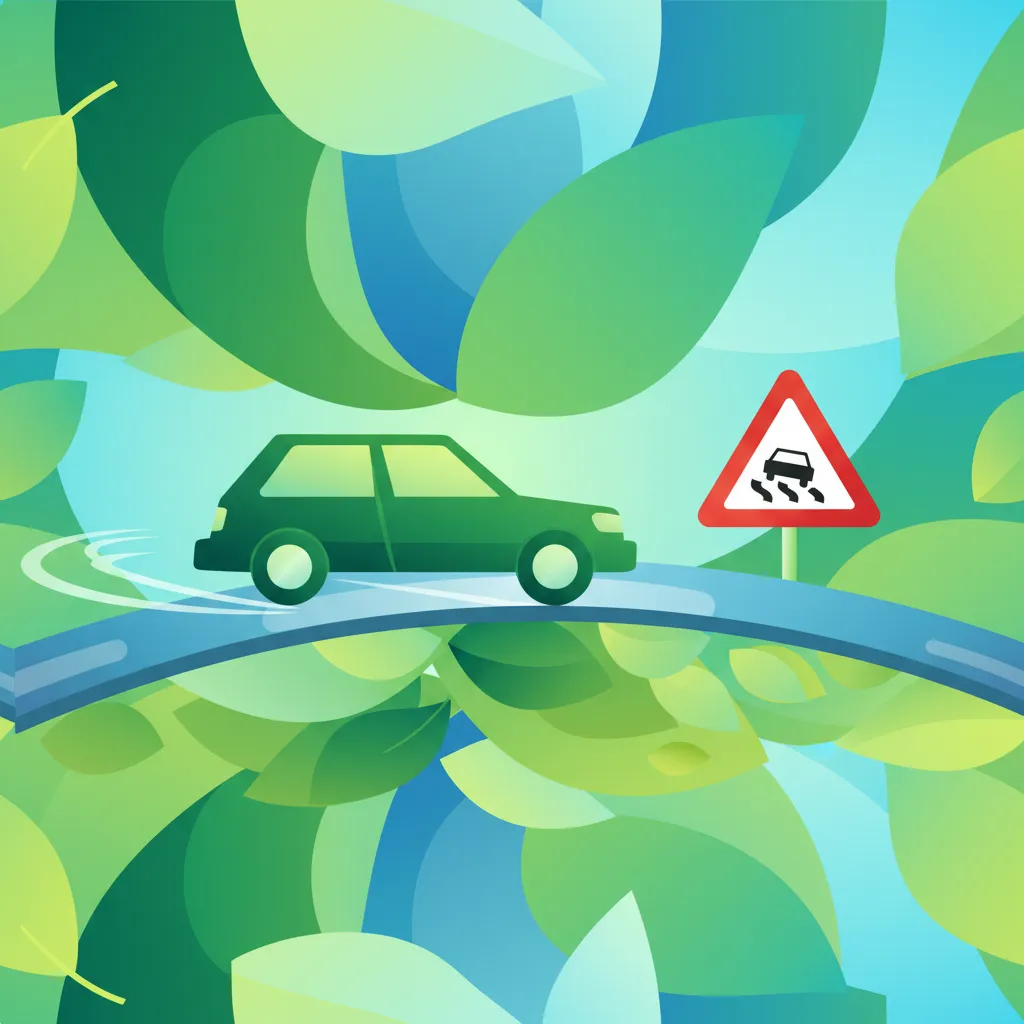
Slippery roads dramatically reduce the friction between your vehicle's tires and the road surface, making it much harder to accelerate, steer, and brake effectively. In the Netherlands, various weather conditions and road factors can lead to dangerously low grip. This page will guide you through recognizing these conditions and adapting your driving style to maintain control and ensure safety.
Theory topic content overview
Read the full theory topic guide for Slippery Roads with structured, easy-to-scan content built for learners in the Netherlands. This detailed section explains the exact rule, meaning, traffic context, comparison points, and exam logic behind this Dutch driving theory topic so you can study faster, understand the concept more clearly, and avoid common interpretation mistakes on the theory test.
Slippery roads, often referred to as glad wegdek in Dutch, pose one of the most significant challenges to safe driving in the Netherlands. They occur when the crucial friction between your vehicle's tires and the road surface is drastically reduced. This loss of traction impairs your ability to accelerate, steer, and brake effectively, dramatically increasing the risk of losing control and skidding.
Understanding the causes of slippery roads and how to react is fundamental for your Dutch driving license theory exam (CBR) and, more importantly, for real-world road safety.
The grip your tires have on the road depends on friction. When something gets between the tire and the road, or when the road surface itself changes, this friction decreases, leading to slippery conditions. Reduced traction means your tires can't "bite" into the road surface as effectively.
Key factors that cause roads to become slippery in the Netherlands include:
vorst aan de grond): This can occur even when air temperatures are slightly above freezing (e.g., up to 4°C), as the ground itself is colder and wet surfaces freeze. It's often invisible and therefore very dangerous.In the Netherlands, with its maritime climate, flat landscape, and extensive road network, drivers frequently encounter varied and often sudden slippery conditions. Ignoring these risks leads to preventable accidents and is a common pitfall in the Dutch driving theory exam.
When your tires lose grip, the crucial connection between your car and the road weakens. This impacts every aspect of driving:
The core principle for driving on slippery roads is to be smooth, gentle, and anticipatory.
Despite best efforts, a skid can sometimes occur. Your reaction in the moment is crucial. The goal is to regain traction and steer the vehicle in the desired direction.
If your car begins to skid:
This sequence is often tested in the CBR theory exam, emphasizing the correct, smooth actions to prevent compounding the problem.
Driving on slippery roads in the Netherlands demands a heightened sense of awareness and a deliberate change in driving style. Always assume that conditions could be worse than they appear. Prioritize anticipation – looking far ahead for potential hazards – and gentle, smooth inputs for steering, braking, and acceleration. This approach will not only help you pass your Dutch driving theory exam but will make you a safer, more confident driver in all conditions.
This topic covers how various conditions like rain, ice, frost, snow, oil, and loose materials reduce tire-road friction and impair vehicle control in the Netherlands. Key effects include dramatically longer braking distances, reduced steering capability, and increased skid risk. The essential response is to reduce speed significantly, increase following distance to 3–4 seconds, and use only smooth, gentle inputs for braking, steering, and acceleration. Specific Dutch hazards include aquaplaning in motorway ruts, ground frost forming at temperatures up to 4°C, and bridges freezing faster than regular roads. During a skid, the correct sequence is to ease off the accelerator, steer into the skid, look where you want to go, and only brake once control is regained.
A short set of high-value points that capture the most important ideas from this theory explanation.
Slippery roads reduce tire-road friction, impairing your ability to accelerate, steer, and brake effectively.
The first rain after a dry spell is particularly hazardous because it mixes accumulated oil, rubber, and dirt into an extremely slippery film.
Aquaplaning occurs when tire grooves cannot displace water, lifting the tire off the road surface, and is more likely in ruts on Dutch motorways.
Ground frost can form even when air temperatures are above freezing (up to 4°C) because the ground itself is colder, making it especially dangerous and often invisible.
During a skid, steer INTO the direction the rear of the car is sliding to realign the vehicle, then brake only after traction is regained.
On slippery surfaces, braking distance increases dramatically—on ice it can be ten times longer than on dry asphalt.
Bridges and viaducts freeze faster and stay icy longer than regular road sections because they lose heat from both above and below.
Minimum legal tread depth in the Netherlands is 1.6mm, but more is strongly recommended for wet and slippery conditions.
Use rear fog lights only when visibility drops below 50 metres, and front fog lights when visibility is below 200 metres.
Speed limits are maximum speeds, not safe speeds for adverse conditions—always adjust to match the actual grip available.
Assuming 'just a bit of rain' is safe and failing to recognize that initial rainfall after dry weather is the most hazardous.
Applying sudden, hard braking, sharp steering inputs, or aggressive acceleration, which are the primary triggers for skids.
Over-relying on ABS and ESC systems to compensate for speed—these assist but cannot overcome physics.
Panicking during a skid by braking hard or steering excessively, which typically worsens the loss of control.
Neglecting to check tire tread depth and pressure, which directly determines how well tires displace water and maintain grip.
Start with a short, direct summary of Slippery Roads before reading the full explanation below.
Slippery roads occur when friction between tires and the road surface is reduced, often due to rain, ice, snow, oil, or loose gravel. This loss of traction significantly impacts your ability to steer, accelerate, and brake, increasing the risk of skidding. In the Netherlands, common causes include sudden rain after long dry spells, black ice on bridges, ground frost, and wet leaves in autumn. Drivers must drastically reduce speed, increase following distance, and use smooth, gentle inputs to maintain control.
Review the most important terms, rule signals, and traffic concepts linked to Slippery Roads.
Explore related theory topic pages connected to Slippery Roads and continue with the next useful rule explanation.
See the common search queries learners use when trying to understand Slippery Roads in the Netherlands.

Ready to deepen your understanding? Browse our comprehensive library of Dutch driving theory topics, rules, and concepts. Each section offers detailed explanations to help you solidify your knowledge and prepare thoroughly for your upcoming CBR driving theory examination.
Explore Driving Theory TopicsTheory topic content overview
A short set of high-value points that capture the most important ideas from this theory explanation.
Slippery roads reduce tire-road friction, impairing your ability to accelerate, steer, and brake effectively.
The first rain after a dry spell is particularly hazardous because it mixes accumulated oil, rubber, and dirt into an extremely slippery film.
Aquaplaning occurs when tire grooves cannot displace water, lifting the tire off the road surface, and is more likely in ruts on Dutch motorways.
Ground frost can form even when air temperatures are above freezing (up to 4°C) because the ground itself is colder, making it especially dangerous and often invisible.
During a skid, steer INTO the direction the rear of the car is sliding to realign the vehicle, then brake only after traction is regained.
On slippery surfaces, braking distance increases dramatically—on ice it can be ten times longer than on dry asphalt.
Bridges and viaducts freeze faster and stay icy longer than regular road sections because they lose heat from both above and below.
Minimum legal tread depth in the Netherlands is 1.6mm, but more is strongly recommended for wet and slippery conditions.
Use rear fog lights only when visibility drops below 50 metres, and front fog lights when visibility is below 200 metres.
Speed limits are maximum speeds, not safe speeds for adverse conditions—always adjust to match the actual grip available.
Assuming 'just a bit of rain' is safe and failing to recognize that initial rainfall after dry weather is the most hazardous.
Applying sudden, hard braking, sharp steering inputs, or aggressive acceleration, which are the primary triggers for skids.
Over-relying on ABS and ESC systems to compensate for speed—these assist but cannot overcome physics.
Panicking during a skid by braking hard or steering excessively, which typically worsens the loss of control.
Neglecting to check tire tread depth and pressure, which directly determines how well tires displace water and maintain grip.
Start with a short, direct summary of Slippery Roads before reading the full explanation below.
Slippery roads occur when friction between tires and the road surface is reduced, often due to rain, ice, snow, oil, or loose gravel. This loss of traction significantly impacts your ability to steer, accelerate, and brake, increasing the risk of skidding. In the Netherlands, common causes include sudden rain after long dry spells, black ice on bridges, ground frost, and wet leaves in autumn. Drivers must drastically reduce speed, increase following distance, and use smooth, gentle inputs to maintain control.
Review the most important terms, rule signals, and traffic concepts linked to Slippery Roads.
Explore related theory topic pages connected to Slippery Roads and continue with the next useful rule explanation.
See the common search queries learners use when trying to understand Slippery Roads in the Netherlands.
Ready to deepen your understanding? Browse our comprehensive library of Dutch driving theory topics, rules, and concepts. Each section offers detailed explanations to help you solidify your knowledge and prepare thoroughly for your upcoming CBR driving theory examination.
Explore Driving Theory TopicsUse this exam-focused revision tip to understand how Slippery Roads is likely to appear in theory questions for learners in the Netherlands. This section helps you identify the most testable part of the rule, avoid common traps, and remember the concept more effectively during Dutch driving theory exam preparation.
In your Dutch theory exam, be prepared for questions about reacting to specific slippery conditions like aquaplaning, black ice, or rain after a dry spell. Remember the core principles: reduce speed, increase following distance, and avoid all abrupt steering, braking, or accelerating to prevent skidding. Practice what to do during a skid.
Read direct answers to the most common learner questions about Slippery Roads in the Netherlands. This FAQ focuses on rule confusion, practical meaning, comparison with similar concepts, and the exact uncertainties that appear most often in Dutch driving theory revision and exam preparation.
Roads become slippery due to reduced friction from factors like rain (especially after a dry spell mixing with oil/dirt), ice, snow, ground frost, loose materials (gravel, sand, mud), and even wet fallen leaves. Bridges and shaded areas are often more prone to freezing. Aquaplaning is also a risk during heavy rain.
Aquaplaning occurs when a layer of water forms between your tires and the road, causing a loss of grip. You can prevent it by ensuring your tires have good tread depth (minimum 1.6mm in the Netherlands), maintaining correct tire pressure, reducing speed in heavy rain, and avoiding deep ruts in the road where water collects.
A slippery road significantly increases your braking distance because the reduced friction means your tires take longer to slow down and stop the vehicle. You must anticipate this by driving slower and maintaining a much larger following distance than usual.
If your car skids, the primary rule is to avoid abrupt actions. Release the accelerator, press the clutch immediately to allow the wheels to roll freely, and gently steer in the direction you want the car to go. Do not brake until you have regained control and your speed is reduced.
Yes. In the Netherlands, roads can become extremely slick during the first rains after a long dry period due to oil and rubber residue mixing with water. Bridges and overpasses often freeze before other road surfaces, and ground frost can occur even when air temperatures are above freezing. Wet leaves in autumn also pose a significant slipping hazard.
Abrupt movements like sudden braking, sharp steering, or rapid acceleration can easily cause your tires to lose grip entirely on a slippery surface, leading to a loss of control or a skid. Smooth, gentle inputs help maintain whatever limited traction is available.
Leverage the targeted practice search to find questions that challenge your understanding of specific Dutch traffic rules or road signs. Focus your study efforts on areas where you need improvement and build a solid foundation for passing your CBR driving theory exam with confidence.