
Traffic lights are essential for regulating traffic flow and ensuring safety at intersections throughout the Netherlands. This page details the specific meaning of red, yellow, and green signals, common variations like arrow lights, and crucial Dutch rules, such as the ‘yellow light dilemma’ and special provisions for cyclists. Knowing these rules is vital to prevent accidents and pass your theory test.
Theory topic content overview
Read the full theory topic guide for Traffic Light Signals with structured, easy-to-scan content built for learners in the Netherlands. This detailed section explains the exact rule, meaning, traffic context, comparison points, and exam logic behind this Dutch driving theory topic so you can study faster, understand the concept more clearly, and avoid common interpretation mistakes on the theory test.
Traffic lights, known as verkeerslichten in the Netherlands, are fundamental components of traffic management. They regulate the flow of vehicles and pedestrians at intersections, preventing collisions and ensuring orderly movement. Mastering the specific meanings and rules associated with traffic lights in Dutch traffic is not only crucial for road safety but also a vital part of your CBR theory exam.
The primary function of traffic lights is to assign priority at points where traffic streams cross. Understanding each signal is your first step:
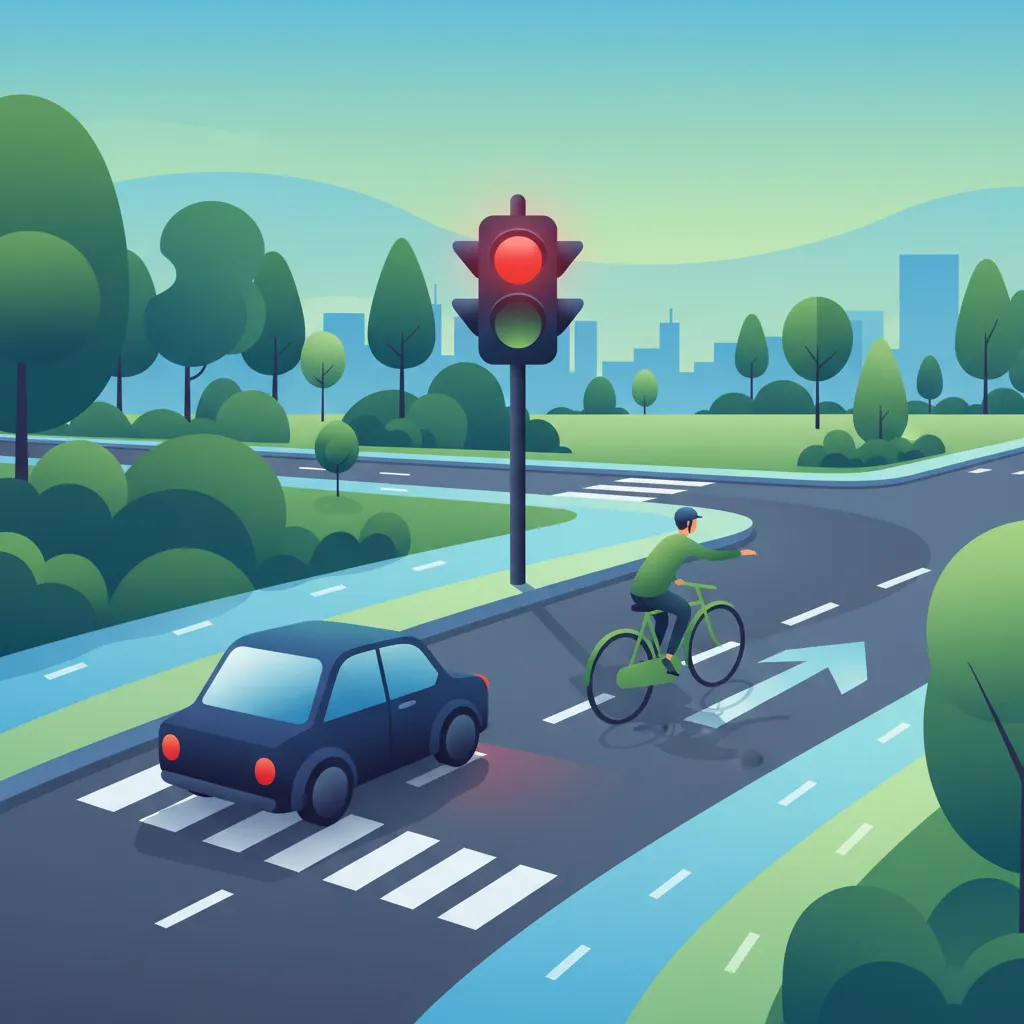
A red light strictly means stop. You must halt your vehicle before the stop line or, if no line is present, before the intersection itself. Driving through a red light is a serious offense in the Netherlands and highly dangerous.
The yellow light (often colloquially called 'orange' but referred to as yellow by CBR) indicates that the signal is about to change to red. The rule in the Netherlands is precise:
This distinction is a frequent trap in the CBR theory exam. Always prioritize a safe stop over rushing through.
A green light permits you to proceed. However, 'proceed' does not mean 'go without looking'. You must still ensure the intersection is clear and that it is safe to move. Not proceeding at a green light when it is safe to do so is also prohibited, as it impedes traffic flow.
In Dutch traffic, there's a clear hierarchy that dictates which instructions you must follow:
verkeersregelaar) always take precedence over traffic lights, traffic signs, and general traffic rules.This order is critical for your CBR exam and everyday driving.
Not all traffic lights are simple red, yellow, green circles. The Netherlands uses several variations:
This is a critical distinction in the Netherlands, especially when turning:
A flashing yellow light indicates that the traffic light is out of order or operating in a warning mode. In this situation, the traffic light has no regulatory power. You must then look for and obey any existing traffic signs and road markings. If none are present, the general traffic rules apply. Approach with extreme caution.
Dedicated signals control pedestrians and cyclists:
verkeerslicht variant for pedestrians.This specific Dutch sign, placed under a traffic light, allows cyclists and snorfietsers (light mopeds) to turn right, even when the vehicle traffic light is red. This rule only applies to these road users and only when the sign is present.
Learners frequently make mistakes with traffic lights, often due to not fully understanding the nuances of Dutch rules:
unless unsafe to stop rule.When approaching any intersection controlled by verkeerslichten in the Netherlands:
By internalizing these rules and distinctions, you'll be well-prepared for both the Dutch roads and your CBR theory exam.
Dutch traffic lights (verkeerslichten) control vehicle and pedestrian movement at intersections using red, yellow, and green signals, with yellow requiring a stop only when it is safely possible. The control hierarchy places traffic controllers first, then working traffic lights (which override priority signs), then traffic signs, and finally general traffic rules. A critical distinction exists between arrow lights, which grant priority in the shown direction, and round lamps, where turning drivers must still yield to through traffic, oncoming vehicles, and crossing pedestrians or cyclists. Special provisions like flashing yellow lights (signal out of order) and the Rechtsaf voor fietsers vrij rule for cyclists are important Dutch-specific variations tested in the CBR exam.
A short set of high-value points that capture the most important ideas from this theory explanation.
Red light always means stop before the stop line or intersection; never proceed
Yellow light: stop if safe to do so, proceed only if you are too close to stop without risking a collision
Green light permits movement only when the path is clear; not proceeding when safe is also prohibited
Arrow-shaped green lights give exclusive priority in that direction, but round green lights still require yielding to other traffic
Working traffic lights override traffic signs and road markings regarding priority at intersections
Dutch Yellow Light Rule: stop if safely possible, only proceed if too close to stop without abrupt braking
Control Hierarchy: traffic controller > traffic lights > traffic signs > general right-of-way rules
Round green lights when turning: always yield to through traffic, oncoming traffic (left turn), and pedestrians/cyclists
Flashing yellow light means the signal has no authority; obey traffic signs or general rules instead
Rechtsaf voor fietsers vrij allows cyclists and snorfietsers to turn right on red only when the sign is present
Misinterpreting yellow light by either always stopping abruptly or always accelerating to beat the red
Assuming round green lights give unconditional right-of-way when turning left or right
Forgetting that a traffic controller's signals override even a green light
Not checking for pedestrians and cyclists who may have conflicting green signals when turning
Overlooking the Rechtsaf voor fietsers vrij sign and failing to anticipate cyclists turning on red
Start with a short, direct summary of Traffic Light Signals before reading the full explanation below.
Traffic lights use specific colors to control vehicle and pedestrian movement: red means stop, green means proceed if safe, and yellow means stop unless you are too close to do so safely. In the Netherlands, traffic lights take precedence over most other priority rules, but drivers must still apply general turning rules at round lamps. Special signs may allow cyclists to turn right on red ('Rechtsaf voor fietsers vrij').
Review the most important terms, rule signals, and traffic concepts linked to Traffic Light Signals.
Explore related theory topic pages connected to Traffic Light Signals and continue with the next useful rule explanation.
See the common search queries learners use when trying to understand Traffic Light Signals in the Netherlands.

Ready to deepen your understanding? Browse our comprehensive library of Dutch driving theory topics, rules, and concepts. Each section offers detailed explanations to help you solidify your knowledge and prepare thoroughly for your upcoming CBR driving theory examination.
Explore Driving Theory TopicsTheory topic content overview
A short set of high-value points that capture the most important ideas from this theory explanation.
Red light always means stop before the stop line or intersection; never proceed
Yellow light: stop if safe to do so, proceed only if you are too close to stop without risking a collision
Green light permits movement only when the path is clear; not proceeding when safe is also prohibited
Arrow-shaped green lights give exclusive priority in that direction, but round green lights still require yielding to other traffic
Working traffic lights override traffic signs and road markings regarding priority at intersections
Dutch Yellow Light Rule: stop if safely possible, only proceed if too close to stop without abrupt braking
Control Hierarchy: traffic controller > traffic lights > traffic signs > general right-of-way rules
Round green lights when turning: always yield to through traffic, oncoming traffic (left turn), and pedestrians/cyclists
Flashing yellow light means the signal has no authority; obey traffic signs or general rules instead
Rechtsaf voor fietsers vrij allows cyclists and snorfietsers to turn right on red only when the sign is present
Misinterpreting yellow light by either always stopping abruptly or always accelerating to beat the red
Assuming round green lights give unconditional right-of-way when turning left or right
Forgetting that a traffic controller's signals override even a green light
Not checking for pedestrians and cyclists who may have conflicting green signals when turning
Overlooking the Rechtsaf voor fietsers vrij sign and failing to anticipate cyclists turning on red
Start with a short, direct summary of Traffic Light Signals before reading the full explanation below.
Traffic lights use specific colors to control vehicle and pedestrian movement: red means stop, green means proceed if safe, and yellow means stop unless you are too close to do so safely. In the Netherlands, traffic lights take precedence over most other priority rules, but drivers must still apply general turning rules at round lamps. Special signs may allow cyclists to turn right on red ('Rechtsaf voor fietsers vrij').
Review the most important terms, rule signals, and traffic concepts linked to Traffic Light Signals.
Explore related theory topic pages connected to Traffic Light Signals and continue with the next useful rule explanation.
See the common search queries learners use when trying to understand Traffic Light Signals in the Netherlands.
Ready to deepen your understanding? Browse our comprehensive library of Dutch driving theory topics, rules, and concepts. Each section offers detailed explanations to help you solidify your knowledge and prepare thoroughly for your upcoming CBR driving theory examination.
Explore Driving Theory TopicsUse this exam-focused revision tip to understand how Traffic Light Signals is likely to appear in theory questions for learners in the Netherlands. This section helps you identify the most testable part of the rule, avoid common traps, and remember the concept more effectively during Dutch driving theory exam preparation.
A common exam trap involves the yellow light rule: remember you only continue if stopping safely is impossible. Also, be aware that while traffic lights override most priority signs, general turning rules and pedestrian priority still apply at round green lights, especially when turning left or right.
Read direct answers to the most common learner questions about Traffic Light Signals in the Netherlands. This FAQ focuses on rule confusion, practical meaning, comparison with similar concepts, and the exact uncertainties that appear most often in Dutch driving theory revision and exam preparation.
In the Netherlands, a red light means you must stop before the stop line. A yellow light means you must stop unless you are so close to the light that stopping safely is impossible. A green light means you may proceed, provided the intersection is clear and it is safe to do so.
The 'yellow light dilemma' refers to the instruction that you must stop at a yellow light unless you are too close to the traffic light to stop safely. If you can stop safely without sudden braking, you should do so. If stopping safely is not possible, you may continue through.
Yes, traffic lights generally take precedence over other traffic signs and road markings that indicate priority. For example, if you are on a priority road but face a red traffic light, you must stop. Only when traffic lights are not working (e.g., flashing yellow) do traffic signs and markings regain their priority.
A flashing yellow light indicates that the traffic light is out of order or operating in a warning mode. In this situation, the usual traffic rules and priority signs (like 'give way' signs or 'shark's teeth' markings) at the intersection become applicable again. Approach with extreme caution.
Yes, in certain situations. If there is a supplementary sign under or next to the traffic light stating 'Rechtsaf voor fietsers vrij' (Right turn clear for cyclists), then cyclists and snorfietsers may turn right even when the main light is red, provided it is safe.
Round traffic lights apply to all directions unless specific lanes or signs indicate otherwise. Arrow-shaped lights (e.g., green arrow) indicate that the signal applies only to traffic moving in the direction of the arrow. If an arrow light is green, you typically won't encounter conflicting traffic in that specific turning direction.
When turning at traffic lights with round lamps, you still need to observe general priority rules. For instance, through traffic has priority over turning traffic, and the 'short bend' turn has priority over the 'long bend' turn. You must also yield to pedestrians and oncoming traffic when turning left.
Leverage the targeted practice search to find questions that challenge your understanding of specific Dutch traffic rules or road signs. Focus your study efforts on areas where you need improvement and build a solid foundation for passing your CBR driving theory exam with confidence.