
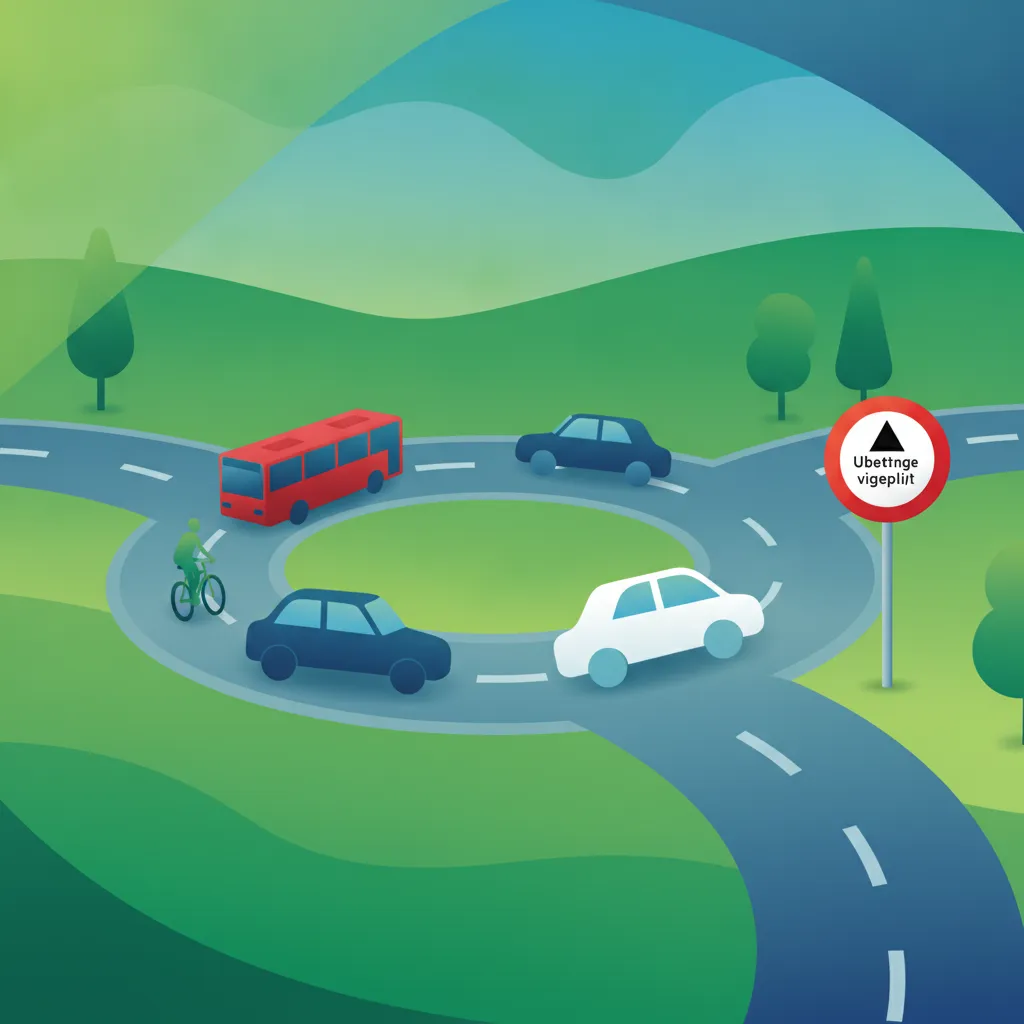
Ronda zostały zaprojektowane w celu poprawy płynności ruchu i zmniejszenia liczby wypadków poprzez zastąpienie tradycyjnych skrzyżowań. W Danii obowiązują określone zasady pierwszeństwa, przede wszystkim wymagające od pojazdów wjeżdżających na rondo ustąpienia pierwszeństwa pojazdom już się na nim poruszającym. Prawidłowe stosowanie tych zasad, w połączeniu z odpowiednim sygnalizowaniem i obserwacją, jest kluczowe dla bezpiecznego i efektywnego poruszania się.
Przegląd treści tematu teoretycznego
Przeczytaj pełny przewodnik po Pierwszeństwo na rondzie z uporządkowaną i łatwą do przejrzenia treścią przygotowaną dla uczniów w Dania. Ta sekcja wyjaśnia dokładny przepis, znaczenie, kontekst drogowy, punkty porównawcze i logikę egzaminacyjną tego tematu teorii jazdy duńska.
Roundabouts are a common feature of Danish road networks, designed to improve traffic flow and reduce the severity of collisions compared to traditional intersections. Mastering the specific roundabout priority rules in Denmark is crucial for safe driving and a key requirement for passing your Danish driving theory test. The fundamental principle revolves around yielding to traffic already circulating within the roundabout, but with important nuances, especially concerning vulnerable road users.
Vigepligt in RoundaboutsIn Denmark, the term vigepligt translates to "priority" or "the duty to give way." When it comes to roundabouts, the primary vigepligt rule is clear: vehicles already in the roundabout have priority over vehicles wishing to enter it.
This means that as you approach a roundabout, you must be prepared to stop and yield to any vehicle (car, motorcycle, moped, or bicycle) that is already circulating inside. This rule is reinforced by specific road signs and markings you will always encounter at Danish roundabouts.
Understanding rundkørsel vigepligt is vital for several reasons:
Navigating a Danish roundabout safely involves a sequence of observations and actions:
Ubetinget VigepligtAs you approach a roundabout, you will encounter the following:
Rundkørsel (A 16): A triangular sign with three arrows forming a circle, indicating a roundabout ahead.Ubetinget vigepligt (B 11): A white triangle with a red border, pointing downwards. This sign means "unconditional give way."Vigelinje (S 11) / "Hajtænder": White triangular markings (often called "shark teeth") painted on the road surface, reinforcing the Ubetinget vigepligt sign.These signs and markings unequivocally instruct you to yield to all traffic already in the roundabout. You must:
Only enter the roundabout when there is a clear and safe gap in circulating traffic. You must not force any vehicle already inside to brake, swerve, or adjust their speed.
Once inside, you have priority over any new vehicles attempting to enter.
vognbanepile) painted on the road, as these override general guidelines.Exiting a roundabout in Denmark requires particular care, especially due to cyclists and pedestrians.
vigepligt distinction in Denmark. When you exit, you are essentially turning right across the path of any cyclists on an adjacent cycle path and pedestrians at a marked crossing (fodgængerfelt).
Ubetinget Vigepligt at Entry is Absolute: Unlike some countries where right-hand priority might apply at unmarked roundabouts, in Denmark, the Ubetinget vigepligt rule at entry is universal for all established roundabouts.Undervisningsplan kategori B) explicitly states that drivers must orient themselves regarding cyclists and moped riders as they would when making a right turn at an intersection.Learners and even experienced drivers often make these mistakes:
When approaching any roundabout in Denmark, remember the mantra: "Scan, Yield, and Signal."
Vigepligt): Unconditionally yield to all traffic already in the roundabout, indicated by the Ubetinget vigepligt sign and Hajtænder.By diligently applying these Danish vigepligt rules, you will navigate roundabouts safely and confidently.
Zacznij od krótkiego i bezpośredniego podsumowania Pierwszeństwo na rondzie, zanim przeczytasz pełne wyjaśnienie.
W Danii obowiązuje ogólna zasada, że ruch znajdujący się już na rondzie ma pierwszeństwo przed pojazdami wjeżdżającymi. Kierowcy zbliżający się do ronda muszą zwolnić, obserwować ruch okrężny (w tym rowerzystów i motorowerzystów) i bezwarunkowo ustąpić pierwszeństwa przed wjazdem, jeśli jest to wymagane przez znaki takie jak „Ubetinget vigepligt” (B 11) i „Vigelinje” (zęby rekina). Prawidłowy wybór pasa ruchu i sygnalizowanie są również kluczowe dla bezpiecznego ruchu i zjazdu.
Przejrzyj najważniejsze terminy, sygnały zasad i pojęcia drogowe związane z Pierwszeństwo na rondzie.
Poznaj powiązane strony dotyczące Pierwszeństwo na rondzie i przejdź do kolejnego przydatnego wyjaśnienia przepisu.
Zobacz, jakich zapytań uczniowie najczęściej używają, gdy próbują zrozumieć Pierwszeństwo na rondzie w Dania.

Zanurz się w szczegółowych wyjaśnieniach duńskich przepisów ruchu drogowego, znaków drogowych i konwencji jazdy. Utrwal swoją wiedzę na temat kluczowych tematów teoretycznych i pewnie przygotuj się do wszystkich części oficjalnego duńskiego egzaminu teoretycznego na prawo jazdy.
Poznaj tematy prawa jazdyPrzegląd treści tematu teoretycznego
Zacznij od krótkiego i bezpośredniego podsumowania Pierwszeństwo na rondzie, zanim przeczytasz pełne wyjaśnienie.
W Danii obowiązuje ogólna zasada, że ruch znajdujący się już na rondzie ma pierwszeństwo przed pojazdami wjeżdżającymi. Kierowcy zbliżający się do ronda muszą zwolnić, obserwować ruch okrężny (w tym rowerzystów i motorowerzystów) i bezwarunkowo ustąpić pierwszeństwa przed wjazdem, jeśli jest to wymagane przez znaki takie jak „Ubetinget vigepligt” (B 11) i „Vigelinje” (zęby rekina). Prawidłowy wybór pasa ruchu i sygnalizowanie są również kluczowe dla bezpiecznego ruchu i zjazdu.
Przejrzyj najważniejsze terminy, sygnały zasad i pojęcia drogowe związane z Pierwszeństwo na rondzie.
Poznaj powiązane strony dotyczące Pierwszeństwo na rondzie i przejdź do kolejnego przydatnego wyjaśnienia przepisu.
Zobacz, jakich zapytań uczniowie najczęściej używają, gdy próbują zrozumieć Pierwszeństwo na rondzie w Dania.
Zanurz się w szczegółowych wyjaśnieniach duńskich przepisów ruchu drogowego, znaków drogowych i konwencji jazdy. Utrwal swoją wiedzę na temat kluczowych tematów teoretycznych i pewnie przygotuj się do wszystkich części oficjalnego duńskiego egzaminu teoretycznego na prawo jazdy.
Poznaj tematy prawa jazdySkorzystaj z tej wskazówki, aby zrozumieć, jak Pierwszeństwo na rondzie może pojawić się w pytaniach egzaminu teoretycznego dla uczniów w Dania. Pomoże Ci zauważyć najbardziej sprawdzany element przepisu i uniknąć częstych pułapek.
Zwróć szczególną uwagę na scenariusze rond w duńskim teście teoretycznym. Częstym błędem jest nieustąpienie pierwszeństwa pojazdom już znajdującym się na rondzie, zwłaszcza rowerzystom. Pamiętaj: ruch na rondzie zazwyczaj ma pierwszeństwo, a sygnalizowanie zjazdu jest obowiązkowe. Zawsze obserwuj niechronionych uczestników ruchu.
Przeczytaj bezpośrednie odpowiedzi na najczęstsze pytania o Pierwszeństwo na rondzie w Dania. Ta sekcja skupia się na niejasnościach dotyczących przepisu, jego praktycznego znaczenia i różnic wobec podobnych pojęć.
W Danii pojazdy już poruszające się po rondzie zawsze mają pierwszeństwo przed pojazdami chcącymi wjechać, chyba że inaczej wskazują światła drogowe lub specyficzne znaki. Należy ustąpić pierwszeństwa wszystkim pojazdom znajdującym się już na rondzie.
Zwykle zbliżając się do ronda, zobaczysz znak ostrzegawczy „Rundkørsel” (A 16). Co ważniejsze, znak „Ubetinget vigepligt” (B 11), często w połączeniu z „Vigelinje” (S 11) lub oznaczeniem „zębów rekina” na drodze, oznacza, że należy ustąpić pierwszeństwa ruchowi na rondzie.
Nie sygnalizuje się wjazdu na rondo. Należy sygnalizować zjazd z ronda. Jeśli zjeżdżasz na pierwszym zjeździe, sygnalizuj skręt w prawo przed wjazdem. Na wszystkich pozostałych zjazdach sygnalizuj skręt w prawo tuż przed zamiarem opuszczenia ronda.
Na wielu duńskich rondach rowerzyści i motorowerzyści, którzy już się po nich poruszają, również mają pierwszeństwo. Kierowcy muszą być szczególnie uważni i ustępować pierwszeństwa rowerzystom zarówno przy wjeździe, jak i zjeździe z ronda, ponieważ są oni niechronionymi uczestnikami ruchu.
Wybór pasa zależy od zamierzonego zjazdu. Generalnie, jeśli planujesz zjechać na pierwszym zjeździe (skręt w prawo), użyj skrajnego prawego pasa. Na pozostałe zjazdy (jazda prosto lub skręt w lewo) użyj lewego pasa (lub pasów). Zawsze przestrzegaj oznakowania drogowego i znaków, upewniając się, że jesteś na właściwym pasie na długo przed wjazdem.
Zawsze zbliżaj się do ronda ze zmniejszoną, odpowiednią prędkością. Daje to czas na obserwację ruchu okrężnego, podjęcie decyzji o ustąpieniu pierwszeństwa i wybór właściwego pasa. Po wjeździe utrzymuj bezpieczną, niską prędkość, aby umożliwić płynny ruch i bezpieczny zjazd.
Skorzystaj z naszego potężnego narzędzia wyszukiwania, aby znaleźć konkretne duńskie tematy teorii jazdy, znaki drogowe lub sytuacje na drodze, które musisz przejrzeć. Zacznij przeglądać odpowiednie zestawy praktyczne już teraz, aby wzmocnić swoją wiedzę i zbudować pewność siebie przed nadchodzącym egzaminem na prawo jazdy.