
This lesson provides critical survival strategies for Category A motorcyclists tackling the most challenging Dutch weather: heavy rain, snow, and potential ice. You'll learn essential mental preparation, the necessity of drastically reduced speeds, and hyper-smooth control inputs. This knowledge is vital for your CBR theory exam and for real-world safe riding in adverse conditions.
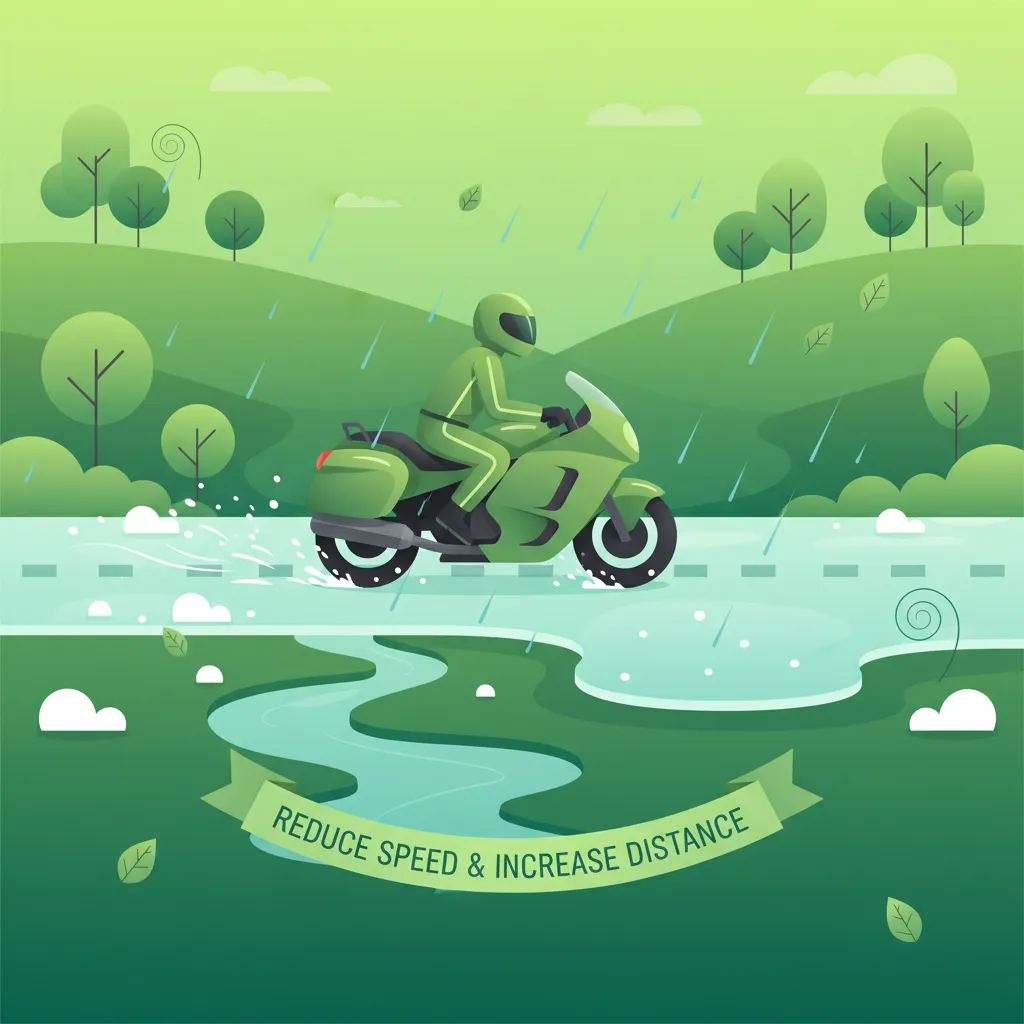
Lesson content overview
Riding a motorcycle in adverse weather conditions like heavy rain, snowfall, or ice presents unique and significant challenges that demand exceptional skill, preparation, and adherence to specific safety protocols. This lesson is crucial for any motorcyclist in the Netherlands, as weather-related accidents constitute a substantial portion of motorcycle injuries. Understanding the physics, mastering adaptive riding techniques, and complying with Dutch traffic regulations are paramount to ensuring your safety and the safety of others.
The fundamental principle governing motorcycle safety in poor weather is the drastic reduction in tire-road friction. Water, snow, and ice act as lubricants, significantly lowering the coefficient of friction (µ) between your tires and the road surface. This reduced grip directly impacts your ability to accelerate, brake, and steer effectively, transforming even routine maneuvers into high-risk situations.
The friction coefficient (µ) is a dimensionless value representing the ratio of frictional force to the normal force between a tire and the road. On dry asphalt, this coefficient can be as high as 0.9, offering excellent grip. However, in adverse conditions, this value plummets:
This reduction in grip has profound implications. A lower µ means significantly longer braking distances and a reduced capacity for safe lean angles when cornering. For example, if the friction coefficient drops from 0.9 on a dry road to 0.15 on ice, your braking distance at the same speed could increase by a factor of six. Motorcyclists must internalize the fact that perceived road conditions do not always reflect actual available traction, particularly when dealing with ice.
Hydroplaning (also known as aquaplaning) occurs when a layer of water builds up between a vehicle's tires and the road surface, leading to a complete loss of contact and traction. The motorcycle effectively skids or glides on a film of water. This phenomenon is especially dangerous for motorcyclists due to their inherent instability and smaller contact patch.
The risk of hydroplaning increases with speed, tire wear, and the depth of standing water. While a precise hydroplaning threshold can be calculated (approximately 35 km/h × tire width in mm / 10), the practical takeaway is to drastically reduce speed in heavy rain or when encountering puddles. Well-maintained tires with adequate tread depth are critical, as the tread patterns are designed to channel water away from the contact patch, allowing the rubber to maintain contact with the road. However, even the best tires cannot prevent hydroplaning if speed is excessive for the conditions.
Wider tires, contrary to common belief, can actually increase the risk of hydroplaning if tire pressure is too low, as they present a larger surface area to the water film at a given pressure.
Black ice is arguably the most treacherous of all adverse road conditions. It is a thin, transparent layer of ice that forms on the road surface, blending in with the pavement and often being completely invisible to the rider. This makes it incredibly dangerous, as a rider may believe they are on a dry road until traction is suddenly lost.
Certain areas are particularly susceptible to black ice formation:
The Black-Ice Identification Rule dictates that you must reduce speed and increase vigilance in these high-risk zones, regardless of the apparent road condition. Assume that any seemingly dry, shiny patch in these areas could be black ice. Early morning rides after a clear, cold night are especially risky.
Safe riding in rain, snow, or ice is less about brute force and more about finesse and precise control. Every input to the motorcycle must be smooth and deliberate to avoid overwhelming the reduced tire grip.
The Progressive Input Principle is paramount: all rider controls – throttle, front and rear brakes, and steering – must be applied and released smoothly and gradually. Abrupt movements can easily break traction, leading to a loss of control.
Braking effectively on low-µ surfaces is a critical survival skill.
The Legal Adaptation Principle is enshrined in Dutch law: RVV 1990, Article 3 mandates that drivers adapt their speed and operation "to the prevailing circumstances." This explicitly includes weather and road conditions. Relying solely on statutory speed limits in adverse weather is a common and dangerous misunderstanding.
The speed at which a rider can safely stop and maintain control, considering the current road surface friction (µ), their reaction time (approximately 1 second for motorcyclists), and the capabilities of their motorcycle.
To estimate a safe following distance, pick a fixed point on the road (e.g., a tree or sign). When the vehicle in front passes that point, start counting "one-thousand-one, one-thousand-two..." until your motorcycle reaches the same point. Aim for at least "one-thousand-four" in rain or snow.
Adequate preparation of both rider and machine is non-negotiable for safe riding in challenging weather.
The Thermal Comfort Principle emphasizes maintaining your core body temperature (approximately 36-38 °C) to preserve muscle coordination, reaction time, and decision-making abilities. Hypothermia, even mild forms, can severely impair your judgment and physical control.
Your tires are the only contact points with the road, making their condition critical.
In poor visibility conditions, being seen by other road users is as important as being able to see.
Dutch traffic law places a clear responsibility on every road user to adapt their driving style to prevailing conditions. Ignorance of these laws is not an excuse and can lead to severe consequences.
Several articles within the Reglement verkeersregels en verkeerstekens (RVV 1990) are particularly relevant to riding in adverse weather:
Failing to adapt to adverse weather is a common cause of accidents and can lead to legal penalties:
Beyond the physical challenges, the mental aspect of riding in adverse weather is equally critical. Human factors like risk perception, overconfidence, and stress can lead to poor decision-making.
To counter these biases, mental preparation is key. Before setting out, acknowledge the challenging conditions and mentally commit to a significantly more cautious and conservative riding style. Regular breaks on long, cold, or wet rides can help manage fatigue and maintain concentration.
The appropriate riding strategy often depends on the specific type of road and the nature of the adverse weather.
Pedestrians and cyclists are particularly vulnerable in adverse conditions.
Riding a motorcycle in rain, snow, or ice dramatically reduces tire-road friction, making smooth, progressive control inputs essential for maintaining stability. Black ice most commonly forms on bridges and shaded areas where you must reduce speed regardless of apparent conditions. Dutch law explicitly requires adapting speed to weather under RVV 1990 Article 3, with specific rules governing headlight use and tire tread depth. Critical techniques include rear-brake bias on extremely slippery surfaces, drastically increased following distances (4+ seconds in rain, 6-8 seconds on ice), and maintaining core body temperature through proper layering to preserve decision-making ability.
A short set of high-value points that capture the most important learning from this lesson.
The friction coefficient drops dramatically in adverse conditions: from 0.9 on dry roads to as low as 0.1 on ice, increasing braking distance by up to six times.
Black ice forms most commonly on bridges, overpasses, and shaded areas where temperatures remain below freezing even when surrounding roads appear dry.
All control inputs—throttle, brakes, and steering—must be applied progressively and smoothly to avoid overwhelming reduced tire grip.
Dutch law (RVV 1990 Article 3) requires adapting speed to conditions; riding at the statutory limit in bad weather is a violation of this duty of care.
Maintaining thermal comfort (core body temperature 36-38°C) is essential for preserving muscle coordination and decision-making ability in cold conditions.
Explore all units and lessons included in this driving theory course.
Friction coefficient values: dry (0.9), wet (0.6), wet snow (0.3), packed snow (0.2-0.25), clear ice (0.1-0.15).
Use dipped headlights in any reduced visibility, including daytime rain (RVV 1990 Article 58§5); fog lights only when visibility is 50 metres or less (Article 58§6).
Minimum tread depth is 1.6 mm in the Netherlands; more tread significantly improves grip in wet and snowy conditions.
Following distance: 2 seconds dry, 4 seconds wet/snow, 6-8 seconds on ice (count 'one-thousand-one' to 'one-thousand-four' as a test).
Studded tires are only legal when ambient temperature is at or below +5°C in the Netherlands.
Riding at the statutory speed limit in heavy rain or snow, believing posted limits apply regardless of conditions.
Applying brakes abruptly or aggressively on slippery surfaces, causing wheel lock-up and loss of control.
Assuming dry-looking road patches in shaded areas or on bridges are safe—they may be black ice.
Using fog lights inappropriately when visibility exceeds 50 metres, which is illegal and can dazzle other road users.
Neglecting gear preparation; riding with inadequate waterproof or insulated clothing leads to hypothermia and impaired concentration.
Lesson content overview
A short set of high-value points that capture the most important learning from this lesson.
The friction coefficient drops dramatically in adverse conditions: from 0.9 on dry roads to as low as 0.1 on ice, increasing braking distance by up to six times.
Black ice forms most commonly on bridges, overpasses, and shaded areas where temperatures remain below freezing even when surrounding roads appear dry.
All control inputs—throttle, brakes, and steering—must be applied progressively and smoothly to avoid overwhelming reduced tire grip.
Dutch law (RVV 1990 Article 3) requires adapting speed to conditions; riding at the statutory limit in bad weather is a violation of this duty of care.
Maintaining thermal comfort (core body temperature 36-38°C) is essential for preserving muscle coordination and decision-making ability in cold conditions.
Explore all units and lessons included in this driving theory course.
Friction coefficient values: dry (0.9), wet (0.6), wet snow (0.3), packed snow (0.2-0.25), clear ice (0.1-0.15).
Use dipped headlights in any reduced visibility, including daytime rain (RVV 1990 Article 58§5); fog lights only when visibility is 50 metres or less (Article 58§6).
Minimum tread depth is 1.6 mm in the Netherlands; more tread significantly improves grip in wet and snowy conditions.
Following distance: 2 seconds dry, 4 seconds wet/snow, 6-8 seconds on ice (count 'one-thousand-one' to 'one-thousand-four' as a test).
Studded tires are only legal when ambient temperature is at or below +5°C in the Netherlands.
Riding at the statutory speed limit in heavy rain or snow, believing posted limits apply regardless of conditions.
Applying brakes abruptly or aggressively on slippery surfaces, causing wheel lock-up and loss of control.
Assuming dry-looking road patches in shaded areas or on bridges are safe—they may be black ice.
Using fog lights inappropriately when visibility exceeds 50 metres, which is illegal and can dazzle other road users.
Neglecting gear preparation; riding with inadequate waterproof or insulated clothing leads to hypothermia and impaired concentration.
Explore search topics learners often look for when studying Riding in Rain, Snow, and Ice (ijs, sneeuw, regen). These topics reflect common questions about road rules, driving situations, safety guidance, and lesson level theory preparation for learners in the Netherlands.
Browse additional driving theory lessons that cover connected traffic rules, road signs, and common driving situations related to this topic. Improve your understanding of how different rules interact across everyday traffic scenarios.
Learn essential Dutch motorcycle theory for riding safely in adverse weather. Understand how rain, snow, and ice affect grip, identify black ice hazards, and master smooth control techniques to prevent accidents.
This lesson addresses the dual challenge of poor visibility: being able to see the road ahead and ensuring other road users can see you. It covers techniques for riding in fog and heavy rain, such as using appropriate lights and reducing speed to match sight distance. The lesson also discusses practical issues like helmet visor fogging and the importance of wearing high-visibility or reflective clothing to enhance conspicuity in low-light conditions.
Rain significantly reduces tire grip and rider visibility. This lesson covers the essential adjustments needed for wet-weather riding, including reducing speed, increasing following distance, and applying all controls more smoothly. It explains the danger of hydroplaning (aquaplaning) when tires lose contact with the road over standing water and how to avoid it. You will also learn about the importance of good tire tread depth for channeling water away and maintaining traction.
Riding on two wheels requires special care on surfaces with reduced grip. This lesson teaches you how to handle challenging conditions like rain, ice, wet leaves, or tram tracks. Key principles include reducing speed significantly, making all control inputs (braking, accelerating, steering) much more smoothly and gradually, and increasing your following distance to allow for much longer stopping distances. Recognizing potentially slippery areas is a critical part of proactive hazard perception.
This lesson provides a detailed guide to riding in wet and low-visibility conditions. You will learn to make all your control inputs—braking, accelerating, and steering—exceptionally smooth to avoid breaking traction on slippery surfaces. The content covers the dangers of painted lines and manhole covers when wet, and the importance of increasing your following distance dramatically to account for longer braking distances.
This lesson covers the critical decision-making process of when to stop riding altogether because weather conditions have become too hazardous to continue safely. It provides procedures for safely pulling off the road, finding suitable shelter, and making yourself and your motorcycle as visible as possible to other traffic. The content emphasizes that there is no shame in stopping, and that rider preservation is the highest priority when faced with extreme conditions like gale-force winds or torrential downpours.

This lesson explains the science behind reduced grip on wet surfaces and the dangerous phenomenon of hydroplaning, where a tire rides on a layer of water instead of the road. It details the critical roles of tire tread depth, tire pressure, and riding speed in maintaining contact with the asphalt. Riders will learn techniques for riding in the rain, including using exceptionally smooth control inputs and proactively reducing speed when approaching standing water.
This lesson provides practical advice for driving in challenging weather. You will learn about the risk of aquaplaning in heavy rain and how to react, as well as how to manage the effects of strong crosswinds. The curriculum covers winter driving, explaining the danger of black ice, the benefits of winter tires, and techniques for avoiding and correcting a skid. A key focus is on adjusting driving style: increasing following distances, reducing speed, and making gentle steering and braking inputs.
This lesson reinforces the critical relationship between adverse conditions, reduced traction, and massively increased stopping distances. It provides a clear framework for how much riders need to increase their following distance and reduce their overall speed to maintain a safe margin for error. The curriculum teaches riders to constantly reassess their speed based on visual feedback from the road surface and the level of visibility, ensuring they can always stop within the distance they can clearly see.
This lesson explains the physics of why wet roads offer significantly less traction than dry ones, highlighting particular hazards like the first rain after a dry spell. It defines aquaplaning (when a tire rides on a layer of water instead of the road) and explains how speed and tire condition contribute to this dangerous phenomenon. The content provides clear strategies for riding in the rain, including reducing speed and applying all controls with extra smoothness.
This lesson covers the principles of selecting and using appropriate protective gear to combat the effects of low temperatures and wind chill. It explains the concept of layering with a base, mid, and outer layer to trap heat and manage moisture. The content also discusses the benefits of heated grips and clothing, effective waterproofing, and solutions like Pinlock inserts to prevent visor fogging, all of which are crucial for maintaining comfort, concentration, and control in the cold.
Understand your legal responsibilities under Dutch traffic law (RVV 1990) when riding a motorcycle in rain, snow, or icy conditions. Learn about speed adaptation, lighting requirements, and vehicle roadworthiness.
This lesson covers the critical decision-making process of when to stop riding altogether because weather conditions have become too hazardous to continue safely. It provides procedures for safely pulling off the road, finding suitable shelter, and making yourself and your motorcycle as visible as possible to other traffic. The content emphasizes that there is no shame in stopping, and that rider preservation is the highest priority when faced with extreme conditions like gale-force winds or torrential downpours.
This lesson reinforces the critical relationship between adverse conditions, reduced traction, and massively increased stopping distances. It provides a clear framework for how much riders need to increase their following distance and reduce their overall speed to maintain a safe margin for error. The curriculum teaches riders to constantly reassess their speed based on visual feedback from the road surface and the level of visibility, ensuring they can always stop within the distance they can clearly see.
This lesson addresses the dual challenge of poor visibility: being able to see the road ahead and ensuring other road users can see you. It covers techniques for riding in fog and heavy rain, such as using appropriate lights and reducing speed to match sight distance. The lesson also discusses practical issues like helmet visor fogging and the importance of wearing high-visibility or reflective clothing to enhance conspicuity in low-light conditions.
This lesson provides a detailed guide to riding in wet and low-visibility conditions. You will learn to make all your control inputs—braking, accelerating, and steering—exceptionally smooth to avoid breaking traction on slippery surfaces. The content covers the dangers of painted lines and manhole covers when wet, and the importance of increasing your following distance dramatically to account for longer braking distances.
This lesson explains how to counteract the effects of strong winds, which can easily upset a motorcycle's stability. It covers techniques like maintaining a relaxed grip on the handlebars and leaning into a steady crosswind. The lesson also addresses the impact of temperature, explaining how cold weather affects both the rider (risk of hypothermia, reduced concentration) and the motorcycle (reduced tire grip until warmed up), and emphasizes the need for appropriate protective gear.
This lesson explains why the standard two-second rule is insufficient in adverse conditions and requires extension. It details how factors like rain, fog, and darkness reduce both visibility and tire grip, thereby significantly increasing total stopping distance. The content provides practical guidelines, such as extending the following gap to four seconds or more in the wet, to ensure the rider always has enough time and space to stop safely, regardless of the conditions.
Riding on two wheels requires special care on surfaces with reduced grip. This lesson teaches you how to handle challenging conditions like rain, ice, wet leaves, or tram tracks. Key principles include reducing speed significantly, making all control inputs (braking, accelerating, steering) much more smoothly and gradually, and increasing your following distance to allow for much longer stopping distances. Recognizing potentially slippery areas is a critical part of proactive hazard perception.
This lesson provides practical advice for driving in challenging weather. You will learn about the risk of aquaplaning in heavy rain and how to react, as well as how to manage the effects of strong crosswinds. The curriculum covers winter driving, explaining the danger of black ice, the benefits of winter tires, and techniques for avoiding and correcting a skid. A key focus is on adjusting driving style: increasing following distances, reducing speed, and making gentle steering and braking inputs.
Rain significantly reduces tire grip and rider visibility. This lesson covers the essential adjustments needed for wet-weather riding, including reducing speed, increasing following distance, and applying all controls more smoothly. It explains the danger of hydroplaning (aquaplaning) when tires lose contact with the road over standing water and how to avoid it. You will also learn about the importance of good tire tread depth for channeling water away and maintaining traction.
Find clear answers to common questions learners have about Riding in Rain, Snow, and Ice (ijs, sneeuw, regen). Learn how the lesson is structured, which driving theory objectives it supports, and how it fits into the overall learning path of units and curriculum progression in the Netherlands. These explanations help you understand key concepts, lesson flow, and exam focused study goals.
In heavy rain, reduce your speed significantly – often 20-30% below the legal limit – to maintain stopping distance and grip. In snow or ice, speeds should be drastically lower, sometimes as low as 10-20 km/h, to allow for maximum reaction time and minimal input. The key is to ride at a speed where you feel completely in control and can react to any unforeseen hazards.
Black ice is a thin, transparent layer of ice that forms on the road surface, often invisible to the eye, making it extremely dangerous. For Category A motorcyclists in the Netherlands, it's most common on bridges, elevated sections of road, shaded areas, and less-trafficked roads where the sun doesn't reach. These spots cool down faster and stay frozen longer, demanding extreme caution.
In slippery conditions, it's crucial to use both brakes very gently and progressively. However, the front brake provides most of your stopping power, even on a motorcycle. The key is extreme smoothness and less force than in dry conditions. Avoid sudden grabs, which can easily cause a skid. If your motorcycle has ABS, trust it, but still apply brakes smoothly.
For cold and wet conditions in the Netherlands, essential gear includes a waterproof and windproof outer layer, thermal base layers, waterproof gloves, and waterproof boots. A neck warmer or balaclava is also highly recommended. The goal is to stay warm and dry, preventing hypothermia which can severely impair your judgment and reaction time.
Leverage the targeted practice search to find questions that challenge your understanding of specific Dutch traffic rules or road signs. Focus your study efforts on areas where you need improvement and build a solid foundation for passing your CBR driving theory exam with confidence.