
When operating an AM category vehicle like a moped or brommobiel, it's essential to know who you can legally and safely carry as a passenger. This guide breaks down the Dutch regulations, including age limits and specific requirements for passengers. Mastering these rules ensures both your safety and that of your passengers, a key area tested in the Dutch driving theory exam.
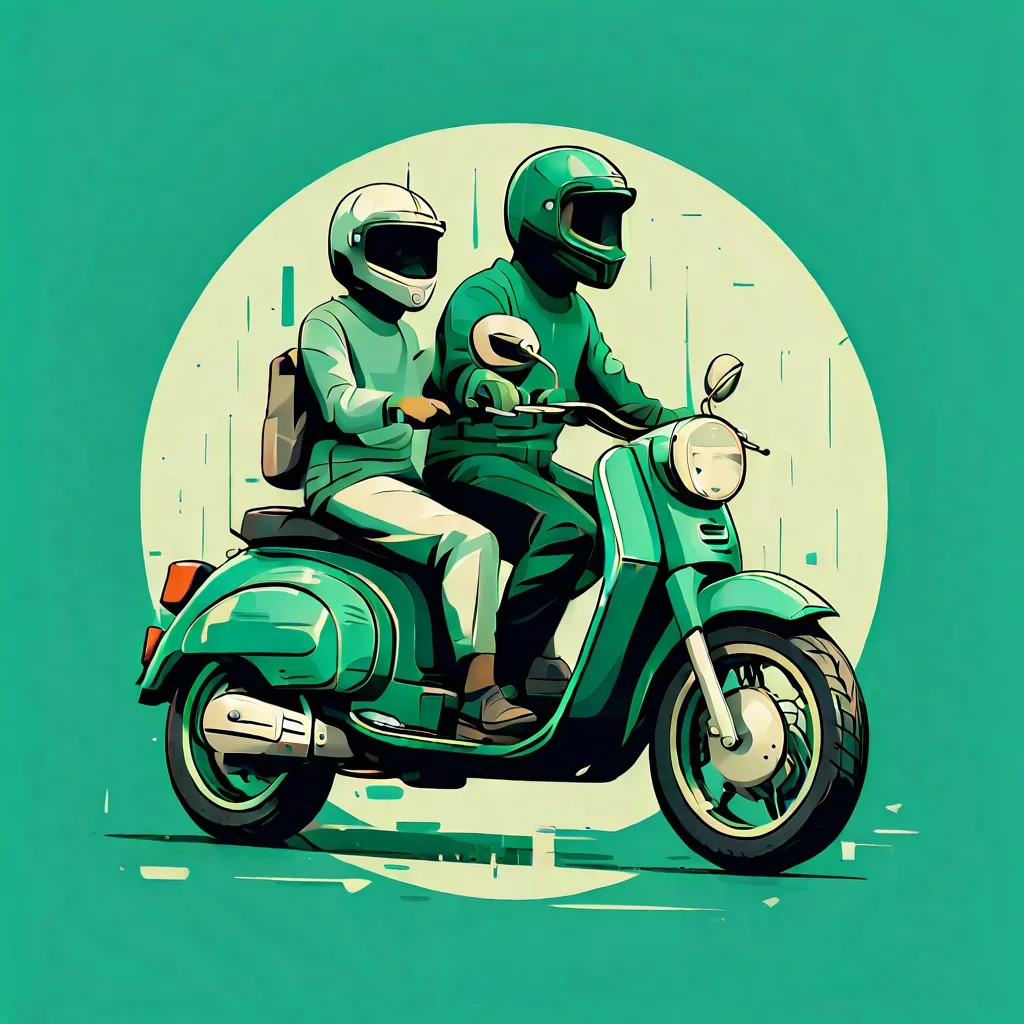
Article content overview
Operating an AM category vehicle in the Netherlands, which includes mopeds and the distinctive brommobiel, comes with specific responsibilities, particularly when carrying passengers. The Dutch traffic regulations, enforced by the CBR, are meticulously designed to ensure the safety of all road users. Understanding precisely who can be a passenger, under what conditions, and what safety measures are required is fundamental not only for safe driving but also for successfully passing your Dutch driving theory exam. This article delves into the intricacies of Article 61b of the Dutch traffic regulations, clarifying the rules to prevent dangerous situations and ensure full legal compliance when transporting passengers on your moped or brommobiel.
The AM category in the Netherlands encompasses a range of vehicles, most notably mopeds (snorfietsen and bromfietsen) and brommobiels, which are essentially small, enclosed mopeds often referred to as microcars. While these vehicles offer convenient mobility, their design and capabilities often impose stricter limitations on passenger transport compared to larger vehicles. The fundamental principle behind these rules is to prevent overcrowding and to ensure that any passenger can be safely accommodated and secured, thereby maintaining the vehicle's stability and the driver's control.
Article 61b of the Dutch traffic regulations is the cornerstone of understanding these restrictions. It broadly prohibits the conveyance of persons in the open or closed loading space of a motor vehicle or moped, and critically, in or on a trailer behind such a vehicle. This general prohibition highlights the intention to avoid carrying passengers in areas not specifically designed and equipped for their safe transport. However, as with many traffic laws, there are specific exceptions and conditions that must be understood.
In the Netherlands, the AM driving licence category covers mopeds, including snorfietsen (low-speed mopeds) and bromfietsen (faster mopeds), as well as brommobiels (microcars). These vehicles have specific regulations regarding their operation and passenger capacity.
While the rule against carrying passengers in loading spaces or trailers is quite strict, the Dutch legislature has recognized certain scenarios where exceptions are permissible. These exceptions are carefully outlined in Article 61b to address specific, often specialised, transport needs. It is crucial for all AM vehicle drivers to be aware of these exceptions, as misunderstandings can lead to violations and, more importantly, safety risks.
One significant exception relates to the transportation of specific individuals in specially equipped vehicles. This includes the transport of persons in the cargo area of an ambulance or veterinary ambulance, provided it is for their intended purpose. Similarly, transporting wheelchair occupants in designated areas within a vehicle specially equipped for them, as indicated on its registration certificate, is also permitted. These provisions acknowledge the necessity of transporting individuals with specific needs in a safe and appropriate manner, even if it involves areas not typically designated for passengers.
Another important exception caters to emergency services. Vehicles belonging to the police, fire brigade, and other designated emergency services are permitted to convey persons in their loading spaces when performing their official duties. This recognizes the operational requirements of these vital services. Furthermore, the law makes allowances for events or processions that have obtained the necessary permits from municipal authorities, allowing for the conveyance of persons as part of these organised activities, provided the permit conditions are met.
Remember that these exceptions are specific and should not be interpreted as a general license to carry passengers in unconventional ways. Always refer to the exact wording of Article 61b for clarity on permitted situations.
Beyond the general exceptions, Article 61b also clarifies situations involving trailers and specific types of mopeds. Generally, it is forbidden to carry persons on a trailer attached to a motor vehicle or moped. This is primarily due to the lack of safety features and the increased risk of falls and injuries. However, a key detail is the width of a trailer's load. If a trailer, including its load, is wider than 0.75 metres, it is strictly forbidden to carry any persons on it. This threshold is in place because wider trailers can pose a greater obstruction and risk on the road.
For mopeds with more than two wheels, such as cargo mopeds, and those fitted with a trailer, even if the trailer's load is less than 0.75 metres wide, there are specific rules. These types of vehicles are generally permitted to use the carriageway, and this includes the ability to tow a trailer. However, the critical aspect remains the safe transport of passengers. The general prohibition against carrying persons in loading spaces or on trailers still applies unless a specific exception is met. Therefore, even with a cargo moped, you cannot simply place a passenger in the cargo area or on a trailer unless it falls under one of the explicit legal allowances.
This also relates to road positioning. Moped riders, including those on speed pedelecs, must use mandatory cycle/moped paths when available. If no such path exists, they can use the carriageway. However, riders of mopeds with more than two wheels or those with trailers wider than 0.75 metres have more flexibility and may use the carriageway at any time. This is often indicated by signs like D-103 and D-104, which guide moped users on how to navigate shared road spaces.
A critical aspect of passenger rules, especially for mopeds, involves age and the necessary safety provisions for younger passengers. While Article 61b focuses on where persons can be carried, other articles within the traffic regulations address who can be carried, particularly concerning age. The general rule is that passengers must be seated in designated seats.
For mopeds and motorcycles, specific rules apply to children. Passengers younger than 8 years old may only be transported if they are seated in a suitable and safe facility that provides adequate support for their back, hands, and feet. This emphasizes the need for appropriate child restraint systems or specially designed seating for very young passengers. Drivers are explicitly forbidden from transporting passengers in any manner other than as described in these articles, meaning creative or unsafe seating arrangements are illegal and dangerous.
Failing to provide adequate safety for young passengers is a serious offense and significantly increases the risk of severe injury in the event of an accident. Always ensure that any child passenger is securely and appropriately accommodated.
For passengers aged 8 years and older, the regulations become more nuanced, but the principle of safe transport remains paramount. While the specific requirements for older children might differ, the underlying expectation is that passengers are seated and secured in a manner that prevents them from falling off the vehicle or interfering with the driver's operation. The Dutch CBR heavily emphasizes this aspect in their theory exams, often posing scenarios to test a candidate's understanding of these safety obligations.
Brommobiels, due to their enclosed nature and car-like structure, often have different passenger rules compared to open mopeds. Article 59 of the traffic regulations, for instance, mandates that drivers and passengers of passenger cars, commercial vehicles, and enclosed three-wheeled motor vehicles or microcars (brommobiels) must use available seat belts. Passengers under 18 years of age and shorter than 1.35 metres must use a suitable child restraint system that bears an official seal of approval.
This clearly indicates that if a brommobiel is equipped with seat belts, they must be used by all occupants, including the driver and any passengers. If a passenger is a child meeting the height and age criteria, a child restraint system is mandatory. This rule is enforced to protect occupants from the forces experienced during braking, acceleration, or in the event of a collision. The enclosed body of a brommobiel provides some protection, but seat belts and child restraints are essential for occupant safety.
It is also worth noting that in certain circumstances, specific exceptions may apply, such as Article 59b, which allows for a third passenger older than 3 years and less than 1.35 meters tall to be transported in specific seating arrangements if two child restraint systems are already in use and a third cannot be fitted, provided that passenger uses a seatbelt. However, these are often incidental or short-distance allowances and depend heavily on the specific vehicle configuration and the presence of approved restraint systems. For general driving, always adhere to the primary rule of using seat belts and appropriate child restraints.
As a driver of an AM category vehicle, the responsibility for ensuring passenger safety and compliance with all regulations lies squarely with you. This includes understanding who is legally allowed to be a passenger, ensuring they are seated appropriately, and that any necessary safety equipment, such as seat belts or child restraints, is used correctly. The Dutch theory exam for all categories, including AM, places significant emphasis on these passenger rules because they are directly related to preventing accidents and protecting vulnerable road users.
Exam questions might present scenarios where you need to decide if carrying a particular passenger is legal, what safety measures are required, or what to do if a passenger is not properly secured. For instance, you might be asked about the legality of carrying a young child on a moped without a proper seat, or the requirement to use seat belts in a brommobiel. You must be able to identify prohibited actions, such as passengers riding on the exterior of the vehicle or in unsafe parts of the vehicle.
When preparing for your theory exam, pay close attention to any questions involving children, trailers, and different types of mopeds (snorfiets, bromfiets, brommobiel), as these are common areas where specific rules apply and can be a source of exam questions.
The CBR aims to ensure that all drivers have a thorough understanding of traffic laws to promote a safe traffic environment. Therefore, mastering these passenger rules is not just about passing the exam; it's about developing safe driving habits that will protect you and others on the road.
This article explains the Dutch passenger rules for AM category vehicles (mopeds and brommobiels) under Article 61b and related regulations. Key rules include the prohibition on carrying passengers in loading spaces or on trailers, with exceptions for emergency services and permitted events. Trailers wider than 0.75m cannot carry passengers. Children under 8 require proper child seating on mopeds, while brommobiel passengers must use seatbelts and children under 18 under 1.35m need approved child restraints. The driver is always responsible for compliance and passenger safety.
A short set of high-value points that capture the most important ideas from this article.
Article 61b generally prohibits carrying passengers in loading spaces or on trailers of AM vehicles, with specific exceptions.
Trailers wider than 0.75 metres (including their load) are strictly forbidden from carrying any passengers.
Children under 8 years old may only be transported on mopeds if seated in a suitable facility providing adequate support for back, hands, and feet.
Brommobiel occupants must use available seat belts, and passengers under 18 and shorter than 1.35 metres require an approved child restraint system.
As the driver, you bear full responsibility for ensuring passengers are legally and safely accommodated.
Article 61b is the primary regulation for passenger transport on AM vehicles, covering prohibitions and exceptions.
Brommobielen are subject to Article 59 seatbelt requirements, which differs from open mopeds.
Snorfietsen have a 25 km/h limit (blue plate); bromfietsen reach 45 km/h (yellow plate) — different passenger implications may apply.
Wheelchair transport is permitted in specially equipped vehicles designated on the registration certificate.
Permitted events may allow passenger transport in non-standard positions if the municipal permit conditions are met.
Assuming passengers can sit anywhere on the vehicle without considering designated seating requirements.
Forgetting that trailers under 0.75m width still generally cannot carry passengers.
Not providing appropriate child safety seating for young passengers on mopeds.
Neglecting to ensure all brommobiel occupants wear seatbelts when available.
Confusing the different rules that apply to snorfietsen, bromfietsen, and brommobielen.
Article content overview
A short set of high-value points that capture the most important ideas from this article.
Article 61b generally prohibits carrying passengers in loading spaces or on trailers of AM vehicles, with specific exceptions.
Trailers wider than 0.75 metres (including their load) are strictly forbidden from carrying any passengers.
Children under 8 years old may only be transported on mopeds if seated in a suitable facility providing adequate support for back, hands, and feet.
Brommobiel occupants must use available seat belts, and passengers under 18 and shorter than 1.35 metres require an approved child restraint system.
As the driver, you bear full responsibility for ensuring passengers are legally and safely accommodated.
Article 61b is the primary regulation for passenger transport on AM vehicles, covering prohibitions and exceptions.
Brommobielen are subject to Article 59 seatbelt requirements, which differs from open mopeds.
Snorfietsen have a 25 km/h limit (blue plate); bromfietsen reach 45 km/h (yellow plate) — different passenger implications may apply.
Wheelchair transport is permitted in specially equipped vehicles designated on the registration certificate.
Permitted events may allow passenger transport in non-standard positions if the municipal permit conditions are met.
Assuming passengers can sit anywhere on the vehicle without considering designated seating requirements.
Forgetting that trailers under 0.75m width still generally cannot carry passengers.
Not providing appropriate child safety seating for young passengers on mopeds.
Neglecting to ensure all brommobiel occupants wear seatbelts when available.
Confusing the different rules that apply to snorfietsen, bromfietsen, and brommobielen.
Explore related topics, search based questions, and concepts that learners often look up when studying AM Vehicle Passenger Rules NL. These themes reflect real search intent and help you understand how this topic connects to wider driving theory knowledge in the Netherlands.
Find clear and practical answers to common questions learners often have about AM Vehicle Passenger Rules NL. This section helps explain difficult points, remove confusion, and reinforce the key driving theory concepts that matter for learners in the Netherlands.
Generally, it is forbidden to carry persons in the open or closed loading space of an AM category vehicle or in a trailer attached to it. Passengers must be seated in designated seats.
Yes, Article 61b outlines exceptions, such as specific transport for emergency services or events with permits. However, for everyday use, passengers must be appropriately seated.
While the primary rule focuses on designated seating, specific regulations may apply to younger passengers. It's crucial that any passenger is seated safely and appropriately for the vehicle type.
Article 61b applies to motor vehicles and mopeds, including those with more than two wheels or trailers. This covers vehicles classified under the AM category in the Netherlands.
Start your targeted search now to explore a vast library of official Dutch driving theory articles and guides. Reinforce your understanding of specific traffic rules or road signs to ensure you are fully prepared for your upcoming CBR theory exam. Discover comprehensive explanations tailored for success.