The CBR theory exam frequently tests your ability to handle complex road situations involving merging traffic and interactions between different road users like cars, cyclists, and mopeds. This article breaks down the essential priority rules, including the crucial 'give way to the right' principle and the absolute priority of trams, ensuring you can make safe and correct decisions in these challenging Dutch traffic environments.
Article content overview
Navigating the complexities of Dutch roads requires more than just knowing the basic rules; it demands a deep understanding of how different road users interact, especially in dynamic situations like merging traffic and confined spaces. The CBR theory exam frequently probes these scenarios, testing your ability to make safe, correct decisions under pressure. This article will equip you with the knowledge to confidently tackle merging, narrow lanes, and multi-user interactions, ensuring you are well-prepared for your CBR theory test in the Netherlands. Understanding these crucial aspects of Dutch traffic legislation is paramount for passing and, more importantly, for driving safely.
Merging onto a roadway, whether it's a busy highway or a smaller provincial road, presents unique challenges. In the Netherlands, the concept of "zipper merging" is often applied, but it's crucial to understand the underlying principles of yielding and ensuring sufficient space. While a formal "yield to merging traffic" sign is rare, the general obligation to facilitate smooth traffic flow exists. The key is to anticipate the merging vehicle's need to enter and to adjust your speed or position to allow them to do so safely, without causing abrupt braking for those behind you. Conversely, when you are the one merging, it's your responsibility to find a safe gap and integrate into the flow of traffic, always giving priority to vehicles already on the main road unless specific signs indicate otherwise.
The CBR exam often presents scenarios where you're either the merging vehicle or the one being merged into. The correct answer typically involves a proactive approach: assessing traffic speed, identifying gaps, and making your intentions clear through appropriate signalling. Remember, safety always precedes speed, and causing an unnecessary hazard by forcing a merge is a surefire way to fall foul of the exam’s assessment.
Dutch roads can vary significantly in width, and encountering narrow lanes or situations requiring you to pass stationary obstacles is common. When a road narrows, or you need to pass a parked vehicle or roadworks, you must assess oncoming traffic. The general rule is that traffic from the right has priority, but in narrow sections where only one vehicle can pass at a time, a more nuanced assessment is needed. If there is no specific signage dictating priority, you must yield to oncoming traffic that is already in the narrow section or would have difficulty passing if you proceeded.
When passing obstacles, ensure you maintain a safe distance and check for cyclists or pedestrians who might be using the space beside the obstacle. The principle of "give way to the right" is foundational, but in these specific situations, it often translates to yielding to those who are already in the confined space or would be most inconvenienced by your presence. Pay close attention to road markings and any temporary signage that might be present, as these will often provide explicit instructions.
The "give way to the right" (verkeer van rechts heeft voorrang) rule is a cornerstone of Dutch traffic law and a frequent topic in the CBR theory exam. At junctions where there are no traffic lights, priority signs, or road markings indicating otherwise, traffic approaching from the right always has priority. This applies to all types of vehicles, including cars, mopeds, and cyclists, and even pedestrians if they are emerging from a driveway or unpaved road onto a paved one.
Understanding this rule is vital for correctly interpreting complex intersections. For example, if you are approaching a junction from the left, and another vehicle is approaching from your right, that vehicle has priority. This principle holds true even if the road to your right appears to be a minor access road. However, there are exceptions, such as drivers on unpaved roads yielding to drivers on paved roads, and specific priority signs that override the general rule. Always be vigilant for these exceptions.
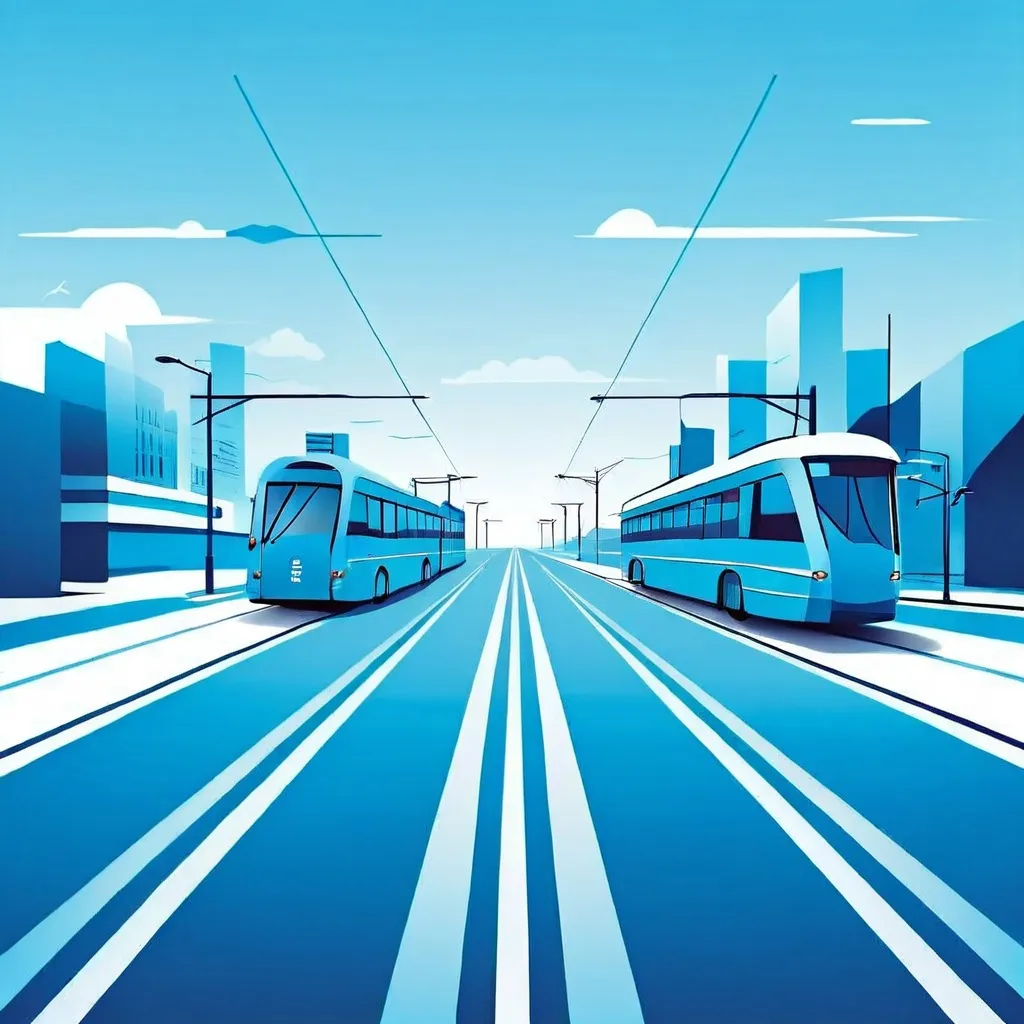
In the Netherlands, certain road users have absolute priority, and understanding these exceptions is critical for both your exam and your safety. Trams are a prime example; they always have priority, regardless of the direction of travel or any other road user. When a tram is approaching or is on a junction you are also approaching, you must yield to it, even if it means stopping completely. Trams are heavy, operate on fixed tracks, and cannot easily deviate, making their priority a non-negotiable rule.
Emergency vehicles, such as police cars, ambulances, and fire engines, that are using their sirens and flashing blue lights also have absolute priority. When you hear or see an emergency vehicle approaching, you must immediately make way for it. This usually means pulling over to the side of the road and stopping until the emergency vehicle has passed. Failure to yield to emergency vehicles is not only a serious traffic offense but also a critical safety lapse.
Dutch roads are a shared space, and understanding how to interact safely with cars, cyclists, and mopeds is a recurring theme in the CBR theory exam. Cyclists, in particular, have a prominent and often complex role in traffic. They generally use dedicated cycle paths, but at junctions, their right of way must be respected. When you are turning, you must yield to cyclists going straight ahead. Similarly, if a cyclist is turning right, they must yield to traffic going straight ahead, but be aware of the specific regulations regarding cyclists turning right at a red light if indicated by signage.
When approaching intersections, always scan for cyclists and mopeds, as they can appear from various directions. The "give way to the right" rule is paramount, but also be mindful of situations where cyclists might be filtering between lanes of slow-moving traffic. The CBR exam frequently tests your ability to anticipate their movements and react safely, ensuring no conflict arises between different road users.
The CBR theory exam is designed to assess your understanding of real-world driving situations. Merging, narrow lanes, and multi-user interactions are prime areas for tricky questions. Be aware of questions that might try to trick you into assuming priority when it doesn't exist, or vice versa. For instance, a question might present a scenario where you're on a priority road, but a cyclist is approaching from a side street on your right. In this case, the cyclist has priority due to the "give way to the right" rule, overriding the priority road status for that specific junction.
Another common trap involves questions about overtaking. While overtaking on the right is generally prohibited, there are exceptions, such as when traffic queues are being overtaken. In narrow sections, or when dealing with trams, the rules become even more specific. Pay close attention to the wording of the questions and consider all road users involved before selecting your answer.
Mastering these complex interactions is key to a successful CBR theory exam. By understanding the underlying principles, paying attention to signage, and anticipating the movements of all road users, you can navigate these challenging scenarios with confidence.
This article covers essential CBR exam topics on Dutch road interactions, focusing on the 'give way to the right' principle as the foundation of unmarked junction priority, alongside absolute priority rules for trams and emergency vehicles. It explains merging obligations and narrow lane navigation, emphasizing that traffic already in a confined space takes precedence. The multi-user section clarifies how cyclists and snorfietsers integrate with motor traffic at junctions. Common exam traps include misinterpreting priority road signs as overriding right-of-hand priority and failing to anticipate tram movements at intersections.
A short set of high-value points that capture the most important ideas from this article.
At unmarked junctions, traffic from the right always has priority, regardless of road importance
Trams have absolute priority over all other road users in every situation
When merging, you must find a safe gap and yield to vehicles already on the main road
Priority road signs (B1) can be overridden by 'give way to the right' at specific junctions
Narrow lane passages require yielding to vehicles already in the confined space
The 'give way to the right' rule applies unless priority signs (B1) or road markings indicate otherwise
Emergency vehicles with sirens and blue lights always have absolute priority
Snorfietsers follow cyclist rules but must use designated lanes and adhere to specific speed limits
When turning at an intersection, you must yield to cyclists going straight ahead
Zipper merging requires vehicles from both lanes to take turns at the merge point
Assuming priority road status overrides 'give way to the right' at unmarked junctions
Forgetting that cyclists approaching from the right have priority even on minor access roads
Neglecting to check for trams when approaching intersections with tram tracks
Not scanning for filtering cyclists between slow-moving traffic lanes before turning
Assuming all cyclists must yield when turning right without checking specific signage permissions
Article content overview
A short set of high-value points that capture the most important ideas from this article.
At unmarked junctions, traffic from the right always has priority, regardless of road importance
Trams have absolute priority over all other road users in every situation
When merging, you must find a safe gap and yield to vehicles already on the main road
Priority road signs (B1) can be overridden by 'give way to the right' at specific junctions
Narrow lane passages require yielding to vehicles already in the confined space
The 'give way to the right' rule applies unless priority signs (B1) or road markings indicate otherwise
Emergency vehicles with sirens and blue lights always have absolute priority
Snorfietsers follow cyclist rules but must use designated lanes and adhere to specific speed limits
When turning at an intersection, you must yield to cyclists going straight ahead
Zipper merging requires vehicles from both lanes to take turns at the merge point
Assuming priority road status overrides 'give way to the right' at unmarked junctions
Forgetting that cyclists approaching from the right have priority even on minor access roads
Neglecting to check for trams when approaching intersections with tram tracks
Not scanning for filtering cyclists between slow-moving traffic lanes before turning
Assuming all cyclists must yield when turning right without checking specific signage permissions
Explore related topics, search based questions, and concepts that learners often look up when studying NL Merging & Multi-User Scenarios. These themes reflect real search intent and help you understand how this topic connects to wider driving theory knowledge in the Netherlands.
Find clear and practical answers to common questions learners often have about NL Merging & Multi-User Scenarios. This section helps explain difficult points, remove confusion, and reinforce the key driving theory concepts that matter for learners in the Netherlands.
At unmarked intersections in the Netherlands, traffic approaching from your right generally has priority. This rule is fundamental for understanding many complex road scenarios tested by the CBR.
Yes, trams in the Netherlands always have priority over other road users, including cars and cyclists. You must yield to trams even if they are not approaching from your right.
When merging, you must adapt your speed to the traffic flow and yield to vehicles already in the lane you are entering. Dutch traffic often uses a zipper merge, where vehicles merge closer to the obstruction, but always prioritize safety and yielding to existing traffic.
Cyclists are common in the Netherlands and often use dedicated paths. In merging or narrow lane situations, pay extra attention to cyclists, as they may be present on the road edge or entering/exiting cycle paths. Always give them adequate space and yield if necessary.
The CBR exam uses realistic scenarios to test your decision-making in merging situations, narrow lanes, and when interacting with multiple road users. Correctly applying priority rules and anticipating others' actions is key to passing these sections.
Start your targeted search now to explore a vast library of official Dutch driving theory articles and guides. Reinforce your understanding of specific traffic rules or road signs to ensure you are fully prepared for your upcoming CBR theory exam. Discover comprehensive explanations tailored for success.