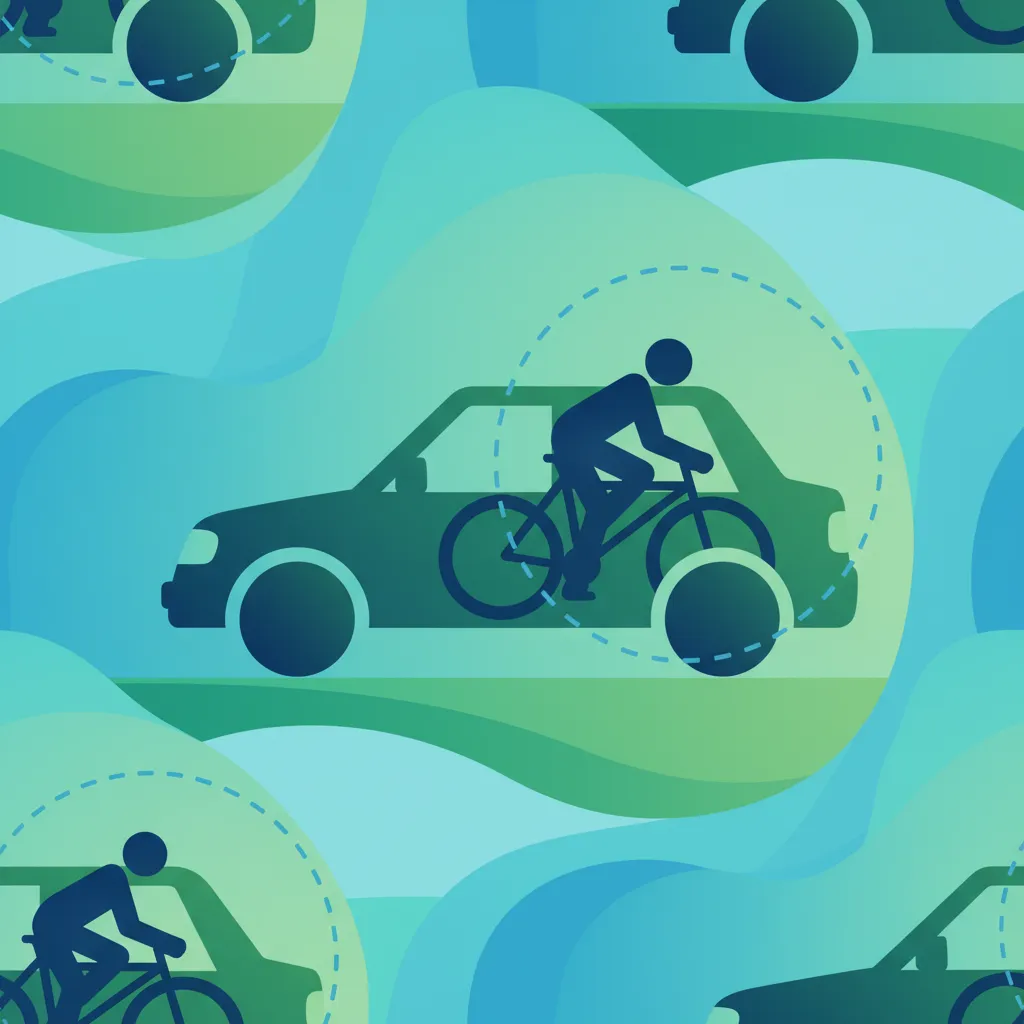
Blind spots are areas around your vehicle that your mirrors and direct forward vision cannot cover, making other road users temporarily invisible. In the Netherlands, where cyclists are prevalent, mastering blind spot checks (dode hoek controle) is essential for safe driving and passing the CBR theory exam. This page explains what blind spots are, their dangers, and how to effectively check them.
Theory topic content overview
Read the full theory topic guide for Blind Spots & Dode Hoek with structured, easy-to-scan content built for learners in the Netherlands. This detailed section explains the exact rule, meaning, traffic context, comparison points, and exam logic behind this Dutch driving theory topic so you can study faster, understand the concept more clearly, and avoid common interpretation mistakes on the theory test.
A blind spot, or in Dutch, a dode hoek, refers to areas around your vehicle that are obscured from your direct view and cannot be seen through any of your mirrors. These unseen zones are created by the physical structure of your car – such as the roof pillars, the design of the vehicle's body, and the angle of your mirrors. Understanding and actively managing these areas is fundamental to safe driving in the Netherlands and a critical component of the CBR driving theory exam.
A blind spot is essentially a "hidden zone" in your vehicle's immediate vicinity. Despite having correctly adjusted interior and exterior mirrors, parts of the road, and critically, other road users, will simply not be visible. This is a universal phenomenon in driving, but its implications are particularly pronounced in dense traffic environments like those found across the Netherlands.
Mirrors provide a wide, but not complete, field of vision. The internal rearview mirror shows what's directly behind, while side mirrors cover areas alongside and slightly behind the vehicle. However, the space directly to the side and diagonally behind your vehicle often remains hidden. This is your primary blind spot or dode hoek.
Ignoring or mismanaging blind spots is a leading cause of collisions, especially during maneuvers like changing lanes, merging, or turning. For learners preparing for the CBR theory exam and practical driving test, understanding the dode hoek is not just about passing; it's about developing a safe driving mindset that prioritizes comprehensive observation.
In the Netherlands, the emphasis on blind spot checks is even greater due to the high number of cyclists (fietsers) and moped riders (bromfietsers). These vulnerable road users are smaller and can easily 'disappear' into a driver's blind spot, especially when a car is preparing to turn or change lanes. The CBR exam frequently tests your knowledge of observation techniques, with a strong focus on recognizing and mitigating blind spot risks, particularly in urban environments with active cycling infrastructure.
Since mirrors cannot eliminate blind spots, drivers must perform an active shoulder check (often called 'dode hoek controle' or 'schoudercheck' in Dutch) before any lateral movement. This is a quick, decisive glance over your shoulder in the direction you intend to move.
Here's how to perform an effective shoulder check:
The shoulder check must be a fluid, integrated part of your observation routine. It should be quick enough not to distract you from the road ahead for too long, but thorough enough to confirm safety.
Performing a dode hoek controle is critical in various situations:
While all vehicles have blind spots, larger vehicles like lorries (vrachtwagens), buses, and vans have significantly larger and more numerous blind spots. These "no-zones" can extend directly in front, alongside, and behind the vehicle, making it extremely difficult for the driver to see smaller road users.
A crucial rule of thumb in Dutch traffic is: If you can't see the lorry driver in their mirrors, assume they can't see you. Always give large vehicles ample space, especially when they are turning, as their rear wheels follow a different path than their front wheels (swept path). Never attempt to overtake a large vehicle that is indicating a turn, particularly a right turn.
Many modern cars are equipped with Blind Spot Warning (BSW) systems, which use sensors to detect vehicles in your blind spots and alert you with visual or auditory warnings. While these systems can be helpful aids, especially on multi-lane roads, it is crucial for drivers to understand their limitations:
Relying solely on technology for blind spot detection is a common mistake and can be dangerous, particularly in the dynamic and cyclist-rich Dutch traffic environment.
Learners and even experienced drivers often make mistakes when it comes to blind spots:
The dode hoek is an inherent challenge of driving, but it's a solvable one with consistent, active observation. For your CBR theory exam and for lifelong safe driving in the Netherlands, remember: Mirrors give you most of the picture, but the shoulder check completes it. Always assume something could be in your blind spot, especially a cyclist, and actively confirm the area is clear before any lateral movement. This habit will significantly reduce your risk of collisions and contribute to safer Dutch roads.
Blind spots (dode hoek) are hidden zones around your vehicle that mirrors cannot cover, making other road users invisible during maneuvers. In Dutch traffic, cyclists and moped riders are particularly at risk because they are small and can easily be concealed in blind spots. The shoulder check is the essential technique to supplement mirrors and must be performed before changing lanes, turning, merging, or overtaking. Larger vehicles like lorries have much larger blind spots, and their rear wheels follow a different path than their front wheels during turns. While modern ADAS systems can assist with blind spot detection, they do not replace the driver's responsibility for active observation and manual checks required by the CBR exam.
A short set of high-value points that capture the most important ideas from this theory explanation.
Blind spots (dode hoek) are areas around your vehicle that mirrors and direct view cannot cover, created by the vehicle's structural design
Shoulder checks (schoudercheck) are mandatory and must always supplement mirror observations before any lateral movement
Cyclists and moped riders are especially vulnerable in Dutch traffic as they can easily disappear into blind spots
Larger vehicles like lorries have significantly larger blind spots, and if you cannot see the driver in their mirrors, they cannot see you
ADAS blind spot warning systems assist but never replace the driver's responsibility to perform manual shoulder checks
A blind spot check must be performed just before executing a maneuver, not too early or too late
The shoulder check requires actually turning your head, not just a flick of the eyes
Blind spots exist on both sides of the vehicle and diagonally behind, even with perfectly adjusted mirrors
Lorry rear wheels follow a different path than front wheels during turns, creating additional danger
Cyclists (fietsers) are smaller and harder to detect than other vehicles in blind spots
Over-relying on mirrors alone, assuming properly adjusted mirrors show everything around the vehicle
Performing an insufficient shoulder check where the head is not turned enough to see into the blind spot
Forgetting to check blind spots during minor maneuvers like adjusting lane position slightly
Relying solely on ADAS blind spot warning systems instead of performing manual observation
Failing to anticipate that you might be in another driver's blind spot, especially near large vehicles
Start with a short, direct summary of Blind Spots & Dode Hoek before reading the full explanation below.
A blind spot, or "dode hoek" in Dutch, is an area around your vehicle that is not visible through your mirrors or direct forward view due to the car's structure. These hidden zones pose a significant risk, especially when changing lanes or turning, as other road users like cyclists or motorcyclists can be completely concealed. To counter this, drivers must perform a quick shoulder check to visually confirm the area is clear before making a maneuver, a crucial skill for safe driving in Dutch traffic.
Review the most important terms, rule signals, and traffic concepts linked to Blind Spots & Dode Hoek.
Explore related theory topic pages connected to Blind Spots & Dode Hoek and continue with the next useful rule explanation.
See the common search queries learners use when trying to understand Blind Spots & Dode Hoek in the Netherlands.

Ready to deepen your understanding? Browse our comprehensive library of Dutch driving theory topics, rules, and concepts. Each section offers detailed explanations to help you solidify your knowledge and prepare thoroughly for your upcoming CBR driving theory examination.
Explore Driving Theory TopicsTheory topic content overview
A short set of high-value points that capture the most important ideas from this theory explanation.
Blind spots (dode hoek) are areas around your vehicle that mirrors and direct view cannot cover, created by the vehicle's structural design
Shoulder checks (schoudercheck) are mandatory and must always supplement mirror observations before any lateral movement
Cyclists and moped riders are especially vulnerable in Dutch traffic as they can easily disappear into blind spots
Larger vehicles like lorries have significantly larger blind spots, and if you cannot see the driver in their mirrors, they cannot see you
ADAS blind spot warning systems assist but never replace the driver's responsibility to perform manual shoulder checks
A blind spot check must be performed just before executing a maneuver, not too early or too late
The shoulder check requires actually turning your head, not just a flick of the eyes
Blind spots exist on both sides of the vehicle and diagonally behind, even with perfectly adjusted mirrors
Lorry rear wheels follow a different path than front wheels during turns, creating additional danger
Cyclists (fietsers) are smaller and harder to detect than other vehicles in blind spots
Over-relying on mirrors alone, assuming properly adjusted mirrors show everything around the vehicle
Performing an insufficient shoulder check where the head is not turned enough to see into the blind spot
Forgetting to check blind spots during minor maneuvers like adjusting lane position slightly
Relying solely on ADAS blind spot warning systems instead of performing manual observation
Failing to anticipate that you might be in another driver's blind spot, especially near large vehicles
Start with a short, direct summary of Blind Spots & Dode Hoek before reading the full explanation below.
A blind spot, or "dode hoek" in Dutch, is an area around your vehicle that is not visible through your mirrors or direct forward view due to the car's structure. These hidden zones pose a significant risk, especially when changing lanes or turning, as other road users like cyclists or motorcyclists can be completely concealed. To counter this, drivers must perform a quick shoulder check to visually confirm the area is clear before making a maneuver, a crucial skill for safe driving in Dutch traffic.
Review the most important terms, rule signals, and traffic concepts linked to Blind Spots & Dode Hoek.
Explore related theory topic pages connected to Blind Spots & Dode Hoek and continue with the next useful rule explanation.
See the common search queries learners use when trying to understand Blind Spots & Dode Hoek in the Netherlands.
Ready to deepen your understanding? Browse our comprehensive library of Dutch driving theory topics, rules, and concepts. Each section offers detailed explanations to help you solidify your knowledge and prepare thoroughly for your upcoming CBR driving theory examination.
Explore Driving Theory TopicsUse this exam-focused revision tip to understand how Blind Spots & Dode Hoek is likely to appear in theory questions for learners in the Netherlands. This section helps you identify the most testable part of the rule, avoid common traps, and remember the concept more effectively during Dutch driving theory exam preparation.
The CBR theory exam frequently includes questions on blind spots. Remember that mirrors alone are insufficient; a quick, decisive shoulder check is always required before changing direction or lane. Pay special attention to situations involving cyclists, as they are often obscured in blind spots.
Read direct answers to the most common learner questions about Blind Spots & Dode Hoek in the Netherlands. This FAQ focuses on rule confusion, practical meaning, comparison with similar concepts, and the exact uncertainties that appear most often in Dutch driving theory revision and exam preparation.
A blind spot is an area around your vehicle that is not visible when looking forward or using your mirrors. It's an area where other vehicles, cyclists, or pedestrians can be hidden from your view.
"Dode hoek" literally translates to "dead corner" in Dutch, referring to the "dead" or invisible zone around a vehicle that mirrors cannot cover. It's the official term used in Dutch driving theory.
You should always check your blind spot before changing lanes, turning, merging onto a road, or making any significant sideways movement with your vehicle. It's a mandatory observation step for safe driving.
To properly check your blind spot, perform a quick glance over your shoulder in the direction you intend to move. This "shoulder check" allows you to visually confirm if anyone is in the area not covered by your mirrors.
Yes, larger vehicles like lorries, buses, and vans have significantly larger and more numerous blind spots than passenger cars. This means other road users need to be extra cautious and stay out of these areas.
No, while blind spot warning systems are helpful, they are not infallible and can sometimes miss smaller vehicles or malfunction. It is always important to manually perform a shoulder check to ensure safety, as required for the CBR exam.
Cyclists are smaller and often travel closer to vehicles, making them highly susceptible to being hidden in a driver's blind spot. Given the high number of cyclists in the Netherlands, diligent blind spot checks are crucial to prevent collisions.
Leverage the targeted practice search to find questions that challenge your understanding of specific Dutch traffic rules or road signs. Focus your study efforts on areas where you need improvement and build a solid foundation for passing your CBR driving theory exam with confidence.