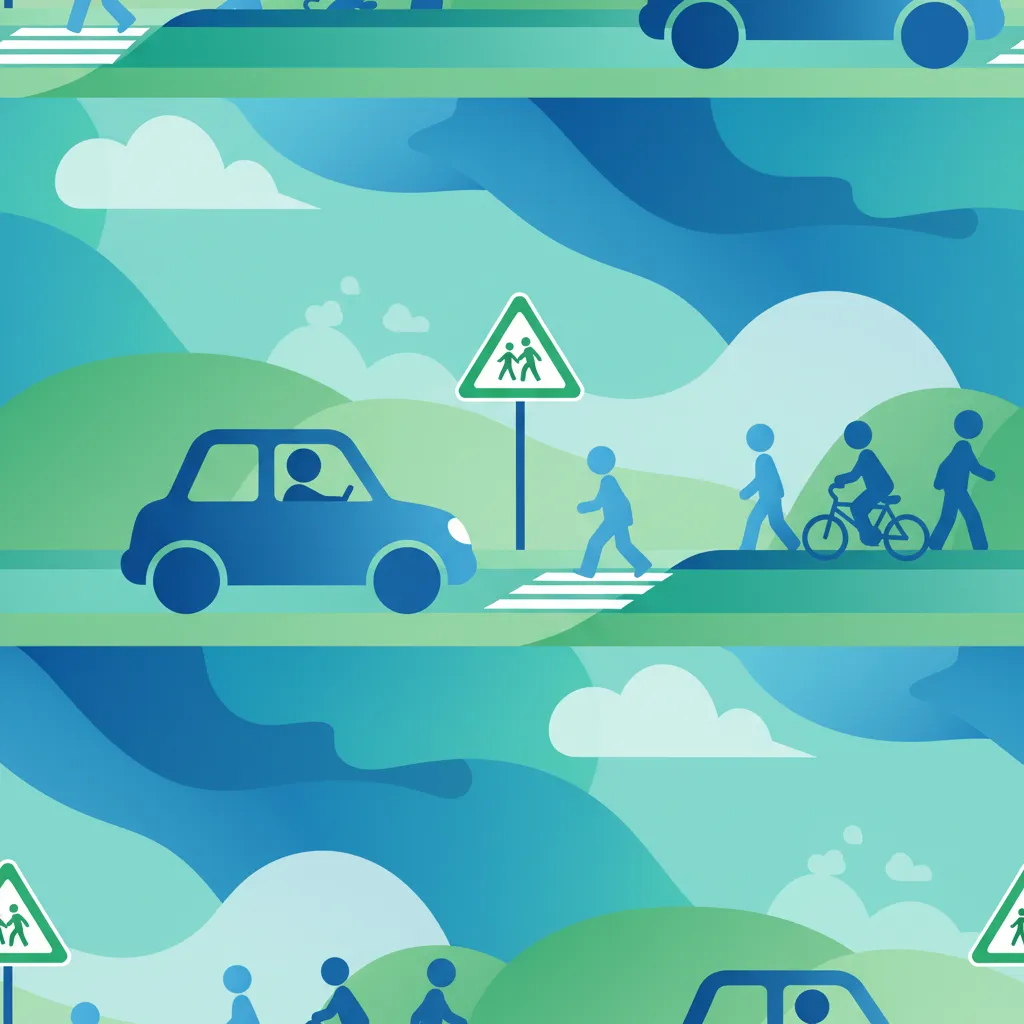
Driving through school zones in the Netherlands demands extreme caution due to the unpredictable behavior of children. These areas, often marked with specific signs, require drivers to significantly reduce their speed and maintain constant vigilance. Understanding these unique hazards is vital for both passing your CBR theory exam and ensuring safety on the roads.
Theory topic content overview
Read the full theory topic guide for Dutch School Zones with structured, easy-to-scan content built for learners in the Netherlands. This detailed section explains the exact rule, meaning, traffic context, comparison points, and exam logic behind this Dutch driving theory topic so you can study faster, understand the concept more clearly, and avoid common interpretation mistakes on the theory test.
School zones are designated areas in the Netherlands surrounding educational institutions, playgrounds, or anywhere children frequently gather and move around in traffic. These zones are critical because they represent environments where vulnerable road users – specifically children – are highly present. Drivers are legally and morally obligated to exercise extreme caution in these areas, adapting their driving style to the unique and often unpredictable behaviour of young people.
Driving safely in school zones is not just a recommendation; it's a fundamental aspect of responsible driving in the Netherlands, directly relevant to both road safety and your CBR theory exam.
Navigating school zones in the Netherlands requires a specific, heightened approach to driving.
Zone 30 signs, or sometimes erf or woonerf signs which also impose a walking pace limit for vehicles). Always drive slowly enough to be able to stop immediately.verkeersregelaar (traffic controller) or a "lollipop lady/man" near Dutch schools. Their instructions always take precedence over traffic signs and signals. Stop immediately if they indicate.Several factors amplify the need for caution in school zones:
A common misconception is that adhering to the posted speed limit is always sufficient. In Dutch school zones, the legal speed limit (e.g., 30 km/h) is the maximum allowed, but the safe speed might be much lower, perhaps even a walking pace, depending on the immediate circumstances. Always choose the speed that allows you to stop safely for any unexpected movement from a child.
In the Netherlands, the official warning sign for children is the J-21 sign: a triangular warning sign with a red border and a black silhouette of two children (one holding a ball) on a white background. This sign indicates that children may be present on or near the road and signals the need for increased caution. These signs are often placed near schools, playgrounds, or residential areas where children are common.
Woonerf or 30 km/h Zone with Children: You enter a residential area marked as a woonerf (living yard) or a 30 km/h zone near a primary school. Children are playing on the pavement. You must drive at a speed that allows you to interact safely with pedestrians, giving them priority, and being ready to stop if any child approaches the carriageway.Learners often underestimate the unique challenges of school zones:
When you see a J-21 sign, notice a school building, or observe children near the road in the Netherlands, your primary duty as a driver is anticipation and adaptation. Lower your speed, increase your observation field, and prepare your braking readiness. Children are the most vulnerable road users, and their safety depends on your vigilance and responsible driving. Always prioritise their well-being by driving as if a child might appear at any moment.
School zones in the Netherlands require drivers to exercise extreme caution due to children's unpredictable behavior and limited traffic awareness. Key precautions include reducing speed below the legal limit when necessary, actively scanning for children between parked cars and around buses, and maintaining readiness to brake instantly. The J-21 sign marks areas where children are likely present, and instructions from traffic controllers at schools always take priority. Understanding these vulnerabilities is essential for both safe driving and passing the CBR theory exam.
A short set of high-value points that capture the most important ideas from this theory explanation.
Children have limited awareness of traffic dangers and may behave unpredictably - always expect sudden, unexpected movements near schools
The J-21 warning sign (triangular with red border and child silhouettes) indicates areas where children are likely present
Your safe speed in a school zone is often lower than the posted legal limit - always drive slowly enough to stop immediately if a child appears
Actively scan between parked cars, around buses, and behind objects where children may suddenly emerge
Always follow instructions from verkeersregelaars (traffic controllers) at schools - their directions take priority over traffic signs
In the Netherlands, the J-21 sign specifically warns of children on or near the road
Woonerf and Zone 30 areas near schools require speeds suitable for pedestrians - potentially walking pace
Critical times are early morning drop-off and afternoon pick-up when children are most concentrated
Look carefully between and underneath parked vehicles for children's feet or bikes before proceeding
School bus stop areas require extra caution as children may rush across the road without looking
Believing the posted speed limit (e.g., 30 km/h) is always safe - congestion and unexpected child movements often demand slower speeds
Only scanning directly ahead instead of actively checking pavements, between parked cars, and near playgrounds
Assuming children will behave like adults and follow traffic rules - their perception and judgment are still developing
Braking too late - waiting until a child is already in the road rather than preparing to stop as a precaution
Allowing any distraction in school zones reduces the critical split-second reaction time needed for safety
Start with a short, direct summary of Dutch School Zones before reading the full explanation below.
School zones are areas near educational facilities or playgrounds where children frequently walk, cycle, or cross roads. Due to children's limited perception of danger and unpredictable movements, drivers must exercise extra caution by reducing speed, increasing observation, and being prepared to stop immediately. This proactive approach is fundamental for preventing accidents involving vulnerable road users in the Netherlands.
Review the most important terms, rule signals, and traffic concepts linked to Dutch School Zones.
Explore related theory topic pages connected to Dutch School Zones and continue with the next useful rule explanation.
See the common search queries learners use when trying to understand Dutch School Zones in the Netherlands.

Ready to deepen your understanding? Browse our comprehensive library of Dutch driving theory topics, rules, and concepts. Each section offers detailed explanations to help you solidify your knowledge and prepare thoroughly for your upcoming CBR driving theory examination.
Explore Driving Theory TopicsTheory topic content overview
A short set of high-value points that capture the most important ideas from this theory explanation.
Children have limited awareness of traffic dangers and may behave unpredictably - always expect sudden, unexpected movements near schools
The J-21 warning sign (triangular with red border and child silhouettes) indicates areas where children are likely present
Your safe speed in a school zone is often lower than the posted legal limit - always drive slowly enough to stop immediately if a child appears
Actively scan between parked cars, around buses, and behind objects where children may suddenly emerge
Always follow instructions from verkeersregelaars (traffic controllers) at schools - their directions take priority over traffic signs
In the Netherlands, the J-21 sign specifically warns of children on or near the road
Woonerf and Zone 30 areas near schools require speeds suitable for pedestrians - potentially walking pace
Critical times are early morning drop-off and afternoon pick-up when children are most concentrated
Look carefully between and underneath parked vehicles for children's feet or bikes before proceeding
School bus stop areas require extra caution as children may rush across the road without looking
Believing the posted speed limit (e.g., 30 km/h) is always safe - congestion and unexpected child movements often demand slower speeds
Only scanning directly ahead instead of actively checking pavements, between parked cars, and near playgrounds
Assuming children will behave like adults and follow traffic rules - their perception and judgment are still developing
Braking too late - waiting until a child is already in the road rather than preparing to stop as a precaution
Allowing any distraction in school zones reduces the critical split-second reaction time needed for safety
Start with a short, direct summary of Dutch School Zones before reading the full explanation below.
School zones are areas near educational facilities or playgrounds where children frequently walk, cycle, or cross roads. Due to children's limited perception of danger and unpredictable movements, drivers must exercise extra caution by reducing speed, increasing observation, and being prepared to stop immediately. This proactive approach is fundamental for preventing accidents involving vulnerable road users in the Netherlands.
Review the most important terms, rule signals, and traffic concepts linked to Dutch School Zones.
Explore related theory topic pages connected to Dutch School Zones and continue with the next useful rule explanation.
See the common search queries learners use when trying to understand Dutch School Zones in the Netherlands.
Ready to deepen your understanding? Browse our comprehensive library of Dutch driving theory topics, rules, and concepts. Each section offers detailed explanations to help you solidify your knowledge and prepare thoroughly for your upcoming CBR driving theory examination.
Explore Driving Theory TopicsUse this exam-focused revision tip to understand how Dutch School Zones is likely to appear in theory questions for learners in the Netherlands. This section helps you identify the most testable part of the rule, avoid common traps, and remember the concept more effectively during Dutch driving theory exam preparation.
In the CBR exam, questions about school zones often test your ability to anticipate unpredictable child behavior and react safely. Remember that children may not look before crossing, or they might play near the road. Always choose the option that involves the greatest caution, such as reducing speed significantly and being ready to brake.
Read direct answers to the most common learner questions about Dutch School Zones in the Netherlands. This FAQ focuses on rule confusion, practical meaning, comparison with similar concepts, and the exact uncertainties that appear most often in Dutch driving theory revision and exam preparation.
A school zone is typically an area near a school or playground where many children are present, often indicated by specific warning signs (like J21) and sometimes special speed limits, such as 30 km/h zones.
Children are considered vulnerable because they have less developed spatial awareness, often act impulsively, and may not fully understand traffic risks. They might run into the road unexpectedly or emerge from behind parked cars.
While specific speed limits vary by signage, drivers should always maintain a significantly reduced speed in school zones, often 30 km/h, and be prepared to stop. Prioritizing safety over speed is key.
Be alert for children on pavements, between parked cars, and near crossings. Watch for school buses, crossing guards, and groups of children walking or cycling. Expect the unexpected.
Yes, warning sign J21 (a triangle with a child) indicates the presence of children. This sign, along with speed limit signs (e.g., 30 km/h), helps identify school zones.
While both require caution, school zones have a higher concentration of children and thus a greater likelihood of unpredictable behavior. Drivers must increase their vigilance even further than in typical residential areas.
The CBR exam emphasizes recognizing school zones, understanding the unique risks children pose, and demonstrating the appropriate defensive driving behaviors, primarily reduced speed and heightened observation.
Leverage the targeted practice search to find questions that challenge your understanding of specific Dutch traffic rules or road signs. Focus your study efforts on areas where you need improvement and build a solid foundation for passing your CBR driving theory exam with confidence.