
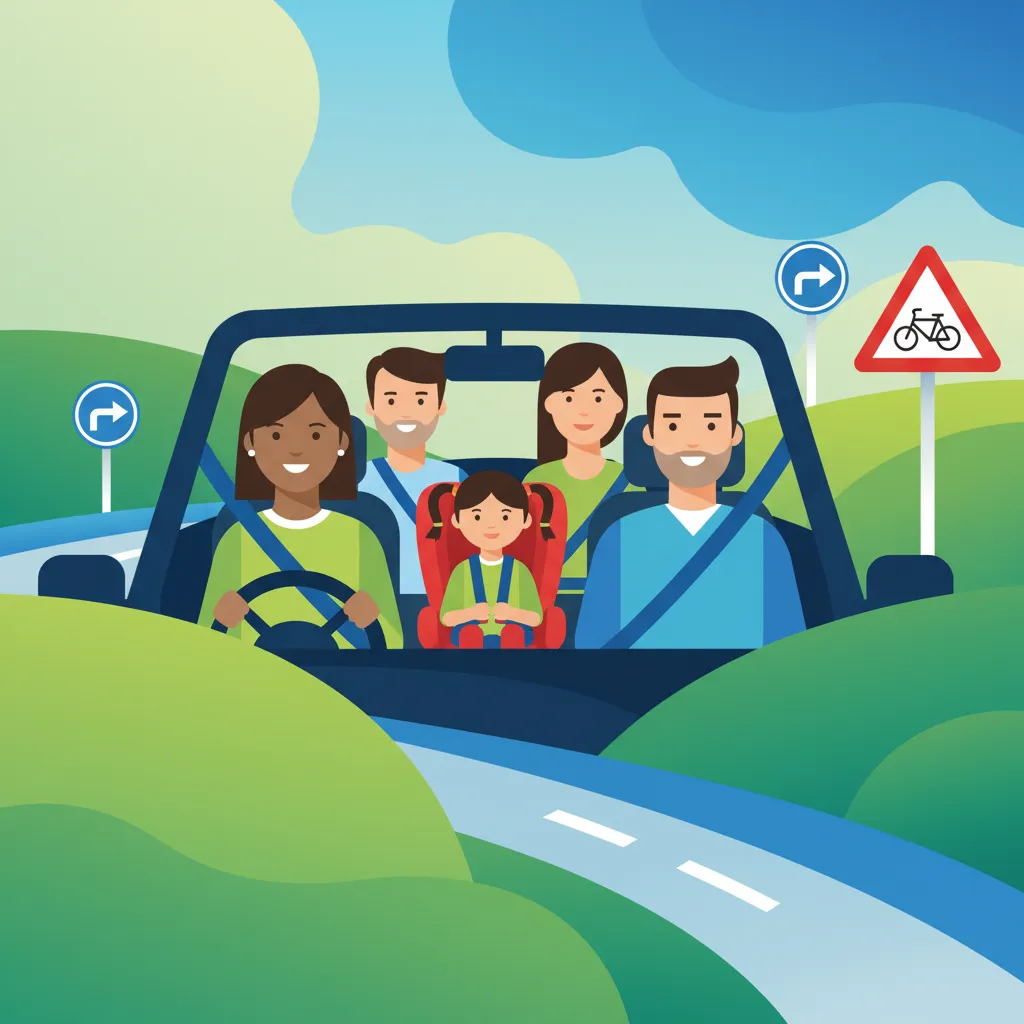
Seat belts are the most effective safety device in a vehicle, designed to protect all occupants during sudden stops or collisions. In the Netherlands, wearing a seat belt is mandatory for virtually all drivers and passengers. This page explains these crucial rules, why they are so important, and how to ensure you and your passengers are always secured correctly according to CBR standards.
Theory topic content overview
Read the full theory topic guide for Dutch Seat Belt Rules with structured, easy-to-scan content built for learners in the Netherlands. This detailed section explains the exact rule, meaning, traffic context, comparison points, and exam logic behind this Dutch driving theory topic so you can study faster, understand the concept more clearly, and avoid common interpretation mistakes on the theory test.
A seat belt is a vital safety device designed to protect vehicle occupants during sudden deceleration, such as emergency braking or a collision. Its primary function is to restrain your body, preventing it from being thrown forward, sideways, or even ejected from the vehicle due to inertia.
In any traffic incident, the forces involved can be immense. Without a seat belt, your body continues to move at the vehicle's speed until it collides with the steering wheel, dashboard, windshield, or other interior parts, leading to severe or fatal injuries. Seat belts counteract these forces by holding you securely in place, distributing the impact across stronger parts of your body like the chest and pelvis.
In the Netherlands, wearing a seat belt is mandatory for all drivers and passengers in most types of enclosed motor vehicles. This is a non-negotiable legal requirement under Dutch traffic law (Wegenverkeerswet). It applies to:
Furthermore, it is strictly forbidden to transport more passengers than there are available and functioning seat belts in the vehicle. All modern passenger cars sold in the Netherlands must be fitted with seat belts on all seats. This commitment to universal seat belt use reflects its proven life-saving effectiveness.
During a collision, a seat belt works by:
Even at speeds as low as 30 km/h, the forces in a collision can be fatal for unbelted occupants. The Dutch legal obligation for seat belts is a direct result of decades of evidence showing their critical role in reducing road accident casualties.
Simply wearing a seat belt is not enough; it must be worn correctly to be effective. The CBR (Centraal Bureau Rijvaardigheidsbewijzen) theory exam often tests knowledge of proper seat belt use.
Here are the key points for correct seat belt wearing in the Netherlands:
The Netherlands has specific regulations and practical advice regarding seat belt use for different groups:
For children, specific rules apply to ensure their safety:
Seat belt use is mandatory for pregnant women in the Netherlands. It significantly reduces the risk to both the mother and the unborn baby. The key is to wear the belt correctly:
A frequent misconception among Dutch learners is the idea that it might be safer to unbuckle your seat belt when driving close to water, allowing for a quicker escape if the vehicle enters the water. This is incorrect and extremely dangerous.
Beyond personal use, seat belts on your vehicle must also meet certain requirements in the Netherlands:
Learners often make these mistakes regarding Dutch seat belt rules:
The CBR driving theory exam in the Netherlands places high importance on understanding mandatory seat belt use, the reasons behind it, and specific rules for passengers, children, and pregnant women. Questions will test your knowledge on responsibility, correct wearing, and the critical safety benefits.
Seat belts are your first line of defence in a vehicle. For your own safety and the safety of all your passengers, always ensure:
These simple habits are legally required and profoundly impact road safety in the Netherlands, significantly reducing the severity of injuries and saving lives daily.
In the Netherlands, seat belt use is a non-negotiable legal requirement for virtually all vehicle occupants, including specific rules for children and pregnant women. The three-point belt must be positioned correctly with the hip belt low across the pelvis and the shoulder belt diagonally across the chest; wearing thick clothing or placing straps incorrectly significantly reduces effectiveness. Drivers are legally responsible for securing children under 12, while children 12 and older are self-responsible. A common misconception addressed in CBR exams is that unbuckling near water is safer—seat belts must always be worn as they protect during the initial impact, which is critical for remaining conscious and able to escape.
A short set of high-value points that capture the most important ideas from this theory explanation.
Seat belts are mandatory for all drivers and passengers in passenger cars, company cars, and enclosed three-wheeled motor vehicles in the Netherlands under the Wegenverkeerswet.
Seat belts work by restraining movement, distributing impact forces across stronger body areas, preventing ejection, and complementing airbags for maximum protection.
The hip belt must sit low across the pelvis (not the stomach) while the shoulder belt runs diagonally across the chest between neck and armpit.
Children under 18 and shorter than 1.35m require an approved child restraint system; drivers are legally responsible for children under 12.
Seat belts must always be worn, even near water—unbelted occupants are more likely to be seriously injured and unable to escape.
The shoulder belt must never be placed behind the back or under the armpit as this concentrates force on vulnerable areas.
Children aged 12 and older are self-responsible for their seat belt use, similar to adult passengers.
Thick winter coats reduce belt effectiveness by creating slack that prevents proper tightening during impact.
For pregnant women, position the hip belt low under the abdomen and the shoulder belt above the abdomen between the breasts.
Damaged seat belts, malfunctioning locking mechanisms, or illuminated seat belt/airbag warning lights require immediate attention.
Assuming short journeys are low risk—most collisions occur close to home and can cause severe injuries at any speed.
Placing the shoulder belt under the arm or behind the back, which drastically reduces protection and can cause internal injuries.
Forgetting that drivers bear legal responsibility for children under 12 being properly secured.
Believing it is safer to unbuckle near water for a quicker escape—this is incorrect and extremely dangerous.
Underestimating how bulky winter clothing affects seat belt performance and tightening capability.
Start with a short, direct summary of Dutch Seat Belt Rules before reading the full explanation below.
In the Netherlands, wearing a seat belt is mandatory for all drivers and passengers in passenger cars, company cars, and certain three-wheeled motor vehicles. Seat belts significantly reduce the risk of serious injury or fatality by restraining occupants and distributing impact forces during a crash. It is essential to wear the seat belt correctly, with the hip belt low over the hips and the shoulder belt across the chest, for maximum effectiveness and legal compliance.
Review the most important terms, rule signals, and traffic concepts linked to Dutch Seat Belt Rules.
Explore related theory topic pages connected to Dutch Seat Belt Rules and continue with the next useful rule explanation.
See the common search queries learners use when trying to understand Dutch Seat Belt Rules in the Netherlands.

Ready to deepen your understanding? Browse our comprehensive library of Dutch driving theory topics, rules, and concepts. Each section offers detailed explanations to help you solidify your knowledge and prepare thoroughly for your upcoming CBR driving theory examination.
Explore Driving Theory TopicsTheory topic content overview
A short set of high-value points that capture the most important ideas from this theory explanation.
Seat belts are mandatory for all drivers and passengers in passenger cars, company cars, and enclosed three-wheeled motor vehicles in the Netherlands under the Wegenverkeerswet.
Seat belts work by restraining movement, distributing impact forces across stronger body areas, preventing ejection, and complementing airbags for maximum protection.
The hip belt must sit low across the pelvis (not the stomach) while the shoulder belt runs diagonally across the chest between neck and armpit.
Children under 18 and shorter than 1.35m require an approved child restraint system; drivers are legally responsible for children under 12.
Seat belts must always be worn, even near water—unbelted occupants are more likely to be seriously injured and unable to escape.
The shoulder belt must never be placed behind the back or under the armpit as this concentrates force on vulnerable areas.
Children aged 12 and older are self-responsible for their seat belt use, similar to adult passengers.
Thick winter coats reduce belt effectiveness by creating slack that prevents proper tightening during impact.
For pregnant women, position the hip belt low under the abdomen and the shoulder belt above the abdomen between the breasts.
Damaged seat belts, malfunctioning locking mechanisms, or illuminated seat belt/airbag warning lights require immediate attention.
Assuming short journeys are low risk—most collisions occur close to home and can cause severe injuries at any speed.
Placing the shoulder belt under the arm or behind the back, which drastically reduces protection and can cause internal injuries.
Forgetting that drivers bear legal responsibility for children under 12 being properly secured.
Believing it is safer to unbuckle near water for a quicker escape—this is incorrect and extremely dangerous.
Underestimating how bulky winter clothing affects seat belt performance and tightening capability.
Start with a short, direct summary of Dutch Seat Belt Rules before reading the full explanation below.
In the Netherlands, wearing a seat belt is mandatory for all drivers and passengers in passenger cars, company cars, and certain three-wheeled motor vehicles. Seat belts significantly reduce the risk of serious injury or fatality by restraining occupants and distributing impact forces during a crash. It is essential to wear the seat belt correctly, with the hip belt low over the hips and the shoulder belt across the chest, for maximum effectiveness and legal compliance.
Review the most important terms, rule signals, and traffic concepts linked to Dutch Seat Belt Rules.
Explore related theory topic pages connected to Dutch Seat Belt Rules and continue with the next useful rule explanation.
See the common search queries learners use when trying to understand Dutch Seat Belt Rules in the Netherlands.
Ready to deepen your understanding? Browse our comprehensive library of Dutch driving theory topics, rules, and concepts. Each section offers detailed explanations to help you solidify your knowledge and prepare thoroughly for your upcoming CBR driving theory examination.
Explore Driving Theory TopicsUse this exam-focused revision tip to understand how Dutch Seat Belt Rules is likely to appear in theory questions for learners in the Netherlands. This section helps you identify the most testable part of the rule, avoid common traps, and remember the concept more effectively during Dutch driving theory exam preparation.
In the CBR theory exam, pay close attention to questions about mandatory seat belt use and responsibility for passengers, especially children. Remember that seat belts are always mandatory, even for short distances or when driving near water. Also, know that wearing a thick winter coat can reduce the belt's effectiveness.
Read direct answers to the most common learner questions about Dutch Seat Belt Rules in the Netherlands. This FAQ focuses on rule confusion, practical meaning, comparison with similar concepts, and the exact uncertainties that appear most often in Dutch driving theory revision and exam preparation.
All drivers and passengers in passenger cars, company cars, three-wheeled motor vehicles with closed bodywork, and brommobielen must wear a seat belt. This applies to all available seats in the vehicle.
For children under 12 years of age, the driver is responsible for ensuring they are properly secured with a seat belt or an appropriate child restraint system. Children aged 12 and older are personally responsible for their seat belt use.
A seat belt should be worn as intended: the hip belt tight and low across the hips (under the abdomen for pregnant women), and the shoulder part diagonally across the chest and shoulder, not under the armpit or behind the back. It should be snug, without excessive slack, and thick clothing should be avoided if it prevents a proper fit.
Yes, seat belts are compulsory for pregnant women. It is crucial to wear the hip belt well under the abdomen and the shoulder part well above the abdomen to protect both the mother and the unborn child during a collision.
If you are not wearing a seat belt, an airbag can cause additional and severe injuries during a collision, as your body is not properly restrained and can collide with the rapidly deploying airbag with full force.
No, it is always mandatory to wear a seat belt when driving, even near water. While some believe it's safer to remove the belt to escape a submerged vehicle, the primary danger is being seriously injured or unconscious upon impact, making escape impossible.
Leverage the targeted practice search to find questions that challenge your understanding of specific Dutch traffic rules or road signs. Focus your study efforts on areas where you need improvement and build a solid foundation for passing your CBR driving theory exam with confidence.