
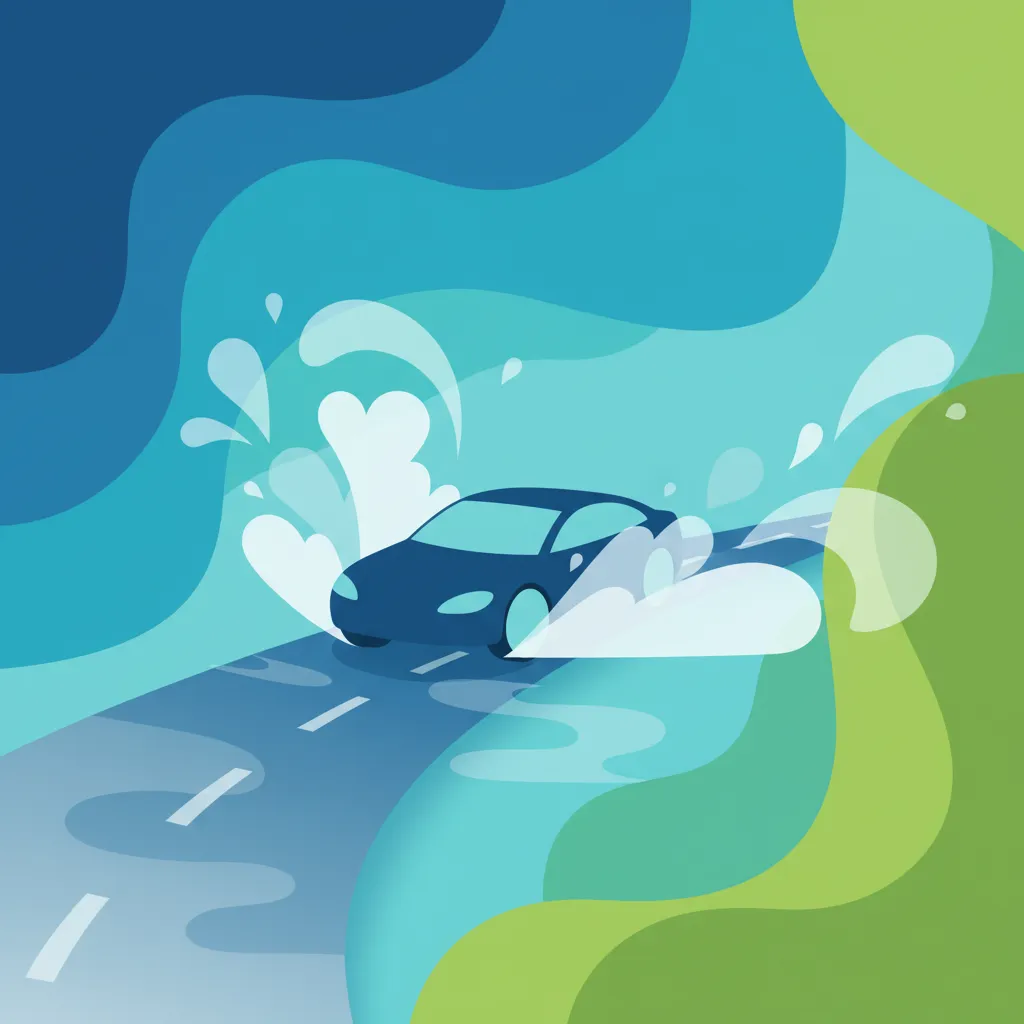
When road surfaces are wet due to rain, the friction between your tires and the road is drastically reduced. This loss of grip directly impacts your vehicle's ability to brake effectively, leading to significantly longer stopping distances. Beyond extended braking, wet roads introduce hazards like skidding and the dangerous phenomenon of aquaplaning, both of which demand specific driving adaptations from Dutch drivers.
Theory topic content overview
Read the full theory topic guide for Wet Road Braking with structured, easy-to-scan content built for learners in the Netherlands. This detailed section explains the exact rule, meaning, traffic context, comparison points, and exam logic behind this Dutch driving theory topic so you can study faster, understand the concept more clearly, and avoid common interpretation mistakes on the theory test.
Driving on wet roads, a frequent occurrence in the Netherlands, fundamentally changes how your vehicle behaves, particularly during braking. The core issue is a significant reduction in tire grip – the friction between your tires and the road surface. This loss of grip means your vehicle needs more time and distance to slow down or stop, and your control over steering can be severely compromised.
This topic is crucial for the CBR theory exam because it tests your understanding of physics in driving and your ability to adapt behavior to adverse conditions, directly impacting road safety in the Netherlands.
Aquaplaning (often also called hydroplaning) is an extreme and dangerous form of grip loss. It occurs when a layer of water builds up faster than your tires can disperse it, effectively lifting the tire off the road surface. Your vehicle then skims or "waterskis" on this layer of water, causing a complete loss of steering, braking, and acceleration control.
The Netherlands experiences frequent rainfall, making an understanding of wet road braking and aquaplaning critical for every driver. Misjudging conditions can lead to serious accidents.
The presence of water fundamentally alters the physics of vehicle control:
Aquaplaning is not just reduced grip; it's the absence of grip. It can be a terrifying experience for drivers.
Several factors increase the likelihood of aquaplaning:
When aquaplaning occurs, you might notice:
Your reaction to aquaplaning is critical and is a frequently tested scenario in the Dutch CBR theory exam. The correct response is counter-intuitive for many:
Critical point: Sudden braking or steering during aquaplaning can cause the vehicle to skid violently once grip suddenly returns, as the wheels will be locked or angled incorrectly.
The best approach to wet road conditions is proactive prevention. As a driver in the Netherlands, adopt these habits:
Learners frequently misunderstand or underestimate the impact of wet conditions:
When driving on wet roads in the Netherlands, remember the golden rule: Always adjust your speed and increase your following distance. Assume the road is more slippery than it looks, especially during the first rain or when approaching areas prone to standing water like those with rutting. Proactive, smooth driving, combined with well-maintained tires, are your best defenses against the hazards of wet road braking and aquaplaning. Your ability to demonstrate this understanding will be crucial for passing your CBR theory exam and for your safety on Dutch roads.
Wet road conditions fundamentally change vehicle physics by reducing the coefficient of friction between tires and asphalt, leading to longer braking distances and increased skidding risk. Aquaplaning represents the complete loss of tire-road contact when water accumulates faster than tires can disperse it, eliminating all vehicle control. The CBR exam frequently tests the correct aquaplaning response, which involves smoothly releasing the accelerator, keeping the steering wheel straight, and waiting patiently for grip to return before attempting any braking or steering. Prevention centres on reducing speed, maintaining at least a three-to-four second following distance, and ensuring tires have adequate tread depth (above the 1.6mm minimum) and correct pressure. Dutch drivers must be especially cautious during the first rain after dry periods and when driving in rutted lanes where water collects.
A short set of high-value points that capture the most important ideas from this theory explanation.
Wet roads drastically reduce tire grip, causing braking distances to increase significantly even during light rain
Aquaplaning occurs when water lifts tires completely off the road surface, eliminating all steering, braking, and acceleration control
Driving speed is the primary controllable factor in aquaplaning risk; lower speeds give tires more time to displace water
The correct aquaplaning response is to release the accelerator smoothly, keep the steering wheel straight, and wait for grip to return before taking any other action
The first rain after a dry spell creates especially treacherous conditions due to accumulated dust, oil, and rubber mixing with water
The legal minimum tread depth in the Netherlands is 1.6mm, but more is always better for wet weather grip
On wet roads, increase following distance to at least three to four seconds instead of the standard two-second rule
During aquaplaning, never brake or steer sharply as this can cause a violent skid when grip suddenly returns
Heavy freight traffic on Dutch motorways creates ruts that collect water and increase aquaplaning risk, particularly in the right-hand lane
Maintain correct tire pressure as specified by your vehicle manufacturer; under-inflation contributes to aquaplaning
Assuming only heavy rain is dangerous; even light rain significantly reduces grip and extends braking distances
Failing to increase following distance on wet roads, believing the two-second rule is always sufficient
Braking or steering sharply when experiencing aquaplaning instead of waiting for grip to return naturally
Overlooking tire maintenance by not regularly checking tread depth and pressure before wet weather driving
Driving at dry-weather speeds on motorways where higher speeds combined with road ruts create elevated aquaplaning risk
Start with a short, direct summary of Wet Road Braking before reading the full explanation below.
Wet roads severely reduce tire grip, causing braking distances to increase and making skidding or aquaplaning more likely. Drivers must compensate by significantly reducing their speed, increasing their following distance, and maintaining smooth control inputs. Being aware of tire condition, particularly tread depth, is also vital to reduce these risks on Dutch roads.
Review the most important terms, rule signals, and traffic concepts linked to Wet Road Braking.
Explore related theory topic pages connected to Wet Road Braking and continue with the next useful rule explanation.
See the common search queries learners use when trying to understand Wet Road Braking in the Netherlands.

Ready to deepen your understanding? Browse our comprehensive library of Dutch driving theory topics, rules, and concepts. Each section offers detailed explanations to help you solidify your knowledge and prepare thoroughly for your upcoming CBR driving theory examination.
Explore Driving Theory TopicsTheory topic content overview
A short set of high-value points that capture the most important ideas from this theory explanation.
Wet roads drastically reduce tire grip, causing braking distances to increase significantly even during light rain
Aquaplaning occurs when water lifts tires completely off the road surface, eliminating all steering, braking, and acceleration control
Driving speed is the primary controllable factor in aquaplaning risk; lower speeds give tires more time to displace water
The correct aquaplaning response is to release the accelerator smoothly, keep the steering wheel straight, and wait for grip to return before taking any other action
The first rain after a dry spell creates especially treacherous conditions due to accumulated dust, oil, and rubber mixing with water
The legal minimum tread depth in the Netherlands is 1.6mm, but more is always better for wet weather grip
On wet roads, increase following distance to at least three to four seconds instead of the standard two-second rule
During aquaplaning, never brake or steer sharply as this can cause a violent skid when grip suddenly returns
Heavy freight traffic on Dutch motorways creates ruts that collect water and increase aquaplaning risk, particularly in the right-hand lane
Maintain correct tire pressure as specified by your vehicle manufacturer; under-inflation contributes to aquaplaning
Assuming only heavy rain is dangerous; even light rain significantly reduces grip and extends braking distances
Failing to increase following distance on wet roads, believing the two-second rule is always sufficient
Braking or steering sharply when experiencing aquaplaning instead of waiting for grip to return naturally
Overlooking tire maintenance by not regularly checking tread depth and pressure before wet weather driving
Driving at dry-weather speeds on motorways where higher speeds combined with road ruts create elevated aquaplaning risk
Start with a short, direct summary of Wet Road Braking before reading the full explanation below.
Wet roads severely reduce tire grip, causing braking distances to increase and making skidding or aquaplaning more likely. Drivers must compensate by significantly reducing their speed, increasing their following distance, and maintaining smooth control inputs. Being aware of tire condition, particularly tread depth, is also vital to reduce these risks on Dutch roads.
Review the most important terms, rule signals, and traffic concepts linked to Wet Road Braking.
Explore related theory topic pages connected to Wet Road Braking and continue with the next useful rule explanation.
See the common search queries learners use when trying to understand Wet Road Braking in the Netherlands.
Ready to deepen your understanding? Browse our comprehensive library of Dutch driving theory topics, rules, and concepts. Each section offers detailed explanations to help you solidify your knowledge and prepare thoroughly for your upcoming CBR driving theory examination.
Explore Driving Theory TopicsUse this exam-focused revision tip to understand how Wet Road Braking is likely to appear in theory questions for learners in the Netherlands. This section helps you identify the most testable part of the rule, avoid common traps, and remember the concept more effectively during Dutch driving theory exam preparation.
A common mistake in the CBR exam is underestimating the impact of rain on braking. Remember that braking distance *always* becomes longer on wet roads, even with light rain. Also, be prepared for questions about the correct response to aquaplaning: release the accelerator, depress the clutch, and wait for grip before steering or braking.
Read direct answers to the most common learner questions about Wet Road Braking in the Netherlands. This FAQ focuses on rule confusion, practical meaning, comparison with similar concepts, and the exact uncertainties that appear most often in Dutch driving theory revision and exam preparation.
Braking distance increases on wet roads because water acts as a lubricant between your tires and the road surface, drastically reducing friction and grip. With less friction, tires cannot effectively transfer braking force to the road, requiring a longer distance to stop.
Aquaplaning occurs when a layer of water builds up between your vehicle's tires and the road, causing the tires to lose contact with the surface entirely. This leads to a complete loss of steering and braking control until the tires regain traction.
If your car aquaplanes, slowly release the accelerator and depress the clutch (if applicable). Do not brake or steer suddenly. Keep your steering wheel straight and wait until the tires regain traction before attempting to brake or steer again. Look in the direction you want to go.
On wet roads, you should significantly increase your following distance. While a minimum of 2 seconds is advised for dry conditions, aim for 3 to 4 seconds or more in rain to provide enough time and space to react to longer braking distances.
After a long dry period, dust, oil, rubber residues, and other dirt accumulate on the road surface. When it first starts to rain, this grime mixes with the water, creating a very slippery, greasy film before it's washed away by heavier rainfall.
Yes, tire condition critically affects wet road braking. Tires with good tread depth (minimum 1.6 mm in the Netherlands) are better at dispersing water, reducing the risk of aquaplaning and maintaining grip. Proper tire pressure also plays a role in maximizing contact with the road.
CBR theory questions often test your understanding of how wet conditions affect braking distance and the appropriate driving behaviour. They might ask about increasing following distance, reducing speed, or what to do in case of aquaplaning, focusing on adapting your driving to maintain safety.
Leverage the targeted practice search to find questions that challenge your understanding of specific Dutch traffic rules or road signs. Focus your study efforts on areas where you need improvement and build a solid foundation for passing your CBR driving theory exam with confidence.