
In Dutch traffic, 'giving way' means allowing other road users to proceed first to ensure safety and maintain traffic flow. This concept is fundamental to preventing accidents, especially at intersections, and is heavily tested in the CBR theory exam. You must learn to correctly interpret priority signs, road markings, and general rules that dictate when you must yield to other drivers, pedestrians, and trams.
Theory topic content overview
Read the full theory topic guide for Dutch Give Way Rules with structured, easy-to-scan content built for learners in the Netherlands. This detailed section explains the exact rule, meaning, traffic context, comparison points, and exam logic behind this Dutch driving theory topic so you can study faster, understand the concept more clearly, and avoid common interpretation mistakes on the theory test.
In Dutch traffic, the concept of giving way (voorrang verlenen or voorrang geven) is fundamental for safety and smooth traffic flow. It means a driver must allow another road user to proceed first, taking action to slow down or stop if necessary, without causing obstruction or danger. Mastering these rules is absolutely essential for safe driving in the Netherlands and for successfully passing the CBR driving theory exam.
The Dutch Traffic Regulations and Road Signs (RVV 1990) lays out the framework for all priority rules. Understanding this framework, including specific signs, road markings, and general rules, is key to navigating the diverse traffic situations you’ll encounter.
To avoid confusion, Dutch traffic rules follow a strict hierarchy. You must always obey instructions in this order:
Understanding the specific conditions under which you must give way is critical. Here are the main scenarios:
Voorrang van Rechts)At equal intersections (where there are no traffic lights, signs, or road markings indicating priority), the general rule is to give way to drivers approaching from your right.
bestuurder)? In the context of this basic rule, a 'driver' includes motorists, motorcyclists, moped riders, scooter riders, cyclists, and even horse-riders.Many intersections in the Netherlands are unequal intersections, meaning priority is determined by signs or road markings.
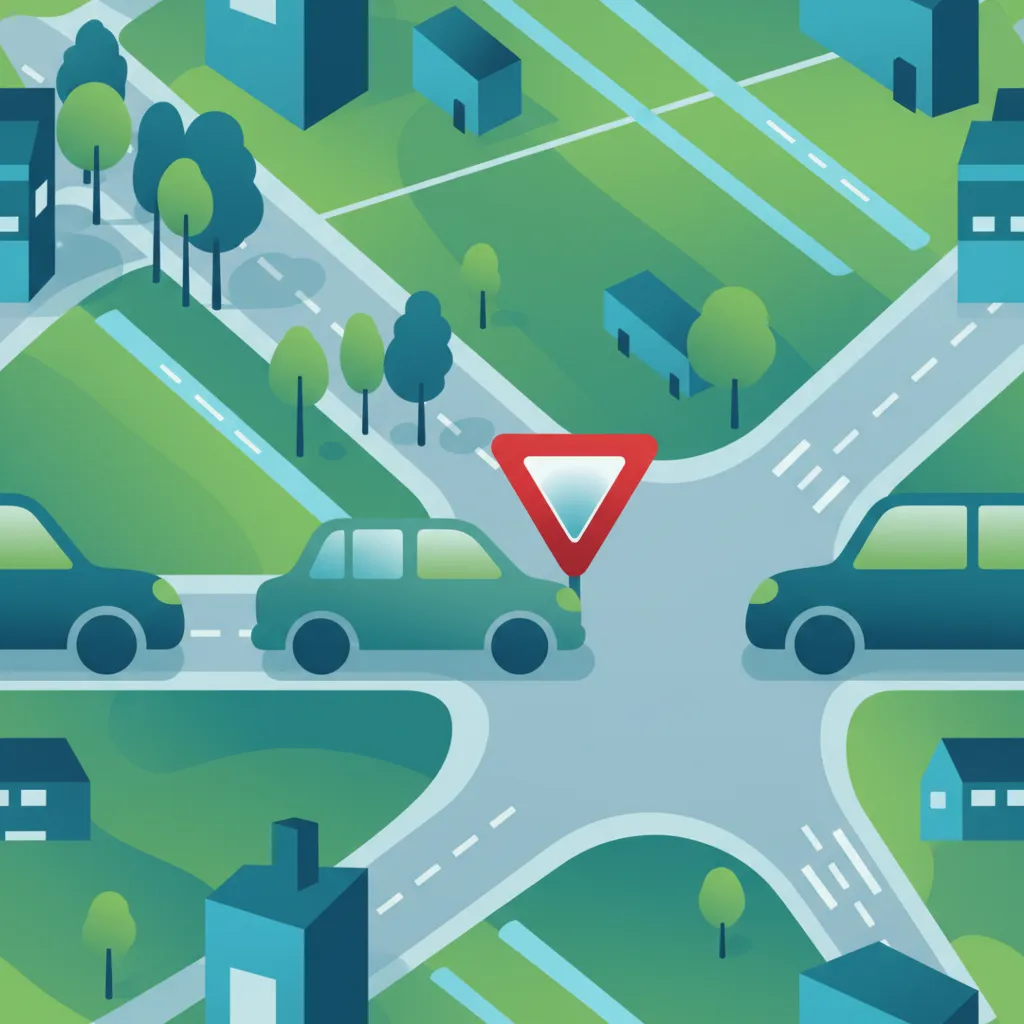
voorrang verlenen) instructs you to give way to all traffic on the intersecting road. You must slow down or stop to ensure the main road traffic can proceed unhindered.haaietanden): These white triangular markings on the road surface reinforce the Give Way sign (B6) or indicate a give way situation even without a sign. They mean you must give way to traffic on the road you are joining or crossing.right-of-way from the right rule often applies again at subsequent equal intersections.When performing certain special manoeuvres, you must always give way to all other road users, regardless of their direction or priority status. This includes drivers, cyclists, and pedestrians.
These manoeuvres include:
Example: If you want to turn right at an intersection, and a cyclist is coming straight ahead on the same road from your right, you must give way to the cyclist. Even if they are on a separate cycle path, if it's considered "on the same road," they have priority.
A crucial and often-tested rule in the Netherlands is that trams always have priority over all other drivers, except when instructed otherwise by a traffic controller or traffic lights specifically for trams. You must always give way to trams, even those approaching from your left at an equal intersection. This is a common pitfall in the CBR exam.
Drivers exiting an unpaved road must always give way to all drivers on a paved road, regardless of whether they are coming from the left or right. This rule reinforces the priority of established, more significant traffic routes.
At designated pedestrian crossings (zebra crossings), drivers must give way to pedestrians who are already crossing or clearly intending to cross.
bestuurders) are those operating a vehicle (car, motorcycle, moped, bicycle, horse-drawn cart). The right-of-way from the right rule only applies between drivers.weggebruikers) is a broader term encompassing all people using the road, including drivers, cyclists, and pedestrians. When performing special manoeuvres or at zebra crossings, you must yield to all road users. This distinction is vital for exam questions.shark's teeth on your side of the road. A bus is approaching from your left on the main road. You must stop or slow down and let the bus pass, even though it's coming from your left.Learners frequently make mistakes with give way rules, leading to exam failures and dangerous situations.
Right-of-Way from the Right: Applying this rule to pedestrians, or at unequal intersections. Remember it's only for drivers at equal intersections.Stop Sign: Failing to come to a complete standstill is an automatic fail point.right-of-way from the right when joining a paved road. They do not; they must always give way.Mastering Dutch give way rules is about more than just memorizing regulations; it's about developing a proactive and safe driving mindset. Always observe, anticipate, and be prepared to yield. When in doubt, err on the side of caution and give way. This approach ensures safety for yourself and all other road users, and will serve you well during your CBR theory exam and beyond.
Dutch give way rules form a hierarchical system where police signals override everything, followed by traffic lights, road signs, markings, and finally general RVV 1990 rules. The fundamental right-of-way from the right applies only between drivers at unmarked intersections and does not extend to pedestrians. Trams hold unconditional priority, and all drivers must yield to pedestrians at zebra crossings and to other road users during any special manoeuvre. Learners must distinguish between drivers and road users, understand when to stop completely versus slow and yield, and remember that equal intersections revert to right-of-way rules after a priority road ends.
A short set of high-value points that capture the most important ideas from this theory explanation.
Dutch priority follows a strict hierarchy: police signals > traffic lights > road signs > markings > general traffic rules (RVV 1990)
At equal intersections without signs or markings, give way to drivers approaching from your right (voorrang van rechts)
Trams always have priority over all other drivers except when a traffic controller or specific tram signals indicate otherwise
Special manoeuvres (turning, reversing, changing lanes, entering/exiting roads) require giving way to ALL road users regardless of priority status
Pedestrians at zebra crossings have priority whether they are crossing or clearly intending to cross
The right-of-way from the right rule only applies between drivers at equal intersections; it does not apply to pedestrians unless you are turning
A Stop sign (B7) requires a complete stop behind the line even when no traffic is present, unlike a Give Way sign (B6) where you only stop if necessary
Drivers on unpaved roads must always give way to all drivers on paved roads, regardless of direction of approach
Road markings called 'shark's teeth' (haaietanden) indicate a give way situation and reinforce the Give Way sign
Drivers (bestuurders) are vehicle operators; road users (weggebruikers) include all people on the road—this distinction matters for different priority rules
Forgetting that trams have priority at all times, including at equal intersections where they may approach from the left
Applying the right-of-way from the right rule to pedestrians or at intersections where signs or markings already determine priority
Failing to come to a complete standstill at a Stop sign, thinking a slow roll is sufficient
Assuming drivers exiting unpaved roads have priority when joining a paved road; they must always give way
Overlooking that special manoeuvres like turning require giving way to all road users, not just other drivers
Start with a short, direct summary of Dutch Give Way Rules before reading the full explanation below.
Giving way means drivers must allow other road users to proceed before them, slowing down or stopping if necessary. In the Netherlands, this often applies at intersections where you yield to traffic from the right, or where signs like the inverted triangle or 'shark's teeth' indicate priority. Special manoeuvres and specific situations involving trams or unpaved roads also require drivers to give way, making it a crucial part of safe driving and the Dutch theory exam.
Review the most important terms, rule signals, and traffic concepts linked to Dutch Give Way Rules.
Explore related theory topic pages connected to Dutch Give Way Rules and continue with the next useful rule explanation.
See the common search queries learners use when trying to understand Dutch Give Way Rules in the Netherlands.

Ready to deepen your understanding? Browse our comprehensive library of Dutch driving theory topics, rules, and concepts. Each section offers detailed explanations to help you solidify your knowledge and prepare thoroughly for your upcoming CBR driving theory examination.
Explore Driving Theory TopicsTheory topic content overview
A short set of high-value points that capture the most important ideas from this theory explanation.
Dutch priority follows a strict hierarchy: police signals > traffic lights > road signs > markings > general traffic rules (RVV 1990)
At equal intersections without signs or markings, give way to drivers approaching from your right (voorrang van rechts)
Trams always have priority over all other drivers except when a traffic controller or specific tram signals indicate otherwise
Special manoeuvres (turning, reversing, changing lanes, entering/exiting roads) require giving way to ALL road users regardless of priority status
Pedestrians at zebra crossings have priority whether they are crossing or clearly intending to cross
The right-of-way from the right rule only applies between drivers at equal intersections; it does not apply to pedestrians unless you are turning
A Stop sign (B7) requires a complete stop behind the line even when no traffic is present, unlike a Give Way sign (B6) where you only stop if necessary
Drivers on unpaved roads must always give way to all drivers on paved roads, regardless of direction of approach
Road markings called 'shark's teeth' (haaietanden) indicate a give way situation and reinforce the Give Way sign
Drivers (bestuurders) are vehicle operators; road users (weggebruikers) include all people on the road—this distinction matters for different priority rules
Forgetting that trams have priority at all times, including at equal intersections where they may approach from the left
Applying the right-of-way from the right rule to pedestrians or at intersections where signs or markings already determine priority
Failing to come to a complete standstill at a Stop sign, thinking a slow roll is sufficient
Assuming drivers exiting unpaved roads have priority when joining a paved road; they must always give way
Overlooking that special manoeuvres like turning require giving way to all road users, not just other drivers
Start with a short, direct summary of Dutch Give Way Rules before reading the full explanation below.
Giving way means drivers must allow other road users to proceed before them, slowing down or stopping if necessary. In the Netherlands, this often applies at intersections where you yield to traffic from the right, or where signs like the inverted triangle or 'shark's teeth' indicate priority. Special manoeuvres and specific situations involving trams or unpaved roads also require drivers to give way, making it a crucial part of safe driving and the Dutch theory exam.
Review the most important terms, rule signals, and traffic concepts linked to Dutch Give Way Rules.
Explore related theory topic pages connected to Dutch Give Way Rules and continue with the next useful rule explanation.
See the common search queries learners use when trying to understand Dutch Give Way Rules in the Netherlands.
Ready to deepen your understanding? Browse our comprehensive library of Dutch driving theory topics, rules, and concepts. Each section offers detailed explanations to help you solidify your knowledge and prepare thoroughly for your upcoming CBR driving theory examination.
Explore Driving Theory TopicsUse this exam-focused revision tip to understand how Dutch Give Way Rules is likely to appear in theory questions for learners in the Netherlands. This section helps you identify the most testable part of the rule, avoid common traps, and remember the concept more effectively during Dutch driving theory exam preparation.
Many CBR exam questions test your ability to apply give way rules in specific scenarios, especially distinguishing between equal and unequal intersections, and recognizing when pedestrians or trams have priority. Pay close attention to who is considered a 'driver' and the exceptions to the general 'right-of-way from the right' rule.
Read direct answers to the most common learner questions about Dutch Give Way Rules in the Netherlands. This FAQ focuses on rule confusion, practical meaning, comparison with similar concepts, and the exact uncertainties that appear most often in Dutch driving theory revision and exam preparation.
Giving way means that you must allow other road users to proceed first, slowing down or stopping your vehicle if necessary to avoid hindering them.
At unmarked intersections in the Netherlands, you must generally give way to all drivers approaching from your right, unless specific signs or rules dictate otherwise.
No, not always. You must give way to pedestrians when performing special manoeuvres (like turning or reversing) or at designated pedestrian crossings. However, at unmarked intersections, pedestrians are not considered 'drivers' and typically do not have priority over vehicles.
'Shark's teeth' are white triangular road markings indicating that you must give way to traffic on the intersecting road. They reinforce the message of a give-way sign or mark a priority intersection.
Yes, trams almost always have priority over other road users, regardless of whether they are approaching from the right, left, or performing a manoeuvre. There are very few exceptions.
At an equal (unmarked) intersection, the general rule is to give way to traffic from the right. At an unequal (priority) intersection, signs, markings, or traffic lights regulate priority, overriding the general right-from-right rule.
Yes, when driving from an unpaved road onto a paved road, you must always give way to all traffic on the paved road, regardless of their direction.
When performing any special manoeuvre, such as turning, reversing, driving away, or changing lanes, you must give way to all other traffic, including pedestrians and cyclists.
Leverage the targeted practice search to find questions that challenge your understanding of specific Dutch traffic rules or road signs. Focus your study efforts on areas where you need improvement and build a solid foundation for passing your CBR driving theory exam with confidence.