
Right of way rules dictate who proceeds first in conflicting traffic situations. In the Netherlands, these rules are based on a clear hierarchy of instructions from traffic controllers, traffic lights, road signs, road markings, and general traffic rules (RVV 1990). Grasping this hierarchy and its application at intersections is essential to prevent accidents and pass your theory test.
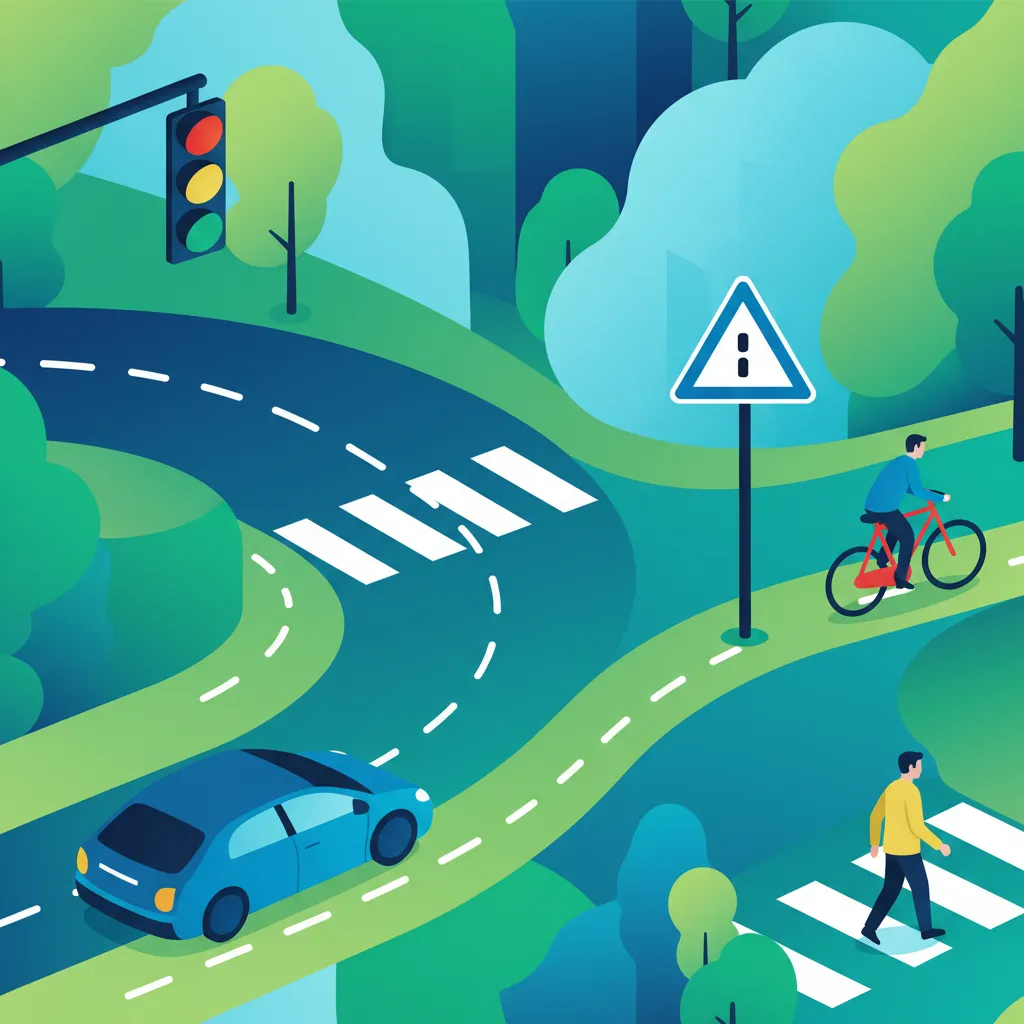
Theory topic content overview
Read the full theory topic guide for Dutch Right of Way Rules with structured, easy-to-scan content built for learners in the Netherlands. This detailed section explains the exact rule, meaning, traffic context, comparison points, and exam logic behind this Dutch driving theory topic so you can study faster, understand the concept more clearly, and avoid common interpretation mistakes on the theory test.
Right of way, or voorrang in Dutch traffic, is a fundamental concept that dictates which road user has priority to proceed first when paths conflict. Mastering these Dutch right of way rules is not just crucial for safe driving in the Netherlands, but also a significant part of the CBR theory exam. Understanding who must yield (voorrang verlenen) and who may proceed without obstruction is key to preventing accidents and maintaining smooth traffic flow.
In the Netherlands, right of way is not a single rule but a clear, strict hierarchy. When you approach any intersection or potential conflict point, you must mentally process this hierarchy to determine who has priority. This order is enshrined in the RVV 1990 traffic regulations:
This hierarchy is essential for all drivers. Always scan for the highest applicable authority first.
The "rechts gaat voor" rule is one of the most frequently misunderstood concepts for Dutch driving theory learners. It states that drivers must give priority to all drivers approaching from the right at an equivalent intersection (gelijkwaardig kruispunt).
While fundamental, "rechts gaat voor" has crucial exceptions:
Another critical area for Dutch traffic rules is priority when turning. These rules apply on the same road and are separate from the "rechts gaat voor" principle which applies at intersections between different roads.
In Dutch traffic, vulnerable road users such as pedestrians and cyclists often have specific priority considerations that drivers must be aware of:
Many CBR theory exam questions focus on scenarios where priority rules are easily confused. Be aware of these common pitfalls:
Let's look at a few common scenarios in the Netherlands:
Scenario 1: Unmarked Intersection in a Residential Area You are driving in a neighbourhood. A car approaches from the road to your right. There are no signs, lights, or markings.
Scenario 2: Turning Left at a Traffic Light with a Round Green Lamp You are at a major intersection with a green round traffic light. You intend to turn left. An oncoming car also has a green light and intends to go straight. A cyclist is also crossing the road you intend to turn into.
Scenario 3: Approaching a Road with 'Shark's Teeth' (Haaietanden) You are driving on a side street and see 'shark's teeth' painted on the road surface at the upcoming junction.
Scenario 4: Encountering a Tram You are at an intersection, and a tram is approaching from your left, where you would normally have priority over a car.
To navigate Dutch intersections and traffic conflict points safely and pass your CBR theory exam questions on priority, always remember this:
Dutch right of way is determined by a clear hierarchy, with instructions from traffic controllers taking precedence, followed by traffic lights, traffic signs, road markings, and finally general rules like 'rechts gaat voor'. The 'rechts gaat voor' rule (right before left) only applies at equivalent unmarked intersections between drivers and has important exceptions for trams and unpaved roads. When turning, drivers must yield to all through traffic, and the short turn (right) takes priority over the long turn (left) when two vehicles turn into the same road. Vulnerable road users such as pedestrians and cyclists have specific priority rights at crossings and when drivers are turning, and drivers must always maintain awareness of the full intersection before proceeding.
A short set of high-value points that capture the most important ideas from this theory explanation.
Right of way in Dutch traffic follows a strict hierarchy: traffic controllers, then traffic lights, then signs, then road markings, and finally general rules from RVV 1990.
'Rechts gaat voor' (right before left) only applies at equivalent intersections where no other priority indicators are present, and only between drivers—not pedestrians.
Trams almost always have priority over other traffic in the Netherlands, regardless of their direction of approach.
When turning, you must always yield to through traffic on the same road, including cyclists and pedestrians crossing the road you are entering.
Even when you legally have priority, you must still drive defensively and be prepared to yield if another road user makes a mistake.
At unmarked intersections without signs, lights, or markings, 'rechts gaat voor' applies between drivers approaching from equivalent roads.
Drivers emerging from unpaved roads must always yield to drivers on paved roads, regardless of approach direction.
At zebra crossings, you must give way to pedestrians who are crossing or clearly intending to cross.
When two drivers turning in opposite directions meet at the same intersection, the driver making the short turn (right) has priority over the one making the long turn (left).
A green arrow traffic light grants exclusive right of way for that specific manoeuvre, unlike a round green light where turning rules still apply.
Assuming 'rechts gaat voor' applies at every intersection, forgetting that priority signs or markings override this rule.
Failing to yield to trams, which generally have priority over all other traffic even at unmarked intersections.
Not yielding when turning left at a green light to oncoming traffic going straight or turning right.
Forgetting to give way to pedestrians at zebra crossings or when turning into a road where pedestrians are crossing.
Only looking for signs directly ahead instead of scanning the entire intersection for all priority indicators from every direction.
Start with a short, direct summary of Dutch Right of Way Rules before reading the full explanation below.
Right of way refers to the rules that determine which road user has priority to proceed first. In Dutch traffic, priority is established by a hierarchy: first traffic controllers, then traffic lights, followed by traffic signs, road markings, and finally, general rules like 'right before left' (rechts gaat voor). Always assess the situation carefully to determine who must yield.
Review the most important terms, rule signals, and traffic concepts linked to Dutch Right of Way Rules.
Explore related theory topic pages connected to Dutch Right of Way Rules and continue with the next useful rule explanation.
See the common search queries learners use when trying to understand Dutch Right of Way Rules in the Netherlands.

Ready to deepen your understanding? Browse our comprehensive library of Dutch driving theory topics, rules, and concepts. Each section offers detailed explanations to help you solidify your knowledge and prepare thoroughly for your upcoming CBR driving theory examination.
Explore Driving Theory TopicsTheory topic content overview
A short set of high-value points that capture the most important ideas from this theory explanation.
Right of way in Dutch traffic follows a strict hierarchy: traffic controllers, then traffic lights, then signs, then road markings, and finally general rules from RVV 1990.
'Rechts gaat voor' (right before left) only applies at equivalent intersections where no other priority indicators are present, and only between drivers—not pedestrians.
Trams almost always have priority over other traffic in the Netherlands, regardless of their direction of approach.
When turning, you must always yield to through traffic on the same road, including cyclists and pedestrians crossing the road you are entering.
Even when you legally have priority, you must still drive defensively and be prepared to yield if another road user makes a mistake.
At unmarked intersections without signs, lights, or markings, 'rechts gaat voor' applies between drivers approaching from equivalent roads.
Drivers emerging from unpaved roads must always yield to drivers on paved roads, regardless of approach direction.
At zebra crossings, you must give way to pedestrians who are crossing or clearly intending to cross.
When two drivers turning in opposite directions meet at the same intersection, the driver making the short turn (right) has priority over the one making the long turn (left).
A green arrow traffic light grants exclusive right of way for that specific manoeuvre, unlike a round green light where turning rules still apply.
Assuming 'rechts gaat voor' applies at every intersection, forgetting that priority signs or markings override this rule.
Failing to yield to trams, which generally have priority over all other traffic even at unmarked intersections.
Not yielding when turning left at a green light to oncoming traffic going straight or turning right.
Forgetting to give way to pedestrians at zebra crossings or when turning into a road where pedestrians are crossing.
Only looking for signs directly ahead instead of scanning the entire intersection for all priority indicators from every direction.
Start with a short, direct summary of Dutch Right of Way Rules before reading the full explanation below.
Right of way refers to the rules that determine which road user has priority to proceed first. In Dutch traffic, priority is established by a hierarchy: first traffic controllers, then traffic lights, followed by traffic signs, road markings, and finally, general rules like 'right before left' (rechts gaat voor). Always assess the situation carefully to determine who must yield.
Review the most important terms, rule signals, and traffic concepts linked to Dutch Right of Way Rules.
Explore related theory topic pages connected to Dutch Right of Way Rules and continue with the next useful rule explanation.
See the common search queries learners use when trying to understand Dutch Right of Way Rules in the Netherlands.
Ready to deepen your understanding? Browse our comprehensive library of Dutch driving theory topics, rules, and concepts. Each section offers detailed explanations to help you solidify your knowledge and prepare thoroughly for your upcoming CBR driving theory examination.
Explore Driving Theory TopicsUse this exam-focused revision tip to understand how Dutch Right of Way Rules is likely to appear in theory questions for learners in the Netherlands. This section helps you identify the most testable part of the rule, avoid common traps, and remember the concept more effectively during Dutch driving theory exam preparation.
Many CBR exam questions test your understanding of right of way at unmarked intersections and when turning. Remember the hierarchy: traffic controllers > lights > signs > markings > general rules. Pay close attention to who is considered a 'driver' versus a 'road user' and exceptions like trams and unpaved roads.
Read direct answers to the most common learner questions about Dutch Right of Way Rules in the Netherlands. This FAQ focuses on rule confusion, practical meaning, comparison with similar concepts, and the exact uncertainties that appear most often in Dutch driving theory revision and exam preparation.
The fundamental rule in the Netherlands is that drivers must give way to traffic approaching from the right at uncontrolled intersections, unless signs or signals indicate otherwise. This is often referred to as 'rechts gaat voor'.
The hierarchy is: traffic controllers, then traffic lights, followed by traffic signs, road markings, and finally, general traffic rules (RVV 1990).
No, pedestrians do not always have priority. They generally have right of way at marked pedestrian crossings, but drivers turning off must also yield to straight-ahead traffic and pedestrians crossing the road they are entering.
An 'equivalent road' (gelijkwaardige kruising) is an intersection where priority is not regulated by traffic signs, lights, or markings. In these situations, the general rule of 'right before left' applies, meaning drivers must yield to traffic coming from their right.
At traffic lights with round lamps, through traffic has priority over turning traffic. Drivers turning right have priority over drivers turning left. If you are turning, you must also yield to oncoming traffic going straight or turning right.
Shark's teeth (haaietanden) are triangular road markings indicating that drivers must give way to traffic on the intersecting road. They reinforce a give-way sign or indicate priority at priority intersections.
Yes, trams generally have priority over all other drivers in the Netherlands, even when coming from the left, unless traffic signs or signals explicitly state otherwise (e.g., a stop sign for the tram).
Drivers emerging from an unpaved road must always yield to all traffic on the paved road, regardless of direction. Treat it as if there's a give-way sign.
Leverage the targeted practice search to find questions that challenge your understanding of specific Dutch traffic rules or road signs. Focus your study efforts on areas where you need improvement and build a solid foundation for passing your CBR driving theory exam with confidence.