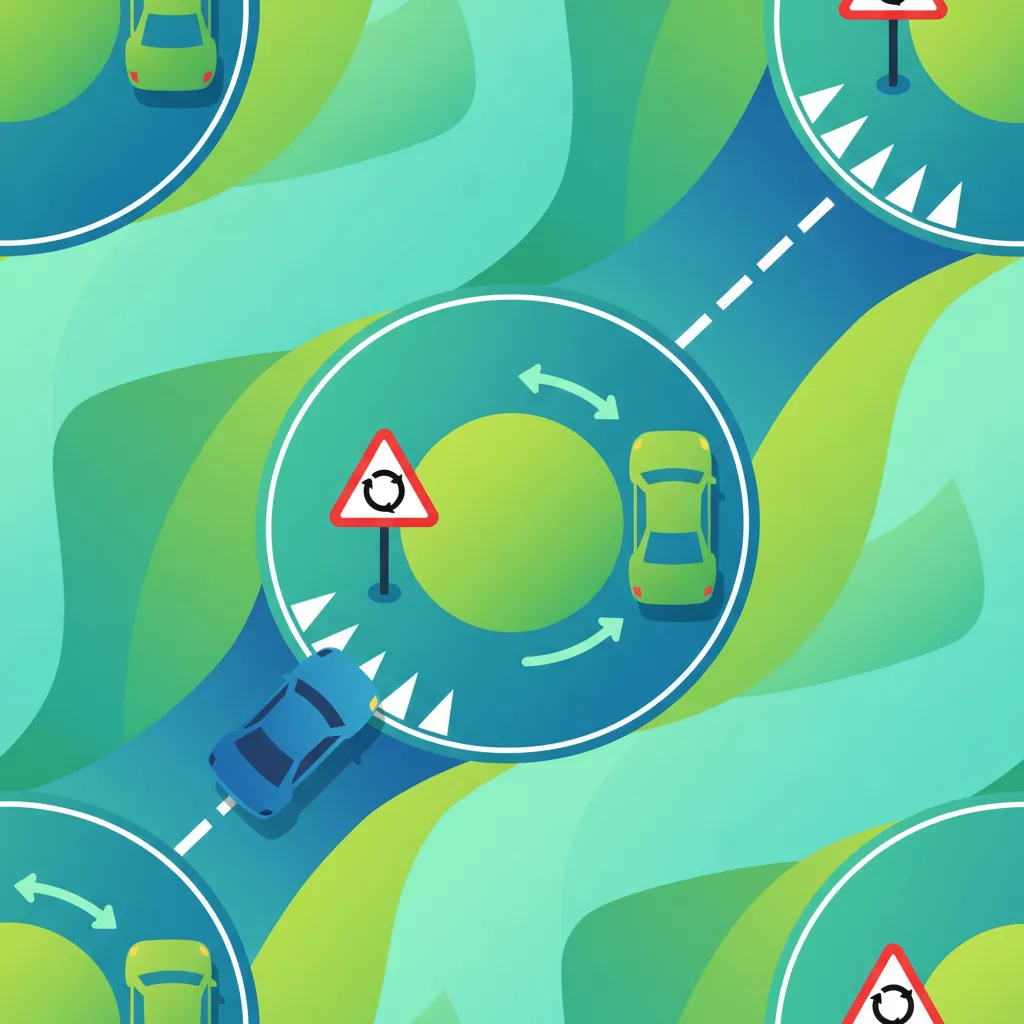
Roundabouts are designed to improve traffic flow and safety, but navigating them correctly requires a clear understanding of priority rules. In the Netherlands, while most roundabouts prioritize circulating traffic, specific signage, markings, and the presence of unmarked roundabouts introduce critical distinctions that every driver must know. This page explains these nuances to ensure you can safely enter, circulate, and exit.
Theory topic content overview
Read the full theory topic guide for Roundabout Priority with structured, easy-to-scan content built for learners in the Netherlands. This detailed section explains the exact rule, meaning, traffic context, comparison points, and exam logic behind this Dutch driving theory topic so you can study faster, understand the concept more clearly, and avoid common interpretation mistakes on the theory test.
Understanding roundabout priority rules is fundamental for safe and efficient driving in the Netherlands and a frequent subject on the CBR driving theory exam. While roundabouts generally improve traffic flow compared to traditional intersections, their specific priority arrangements can differ significantly, making careful observation crucial for every driver.
Roundabout priority refers to the rules that dictate which driver has the right-of-way when approaching, entering, circulating within, and exiting a circular intersection (a roundabout, or rotonde in Dutch). These rules ensure an orderly flow of traffic and prevent collisions by establishing a clear hierarchy of movement.
In the Netherlands, roundabout priority is primarily determined by signs and road markings, which can lead to two distinctly different types of roundabouts:
Mastering Dutch roundabout priority rules is essential for several reasons:
Reglement verkeersregels en verkeerstekens 1990 (RVV 1990), defines these rules, and non-compliance can result in fines and dangerous situations.The way priority operates depends entirely on the presence (or absence) of specific signs and road markings.
These are the most common type of roundabout in the Netherlands.
Signs and Markings:
Haaietanden): These distinctive white triangular markings painted on the road surface at the entrance of a roundabout reinforce the B-6 sign, indicating where you must stop or slow down to yield.Rule for Entering: When approaching a marked roundabout, you must give way to all vehicles (and often cyclists, see below) already circulating on the roundabout. Look left to check for approaching traffic. Only enter when there is a safe gap, without forcing others to brake or swerve.
Rule for Circulating: Once you have entered the roundabout safely, you have priority over any vehicles still waiting to enter from subsequent entrances (unless specified by other local signs, which is rare for traffic already on the roundabout).
Rule for Exiting:
These roundabouts are less common but are a significant source of confusion and exam questions.
Signs and Markings:
Rule for Entering:
At an unmarked roundabout, the general Dutch rule of 'give way to traffic from the right' (voorrang van rechts) applies, as stipulated in the RVV 1990. This means that if you are approaching an unmarked roundabout, you have priority over traffic already on the roundabout that is coming from your left. Traffic from your right (entering ahead of you) has priority over you.
Why this is confusing: This is counter-intuitive for many drivers familiar with priority roundabouts. It requires heightened vigilance to identify the absence of priority signs.
Rule for Circulating and Exiting (Unmarked): Once on an unmarked roundabout, the 'right-before-left' rule still governs interactions with new entering traffic. When exiting, standard turning rules apply, including signaling right and yielding to through traffic (cyclists/pedestrians) crossing your exit.
The priority rules for cyclists and pedestrians at roundabouts in the Netherlands are particularly nuanced and important for the CBR exam:
RVV 1990 rule. Think of them as "through traffic" that you are crossing.The single biggest distinction in Dutch roundabout priority is the presence or absence of a B-6 'give way' sign and shark teeth.
Failing to yield to cyclists and pedestrians when exiting a roundabout is a very common and dangerous mistake, often leading to exam failure or accidents. Always scan for them, especially over your right shoulder and side mirror, before exiting.
Always remember the golden rule for Dutch roundabouts: Scan for signs and road markings first. Their presence or absence is the single most important factor determining priority.
voorrang van rechts (give way to traffic from the right) applies. This means traffic entering from your right has priority, and if you are on the roundabout, you must yield to someone entering from your right.By internalizing these distinctions and practicing vigilant observation, you'll confidently navigate roundabout priority rules in the Netherlands and ace your CBR theory exam.
Dutch roundabout priority is primarily determined by road signs and markings rather than a universal rule. Most roundabouts have B-6 'give way' signs and shark teeth markings, requiring you to yield to traffic already circulating; however, unmarked roundabouts apply the standard 'give way to traffic from the right' rule, meaning entering traffic may have priority over circulating vehicles. When exiting any roundabout, you must signal right and yield to cyclists and pedestrians continuing on the roundabout path as through traffic. The single most important action when approaching any roundabout is to scan for priority signs and markings to determine which rule applies.
A short set of high-value points that capture the most important ideas from this theory explanation.
Most Dutch roundabouts are marked with B-6 signs and shark teeth markings, giving priority to traffic already circulating on the roundabout
Unmarked roundabouts are rare but critical: they apply the general 'give way to traffic from the right' rule, meaning entering traffic can have priority
When exiting any roundabout, you must yield to cyclists and pedestrians continuing on the roundabout path as they are considered through traffic
The B-6 'give way' sign at roundabouts specifically means you must yield to vehicles already on the roundabout, not just any cross traffic
The presence or absence of B-6 signs and shark teeth markings is the single most important factor determining which driver has priority
B-6 sign = yield to traffic already on the roundabout; no B-6 sign = right-before-left rule applies
Signal right only when exiting a roundabout, regardless of whether you're turning left, going straight, or turning right
On unmarked roundabouts, vehicles entering from your right have priority over you even if you're already circulating
You must give way to cyclists and pedestrians crossing your exit path before you leave the roundabout
D-1 sign indicates a compulsory roundabout direction (counter-clockwise in the Netherlands) and does not itself establish priority
Assuming all roundabouts work the same way and forgetting that unmarked roundabouts require right-before-left priority logic
Failing to signal right when exiting, especially when going straight through the roundabout
Neglecting to check for cyclists and pedestrians crossing the exit path before turning off the roundabout
Confusing the D-1 roundabout sign with priority rules—it indicates direction of travel, not who has right of way
Forgetting to yield to cyclists on separate cycle paths that may have their own give-way signs and do not integrate with main roundabout priority
Start with a short, direct summary of Roundabout Priority before reading the full explanation below.
In the Netherlands, priority at most roundabouts is given to traffic already on the roundabout, indicated by 'give way' signs (B-6) and shark teeth road markings. However, if a roundabout is completely unmarked, the general rule of 'give way to traffic from the right' applies, meaning entering traffic would have priority. Always check for signs and markings upon approach, and remember to signal correctly when exiting.
Review the most important terms, rule signals, and traffic concepts linked to Roundabout Priority.
Explore related theory topic pages connected to Roundabout Priority and continue with the next useful rule explanation.
See the common search queries learners use when trying to understand Roundabout Priority in the Netherlands.

Ready to deepen your understanding? Browse our comprehensive library of Dutch driving theory topics, rules, and concepts. Each section offers detailed explanations to help you solidify your knowledge and prepare thoroughly for your upcoming CBR driving theory examination.
Explore Driving Theory TopicsTheory topic content overview
A short set of high-value points that capture the most important ideas from this theory explanation.
Most Dutch roundabouts are marked with B-6 signs and shark teeth markings, giving priority to traffic already circulating on the roundabout
Unmarked roundabouts are rare but critical: they apply the general 'give way to traffic from the right' rule, meaning entering traffic can have priority
When exiting any roundabout, you must yield to cyclists and pedestrians continuing on the roundabout path as they are considered through traffic
The B-6 'give way' sign at roundabouts specifically means you must yield to vehicles already on the roundabout, not just any cross traffic
The presence or absence of B-6 signs and shark teeth markings is the single most important factor determining which driver has priority
B-6 sign = yield to traffic already on the roundabout; no B-6 sign = right-before-left rule applies
Signal right only when exiting a roundabout, regardless of whether you're turning left, going straight, or turning right
On unmarked roundabouts, vehicles entering from your right have priority over you even if you're already circulating
You must give way to cyclists and pedestrians crossing your exit path before you leave the roundabout
D-1 sign indicates a compulsory roundabout direction (counter-clockwise in the Netherlands) and does not itself establish priority
Assuming all roundabouts work the same way and forgetting that unmarked roundabouts require right-before-left priority logic
Failing to signal right when exiting, especially when going straight through the roundabout
Neglecting to check for cyclists and pedestrians crossing the exit path before turning off the roundabout
Confusing the D-1 roundabout sign with priority rules—it indicates direction of travel, not who has right of way
Forgetting to yield to cyclists on separate cycle paths that may have their own give-way signs and do not integrate with main roundabout priority
Start with a short, direct summary of Roundabout Priority before reading the full explanation below.
In the Netherlands, priority at most roundabouts is given to traffic already on the roundabout, indicated by 'give way' signs (B-6) and shark teeth road markings. However, if a roundabout is completely unmarked, the general rule of 'give way to traffic from the right' applies, meaning entering traffic would have priority. Always check for signs and markings upon approach, and remember to signal correctly when exiting.
Review the most important terms, rule signals, and traffic concepts linked to Roundabout Priority.
Explore related theory topic pages connected to Roundabout Priority and continue with the next useful rule explanation.
See the common search queries learners use when trying to understand Roundabout Priority in the Netherlands.
Ready to deepen your understanding? Browse our comprehensive library of Dutch driving theory topics, rules, and concepts. Each section offers detailed explanations to help you solidify your knowledge and prepare thoroughly for your upcoming CBR driving theory examination.
Explore Driving Theory TopicsUse this exam-focused revision tip to understand how Roundabout Priority is likely to appear in theory questions for learners in the Netherlands. This section helps you identify the most testable part of the rule, avoid common traps, and remember the concept more effectively during Dutch driving theory exam preparation.
For the CBR exam, always scan for signs and road markings immediately upon approaching a roundabout. The presence or absence of a B-6 sign or shark teeth dictates priority. Remember the rare 'unmarked roundabout' rule (right-before-left) as it's a common trap question.
Read direct answers to the most common learner questions about Roundabout Priority in the Netherlands. This FAQ focuses on rule confusion, practical meaning, comparison with similar concepts, and the exact uncertainties that appear most often in Dutch driving theory revision and exam preparation.
On most Dutch roundabouts, traffic already circulating within the roundabout has priority over vehicles entering it. This is typically indicated by a B-6 'give way' sign and shark teeth road markings on the approach road.
An unmarked roundabout lacks 'give way' signs or markings. In this rare scenario in the Netherlands, the general rule of 'give way to traffic from the right' applies, meaning vehicles entering the roundabout from the right have priority over those already on it.
You must always signal to the right when you intend to exit a roundabout. You do not typically signal when entering a roundabout unless you intend to turn left, in which case you signal left until passing the exit before yours, then switch to right.
When exiting a roundabout, you must give way to any traffic continuing on the roundabout, as well as to pedestrians crossing or intending to cross at the exit, particularly if they are 'through traffic' on your exit path.
Cyclists generally follow the same rules as other vehicles. When entering, they usually yield to cars already on the roundabout. While on the roundabout, they have priority. However, some cycle paths run separately from the roundabout and have their own distinct priority rules, so always observe signage.
The B-6 sign, often seen on approach to a Dutch roundabout, means 'give right of way to drivers on the intersecting road.' This sign, along with give-way road markings, establishes that traffic already on the roundabout has priority.
Leverage the targeted practice search to find questions that challenge your understanding of specific Dutch traffic rules or road signs. Focus your study efforts on areas where you need improvement and build a solid foundation for passing your CBR driving theory exam with confidence.