
Driving in Ireland requires you to have specific documents readily available. This article clarifies which documents, such as your learner permit or driving licence, must be carried at all times and produced upon request by An Garda Síochána. Understanding these legal obligations is fundamental for all drivers and is a vital component of preparing for your Irish Driver Theory Test.
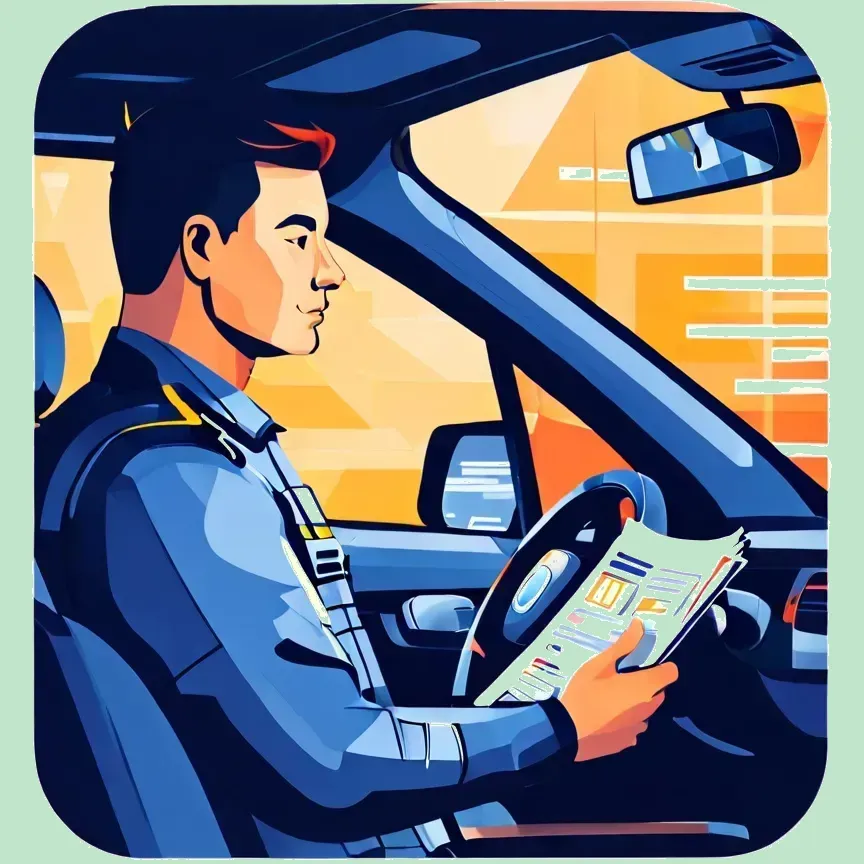
Article content overview
Driving legally on Irish roads requires more than just mastering the Rules of the Road and understanding traffic signs; it also involves carrying the correct documentation with you at all times. This is a fundamental requirement, not just for legal compliance, but it's also a crucial aspect frequently tested in the Driver Theory Test. An Garda Síochána has the legal authority to request these documents during any roadside stop. Failing to produce them can lead to penalties, and understanding this obligation is a vital part of becoming a responsible and lawful driver in Ireland.
The primary documents you must have readily available when driving in Ireland are your learner permit or your full driving licence. These documents serve as official proof of your authorisation to drive a particular category of vehicle. For learner drivers, the learner permit is paramount, and it dictates the conditions under which you are permitted to drive, such as the requirement for a fully qualified driver to accompany you and the display of 'L' plates. For those who have passed their driving test, the driving licence itself is the evidence of their qualification.
It is crucial to understand that simply possessing these documents at home is insufficient. They must be physically present in the vehicle with you while you are driving. This requirement ensures that law enforcement officers can verify your driving credentials swiftly and efficiently at the roadside, contributing to overall road safety and regulatory adherence.
An Garda Síochána, Ireland's national police service, plays a key role in enforcing road traffic legislation. During any routine or targeted roadside checks, an Garda Síochána may ask to see your driving documentation. This is a standard procedure designed to confirm that only legally authorised individuals are operating vehicles on public roads.
When requested, you are legally obliged to produce your learner permit or driving licence, along with any other relevant documents such as your motor insurance certificate and vehicle registration certificate. The ability to present these documents promptly demonstrates your compliance with Irish driving regulations and shows that you are a responsible road user. Not being able to produce them when asked can result in immediate penalties, underscoring the importance of always having them with you.
For individuals driving on a learner permit, carrying this document is of utmost importance, and it comes with specific accompanying responsibilities. The learner permit signifies that you are in the process of learning to drive and are not yet qualified to drive unsupervised. Therefore, adherence to the conditions stipulated on your learner permit is non-negotiable.
This typically includes driving only under the supervision of a fully qualified driver who holds a licence for the same vehicle category, and displaying 'L' plates prominently on your vehicle. The Garda Síochána will expect to see your learner permit and may also inquire about the qualifications of your accompanying driver and the appropriate display of 'L' plates. Ensuring all these elements are in place is vital for learner drivers.
Once you have successfully passed your driving test and obtained your full driving licence, the obligation to carry it remains. This licence is your entitlement to drive independently, and it must be presented upon request. Just like with a learner permit, failure to produce your driving licence to An Garda Síochána can lead to penalties, including potential fines and penalty points.
It is also essential to ensure your driving licence is valid and has not expired. If you have recently changed your address, you are required to update your driving licence details with the National Driver Licence Service (NDLS). While not a document to be carried, having your licence correctly updated is part of your overall legal responsibility as a driver.
While your learner permit or driving licence is the most frequently requested document, there are other important pieces of documentation related to your vehicle that you should have available or be able to produce. These typically include:
While you may not always be required to carry these documents on your person, you must be able to produce them if requested by An Garda Síochána, often within a specified timeframe. This highlights the importance of keeping your vehicle's paperwork organised and accessible.
For those applying for a learner permit or a driving licence in Ireland, proving residency entitlement is a key step, as highlighted by the National Driver Licence Service (NDLS). This generally means demonstrating that your place of birth or nationality is within the European Union, European Economic Area, Switzerland, the United Kingdom, or Northern Ireland, or that you have been granted leave to remain in Ireland.
The NDLS provides a comprehensive list of accepted documents to verify this entitlement. While this is part of the application process rather than a document to be carried while driving, understanding these requirements is part of the broader context of licensing and regulations in Ireland. It underscores that eligibility for a driving permit or licence is tied to your legal status in the country.
A common area of confusion, and a potential trap in the Driver Theory Test, relates to the precise requirements for carrying documentation. Test questions often assess whether learners understand that producing the document upon request is the key action, and that it must be carried at all times while driving. Misinterpreting these requirements can lead to incorrect answers.
For example, a question might present a scenario where a driver is stopped and asked for their licence. The correct answer will always involve the driver being able to produce it, reinforcing the necessity of always having it with them, not just knowing they possess one. Understanding these nuances is critical for success in the theory test.
In conclusion, being a responsible driver in Ireland means more than just skillful operation of a vehicle; it encompasses a thorough understanding and adherence to legal requirements, particularly concerning documentation. Always ensuring you have your learner permit or driving licence with you, along with being prepared to produce other vehicle-related documents like your motor insurance certificate, is fundamental. This not only keeps you on the right side of the law and avoids potential penalties but also demonstrates your commitment to road safety and the regulations set forth by the Road Safety Authority (RSA) and enforced by An Garda Síochána.
Preparing for your Driver Theory Test involves internalising these rules, and this article provides a solid foundation for understanding your obligations. By mastering these essential requirements, you can drive with greater confidence and contribute to a safer road environment for everyone.
This article outlines the mandatory documentation requirements for driving legally in Ireland, emphasising that all drivers must carry their original learner permit or driving licence at all times and produce it upon request by An Garda Síochána. Learner permit holders face additional requirements including displaying L plates and being accompanied by a fully qualified driver. Beyond personal driving documents, drivers must also be prepared to produce motor insurance and vehicle registration certificates. Understanding these requirements is directly tested in the Driver Theory Test, making this knowledge essential for both exam preparation and legal compliance on Irish roads.
A short set of high-value points that capture the most important ideas from this article.
You must physically carry your original learner permit or driving licence at all times while driving in Ireland
Photocopies or digital images of your licence are not acceptable - only the original document serves as valid proof
Learner permit holders must display L plates and drive only under supervision of a fully qualified driver
Motor insurance certificate and vehicle registration certificate must be produced upon request by An Garda Síochána
Driving without valid motor insurance is a serious offence carrying significant penalties including potential disqualification
Original documents only - keep the physical learner permit or driving licence on your person when driving
An Garda Síochána can request your documents during any routine or targeted roadside check
Learner permit conditions are non-negotiable: L plates must be displayed and a qualified supervisor must be present
Your driving licence must be valid and not expired - update your address with NDLS if you move
Vehicle documentation like insurance and registration must be accessible even if not carried on your person
Assuming a photocopy or phone photo of the licence is sufficient - only originals are acceptable
Thinking documents can be kept at home if you know they are valid - they must be in the vehicle
Forgetting that learner permit holders need L plates AND accompanying supervision to be legal
Not knowing that penalty points and fines can be issued immediately for failing to produce documents
Confusing application requirements (like residency entitlement) with documents that must be carried while driving
Article content overview
A short set of high-value points that capture the most important ideas from this article.
You must physically carry your original learner permit or driving licence at all times while driving in Ireland
Photocopies or digital images of your licence are not acceptable - only the original document serves as valid proof
Learner permit holders must display L plates and drive only under supervision of a fully qualified driver
Motor insurance certificate and vehicle registration certificate must be produced upon request by An Garda Síochána
Driving without valid motor insurance is a serious offence carrying significant penalties including potential disqualification
Original documents only - keep the physical learner permit or driving licence on your person when driving
An Garda Síochána can request your documents during any routine or targeted roadside check
Learner permit conditions are non-negotiable: L plates must be displayed and a qualified supervisor must be present
Your driving licence must be valid and not expired - update your address with NDLS if you move
Vehicle documentation like insurance and registration must be accessible even if not carried on your person
Assuming a photocopy or phone photo of the licence is sufficient - only originals are acceptable
Thinking documents can be kept at home if you know they are valid - they must be in the vehicle
Forgetting that learner permit holders need L plates AND accompanying supervision to be legal
Not knowing that penalty points and fines can be issued immediately for failing to produce documents
Confusing application requirements (like residency entitlement) with documents that must be carried while driving
Explore related topics, search based questions, and concepts that learners often look up when studying Irish Driving Documents. These themes reflect real search intent and help you understand how this topic connects to wider driving theory knowledge in Ireland.
Find clear and practical answers to common questions learners often have about Irish Driving Documents. This section helps explain difficult points, remove confusion, and reinforce the key driving theory concepts that matter for learners in Ireland.
You must carry your current, valid learner permit or driving licence at all times while driving in Ireland and be ready to produce it when requested by An Garda Síochána.
You are legally obliged to produce your learner permit or driving licence for inspection by An Garda Síochána upon request. Failure to do so can result in penalties.
While your learner permit or driving licence is the primary document required for immediate production, ensuring your vehicle has valid insurance and NCT (if applicable) is also a legal requirement, although these may not always need to be produced on the spot in the same manner.
If you are driving on a provisional licence, you must carry your learner permit at all times and adhere to any accompanying conditions, such as displaying L-plates and being accompanied by a full licence holder where required.
After searching, continue your DTT preparation by exploring related articles, practicing questions, or reviewing specific road sign categories. Deepen your understanding of Irish road rules and ensure you're fully prepared for your Driver Theory Test.