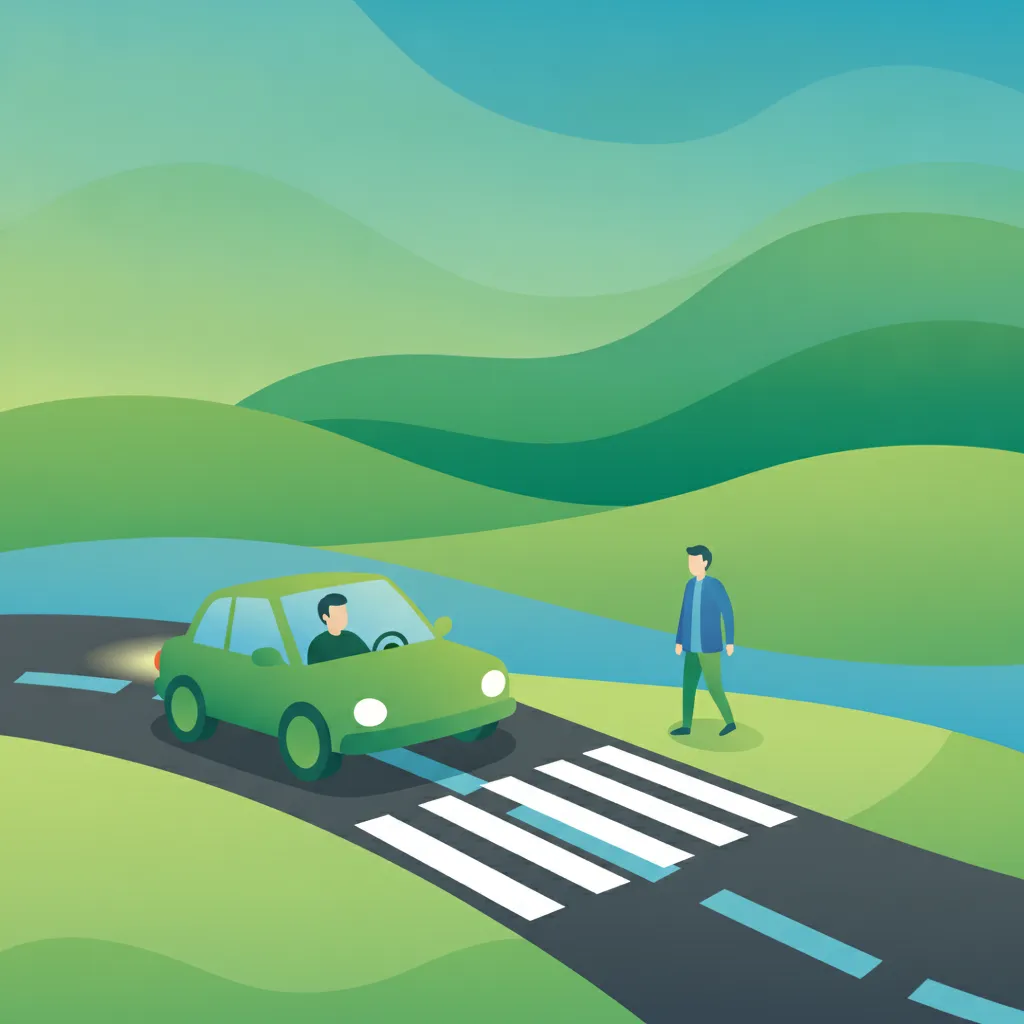
In Ireland, drivers must understand and respect pedestrian crossings, whether they are marked Zebra crossings or informal courtesy crossings. These designated areas require drivers to exercise extra caution, reduce speed, and be prepared to stop. The primary goal is to ensure the safety of pedestrians who have priority or are preparing to cross the road.
Theory topic content overview
Read the full theory topic guide for Pedestrian Crossings with structured, easy-to-scan content built for learners in Ireland. This detailed section explains the exact rule, meaning, traffic context, comparison points, and exam logic behind this Irish driving theory topic so you can study faster, understand the concept more clearly, and avoid common interpretation mistakes on the theory test.
Pedestrian crossings are vital designated areas on Irish roads where pedestrians are provided a safe means to cross. As a driver in Ireland, a deep understanding of the rules governing these crossings is not just for your Driver Theory Test, but crucial for the safety of vulnerable road users and maintaining a safe driving record. The Rules of the Road, set out by the Road Safety Authority (RSA), clearly define a driver's obligations at these points.
Navigating pedestrian crossings safely is a fundamental skill for all drivers in Ireland. Misjudging these situations can lead to severe consequences, as pedestrians are unprotected in a collision. For your Irish Driver Theory Test, questions about yielding, stopping, and understanding different crossing types are common. Beyond the test, real-world driving demands constant vigilance to prevent accidents and ensure the free and safe movement of all road users.
Ireland features several types of pedestrian crossings, each with specific rules for drivers. Understanding the differences is critical for complying with the Irish pedestrian crossing rules.
These are the most common type of marked pedestrian crossing in Ireland, easily identifiable by:
Driver Obligations at Zebra Crossings in Ireland:
Often found in urban centres, near shops, or in residential areas, courtesy crossings are less formally marked but still require high driver vigilance.
Driver Obligations at Courtesy Crossings in Ireland:
Mastering your approach to pedestrian crossings in Ireland involves a systematic process of observation, anticipation, and appropriate action:
Pedestrian crossings are dedicated zones where driver responsibility is paramount. Always prioritise the safety of vulnerable road users in Ireland. Remember the critical differences between a Zebra crossing (where you must stop for waiting or crossing pedestrians) and a courtesy crossing (where you must drive very slowly and anticipate pedestrians). By applying these pedestrian crossing rules Ireland, you'll not only pass your Irish Driver Theory Test but also contribute to safer roads for everyone.
This lesson covers driver obligations at pedestrian crossings in Ireland, distinguishing between legally mandated Zebra crossings and informal courtesy crossings. At Zebra crossings, drivers must stop for waiting or crossing pedestrians and observe zig-zag line restrictions. At courtesy crossings, while no automatic stop obligation exists, drivers must drive very slowly and anticipate pedestrians. The content emphasises systematic approach techniques—scanning ahead, adjusting speed early, checking both sides, covering the brake, and waiting for pedestrians to fully clear before proceeding. These rules are essential for both safe driving and success in the Irish Driver Theory Test.
A short set of high-value points that capture the most important ideas from this theory explanation.
At Zebra crossings, you must stop if a pedestrian is waiting or already on the crossing—this is a legal obligation under Irish road rules.
Zig-zag lines flanking Zebra crossings prohibit overtaking and parking, ensuring clear visibility for drivers and pedestrians.
Courtesy crossings require you to drive very slowly and anticipate pedestrians, even though there is no automatic legal requirement to stop.
Always reduce speed well in advance of any crossing and be prepared to stop, covering your brake as you approach.
Never proceed until a pedestrian has completely cleared the crossing in both directions.
Zebra crossings are identified by bold black and white stripes with yellow flashing Belisha beacons on poles.
Stop behind the white stop line if present; never stop on the crossing itself as this blocks pedestrians.
At courtesy crossings, pedestrians should ensure traffic is aware of their presence before crossing.
Cover your brake (move foot over it without pressing) when approaching crossings to shorten reaction time.
Pedestrians waiting on either side of a Zebra crossing require your attention if they step onto the markings.
Rolling past the stop line or stopping partially on the Zebra crossing stripes instead of behind the line.
Overtaking other vehicles on zig-zag lines, which is a serious road traffic offence in Ireland.
Treating courtesy crossings as merely suggestions rather than areas requiring extreme caution and slow speed.
Failing to check both left and right for pedestrians waiting or approaching the crossing.
Driving off before pedestrians have fully cleared the crossing, potentially startling them or creating danger.
Start with a short, direct summary of Pedestrian Crossings before reading the full explanation below.
When approaching a pedestrian crossing in Ireland, drivers must always slow down and be ready to stop. At marked Zebra crossings, you must stop if a pedestrian is waiting or already on the crossing. For courtesy crossings, while pedestrians should ensure traffic is aware, drivers should still proceed very slowly and cautiously. Always be vigilant for pedestrians, especially children or those with reduced mobility, to ensure their safe passage.
Review the most important terms, rule signals, and traffic concepts linked to Pedestrian Crossings.
Explore related theory topic pages connected to Pedestrian Crossings and continue with the next useful rule explanation.
See the common search queries learners use when trying to understand Pedestrian Crossings in Ireland.

After reviewing core Irish driving theory topics, test your understanding with comprehensive practice questions. Apply your knowledge of road rules, signs, and traffic laws to scenarios mirroring the official Driver Theory Test. Solidify your learning and prepare effectively for your exam.
Irish Driving Theory TopicsTheory topic content overview
A short set of high-value points that capture the most important ideas from this theory explanation.
At Zebra crossings, you must stop if a pedestrian is waiting or already on the crossing—this is a legal obligation under Irish road rules.
Zig-zag lines flanking Zebra crossings prohibit overtaking and parking, ensuring clear visibility for drivers and pedestrians.
Courtesy crossings require you to drive very slowly and anticipate pedestrians, even though there is no automatic legal requirement to stop.
Always reduce speed well in advance of any crossing and be prepared to stop, covering your brake as you approach.
Never proceed until a pedestrian has completely cleared the crossing in both directions.
Zebra crossings are identified by bold black and white stripes with yellow flashing Belisha beacons on poles.
Stop behind the white stop line if present; never stop on the crossing itself as this blocks pedestrians.
At courtesy crossings, pedestrians should ensure traffic is aware of their presence before crossing.
Cover your brake (move foot over it without pressing) when approaching crossings to shorten reaction time.
Pedestrians waiting on either side of a Zebra crossing require your attention if they step onto the markings.
Rolling past the stop line or stopping partially on the Zebra crossing stripes instead of behind the line.
Overtaking other vehicles on zig-zag lines, which is a serious road traffic offence in Ireland.
Treating courtesy crossings as merely suggestions rather than areas requiring extreme caution and slow speed.
Failing to check both left and right for pedestrians waiting or approaching the crossing.
Driving off before pedestrians have fully cleared the crossing, potentially startling them or creating danger.
Start with a short, direct summary of Pedestrian Crossings before reading the full explanation below.
When approaching a pedestrian crossing in Ireland, drivers must always slow down and be ready to stop. At marked Zebra crossings, you must stop if a pedestrian is waiting or already on the crossing. For courtesy crossings, while pedestrians should ensure traffic is aware, drivers should still proceed very slowly and cautiously. Always be vigilant for pedestrians, especially children or those with reduced mobility, to ensure their safe passage.
Review the most important terms, rule signals, and traffic concepts linked to Pedestrian Crossings.
Explore related theory topic pages connected to Pedestrian Crossings and continue with the next useful rule explanation.
See the common search queries learners use when trying to understand Pedestrian Crossings in Ireland.
After reviewing core Irish driving theory topics, test your understanding with comprehensive practice questions. Apply your knowledge of road rules, signs, and traffic laws to scenarios mirroring the official Driver Theory Test. Solidify your learning and prepare effectively for your exam.
Irish Driving Theory TopicsUse this exam-focused revision tip to understand how Pedestrian Crossings is likely to appear in theory questions for learners in Ireland. This section helps you identify the most testable part of the rule, avoid common traps, and remember the concept more effectively during Irish driving theory exam preparation.
Many Driver Theory Test questions in Ireland involve scenarios at pedestrian crossings. Remember that at Zebra crossings, you *must* stop for pedestrians waiting or on the crossing. Also, pay close attention to zig-zag lines, where you are prohibited from overtaking or parking.
Read direct answers to the most common learner questions about Pedestrian Crossings in Ireland. This FAQ focuses on rule confusion, practical meaning, comparison with similar concepts, and the exact uncertainties that appear most often in Irish driving theory revision and exam preparation.
A Zebra crossing is a marked area on the road with distinctive black and white stripes and often flashing yellow beacons (Belisha beacons), where drivers in Ireland *must* stop for pedestrians waiting to cross or already on the crossing.
A courtesy crossing is an unmarked or informally designated area where pedestrians frequently cross the road. While pedestrians should ensure traffic is aware of their presence, drivers must still approach very slowly and be prepared to stop out of caution.
At a marked Zebra crossing, you must stop if a pedestrian is waiting to cross or is already on the crossing. At courtesy crossings, you must slow down significantly and be prepared to stop if pedestrians are using or intending to use it.
No, you must never overtake vehicles or park within the zig-zag markings on either side of a pedestrian crossing. These lines ensure clear visibility for both drivers and pedestrians.
These are white zig-zag road markings found at the approach and exit of some pedestrian crossings. They indicate an area where stopping, parking, or overtaking is strictly prohibited to maintain clear lines of sight and enhance safety.
You should always drive at a speed that allows you to stop safely when approaching a crossing. If a pedestrian steps out unexpectedly, apply your brakes safely and avoid sudden swerving, always prioritizing pedestrian safety.
At marked Zebra crossings, pedestrians on or waiting to use the crossing have clear priority. At courtesy crossings, drivers should give way out of caution, but pedestrians also have a responsibility to ensure their safe passage.
Use the practice question search tool to pinpoint specific topics, road signs, or rules you need to master for your official Driver Theory Test. Refine your study strategy and ensure comprehensive preparation for all aspects of the Irish driving exam. Start your focused revision now and build confidence for your learner permit test.