
Driving on Ireland's rural roads presents unique challenges, from slow-moving tractors and unpredictable livestock to unseen bends. This guide explains how to anticipate and safely manage these hazards, aligning with RSA guidelines and the Driver Theory Test curriculum. Prepare yourself by learning the specific skills needed to navigate these complex environments safely and confidently.
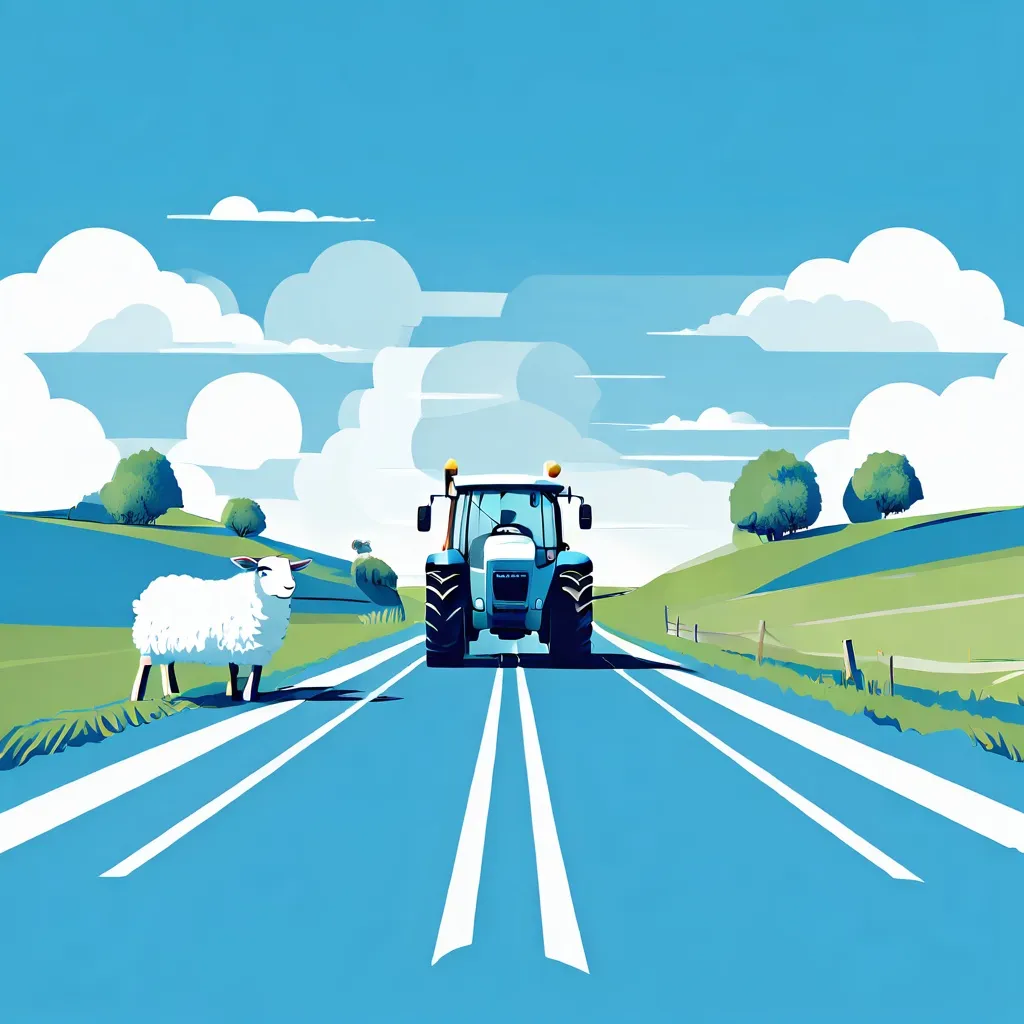
Article content overview
Ireland's charm often lies in its picturesque countryside, but these same rural roads present unique challenges for drivers that differ significantly from urban environments. Understanding these specific hazards, such as slow-moving tractors, unpredictable farm animals, and deceptive bends, is paramount for both road safety and success in the Irish Driver Theory Test. The Road Safety Authority (RSA) places a strong emphasis on hazard perception, and mastering these rural road scenarios is a key component of demonstrating that understanding. This article will guide you through the essential knowledge and safe practices needed to navigate these complex rural routes with confidence.
The vast network of rural roads across Ireland, estimated at nearly 100,000 kilometres, ranges from single-lane tracks bordered by dense hedges to wider country lanes. While Ireland boasts a strong overall road safety record within the European Union, these less controlled environments require heightened awareness and a proactive approach to risk management. Unlike well-lit, clearly marked urban streets, rural roads often present a dynamic and less predictable driving experience. This necessitates a thorough understanding of the specific challenges that drivers will encounter, ensuring they are prepared to react appropriately to protect themselves and other road users.
Tractors and other agricultural vehicles are a common sight on Irish rural roads, particularly during planting and harvesting seasons. These vehicles typically travel at much slower speeds than cars, often below 40 km/h, and can significantly impede traffic flow. They can also be wider than expected and may have attachments that extend outwards, making them a potential hazard for overtaking. Drivers must exercise extreme caution when approaching or following agricultural machinery. It is crucial to maintain a safe distance, anticipate sudden braking or turning, and to only attempt an overtake when it is absolutely safe to do so, with clear visibility and ample space.
When considering an overtake, it is vital to assess the road ahead for oncoming traffic and any potential hazards that might obscure your view. The presence of hedges or other roadside vegetation can significantly reduce sightlines, making it impossible to judge oncoming traffic safely. Always err on the side of caution; if you are in any doubt about the safety of an overtake, it is far better to wait for a clearer opportunity. Remember that drivers of agricultural vehicles may not always be able to move aside easily, especially on narrow roads, and their primary concern is the safe operation of their machinery.
Livestock, including cattle, sheep, and horses, frequently roam along or across rural roads in Ireland. These animals are unpredictable and can appear suddenly from behind bends, farm gates, or dense foliage. Unlike other road users, animals do not adhere to traffic rules and may not react predictably to approaching vehicles. Drivers must be particularly vigilant in areas known for livestock, such as alongside fields or near farm entrances. Reduced speed in such areas is essential, allowing more time to spot animals and react accordingly.
When you spot animals on or near the road, your primary response should be to slow down significantly. If they are on the road, you may need to stop completely. Avoid sounding your horn or revving your engine, as this can startle the animals and cause them to panic, potentially leading to erratic movements or stampedes. If animals are blocking your path, wait patiently for them to move. If you need to pass them, do so very slowly and with extreme care, ensuring there is plenty of space between your vehicle and the animals. Be aware that they may unexpectedly change direction.
Irish rural roads are often characterised by frequent, sharp bends, many of which are 'blind' – meaning the driver's view of what lies around the bend is obscured. These bends can hide oncoming traffic, cyclists, pedestrians, agricultural machinery, or animals. Approaching a bend too quickly is a common cause of accidents, as it reduces the time available to react to any hazards that may be present. The principle of slowing down before the bend, not on it, is critical for safe rural driving.
The safest approach to any bend, especially a blind one, is to reduce your speed well in advance. As you approach, position your vehicle towards the centre line of your side of the road to maximise your view around the bend, but always be prepared to move back to your side if you see oncoming traffic. Scan as far ahead as possible and listen for sounds of approaching vehicles. Only proceed around the bend when you are certain it is clear and safe to do so. If you are in a Category W work vehicle, the RSA rule of slowing down early, observing, and only proceeding when lawful and safe, is paramount.
Many rural roads are significantly narrower than urban streets, often bordered by dense hedges, stone walls, or ditches. This lack of width can make meeting oncoming traffic a challenge, particularly if one vehicle needs to move over to allow passage. Drivers should be prepared to slow down or even stop when encountering oncoming vehicles on narrow sections. Look for opportunities to pull into passing places or wider areas where available to let others pass. When passing parked vehicles, be aware of potential opening doors or people alighting.
When driving on narrow roads, maintaining a steady and controlled speed is essential. Avoid sudden acceleration or braking, which can destabilise your vehicle. Keep your eyes on the road ahead and be mindful of the road edges. If you encounter a tractor or other wide vehicle on a narrow road, it may be necessary for one of you to stop or move as far to the side as possible. Communication through hazard lights or a wave can sometimes help manage these situations, but always prioritise the safe manoeuvring of both vehicles.
Successfully navigating the complexities of Irish rural roads requires a consistent application of defensive driving techniques, a keen awareness of your surroundings, and a thorough understanding of the rules of the road as set out by the RSA. The Driver Theory Test specifically assesses your ability to anticipate and respond to these hazards, so internalising these principles is not just about passing the test, but about becoming a safer driver overall.
The legal speed limits on rural roads are generally lower than on national or urban routes, but the 'safe speed' is often even lower than the posted limit, depending on conditions. This is particularly true for Irish rural roads where hazards are frequent. Always adjust your speed according to visibility, road surface conditions (e.g., wet, muddy, gravelly), the presence of potential hazards like bends or junctions, and the proximity of other road users. Excessive speed is a major contributing factor in rural accidents, especially on bends where loss of control is more likely.
Remember the RSA's advice: slow down early for bends, observe all relevant road users, and only proceed when the manoeuvre is lawful and safe. This is a fundamental principle for navigating all challenging road conditions in Ireland, especially rural ones.
Overtaking on rural roads is one of the most dangerous manoeuvres a driver can undertake and should only be attempted when absolutely necessary and when you are completely certain it is safe. Before initiating an overtake, you must have clear visibility of the road ahead, and there must be no oncoming traffic. Ensure there is sufficient distance to complete the manoeuvre well before meeting any oncoming vehicle. If you are being overtaken, maintain a steady speed and keep as far to the left as is safe.
Effective hazard perception on rural roads means constantly scanning the road ahead, to the sides, and behind you, anticipating what might happen next. This includes looking for potential hazards such as changes in road surface, animals near the roadside, children playing, farm gates that might open, or vehicles emerging from driveways. Early detection allows for a more measured and safe response. For instance, seeing a farmer with a quad bike near a field gate might indicate that livestock could be moved onto the road soon, prompting you to slow down preemptively.
Never assume that a rural road is empty. Always anticipate the possibility of encountering unexpected obstacles, such as animals or slow-moving vehicles, especially when approaching junctions or bends.
The Driver Theory Test in Ireland is designed to ensure that all prospective drivers have a comprehensive understanding of road safety and traffic laws. Questions related to rural driving hazards are common and often test your ability to apply the principles of hazard perception and defensive driving. Expect to see questions that present scenarios involving tractors, animals, narrow roads, and bends, asking you to select the safest course of action.
The test may present situations where you need to decide the correct speed, when it is safe to overtake, or how to react to unexpected encounters with farm animals. Understanding the reasoning behind the correct answer is crucial. For example, a question might ask about the safest way to handle rural bends; the correct answer will always involve slowing down early, observing, and proceeding only when safe, rather than relying on other drivers or simply memorising facts.
This article covers the unique hazards of Irish rural roads, including slow-moving tractors, unpredictable farm animals, and blind bends that can hide oncoming traffic. It emphasises defensive driving techniques specific to these environments, such as adjusting speed below posted limits, scanning ahead for hazards, and only overtaking when visibility is completely clear. The content aligns with RSA guidelines and Driver Theory Test requirements, providing practical guidance on speed management, safe overtaking procedures, and hazard perception that are essential for both passing the test and becoming a safer driver on Ireland's countryside routes.
A short set of high-value points that capture the most important ideas from this article.
Tractors and agricultural vehicles travel below 40 km/h and may have wide attachments - maintain safe distance and only overtake with clear visibility and no oncoming traffic
Farm animals on roads are unpredictable - slow down significantly, avoid sounding your horn which can startle them, and pass slowly if necessary
Blind bends require slowing down BEFORE the bend, not on it, and positioning toward the centre line to maximise your view around the corner
Speed on rural roads should be adjusted below the posted limit based on visibility, road surface conditions, and presence of hazards
Effective hazard perception means constantly scanning ahead for animals, farm gates, junction traffic, and other unexpected obstacles
Never attempt an overtake on rural roads without clear visibility of the road ahead and sufficient space to complete the manoeuvre safely
Do not sound your horn or rev your engine near farm animals as this can cause them to panic and behave erratically
For any bend, especially blind ones, reduce speed in advance - the RSA principle is slow down early, observe, and only proceed when safe
Watch for signs of livestock such as a farmer near a field gate, which may indicate animals could move onto the road
Rural roads require continuous scanning of all directions and anticipation that the road may not be empty despite appearing so
Attempting to overtake slow-moving vehicles on narrow roads with poor visibility due to hedges or bends
Sounding the horn or accelerating when approaching farm animals on the road, which can startle them into dangerous movements
Only slowing down once already on a bend rather than reducing speed in advance, leaving insufficient reaction time
Assuming rural roads are empty and safe to travel at the posted speed limit without adjusting for conditions
Failing to check mirrors and assess whether being overtaken is safe before initiating an overtake manoeuvre
Article content overview
A short set of high-value points that capture the most important ideas from this article.
Tractors and agricultural vehicles travel below 40 km/h and may have wide attachments - maintain safe distance and only overtake with clear visibility and no oncoming traffic
Farm animals on roads are unpredictable - slow down significantly, avoid sounding your horn which can startle them, and pass slowly if necessary
Blind bends require slowing down BEFORE the bend, not on it, and positioning toward the centre line to maximise your view around the corner
Speed on rural roads should be adjusted below the posted limit based on visibility, road surface conditions, and presence of hazards
Effective hazard perception means constantly scanning ahead for animals, farm gates, junction traffic, and other unexpected obstacles
Never attempt an overtake on rural roads without clear visibility of the road ahead and sufficient space to complete the manoeuvre safely
Do not sound your horn or rev your engine near farm animals as this can cause them to panic and behave erratically
For any bend, especially blind ones, reduce speed in advance - the RSA principle is slow down early, observe, and only proceed when safe
Watch for signs of livestock such as a farmer near a field gate, which may indicate animals could move onto the road
Rural roads require continuous scanning of all directions and anticipation that the road may not be empty despite appearing so
Attempting to overtake slow-moving vehicles on narrow roads with poor visibility due to hedges or bends
Sounding the horn or accelerating when approaching farm animals on the road, which can startle them into dangerous movements
Only slowing down once already on a bend rather than reducing speed in advance, leaving insufficient reaction time
Assuming rural roads are empty and safe to travel at the posted speed limit without adjusting for conditions
Failing to check mirrors and assess whether being overtaken is safe before initiating an overtake manoeuvre
Explore related topics, search based questions, and concepts that learners often look up when studying Irish Rural Road Hazards. These themes reflect real search intent and help you understand how this topic connects to wider driving theory knowledge in Ireland.
Find clear and practical answers to common questions learners often have about Irish Rural Road Hazards. This section helps explain difficult points, remove confusion, and reinforce the key driving theory concepts that matter for learners in Ireland.
The main hazards include slow-moving agricultural vehicles like tractors, unpredictable farm animals, narrow roads, poor surfaces, and hidden bends which obscure visibility.
Slow down, assess if you can safely overtake, and ensure you have a clear view ahead. If unsure, wait behind the tractor until it's safe to pass, respecting the RSA's guidance on overtaking.
Slow down immediately, be prepared to stop, and do not try to scare the animals. Wait patiently for them to move off the road, maintaining a safe distance.
Hidden bends mean you cannot see oncoming traffic or other hazards until you are very close, making them high-risk areas for collisions. Slowing down before the bend is crucial.
Rural roads often present less predictable and more sudden hazards, such as unexpected animals or agricultural machinery, requiring constant vigilance and a proactive approach to risk management.
After searching, continue your DTT preparation by exploring related articles, practicing questions, or reviewing specific road sign categories. Deepen your understanding of Irish road rules and ensure you're fully prepared for your Driver Theory Test.