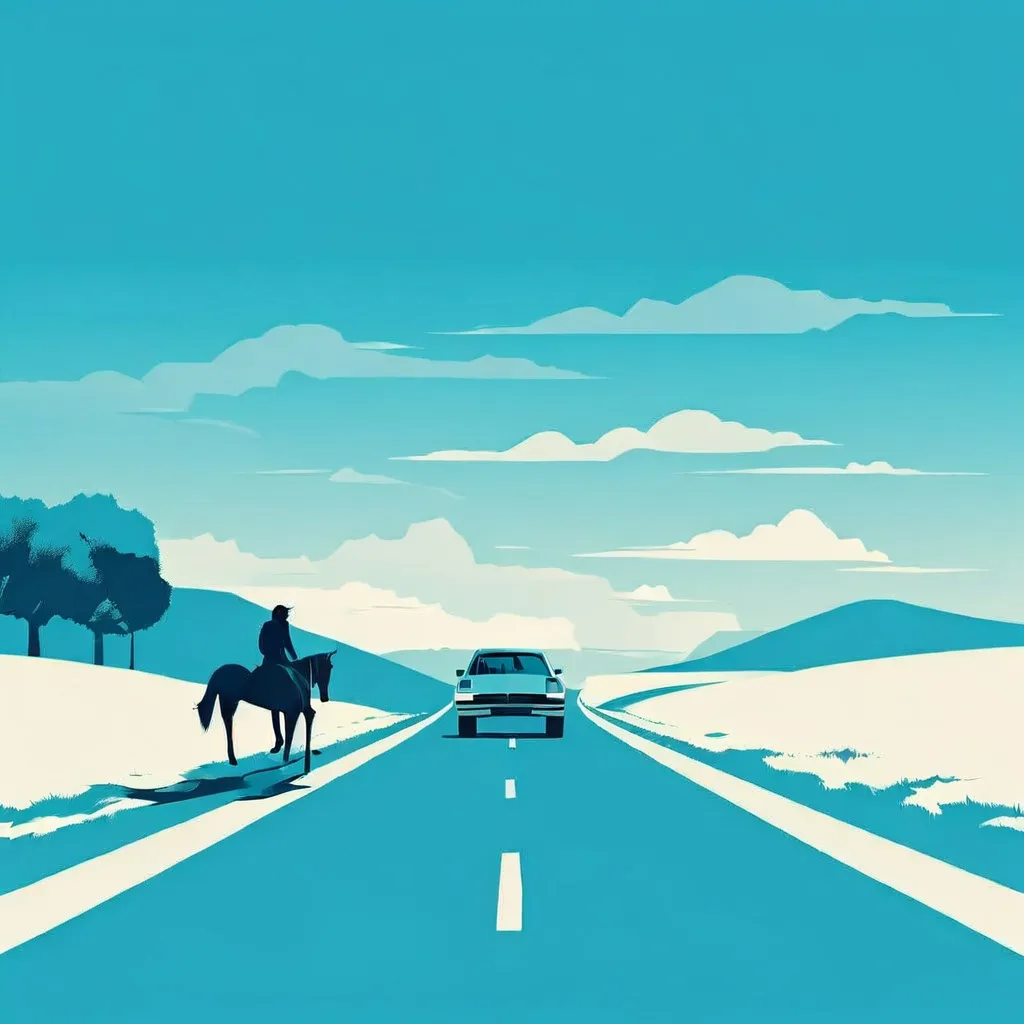
Rural Irish roads present unique challenges, especially when sharing them with horses, riders, and pedestrians. This article explains your responsibilities as a driver according to the Rules of the Road, focusing on hazard perception and how to safely interact with these vulnerable road users. Understanding these aspects is vital for both safe driving practice and success in your Irish Driver Theory Test.
Article content overview
Rural Irish roads can present unique challenges for drivers, particularly when encountering vulnerable road users like horses, riders, and pedestrians. Understanding and adhering to the specific rules and best practices outlined in the Rules of the Road is not only crucial for maintaining safety but is also a key component of preparing for your Irish Driver Theory Test. This article delves into the responsibilities of drivers when sharing these roads, emphasizing hazard awareness and the importance of mutual respect to prevent accidents and ensure everyone's well-being.
In rural Ireland, roads are often narrower, winding, and may have limited visibility due to natural features or agricultural activity. This environment makes horse riders and pedestrians particularly vulnerable. Drivers must cultivate a heightened sense of hazard awareness, recognising that these road users may not behave or be as predictable as other vehicles. The Road Safety Authority (RSA) places significant emphasis on protecting these groups, as they have limited physical protection and can be easily startled or endangered by fast-moving vehicles.
When walking along or beside an Irish road, especially in rural areas without footpaths, pedestrians have specific guidelines to follow to ensure their safety. The primary rule is to always make themselves visible and to walk on the right-hand side of the road, facing oncoming traffic. This allows them to see approaching vehicles and react accordingly. While pedestrians are responsible for their own safety, drivers share a duty of care to be aware of them and to pass with ample clearance and at a reduced speed. Pedestrian deaths account for a significant proportion of road fatalities in Ireland, underscoring the critical importance of both pedestrian caution and driver attentiveness.
When walking beside or along a road, pedestrians should:
Encounters with horses and riders on Irish roads require special consideration from drivers. Collisions involving horses frequently occur when the horse is struck from behind, highlighting the need for drivers to be extremely cautious when approaching them. This is particularly true when approaching riding schools, areas where horses are common, or when overtaking. Drivers must anticipate the presence of horses, especially if warning signs are displayed, and be prepared to slow down significantly or even stop if necessary to allow them to pass safely.
When approaching or overtaking horses, drivers should:
The concept of "shared spaces" is becoming more prevalent, particularly in urban fringe areas, but the principles of shared use and mutual respect extend to rural environments. These are low-speed areas where pedestrians, cyclists, e-scooter users, and vehicles coexist. Drivers must adopt a significantly slower speed and a more attentive approach in such zones. Similarly, when encountering any form of animal traffic – from farm animals like cattle and sheep to wild deer or even straying domestic animals – drivers must be prepared to react defensively.
Drivers entering areas designated as shared spaces must understand that these are fundamentally different from typical roads. The emphasis shifts from vehicle dominance to a collaborative environment where the safety of the most vulnerable users is paramount. This necessitates a dramatic reduction in speed, often to walking pace or slower, and a constant scan for unexpected movements from pedestrians, cyclists, or other micro-mobility users. Maintaining a vigilant watch and being ready to yield is key in these environments.
Beyond horses, drivers in Ireland may encounter various other animals on rural roads. This includes farm animals being moved between fields, wild deer, or even domestic pets that might have strayed. In all cases, the advice is consistent: slow down, be prepared to stop, and exercise extreme caution. If you are in charge of animals on the road, it is your responsibility to ensure they do not obstruct traffic or pedestrians, and to carry appropriate lighting and reflective gear if travelling at night.
When encountering animals on the road, anticipate that they may behave unpredictably. Your primary responsibility is to avoid a collision, even if it means stopping completely and waiting for a considerable period.
Effective hazard awareness is central to safe driving in Ireland, especially in rural settings. For learner drivers preparing for their theory test, understanding how to identify, assess, and react to potential dangers is a core competency. When it comes to sharing roads with horses, riders, and pedestrians, this means constantly scanning ahead, checking mirrors, and being aware of the potential for sudden actions. Drivers must also consider their own actions, such as opening car doors, which can pose a significant risk to passing cyclists.
The act of overtaking requires careful judgment under any circumstances, but it becomes even more critical when dealing with horses, riders, or pedestrians. Before even contemplating an overtake, drivers must be absolutely certain that it is safe to do so, that there is sufficient room, and that they can complete the manoeuvre without endangering anyone. It is often safer and more courteous to wait for a clearer stretch of road or for the other road user to reach a safer point, such as a wider verge or passing place.
For those undertaking the Irish Driver Theory Test, questions related to sharing roads with vulnerable users are common. These questions often test your understanding of who has priority, how to approach potentially hazardous situations, and the specific rules for interacting with animals and pedestrians. Pay close attention to the nuances of rural driving, where slower speeds and increased caution are consistently emphasised by the Road Safety Authority (RSA).
Remember that a parked vehicle's door can swing open unexpectedly. Always check your mirrors for cyclists or motorcyclists approaching from behind before opening your door.
When you encounter a horse and rider, the overarching principle is to pass them as if you were passing another vehicle, but with significantly more caution and space. This means signalling your intention to overtake, checking your mirrors and blind spots, and then moving over to the right-hand side of the road as much as is safely possible. Crucially, you must maintain a safe distance; the RSA recommends at least two metres between your vehicle and the horse. This allows for any unexpected movement by the horse and ensures the rider feels secure. It is also vital to pass at a reduced speed, and if the horse appears agitated or unsure, it is best to stop and wait.
The same principles apply when encountering horse-drawn vehicles. These vehicles are typically slow-moving and may take up a significant portion of the road. Drivers must be patient, signal their intention to overtake, and ensure there is ample room to do so safely, maintaining a good distance. Again, if in doubt or if the road ahead is unclear, waiting is the safest option.
The general rule for all animals on the road, whether domesticated or wild, is to slow down and be prepared to stop. This proactive approach helps to avoid sudden braking or swerving, which can lead to accidents. For those driving at night in areas where animals are common, being aware of warning signs and maintaining a slower speed is paramount, as visibility is significantly reduced.
To excel in the Irish Driver Theory Test, a solid grasp of specific terminology is essential. These terms are frequently used in questions and are fundamental to understanding road safety regulations.
Mastering the rules for sharing the road with horses, riders, and pedestrians is a vital aspect of your preparation for the Irish Driver Theory Test. Practice questions often focus on scenarios involving these vulnerable road users, testing your understanding of safe distances, appropriate speeds, and priority situations. By internalising these guidelines and practicing with relevant materials, you will not only enhance your safety on the road but also significantly improve your chances of passing the test.
This article covers the essential rules for drivers sharing Irish rural roads with horses, riders, and pedestrians as outlined in the Rules of the Road. Drivers must exercise heightened hazard awareness, slow considerably when approaching horses, never sound their horn near animals, and maintain at least two metres clearance when overtaking. Pedestrians on roads without footpaths must walk on the right side facing traffic and wear reflective gear at night. The RSA emphasises that collisions with horses frequently occur from behind, making rear approach caution critical. These guidelines are directly relevant to the Irish Driver Theory Test, where questions frequently test understanding of safe distances, appropriate speeds, and priority situations with vulnerable road users.
A short set of high-value points that capture the most important ideas from this article.
Drivers must slow significantly and be prepared to stop when encountering horses, riders, or pedestrians on rural roads
Never sound your horn near horses, as sudden noise can startle them and cause them to bolt dangerously
Maintain at least a two-metre gap when passing horses and riders, treating them with the same caution as another vehicle
Pedestrians on roads without footpaths must walk on the right-hand side, facing oncoming traffic to see approaching vehicles
Shared spaces require dramatically reduced speeds, often at walking pace, with constant vigilance for unexpected movements
Road signs WI213 (animals on road) and WI214 (horses on road) warn drivers to slow down and be prepared to stop
If a person in charge of animals signals you to slow down or stop, you must obey that signal
Pedestrians should wear reflective clothing and carry a torch when walking on roads at night in unlit areas
Overtaking vulnerable road users requires absolute certainty of safety, sufficient room, and completing the manoeuvre without endangering anyone
Horse-drawn vehicles are slow-moving and may occupy significant road space - patience and ample clearance are essential
Assuming horses will stay calm and predictable; horses can behave unpredictably when frightened by vehicles
Failing to slow down sufficiently when approaching horses or riders, treating them like regular slow-moving vehicles
Overtaking horses too quickly without maintaining the recommended two-metre safety distance
Forgetting that pedestrians on rural roads without footpaths should face oncoming traffic, not walk with their backs to traffic
Not checking mirrors and blind spots before opening car doors, risking danger to cyclists or motorcyclists approaching from behind
Article content overview
A short set of high-value points that capture the most important ideas from this article.
Drivers must slow significantly and be prepared to stop when encountering horses, riders, or pedestrians on rural roads
Never sound your horn near horses, as sudden noise can startle them and cause them to bolt dangerously
Maintain at least a two-metre gap when passing horses and riders, treating them with the same caution as another vehicle
Pedestrians on roads without footpaths must walk on the right-hand side, facing oncoming traffic to see approaching vehicles
Shared spaces require dramatically reduced speeds, often at walking pace, with constant vigilance for unexpected movements
Road signs WI213 (animals on road) and WI214 (horses on road) warn drivers to slow down and be prepared to stop
If a person in charge of animals signals you to slow down or stop, you must obey that signal
Pedestrians should wear reflective clothing and carry a torch when walking on roads at night in unlit areas
Overtaking vulnerable road users requires absolute certainty of safety, sufficient room, and completing the manoeuvre without endangering anyone
Horse-drawn vehicles are slow-moving and may occupy significant road space - patience and ample clearance are essential
Assuming horses will stay calm and predictable; horses can behave unpredictably when frightened by vehicles
Failing to slow down sufficiently when approaching horses or riders, treating them like regular slow-moving vehicles
Overtaking horses too quickly without maintaining the recommended two-metre safety distance
Forgetting that pedestrians on rural roads without footpaths should face oncoming traffic, not walk with their backs to traffic
Not checking mirrors and blind spots before opening car doors, risking danger to cyclists or motorcyclists approaching from behind
Explore related topics, search based questions, and concepts that learners often look up when studying Irish Rural Road Sharing. These themes reflect real search intent and help you understand how this topic connects to wider driving theory knowledge in Ireland.
Find clear and practical answers to common questions learners often have about Irish Rural Road Sharing. This section helps explain difficult points, remove confusion, and reinforce the key driving theory concepts that matter for learners in Ireland.
Drivers must slow down and be prepared to stop. Avoid using your horn, as it may frighten the animals, and always allow them enough space to pass safely.
Pedestrians should walk on the right-hand side facing oncoming traffic. Drivers should be extra vigilant and give pedestrians plenty of room, slowing down or stopping if necessary.
Most collisions involving horses occur when they are struck from behind. Drivers need to be particularly aware when overtaking or approaching horses, especially loose ones or horse-drawn vehicles.
Yes, Ireland has warning signs for cattle, sheep, deer, and horses. Seeing these signs means you should anticipate animals on or near the road and drive with increased caution.
Drivers must obey any signal given by the person in charge of animals to slow down or stop. This is a critical rule for ensuring the safety of both the animals and road users.
After searching, continue your DTT preparation by exploring related articles, practicing questions, or reviewing specific road sign categories. Deepen your understanding of Irish road rules and ensure you're fully prepared for your Driver Theory Test.