
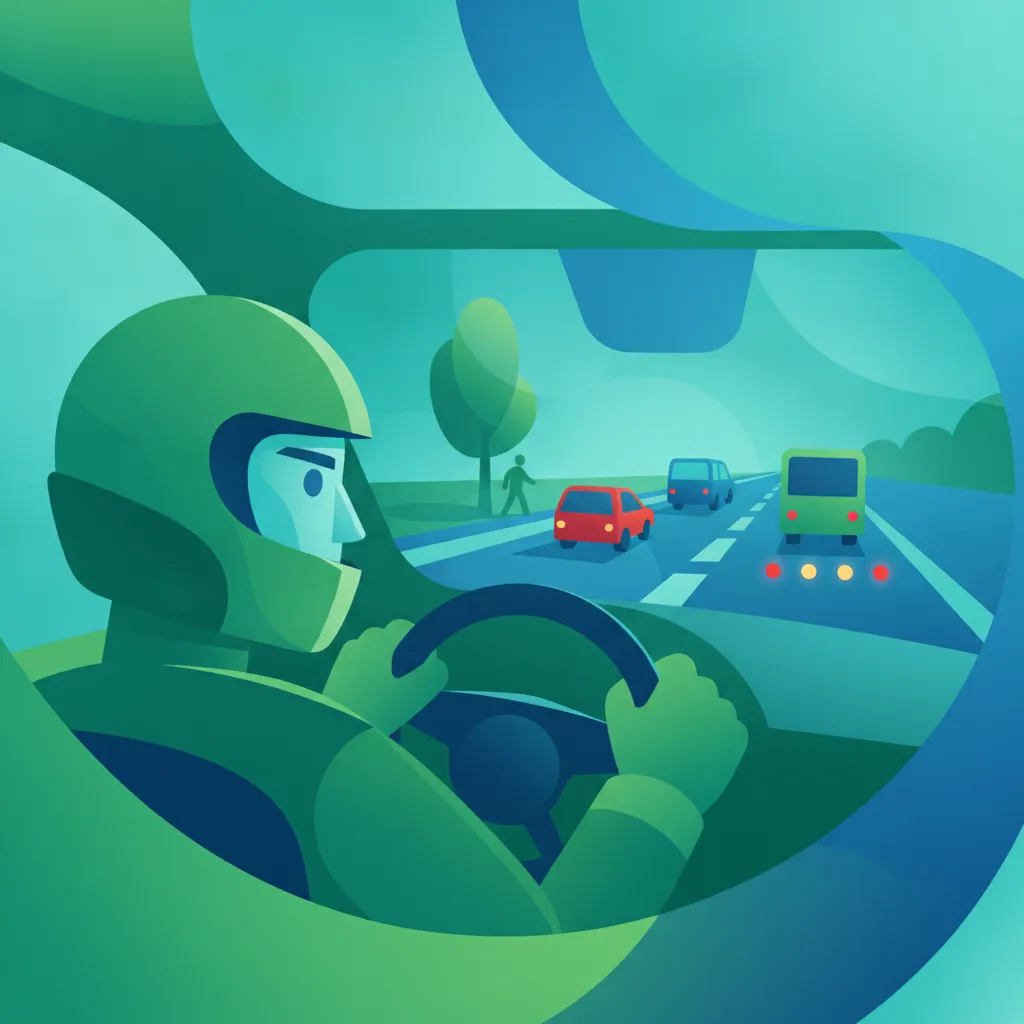
Defensive driving is a proactive approach to road safety that involves anticipating potential hazards and adjusting your driving to prevent accidents, even when others make mistakes. In Ireland, the Road Safety Authority (RSA) emphasizes anticipation and awareness as core components of safe driving, making these principles vital for both your theory and practical driving tests.
Theory topic content overview
Read the full theory topic guide for Defensive Driving with structured, easy-to-scan content built for learners in Ireland. This detailed section explains the exact rule, meaning, traffic context, comparison points, and exam logic behind this Irish driving theory topic so you can study faster, understand the concept more clearly, and avoid common interpretation mistakes on the theory test.
Defensive driving is a proactive approach to road safety that involves constantly anticipating potential hazards and adjusting your driving behaviour to prevent accidents, even when other road users make mistakes or road conditions are challenging. In Ireland, it's not just a good habit; it's a fundamental skill actively assessed by the Road Safety Authority (RSA) in both the Driver Theory Test and the practical driving test.
Instead of merely reacting to dangers as they arise, a defensive driver continuously scans their environment, identifies potential risks before they fully develop, and plans ahead to avoid collisions. This mindset prioritises safety above all else, ensuring you create a safe space for yourself, your passengers, and all other road users on Irish roads.
Understanding and applying defensive driving principles is crucial for several reasons, especially for those learning to drive in Ireland:
Defensive driving is built upon a set of interconnected principles that work together to create a robust safety strategy.
This is the cornerstone of defensive driving, directly linking to the RSA's "Anticipation and Awareness" requirement. It means looking beyond the vehicle directly in front of you.
This is crucial for providing reaction time and space to manoeuvre.
A defensive driver constantly adjusts their driving to suit the environment.
Always assume other road users might make mistakes.
Always have a "way out" or an alternative course of action.
It's important to understand that defensive driving goes beyond simply knowing and obeying the Rules of the Road. While adherence to traffic laws in Ireland is fundamental, defensive driving provides an extra layer of safety.
Let's look at how defensive driving applies to common situations you might encounter:
Learners often make these errors that undermine defensive driving principles:
Defensive driving in Ireland is fundamentally about embracing an "Anticipate and Aware" mindset. It's the skill that allows you to predict potential dangers, create a safe zone around your vehicle, and take pre-emptive action to prevent accidents. By consistently applying these principles – observing widely, looking far ahead, maintaining safe distances, adapting to conditions, and assuming others might make mistakes – you'll not only significantly improve your road safety but also demonstrate the high standard of driving expected by the RSA for your Irish driving licence. Make it your habit to always think ahead: What could happen next? How can I prevent it?
Defensive driving in Ireland is a proactive safety approach required by the RSA that involves anticipating hazards before they develop, not merely reacting to them. The core techniques include scanning far ahead (12-15 seconds in towns, 20-30 seconds on motorways), maintaining a 2-second following distance that extends in poor conditions, checking mirrors and blind spots every 5-8 seconds, and always assuming other road users might make mistakes. RSA examiners specifically assess 'Anticipation and Awareness' in driving tests, meaning learners must demonstrate they are thinking several steps ahead and have an escape route available. This goes beyond basic rule following—it's about taking responsibility for preventing accidents even when you technically have priority, such as slowing at a green light if cross-traffic appears uncertain.
A short set of high-value points that capture the most important ideas from this theory explanation.
Defensive driving is a proactive mindset that anticipates hazards before they fully develop, giving you valuable extra reaction time.
Maintain at least a 2-second following distance in good conditions, extending to 4 seconds or more in rain, fog, heavy traffic, or when following large vehicles.
Scan the road 12-15 seconds ahead in urban areas and 20-30 seconds on motorways to identify developing hazards early.
RSA examiners specifically assess 'Anticipation and Awareness' in both theory and practical driving tests—showing you think ahead matters.
Always assume other road users might make errors and keep an escape route in mind by maintaining space on all sides of your vehicle.
The speed limit is a maximum, not a target—reduce speed for rain, fog, ice, heavy traffic, or reduced visibility.
Check mirrors every 5-8 seconds and always check blind spots before changing lanes or turning.
Use headlights in poor light, rain, or fog during daytime to help other road users see you.
When encountering an oncoming overtaking vehicle with insufficient space, slow down and move left or stop to allow them to complete the manoeuvre safely.
Position your vehicle to maximise your view ahead and keep a clear shoulder or lane as an escape route.
Assuming other drivers will obey rules, signal correctly, or give way—defensive drivers never assume this.
Fixed stare ahead, only watching the car directly in front, which causes developing hazards to the sides and further ahead to be missed.
Driving at the posted speed limit in adverse conditions like heavy rain or fog, which reduces traction and stopping distance.
Tailgating or maintaining insufficient following distance, which severely limits reaction time and escape options.
Relying solely on mirrors without physically checking blind spots before changing lanes or turning, especially on motorways.
Start with a short, direct summary of Defensive Driving before reading the full explanation below.
Defensive driving is a mindset and set of techniques focused on reducing risks by being alert, anticipating potential dangers, and always having an escape route. It involves constant observation, maintaining safe distances, adapting to conditions, and assuming other road users might make mistakes. This proactive approach helps Irish drivers avoid collisions and promotes overall road safety.
Review the most important terms, rule signals, and traffic concepts linked to Defensive Driving.
Explore related theory topic pages connected to Defensive Driving and continue with the next useful rule explanation.
See the common search queries learners use when trying to understand Defensive Driving in Ireland.

After reviewing core Irish driving theory topics, test your understanding with comprehensive practice questions. Apply your knowledge of road rules, signs, and traffic laws to scenarios mirroring the official Driver Theory Test. Solidify your learning and prepare effectively for your exam.
Irish Driving Theory TopicsTheory topic content overview
A short set of high-value points that capture the most important ideas from this theory explanation.
Defensive driving is a proactive mindset that anticipates hazards before they fully develop, giving you valuable extra reaction time.
Maintain at least a 2-second following distance in good conditions, extending to 4 seconds or more in rain, fog, heavy traffic, or when following large vehicles.
Scan the road 12-15 seconds ahead in urban areas and 20-30 seconds on motorways to identify developing hazards early.
RSA examiners specifically assess 'Anticipation and Awareness' in both theory and practical driving tests—showing you think ahead matters.
Always assume other road users might make errors and keep an escape route in mind by maintaining space on all sides of your vehicle.
The speed limit is a maximum, not a target—reduce speed for rain, fog, ice, heavy traffic, or reduced visibility.
Check mirrors every 5-8 seconds and always check blind spots before changing lanes or turning.
Use headlights in poor light, rain, or fog during daytime to help other road users see you.
When encountering an oncoming overtaking vehicle with insufficient space, slow down and move left or stop to allow them to complete the manoeuvre safely.
Position your vehicle to maximise your view ahead and keep a clear shoulder or lane as an escape route.
Assuming other drivers will obey rules, signal correctly, or give way—defensive drivers never assume this.
Fixed stare ahead, only watching the car directly in front, which causes developing hazards to the sides and further ahead to be missed.
Driving at the posted speed limit in adverse conditions like heavy rain or fog, which reduces traction and stopping distance.
Tailgating or maintaining insufficient following distance, which severely limits reaction time and escape options.
Relying solely on mirrors without physically checking blind spots before changing lanes or turning, especially on motorways.
Start with a short, direct summary of Defensive Driving before reading the full explanation below.
Defensive driving is a mindset and set of techniques focused on reducing risks by being alert, anticipating potential dangers, and always having an escape route. It involves constant observation, maintaining safe distances, adapting to conditions, and assuming other road users might make mistakes. This proactive approach helps Irish drivers avoid collisions and promotes overall road safety.
Review the most important terms, rule signals, and traffic concepts linked to Defensive Driving.
Explore related theory topic pages connected to Defensive Driving and continue with the next useful rule explanation.
See the common search queries learners use when trying to understand Defensive Driving in Ireland.
After reviewing core Irish driving theory topics, test your understanding with comprehensive practice questions. Apply your knowledge of road rules, signs, and traffic laws to scenarios mirroring the official Driver Theory Test. Solidify your learning and prepare effectively for your exam.
Irish Driving Theory TopicsUse this exam-focused revision tip to understand how Defensive Driving is likely to appear in theory questions for learners in Ireland. This section helps you identify the most testable part of the rule, avoid common traps, and remember the concept more effectively during Irish driving theory exam preparation.
In your Irish driving test, examiners look for 'Anticipation and Awareness'. This means not just reacting to hazards, but actively looking ahead and around to predict potential dangers, like a child running into the road or another driver pulling out. Show you are thinking several steps ahead to avoid a fault.
Read direct answers to the most common learner questions about Defensive Driving in Ireland. This FAQ focuses on rule confusion, practical meaning, comparison with similar concepts, and the exact uncertainties that appear most often in Irish driving theory revision and exam preparation.
The main goal of defensive driving is to reduce the risk of collisions by anticipating potential hazards and adapting your driving behavior to avoid dangerous situations, even if other road users make mistakes.
Anticipation is crucial because the RSA Driver Tester Marking Guidelines specifically assess a driver's ability to show anticipation and awareness. By anticipating what others might do, you can react safely and avoid faults during your practical test and prevent accidents on the road.
Key techniques include maintaining a safe following distance, constantly observing your surroundings (360-degree awareness), adapting your speed to conditions, avoiding distractions, being aware of blind spots, and predicting the likely actions of other drivers, cyclists, and pedestrians.
The Irish Driver Theory Test includes questions that assess your understanding of hazard perception, safe distances, and how to react to various road situations, all of which are core principles of defensive driving.
No, defensive driving means driving appropriately for the conditions, not necessarily slowly. It involves managing your speed to give yourself enough time and space to react to hazards, which may mean slowing down in certain situations or maintaining safe progress when clear.
You can anticipate hazards by actively looking for pedestrians near crossings or footpaths, cyclists near intersections or on narrow roads, and motorcyclists who may be harder to see. Always assume they might make unexpected moves and be prepared to slow down or stop.
Situational awareness means constantly monitoring the traffic environment, including road conditions, weather, other vehicles, and potential distractions. It's about 'reading the road' to understand what is happening around you and what might happen next, allowing you to respond proactively.
Use the practice question search tool to pinpoint specific topics, road signs, or rules you need to master for your official Driver Theory Test. Refine your study strategy and ensure comprehensive preparation for all aspects of the Irish driving exam. Start your focused revision now and build confidence for your learner permit test.