
When rain makes Irish roads wet, the friction between your tyres and the road surface is significantly reduced. This means your vehicle will need much longer to stop and is more prone to losing control. This page explains the crucial factors affecting braking on wet surfaces, including the risks of skidding and aquaplaning, and how to maintain safety in challenging weather conditions.
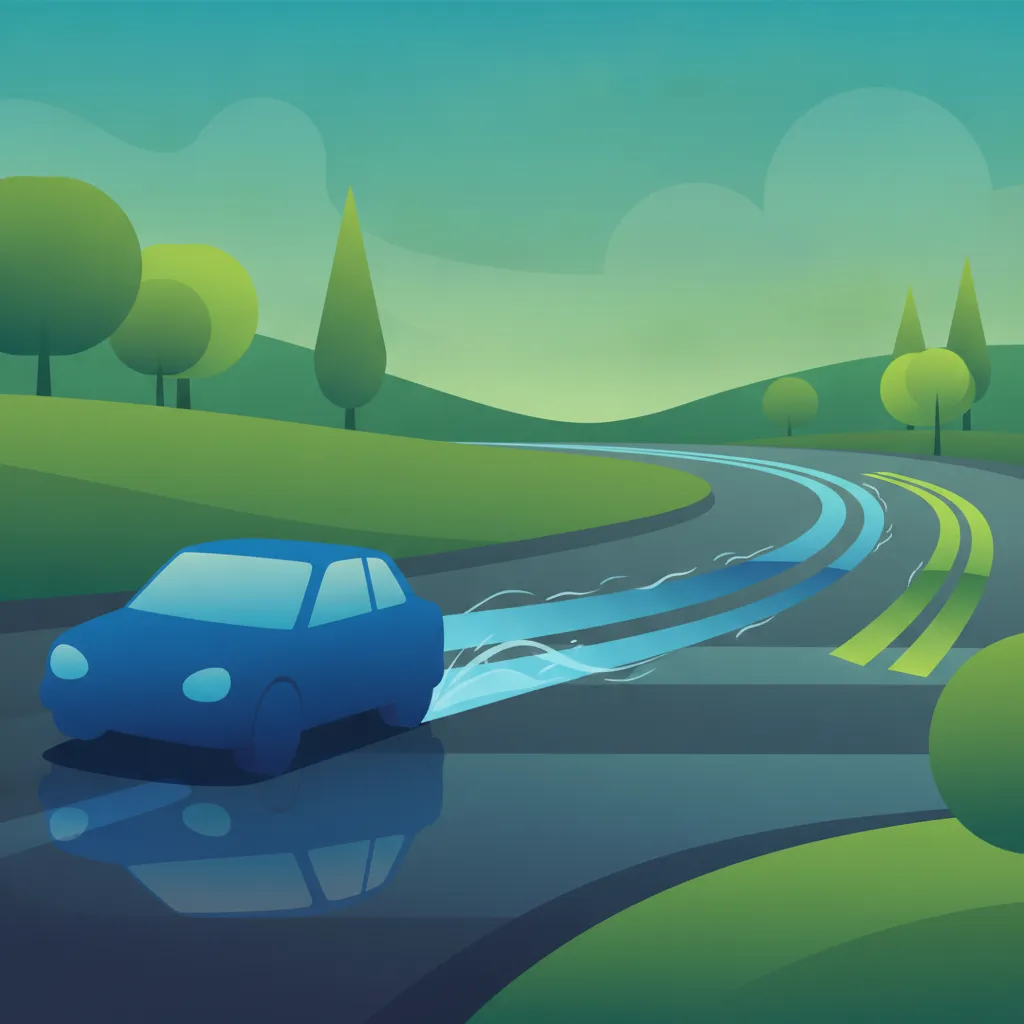
Theory topic content overview
Read the full theory topic guide for Wet Road Braking with structured, easy-to-scan content built for learners in Ireland. This detailed section explains the exact rule, meaning, traffic context, comparison points, and exam logic behind this Irish driving theory topic so you can study faster, understand the concept more clearly, and avoid common interpretation mistakes on the theory test.
Wet road braking refers to the dramatically altered performance of your vehicle's braking system and overall control when the road surface is wet, typically from rain. Water acts as a lubricant between your tyres and the tarmac, significantly reducing the available friction or 'grip'. This reduction in grip is the core reason why braking on wet roads in Ireland requires a complete adjustment in driving style to ensure safety.
Understanding this concept is vital for every driver in Ireland, not just for passing the Irish Driver Theory Test, but for everyday safety on roads that frequently experience rain.
Ireland's climate often means encountering wet roads. This constant exposure makes understanding the implications of reduced grip paramount for road safety. When roads are wet:
Ignoring these factors puts yourself, your passengers, and other road users at severe risk. Proactive adaptation is the cornerstone of safe driving in adverse conditions.
The interaction between your tyres and the road surface is fundamental to vehicle control. On a dry road, the tyre tread provides maximum friction. When water is introduced, several things happen:
The crucial takeaway is that the forces you can apply to the road (through braking, accelerating, or steering) are significantly diminished, meaning your vehicle responds more slowly and with less precision.
Several elements combine to determine just how much your wet road braking performance is affected:
While both involve a loss of control on wet roads, understanding the difference is key:
Consider these situations often encountered by Irish drivers:
Learner drivers, and even experienced drivers, often make critical errors when dealing with wet roads:
The Road Safety Authority (RSA) Rules of the Road are clear on the need to adapt driving to conditions, and this is strongly reflected in the Irish Driver Theory Test. Ireland's weather means that "driving for the conditions" often translates directly to "driving for wet roads."
Key principles reinforced by the RSA include:
The emphasis in Irish driving education is on proactive hazard perception and risk mitigation, with wet roads being a prime example where these skills are tested.
The core principle for wet road braking and vehicle control is proactive adaptation. Assume roads are more slippery when wet.
Remember, understanding these principles is not just theoretical; it's a fundamental part of staying safe on Irish roads and successfully navigating your driving journey.
Wet road braking fundamentally changes vehicle dynamics because water reduces the friction between tyres and road surface, requiring longer stopping distances and greater caution. The RSA emphasises that stopping distances can more than double in wet conditions, making speed reduction and increased following distance the primary safety measures. Tyre condition is critical, with a legal minimum tread depth of 1.6mm required in Ireland to channel water effectively. Skidding and aquaplaning are distinct hazards requiring different responses: for skids, steer into the slide; for aquaplaning, ease off the accelerator without braking sharply. Proactive adaptation—checking tyres, reducing speed, and maintaining smooth inputs—is essential for both safe driving and passing the Irish Driver Theory Test.
A short set of high-value points that capture the most important ideas from this theory explanation.
Water between tyres and road surface acts as a lubricant, dramatically reducing grip and making stopping distances more than double in wet conditions
Speed is the most critical factor in wet road safety; higher speeds increase both braking distance and aquaplaning risk
Tyre tread depth must be at least 1.6mm across the central three-quarters of the tyre to effectively channel water away
Smooth, progressive braking maintains grip better than harsh or sudden braking, which can lock wheels and cause skidding
In Ireland, RSA Rules of the Road require adapting speed and following distance to actual conditions, not just the posted limit
Skidding: tyres still have partial road contact, steer INTO the slide to regain control
Aquaplaning: complete loss of tyre contact, do NOT brake sharply, ease off accelerator and let speed reduce naturally
Legal minimum tread depth in Ireland is 1.6mm; worn tyres dramatically increase aquaplaning risk
On motorways in heavy rain, reduce speed to 80-100 km/h and increase following distance to at least four seconds
Poor tyre pressure reduces the contact patch and further compromises wet weather grip
Assuming a slight drizzle or light rain won't significantly affect grip; any moisture reduces tyre-road friction
Maintaining the posted speed limit without adjusting for wet conditions, which is especially dangerous in theory test scenarios
Tailgating by not increasing following distance, leaving insufficient space to react and stop safely
Using aggressive or harsh braking, steering, or acceleration inputs that exceed available grip on wet surfaces
Failing to check tyre condition and pressure before driving, which compounds wet weather safety risks
Start with a short, direct summary of Wet Road Braking before reading the full explanation below.
Braking on wet roads requires significantly longer distances to stop due to reduced tire grip caused by water on the road surface. Drivers in Ireland must reduce their speed and greatly increase their following distance to account for this. Ignoring these precautions increases the risk of skidding or aquaplaning, where the vehicle completely loses contact with the road, making control impossible.
Review the most important terms, rule signals, and traffic concepts linked to Wet Road Braking.
Explore related theory topic pages connected to Wet Road Braking and continue with the next useful rule explanation.
See the common search queries learners use when trying to understand Wet Road Braking in Ireland.

After reviewing core Irish driving theory topics, test your understanding with comprehensive practice questions. Apply your knowledge of road rules, signs, and traffic laws to scenarios mirroring the official Driver Theory Test. Solidify your learning and prepare effectively for your exam.
Irish Driving Theory TopicsTheory topic content overview
A short set of high-value points that capture the most important ideas from this theory explanation.
Water between tyres and road surface acts as a lubricant, dramatically reducing grip and making stopping distances more than double in wet conditions
Speed is the most critical factor in wet road safety; higher speeds increase both braking distance and aquaplaning risk
Tyre tread depth must be at least 1.6mm across the central three-quarters of the tyre to effectively channel water away
Smooth, progressive braking maintains grip better than harsh or sudden braking, which can lock wheels and cause skidding
In Ireland, RSA Rules of the Road require adapting speed and following distance to actual conditions, not just the posted limit
Skidding: tyres still have partial road contact, steer INTO the slide to regain control
Aquaplaning: complete loss of tyre contact, do NOT brake sharply, ease off accelerator and let speed reduce naturally
Legal minimum tread depth in Ireland is 1.6mm; worn tyres dramatically increase aquaplaning risk
On motorways in heavy rain, reduce speed to 80-100 km/h and increase following distance to at least four seconds
Poor tyre pressure reduces the contact patch and further compromises wet weather grip
Assuming a slight drizzle or light rain won't significantly affect grip; any moisture reduces tyre-road friction
Maintaining the posted speed limit without adjusting for wet conditions, which is especially dangerous in theory test scenarios
Tailgating by not increasing following distance, leaving insufficient space to react and stop safely
Using aggressive or harsh braking, steering, or acceleration inputs that exceed available grip on wet surfaces
Failing to check tyre condition and pressure before driving, which compounds wet weather safety risks
Start with a short, direct summary of Wet Road Braking before reading the full explanation below.
Braking on wet roads requires significantly longer distances to stop due to reduced tire grip caused by water on the road surface. Drivers in Ireland must reduce their speed and greatly increase their following distance to account for this. Ignoring these precautions increases the risk of skidding or aquaplaning, where the vehicle completely loses contact with the road, making control impossible.
Review the most important terms, rule signals, and traffic concepts linked to Wet Road Braking.
Explore related theory topic pages connected to Wet Road Braking and continue with the next useful rule explanation.
See the common search queries learners use when trying to understand Wet Road Braking in Ireland.
After reviewing core Irish driving theory topics, test your understanding with comprehensive practice questions. Apply your knowledge of road rules, signs, and traffic laws to scenarios mirroring the official Driver Theory Test. Solidify your learning and prepare effectively for your exam.
Irish Driving Theory TopicsUse this exam-focused revision tip to understand how Wet Road Braking is likely to appear in theory questions for learners in Ireland. This section helps you identify the most testable part of the rule, avoid common traps, and remember the concept more effectively during Irish driving theory exam preparation.
The Irish Driver Theory Test often features scenarios involving wet roads. Remember that stopping distances can more than double in wet conditions compared to dry. Always choose the safest option that involves reducing speed and increasing the gap to the vehicle in front, rather than relying on harsh braking or risky maneuvers.
Read direct answers to the most common learner questions about Wet Road Braking in Ireland. This FAQ focuses on rule confusion, practical meaning, comparison with similar concepts, and the exact uncertainties that appear most often in Irish driving theory revision and exam preparation.
The RSA's 'Rules of the Road' indicate that stopping distances on wet roads can be at least double those on dry roads, depending on speed and tyre condition. For example, at 50 km/h, the total minimum stopping distance more than doubles from 25m to 36m (Source: RSA, 2012).
Aquaplaning, also known as hydroplaning, occurs when a layer of water builds up between your tyres and the road surface, causing your vehicle to lose contact and effectively 'float'. This renders steering and braking ineffective until tyre contact is restored.
Prevent skidding by reducing your speed, increasing your following distance, ensuring your tyres have good tread depth, and using smooth, gentle inputs for steering, braking, and accelerating.
While there isn't one specific rule titled 'driving in rain', the RSA's 'Rules of the Road' strongly emphasize adapting your driving to current conditions. This explicitly means reducing speed and increasing safety margins in wet weather to prevent hazards.
If your car aquaplanes, ease off the accelerator gently, keep the steering wheel straight, and avoid braking suddenly. Allow the car to slow down naturally until the tyres regain contact with the road, then resume control.
Yes, adequate tyre tread depth is critically important on wet roads. Good tread helps to channel water away from beneath the tyre, maintaining essential grip and significantly reducing the risk of aquaplaning.
Because braking distances are significantly longer on wet roads, a larger following distance provides crucial extra time and space to react safely and stop if the vehicle ahead brakes suddenly or a hazard appears.
Use the practice question search tool to pinpoint specific topics, road signs, or rules you need to master for your official Driver Theory Test. Refine your study strategy and ensure comprehensive preparation for all aspects of the Irish driving exam. Start your focused revision now and build confidence for your learner permit test.