Directional signs are your roadmap on the road, guiding you safely through complex junctions, exits, and route choices. Understanding these signs is crucial for planning your journey ahead, choosing the correct lane early, and avoiding confusion, especially on motorways and major routes. This section will equip you with the knowledge to interpret these vital signs, ensuring you drive with greater awareness and pass your theory test with flying colours.
An explanation of how Directional Information Signs road signs apply in real traffic situations in Ireland. Learn where these signs are typically placed, what drivers are expected to do when they appear, and how correct reactions help you stay safe, avoid fines, and succeed in your Irish driving theory exam.
You will encounter directional signs extensively when travelling on national and regional roads, particularly as you approach junctions, exits, or complex intersections. They are indispensable on motorways where early lane discipline is critical; overhead gantry signs often dictate which lanes lead to specific destinations or exits. Map-type signs provide a visual overview of the upcoming junction layout, while stack-type signs clearly indicate lane assignments. Route confirmatory signs appear after you've taken an exit or joined a new route, reassuring you that you are on the correct path. Exit signs clearly mark the point of departure. Drivers must pay close attention to these signs well in advance of the manoeuvre to select the appropriate lane and avoid last-minute, potentially dangerous, changes.
An overview of the key learning outcomes when studying the Directional Information Signs road sign category. Understand the main concepts, sign meanings, and traffic situations covered here so you can recognise patterns, answer theory questions more confidently, and build a solid foundation for safe driving in Ireland.
Study Ireland's directional road signs to confidently navigate junctions, exits, and route choices. Understanding these signs, from advance direction signs to overhead gantries, is crucial for early lane selection and safe driving. Master sign meanings for your Driver Theory Test revision.

Understand Ireland's Map Type Advance Direction Sign (DIR-001) for Safer Route Navigation.
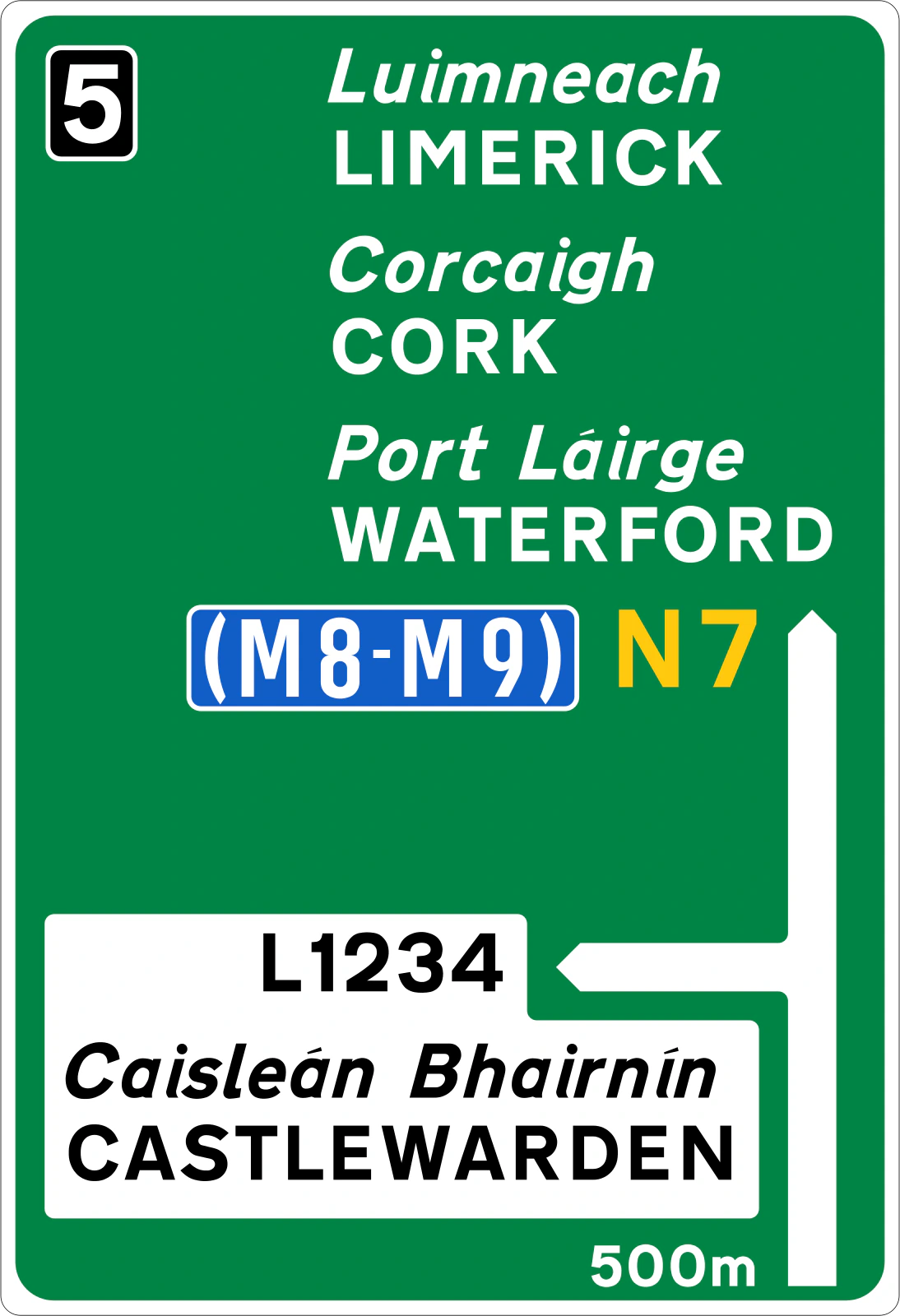
DIR-002 Map Type Advance Direction Sign helps you plan your route ahead.
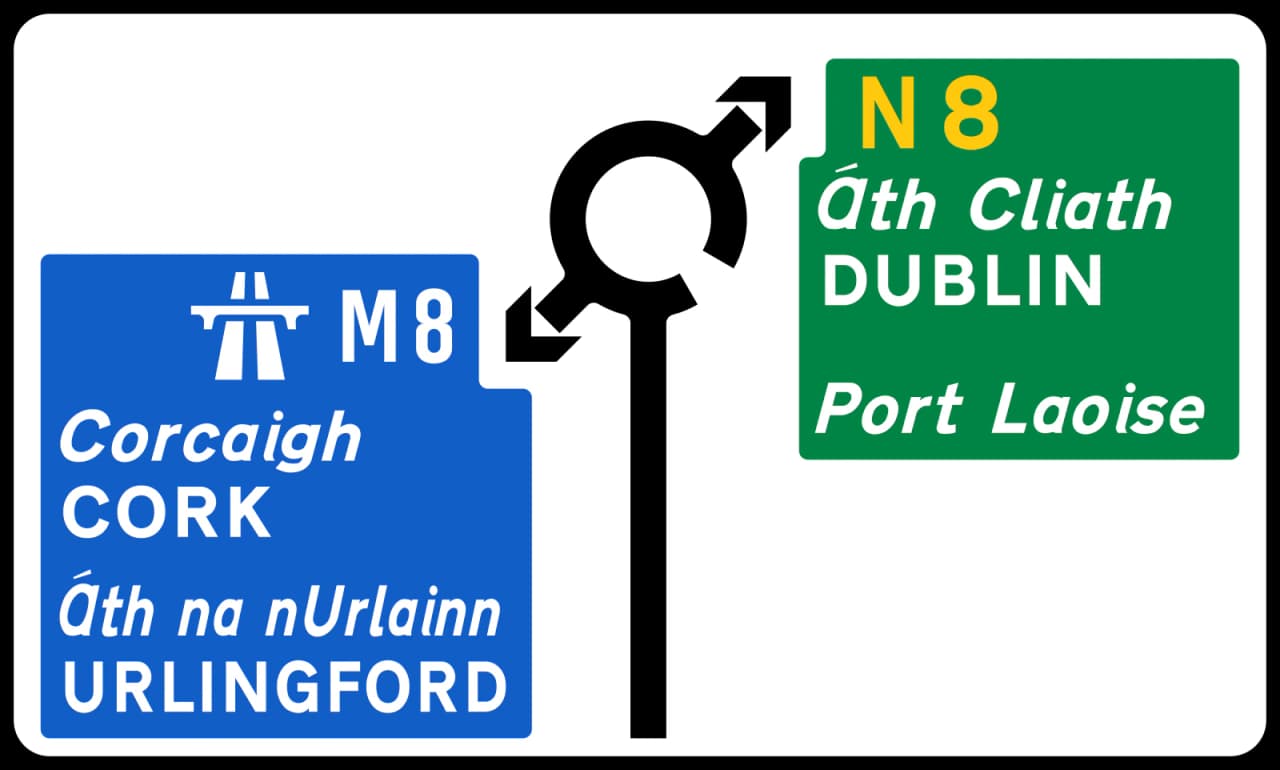
DIR-003 Map Type Advance Direction Sign (Roundabout): Your Guide to Navigating Roundabout Exits

Plan Your Route Early with the Stack Type Advance Direction Sign
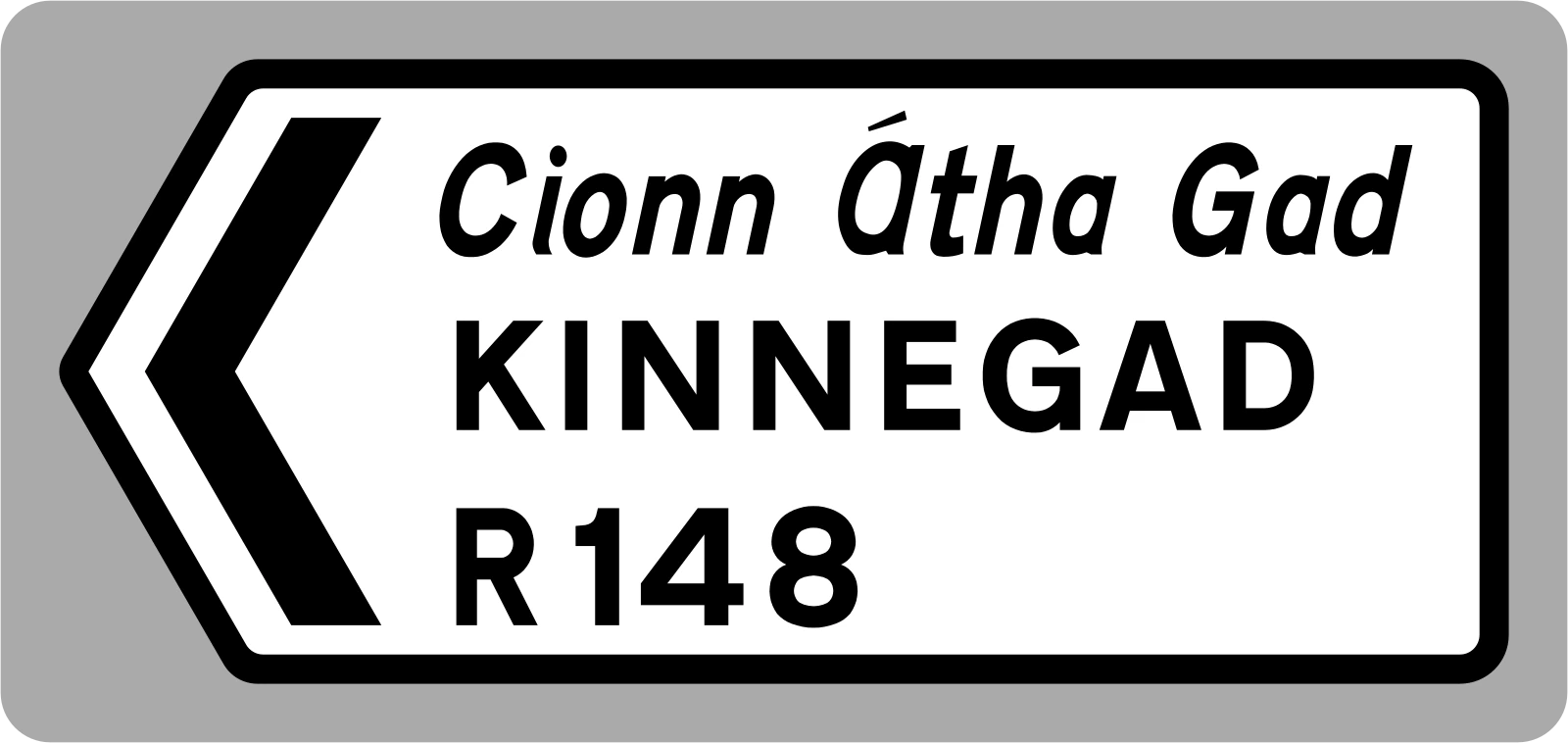
Understand the Direction Sign (DIR-005) to confidently choose your route and lane.

Navigate Smartly with the Overhead Gantry Sign (Non-Lane Drop)

Navigate ahead with Overhead Gantry Signs indicating Lane Drops.
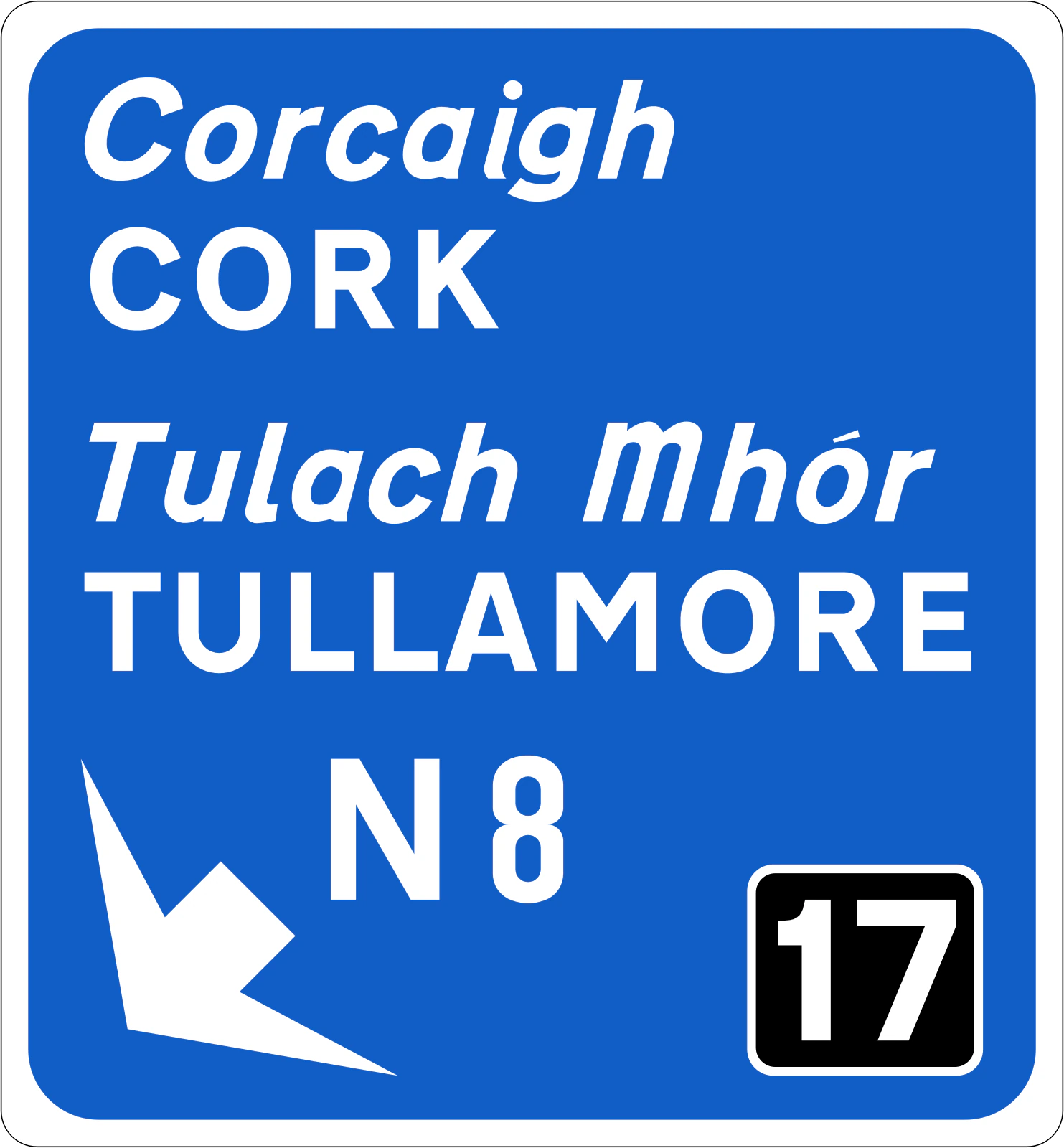
DIR-008 Exit Taper Gantry Sign helps you choose the correct route or lane before reaching the exit.
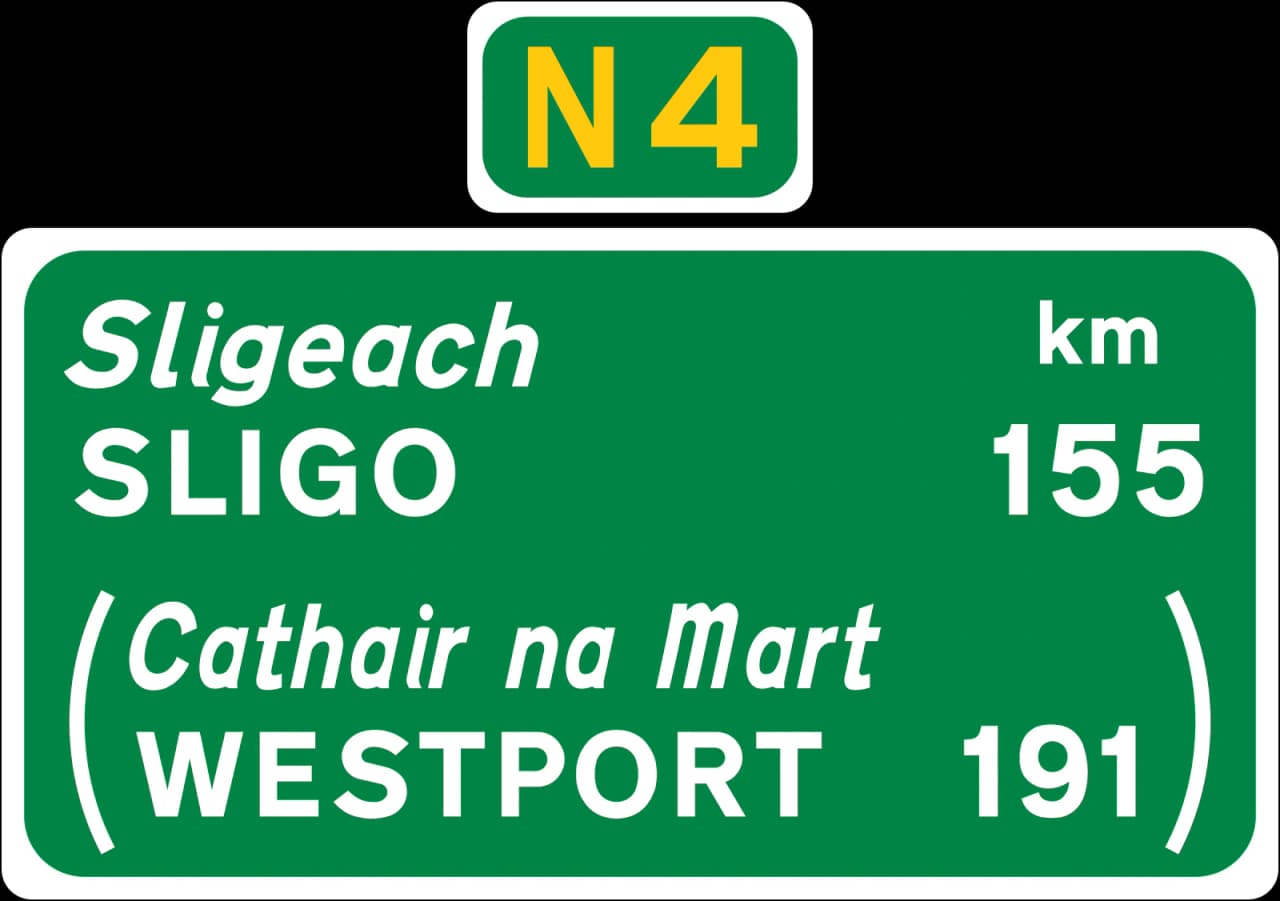
Know where you're going with the Route Confirmatory Sign (DIR-009).
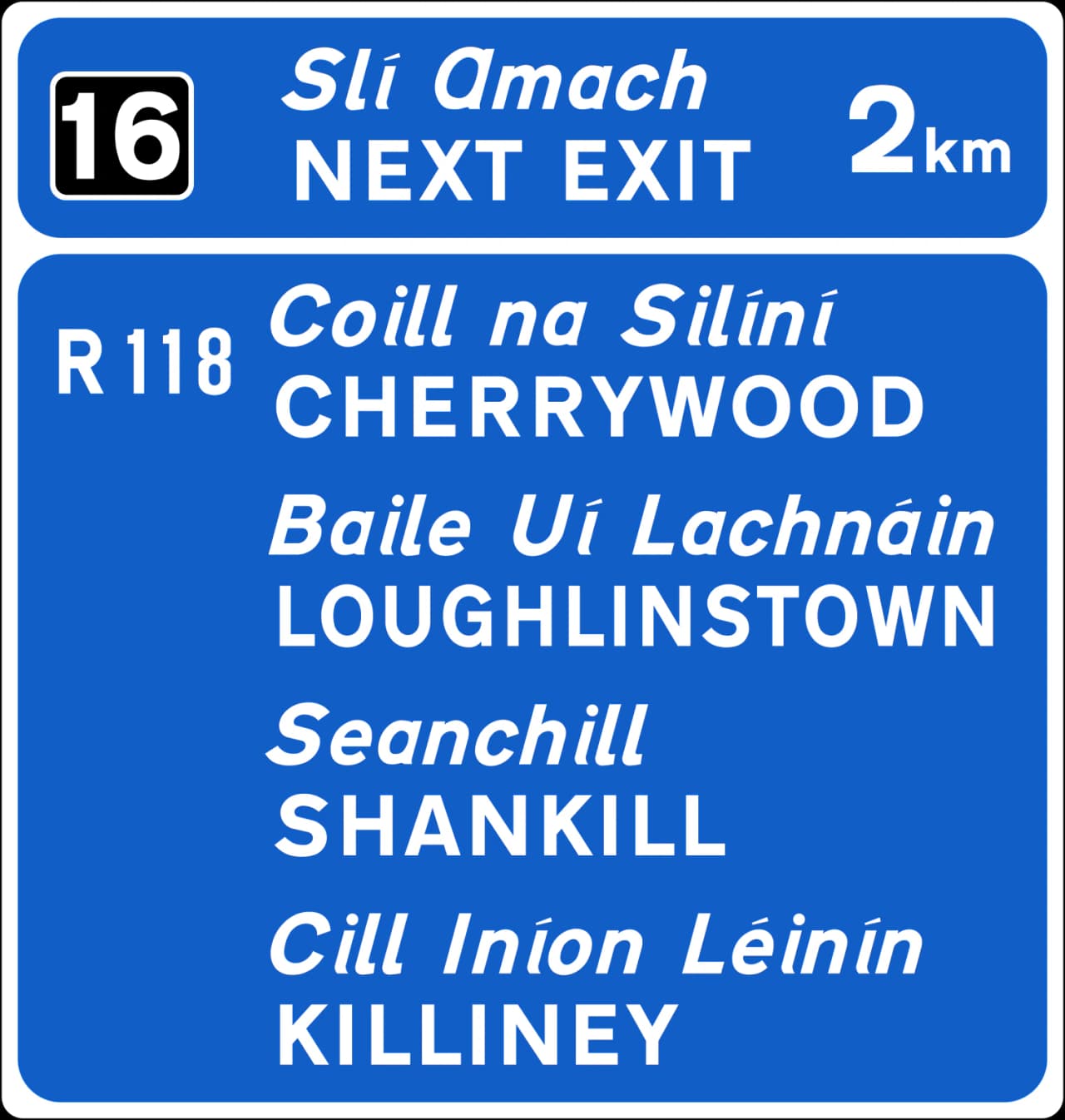
Prepare for your route with the Next Exit Sign (DIR-010).
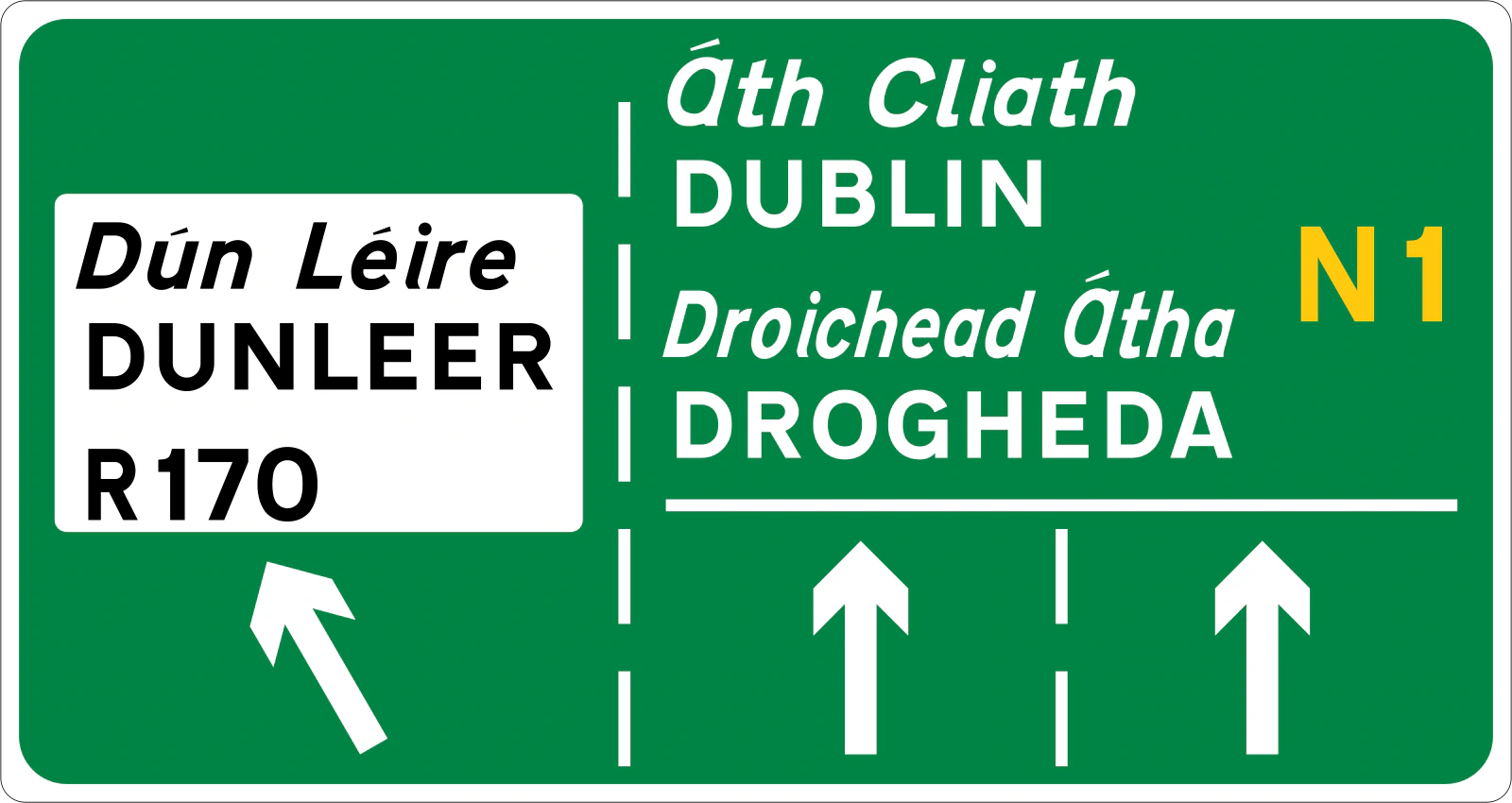
Choose Your Lane Early with the Lane Destination Sign

The Exit Sign (DIR-012) helps you choose your route and lane early.
Clear answers to common questions about the Directional Information Signs road sign category. Use this FAQ to review tricky rules, understand how these signs appear in exam scenarios, and remove confusion that often leads to mistakes in the Irish driving theory exam in Ireland.
Map-type advance direction signs provide a schematic, bird's-eye view of the road layout ahead, showing the relationship between different routes and exits. Stack-type advance direction signs are more linear, typically showing destinations and routes listed vertically, indicating which lane(s) to use for each.
Motorways have high speeds and multiple lanes, making early planning essential for safety. Directional signs, especially overhead gantry signs, inform drivers about upcoming exits, route numbers, and destinations, allowing them to choose the correct lane well in advance. This prevents sudden lane changes, which can be hazardous.
Never stop or reverse on a motorway. If you miss your exit, continue to the next available exit. You can then re-plan your route using your navigation system or by following signs for your destination from the motorway network.
Yes, most directional signs are advance direction signs, meaning they appear before the junction or exit they relate to, giving you time to prepare. Route confirmatory signs, however, appear after you have taken a route to confirm you are heading in the right direction.
Many directional signs, particularly on major routes and motorways, are bilingual to assist a wider range of travellers. You will often see place names and route numbers repeated in two languages.
Navigate through individual Irish road sign categories to focus your study on specific types of traffic signs. Select a group to practice and deepen your understanding, ensuring you are fully prepared for the Road Safety Authority Driver Theory Test.
Irish Road Sign Categories Overview