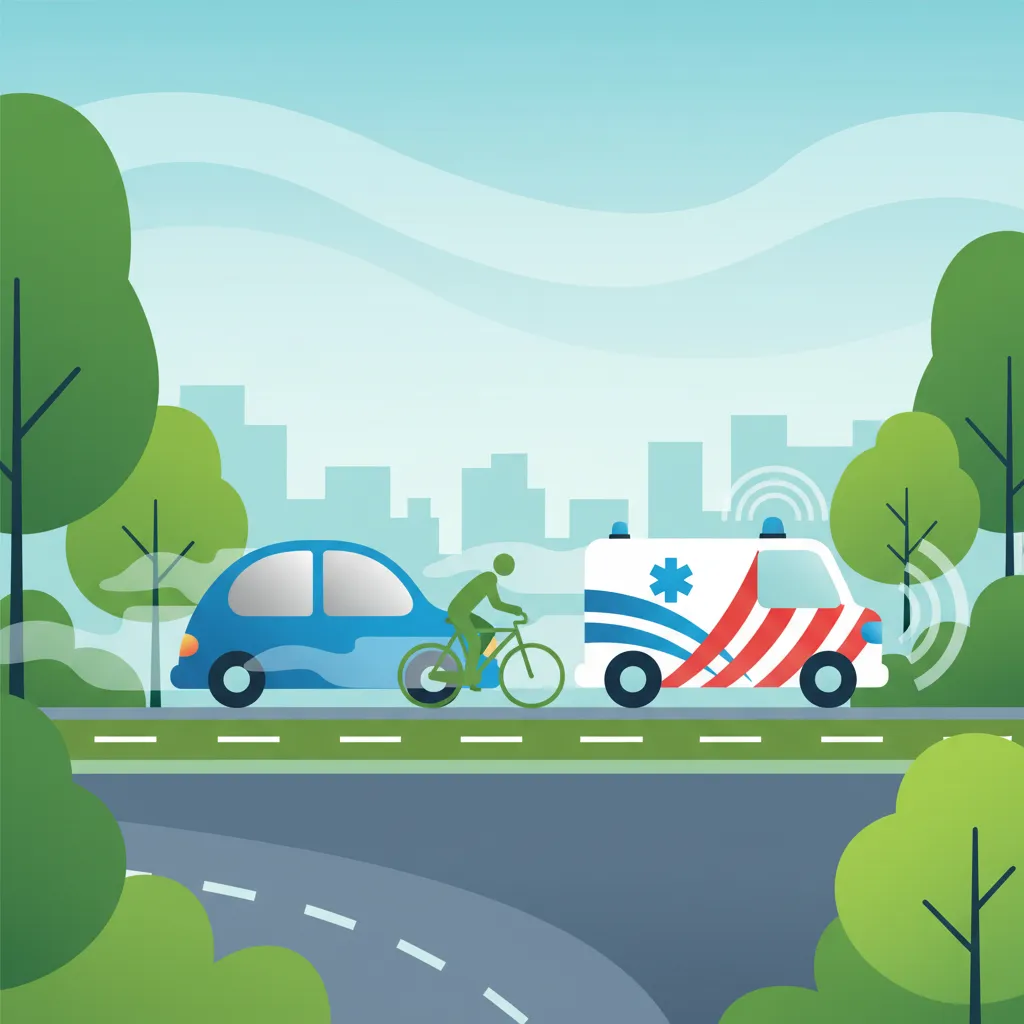
In the Netherlands, all road users must give way to emergency vehicles that are using blue flashing lights and a two-tone horn (siren). This rule ensures that police, fire brigades, and ambulances can reach incidents quickly. It's not just about stopping; it's about reacting safely and predictably to create a clear path without causing new hazards or breaking other essential traffic rules.
Theory topic content overview
Read the full theory topic guide for Emergency Vehicle Priority with structured, easy-to-scan content built for learners in the Netherlands. This detailed section explains the exact rule, meaning, traffic context, comparison points, and exam logic behind this Dutch driving theory topic so you can study faster, understand the concept more clearly, and avoid common interpretation mistakes on the theory test.
In the Netherlands, specific criteria determine what constitutes an emergency vehicle, granting it priority on the road. According to the Reglement Verkeersregels en Verkeerstekens 1990 (RVV 1990), a vehicle is officially considered an emergency vehicle when it is performing an urgent duty and is simultaneously using both:
This dual signal (both visual and audible) is critical. Without both blue lights and the siren active, a vehicle, even if it belongs to the police, fire brigade, or ambulance services, is not legally considered an emergency vehicle with automatic priority. This distinction is vital for your Dutch driving theory knowledge and practical application.
The primary services operating emergency vehicles are:
Other designated services, such as blood or organ transport, or certain Rijkswaterstaat vehicles, can also be granted emergency vehicle status if they are performing urgent duties and displaying the required blue lights and siren.
The rule to give priority to emergency vehicles is fundamental to road safety in the Netherlands for several reasons:
Your predictable and safe actions allow emergency responders to navigate traffic efficiently and safely, knowing that other road users will cooperate.
When an emergency vehicle with active blue flashing lights and siren approaches, your immediate response must be to safely make way. This involves a series of steps to ensure their unobstructed passage without creating new hazards.
Key Principle: Your actions should always be predictable and safe. Emergency vehicle drivers anticipate certain reactions from other road users. Sudden, erratic braking or swerving can put everyone at risk.
The way you give priority can vary depending on the traffic situation:
A common point of confusion for drivers, particularly in the Netherlands, is differentiating between "emergency vehicles" and "special vehicles."
Always remember: it's the combination of blue lights AND siren that activates the legal requirement for priority.
Understanding the rules is one thing; applying them safely under pressure is another. Here are common mistakes to avoid:
When you see or hear an emergency vehicle approaching with blue flashing lights and siren active on Dutch roads, remember: React calmly, predictably, and safely.
Your primary goal is to provide a clear, unobstructed path for them to pass, without creating new dangers for yourself or other road users. Always prioritize safety over speed when giving way. By doing so, you contribute to road safety and demonstrate the responsible driving behaviour expected by the CBR and Dutch traffic law.
In the Netherlands, only vehicles using both blue flashing lights and a siren simultaneously are classified as emergency vehicles with automatic priority under RVV 1990, including police, fire brigade, and ambulances. When you encounter one, you must safely create a clear path by slowing down, moving right, and signaling your intentions, but you must never break other traffic rules in the process. At traffic lights, do not run the red light—if safe, move slightly forward or to the side within your lane; otherwise stay stopped as the emergency vehicle will navigate around. Remember that yellow or green flashing lights (breakdown services, road maintenance) do not grant the same legal priority as blue lights with sirens.
A short set of high-value points that capture the most important ideas from this theory explanation.
An emergency vehicle legally requires BOTH blue flashing lights AND a siren active simultaneously
When you hear or see an emergency vehicle, react calmly and predictably by slowing down and moving to the right
You must never violate traffic rules (like running red lights) to make way for emergency vehicles
On roundabouts, complete your turn and exit before finding a safe place to pull over
Always check for additional emergency vehicles following the first one
Blue lights + siren together = legal obligation to give way; yellow or green flashing lights do NOT create automatic priority
On Dutch roundabouts: finish exiting before pulling over, never stop on the roundabout itself
The hard shoulder (vluchtstrook) is primarily for breakdowns; only use it when truly safe or explicitly instructed
In dense traffic jams, create a gap by moving slightly left or right within your lane rather than using the hard shoulder
Blood/organ transport vehicles without blue lights are not emergency vehicles under RVV 1990 despite flashing headlights or horns
Panicking and braking abruptly, which can cause rear-end collisions with vehicles behind you
Driving through a red light to make way, creating a dangerous situation for cross-traffic
Blocking the hard shoulder unnecessarily when a gap could be created within your own lane
Stopping suddenly on the roundabout instead of completing the turn and exiting safely first
Only checking mirrors once and missing emergency vehicles approaching from other directions
Start with a short, direct summary of Emergency Vehicle Priority before reading the full explanation below.
When an emergency vehicle with active blue flashing lights and siren approaches in the Netherlands, all road users must immediately give priority. This means safely making way by slowing down, moving to the side, or stopping, ensuring they can pass without obstruction. Remain calm and act predictably to assist their urgent passage without endangering yourself or others.
Review the most important terms, rule signals, and traffic concepts linked to Emergency Vehicle Priority.
Explore related theory topic pages connected to Emergency Vehicle Priority and continue with the next useful rule explanation.
See the common search queries learners use when trying to understand Emergency Vehicle Priority in the Netherlands.

Ready to deepen your understanding? Browse our comprehensive library of Dutch driving theory topics, rules, and concepts. Each section offers detailed explanations to help you solidify your knowledge and prepare thoroughly for your upcoming CBR driving theory examination.
Explore Driving Theory TopicsTheory topic content overview
A short set of high-value points that capture the most important ideas from this theory explanation.
An emergency vehicle legally requires BOTH blue flashing lights AND a siren active simultaneously
When you hear or see an emergency vehicle, react calmly and predictably by slowing down and moving to the right
You must never violate traffic rules (like running red lights) to make way for emergency vehicles
On roundabouts, complete your turn and exit before finding a safe place to pull over
Always check for additional emergency vehicles following the first one
Blue lights + siren together = legal obligation to give way; yellow or green flashing lights do NOT create automatic priority
On Dutch roundabouts: finish exiting before pulling over, never stop on the roundabout itself
The hard shoulder (vluchtstrook) is primarily for breakdowns; only use it when truly safe or explicitly instructed
In dense traffic jams, create a gap by moving slightly left or right within your lane rather than using the hard shoulder
Blood/organ transport vehicles without blue lights are not emergency vehicles under RVV 1990 despite flashing headlights or horns
Panicking and braking abruptly, which can cause rear-end collisions with vehicles behind you
Driving through a red light to make way, creating a dangerous situation for cross-traffic
Blocking the hard shoulder unnecessarily when a gap could be created within your own lane
Stopping suddenly on the roundabout instead of completing the turn and exiting safely first
Only checking mirrors once and missing emergency vehicles approaching from other directions
Start with a short, direct summary of Emergency Vehicle Priority before reading the full explanation below.
When an emergency vehicle with active blue flashing lights and siren approaches in the Netherlands, all road users must immediately give priority. This means safely making way by slowing down, moving to the side, or stopping, ensuring they can pass without obstruction. Remain calm and act predictably to assist their urgent passage without endangering yourself or others.
Review the most important terms, rule signals, and traffic concepts linked to Emergency Vehicle Priority.
Explore related theory topic pages connected to Emergency Vehicle Priority and continue with the next useful rule explanation.
See the common search queries learners use when trying to understand Emergency Vehicle Priority in the Netherlands.
Ready to deepen your understanding? Browse our comprehensive library of Dutch driving theory topics, rules, and concepts. Each section offers detailed explanations to help you solidify your knowledge and prepare thoroughly for your upcoming CBR driving theory examination.
Explore Driving Theory TopicsUse this exam-focused revision tip to understand how Emergency Vehicle Priority is likely to appear in theory questions for learners in the Netherlands. This section helps you identify the most testable part of the rule, avoid common traps, and remember the concept more effectively during Dutch driving theory exam preparation.
The CBR theory exam frequently tests your knowledge of how to safely react to emergency vehicles, especially at intersections or in congested traffic. Remember that all road users must give way, but always do so safely. Avoid making sudden movements or violating traffic lights, as this creates new hazards.
Read direct answers to the most common learner questions about Emergency Vehicle Priority in the Netherlands. This FAQ focuses on rule confusion, practical meaning, comparison with similar concepts, and the exact uncertainties that appear most often in Dutch driving theory revision and exam preparation.
In the Netherlands, an emergency vehicle requires priority when it is actively using both blue flashing lights and a two-tone horn (siren) to signal an urgent duty.
No, you must never cause a new hazard, danger, or violate essential traffic rules to make way. Prioritize safely, even if it means waiting for a suitable opportunity.
Move safely to the right (or left if appropriate for an emergency lane) to create an open lane for the emergency vehicle, typically by staying in your lane and keeping as far right as possible. Do not drive onto the hard shoulder in a traffic jam unless instructed.
Only make room if it is safe and the emergency vehicle cannot pass. Do not drive through a red light onto the intersection if it's unsafe; waiting is often the safer option.
Police vehicles, and other special vehicles like those from Rijkswaterstaat, may be exempt from some rules for good reason, even without full emergency signals. However, they only have absolute priority over all road users when using both blue lights and siren.
No, in the Netherlands, all road users must at all times give priority to drivers of emergency vehicles that are using their optical and sound signals. There are no exceptions to this rule.
Always check your mirrors and surroundings to ensure there isn't more than one emergency vehicle approaching. Continue to provide a clear path until all emergency responders have passed.
Leverage the targeted practice search to find questions that challenge your understanding of specific Dutch traffic rules or road signs. Focus your study efforts on areas where you need improvement and build a solid foundation for passing your CBR driving theory exam with confidence.