
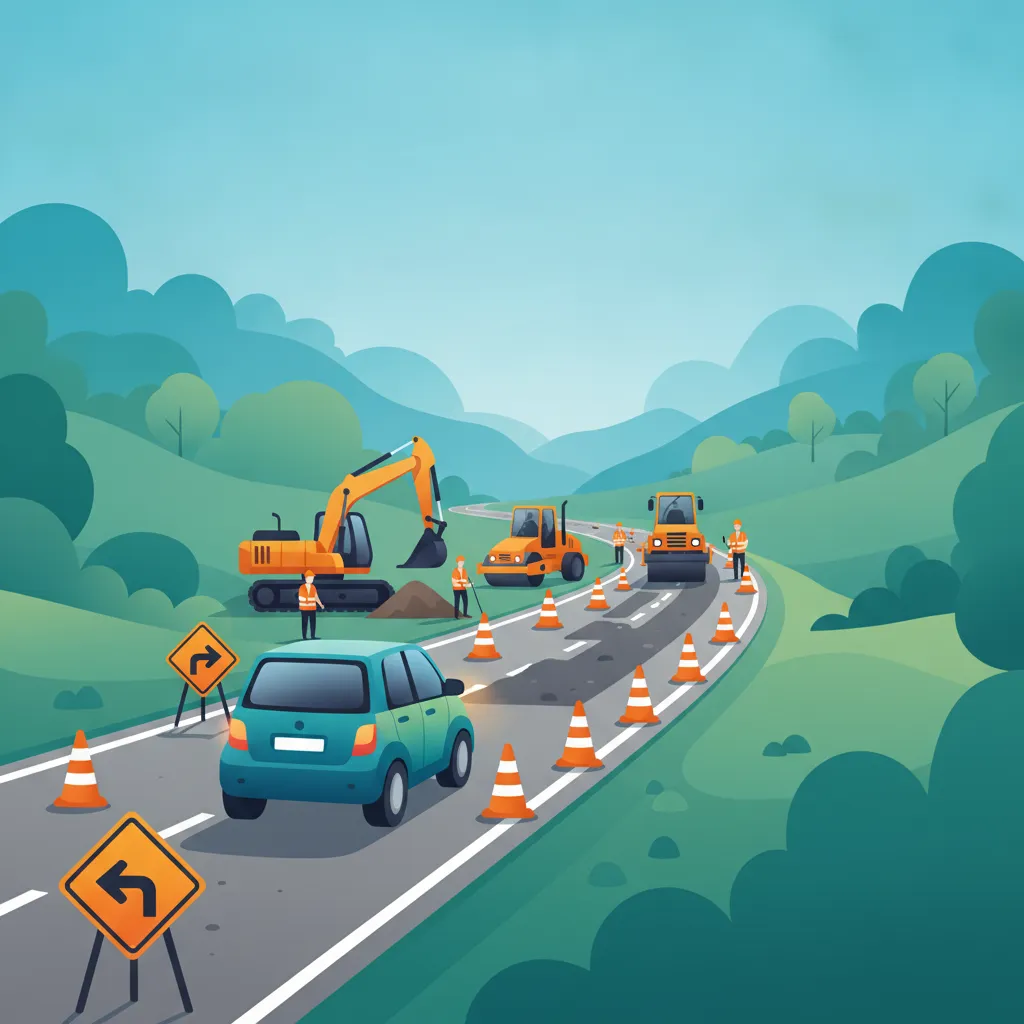
Road work zones are temporary sections of road where construction, maintenance, or repair is underway, often altering normal traffic flow. In Portugal, these areas are governed by specific temporary signage and rules that override permanent regulations. Understanding how to react to these changes, adjust your speed, and watch for workers is crucial for preventing accidents and passing your driving theory exam.
Theory topic content overview
Read the full theory topic guide for Road Work Zone Rules with structured, easy-to-scan content built for learners in Portugal. This detailed section explains the exact rule, meaning, traffic context, comparison points, and exam logic behind this Portuguese driving theory topic so you can study faster, understand the concept more clearly, and avoid common interpretation mistakes on the theory test.
Obras na Estrada) in PortugalRoad work zones, known as zonas de obras or obras na estrada in Portugal, are temporary sections of public roads where construction, maintenance, or repair activities are actively taking place. These areas fundamentally alter the normal flow of traffic and introduce unique hazards, demanding heightened awareness and strict adherence to special rules from all drivers. Unlike permanent road conditions, obras na estrada are dynamic environments that require constant adaptation.
Navigating road work zones safely is not just about avoiding accidents; it's a key area tested in the Portuguese driving theory exam (IMT test). These zones represent a significant safety challenge because:
Código da Estrada (Portuguese Road Code) and the Regulamento de Sinalização do Trânsito (RST – Traffic Signalling Regulation) contain specific articles governing behavior and signage in these areas (e.g., RST Art. 77º, 78º).Driving through a zona de obras requires a systematic approach to ensure safety and compliance with Portuguese traffic law.
Sinalização de Aproximação), typically yellow or orange, indicating a road work zone ahead. These signs (Sinal A23 - Obras) tell you to prepare for changes.Limite de Velocidade) are common and must be strictly obeyed, even if they seem overly cautious or the road appears clear. Remember, a reduced speed allows more time to react to unexpected hazards.Sinalização Temporária): This is the most crucial rule. Any temporary sign (orange/yellow background, usually on portable stands) overrides permanent signs. This includes speed limits, no overtaking signs (Proibido Ultrapassar), lane closure signs, and diversion instructions (Desvio).operários) may be focused on their tasks and less aware of traffic. Heavy machinery can move slowly, unpredictably, or across lanes. Give them ample space and be prepared for sudden stops or movements.agentes de trânsito) are present, their signals (sinalização luminosa temporária) take absolute precedence over all other signs, lights, or markings. Similarly, temporary traffic lights controlling circulação alternada (alternating traffic flow) must be strictly obeyed.The Regulamento de Sinalização do Trânsito specifies the types and principles of temporary signage in Portugal. These signs are designed to stand out:
Obras (roadworks), Passagem Estreita (narrow passage), or Trabalhos Móveis (mobile works).Ceder a Passagem (give way).Desvio) or lane changes.Dispositivos Complementares): These include cones, barriers, luminous arrows, and warning lights, all guiding traffic flow and highlighting hazards.A core principle for drivers in Portugal, especially for the IMT exam, is the supremacy of temporary rules.
zona de obras, your legal speed limit is 50 km/h.Obras on an Autoestrada (Motorway): You see a yellow sign A23 - Obras with a panel indicating the distance. Further along, a temporary Limite de Velocidade sign restricts you to 60 km/h, and cones funnel traffic into fewer lanes. You must reduce speed well in advance, signal early for lane changes, and maintain sufficient distance from the car in front, even if traffic is free-flowing.Circulação Alternada on a Rural Road: You encounter a sign indicating circulação alternada (alternating traffic) due to obras narrowing the road. This may be controlled by temporary traffic lights or flagmen. You must wait for your turn to proceed, even if the opposite lane seems clear, as oncoming traffic might be released at any moment.Trabalhos Móveis (Mobile Works): On an urban street, you see a utility vehicle with a yellow flashing light and a temporary A23 sign on its rear, indicating trabalhos móveis. These workers are constantly moving. You should pass them with extreme caution, giving them maximum lateral space, and being ready for sudden stops or shifts in their path.Learners and even experienced drivers often make specific errors in zonas de obras:
Não ultrapassar em zona de obras se a sinalização ou espaço não o permitir (Do not overtake in work zones if signage or space does not allow it).When encountering obras na estrada in Portugal, adopt a "Stop, Observe, Adapt" mindset. Prioritise temporary signage and the instructions of any traffic agents above all else. Reduce your speed, increase your following distance, and remain highly alert for both visible and potential hazards. Mastering this vigilance and understanding the hierarchy of signs is vital for both your safety on Portuguese roads and success in your driving theory examination.
Start with a short, direct summary of Road Work Zone Rules before reading the full explanation below.
When entering a road work zone in Portugal, drivers must immediately reduce speed, increase following distance, and strictly obey all temporary signage, even if it contradicts permanent signs. Be highly alert for workers, construction equipment, narrow lanes, and altered road surfaces. Always be prepared for unexpected stops or changes in traffic flow.
Review the most important terms, rule signals, and traffic concepts linked to Road Work Zone Rules.
Explore related theory topic pages connected to Road Work Zone Rules and continue with the next useful rule explanation.
See the common search queries learners use when trying to understand Road Work Zone Rules in Portugal.

Continue your preparation for the Portuguese driving test by exploring specific theory topics in detail. Understand the Código da Estrada, review road signs, and clarify complex traffic regulations to ensure you're fully prepared for the IMT examination.
Explore Driving Theory TopicsTheory topic content overview
Start with a short, direct summary of Road Work Zone Rules before reading the full explanation below.
When entering a road work zone in Portugal, drivers must immediately reduce speed, increase following distance, and strictly obey all temporary signage, even if it contradicts permanent signs. Be highly alert for workers, construction equipment, narrow lanes, and altered road surfaces. Always be prepared for unexpected stops or changes in traffic flow.
Review the most important terms, rule signals, and traffic concepts linked to Road Work Zone Rules.
Explore related theory topic pages connected to Road Work Zone Rules and continue with the next useful rule explanation.
See the common search queries learners use when trying to understand Road Work Zone Rules in Portugal.
Continue your preparation for the Portuguese driving test by exploring specific theory topics in detail. Understand the Código da Estrada, review road signs, and clarify complex traffic regulations to ensure you're fully prepared for the IMT examination.
Explore Driving Theory TopicsUse this exam-focused revision tip to understand how Road Work Zone Rules is likely to appear in theory questions for learners in Portugal. This section helps you identify the most testable part of the rule, avoid common traps, and remember the concept more effectively during Portuguese driving theory exam preparation.
In your Portuguese driving theory exam, remember that temporary signage in road work zones *always* takes precedence over permanent signs. Pay close attention to questions involving speed limits, overtaking restrictions, and the role of traffic agents in these areas, as these are common areas of confusion.
Read direct answers to the most common learner questions about Road Work Zone Rules in Portugal. This FAQ focuses on rule confusion, practical meaning, comparison with similar concepts, and the exact uncertainties that appear most often in Portuguese driving theory revision and exam preparation.
Road work zones are areas where construction, maintenance, or repair activities are ongoing on or near the roadway, involving temporary changes to traffic conditions and potential hazards.
In Portugal, temporary signage (sinalização temporária) erected in a road work zone always takes precedence over permanent road signs and markings.
Yes, you must significantly reduce your speed when approaching and driving through road work zones, often adhering to specific temporary speed limits indicated by signs.
Key hazards include workers on the road, construction equipment, narrow or altered lanes, uneven surfaces, loose gravel, and sudden traffic changes or stops.
Generally, no. Overtaking is typically prohibited in road work zones due to reduced space, limited visibility, and the presence of workers, unless explicitly permitted by temporary signage.
Drive with extreme caution, maintain a safe distance, and be prepared to stop. Always obey any signals given by traffic agents (agentes de trânsito) or the workers themselves.
Follow temporary lane markings and signs carefully. Signal your intentions early and execute lane changes smoothly and cautiously, anticipating other drivers' movements.
The IMT exam often includes questions on identifying temporary signage, understanding priority rules, and safe driving behavior specific to road work environments, testing your awareness of the Código da Estrada.
Utilize the powerful search tool to refine your Portuguese driving theory practice. Pinpoint questions related to specific traffic laws, road signs, or complex scenarios from the Código da Estrada. Begin targeted revision now to boost your understanding and confidently approach your IMT driving exam.