
Navigate Portugal's roads safely by mastering the Código da Estrada's speed limits. This section prepares you for IMT theory exam questions on maximum speeds and teaches you how to determine a safe, appropriate speed for any driving situation, ensuring you pass your test and drive responsibly.
This category covers the mandatory speed limits defined by Portuguese traffic legislation for different vehicle categories and road environments across the national network. You will learn to calculate stopping distances and adjust your speed based on weather conditions to succeed in your official theory test.
Speeding is a leading cause of severe road accidents in Portugal, and understanding how enforcement works is vital for both your practical driving safety and your theoretical exam success. This guide clarifies the distinction between fixed SINCRO installations, which are generally signposted, and mobile police units that can be deployed at any time. You will learn why relying on third-party location apps is discouraged and why sticking to posted speed limits is the only reliable way to prevent severe penalties and licence disqualification.
In the context of the Portuguese driving theory exam, passing often depends on your ability to distinguish between a legal speed limit and a safe, moderate speed. You will learn why adapting your driving to environmental factors like rain, fog, and traffic is a mandatory legal duty under the Código da Estrada, rather than a mere suggestion. Mastering these principles of risk perception will improve your defensive driving skills and help you avoid common traps set by the IMT.
Understanding that the posted speed limit is a maximum rather than a target is essential for every driver in Portugal. This guide details how to correctly interpret Article 24 and 25 of the Código da Estrada, ensuring you can confidently manage your vehicle's speed during rain, fog, or heavy traffic. Learn how to apply the 'stop within the visible space' principle to avoid common pitfalls on the IMT theory exam.
Navigate Portugal's roads safely by mastering the Código da Estrada's speed limits and understanding safe driving speed calculations. This section prepares you for IMT theory exam questions on maximum speeds and teaches you how to determine an appropriate speed for any driving situation, ensuring you pass your Portuguese driving test.
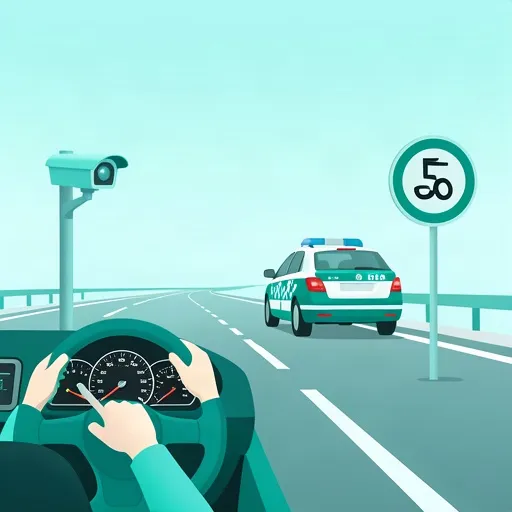
Speeding is a leading cause of severe road accidents in Portugal, and understanding how enforcement works is vital for both your practical driving safety and your theoretical exam success. This guide clarifies the distinction between fixed SINCRO installations, which are generally signposted, and mobile police units that can be deployed at any time. You will learn why relying on third-party location apps is discouraged and why sticking to posted speed limits is the only reliable way to prevent severe penalties and licence disqualification.
Updated on Oct 20, 2026

In the context of the Portuguese driving theory exam, passing often depends on your ability to distinguish between a legal speed limit and a safe, moderate speed. You will learn why adapting your driving to environmental factors like rain, fog, and traffic is a mandatory legal duty under the Código da Estrada, rather than a mere suggestion. Mastering these principles of risk perception will improve your defensive driving skills and help you avoid common traps set by the IMT.
Updated on Aug 25, 2026

Understanding that the posted speed limit is a maximum rather than a target is essential for every driver in Portugal. This guide details how to correctly interpret Article 24 and 25 of the Código da Estrada, ensuring you can confidently manage your vehicle's speed during rain, fog, or heavy traffic. Learn how to apply the 'stop within the visible space' principle to avoid common pitfalls on the IMT theory exam.
Updated on Aug 25, 2026

Learners often encounter questions about speed limits and safety zones in the IMT theory exam. This article breaks down the physics of collision energy, the importance of traffic calming measures, and the practical application of 30 km/h limits in Portuguese urban environments, helping you master both the theory and the defensive driving mindset required for your license.
Updated on Aug 13, 2026

Learn the essential two-second rule for maintaining safe following distances in Portugal, a key topic for your IMT driving theory test. This guide breaks down the principle, its practical application, and crucial adjustments needed for varying weather and road conditions, helping you drive more safely and confidently.
Updated on Jun 11, 2026

This article delves into the critical components of stopping distance in Portugal: reaction distance and braking distance. You will learn how factors such as speed, road conditions like rain, and tyre wear influence these distances, directly impacting safe following distances mandated by the Código da Estrada. Understanding this is essential preparation for the IMT theory exam.
Updated on Jun 11, 2026

Learn the essential principles for calculating and maintaining safe distances between vehicles on Portuguese roads, as mandated by the Código da Estrada. This guide breaks down reaction time, braking distance, and the factors that influence them, providing vital knowledge for your IMT theory exam preparation and safe driving on any road condition.
Updated on Jun 11, 2026

Learn the critical rules for maintaining 'distância de segurança' according to Portugal's Código da Estrada. This guide explains the legal requirements and provides practical advice on adjusting your following distance based on speed, road conditions like rain or fog, and the type of vehicles around you, all vital for the IMT theory exam.
Updated on Jun 11, 2026

Navigate Portugal's roads safely and pass your theory exam by understanding the specific speed limits applicable to different vehicle types and road classifications. This guide breaks down the maximum speeds for cars, motorcycles, and vehicles with trailers on urban roads, rural routes, 'vias rápidas', and 'autoestradas', as defined by the Código da Estrada.
Updated on Jun 11, 2026

Navigate Portugal's roads with confidence by understanding the specific speed limits for different road types. This guide clarifies the maximum speeds allowed within built-up areas (localidades), on rural roads, 'vias rápidas' (express roads), and 'autoestradas' (motorways), as per Article 27.º of the Código da Estrada. Mastering these distinctions is essential for your driving theory exam and safe driving practice in Portugal.
Updated on Jun 11, 2026

On Portuguese motorways (autoestradas), you'll encounter different speed regulations. This article breaks down the mandatory minimum and maximum speed limits, explaining their legal implications and how they are enforced. We also cover recommended speeds, clarifying that these are advisory, not obligatory. Grasping these distinctions is vital for passing your IMT driving theory test and driving safely.
Updated on Jun 11, 2026

Navigate Portugal's roads safely and pass your theory exam with confidence by understanding the specific speed restrictions for new drivers and those in their probationary period (período probatório). This article breaks down the often-confusing speed limits, focusing on critical areas like motorways, ensuring you know the rules beyond the standard limits.
Updated on Jun 11, 2026

Understanding the rationale and application of 30 km/h speed limits in Portuguese cities is crucial for safe driving and theory exam success. This article delves into the safety benefits, drawing parallels with 'Vision Zero' and 'Safe System' philosophies, and explains how these lower speeds directly impact accident rates and urban livability as per the Código da Estrada. Prepare to answer exam questions confidently by grasping the importance of reduced speeds in built-up areas.
Updated on Jun 11, 2026

Learn all about the 'Zona 30' (30 km/h zones) in Portugal, a critical topic for your IMT theory exam. This article details the purpose of these zones, the specific signage (G4a entry and G10 exit signs), and the legal implications of driving within them. Understanding these reduced speed areas is essential for safe urban driving and demonstrating your knowledge of Portuguese traffic law.
Updated on Jun 11, 2026

Navigate Portugal's autoestradas with confidence by understanding all speed-related signage. This article explains maximum speed limits, minimum speed requirements mandated by law, and recommended speeds advisory signs, all essential for safe driving and passing your IMT theory test. Learn how to correctly interpret these signs and their implications under Portuguese traffic law.
Updated on Jun 11, 2026

Driving near schools in Portugal requires special attention to speed limits and safety precautions. This article breaks down the Código da Estrada rules for school zones, including reduced speeds and enhanced caution needed, all vital for passing your theory test and driving safely.
Updated on Jun 11, 2026

Learn the critical link between excessive speed and severe accident outcomes in Portugal, a key topic for your IMT theory exam. We delve into the physics of kinetic energy and stopping distances, supported by ANSR statistics, to underscore why adhering to speed limits is paramount for road safety and exam success.
Updated on Jun 8, 2026

Delve into the fundamental physics that dictates the severity of road accidents in Portugal. This article clarifies how speed, kinetic energy, and driver reaction time interact in a non-linear fashion, drastically increasing danger. Learning these concepts is essential for comprehending safe driving principles and succeeding in the IMT theory exam.
Updated on Jun 8, 2026
Discover other categories connected to Speed Limits & Safe Speed Portugal. These sections help you explore additional topics, expand your understanding of driving theory in Portuguese, and build a more complete picture of the rules and situations tested during the exam.
Find answers to common questions learners ask about Speed Limits & Safe Speed Portugal. This section helps clarify difficult concepts, highlight critical exam information, and support your preparation for the Portuguese driving theory exam in Portugal.
In Portugal, standard speed limits vary by road type: 50 km/h in built-up areas, 90 km/h outside built-up areas on single carriageways, 100 km/h on dual carriageways (not motorways), and 120 km/h on motorways (autoestradas). Specific signs may alter these limits.
The legal speed limit is the maximum allowed speed under ideal conditions. Safe speed, however, is the speed appropriate for the current conditions, which may be significantly lower than the legal limit due to factors like rain, fog, heavy traffic, poor road surface, or sharp curves, ensuring you can stop safely if needed.
Yes, speed limits can vary for different vehicle types, particularly for heavy goods vehicles, buses, and vehicles with trailers. These are typically lower than for passenger cars and motorcycles and are detailed within the Código da Estrada and often indicated by specific road signs.
Adverse weather conditions such as rain, fog, or strong winds significantly reduce visibility and tyre grip. The Código da Estrada requires drivers to reduce speed substantially below the legal limit in such conditions to maintain adequate stopping distance and control of the vehicle.
Exceeding speed limits in Portugal results in fines, and depending on the severity, can also lead to points being deducted from your driving licence or even its temporary suspension. Speeding is considered a serious traffic offense due to its contribution to accidents.
Ready to deepen your understanding of Portuguese road law and prepare for your IMT driving exam? Browse through our carefully organized article categories to focus on specific areas like traffic signs, vehicle maneuvers, or priority rules. Build a robust knowledge base for confident driving.
Explore Article Categories