
Navigate Portugal's roads with confidence by mastering traffic signs, signals, and road markings. This comprehensive category covers everything you need to know for your IMT theory exam, from basic symbols to complex priority situations.
Mastering these signals is a core requirement for passing the Portuguese theory test and ensuring safe navigation on national roads. Our detailed guides clarify complex priority situations, regulatory signs, and road markings according to current IMT standards.
Learn how to correctly interpret danger signs, known in Portugal as sinais de perigo, to ensure your safety and success in the official theory exam. This article details how to identify key hazard categories, understand the role of supplemental panels, and apply appropriate defensive maneuvers to avoid common pitfalls on the test.
Understanding warning signs is more than just memorizing shapes; it is about anticipating road hazards and adapting your driving behavior accordingly. This guide clarifies how to interpret these triangular signs, from school zones to slippery road conditions, ensuring you are prepared for both practical scenarios and trickier exam questions. You will learn why these signs are vital for safety and how to correctly apply the rules of the road when you encounter them.
Understanding warning signs is a critical component of the Portuguese driving theory test, as these signs alert drivers to upcoming hazards before they become immediate dangers. This article breaks down how to recognize these signs according to the Código da Estrada and explains the expected driving behavior required for each. You will gain the skills needed to make split-second decisions and avoid common traps in your IMT exam.
Understand the critical importance of traffic signs, signals, and road markings in Portugal for safe driving and your IMT theory exam preparation. Our detailed articles cover official Portuguese road law, including the Código da Estrada, to ensure you master all aspects of driving theory.
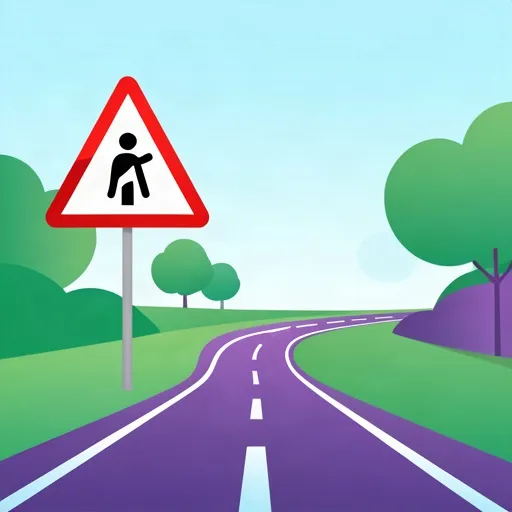
Learn how to correctly interpret danger signs, known in Portugal as sinais de perigo, to ensure your safety and success in the official theory exam. This article details how to identify key hazard categories, understand the role of supplemental panels, and apply appropriate defensive maneuvers to avoid common pitfalls on the test.
Updated on Oct 3, 2026
Understanding warning signs is more than just memorizing shapes; it is about anticipating road hazards and adapting your driving behavior accordingly. This guide clarifies how to interpret these triangular signs, from school zones to slippery road conditions, ensuring you are prepared for both practical scenarios and trickier exam questions. You will learn why these signs are vital for safety and how to correctly apply the rules of the road when you encounter them.
Updated on Oct 3, 2026
Understanding warning signs is a critical component of the Portuguese driving theory test, as these signs alert drivers to upcoming hazards before they become immediate dangers. This article breaks down how to recognize these signs according to the Código da Estrada and explains the expected driving behavior required for each. You will gain the skills needed to make split-second decisions and avoid common traps in your IMT exam.
Updated on Oct 3, 2026

Understanding the specific responsibilities of drivers near maintenance areas is a key component of the Portuguese theory curriculum. This guide covers how to identify temporary signaling, the importance of strictly adhering to reduced speed limits, and the professional driving behavior required to keep road workers safe. By following these rules, you will gain the insight needed to handle complex roadwork scenarios safely and successfully navigate related exam questions.
Updated on Aug 25, 2026

Understanding the distinct legal requirements of Portugal's STOP (B2) and Give Way (B1) signs is essential for all learner drivers. This article details precisely when you must come to a complete halt and when you need only to yield, adhering strictly to Portuguese traffic law and IMT exam standards. Grasping these priority rules will enhance your road safety and improve your performance on the official theory examination.
Updated on Jul 2, 2026

Navigate Portuguese intersections with confidence by mastering the meanings of priority signs like B1 (Give Way), B2 (STOP), and the Priority Road sign. This guide details your exact obligations at each sign, crucial for both passing your theory exam and ensuring safe driving on Portuguese roads.
Updated on Jul 2, 2026

Navigate Portugal's roads with confidence by learning to interpret directional and informational signs. This guide breaks down the colour coding, symbols, and text used on signs guiding you to destinations, services, and exits. Essential knowledge for safe driving and succeeding in the Instituto da Mobilidade e dos Transportes (IMT) theory exam.
Updated on Jun 29, 2026

Navigate Portugal's roads with confidence by understanding its road sign colour system. This guide details how green signs signify motorways (autoestradas), blue signs indicate express roads (vias rápidas), and white signs direct you on local routes. Learn to interpret destination, distance, and service information effectively, a vital skill for both passing your IMT theory test and ensuring safe travel across Portugal.
Updated on Jun 29, 2026

Navigate Portugal's roads with confidence by understanding every road marking. This article breaks down the crucial rules behind longitudinal lines, direction arrows, and colored markings, directly relating them to Portuguese traffic law and the IMT theory test. Prepare thoroughly by mastering these essential visual cues.
Updated on Jun 11, 2026

Master the nuances of longitudinal road markings and direction arrows on Portuguese roads. This guide clarifies the legal implications of continuous and broken lines, crucial for understanding when lane changes and crossings are permissible. You will learn how lane arrows dictate your path before intersections, a key element for safe driving and success in your IMT theory exam.
Updated on Jun 11, 2026

Learn to identify and interpret Portuguese road signs I8 and A14, which alert drivers to pedestrian crossings and school zones. Understanding the obligations associated with these signs, as mandated by the Código da Estrada, is essential for safe driving and passing your theory exam. This guide clarifies driver responsibilities, ensuring you know when and how to yield to pedestrians and children.
Updated on Jun 11, 2026

Learn to interpret the diverse road markings encountered in Portugal, including the significance of yellow lines that often override white ones, and the specific rules for pedestrian crossings (passadeiras), bus lanes, and cycle lanes. This knowledge is vital for passing your IMT theory exam and driving safely and legally within Portugal's traffic system.
Updated on Jun 11, 2026

Navigating Portugal's roads requires a clear understanding of its regulatory signs, or 'sinais de regulamentação'. This guide demystifies the key differences between signs indicating priority, prohibition, and obligation, focusing on their visual cues like shape and colour. Essential knowledge for passing the IMT theory exam and driving confidently.
Updated on Jun 11, 2026

Navigate Portugal's roads with confidence by understanding essential prohibition signs, from no entry and speed limits to parking restrictions. This guide clarifies the purpose and interpretation of 'sinais de proibição' and their common exam traps, ensuring you comply with the Código da Estrada and excel in your IMT theory test.
Updated on Jun 11, 2026

Prepare for your Portuguese driving theory exam by thoroughly understanding obligation signs (Sinais de Obrigação) and key priority rules, including STOP and 'give way' (cedência de passagem) signs. This guide will equip you with the knowledge to interpret these regulatory signals, navigate intersections confidently, and avoid common mistakes frequently tested by the IMT.
Updated on Jun 11, 2026

Navigate Portuguese junctions with confidence by understanding every aspect of traffic light signals. This guide clarifies the standard red, amber, and green meanings and delves into the critical role of directional arrows in regulating traffic flow. Proper comprehension is essential for safe driving and for succeeding in your Portuguese driving theory test, ensuring you know exactly when to stop, when to proceed, and when to follow a specific direction.
Updated on Jun 11, 2026

Navigate Portugal's complex traffic light system with confidence. This guide breaks down the meanings of flashing amber and red signals, specialized lights for pedestrians and cyclists, and the critical hierarchy of signals (officer > light > sign) mandated by the Código da Estrada. Essential knowledge for your Portuguese driving theory exam.
Updated on Jun 11, 2026
Discover other categories connected to Traffic Signs and Signals Portugal. These sections help you explore additional topics, expand your understanding of driving theory in Portuguese, and build a more complete picture of the rules and situations tested during the exam.
Find answers to common questions learners ask about Traffic Signs and Signals Portugal. This section helps clarify difficult concepts, highlight critical exam information, and support your preparation for the Portuguese driving theory exam in Portugal.
In Portugal, traffic signs are categorized into warning signs (sinais de advertência), regulatory signs (sinais de regulamentação), mandatory signs (sinais de obrigação), prohibition signs (sinais de proibição), priority signs (sinais de cedência de passagem e paragem), information signs (sinais de indicação), direction signs (sinais de mensagem variável), and temporary roadwork signs. Understanding each category is key to safe driving and passing the IMT theory exam.
Portuguese traffic lights follow standard international conventions. Red means stop, amber means prepare to stop (or proceed with caution if stopping is unsafe), and green means proceed if safe. Flashing amber signals caution, and pedestrian crossing lights have specific meanings for drivers and pedestrians.
In case of conflict in Portugal, signals from traffic officers (agentes reguladores do trânsito) take precedence over all other signals, including traffic lights and signs. Traffic lights (sinais luminosos) take precedence over road signs (sinais de trânsito) and road markings (marcas rodoviárias), except for priority signs.
Yes, road markings are critical for understanding lane usage, direction, prohibited areas, and pedestrian crossings. They work in conjunction with traffic signs and signals to guide traffic flow and ensure safety. Ignoring road markings can lead to fines and dangerous situations.
Common mistakes include confusing similar-looking signs (e.g., priority signs, prohibition signs), misinterpreting the meaning of regulatory signs, and failing to recognize temporary roadwork signs. Always pay close attention to the shape, color, and symbol of each sign and its context.
Ready to deepen your understanding of Portuguese road law and prepare for your IMT driving exam? Browse through our carefully organized article categories to focus on specific areas like traffic signs, vehicle maneuvers, or priority rules. Build a robust knowledge base for confident driving.
Explore Article Categories