When learning for your Irish Driver Theory Test, understanding how to safely overtake tractors and cyclists is paramount. This guide, based on the RSA's 'Rules of the Road', explains the legal requirements and practical considerations for these manoeuvres, focusing on hazard awareness and avoiding common exam pitfalls. Learn how to give adequate space and adhere to speed limits, ensuring safety for all road users.
Article content overview
Understanding the nuances of overtaking vulnerable road users is a cornerstone of safe driving and a critical component of the Irish Driver Theory Test. While the 'Rules of the Road' provide a clear framework, specific situations involving tractors and cyclists demand heightened awareness and adherence to priority rules. This article, drawing directly from the Road Safety Authority (RSA) guidelines, will delve into the essential principles for safely overtaking these vehicles, highlighting potential exam traps and practical considerations for learners preparing for their theory test in Ireland.
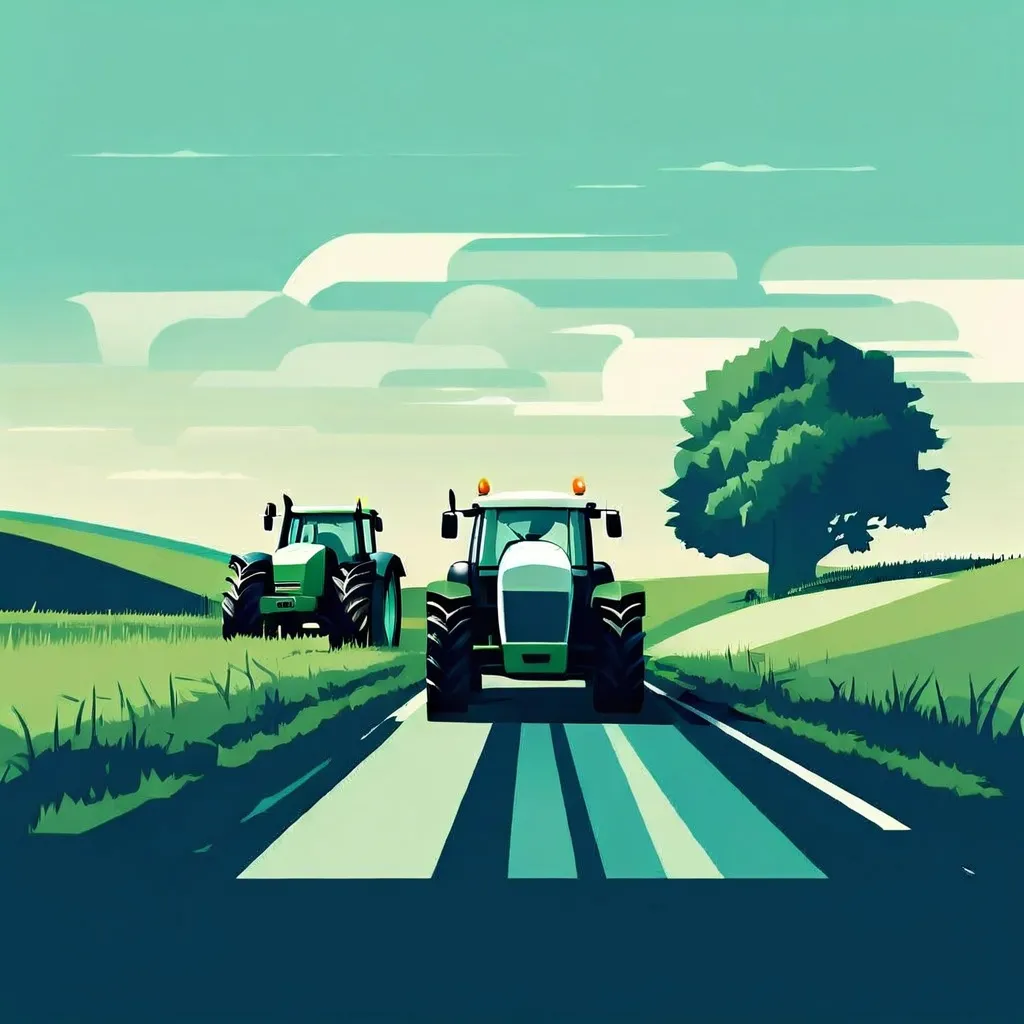
Tractors and cyclists, while significantly different in their operational characteristics, share a common thread: they are more vulnerable than motor vehicles on public roads. Tractors, often large, slow-moving, and sometimes carrying equipment, present unique challenges, particularly on rural Irish roads where they are frequently encountered. Cyclists, on the other hand, are inherently less protected and can be easily affected by road conditions and the actions of other drivers. Recognising this inherent vulnerability is the first step towards safe overtaking.
Tractors operating on public roads in Ireland must comply with general road traffic laws. Drivers of these agricultural vehicles are expected to keep to the left to allow faster traffic to pass, and their mirrors must provide an adequate view of the road behind them. It is crucial to remember that carrying a passenger on a tractor is only permitted if the vehicle is specifically equipped for it, a detail that might appear in theory test questions.
When you encounter a tractor, particularly on narrower roads, patience is key. Overtaking a tractor requires a significant amount of space and a clear view of the road ahead. Unlike many other vehicles, tractors may not always have advanced signalling capabilities or the ability to manoeuvre quickly. The RSA emphasises that you must not break the speed limit, even when overtaking, and this applies equally to slower-moving vehicles like tractors. A ‘LONG VEHICLE’ sign on a tractor indicates a length of at least 13 metres, requiring even more road space for a safe overtake.
When overtaking a tractor, always ensure you have ample room and a clear line of sight for the entire manoeuvre. Never attempt to overtake if you are unsure about the space available or if your view ahead is obstructed, especially near junctions or crests.
Cyclists are among the most vulnerable road users, and the RSA places a strong emphasis on protecting them. They are particularly at risk at junctions, where cycle tracks merge with roads, when you change lanes, when opening your car door, and when stopping or turning, especially to the left. A fundamental principle is to never put a cyclist at risk and to always be aware of their presence.
When overtaking a cyclist, the general rule of allowing adequate space is amplified. This means not only passing them with sufficient lateral distance but also being mindful of their potential need to avoid road hazards. Potholes, uneven surfaces, or even debris can cause a cyclist to swerve unexpectedly. Therefore, using your mirrors and checking blind spots diligently is paramount before initiating an overtake.
Never cut in front of a cyclist when overtaking. Give them plenty of space, particularly in adverse weather conditions like wet or icy roads, or when they are just starting to move. Cyclists can wobble until they build up speed, and their path can be less predictable than a motorised vehicle.
The RSA's guidance on overtaking also extends to the timing and execution of the manoeuvre. You should accelerate and complete the overtake with minimal delay, but this must never be at the expense of safety or by exceeding the speed limit. Once you are well past the cyclist, check your mirror, signal, and gradually move back to your side of the road, ensuring you do not cut across their path.
The 'Rules of the Road' outline situations where overtaking on the left is permissible. While normally you must overtake on the right, exceptions exist. These include when the vehicle in front has signalled to turn right, and you intend to go straight ahead or turn left, provided you have signalled your intention. Another scenario is when traffic in both lanes is moving slowly, but the left lane is progressing faster than the right, such as in stop-start traffic. However, these exceptions do not negate the fundamental safety principles when encountering vulnerable road users.
Overtaking refers to the act of a driver moving past another vehicle or road user that is travelling in the same direction at a slower speed. This manoeuvre requires careful assessment of road conditions, traffic, and the speed and position of the vehicle being overtaken, with specific rules applying to ensure safety.
It is also crucial to understand when overtaking is prohibited. You must not overtake when you are at or near a pelican crossing, zebra crossing, or pedestrian signals. This rule is in place to protect pedestrians, who are also vulnerable road users, and it highlights the overarching principle of prioritising safety over speed in potentially hazardous situations.
Preparing for the Driver Theory Test in Ireland involves understanding not just the general rules but also the specific considerations for different road users. When it comes to overtaking tractors and cyclists, examiners are looking for an understanding of:
A common trap in theory test questions relates to the perception of speed and distance. Learners might underestimate the space needed to safely pass a tractor or a cyclist, or they might incorrectly assume that slower speeds in rural areas permit higher overtaking speeds. Always adhere strictly to the posted speed limits.
Understanding the specific rules and safety considerations for overtaking tractors and cyclists is not just about passing the Driver Theory Test; it's about contributing to a safer road environment for everyone in Ireland. By internalising these principles and practising safe driving habits, you will be well-prepared for the theoretical knowledge required and for the practical challenges of driving on Irish roads.
This article covers the RSA's rules for safely overtaking tractors and cyclists in Ireland, which are essential for both the Driver Theory Test and practical driving. Tractors, which may display a LONG VEHICLE sign if over 13 metres long, require patience and adequate space, while cyclists need generous lateral clearance because they can wobble or swerve to avoid hazards. Key rules include never exceeding the speed limit when overtaking, ensuring clear visibility ahead before attempting the manoeuvre, and knowing that overtaking is prohibited near pedestrian crossings and junctions. Understanding these priority rules and the specific vulnerabilities of these road users will help learners avoid common exam traps and contribute to road safety.
A short set of high-value points that capture the most important ideas from this article.
Tractors and cyclists are vulnerable road users requiring extra space and patience when you encounter them on Irish roads
You must never exceed the speed limit when overtaking, even if the vehicle ahead is moving slowly
A LONG VEHICLE sign on a tractor indicates a length of at least 13 metres, requiring significantly more road space for safe overtaking
Before overtaking any vehicle, always ensure you have a clear view ahead and adequate space for the entire manoeuvre
Overtaking is prohibited at or near pedestrian crossings, junctions, and other locations where vulnerable road users may be present
Cyclists can wobble or swerve unexpectedly to avoid potholes, debris, or uneven surfaces, so always give them extra lateral space
Tractors must keep to the left to allow faster traffic to pass, but you should never assume they can manoeuvre quickly
When overtaking on the left is permitted only in specific situations, such as when the vehicle ahead signals right and you are going straight or left
Check mirrors and blind spots diligently before initiating any overtake, and complete it without undue delay
A passenger on a tractor is only permitted if the vehicle is specifically equipped for it
Underestimating the space and time needed to safely overtake a slow-moving tractor, especially on rural roads
Incorrectly believing that lower rural speed limits permit faster overtaking speeds
Cutting in front of a cyclist too closely after overtaking, forcing them to brake or swerve
Attempting to overtake near junctions, crests, or crossings where visibility is limited
Failing to account for a cyclist's unpredictable path when road conditions are poor (wet, icy, or uneven surfaces)
Article content overview
A short set of high-value points that capture the most important ideas from this article.
Tractors and cyclists are vulnerable road users requiring extra space and patience when you encounter them on Irish roads
You must never exceed the speed limit when overtaking, even if the vehicle ahead is moving slowly
A LONG VEHICLE sign on a tractor indicates a length of at least 13 metres, requiring significantly more road space for safe overtaking
Before overtaking any vehicle, always ensure you have a clear view ahead and adequate space for the entire manoeuvre
Overtaking is prohibited at or near pedestrian crossings, junctions, and other locations where vulnerable road users may be present
Cyclists can wobble or swerve unexpectedly to avoid potholes, debris, or uneven surfaces, so always give them extra lateral space
Tractors must keep to the left to allow faster traffic to pass, but you should never assume they can manoeuvre quickly
When overtaking on the left is permitted only in specific situations, such as when the vehicle ahead signals right and you are going straight or left
Check mirrors and blind spots diligently before initiating any overtake, and complete it without undue delay
A passenger on a tractor is only permitted if the vehicle is specifically equipped for it
Underestimating the space and time needed to safely overtake a slow-moving tractor, especially on rural roads
Incorrectly believing that lower rural speed limits permit faster overtaking speeds
Cutting in front of a cyclist too closely after overtaking, forcing them to brake or swerve
Attempting to overtake near junctions, crests, or crossings where visibility is limited
Failing to account for a cyclist's unpredictable path when road conditions are poor (wet, icy, or uneven surfaces)
Explore related topics, search based questions, and concepts that learners often look up when studying Overtaking Tractors and Cyclists. These themes reflect real search intent and help you understand how this topic connects to wider driving theory knowledge in Ireland.
Find clear and practical answers to common questions learners often have about Overtaking Tractors and Cyclists. This section helps explain difficult points, remove confusion, and reinforce the key driving theory concepts that matter for learners in Ireland.
The main priority is to give cyclists plenty of space and never cut in front of them when overtaking. Always check your mirrors and blind spots, and be prepared for them to wobble or avoid road hazards.
While there isn't a specific overtaking speed limit for tractors themselves, you must not exceed the general speed limit for the road type when overtaking any vehicle, including tractors. Ensure you have ample room to pass safely.
The RSA advises giving cyclists plenty of space. While a precise distance isn't always specified, it implies a significantly wider berth than you might give another car, especially in adverse weather or poor road conditions.
Tractors can be slow and wide. You must ensure you have a clear view, sufficient road length to overtake safely without exceeding the speed limit, and ample space to manoeuvre back into your lane. Be aware they may need to turn or manoeuvre unexpectedly.
Yes, the 'Rules of the Road' highlights that cyclists are vulnerable and may need to avoid potholes. It also advises extra caution at junctions, when changing lanes, and when they are starting off or encountering poor road surfaces.
After searching, continue your DTT preparation by exploring related articles, practicing questions, or reviewing specific road sign categories. Deepen your understanding of Irish road rules and ensure you're fully prepared for your Driver Theory Test.