Traffic signals are your essential guide at junctions and crossings, dictating when to proceed, wait, or yield. This group covers everything from standard traffic lights to signals for pedestrians, cyclists, and buses, ensuring you understand which signal applies to you and how to react safely. Mastering these signs is crucial for both passing your theory exam and navigating complex traffic situations with confidence.
An explanation of how Traffic Signals road signs apply in real traffic situations in Ireland. Learn where these signs are typically placed, what drivers are expected to do when they appear, and how correct reactions help you stay safe, avoid fines, and succeed in your Irish driving theory exam.
Traffic signals are encountered at virtually every controlled junction, pedestrian crossing, and railway crossing you will encounter while driving. You'll see standard three-aspect signals controlling general traffic flow, but also more complex setups. For instance, four-aspect signals might include a dedicated green arrow for a specific turn, indicating that while other directions might be stopped, you may proceed if your path is clear. Some signals are tailored for specific road users: buses might have their own signals to prioritise public transport, while cyclists have dedicated signals to manage their movement safely through junctions. Pedestrian signals, often showing walking figures or hand symbols, tell you when it's safe to cross the road. Flashing amber signals typically indicate caution, often meaning you can proceed if the way is clear, but always be prepared to stop. Railway crossing signals are critical warnings of an approaching train, requiring an immediate stop. Understanding these signals is vital for avoiding collisions, ensuring smooth traffic flow, and complying with traffic laws.
An overview of the key learning outcomes when studying the Traffic Signals road sign category. Understand the main concepts, sign meanings, and traffic situations covered here so you can recognise patterns, answer theory questions more confidently, and build a solid foundation for safe driving in Ireland.
Learn to interpret Irish traffic signals, from standard lights to dedicated signals for buses and cyclists. Mastering these signs is crucial for safe driving through junctions, pedestrian crossings, and railway crossings, ensuring you understand right-of-way and avoid collisions during your Driver Theory Test revision.

Master the 3 Aspect Standard Traffic Signal for Safe Driving in Ireland

Know Your Green Left Turn Signal: What RTS-002 Means for Your Drive

Obey the Green Go Straight 3 Aspect Traffic Signal for safe passage.

Master the Green Right Turn 3 Aspect Traffic Signal for safe driving in Ireland.
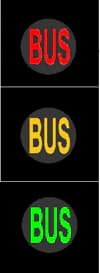
Understand the 3 Aspect Bus Traffic Signal (RTS-002) and what it means for your driving.

Understand the 3 Aspect U-Turn Traffic Signal for Safe Driving in Ireland
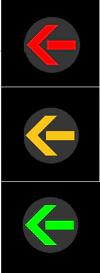
Obey the 3 Aspect Left Turn Traffic Signal to safely navigate junctions in Ireland.
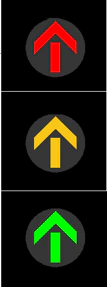
Obey the 3 Aspect Go Straight Traffic Signal (RTS-002) for safe road crossings.
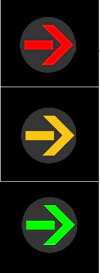
Understand the 3 Aspect Right Turn Traffic Signal (RTS-002) for safe driving in Ireland.

Understand the 3 Aspect Flashing Amber Left Turn Traffic Signal (RTS-004)

Master the 3 Aspect Flashing Amber Right Turn Traffic Signal for Safe Driving

Understand the Flashing Amber Left Turn Traffic Signal for Your Turn

Master the 3 Aspect Flashing Amber Right Turn Traffic Signal (Alternative) for safe driving.

Understand the 4 Aspect Traffic Signal with a Green Left Turn Arrow

Understand the 4 Aspect Traffic Signal with a Green Left Turn signal in Ireland
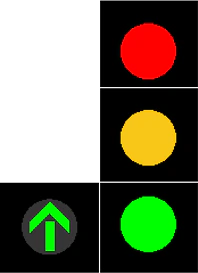
Obey the 4 Aspect Traffic Signal with Green Go Straight to proceed safely.

Mastering the 4 Aspect Traffic Signal with a Green Go Straight Aspect
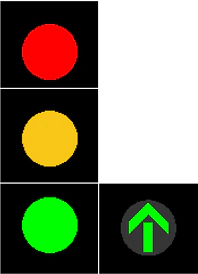
Understand the multi-aspect RTS-003 traffic signal for safe driving in Ireland.

Learn what the 4 Aspect Traffic Signal with Green Right Turn means for your journey.

Master the 4 Aspect Traffic Signal with a Green Right Turn Indicator

Navigate Ireland's 4-Aspect Traffic Signals with Green Left Turn and Go Straight

Master the 4 Aspect Traffic Signal: Green for Left Turn and Straight Ahead!

Learn the Meaning of the 4 Aspect Traffic Signal with Green Right Turn and Go Straight (RTS-003)

Learn to interpret the 4 Aspect Traffic Signal for Green Right Turn and Straight Ahead movements.

Understand the 4 Aspect Traffic Signal with Green Bus for Irish Roads
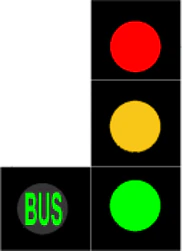
Obey the 4 Aspect Traffic Signal with Green Bus according to your lane and movement.
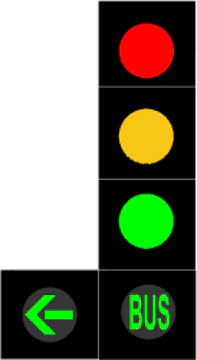
Mastering the 5 Aspect Traffic Signal with Bus and Arrow (RTS-013)
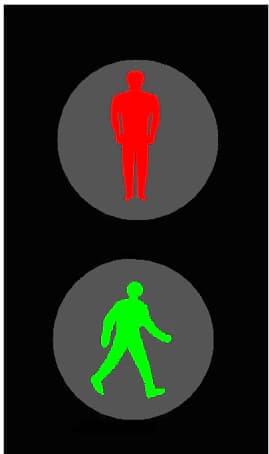
Obey the 2 Aspect Pedestrian Signal to safely navigate junctions and crossings.
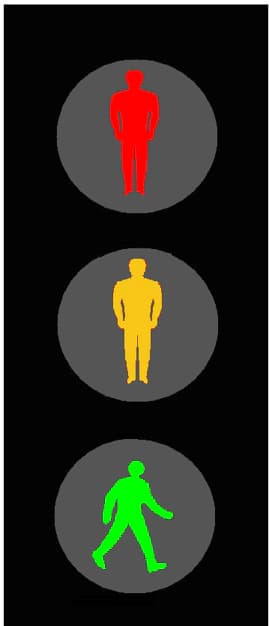
Obey the 3 Aspect Pedestrian Signal (RPC-004) to safely navigate junctions and crossings.
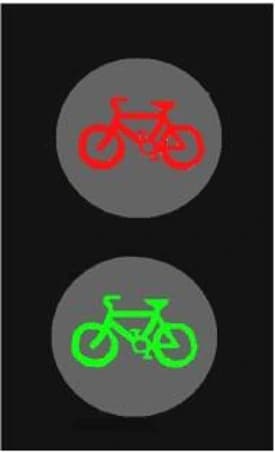
Obey the 2 Aspect Cycle Signal to manage traffic flow safely.
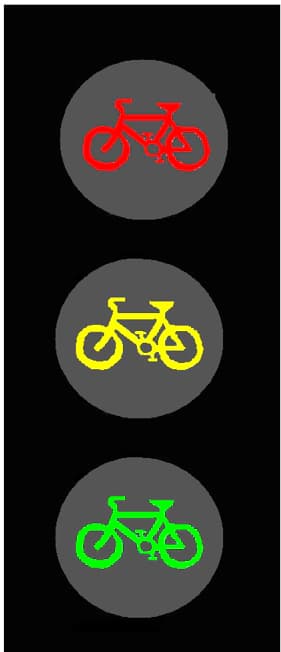
What the 3 Aspect Cycle Signal means and how to react.
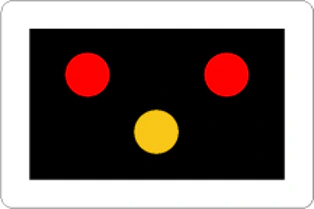
Obey Railway Crossing Signals to ensure safe passage over train tracks.

Master the Flashing Amber Signal (S-102) for safe and compliant driving in Ireland.
Clear answers to common questions about the Traffic Signals road sign category. Use this FAQ to review tricky rules, understand how these signs appear in exam scenarios, and remove confusion that often leads to mistakes in the Irish driving theory exam in Ireland.
A standard three-aspect traffic signal has red, amber, and green lights to control general traffic flow. A four-aspect signal adds an extra aspect, commonly a green arrow for a specific movement like a left turn. This arrow indicates that you may proceed in that direction, even if the main green light is not showing, as long as there are no conflicts. This allows for more efficient traffic management at complex junctions.
A flashing amber light on a traffic signal, often seen on turn signals or sometimes as a standalone signal, means proceed with caution. You may go if the way is clear, but you must be prepared to stop if necessary. This is particularly important at junctions where a flashing amber arrow might indicate you can turn, but you still need to give way to pedestrians or oncoming traffic if they have priority.
You should always look for the signal head that is positioned to control your specific lane or intended direction of travel. For example, if you are in a lane marked with a left-turn arrow, you should obey the signals directly above or beside that lane, which might include a left-turn arrow signal. If there are separate signals for buses or cyclists, those do not apply to you unless you are using those modes of transport. In general, the closest signal relevant to your lane is the one you must follow.
Pedestrian signals typically use a red 'stop' symbol (often a hand) and a green 'go' symbol (often a walking person). You must wait for the green symbol before crossing and finish crossing if you have already started when it changes. Cyclists may have signals similar to vehicles, or dedicated signals showing bicycle symbols. These function in the same way, with red meaning stop and green meaning go. Always be aware of these signals as they are designed to keep vulnerable road users safe.
Yes, the theory test may present scenarios with multiple signals, or signals that apply to specific lanes or vehicle types. Pay close attention to the diagrams and questions to determine which signal is relevant to the driver's position and intended action. Questions might also test your understanding of priority rules when signals are flashing or malfunctioning, and your knowledge of dedicated signals for buses or trams.
Navigate through individual Irish road sign categories to focus your study on specific types of traffic signs. Select a group to practice and deepen your understanding, ensuring you are fully prepared for the Road Safety Authority Driver Theory Test.
Irish Road Sign Categories Overview