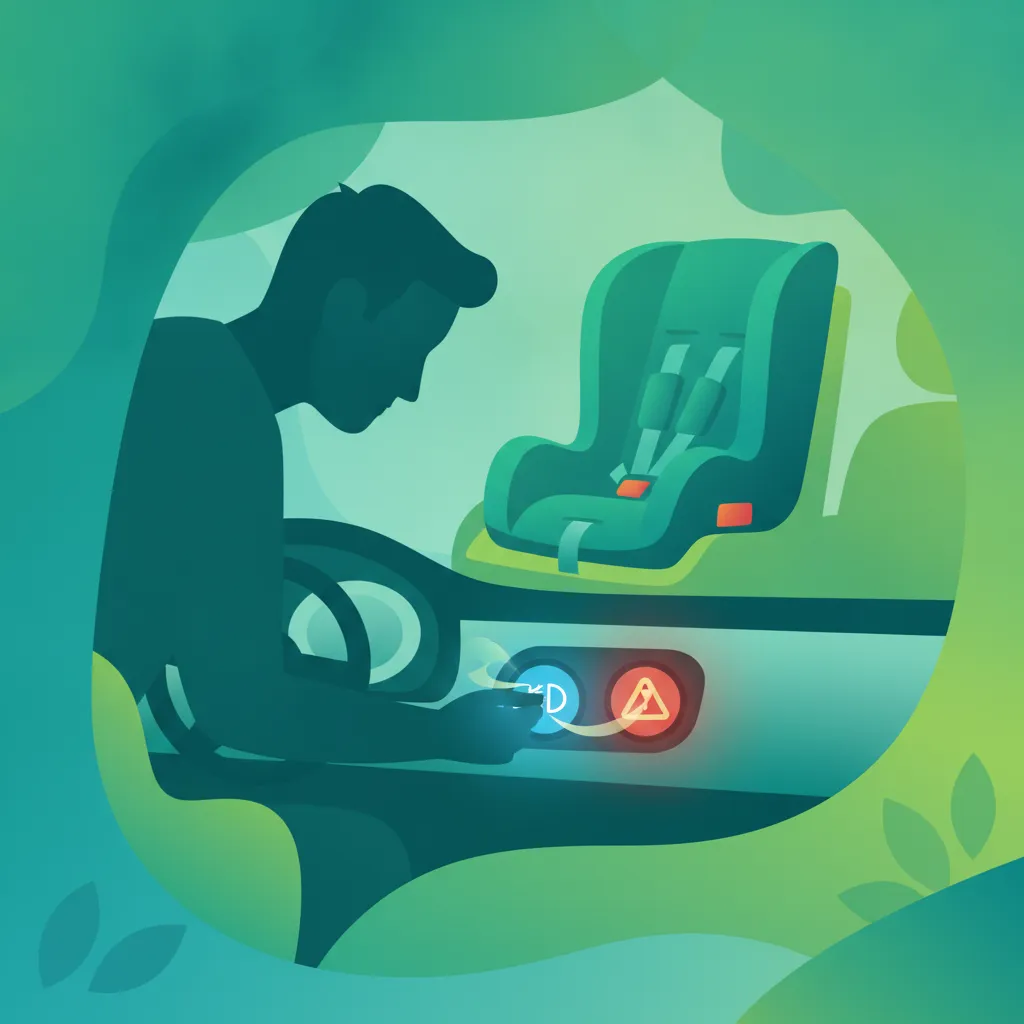
This unit is crucial for your Portuguese Category B driving theory exam, focusing on ensuring your vehicle is safe and roadworthy. You will learn about essential pre-drive checks, the correct use of all vehicle lights, and the critical importance of maintaining your tyres. We also cover legal requirements for securing loads and the mandatory use of seatbelts and child restraint systems to guarantee passenger safety.
Browse all lessons that make up Vehicle Safety, Lights, Tyres, Loads and Passenger Safety. Each lesson focuses on specific topics, learning objectives, and core concepts, helping you build essential knowledge and follow a clear, structured progression toward your study goals in Portugal.
This lesson outlines the safety equipment legally required to be carried in a vehicle in Portugal. It covers the correct use of the warning triangle and reflective vest in the event of a breakdown or accident. Understanding the function and location of this equipment is vital for ensuring safety during a roadside emergency.
This lesson details the functions of the various lights on a vehicle and the regulations governing their use. It explains the appropriate conditions for using dipped headlights, main beams, and fog lights to maximize visibility without dazzling other road users. The correct use of indicators and hazard warning lights as communication tools is also thoroughly covered.
This lesson emphasizes the critical role tyres play in vehicle safety, affecting grip, braking, and handling. It explains how to check tyre pressure and tread depth, and how to identify the legal minimum requirements. Recognizing uneven wear patterns and understanding the need for timely replacement are key skills for maintaining a roadworthy vehicle.
This lesson explains the principles of safely loading a vehicle to avoid negatively impacting its stability and handling. It covers the importance of even weight distribution, respecting the vehicle's maximum load capacity, and properly securing all items. The dangers of unsecured loads, both inside the cabin and on external racks, are highlighted as significant safety hazards.
This lesson covers the legal and safety requirements for restraining occupants in a vehicle. It details the mandatory use of seatbelts for all passengers and explains the specific laws regarding child restraint systems. The content provides guidance on choosing and correctly installing the appropriate type of child seat—from rear-facing carriers to booster seats—based on a child's age, weight, and height.
Explore high-intent keywords and long-tail search topics learners use when researching Vehicle Safety, Lights, Tyres, Loads and Passenger Safety. These terms reflect how people search for reliable study materials, structured explanations, and unit-level theory preparation support in Portugal.
Find clear answers to the most common questions learners ask about Vehicle Safety, Lights, Tyres, Loads and Passenger Safety. Understand how the unit is organized, what learning goals it supports, and how it contributes to your study progression with structured explanations and practical guidance tailored for learners in Portugal.
The theory exam often includes questions about tyre condition (tread depth, pressure), the correct use of lights in various conditions (day, night, fog), how to properly secure luggage or other loads, and the mandatory use of seatbelts for all occupants. Understanding your responsibility for the vehicle's roadworthiness is key.
The minimum legal tread depth for car tyres in Portugal, as stipulated by the Código da Estrada, is 1.6mm across the main groove of the tyre. However, for optimal safety, especially in wet conditions, it's recommended to replace tyres well before they reach this limit.
Portuguese law specifies that front fog lights can be used with dipped or main beam headlights when visibility is significantly reduced due to fog, heavy snow, or heavy rain. Rear fog lights should only be used when visibility is less than 50 metres.
Any load carried must be secured in a way that it does not obstruct the driver's view, compromise the vehicle's stability, or pose a danger to others. This means using appropriate restraints like cargo nets or straps for larger items and ensuring nothing protrudes dangerously or shifts during transit.
Yes, child restraint systems (car seats, boosters) are mandatory for children under 1.35 metres tall, unless they are 12 years old or older. They must be used in conjunction with the vehicle's seatbelt system and adapted to the child's weight and size.
A pre-drive check involves a quick but thorough inspection before setting off. This includes checking tyre condition and pressure, ensuring all lights and indicators are working, checking fluid levels (like screen wash), and verifying that mirrors are adjusted correctly and the driver's seat is properly positioned.
All included lessons
Lessons in Vehicle Safety, Lights, Tyres, Loads and Passenger Safety
See who benefits most from studying Vehicle Safety, Lights, Tyres, Loads and Passenger Safety. This overview explains how the unit supports different learning needs, what level of knowledge is helpful before starting, and how it fits into the overall study path in Portugal.
This unit is essential for all learners preparing for the Portuguese Category B driving theory test. It is particularly beneficial for those who may not have prior knowledge of vehicle mechanics or safety standards, ensuring they meet legal requirements and drive safely.

Dive into our comprehensive curriculum and begin your journey through official Portuguese driving theory. Select a structured course tailored to your learning needs, master the Código da Estrada, and prepare systematically for your IMT driving licence exam with confidence. Start building your essential driving knowledge now.
Portuguese Theory CurriculumExplore all units and lessons included in this driving theory course.
Dive into our comprehensive curriculum and begin your journey through official Portuguese driving theory. Select a structured course tailored to your learning needs, master the Código da Estrada, and prepare systematically for your IMT driving licence exam with confidence. Start building your essential driving knowledge now.
Portuguese Theory Curriculum