
Learn how rain, wind, and reduced visibility impact your motorcycle's handling and what strategies you must apply to stay safe on the road. This guide focuses on the theoretical aspects of maintaining traction and awareness, helping you prepare for safety-related questions in the Dutch theory exam.
Article content overview
Riding a motorcycle in the Netherlands requires a deep understanding of how environmental conditions influence vehicle stability and traction. Whether you are preparing for your CBR motorcycle theory exam or sharpening your skills for the road, mastering the physics of grip and the nuances of defensive riding is essential. Weather in the Netherlands is notoriously changeable, and knowing how to adapt your riding behavior to rain, wind, and low-visibility scenarios is a core competency required for every licensed motorcyclist.
The stability of a motorcycle depends entirely on the contact patches of the tires. When the road surface is wet, the coefficient of friction decreases significantly, meaning your motorcycle requires a longer braking distance and has a reduced capacity for cornering forces. Understanding this is not just a practical skill; it is a fundamental part of the CBR hazard perception exam, where you will be tested on your ability to anticipate reduced traction.
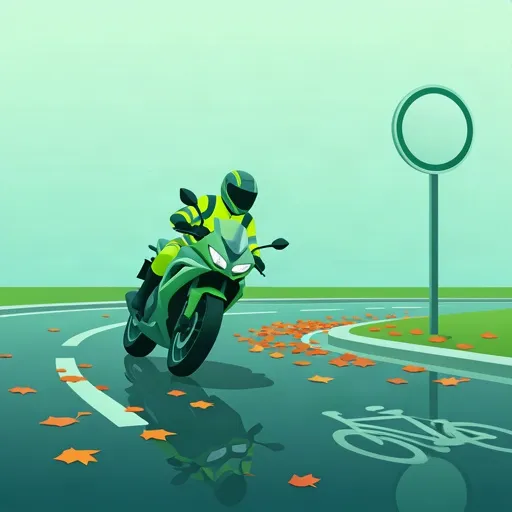
On wet roads, riders must be particularly cautious of road markings, manhole covers, and patches of oil. These surfaces provide significantly less grip than the surrounding asphalt. During autumn, fallen leaves can create a deceptive and extremely slippery surface that mimics the behavior of black ice. As a motorcyclist, you must learn to scan the road ahead not just for other vehicles, but for changes in surface texture and color that indicate potential hazards.
Visibility is a critical factor in motorcycle safety. Dutch traffic laws are very specific about the use of lighting, and understanding when to use your fog lights is a recurring topic in theory assessments. Many candidates fail to distinguish between the correct usage of front and rear fog lights, often assuming they can be used whenever it rains.
In situations where visibility is reduced due to mist or heavy rain, the primary rule is to increase your following distance and reduce your speed. If visibility drops below 200 metres, consider the use of your front fog lights to ensure you are seen by other road users. Always remember that a motorcycle is a narrow vehicle, and in adverse weather, it is easier for car drivers to misjudge your speed and distance.
| Condition | Action | Visibility Rule |
|---|---|---|
| Heavy Fog / Snow | Use rear fog light | Visibility < 50m |
| Mist / Heavy Rain | Use front fog light | Visibility < 200m |
| Normal Rain | Headlights only | Normal daylight |
The Netherlands is known for its flat landscape and open polders, where crosswinds can be particularly hazardous for motorcyclists. A strong gust of wind can easily push a motorcycle out of its lane, especially when overtaking larger vehicles like trucks or buses. When riding in windy conditions, keep your body relaxed and avoid gripping the handlebars too tightly, as this can cause you to inadvertently steer the bike in response to wind gusts.
Anticipation is your best tool for managing wind. If you are approaching a bridge or an open area, prepare for a sudden shift in wind pressure. Adjust your speed early and maintain a larger lateral buffer zone from other vehicles. In the context of the CBR exam, you should always demonstrate that you are aware of how environmental conditions—such as wind or rain—necessitate a proactive rather than reactive riding style.
The Dutch theory exam frequently tests your ability to make safety-conscious decisions based on real-world scenarios. You will likely face questions asking how to react to slippery road markings or how to handle a situation where a vehicle ahead brakes suddenly in the fog. The key to answering these correctly is to prioritize stability and reaction time. Always choose the answer that involves smoothing out your inputs—gentle braking, progressive acceleration, and increased following distances.
This article covers the essential physics of motorcycle traction in wet conditions and explains how reduced grip affects braking distance and cornering. It clarifies Dutch visibility rules: rear fog lights are only for fog or heavy snow below 50 metres, while front fog lights help when visibility drops below 200 metres. Wind safety emphasises staying relaxed and maintaining a wide buffer from large vehicles on exposed roads. The CBR exam tests your ability to choose the smoothest, most anticipatory response in these conditions, prioritising gentle inputs and increased following distances over sudden reactions.
A short set of high-value points that capture the most important ideas from this article.
Wet roads significantly reduce tire grip, which means longer braking distances and reduced cornering capability.
Rear fog lights are strictly for visibility below 50 metres due to fog or heavy snow; they are prohibited in normal rain because they blind following drivers.
Crosswinds in open Dutch polder areas can push a motorcycle out of its lane, especially when passing large vehicles.
Defensive riding in bad weather means anticipating hazards proactively rather than reacting to them.
Autumn leaves create a deceptive, extremely slippery surface similar to black ice and require heightened caution.
Aquaplaning occurs when water separates the tire from the road surface, causing complete loss of steering and braking control.
Visibility thresholds: rear fog light required when visibility drops below 50 metres; front fog light should be considered when visibility is below 200 metres.
Increase following distance and reduce speed whenever visibility is reduced, regardless of the cause.
Keep your body relaxed and grip handlebars loosely in wind to avoid inadvertently counter-steering into gusts.
Scan the road ahead for changes in surface texture and colour that indicate reduced grip, such as road markings, manhole covers, and leaf piles.
Gripping the handlebars too tightly in windy conditions, which causes overcorrection and loss of stability.
Using rear fog lights during normal rain or light mist, which is prohibited under Dutch traffic law.
Making abrupt steering or braking inputs on slippery surfaces, which causes the motorcycle to lose traction.
Positioning too close to larger vehicles when being overtaken or riding in wind, reducing lateral buffer space.
Assuming that headlights alone are sufficient in heavy fog; rear fog lights become mandatory when visibility falls below 50 metres.
Article content overview
A short set of high-value points that capture the most important ideas from this article.
Wet roads significantly reduce tire grip, which means longer braking distances and reduced cornering capability.
Rear fog lights are strictly for visibility below 50 metres due to fog or heavy snow; they are prohibited in normal rain because they blind following drivers.
Crosswinds in open Dutch polder areas can push a motorcycle out of its lane, especially when passing large vehicles.
Defensive riding in bad weather means anticipating hazards proactively rather than reacting to them.
Autumn leaves create a deceptive, extremely slippery surface similar to black ice and require heightened caution.
Aquaplaning occurs when water separates the tire from the road surface, causing complete loss of steering and braking control.
Visibility thresholds: rear fog light required when visibility drops below 50 metres; front fog light should be considered when visibility is below 200 metres.
Increase following distance and reduce speed whenever visibility is reduced, regardless of the cause.
Keep your body relaxed and grip handlebars loosely in wind to avoid inadvertently counter-steering into gusts.
Scan the road ahead for changes in surface texture and colour that indicate reduced grip, such as road markings, manhole covers, and leaf piles.
Gripping the handlebars too tightly in windy conditions, which causes overcorrection and loss of stability.
Using rear fog lights during normal rain or light mist, which is prohibited under Dutch traffic law.
Making abrupt steering or braking inputs on slippery surfaces, which causes the motorcycle to lose traction.
Positioning too close to larger vehicles when being overtaken or riding in wind, reducing lateral buffer space.
Assuming that headlights alone are sufficient in heavy fog; rear fog lights become mandatory when visibility falls below 50 metres.
Explore related topics, search based questions, and concepts that learners often look up when studying Motorcycle Safety in Bad Weather. These themes reflect real search intent and help you understand how this topic connects to wider driving theory knowledge in the Netherlands.
Find clear and practical answers to common questions learners often have about Motorcycle Safety in Bad Weather. This section helps explain difficult points, remove confusion, and reinforce the key driving theory concepts that matter for learners in the Netherlands.
You may use front fog lights if visibility is severely restricted due to fog, snow, or rain. Rear fog lights are only permitted when visibility is less than 50 meters, and only in cases of dense fog or heavy snowfall, never just for rain.
Rain significantly reduces the grip between your tires and the road surface, especially on road markings or manhole covers. You must anticipate this by increasing your following distance and braking earlier and more gently than you would on a dry surface.
Strong winds can push a motorcycle off-course, particularly when exiting tunnels or overtaking large vehicles. Adjust your speed, maintain a firm grip on the handlebars, and stay alert to the movement of other vehicles that might be affected by crosswinds.
Yes, motorcyclists are vulnerable road users and must adhere to the same visibility and speed regulations as other vehicles. In poor weather, it is vital to be visible to others by ensuring your lighting is functioning correctly and adjusting your speed to the conditions.
Start your targeted search now to explore a vast library of official Dutch driving theory articles and guides. Reinforce your understanding of specific traffic rules or road signs to ensure you are fully prepared for your upcoming CBR theory exam. Discover comprehensive explanations tailored for success.