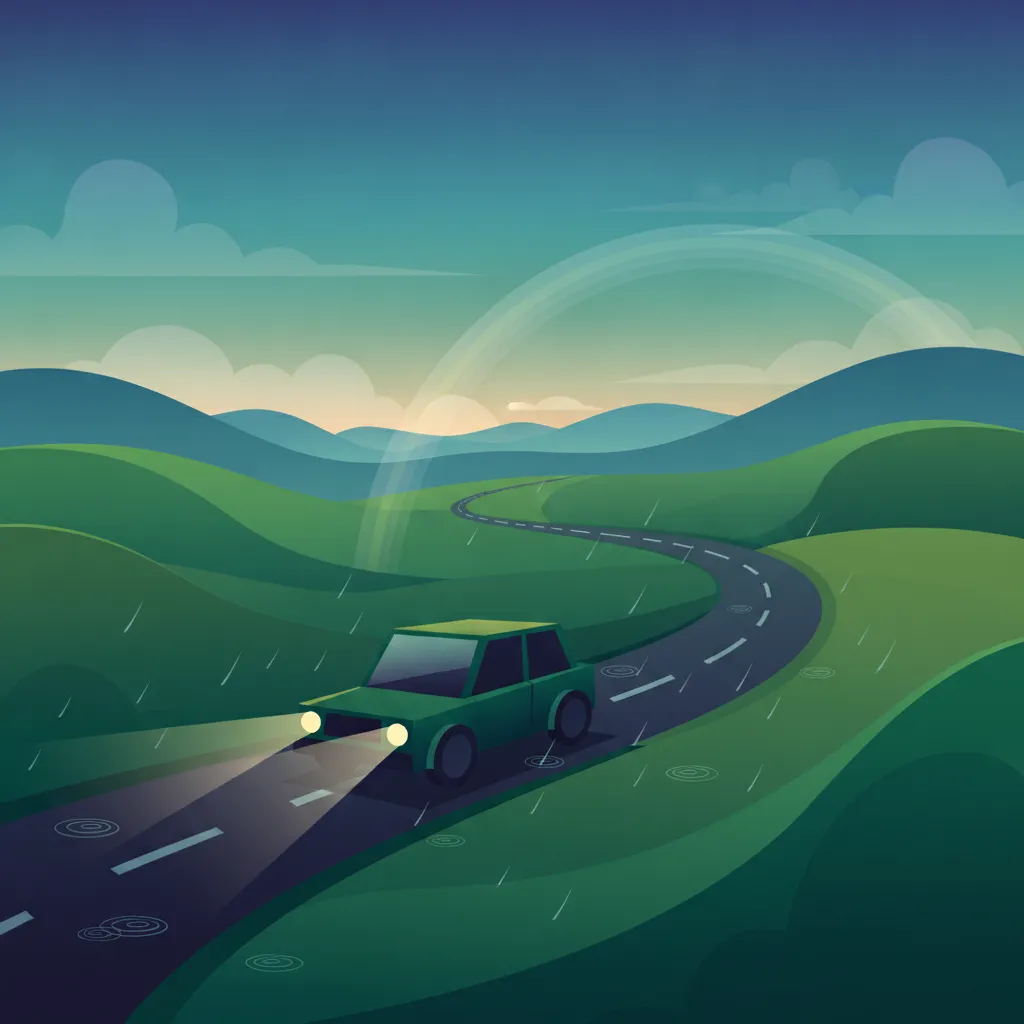
Vehicle lights are fundamental for road safety, allowing you to illuminate the road ahead and making your vehicle visible to others. In Ireland, the proper use of headlights and other lighting systems is governed by the Road Safety Authority's Rules of the Road, with specific requirements for different conditions. This page covers when to switch on your lights, the functions of various light types, and how to maintain optimal visibility for safe driving.
Theory topic content overview
Read the full theory topic guide for Headlights and Visibility with structured, easy-to-scan content built for learners in Ireland. This detailed section explains the exact rule, meaning, traffic context, comparison points, and exam logic behind this Irish driving theory topic so you can study faster, understand the concept more clearly, and avoid common interpretation mistakes on the theory test.
Headlights and other vehicle lights are fundamental components of road safety in Ireland, serving two critical functions: to help you see the road ahead and to ensure your vehicle is seen by other road users. The Road Safety Authority (RSA) provides clear guidelines in the Rules of the Road regarding their use, especially during specific times and in various weather conditions.
Proper lighting isn't just about avoiding a penalty; it's about preventing collisions by extending your effective vision and making your vehicle easily identifiable, particularly to vulnerable road users like pedestrians and cyclists who are harder to spot in low light.
Understanding and correctly applying vehicle lighting rules is crucial for several reasons specific to driving in Ireland:
Rules of the Road stipulate mandatory lighting periods and conditions, known as "lighting-up hours," and specific requirements for different light types. Non-compliance can lead to penalty points and fines.Modern vehicles are equipped with a range of lighting systems, each designed for specific visibility challenges. Knowing when and how to use each one is key to safe driving in Ireland.
Dipped headlights project a beam that illuminates the road without dazzling oncoming drivers or those you are following. In Ireland, they are your primary headlights for most driving conditions when visibility is reduced.
When to use dipped headlights:
Main beam headlights provide the maximum illumination and should be used to see as far ahead as possible. However, their powerful beam can dazzle other drivers and must be used with caution.
When to use main beam headlights:
When to switch off main beam:
Fog lights are specifically designed to cut through dense fog or falling snow, improving visibility in extremely poor conditions. They are bright and low-mounted (front fog lights) or unusually bright at the rear (rear fog lights), and their misuse can be dangerous and illegal.
Rules for using fog lights in Ireland:
Daytime Running Lights are specific white lights on the front of a vehicle that illuminate automatically when the engine is running. Their purpose is to make your vehicle more visible to others during daylight hours.
Key distinction for Irish drivers:
Sidelights are low-intensity lights designed primarily to mark the presence of a parked vehicle. They are often combined with rear lights.
When to use sidelights:
Crucial warning: Sidelights are never sufficient for driving during "lighting-up hours" or in poor visibility. You must use dipped headlights.
Learners often make specific errors concerning vehicle lighting. Understanding these distinctions can help you avoid common pitfalls in the Driver Theory Test and on Irish roads.
Let's look at how these rules apply in typical Irish driving situations:
The overarching principle for headlights and visibility in Ireland is simple: when in doubt, turn them on.
Mastering vehicle lighting rules is a fundamental part of becoming a safe and responsible driver on Irish roads and is essential for success in your Irish Driver Theory Test.
Start with a short, direct summary of Headlights and Visibility before reading the full explanation below.
In Ireland, you must use appropriate vehicle lights whenever visibility is reduced, including during official 'lighting-up hours' (dusk to dawn) or in adverse weather like fog, heavy rain, or snow. Dipped headlights are for general use, meeting oncoming traffic, or in lit areas, while main beam headlights are for unlit roads with no other traffic. Fog lights should only be used in dense fog or falling snow to prevent dazzling others.
Review the most important terms, rule signals, and traffic concepts linked to Headlights and Visibility.
Explore related theory topic pages connected to Headlights and Visibility and continue with the next useful rule explanation.
See the common search queries learners use when trying to understand Headlights and Visibility in Ireland.

After reviewing core Irish driving theory topics, test your understanding with comprehensive practice questions. Apply your knowledge of road rules, signs, and traffic laws to scenarios mirroring the official Driver Theory Test. Solidify your learning and prepare effectively for your exam.
Irish Driving Theory TopicsTheory topic content overview
Start with a short, direct summary of Headlights and Visibility before reading the full explanation below.
In Ireland, you must use appropriate vehicle lights whenever visibility is reduced, including during official 'lighting-up hours' (dusk to dawn) or in adverse weather like fog, heavy rain, or snow. Dipped headlights are for general use, meeting oncoming traffic, or in lit areas, while main beam headlights are for unlit roads with no other traffic. Fog lights should only be used in dense fog or falling snow to prevent dazzling others.
Review the most important terms, rule signals, and traffic concepts linked to Headlights and Visibility.
Explore related theory topic pages connected to Headlights and Visibility and continue with the next useful rule explanation.
See the common search queries learners use when trying to understand Headlights and Visibility in Ireland.
After reviewing core Irish driving theory topics, test your understanding with comprehensive practice questions. Apply your knowledge of road rules, signs, and traffic laws to scenarios mirroring the official Driver Theory Test. Solidify your learning and prepare effectively for your exam.
Irish Driving Theory TopicsUse this exam-focused revision tip to understand how Headlights and Visibility is likely to appear in theory questions for learners in Ireland. This section helps you identify the most testable part of the rule, avoid common traps, and remember the concept more effectively during Irish driving theory exam preparation.
A common mistake in the Irish theory test is confusing when to use different types of lights. Remember: 'lighting-up hours' and poor visibility always require dipped headlights, not just sidelights or DRLs. Fog lights are only for severe conditions and must be switched off when conditions improve to avoid a penalty.
Read direct answers to the most common learner questions about Headlights and Visibility in Ireland. This FAQ focuses on rule confusion, practical meaning, comparison with similar concepts, and the exact uncertainties that appear most often in Irish driving theory revision and exam preparation.
Lighting-up hours refer to the period between dusk and dawn when specific vehicle lighting is legally required in Ireland. This ensures your vehicle is visible in low light conditions, significantly reducing accident risk.
Dipped (low beam) headlights provide adequate illumination without dazzling other drivers, used during lighting-up hours, in built-up areas, or when meeting/following other traffic. Main beam (high beam) headlights offer maximum illumination and are for unlit roads where there is no oncoming or preceding traffic.
Fog lights in Ireland should only be used in conditions of dense fog or falling snow, where visibility is severely reduced. They must be switched off once visibility improves to avoid dazzling other road users.
No. Daytime running lights (DRLs) are designed to increase your vehicle's visibility during daylight hours. They are not sufficient for illuminating the road ahead or making your vehicle fully visible at night or during lighting-up hours; you must switch to dipped headlights.
If dazzled, slow down immediately and be prepared to stop. Avoid looking directly into the lights; instead, look towards the left-hand verge (edge of your side of the road) until the vehicle has passed or the effect has worn off. Always watch for pedestrians or cyclists.
Dirt, mud, or snow can significantly reduce the effectiveness of your vehicle's lights, diminishing your ability to see and be seen. Regularly cleaning your headlights, tail lights, and indicators ensures maximum visibility and compliance with road safety rules.
Use the practice question search tool to pinpoint specific topics, road signs, or rules you need to master for your official Driver Theory Test. Refine your study strategy and ensure comprehensive preparation for all aspects of the Irish driving exam. Start your focused revision now and build confidence for your learner permit test.