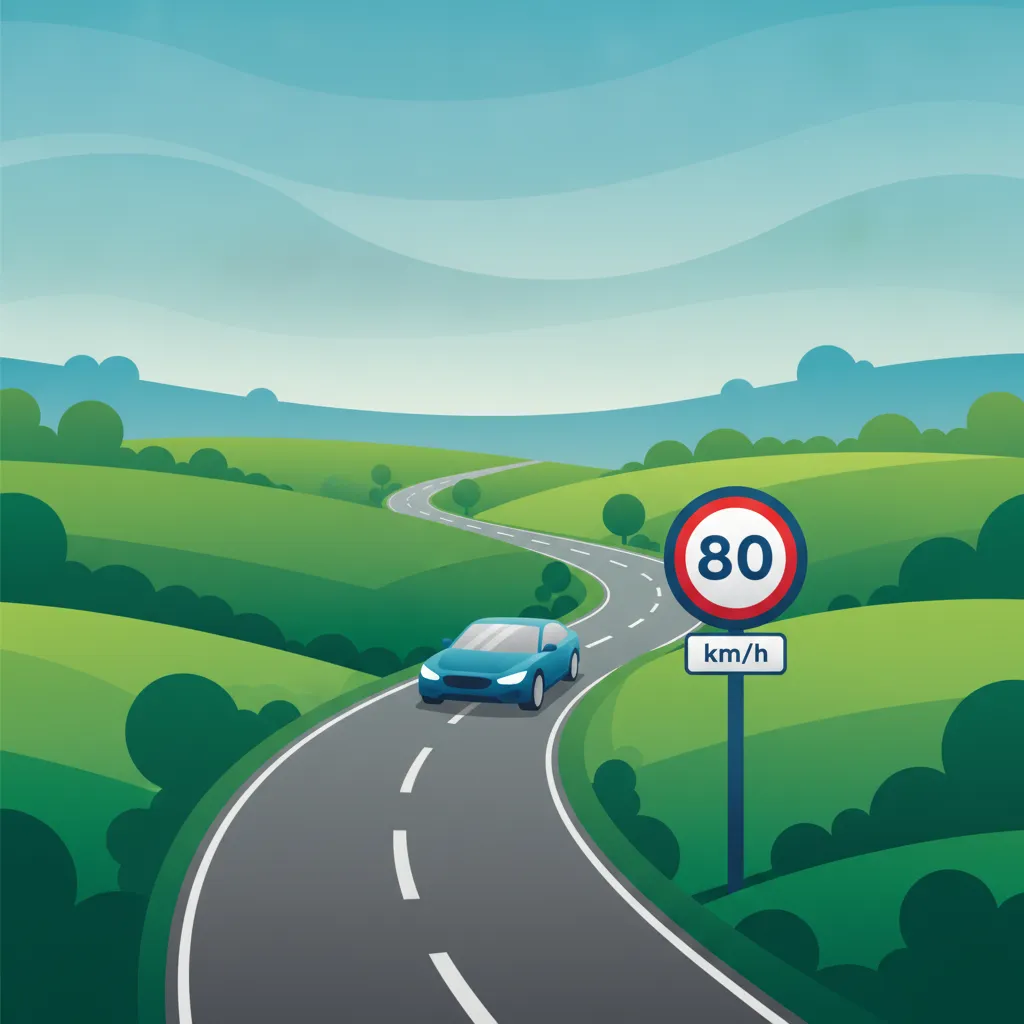
Speed limits are fundamental traffic regulations designed to balance traffic efficiency with road safety across Ireland. While they specify the maximum legal speed a vehicle may travel, the Road Safety Authority (RSA) emphasizes that drivers must always adjust their speed according to actual road conditions, traffic, and visibility, regardless of the posted limit. This page clarifies these distinctions and their importance.
Theory topic content overview
Read the full theory topic guide for Speed Limits with structured, easy-to-scan content built for learners in Ireland. This detailed section explains the exact rule, meaning, traffic context, comparison points, and exam logic behind this Irish driving theory topic so you can study faster, understand the concept more clearly, and avoid common interpretation mistakes on the theory test.
Speed limits in Ireland are fundamental traffic regulations that define the maximum legal speed a vehicle is permitted to travel on a specific road or within a designated area. Governed by the Road Traffic Act 2004 and detailed in the RSA's Rules of the Road, these limits are crucial for maintaining road safety and regulating traffic flow. However, it's vital for every driver in Ireland to understand that a speed limit is never a target speed; it is merely the upper legal threshold.
Understanding and correctly applying speed limits is essential for several reasons:
In Ireland, speed limits are primarily communicated in two ways: through posted signs and by default limits that apply where no signs are present. All speeds are measured in kilometres per hour (km/h).
Where no signs are posted, specific default speed limits apply based on the type of road. It is crucial for every driver to know these as they are frequently tested and apply on countless Irish roads:
It's also important to remember that certain vehicle types have different maximum speed limits, regardless of the posted road speed limit. For example, buses (not designed for standing passengers) have a maximum of 100 km/h on motorways/dual carriageways, and HGVs (Heavy Goods Vehicles) are generally limited to 90 km/h on motorways. Always be aware if your vehicle type has specific restrictions.
The RSA Rules of the Road explicitly state that you must not drive at a speed at which you cannot stop the vehicle within the distance you can see to be clear ahead. This is a critical principle for safe driving in Ireland. It means you must constantly adjust your speed based on actual conditions, even if it's well below the posted or default limit.
Key factors that demand a reduction in speed include:
This is the most crucial distinction for the Irish Driver Theory Test and for practical driving.
A common pitfall is to think that if the limit is 100 km/h, it's always safe to drive at 100 km/h. This is rarely the case outside of ideal conditions.
To drive safely and pass your Irish Driver Theory Test and practical driving exam, always remember: Speed limits are absolute maximums, not minimums or recommended speeds. Your responsibility as a driver in Ireland is to consistently assess the road, traffic, and weather conditions, and adjust your speed to ensure you can always stop safely within the distance you can see to be clear ahead. Always observe, assess, and adapt your speed.
Start with a short, direct summary of Speed Limits before reading the full explanation below.
Speed limits in Ireland define the maximum legal speed for vehicles on specific roads or areas, but they are not target speeds. The Rules of the Road require drivers to constantly assess conditions like weather, traffic, and visibility, and to reduce their speed accordingly to maintain safety. Default speed limits apply where no signs are posted, varying by road type.
Review the most important terms, rule signals, and traffic concepts linked to Speed Limits.
Explore related theory topic pages connected to Speed Limits and continue with the next useful rule explanation.
See the common search queries learners use when trying to understand Speed Limits in Ireland.

After reviewing core Irish driving theory topics, test your understanding with comprehensive practice questions. Apply your knowledge of road rules, signs, and traffic laws to scenarios mirroring the official Driver Theory Test. Solidify your learning and prepare effectively for your exam.
Irish Driving Theory TopicsTheory topic content overview
Start with a short, direct summary of Speed Limits before reading the full explanation below.
Speed limits in Ireland define the maximum legal speed for vehicles on specific roads or areas, but they are not target speeds. The Rules of the Road require drivers to constantly assess conditions like weather, traffic, and visibility, and to reduce their speed accordingly to maintain safety. Default speed limits apply where no signs are posted, varying by road type.
Review the most important terms, rule signals, and traffic concepts linked to Speed Limits.
Explore related theory topic pages connected to Speed Limits and continue with the next useful rule explanation.
See the common search queries learners use when trying to understand Speed Limits in Ireland.
After reviewing core Irish driving theory topics, test your understanding with comprehensive practice questions. Apply your knowledge of road rules, signs, and traffic laws to scenarios mirroring the official Driver Theory Test. Solidify your learning and prepare effectively for your exam.
Irish Driving Theory TopicsUse this exam-focused revision tip to understand how Speed Limits is likely to appear in theory questions for learners in Ireland. This section helps you identify the most testable part of the rule, avoid common traps, and remember the concept more effectively during Irish driving theory exam preparation.
In the Irish Driver Theory Test, you'll be tested not just on knowing the numerical speed limits, but also on your judgment for adapting speed to conditions. Remember: the posted limit is a maximum, not a target. Always consider traffic, weather, and road hazards, and ensure you can stop within your visible clear distance.
Read direct answers to the most common learner questions about Speed Limits in Ireland. This FAQ focuses on rule confusion, practical meaning, comparison with similar concepts, and the exact uncertainties that appear most often in Irish driving theory revision and exam preparation.
Speed limits in Ireland are the maximum legal speeds, but drivers must always reduce their speed if road, weather, or traffic conditions demand it for safety, as outlined in the RSA Rules of the Road.
Default speed limits automatically apply to certain types of roads if no specific speed limit signs are present. These are set by the Road Traffic Act 2004 and vary depending on the road classification.
Yes, alongside general road speed limits, certain vehicles like heavy goods vehicles (HGVs) and buses may have their own specific, lower maximum speed limits, particularly on motorways or dual carriageways.
The general maximum speed limit on motorways in Ireland is 120 km/h, unless signs indicate a different limit, or your vehicle type is subject to a lower specific limit.
Adapting your speed ensures you can stop safely within the distance you can see to be clear ahead. Driving too fast for conditions, even if under the posted limit, significantly increases reaction time and stopping distance, raising accident risk.
Official information on speed limits in Ireland is provided by the Road Safety Authority (RSA) in their 'Rules of the Road' publication, which is the primary source for the Driver Theory Test.
Use the practice question search tool to pinpoint specific topics, road signs, or rules you need to master for your official Driver Theory Test. Refine your study strategy and ensure comprehensive preparation for all aspects of the Irish driving exam. Start your focused revision now and build confidence for your learner permit test.