
This lesson provides a comprehensive guide to navigating roundabouts safely as a motorcyclist in Portugal. You will learn the critical rules regarding lane selection, signalling, and yielding to traffic, all of which are vital for your category A1, A2, and A theory exam.
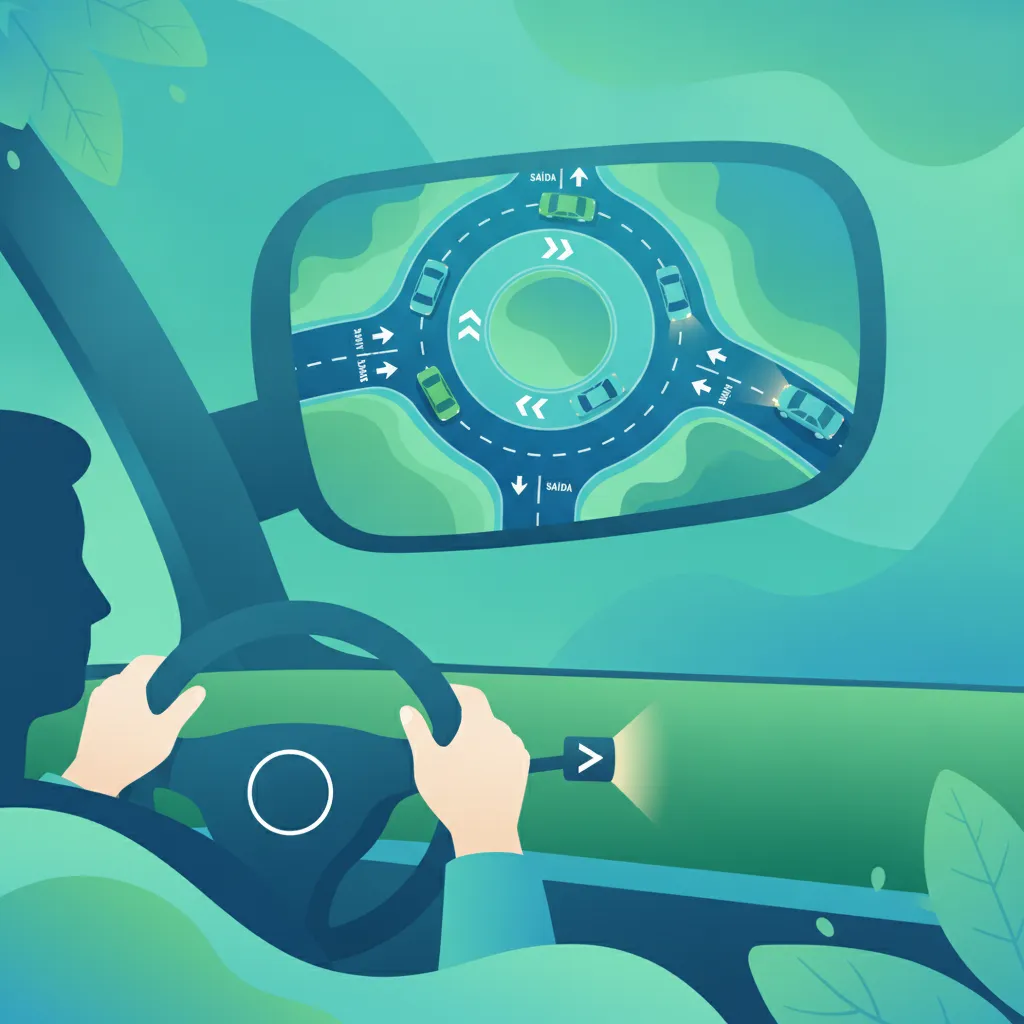
Lesson content overview
Navigating roundabouts safely and efficiently is a fundamental skill for all riders undertaking the Motorcycle Licence Theory: Comprehensive Portuguese Road Safety and Practical Riding Knowledge course. Roundabouts, also known as rotaries, are a common feature of the Portuguese road network, designed to improve traffic flow and reduce the severity of collisions. This lesson will equip you with the knowledge and strategies required to correctly approach, enter, circulate within, and exit these circular intersections, ensuring your safety and the safety of others.
Roundabouts are circular intersections engineered to manage traffic flow by requiring vehicles to travel in one direction around a central island. In Portugal, like most of Europe, traffic circulates counterclockwise. This design minimizes the number of potential conflict points compared to traditional crossroads, leading to smoother traffic movement and fewer severe accidents.
A roundabout is a circular junction where traffic flows in one direction around a central island. Vehicles entering the roundabout must yield to traffic already circulating within it. This core principle helps maintain continuous movement and reduces the need for full stops, which can lead to congestion.
Roundabouts come in various configurations, primarily categorised by the number of lanes:
The structure of a roundabout involves several key components:
The design of roundabouts offers several advantages over traditional intersections. By converting potential head-on or right-angle collisions into glancing blows, they significantly reduce the likelihood of severe injuries or fatalities. The yield-at-entry rule promotes continuous traffic flow, reducing delays and fuel consumption from stop-and-go traffic. They also provide opportunities for U-turns without needing complex multi-phase traffic signals. For motorcyclists, the continuous flow can be beneficial, but it also demands heightened awareness and precise execution of manoeuvres.
Navigating roundabouts safely demands adherence to several core principles. These guidelines are not merely suggestions but are often enshrined in the Código da Estrada (Portuguese Road Code) and are vital for preventing collisions and ensuring smooth traffic flow.
The most fundamental rule when approaching a roundabout in Portugal is to yield to traffic already circulating within it. This means you must slow down, prepare to stop, and only enter the roundabout when there is a safe and sufficient gap in the traffic approaching from your left.
This rule is paramount for preventing collisions and maintaining the continuous flow of the roundabout. Entering without yielding forces circulating vehicles to brake abruptly or swerve, creating dangerous situations. Always assess the traffic situation comprehensively before committing to entry.
In multi-lane roundabouts, choosing the correct entry lane is critical. Lane markings and signs will guide you on which lane to use for your intended exit (first, second, third, or beyond). Generally, for the first or second exit (straight ahead), you might use the outer lane, while for exits further along or turning left, the inner lane is often more appropriate.
Incorrect lane choice can lead to dangerous situations, such as needing to change lanes suddenly within the roundabout or missing your exit entirely. Plan your exit well in advance and position your motorcycle in the correct lane before you enter. This proactive approach reduces stress and the risk of conflicts with other road users.
Appropriate speed management is essential for safe roundabout navigation. As you approach a roundabout, reduce your speed to a level that allows you to assess the traffic, yield if necessary, and enter smoothly. Maintaining a controlled speed throughout your circulation ensures you have enough time to react to unexpected situations and execute your exit safely.
Excessive speed can lead to a loss of control, especially in wet conditions, and may cause you to miss your intended exit. Conversely, travelling too slowly can impede traffic flow and make you a hazard to faster-moving vehicles behind you. Strive for a consistent, moderate speed that allows for decisive action without being overly cautious.
Effective communication with other road users is vital, and nowhere is this more true than in a roundabout. While entering, you generally do not signal unless you intend to take the very first exit (turning right immediately upon entry). However, signalling your exit is mandatory and crucial.
Activate your turn signal (indicator) for the intended exit well before you reach it. This communicates your intention to drivers behind you and, importantly, to vehicles waiting to enter the roundabout from subsequent entries. Clear signalling reduces ambiguity, allows others to anticipate your actions, and contributes to the overall smooth flow of traffic.
Within the roundabout, maintaining an appropriate lane position is key to your safety as a motorcyclist. Generally, position your motorcycle centrally within your chosen lane. This provides a good field of vision, makes you more visible to other drivers, and provides a buffer zone from potential hazards such as curbs or other vehicles.
Avoid riding too close to the curb or the central island, as this can limit your maneuvering space and might place you in another vehicle's blind spot. Similarly, do not hug the lane markings too tightly, as this could lead to collisions if another driver drifts. Your central position asserts your presence and provides room for minor adjustments.
Roundabouts are often located in urban or suburban areas where vulnerable road users (VRUs) such as pedestrians and cyclists are present. As a motorcyclist, you must exercise particular caution and attention to these users. Pedestrians may cross at marked zebra crossings adjacent to roundabout entries or exits, and cyclists may share the circulating lanes with vehicles.
Always be prepared to yield to pedestrians at marked crossings near roundabouts, especially as you exit. Cyclists, in many cases, have the same rights as other vehicles within the roundabout, so never assume they will yield to you.
Anticipate their movements, be prepared to stop, and ensure they are safely clear before proceeding. Their vulnerability means any collision can have severe consequences.
Successfully navigating a roundabout involves a sequence of actions that, when performed correctly, ensure safety and efficiency. This section breaks down the process into clear steps.
The approach is where preparation begins. As you near a roundabout, look for road signs and markings that indicate its presence and configuration (e.g., single-lane, multi-lane).
Scan and Assess: As you approach, begin scanning the roundabout for circulating traffic and any queueing vehicles. Identify your intended exit.
Reduce Speed: Adjust your speed downwards. This gives you more time to assess the situation, select the correct lane, and react to any sudden changes.
Select Lane (Multi-lane): If it's a multi-lane roundabout, choose the appropriate lane based on your intended exit. Follow any arrow markings or signage. For example, the outer lane for a right turn or straight ahead, and the inner lane for a left turn or U-turn.
Position Motorcycle: Once in your chosen lane, position your motorcycle centrally.
Yield: As you reach the entry line, you must yield to any traffic already within the roundabout. Look left and assess the gaps. Do not enter until there is a safe and sufficient gap.
Enter Smoothly: When a safe gap appears, enter the roundabout smoothly, accelerating gently to match the speed of circulating traffic. Do not stop once inside the roundabout unless traffic conditions absolutely demand it (e.g., a complete blockage, which is rare and generally to be avoided by waiting outside).
Once inside the roundabout, your focus shifts to maintaining your position and preparing for your exit.
Stay in Your Lane: Remain in the lane you selected upon entry. Avoid changing lanes within the roundabout unless markings explicitly permit it and it's absolutely safe to do so. Unnecessary lane changes are a common cause of collisions.
Maintain Speed and Gaps: Keep a consistent speed that allows you to flow with traffic while maintaining a safe following distance from the vehicle ahead.
Monitor Surroundings: Continuously check your mirrors and blind spots for other vehicles, especially those that might be changing lanes or exiting. Be particularly mindful of larger vehicles that may need more space.
Prepare for Exit: As you approach your intended exit, prepare to signal.
Exiting a roundabout safely requires clear communication and a smooth transition.
Signal Intention: Activate your left turn signal (indicator) as you pass the exit before your intended exit. This informs other road users, especially those waiting to enter, of your intention to leave. For example, if you are taking the second exit, signal left as you pass the first exit.
Check Mirrors and Blind Spots: Before exiting, quickly check your left mirror and blind spot to ensure no vehicle is attempting to overtake or change lanes into your path.
Adjust Speed: Gently reduce your speed as you approach the exit if necessary, but maintain enough momentum for a smooth merge.
Exit Smoothly: Steer smoothly into the exit lane, ensuring you do not cut across the path of other vehicles or pedestrians. Continue to signal until you have fully cleared the roundabout and are safely positioned on the new road.
Cancel Signal: Once safely on the new road and straight, cancel your turn signal.
In Portugal, the Código da Estrada (Road Code) outlines specific rules for navigating roundabouts. Adhering to these regulations is not only a legal requirement but also fundamental for road safety.
To give way to other traffic that has priority, allowing them to proceed before you. In roundabouts, this applies to vehicles already circulating.
Rule 1: Yield to Circulating Traffic. This is explicitly stated in the Código da Estrada. When you approach any entry point to a roundabout, you must give way to vehicles that are already moving within the circulating carriageway. Failure to do so is a common cause of accidents and carries legal penalties. Always reduce speed, look left, and enter only when a safe gap is available.
Rule 2: Use Turn Signals When Exiting. It is mandatory to use your motorcycle's turn signals (indicators) to communicate your intention to exit the roundabout. This should be done before you reach your chosen exit, typically as you pass the exit immediately preceding it. This clear communication is vital for other drivers and riders, especially those waiting to enter the roundabout, to anticipate your actions.
Rule 3: Stay in Your Chosen Lane. Once you have entered a multi-lane roundabout and selected your lane based on your intended exit, you are generally required to remain in that lane throughout your circulation. Unnecessary lane changes within the roundabout are prohibited or highly discouraged unless road markings explicitly permit them and it is done with extreme caution. This rule prevents unpredictable movements and reduces lane conflicts.
Rule 4: Do Not Stop Within the Roundabout. The design of roundabouts promotes continuous flow. Therefore, stopping inside the circulating carriageway, even if traffic builds up, should be avoided. If the roundabout is congested, you should wait at the entry point until there is sufficient space to enter and circulate without having to stop. Stopping within the roundabout can create blockages and increase the risk of rear-end collisions.
Rule 5: Yield to Pedestrians at Zebra Crossings. The Código da Estrada mandates that drivers and riders must yield to pedestrians at marked zebra crossings, including those located immediately adjacent to roundabout entries or exits. Always be vigilant for pedestrians, especially children, and be prepared to stop to allow them to cross safely.
Rule 6: Be Aware of Cyclists. While not specifically having different priority rules, cyclists are considered vulnerable road users. When sharing roundabouts with cyclists, remember that they have the same rights and obligations as other vehicles. Give them adequate space, anticipate their movements, and ensure you do not cut them off or endanger them.
Always verify specific regulations with the latest Código da Estrada. These rules are general interpretations and apply broadly across Portugal.
Even experienced riders can sometimes make mistakes in roundabouts, leading to dangerous situations or violations. Being aware of these common pitfalls can help you avoid them.
Roundabout navigation isn't a one-size-fits-all process. Various external factors can influence your strategy and require adjustments to ensure safety.
Understanding the rules is one thing; applying them in real-world scenarios is another. Here are some common situations you might encounter.
Setting: You are riding your motorcycle on a residential street in Faro, approaching a single-lane roundabout marked with a yield sign. You intend to take the first exit (turn right). It's a busy Saturday afternoon with moderate traffic.
Correct Behavior: As you approach, you reduce your speed to approximately 25-30 km/h. You scan left for circulating traffic and notice a car approaching from the 9 o'clock position (your left). You pause briefly at the yield line, allowing the car to pass. As the gap appears, you activate your left indicator (to show you are exiting at the first exit), enter the roundabout smoothly, and maintain a central position in the single lane. You then calmly exit the roundabout onto the new road, ensuring your indicator is cancelled.
Incorrect Behavior: You maintain speed, assume the car will yield to you (which it won't), and enter without fully checking. This forces the circulating car to brake sharply, potentially causing a rear-end collision for them or a side-swipe with you. You might also forget to signal your exit, confusing other drivers.
Setting: You are navigating a large, two-lane roundabout in Lisbon, clearly marked with lane arrows. The inner lane is for exits beyond the second one (effectively, turning left or U-turn), and the outer lane is for the first two exits (straight or right turn). You need to take the third exit. It's daytime, clear weather.
Correct Behavior: Well before the roundabout, you identify the third exit and consult the lane markings. You correctly position your motorcycle in the inner lane. As you approach the entry, you yield to circulating traffic. Once safe, you enter the inner lane, maintain your position, and pass the first two exits. As you pass the second exit, you activate your left turn signal. You check your mirrors and blind spot, adjust your speed, and smoothly transition out of the roundabout onto the third exit road, then cancel your signal.
Incorrect Behavior: You mistakenly enter the outer lane, assuming you can navigate to the third exit from there. As you pass the second exit, you realise your mistake and attempt a sudden, unsafe lane change to the inner lane to reach the third exit, creating a dangerous situation with a vehicle in the inner lane. Alternatively, you take the second exit, realising you're in the wrong lane, and have to find an alternative route.
Setting: You are approaching a roundabout that has a marked zebra crossing immediately after your intended exit. It's early afternoon, and several schoolchildren are waiting to cross.
Correct Behavior: You approach the roundabout, follow the usual entry and circulation procedures, signalling your exit correctly. As you prepare to leave the roundabout, you spot the children at the zebra crossing. You immediately anticipate their movement, reduce your speed, and stop before the crossing, allowing them to cross safely. Once the crossing is clear, you proceed with your exit.
Incorrect Behavior: You focus solely on exiting the roundabout and fail to notice the pedestrians. You proceed to exit without yielding, forcing the children to stop or putting them at severe risk of collision.
Setting: You are riding at night on an unfamiliar road in a rural area, and suddenly encounter an unlit roundabout. Visibility is poor due to the darkness and a slight drizzle.
Correct Behavior: You immediately reduce your speed significantly. You ensure your dipped headlights are on and providing good illumination without dazzling others. You approach cautiously, using the reflection of your lights on the road to discern the central island and lane markings. You take extra time to assess gaps, knowing that other vehicles might also be less visible. You signal your exit clearly and maintain a very controlled speed throughout the manoeuvre, using your peripheral vision and mirrors to monitor your surroundings.
Incorrect Behavior: You maintain a higher speed, assuming you can see enough. You might miss the subtle signs of the roundabout's layout, struggle to judge distances in the dark, and potentially enter without yielding to a less visible circulating vehicle. Forgetting to signal in the dark could further confuse other drivers.
The principles and rules governing roundabout navigation are not arbitrary; they are meticulously designed to enhance safety and optimise traffic flow.
By integrating these principles into your riding habits, you contribute not only to your own safety but also to the overall efficiency and safety of the road network for all users. These strategies are a critical part of defensive riding and will serve you well beyond your motorcycle theory exam.
Explore all units and lessons included in this driving theory course.
Lesson content overview
Explore all units and lessons included in this driving theory course.
Explore search topics learners often look for when studying Roundabout Entry, Circulation, and Exit Strategies. These topics reflect common questions about road rules, driving situations, safety guidance, and lesson level theory preparation for learners in Portugal.
Browse additional driving theory lessons that cover connected traffic rules, road signs, and common driving situations related to this topic. Improve your understanding of how different rules interact across everyday traffic scenarios.
Explore detailed explanations and real-world scenarios for navigating complex multi-lane roundabouts and challenging traffic situations. Understand advanced strategies for priority, lane selection, and avoiding common mistakes in Portuguese driving theory.
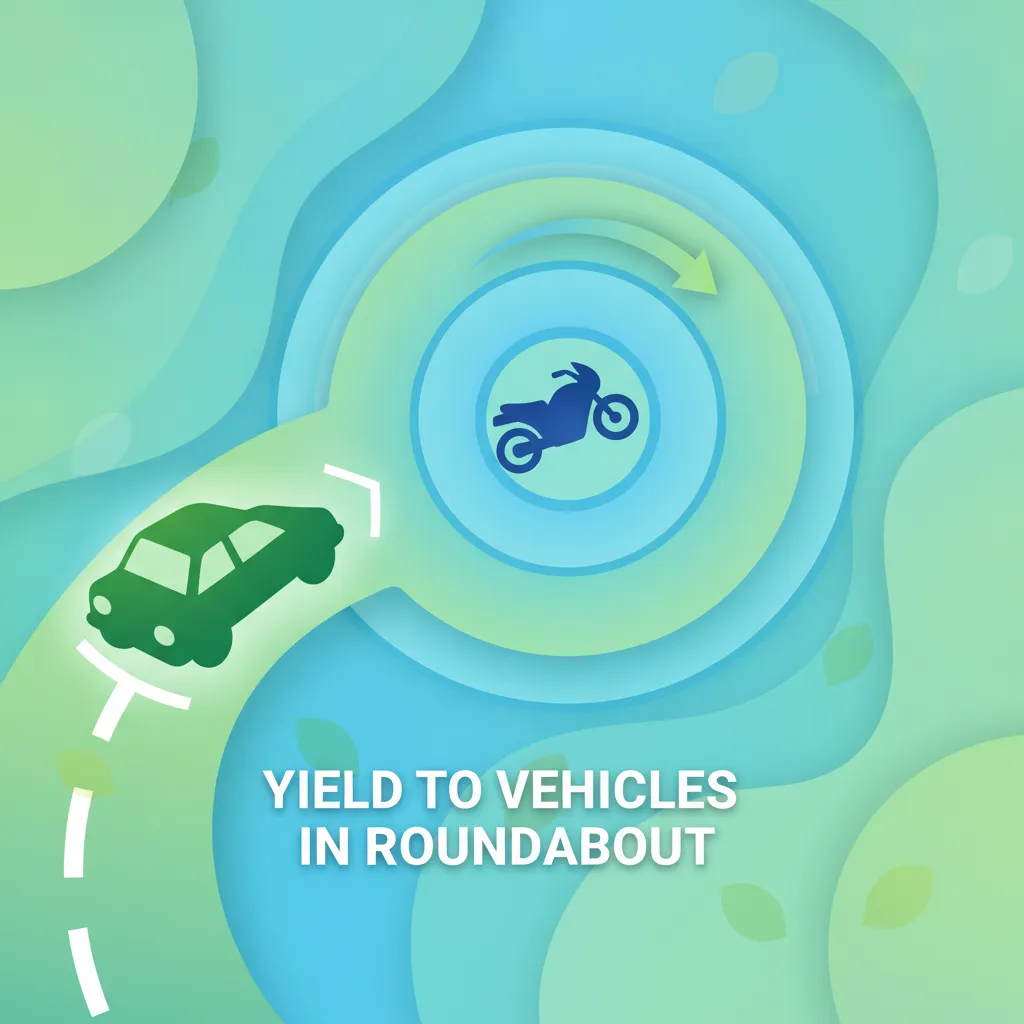
This lesson provides a step-by-step guide to navigating roundabouts in Portugal. It emphasizes the primary rule of yielding to traffic already circulating within the roundabout before entering. The content covers correct lane selection based on the intended exit, proper use of indicators for exiting, and managing the complexities of multi-lane roundabouts.

This lesson provides clear instructions for navigating roundabouts, a common feature on Portuguese roads. It explains the crucial rule of yielding to traffic already circulating and how to select the correct lane based on the intended exit. The content also covers the proper use of indicators when entering and before exiting the roundabout to communicate intentions to other drivers.
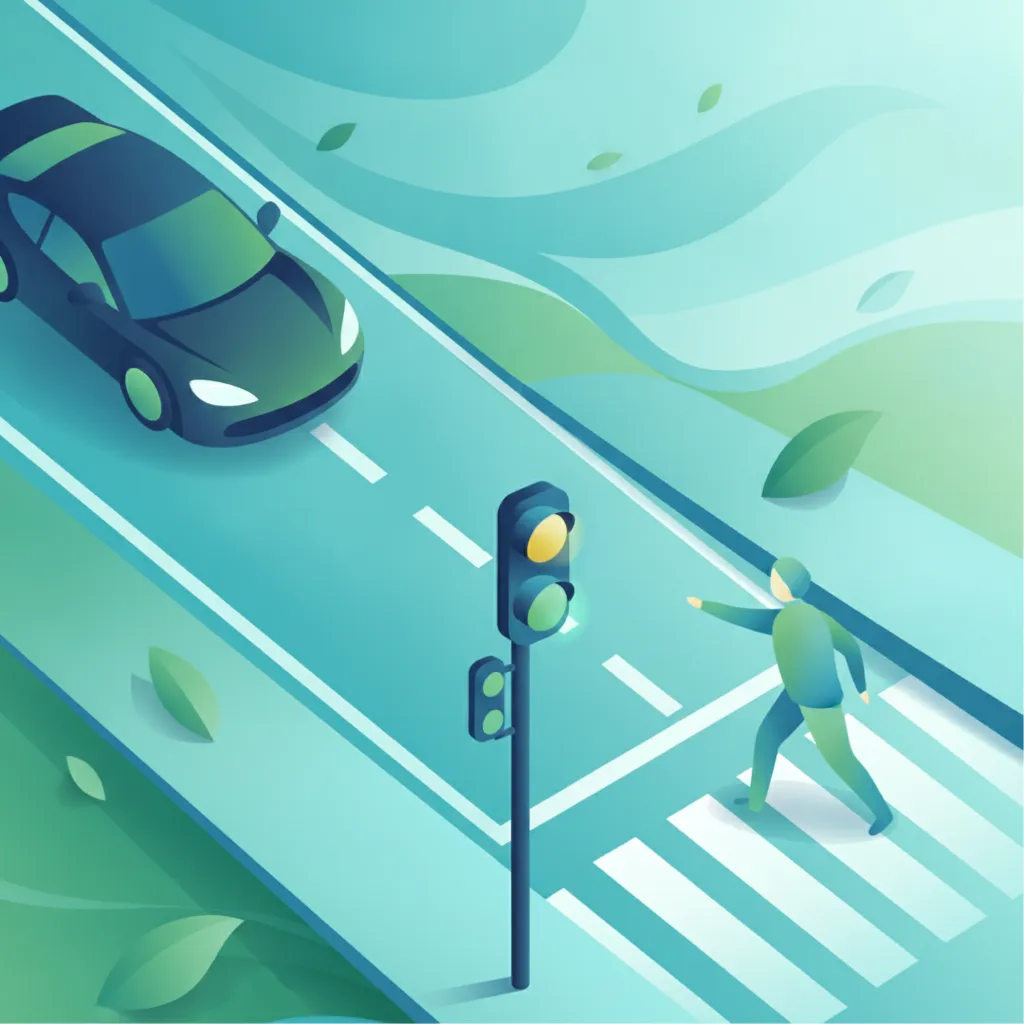
This lesson covers procedures for safely approaching and navigating various intersections, including those controlled by traffic lights and signs. It emphasizes correct lane positioning, visibility, and anticipating the actions of other road users. Riders will learn how to interpret intersection markings and signals to ensure a safe passage through all junctions.

This lesson focuses on riding safely on two-way roads and narrow lanes where space is limited. It emphasizes maintaining lane discipline, using the road edge when appropriate, and anticipating oncoming traffic. Techniques for safe passing, speed control, and positioning to maximize visibility and minimize collision risk are provided.
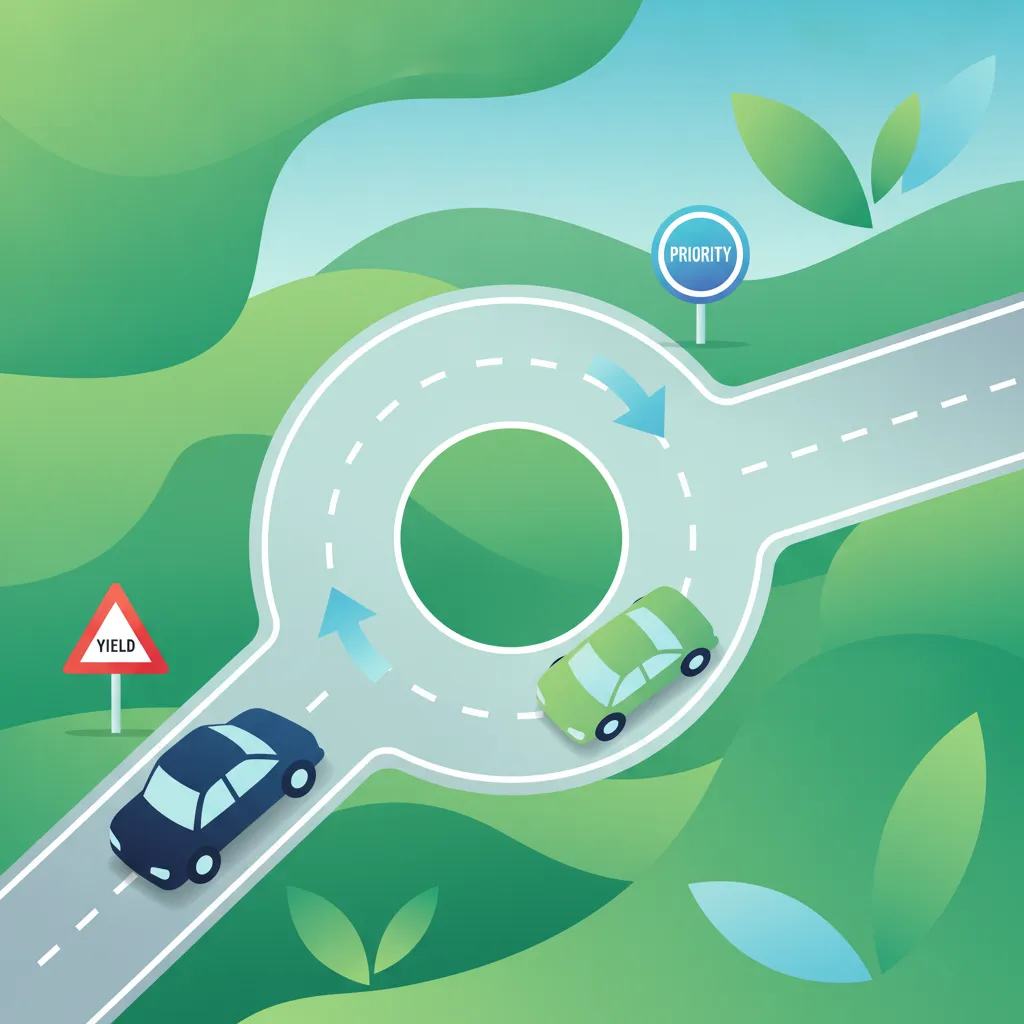
This lesson delves into the specific priority rules governing intersections and roundabouts in Portugal. It clarifies the hierarchy of signs such as stop and give-way, as well as the rules for entering and navigating roundabouts. Motorcyclists will learn how to position themselves correctly for exits and yield appropriately to ensure safe negotiation of these common traffic features.
This lesson teaches a systematic approach to safely navigating intersections. It covers the importance of reducing speed on approach, conducting thorough visual checks (observation), and selecting the appropriate lane for the intended direction. The content also details how to assess gaps in traffic before proceeding and correctly apply priority rules to avoid conflicts with other vehicles.

This lesson details the steps for performing safe overtaking maneuvers, focusing on judgment, speed differential, and signaling. It covers assessing safe distances, using mirrors, and selecting appropriate lanes for overtaking. Guidelines for overtaking in various traffic conditions are provided to ensure riders can execute this maneuver safely and legally.
Urban traffic presents unique challenges such as high density, frequent stops, and limited lane availability. This lesson discusses appropriate lane usage, the legal status of lane filtering, and strategies for navigating stop-and-go traffic. Riders will learn how to select lanes based on traffic flow and maintain visibility while riding through congested city streets.
This lesson focuses on the specifics of riding on motorways, covering speed management, lane discipline, and safe entry and exit strategies. Riders will learn how to choose appropriate lanes, maintain safe following distances at high speeds, and execute overtaking safely. The impact of wind and understanding Portuguese motorway signage are also addressed.
This lesson examines the hierarchy of road users defined by Portuguese law, emphasizing the right-of-way principles that apply to motorcycles. It covers priority at intersections, the rules governing roundabouts, and how motorcyclists must act upon these regulations when sharing space with larger vehicles. Understanding these priority rules is vital for avoiding conflicts and reducing accident risk.
Understand the critical rules for interacting safely with pedestrians and cyclists at roundabouts. Learn about yielding priorities and defensive riding techniques to ensure the safety of vulnerable road users in Portugal's traffic.

This lesson explores the various types of pedestrian crossings found in Portuguese urban areas, such as zebra crossings. It emphasizes the rider’s responsibility to yield to pedestrians, the importance of reducing speed, and maintaining a safe passing distance. Strategies for anticipating pedestrian behavior and ensuring visibility are discussed to prevent incidents.

This lesson focuses on the rider's responsibilities at designated pedestrian crossings. It clarifies the legal requirement to give way to pedestrians on or about to step onto a zebra crossing. The content emphasizes the need to approach all crossings with caution, be prepared to stop, and scan for pedestrians to ensure their safety as vulnerable road users.
This lesson focuses on safe interaction with cyclists on the road. It covers the identification of dedicated bicycle lanes and the rules regarding cyclist priority in various situations. Key topics include maintaining a safe lateral distance when overtaking cyclists and the importance of checking blind spots for them before turning or changing lanes.
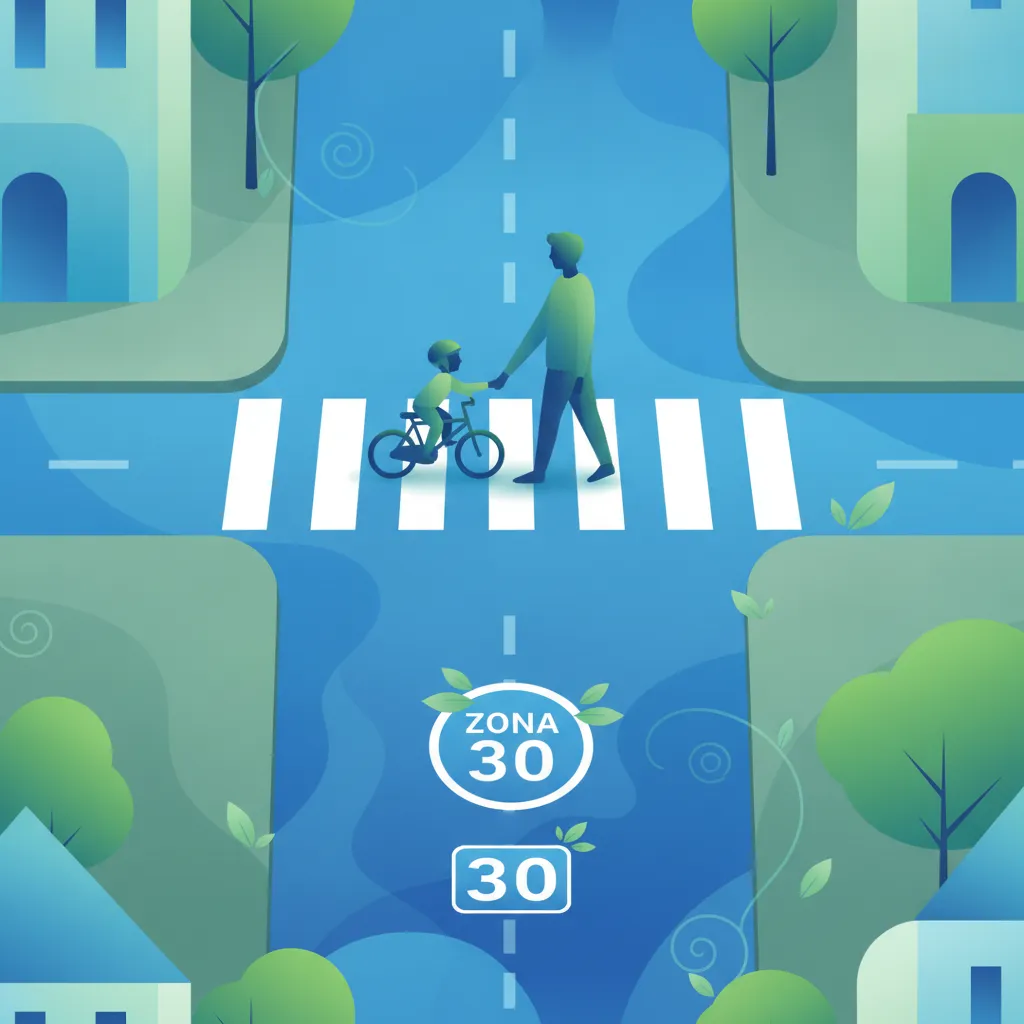
This lesson highlights road markings specifically designed to enhance the safety of vulnerable road users. It focuses on pedestrian crossings (zebra crossings), markings indicating school zones, and symbols for bicycle lanes or shared routes. The content stresses the heightened duty of care and specific actions, such as yielding or stopping, that drivers must take in these designated areas.
This lesson delves into the specific priority rules governing intersections and roundabouts in Portugal. It clarifies the hierarchy of signs such as stop and give-way, as well as the rules for entering and navigating roundabouts. Motorcyclists will learn how to position themselves correctly for exits and yield appropriately to ensure safe negotiation of these common traffic features.
This lesson focuses on the heightened duty of care professional drivers have towards vulnerable road users. It covers common conflict points, such as junctions and roundabouts, and teaches techniques for anticipating the actions of pedestrians, cyclists, and motorcyclists. Giving extra space and being prepared to stop are key themes.
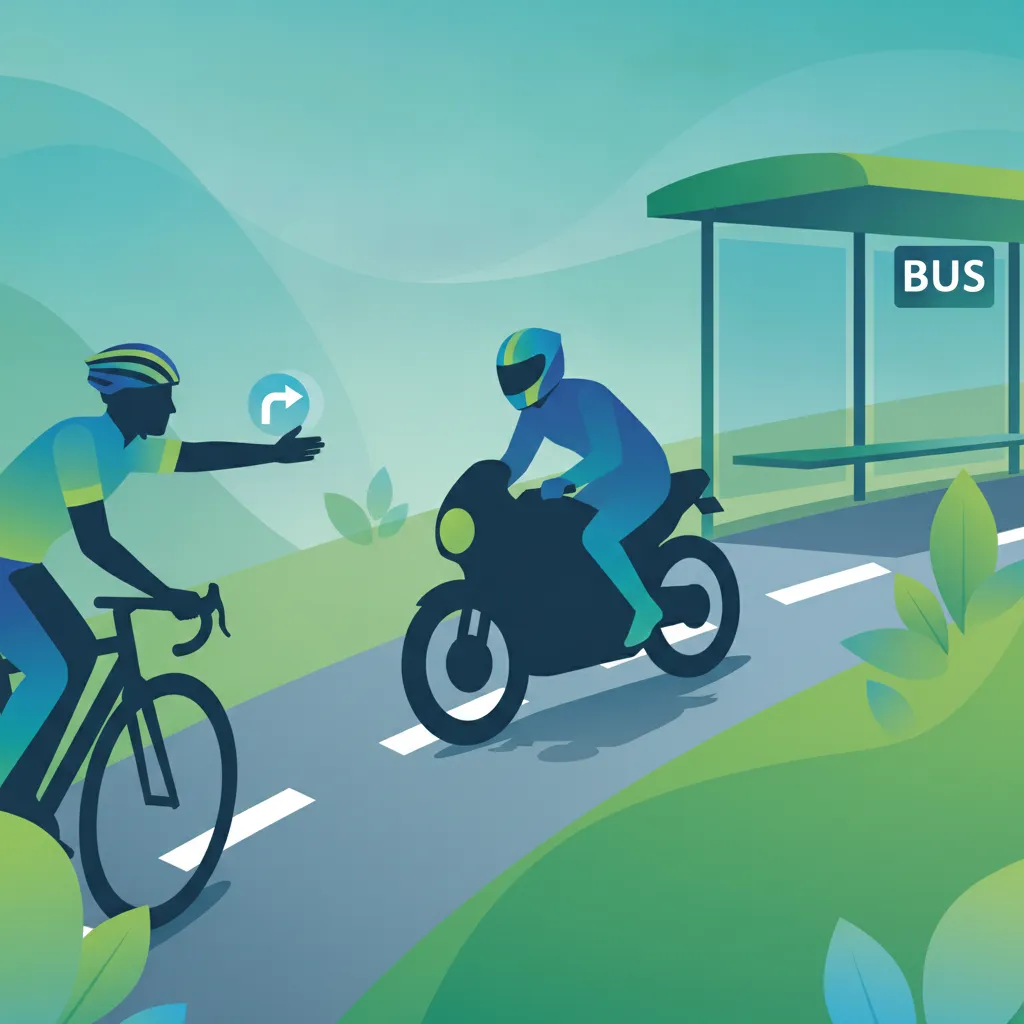
This lesson focuses on the specific challenges of sharing the road with two-wheeled vehicles. It highlights the importance of thorough blind spot checks before turning or changing lanes, particularly near bus stops where cyclists may pass. The content provides guidelines for safe overtaking and maintaining adequate separation to prevent conflicts.

This lesson addresses the heightened risk of interaction with pedestrians and cyclists around bus stops. It explains right-of-way regulations and the importance of vigilance, particularly when turning or pulling away from the curb. The content provides strategies for anticipating the actions of vulnerable road users to prevent conflicts.
This lesson covers procedures for safely approaching and navigating various intersections, including those controlled by traffic lights and signs. It emphasizes correct lane positioning, visibility, and anticipating the actions of other road users. Riders will learn how to interpret intersection markings and signals to ensure a safe passage through all junctions.

This lesson addresses the specific challenges of driving alongside motorcyclists and large vehicles such as trucks and buses. It highlights the reduced visibility of motorcyclists and the extensive blind spots (no-zones) around heavy vehicles. Drivers will learn to provide extra space, anticipate wide turns, and adjust for factors like spray and wind turbulence.
Find clear answers to common questions learners have about Roundabout Entry, Circulation, and Exit Strategies. Learn how the lesson is structured, which driving theory objectives it supports, and how it fits into the overall learning path of units and curriculum progression in Portugal. These explanations help you understand key concepts, lesson flow, and exam focused study goals.
Generally, you should use the lane that corresponds to your intended exit. If you intend to take the first exit, use the right lane. For subsequent exits, you should generally move to the internal lanes before exiting, unless signs indicate otherwise.
Yes, you must signal your intention to exit by using your right turn signal after passing the exit immediately preceding your intended one. Failure to signal is a common cause for mark deductions in the practical phase and indicates a misunderstanding in the theory test.
Yes, vehicles already inside the roundabout have the right of way. You must wait for a safe gap before entering to ensure you do not force other drivers to change speed or direction.
Motorcycles are less visible and more vulnerable to being squeezed by larger vehicles. Proper positioning helps keep you out of blind spots and ensures you have a clear path to exit without making abrupt, risky maneuvers.
Utilize the powerful search tool to refine your Portuguese driving theory practice. Pinpoint questions related to specific traffic laws, road signs, or complex scenarios from the Código da Estrada. Begin targeted revision now to boost your understanding and confidently approach your IMT driving exam.