
This lesson teaches you the critical procedures for performing safe overtaking maneuvers as a motorcycle rider in Portugal. It is part of our unit on space management and builds upon your knowledge of road hierarchy and lane positioning to ensure you can pass your A1, A2, or A theory exam with confidence.

Lesson content overview
Overtaking is a fundamental maneuver in traffic, but for motorcyclists, it requires an even higher degree of precision, judgment, and adherence to specific rules to ensure safety. This comprehensive lesson, part of your Motorcycle Licence Theory: Comprehensive Portuguese Road Safety and Practical Riding Knowledge, details the essential steps and considerations for executing safe overtaking maneuvers. Mastery of these techniques is crucial not only for passing your theoretical exam but, more importantly, for becoming a safe and confident rider on Portuguese roads.
Understanding the principles of safe overtaking minimises the inherent risks associated with sharing the road with other vehicles, especially given a motorcycle's smaller profile and susceptibility to blind spots. This lesson will guide you through assessing the situation, communicating your intentions, executing the pass, and observing all relevant traffic laws.
Safe overtaking is a complex skill built upon several core principles. These principles ensure that every decision and action taken during an overtaking maneuver contributes to the rider's safety and the safety of other road users. Neglecting any of these can lead to hazardous situations or legal penalties.
Overtaking judgment refers to the critical process of evaluating whether a passing maneuver can be performed safely and legally. This involves a rapid assessment of numerous factors, including current visibility, the speeds of all involved vehicles, available distance, overall traffic flow, and prevailing road conditions. Making an incorrect judgment can have severe consequences, ranging from minor collisions to serious accidents or legal infractions. The primary purpose of this judgment is to minimise collision risk and ensure full compliance with the Código da Estrada, Portugal's traffic law.
The speed differential is the difference in speed between your motorcycle and the vehicle you intend to overtake. For safe and lawful overtaking in Portugal, the speed of your motorcycle must not exceed that of the overtaken vehicle by more than 5 km/h at the moment of undertaking the maneuver. This specific limit is designed to prevent riders from approaching too quickly, which reduces reaction time and increases the risk of high-speed collisions. Maintaining this controlled speed difference allows for a smooth, predictable pass and ensures you can react effectively to unforeseen changes in traffic.
Before initiating any overtaking maneuver, it is mandatory to clearly communicate your intentions to other road users. This is typically done by activating your left turn indicator and, for motorcyclists, often includes flashing your headlamp. Signaling serves to alert drivers around you, especially the vehicle directly ahead and those behind, to your forthcoming action. Failure to signal, or signaling too late, creates uncertainty and can lead to misunderstandings, sudden evasive actions by other drivers, and increased accident risk.
Mirrors are your essential tools for maintaining situational awareness, particularly before and during an overtaking maneuver. You must diligently check your rearview and side mirrors at appropriate moments to ensure you are aware of traffic behind you and to your side. This is especially vital for motorcyclists, who are smaller and can be easily overlooked in other vehicles' blind spots. Neglecting mirror checks can lead to dangerous overtaking attempts, such as pulling out into the path of a faster-moving vehicle already initiating its own overtake.
Choosing the correct lane for overtaking is paramount for a safe and legal maneuver. Generally, you should select the lane that is best suited for the required speed differential and the overall road layout. On multi-lane roads, this usually means using the leftmost available lane. Proper lane selection ensures a clear and safe overtaking path without impeding other traffic or creating dangerous merging situations. Inappropriate lane choice can result in dangerous merging, improper overtaking, or even forcing other vehicles to react abruptly.
Executing a safe overtaking maneuver involves more than just speed and signaling; it requires a deep understanding of road conditions, legal restrictions, and potential hazards.
Before you even consider overtaking, you must perform a thorough visibility assessment. This means determining that you have a clear, unobstructed line of sight for the entire duration of the maneuver. Factors to consider include sight distance, identifying potential blind spots of other vehicles, and how road curvature or gradients might impact your view. Motorcyclists must ensure they can see far enough ahead to complete the overtake safely and have ample space to return to their original lane without conflict. Overtaking is strictly prohibited in areas with limited visibility, such as sharp curves, crests of hills, and near intersections or pedestrian crossings. A common mistake is attempting to overtake when visibility is questionable, assuming it will improve later.
A safe following distance is the space you maintain behind the vehicle ahead, allowing enough time for you to react and brake if necessary. This is typically calculated using the two-second rule, which should be adjusted for higher speeds, adverse weather, or heavy vehicles. Before initiating an overtaking maneuver, maintaining this safe distance is crucial. It provides you with the necessary space to accelerate smoothly into the overtaking lane without crowding the vehicle ahead, which could lead to sudden braking or an aggressive start to the pass. Following too closely reduces your reaction time and can push you into making hasty overtaking decisions.
The decision to overtake should not be taken lightly. It involves determining if overtaking is truly necessary (e.g., if the vehicle ahead is moving significantly slower than the speed limit or traffic flow) and, crucially, if it is permissible according to traffic laws and current road conditions. Overtaking is prohibited on solid lines, near intersections, at pedestrian crossings, and for certain vehicle types in specific situations. Riders must never overtake out of impatience or ignore road markings that forbid the maneuver. Always ensure the road ahead is clear, there are no oncoming vehicles within the required distance, and you will not have to exceed the speed limit.
As previously mentioned, clear communication is vital. Before you move out of your lane to overtake, you must signal your intention. For motorcyclists, this typically involves activating your left turn signal and briefly flashing your headlamp (high beam). The headlamp flash is a particularly effective signal for motorcycles, as it increases your visibility and explicitly warns the vehicle ahead of your intent to pass. Signaling should be done early enough to give other drivers time to react, but not so early that your intentions become ambiguous. Failing to signal, or signaling too late, can lead to confusion and increase the risk of an accident.
Once you have assessed the situation, decided to overtake, and signaled your intention, the execution phase begins. This requires precise speed management and timing.
Acceleration Phase: Smoothly increase your speed, maintaining the specified speed differential (not more than 5 km/h faster than the overtaken vehicle). Move deliberately and confidently into the overtaking lane.
Passing Phase: Pass the vehicle quickly and efficiently, ensuring you maintain a safe lateral distance. Do not linger alongside the vehicle being overtaken.
Rejoining Phase: Once you can see the entire front of the overtaken vehicle in your rearview mirror, signal your intention to return to the original lane (right turn signal). Gently move back into the lane, ensuring you maintain a safe distance before fully returning to your original lane position.
Common mistakes include cutting in too early or too late, which can lead to collisions with the overtaken vehicle or other traffic. Insufficient speed differential can also prolong the maneuver, increasing exposure to risk.
Overtaking near junctions or pedestrian zones requires extreme caution and is often prohibited. In Portugal, overtaking is generally prohibited within 30 meters of an intersection or where pedestrians may be present at or near crosswalks. This rule is in place to prevent conflicts with turning traffic or pedestrians who may enter the crossing unexpectedly. A rider must refrain from overtaking a car that is about to turn or at any point where their vision of the intersection or crossing is obscured. Assuming pedestrians will yield or that other drivers will see you near a junction are dangerous assumptions.
Always assume limited visibility and unpredictable behavior near intersections and pedestrian crossings. Prioritise safety over completing an overtaking maneuver.
Overtaking large vehicles like trucks and buses presents specific challenges for motorcyclists. These vehicles have significantly larger blind spots, often referred to as "no-zones," where a motorcycle can disappear entirely from the driver's view. These blind spots are present on both sides, directly behind, and often directly in front of the heavy vehicle. Additionally, large vehicles can generate significant wind turbulence, which can affect a motorcycle's stability, especially during the passing phase. It is strictly prohibited to overtake a heavy vehicle on its right side unless there is a dedicated lane for that purpose. Always overtake heavy vehicles on the left, pass quickly, and ensure you can see the truck fully in your mirrors before returning to your lane. Never linger in a heavy vehicle's blind spot.
On two-way roads with narrow lanes, the feasibility and safety of overtaking are significantly reduced. These roads may have lane widths that barely accommodate two vehicles side by side, making it extremely dangerous to attempt an overtake. Overtaking is prohibited where the lane width does not allow for safe passage. In such conditions, a motorcyclist must exercise sound judgment and often decide against overtaking, waiting instead for a wider section of the road or a passing zone. Misjudging lane width or attempting to squeeze past in cramped spaces can lead to sideswiping, loss of control, and head-on collisions.
Compliance with the Portuguese Código da Estrada is paramount for safe and lawful riding. Specific rules govern overtaking, and understanding them is crucial to avoid penalties and ensure safety.
Overtaking is explicitly prohibited in several critical areas to prevent accidents:
Always observe road markings carefully. A solid line means do not cross for overtaking.
As previously detailed, the law mandates a specific speed differential:
Understanding common errors is as important as knowing the correct procedures. Recognizing these pitfalls can help you avoid dangerous situations.
Safe overtaking is not a static process; it must adapt to the ever-changing conditions of the road and environment.
Every rule and guideline for safe overtaking is founded on principles of physics, human psychology, and accident prevention.
Safe overtaking is a critical skill for any motorcyclist, demanding continuous vigilance and adherence to strict guidelines. It requires excellent judgment, a controlled speed differential (not exceeding 5 km/h faster than the overtaken vehicle), clear signaling (including headlamp flash), and diligent mirror checks.
Crucially, riders must conduct a thorough visibility assessment to ensure clear sight distance. Overtaking is strictly prohibited near intersections (typically within 30 meters), at pedestrian crossings, and where road markings such as solid lines forbid it. Lane selection must be strategic, considering road type, available lane width, and the presence of heavy vehicles, whose significant blind spots necessitate extra caution.
Maintaining a safe following distance (using the two-second rule, adjusted for conditions) before initiating the maneuver is essential. Speed management throughout the overtake is paramount, as excessive acceleration reduces reaction time and increases collision risk. Special care must be taken when overtaking heavy vehicles, always preferring the left side unless a dedicated lane exists, and ensuring you are not caught in their blind spots. On narrow lanes, overtaking may be entirely unsafe or prohibited.
Finally, rejoining the lane must only occur after establishing a safe distance from the overtaken vehicle, accompanied by appropriate signaling. By mastering these principles, motorcyclists not only comply with the Portuguese Código da Estrada but also significantly enhance their personal safety and contribute to safer roads for everyone.
Explore all units and lessons included in this driving theory course.
Lesson content overview
Explore all units and lessons included in this driving theory course.
Explore search topics learners often look for when studying Safe Overtaking Maneuvers for Motorcyclists. These topics reflect common questions about road rules, driving situations, safety guidance, and lesson level theory preparation for learners in Portugal.
Browse additional driving theory lessons that cover connected traffic rules, road signs, and common driving situations related to this topic. Improve your understanding of how different rules interact across everyday traffic scenarios.
Learn specific Portuguese traffic laws and safe practices for overtaking near intersections, around large vehicles with blind spots, and on narrow roads. Understand prohibited zones and how to safely manage these challenging scenarios.

This lesson provides a detailed guide to the rules and safety considerations for overtaking. It covers how to assess if an overtake is necessary and safe, considering factors like road markings, visibility, and oncoming traffic. The correct procedure, from initial checks and signaling to returning safely to the lane, is explained in full.
This lesson explains the unique set of rules that apply to motorway driving to facilitate safe, high-speed travel. It covers the correct procedure for entering and exiting the motorway, principles of lane discipline (keeping left unless overtaking), and the rules for safe overtaking. The lesson also clarifies the proper use of the hard shoulder or emergency lane for genuine emergencies only.
This lesson delves into the specific priority rules governing intersections and roundabouts in Portugal. It clarifies the hierarchy of signs such as stop and give-way, as well as the rules for entering and navigating roundabouts. Motorcyclists will learn how to position themselves correctly for exits and yield appropriately to ensure safe negotiation of these common traffic features.
This lesson covers procedures for safely approaching and navigating various intersections, including those controlled by traffic lights and signs. It emphasizes correct lane positioning, visibility, and anticipating the actions of other road users. Riders will learn how to interpret intersection markings and signals to ensure a safe passage through all junctions.

This lesson examines the hierarchy of road users defined by Portuguese law, emphasizing the right-of-way principles that apply to motorcycles. It covers priority at intersections, the rules governing roundabouts, and how motorcyclists must act upon these regulations when sharing space with larger vehicles. Understanding these priority rules is vital for avoiding conflicts and reducing accident risk.

This lesson addresses the specific challenges of driving alongside motorcyclists and large vehicles such as trucks and buses. It highlights the reduced visibility of motorcyclists and the extensive blind spots (no-zones) around heavy vehicles. Drivers will learn to provide extra space, anticipate wide turns, and adjust for factors like spray and wind turbulence.
This lesson focuses on the specifics of riding on motorways, covering speed management, lane discipline, and safe entry and exit strategies. Riders will learn how to choose appropriate lanes, maintain safe following distances at high speeds, and execute overtaking safely. The impact of wind and understanding Portuguese motorway signage are also addressed.

This lesson details the rules of lane discipline and the procedures for safe overtaking. It explains how to maintain correct lane positioning and how road markings and signs define where overtaking is allowed or forbidden. The lesson emphasizes the importance of the mirror-signal-manoeuvre routine and ensuring sufficient space and visibility before attempting to pass another vehicle.
This lesson teaches riders to interpret traffic lights and signals, understanding their impact on priority and right-of-way. It covers standard traffic light phases, flashing amber situations, and pedestrian crossing signals. The lesson also explains how to respond to priority signs at intersections, ensuring compliance with Portuguese traffic signal standards.

Focusing on roundabouts, this lesson teaches riders how to correctly enter, circulate, and exit these traffic features. It covers lane selection based on the intended exit, maintaining appropriate speed, and using signals to indicate intentions. The lesson also addresses the importance of yielding to circulating traffic and positioning oneself safely to avoid collisions.
Identify and understand the most frequent errors motorcyclists make when overtaking in Portugal. Learn to assess risks, improve judgment, and apply defensive riding principles to avoid dangerous situations and legal penalties.

This lesson emphasizes the development of defensive riding strategies through continuous risk assessment and situational awareness. It teaches techniques for scanning the environment, maintaining safe following distances, and anticipating potential hazards. The importance of a proactive riding attitude and creating safety margins is highlighted to promote a habit of anticipatory riding.

This lesson identifies and corrects prevalent myths and misunderstandings among new riders, such as incorrect beliefs about lane filtering or priority. It discusses the dangers of assuming visibility or overestimating braking capabilities, highlighting critical rider errors. By addressing these misconceptions, learners can recognize and avoid common mistakes, fostering a mindset of safety awareness.

This lesson focuses on riding safely on two-way roads and narrow lanes where space is limited. It emphasizes maintaining lane discipline, using the road edge when appropriate, and anticipating oncoming traffic. Techniques for safe passing, speed control, and positioning to maximize visibility and minimize collision risk are provided.
Focusing on roundabouts, this lesson teaches riders how to correctly enter, circulate, and exit these traffic features. It covers lane selection based on the intended exit, maintaining appropriate speed, and using signals to indicate intentions. The lesson also addresses the importance of yielding to circulating traffic and positioning oneself safely to avoid collisions.

Focusing on social dynamics, this lesson addresses how peer pressure and overconfidence can lead to unsafe riding decisions. It explores the psychological aspects of group riding and the tendency to take unnecessary risks in social settings. Riders are guided on assertive decision-making and resisting unsafe group dynamics to prioritize safety.
This lesson focuses on the psychological aspects of safe riding, helping riders recognize and manage high-risk behaviors. It discusses the dangers of distraction, particularly from mobile phones, and the influence of peer pressure and overconfidence. The content encourages the development of a mature risk assessment mindset and emphasizes the importance of riding only when physically and mentally fit.
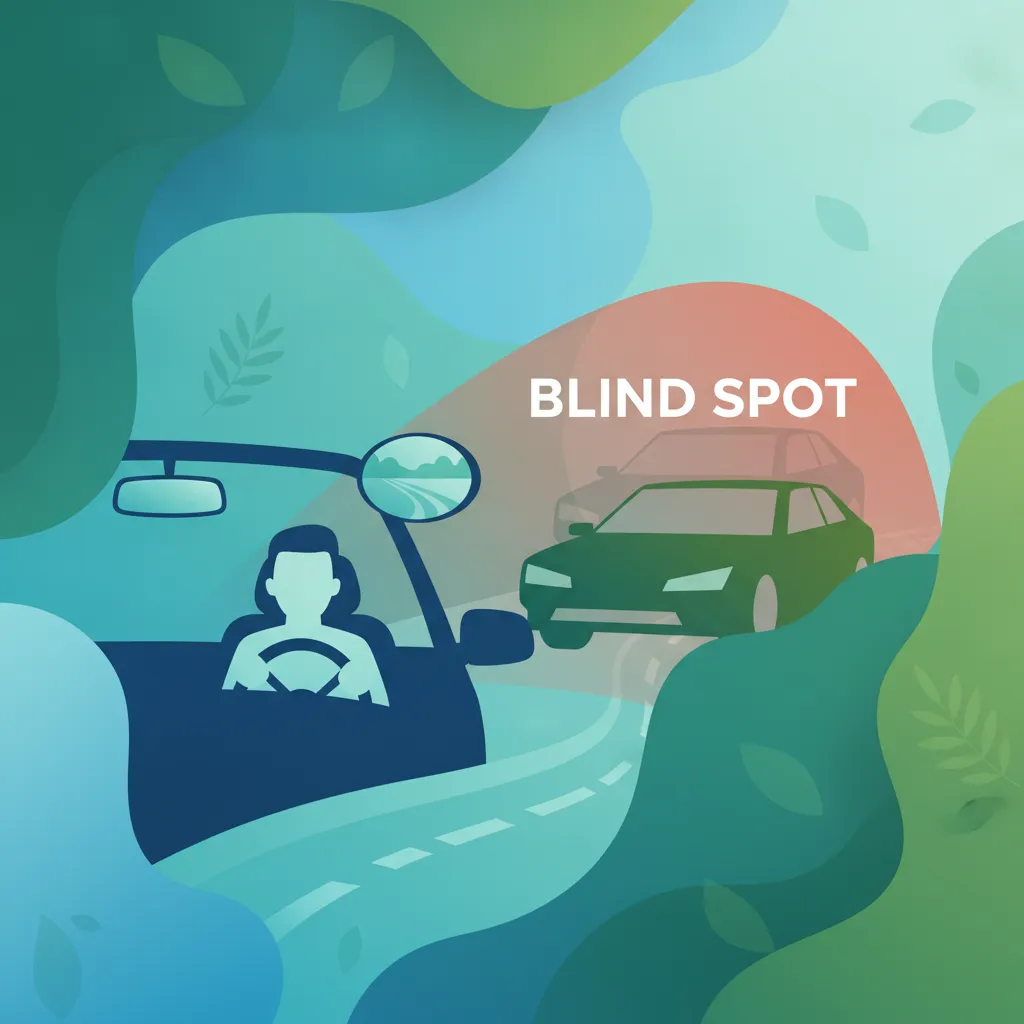
Focusing on blind spots, this lesson explains the areas where riders may become invisible to drivers of larger vehicles. It discusses how to assess and avoid these zones, especially during overtaking or when riding alongside other vehicles. Techniques for positioning oneself safely and ensuring visibility to other drivers are provided to reduce collision risk.
This lesson focuses on the specifics of riding on motorways, covering speed management, lane discipline, and safe entry and exit strategies. Riders will learn how to choose appropriate lanes, maintain safe following distances at high speeds, and execute overtaking safely. The impact of wind and understanding Portuguese motorway signage are also addressed.
This lesson introduces the core principles of defensive riding as applied to small, vulnerable vehicles. It teaches riders how to create and maintain a 'space cushion' around them, anticipate the actions of other drivers, and identify potential hazards early. Key techniques such as effective scanning, maintaining a safe following distance, and planning escape routes are explained in detail.
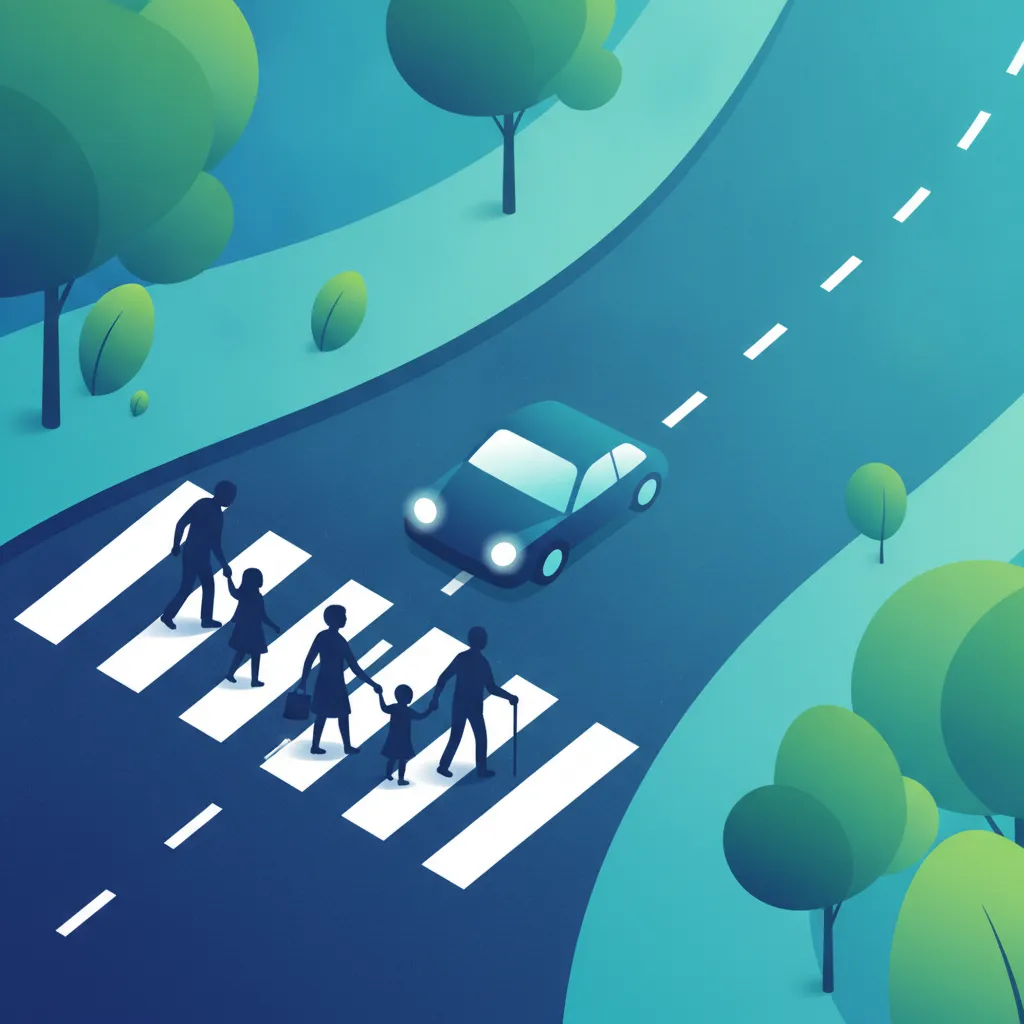
This lesson explores the various types of pedestrian crossings found in Portuguese urban areas, such as zebra crossings. It emphasizes the rider’s responsibility to yield to pedestrians, the importance of reducing speed, and maintaining a safe passing distance. Strategies for anticipating pedestrian behavior and ensuring visibility are discussed to prevent incidents.
Find clear answers to common questions learners have about Safe Overtaking Maneuvers for Motorcyclists. Learn how the lesson is structured, which driving theory objectives it supports, and how it fits into the overall learning path of units and curriculum progression in Portugal. These explanations help you understand key concepts, lesson flow, and exam focused study goals.
Generally, you must overtake on the left. Overtaking on the right is only permitted in specific situations, such as when the vehicle ahead is turning left or in lanes specifically marked for different directions in urban traffic. As a motorcyclist, you must understand these exceptions for the theory exam.
Visibility and space. You must ensure you have a clear view of the road ahead, that no one is currently overtaking you, and that you have enough power and distance to complete the maneuver quickly and safely without forcing the overtaken vehicle to change speed.
The legal rules for overtaking remain the same for all categories under the Código da Estrada. However, understanding your motorcycle's acceleration capabilities is vital; you must ensure your bike can complete the pass safely within the available distance.
You must not begin your own maneuver if someone is already overtaking you. Always check your mirrors and blind spots carefully before initiating any change in lane or speed. Being aware of faster-moving vehicles behind you is a key skill tested in the theory exam.
Utilize the powerful search tool to refine your Portuguese driving theory practice. Pinpoint questions related to specific traffic laws, road signs, or complex scenarios from the Código da Estrada. Begin targeted revision now to boost your understanding and confidently approach your IMT driving exam.