
This lesson provides essential knowledge on how to manage motorcycle stability through precise braking techniques. It builds on the principles of motorcycle control to ensure you can handle emergency scenarios safely as required by the Portuguese theory exam.

Lesson content overview
Mastering braking is one of the most critical skills for any motorcycle rider, especially within the context of the Motorcycle Licence Theory: Comprehensive Portuguese Road Safety and Practical Riding Knowledge curriculum. This lesson delves into advanced braking methods, focusing on progressive braking and the safe execution of emergency stops. Understanding these techniques is not just about slowing down; it's about maintaining control, maximizing tire grip, and ultimately, preventing accidents in diverse riding conditions.
We will explore the optimal balance between front and rear brakes, the dynamic effects of weight distribution known as load transfer, and how modern Anti-lock Braking Systems (ABS) enhance safety by preventing wheel lock. Furthermore, we will examine specific challenges such as braking on wet surfaces and while cornering, providing you with the knowledge to react effectively and safely in any situation on Portuguese roads.
Progressive braking is a fundamental technique that allows a motorcycle rider to decelerate smoothly and controllably. It's about gradually increasing brake pressure, rather than abruptly grabbing the levers, to match the available grip and the desired rate of deceleration.
Progressive braking involves the gradual and continuous application of both the front and rear brakes, smoothly increasing pressure until the desired deceleration is achieved. This method ensures that the motorcycle remains stable, maximizing the tire-road contact patch, and adapting to the motorcycle's inherent grip limits. The rider constantly modulates brake lever pressure and pedal force in response to feedback from the motorcycle and the road surface, carefully avoiding abrupt inputs that could destabilize the bike or cause a skid.
When you apply the brakes on a motorcycle, the vehicle's weight naturally shifts forward. This phenomenon, known as load transfer, significantly increases the traction available at the front wheel while simultaneously reducing the load, and therefore the grip, on the rear wheel. Progressive braking accounts for this dynamic shift. By gradually increasing front brake pressure as the weight transfers, the rider leverages the enhanced front wheel grip effectively. Simultaneously, judicious use of the rear brake helps stabilize the motorcycle and contributes to overall stopping power, especially as the rear tire's grip diminishes.
The goal is to maintain equilibrium and prevent either wheel from locking up. This requires the rider to "feel" the limits of adhesion, constantly adjusting the brake input. The smoother the application, the more control the rider maintains over the motorcycle's balance and steering.
In everyday riding scenarios, progressive braking is the standard technique for any planned deceleration. Whether you're approaching a traffic light, a stop sign, or simply adjusting your speed to traffic flow, you should gently squeeze both brake levers. Start with a light touch, then smoothly increase pressure. This allows the motorcycle's suspension to compress gradually, settling the bike and transferring weight in a controlled manner.
Smoothness is Key: Avoid sudden, jerky movements on the brake levers. Think of squeezing the brakes as you would squeeze a sponge – steadily increasing pressure. This predictability helps prevent instability and surprises for other road users.
On dry roads, the front brake provides the majority of the stopping power due to load transfer. However, even then, the rear brake plays a vital role in stability and helps to shorten the stopping distance marginally. The correct approach balances brake force according to the dynamic load transfer and prevailing road conditions, rather than a fixed ratio.
An emergency stop is a critical maneuver performed when an immediate halt is necessary to avoid a collision or hazard. It demands a rapid, maximal, yet controlled application of both brakes to reduce stopping distance to the absolute minimum within safety constraints.
An emergency stop is a rapid deceleration maneuver requiring immediate and decisive brake application. Its sole purpose is to reduce the stopping distance as much as possible, as quickly as possible, to prevent or mitigate a collision. This maneuver demands maximal, yet balanced, brake force application, often utilizing the full capabilities of an Anti-lock Braking System (ABS) if the motorcycle is equipped with it.
Executing a controlled emergency stop involves a sequence of actions designed to maximize deceleration while maintaining stability and steering control:
Identify the Hazard: Recognize the need for an immediate stop.
Apply Both Brakes Decisively: Simultaneously and forcefully apply both the front brake lever and the rear brake pedal. The front brake will bear the majority of the braking force due to load transfer.
Increase Pressure Progressively (Rapidly): While the application is rapid, it still needs to be progressive. Squeeze the front brake lever very firmly, but be prepared to modulate if you feel the wheel starting to lock (though ABS will manage this if present). Apply significant pressure to the rear brake pedal, but be mindful of its lower traction limits.
Maintain a Straight Trajectory: Keep the handlebars straight and the motorcycle upright. Avoid sudden steering inputs, as braking while turning can significantly reduce available traction.
Keep Feet on Footrests: Both feet should remain planted on the footrests throughout the braking process to maintain balance and control. Only put your feet down once the motorcycle has come to a complete stop.
Look Ahead: Focus on the escape path or the space you want to stop in, not directly at the hazard itself.
The goal is to brake as hard as possible without locking either wheel, which would result in a loss of control. The rear brake, while contributing less overall stopping power, is crucial for stability, helping to prevent the rear wheel from sliding out or lifting excessively during hard front braking.
Do not pump the brakes on a modern motorcycle, especially one equipped with ABS. Apply firm, consistent pressure and let the ABS system do its work if activated.
Load transfer is a fundamental physical principle that profoundly impacts motorcycle braking dynamics. Understanding it is key to effective and safe deceleration.
Load transfer is the redistribution of a motorcycle's weight from the rear to the front during deceleration. When brakes are applied, the motorcycle's inertia tries to continue moving forward, causing a significant portion of its weight to shift towards the front wheel. This dynamic weight shift means the front tire experiences a substantial increase in downward force, while the rear tire experiences a corresponding decrease.
This phenomenon has critical implications for stability and braking efficiency. The increased load on the front tire means it can generate significantly more grip and therefore more braking force. Conversely, the reduced load on the rear tire means its available grip for braking diminishes, making it more prone to locking up.
Given the effects of load transfer, the front brake provides the majority of the stopping power on a motorcycle. On dry roads, the front brake can contribute 70-90% of the total braking force. The rear brake, while secondary in terms of raw stopping power on dry surfaces, is essential for maintaining stability and preventing the rear wheel from lifting or sliding out.
Optimal brake balance is not a fixed ratio but rather a dynamic adjustment based on speed, road conditions, and the intensity of braking. As braking force increases, more weight transfers to the front, necessitating an increase in front brake pressure relative to the rear.
The principle that, due to load transfer during braking, the front brake on a motorcycle is capable of generating a much larger proportion of the total stopping force compared to the rear brake.
The degree of load transfer and the resulting available grip are highly dependent on the road surface.
Riders must constantly adjust their braking technique to the road conditions, using tactile feedback from the motorcycle to gauge the available traction.
The Anti-lock Braking System (ABS) is a pivotal safety feature on modern motorcycles, significantly enhancing control during heavy braking, especially in challenging conditions.
ABS (Anti-lock Braking System) is an electronic safety system designed to prevent the wheels from locking up during heavy braking. It works by monitoring wheel speed sensors on both the front and rear wheels. If a sensor detects that a wheel is about to lock (i.e., its rotational speed drops much faster than the vehicle's speed, indicating slippage), the ABS control unit automatically modulates the brake pressure to that specific wheel.
This modulation involves rapidly releasing and re-applying brake pressure many times per second – much faster than a human rider could. This "pulsing" action ensures that the wheel continues to rotate, preventing lock-up and allowing the rider to maintain steering control.
Benefits:
Limitations:
When riding an ABS-equipped motorcycle, the most effective way to utilize the system is to apply the brakes firmly and consistently in an emergency. Do not "pump" the brakes manually, as this overrides the rapid modulation performed by the ABS system, reducing its effectiveness. Instead, squeeze the front brake lever hard and press the rear brake pedal firmly, maintaining constant pressure. Let the ABS do its job of preventing lock-up while you focus on steering and avoiding the hazard.
Some motorcycles may have different ABS modes (e.g., Road, Rain, Off-Road) that adjust the intervention threshold. Always be aware of your motorcycle's specific features and select the appropriate mode for the riding conditions.
Effective braking is highly contextual. The techniques discussed must be adapted based on the specific environmental and operational conditions.
Braking on wet, icy, or dirty roads is significantly more challenging due to reduced tire-road friction. The available grip is substantially diminished, making wheel lock-up much easier to achieve.
Braking while cornering is one of the most demanding maneuvers on a motorcycle because the tires' grip is divided between braking, accelerating, and cornering forces (the traction circle). Applying too much brake while leaned over can easily exceed the available grip, leading to a loss of traction and a fall.
The weight of a passenger or heavy luggage significantly alters a motorcycle's dynamics, particularly during braking.
While specific articles of the Portuguese Código da Estrada may not dictate braking techniques down to the exact percentage, the principles of safe and controlled braking are fundamental to the legal obligation of operating a vehicle safely.
Rule 1: Progressive Braking Requirement
Rule 2: Front Brake Dominance on Dry Roads
Rule 3: Limiting Front Brake on Wet Surfaces
Rule 4: Emergency Braking Procedure
Rule 5: ABS Usage
Even experienced riders can fall into bad habits. Recognizing and correcting common braking errors is crucial for safety.
Improper braking techniques can lead to severe consequences, including:
Mastering progressive braking and emergency stopping techniques is not merely a theoretical exercise; it is a vital component of safe and confident motorcycle riding. These advanced braking skills, combined with an understanding of load transfer and the capabilities of ABS, empower you to react effectively to unexpected hazards and maintain control under diverse conditions on Portuguese roads.
Remember, practice is key. While this lesson provides the foundational knowledge, consistent, safe practice of these techniques in a controlled environment will solidify your skills and build the muscle memory necessary for effective emergency responses. By prioritizing smooth, progressive inputs and adapting your braking to the environment, you will significantly enhance your safety and riding proficiency as a motorcyclist.
Explore all units and lessons included in this driving theory course.
Lesson content overview
Explore all units and lessons included in this driving theory course.
Explore search topics learners often look for when studying Progressive Braking and Emergency Stopping Techniques. These topics reflect common questions about road rules, driving situations, safety guidance, and lesson level theory preparation for learners in Portugal.
Browse additional driving theory lessons that cover connected traffic rules, road signs, and common driving situations related to this topic. Improve your understanding of how different rules interact across everyday traffic scenarios.
Understand the theory behind emergency stops on a motorcycle. Learn how to apply brakes effectively, manage load transfer, and utilize ABS for maximum safety in critical situations according to Portuguese traffic law.

This lesson provides a step-by-step guide for handling breakdowns and accidents safely. It covers the use of hazard lights, positioning on the roadside, and deploying safety triangles. Procedures for contacting emergency services, delivering information, and basic first aid measures are discussed, along with guidelines for managing the aftermath.
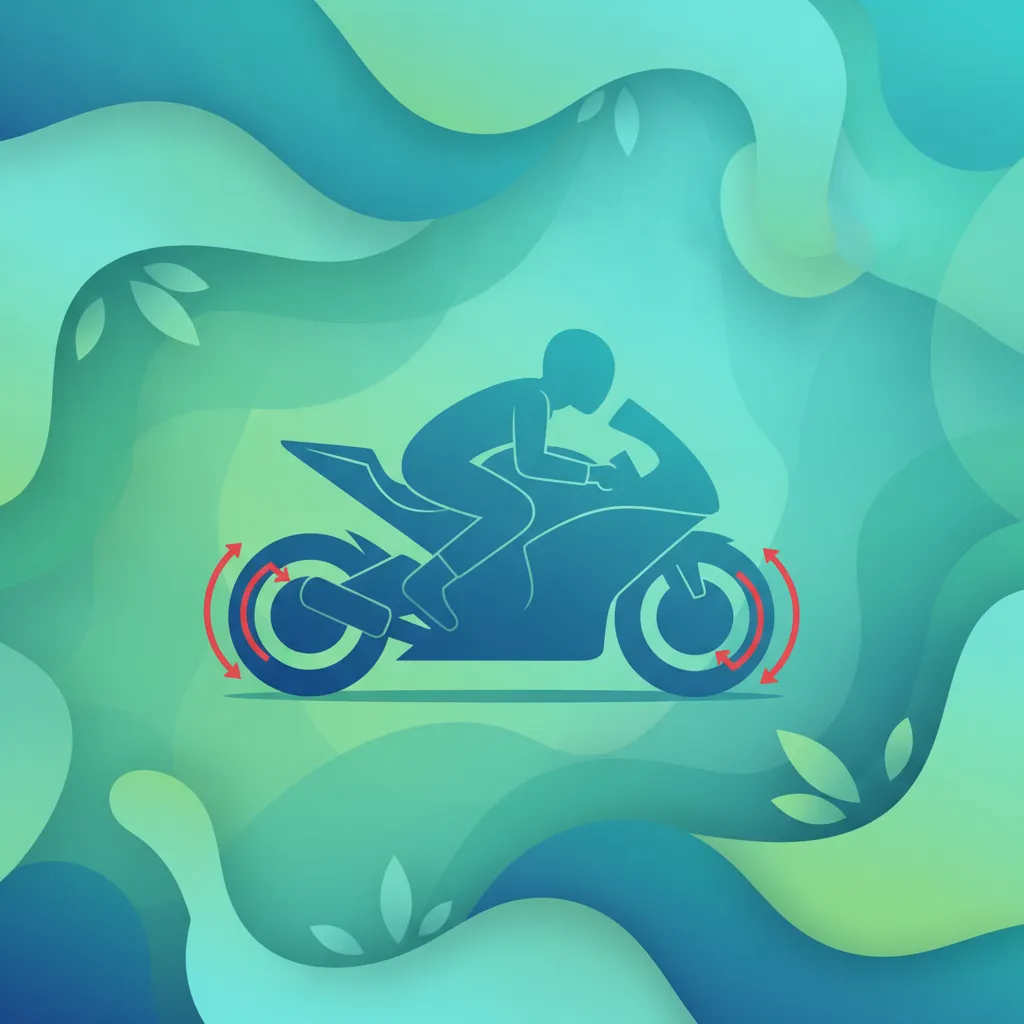
This lesson introduces the basic components and operation of motorcycle braking systems, including front and rear brakes and combined braking. Learners will understand the role of brake pads, disc rotors, and brake fluid, as well as the importance of regular maintenance. The lesson provides a solid foundation for understanding safe braking practices.

This lesson breaks down the concept of total stopping distance into thinking distance and braking distance. It provides instruction on how to use both front and rear brakes effectively and progressively to slow down smoothly and safely. The content also covers techniques for performing an emergency stop while maintaining control and how braking is affected by wet or loose road surfaces.

This lesson emphasizes the development of defensive riding strategies through continuous risk assessment and situational awareness. It teaches techniques for scanning the environment, maintaining safe following distances, and anticipating potential hazards. The importance of a proactive riding attitude and creating safety margins is highlighted to promote a habit of anticipatory riding.

This lesson provides a clear, step-by-step guide for handling on-road emergencies. It covers what to do in case of a mechanical breakdown, including how to move the vehicle to a safe location and make it visible to others. It also details the correct procedure at an accident scene: securing the area, assessing casualties, calling emergency services (112), and providing basic first aid if trained.

This lesson focuses on adapting riding techniques for rainy conditions and wet road surfaces. It covers the increased risk of hydroplaning, the need for longer braking distances, and adjustments to cornering and throttle control. Riders are advised on how to handle water accumulation and where to position themselves to maintain stability in wet conditions.
This lesson introduces the core principles of defensive riding as applied to small, vulnerable vehicles. It teaches riders how to create and maintain a 'space cushion' around them, anticipate the actions of other drivers, and identify potential hazards early. Key techniques such as effective scanning, maintaining a safe following distance, and planning escape routes are explained in detail.
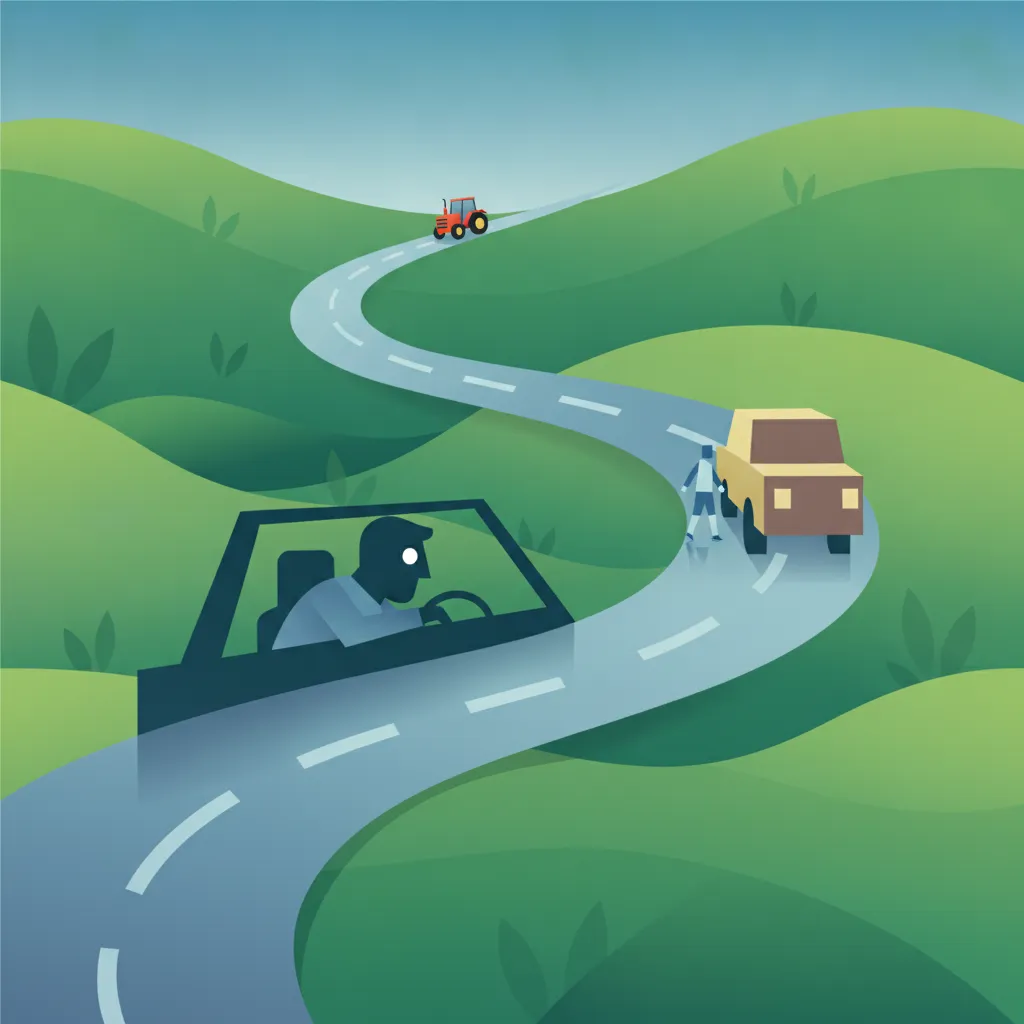
Focusing on warning signs, this lesson educates riders on anticipating hazards and adjusting riding behavior accordingly. It includes signs indicating curves, slippery surfaces, pedestrian crossings, roadworks, and other potential dangers. By learning to interpret these warnings, motorcyclists can proactively adjust speed and lane position to reduce accident likelihood.

This lesson equips drivers with the essential knowledge for managing a roadside emergency. It outlines the correct steps to take following a vehicle breakdown or an accident, including securing the scene with a warning triangle, wearing a reflective vest, and contacting emergency services. The lesson concludes by reinforcing the principles of responsible and courteous driving as part of a positive road safety culture.

This lesson explores the various types of pedestrian crossings found in Portuguese urban areas, such as zebra crossings. It emphasizes the rider’s responsibility to yield to pedestrians, the importance of reducing speed, and maintaining a safe passing distance. Strategies for anticipating pedestrian behavior and ensuring visibility are discussed to prevent incidents.
Explore advanced motorcycle braking theory, including progressive braking, managing weight transfer, and adapting techniques for wet roads and cornering. Learn essential control strategies for diverse riding conditions in Portugal.
This lesson introduces the basic components and operation of motorcycle braking systems, including front and rear brakes and combined braking. Learners will understand the role of brake pads, disc rotors, and brake fluid, as well as the importance of regular maintenance. The lesson provides a solid foundation for understanding safe braking practices.
This lesson breaks down the concept of total stopping distance into thinking distance and braking distance. It provides instruction on how to use both front and rear brakes effectively and progressively to slow down smoothly and safely. The content also covers techniques for performing an emergency stop while maintaining control and how braking is affected by wet or loose road surfaces.
This lesson explores the dynamics of cornering, including the required lean angle, the role of physical forces, and the technique of countersteering. It explains how traction limits are approached and the importance of speed selection before the turn. Rider posture and weight distribution are also covered to ensure controlled and safe cornering.

This lesson explains the physics of how tires maintain grip with the road surface, a crucial concept for two-wheeled vehicles. It details the correct technique for cornering, which involves adjusting speed before the turn, selecting a safe line, and leaning the vehicle. The content also discusses common causes of grip loss, such as poor road surfaces or improper rider inputs.
This lesson focuses on adapting riding techniques for rainy conditions and wet road surfaces. It covers the increased risk of hydroplaning, the need for longer braking distances, and adjustments to cornering and throttle control. Riders are advised on how to handle water accumulation and where to position themselves to maintain stability in wet conditions.
This lesson focuses on effective braking techniques that ensure both safety and passenger comfort. It explains the principles of progressive braking and the function of the anti-lock braking system (ABS). Learners will understand how to calculate stopping distances based on vehicle load, speed, and environmental factors.

This lesson explains the dangerous phenomenon of brake fade, where brakes lose effectiveness due to overheating. It teaches drivers how to avoid this by using auxiliary braking systems and managing speed on long descents. The lesson also covers the techniques for executing a controlled emergency brake application in a critical situation.
Find clear answers to common questions learners have about Progressive Braking and Emergency Stopping Techniques. Learn how the lesson is structured, which driving theory objectives it supports, and how it fits into the overall learning path of units and curriculum progression in Portugal. These explanations help you understand key concepts, lesson flow, and exam focused study goals.
Progressive braking allows the weight to transfer to the front wheel gradually, increasing grip. A sudden grab can lock the wheel instantly, leading to a loss of traction and potential fall, which is a key concept in the Portuguese theory test.
ABS prevents the wheel from locking by modulating brake pressure automatically. This allows the rider to maintain steering control while slowing down, reducing the risk of a skid in hazardous conditions.
Yes, for maximum stopping efficiency, you should apply both the front and rear brakes in a balanced manner. Modern motorcycle training emphasizes utilizing the full braking potential of both ends of the bike.
Yes, braking while cornering causes the motorcycle to stand up and affects your line. This lesson explains how to adjust your technique to maintain stability and stay within the lane safely.
Utilize the powerful search tool to refine your Portuguese driving theory practice. Pinpoint questions related to specific traffic laws, road signs, or complex scenarios from the Código da Estrada. Begin targeted revision now to boost your understanding and confidently approach your IMT driving exam.