
This lesson explores the physics of motorcycle grip, teaching you how different road surfaces and tire conditions impact your control. As part of our comprehensive motorcycle theory course, this topic is essential for anticipating hazards and making safe, informed decisions on the road.

Lesson content overview
Managing the delicate interaction between your motorcycle's tires and the road surface is fundamental to safe and confident riding. For any rider pursuing their Motorcycle Licence Theory in Portugal, a deep understanding of grip management is not just a theoretical exercise; it is a critical skill that directly impacts safety, control, and accident prevention. This lesson explores how various road surfaces and conditions influence tire traction, and how riders must adapt their inputs to maintain optimal control.
At its core, motorcycle grip refers to the frictional force between the tires and the road, which allows for acceleration, braking, and turning. Without sufficient grip, any rider input can lead to a loss of control. Effective grip management involves a constant awareness of the road surface and conditions, coupled with precise adjustments to throttle, braking, and lean inputs. This skill is paramount for safely navigating the diverse road environments, from smooth Portuguese motorways to challenging rural paths.
The primary scientific principle governing grip is friction. Friction is the force that opposes motion between two surfaces in contact. Its magnitude is quantified by the friction coefficient (μ), a dimensionless number representing the ratio of frictional force to the normal force (the weight pressing the surfaces together). A higher friction coefficient means more grip is available.
The tire contact patch is the small area of the tire that is physically touching the road at any given moment. This is the crucial interface where all forces are transmitted between the motorcycle and the road. The size and shape of this contact patch are influenced by tire pressure, load, and the tire's construction and wear. Optimal grip depends heavily on maintaining an effective and consistent contact patch.
Every combination of tire and road surface has a traction limit, which is the maximum frictional force that can be generated before the tire begins to slip. Exceeding this limit, whether through too much throttle, too much brake, or too aggressive a lean angle, will result in a loss of traction. Riders must learn to sense and respect these limits, understanding that they are dynamic and change constantly with the road environment.
Rider inputs – throttle, brakes, and steering – directly apply forces to the tires. Smooth, progressive application of these inputs is key to staying within the traction limit. Abrupt changes can overwhelm the available grip, especially on surfaces with low friction coefficients.
Motorcycles exhibit load sensitivity, meaning the amount of grip a tire can generate changes with the vertical load (weight) placed upon it. This is particularly noticeable during load transfer, the shift of weight between the front and rear wheels during maneuvers.
When you brake, weight shifts forward, increasing the load on the front tire and reducing it on the rear. This increases the front tire's braking grip but decreases the rear's. Conversely, during acceleration, weight shifts backward, increasing rear tire grip for propulsion but potentially reducing front tire stability. Understanding and managing this dynamic load transfer through rider posture and input modulation is crucial for maintaining control and maximizing available grip on both wheels.
Different road surfaces offer wildly different levels of grip. Anticipating and reacting to these changes is a hallmark of a skilled motorcyclist.
Dry asphalt surfaces, typically found on well-maintained urban roads and highways, generally provide the highest and most consistent friction coefficients for motorcycles. These surfaces can vary from fine-grained, smooth asphalt to coarse-grained, textured varieties. In optimal conditions, dry asphalt allows for strong acceleration, effective braking, and confident cornering.
However, even on dry asphalt, grip is not always uniform. Variations can occur due to surface wear, patches of spilled liquids, or temperature fluctuations. Riders should always be scanning the road ahead for any anomalies. While no specific legal rules dictate riding on dry asphalt differently, the overarching principle of riding with due care (as per the Código da Estrada) always applies, meaning anticipating potential hazards. A common mistake is assuming uniform grip across all dry asphalt, leading to unexpected slides on worn or contaminated patches.
Wet asphalt, covered by a film of water from light drizzle or heavy rain, significantly reduces the friction coefficient. Water acts as a lubricant, and on smooth surfaces or at higher speeds, it can lead to hydroplaning – a dangerous condition where the tire loses contact with the road surface entirely as it rides on a layer of water.
In Portugal, the Código da Estrada mandates reduced speed limits in rainy conditions and the mandatory use of dipped beam headlights to enhance visibility. Riding on wet asphalt requires significantly reduced speeds, gentler braking, smoother throttle application, and shallower lean angles in turns. Abrupt inputs are highly likely to cause wheel slip. The depth of your tire tread is critical here, as it's designed to disperse water and maintain contact with the road.
Hydroplaning risk increases with speed, water depth, and worn tires. Always reduce speed substantially on wet roads.
An oil slick is a thin, often invisible, film of oil, diesel, or other petroleum residue on the road surface. These are particularly hazardous because they drastically lower the friction coefficient, making the surface extremely slippery. Oil slicks are common near intersections, industrial areas, or after vehicle accidents.
There are no specific laws just for oil slicks, but the general obligation to ride with due care under slippery conditions is paramount. The biggest mistake is failing to spot them or not adjusting riding inputs immediately upon detection. If you encounter an oil slick, the safest course of action is to reduce speed very gradually, avoid any sudden braking or acceleration, and maintain a straight line if possible, allowing the motorcycle to roll through the hazard. Any attempt to brake or turn sharply can lead to an instant loss of control.
Gravel and loose surfaces, such as unpaved country roads, construction zones, or areas with spilled sand or aggregate, present a highly variable and generally low-grip environment. Lateral grip (for cornering) is particularly reduced, and the loose material can cause the tires to slide or dig in unpredictably.
On such surfaces, speed limits are typically lower, and overtaking may be prohibited due to the increased risk. Riders must significantly reduce their speed, keep the motorcycle as upright as possible, and use extremely gentle inputs for braking and acceleration. Braking primarily with the rear brake and very gently with the front can help maintain stability. When cornering, a wider, smoother line with minimal lean is advisable. The tire tread pattern also plays a crucial role here, with more aggressive patterns offering better grip on loose terrain.
Beyond the road surface itself, the condition of your motorcycle's tires is perhaps the single most important factor influencing available grip. Neglecting tire maintenance can render even a perfect road surface dangerous.
Tread depth refers to the height of the grooves in a tire's tread. These grooves are designed to channel water away from the contact patch, allowing the rubber to maintain direct contact with the road. If the tread depth is insufficient, especially on wet roads, the tire cannot effectively disperse water, dramatically increasing the risk of hydroplaning.
In Portugal, like many other European countries, a minimum legal tread depth is enforced. Riding with tires below this minimum is not only dangerous but also illegal and subject to penalties. Regular inspection of your tire tread is essential for safety and compliance.
Tire pressure directly affects the shape and size of the contact patch. Incorrect inflation pressure—either too high or too low—can compromise grip, handling, and tire lifespan.
Always consult your motorcycle manufacturer's specifications for the recommended tire pressures, typically found in the owner's manual or on a sticker on the swingarm. Check pressures regularly when the tires are cold.
Tires are not just about tread; their material composition and age are equally important. Rubber compounds degrade over time, losing elasticity and grip, even if the tires appear to have sufficient tread and are not heavily worn. Motorcycle tires generally have a recommended service life, often around 3 to 5 years, regardless of mileage.
Tire temperature also significantly impacts grip. Tires perform best within a specific operating temperature range. Cold tires are harder and offer less grip. As tires warm up through riding, the rubber softens, increasing traction. However, excessively hot tires can also lose grip and degrade faster. This is particularly relevant in extreme weather conditions.
Always allow your tires a few minutes of gentle riding to warm up before demanding full performance, especially on cold days.
Beyond the static condition of the road and tires, dynamic elements like load transfer and electronic aids also play a significant role in grip management.
As discussed, load transfer is the dynamic shift of weight on your motorcycle. Understanding and anticipating these shifts allows you to adjust your inputs for optimal grip.
Effective load transfer management is a cornerstone of advanced riding technique, enabling riders to maximize grip in all phases of a maneuver.
Modern motorcycles increasingly feature Traction Control (TC) systems. These electronic aids detect when a wheel begins to spin (losing traction) and automatically reduce engine power to restore grip. TC systems can be invaluable, especially on slippery surfaces, helping to prevent rear wheel slides during acceleration.
While TC systems offer a significant safety net, they are not a substitute for proper riding technique and awareness. Riders should understand that TC has its limits; it cannot magically create grip where none exists. Over-reliance on TC, especially with overly aggressive inputs, can still lead to dangerous situations. Many TC systems offer different modes (e.g., rain, road, sport) that adjust their intervention level, allowing riders to adapt to conditions.
Adhering to the Código da Estrada (Portuguese Road Code) is crucial for safe grip management. Several regulations directly influence how riders must approach different road and weather conditions.
The Código da Estrada mandates reduced speed limits when weather conditions (such as heavy rain, fog, or ice) reduce visibility or road grip.
This regulation is mandatory. The rationale is simple: lower speeds provide more time to react to hazards and significantly reduce the distance required to stop, giving the rider a greater margin for error when grip is compromised. For example, in heavy rain, a 100 km/h speed limit might be reduced to 80 km/h, and on local roads, similar proportional reductions apply. Ignoring this regulation greatly increases accident risk.
All motor vehicles, including motorcycles, must maintain a minimum legal tread depth on their tires.
This is a mandatory regulation designed to ensure tires can effectively disperse water on wet roads. Failure to comply can result in fines and points on your licence. The legal minimum is typically 1.6 mm across the main tread grooves. Regularly checking your tire tread with a gauge or by observing the built-in tread wear indicators is vital for safety and legality.
Dipped beam headlights are mandatory during reduced visibility conditions (e.g., rain, fog, low light), and specific fog lights may be required in severe fog.
While not directly about grip, proper lighting enhances your visibility to other road users and helps you identify potential hazards and changes in road surface conditions, which indirectly contributes to safer grip management. High beams are prohibited when visibility is less than 100 meters, or when approaching or following other vehicles.
Overtaking is prohibited or requires extreme caution when the road surface is wet, oily, or covered with loose material, even if road markings would otherwise permit it.
This mandatory rule reflects the increased risk of losing control during an overtaking maneuver on a low-grip surface. The additional acceleration and potential for sudden braking or steering inputs make overtaking hazardous. Riders must exercise extreme judgment and often refrain from overtaking in such conditions, even if a solid line does not explicitly prohibit it.
Motorcycles have a maximum permissible load (including rider, passenger, and luggage) specified by the manufacturer.
Exceeding these load limits is mandatory and has direct implications for grip. An overloaded motorcycle handles differently: braking distances increase, acceleration is slower, and weight distribution is altered, negatively impacting tire grip and suspension performance. This can make the motorcycle unstable, especially during emergency maneuvers or on challenging surfaces.
Understanding the theory is the first step; applying it correctly requires avoiding common pitfalls:
The principles of grip management remain constant, but their application varies significantly depending on the riding context.
Ignoring the principles of grip management carries severe consequences, primarily leading to a loss of control.
Proper grip management ensures stable acceleration, controlled braking, and predictable cornering, forming the bedrock of defensive riding and accident prevention.
Let's look at how grip management principles apply in real-world Portuguese driving situations:
Explore all units and lessons included in this driving theory course.
Lesson content overview
Explore all units and lessons included in this driving theory course.
Explore search topics learners often look for when studying Grip Management on Various Road Surfaces. These topics reflect common questions about road rules, driving situations, safety guidance, and lesson level theory preparation for learners in Portugal.
Browse additional driving theory lessons that cover connected traffic rules, road signs, and common driving situations related to this topic. Improve your understanding of how different rules interact across everyday traffic scenarios.
Learn the science behind motorcycle grip, including friction coefficients and contact patches. Understand how dry asphalt, wet conditions, oil slicks, and gravel impact tire traction and how to adapt your riding.

This lesson addresses the hazards presented by oil, gravel, and loose surfaces on the road. It explains how these conditions reduce traction, necessitate speed reduction, and affect braking performance. Riders learn strategies for anticipating and navigating these hazardous surfaces safely while maintaining motorcycle stability and control.

This lesson explains the physics of how tires maintain grip with the road surface, a crucial concept for two-wheeled vehicles. It details the correct technique for cornering, which involves adjusting speed before the turn, selecting a safe line, and leaning the vehicle. The content also discusses common causes of grip loss, such as poor road surfaces or improper rider inputs.
This lesson focuses on adapting riding techniques for rainy conditions and wet road surfaces. It covers the increased risk of hydroplaning, the need for longer braking distances, and adjustments to cornering and throttle control. Riders are advised on how to handle water accumulation and where to position themselves to maintain stability in wet conditions.
This lesson explores the dynamics of cornering, including the required lean angle, the role of physical forces, and the technique of countersteering. It explains how traction limits are approached and the importance of speed selection before the turn. Rider posture and weight distribution are also covered to ensure controlled and safe cornering.
Explore the critical role of tire condition, including tread depth, correct pressure, and age, in managing motorcycle grip. Understand legal requirements and how tire health influences safe riding on diverse surfaces.
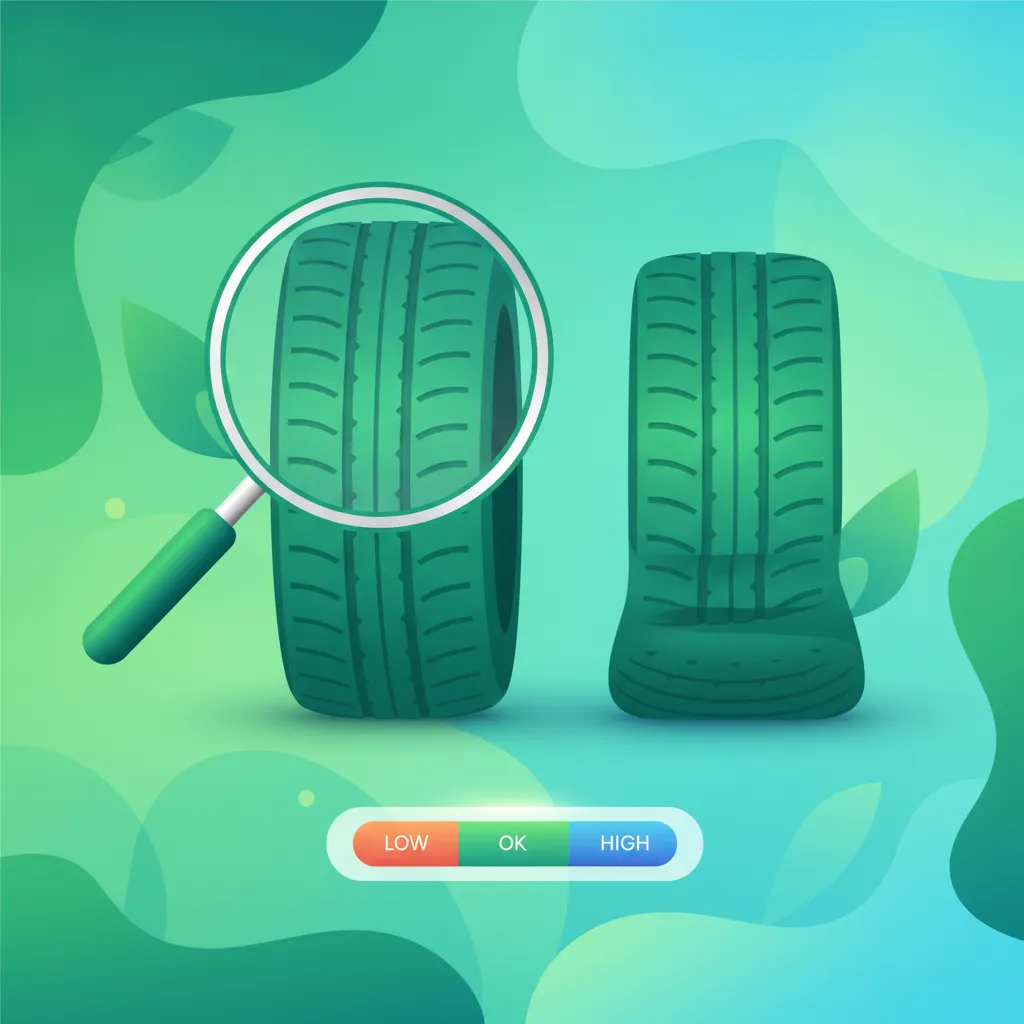
This lesson emphasizes the critical role tyres play in vehicle safety, affecting grip, braking, and handling. It explains how to check tyre pressure and tread depth, and how to identify the legal minimum requirements. Recognizing uneven wear patterns and understanding the need for timely replacement are key skills for maintaining a roadworthy vehicle.
This lesson addresses the hazards presented by oil, gravel, and loose surfaces on the road. It explains how these conditions reduce traction, necessitate speed reduction, and affect braking performance. Riders learn strategies for anticipating and navigating these hazardous surfaces safely while maintaining motorcycle stability and control.
This lesson focuses on adapting riding techniques for rainy conditions and wet road surfaces. It covers the increased risk of hydroplaning, the need for longer braking distances, and adjustments to cornering and throttle control. Riders are advised on how to handle water accumulation and where to position themselves to maintain stability in wet conditions.
This lesson explains the physics of how tires maintain grip with the road surface, a crucial concept for two-wheeled vehicles. It details the correct technique for cornering, which involves adjusting speed before the turn, selecting a safe line, and leaning the vehicle. The content also discusses common causes of grip loss, such as poor road surfaces or improper rider inputs.

This lesson addresses the human factors influencing riding safety, focusing on the rider’s physical condition, fatigue, and medication effects. It outlines signs of rider fatigue, recommended rest periods, and proper hydration and nutrition strategies. The content also discusses how certain medications can affect reaction times and coordination, providing critical safety guidance.
This lesson provides detailed guidance for riding in challenging weather conditions. It explains how rain affects braking distances and tire grip, and the importance of using lights correctly in fog to be seen. The content also offers practical advice on appropriate waterproof and high-visibility gear, as well as how strong winds can affect the stability of a lightweight vehicle.

This lesson examines how various weather conditions like wind, heat, and sun glare affect motorcycle handling and rider comfort. It provides guidance on coping with crosswinds, managing heat stress, and mitigating glare from a low sun. Strategies for maintaining visibility and rider alertness under these challenging conditions are discussed in detail.

Night riding presents unique visual challenges and increased fatigue. This lesson covers proper headlight usage, including high and low beam settings, along with the importance of reflective gear for visibility. It also addresses eye fatigue, glare from oncoming lights, and strategies for managing rider alertness and speed to navigate safely at night.
Focusing on warning signs, this lesson educates riders on anticipating hazards and adjusting riding behavior accordingly. It includes signs indicating curves, slippery surfaces, pedestrian crossings, roadworks, and other potential dangers. By learning to interpret these warnings, motorcyclists can proactively adjust speed and lane position to reduce accident likelihood.

This lesson emphasizes the development of defensive riding strategies through continuous risk assessment and situational awareness. It teaches techniques for scanning the environment, maintaining safe following distances, and anticipating potential hazards. The importance of a proactive riding attitude and creating safety margins is highlighted to promote a habit of anticipatory riding.
Find clear answers to common questions learners have about Grip Management on Various Road Surfaces. Learn how the lesson is structured, which driving theory objectives it supports, and how it fits into the overall learning path of units and curriculum progression in Portugal. These explanations help you understand key concepts, lesson flow, and exam focused study goals.
Tires are your only contact point with the road. Worn tread or incorrect pressure significantly reduces your grip, especially on wet surfaces, increasing the risk of aquaplaning or skidding.
You should reduce your speed early, avoid sudden braking or aggressive steering, and keep the motorcycle as upright as possible to maintain maximum traction until you clear the hazard.
Yes, you may be asked how to react to signs indicating slippery conditions or how to adjust your braking distance on wet versus dry surfaces to ensure rider safety.
Yes, tires must have a minimum tread depth and must match the manufacturer's specifications for your motorcycle category to ensure legal and mechanical compliance on the road.
Utilize the powerful search tool to refine your Portuguese driving theory practice. Pinpoint questions related to specific traffic laws, road signs, or complex scenarios from the Código da Estrada. Begin targeted revision now to boost your understanding and confidently approach your IMT driving exam.