
This lesson guides you through the complexities of riding on motorways and expressways in Portugal. You will learn the essential rules for lane discipline, high-speed merging, and safe overtaking practices that are critical for your motorcycle theory exam and real-world safety.
Lesson content overview
Riding a motorcycle on high-speed roads such as motorways (autoestradas) and expressways (vias rápidas) presents unique challenges and demands a specific set of skills and knowledge. These roads are designed for efficient travel at higher speeds, but this also means that errors can have more severe consequences. Mastering speed management, maintaining strict lane discipline, understanding safe entry and exit procedures, and being aware of environmental factors like wind are paramount for motorcycle riders in Portugal.
This lesson provides comprehensive guidance on navigating these high-speed environments, building upon foundational knowledge of traffic rules, road signs, and lane positioning. The goal is to equip riders with the understanding necessary to ride confidently, safely, and in full compliance with Portuguese traffic law.
Motorways (Autoestradas) and expressways (Vias Rápidas or Itinerários Principais/Complementares) are arterial roads designed for high-speed, long-distance travel. They feature multiple lanes, controlled access points, and are typically free from intersections at grade, pedestrian crossings, or roundabouts. This design allows for smoother traffic flow and higher average speeds compared to conventional roads.
For motorcycle riders, these characteristics mean a need for heightened awareness, precise control, and strict adherence to rules. While motorways offer quicker journeys, the reduced reaction time and increased stopping distances at higher speeds necessitate a disciplined approach to riding. Understanding the specific nature of these roads is the first step towards safe and efficient travel.
Effective speed management is fundamental to safe riding on motorways and expressways. It involves not only adhering to legal limits but also constantly adjusting your speed to match prevailing road, traffic, and weather conditions. High speeds amplify the consequences of any error, making judicious speed control a critical safety factor.
In Portugal, motorcycles, like most light vehicles, are subject to specific legal maximum speed limits on different types of roads. On most autoestradas (motorways), the general maximum speed limit is 120 km/h. However, on vias rápidas (expressways) or specific sections of autoestradas, lower limits such as 100 km/h or even 90 km/h may apply, indicated by relevant signage. It is crucial to always observe and obey the posted speed limits.
It is important to remember that these are maximum limits. Exceeding them is illegal and carries penalties, but even riding at the maximum limit may not always be safe.
Always be vigilant for signs indicating changes in speed limits, especially when approaching specific sections, tunnels, or construction zones on the motorway.
While legal limits define the absolute maximum, a practical safe speed is often lower than the legal limit and is dictated by current conditions. Factors such as heavy rain, fog, strong winds, dense traffic, or poor road surfaces (e.g., oil, gravel) all necessitate a reduction in speed. Your speed must always allow you to stop safely within the visible distance ahead and maintain full control of your motorcycle.
For instance, riding at 120 km/h on a wet motorway, even if permitted, is significantly more hazardous than doing so in dry conditions. Your braking distance increases, and grip is reduced. Similarly, if visibility is poor due to fog or heavy spray from other vehicles, you must slow down to ensure you have enough time to react to unexpected hazards.
At high speeds, the importance of maintaining a safe following distance cannot be overstated. The "two-second rule" is a common guideline, where you choose a fixed object ahead and ensure at least two seconds pass between the vehicle in front of you passing that object and your motorcycle reaching it. In adverse conditions (wet roads, poor visibility, heavy loads, strong wind), this distance should be increased to three, four, or even more seconds.
A sufficient following distance provides the necessary time and space to react to sudden braking by the vehicle ahead, unexpected lane changes, or road debris. It also reduces the risk of rear-end collisions, which can be particularly dangerous on a motorcycle at high speeds.
Lane discipline refers to the practice of choosing and maintaining the correct lane based on your speed, intended direction, and the traffic flow. Proper lane discipline is crucial for smooth traffic flow, preventing congestion, and significantly reducing the risk of collisions on motorways and expressways.
In Portugal, as in many European countries, the fundamental rule of lane discipline on multi-lane roads is to keep to the rightmost lane (faixa da direita) unless you are overtaking another vehicle or preparing to exit. The rightmost lane is considered the standard driving lane. Middle and leftmost lanes (faixas da esquerda) are primarily designated for overtaking slower vehicles or for situations where road markings temporarily direct traffic.
Once you have completed an overtaking maneuver, you must return to the rightmost lane as soon as it is safe to do so, without impeding other traffic. Cruising in the middle or left lane when the right lane is clear is a common violation and disrupts traffic flow, potentially causing frustration and dangerous maneuvers by other drivers.
Never use the hard shoulder (berma) for anything other than emergencies. It is not an additional lane and is strictly for breakdown or emergency stops.
Several common mistakes can compromise safety and lead to penalties:
Entering and exiting motorways and expressways safely requires specific procedures to integrate smoothly with high-speed traffic. These maneuvers are facilitated by dedicated acceleration and deceleration lanes.
An acceleration lane (faixa de aceleração) is a designated lane that allows you to gain speed to match the flow of motorway traffic before merging. The procedure for safe entry is as follows:
Assess traffic: As you enter the acceleration lane, observe the motorway traffic, paying close attention to the speed and spacing of vehicles in the lane you intend to merge into.
Signal early: Activate your left turn signal well in advance to indicate your intention to merge.
Accelerate: Accelerate smoothly and decisively to match the speed of the motorway traffic. Do not attempt to merge at a significantly lower speed, as this can force other vehicles to brake or swerve.
Find a safe gap: Identify a sufficient gap in traffic. Do not force your way in. If necessary, adjust your speed (within the acceleration lane) to find a safe opening.
Merge smoothly: When a safe gap appears and you have matched speed, steer smoothly into the motorway lane. Cancel your signal once safely merged.
Exiting a motorway involves using a deceleration lane (faixa de deceleração) to reduce speed safely without impeding the flow of main road traffic.
Anticipate your exit: Look for motorway exit signs well in advance, typically starting around 1000 metres before the exit.
Position correctly: Move to the rightmost lane (or the designated exit lane, if specified by signage) with ample time before your exit.
Signal early: Activate your right turn signal approximately 300 to 500 metres before the exit ramp. This alerts other drivers to your intention.
Enter deceleration lane: Guide your motorcycle smoothly into the deceleration lane. Do not begin to slow down significantly on the main carriageway.
Reduce speed gradually: Once in the deceleration lane, reduce your speed gradually and safely to the appropriate speed for the exit ramp or the road you are joining.
Adjust for wind: If there are strong crosswinds, be extra cautious as you leave the protection of the main motorway traffic flow.
Overtaking on motorways is a common maneuver, but it must be executed with precision and strict adherence to rules to ensure safety. Improper overtaking is a major cause of accidents.
In Portugal, as a general rule on multi-lane roads, you must overtake only on the left. This rule ensures predictability in traffic flow. Overtaking on the right is illegal and highly dangerous, as drivers in the right lane may not anticipate a vehicle passing them on that side.
There are rare exceptions, such as when traffic in the leftmost lane is stationary or moving very slowly, or when road markings specifically allow it for traffic turning right. However, for general overtaking on motorways, always use the left lane.
When planning to overtake:
Assess conditions: Ensure there is a safe gap in the left lane and sufficient clear road ahead to complete the maneuver. Check your mirrors and blind spots.
Signal left: Indicate your intention to move into the left lane by signaling left.
Move into overtaking lane: When safe, smoothly move into the left lane.
Increase speed: Accelerate to a speed that allows you to pass the slower vehicle quickly but safely, without exceeding the legal speed limit. Maintain a safe lateral distance from the vehicle you are passing.
Signal right and return: Once you have safely passed the vehicle and can see it in your right mirror, signal right. Check your right mirror and blind spot again, then smoothly return to the rightmost lane. Ensure there is adequate space between your motorcycle and the overtaken vehicle before moving back.
Cancel signal: Cancel your right turn signal.
Do not linger in the overtaking lane after completing your maneuver. This is considered improper lane discipline and can obstruct faster traffic. Return to the right lane as soon as it is safe to do so.
Motorcycles are particularly susceptible to wind, especially at motorway speeds. Wind can significantly affect stability, handling, and rider fatigue. Understanding how different types of wind influence your riding is crucial for safe motorway travel.
When encountering windy conditions, especially strong crosswinds, it is vital to adjust your riding technique:
Reduce speed: This is the most effective way to counteract wind effects. Lower speeds give you more time to react and make smaller, less abrupt corrections.
Counter-steer/Lean into the wind: For crosswinds, subtly lean your body or make slight counter-steering inputs into the direction of the wind to maintain a straight line of travel.
Relax your grip: Tensing up can make your steering inputs too stiff and overcorrect for wind gusts. Keep a relaxed but firm grip on the handlebars.
Increase following distance: Wind can cause your motorcycle to wander, or it can affect the stability of other vehicles. Give yourself more space from other traffic.
Be aware of larger vehicles: Passing or being passed by lorries or buses can create significant wind turbulence. The sudden change from being shielded to being exposed (or vice versa) can cause a jolt. Anticipate this and be prepared to correct.
Anticipate changes: Be extra alert when entering or exiting sheltered areas (e.g., underpasses, tunnels, tree lines, next to large buildings) where wind conditions can change abruptly.
Portuguese motorway signage is designed to be clear and informative, but understanding the specific symbols and colors is essential for safe navigation. These signs guide riders on speed limits, lane usage, upcoming exits, and services.
These signs will provide information about upcoming exits, destinations, and distances, allowing you ample time to plan your lane changes. Pay attention to the exit numbers and names of the towns or cities you intend to reach.
Motorways feature standard mandatory and warning signs, often with specific relevance to high-speed travel:
Always scan ahead for signs, interpret them correctly, and adjust your riding plan accordingly. Missing an exit sign or misinterpreting a lane assignment sign can lead to dangerous last-minute maneuvers.
Understanding common mistakes and violations on motorways helps riders avoid dangerous situations and legal penalties. Proactive awareness is key to safe riding.
Riding on Portuguese motorways and expressways demands a high level of skill, discipline, and awareness. Always ride at a speed appropriate for the conditions, never exceeding the legal limits. Maintain strict lane discipline, using the rightmost lane for normal travel and only moving to the left to overtake, returning promptly when safe. Execute motorway entry and exit maneuvers smoothly and safely, utilizing acceleration and deceleration lanes correctly and signaling intentions early. Be vigilant for wind effects, especially crosswinds, and adjust your speed and handling accordingly. Finally, continuously interpret and obey all motorway-specific signage to ensure safe and efficient navigation. By internalizing these principles, motorcycle riders can confidently and safely traverse Portugal's high-speed road network.
Explore all units and lessons included in this driving theory course.
Lesson content overview
Explore all units and lessons included in this driving theory course.
Explore search topics learners often look for when studying Riding on Motorways and Expressways: Speed Management and Lane Discipline. These topics reflect common questions about road rules, driving situations, safety guidance, and lesson level theory preparation for learners in Portugal.
Browse additional driving theory lessons that cover connected traffic rules, road signs, and common driving situations related to this topic. Improve your understanding of how different rules interact across everyday traffic scenarios.
Explore advanced strategies for safe riding on Portuguese motorways and expressways. Covers detailed lane discipline, high-speed overtaking techniques, managing wind turbulence, and interpreting complex signage for a safer journey.
This lesson focuses on the specific skills required for driving on high-speed motorways. It details the procedures for safely merging onto and exiting the motorway, maintaining proper lane discipline, and adhering to variable speed limits. The content also provides rules for safe overtaking and managing the vehicle's stability at high speeds.
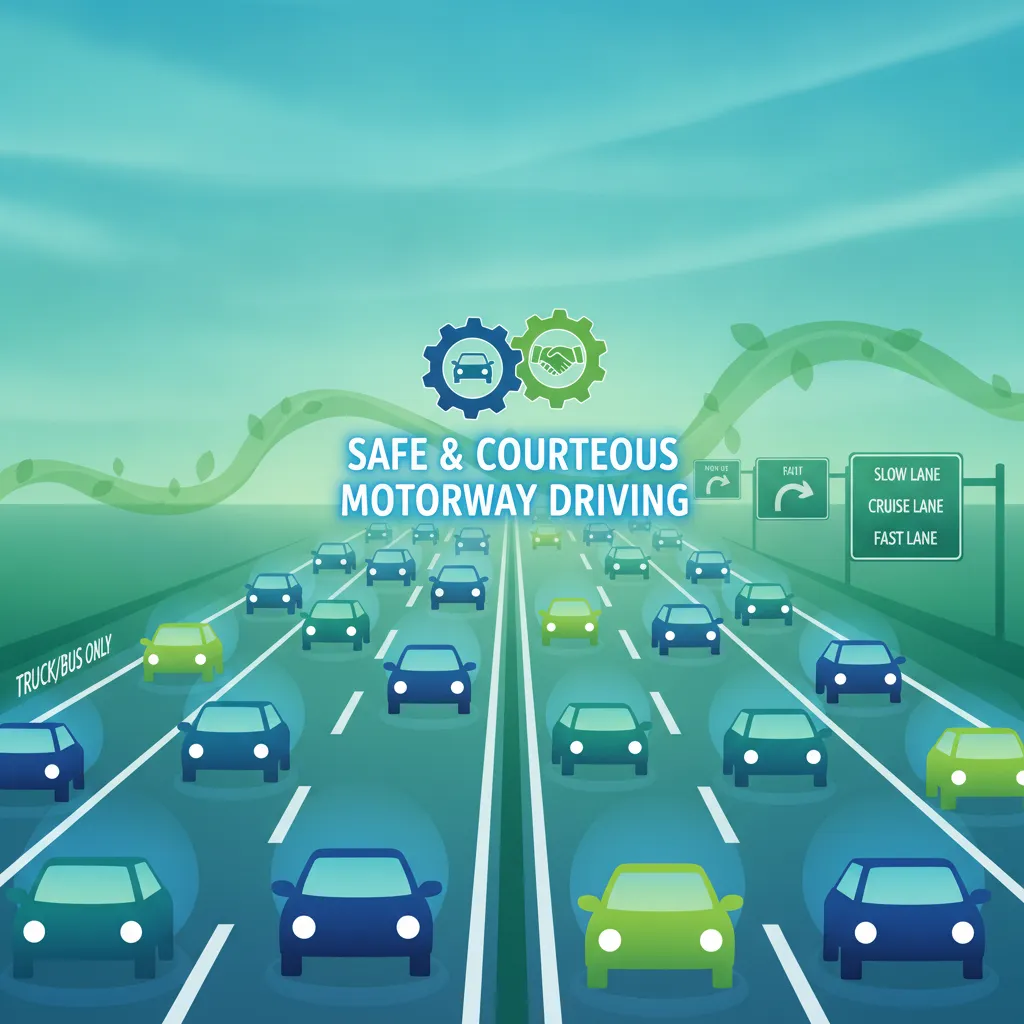
This lesson explains the unique set of rules that apply to motorway driving to facilitate safe, high-speed travel. It covers the correct procedure for entering and exiting the motorway, principles of lane discipline (keeping left unless overtaking), and the rules for safe overtaking. The lesson also clarifies the proper use of the hard shoulder or emergency lane for genuine emergencies only.

This lesson details the rules of lane discipline and the procedures for safe overtaking. It explains how to maintain correct lane positioning and how road markings and signs define where overtaking is allowed or forbidden. The lesson emphasizes the importance of the mirror-signal-manoeuvre routine and ensuring sufficient space and visibility before attempting to pass another vehicle.

This lesson focuses on the specific skills and regulations for motorway driving. It covers correct lane usage for HGVs, safe procedures for overtaking slower traffic, and the rules for using the hard shoulder or emergency refuge areas. Maintaining consistent speed and awareness of surrounding traffic is key to motorway safety.

This lesson focuses on riding safely on two-way roads and narrow lanes where space is limited. It emphasizes maintaining lane discipline, using the road edge when appropriate, and anticipating oncoming traffic. Techniques for safe passing, speed control, and positioning to maximize visibility and minimize collision risk are provided.

This lesson details the systematic process for changing lanes and merging with traffic, particularly when entering a motorway from an acceleration lane. It emphasizes the critical importance of the mirror-signal-blind spot check routine. The content also explains how to judge a safe gap in the traffic and adjust vehicle speed to merge smoothly and without disrupting the flow.

This lesson details the steps for performing safe overtaking maneuvers, focusing on judgment, speed differential, and signaling. It covers assessing safe distances, using mirrors, and selecting appropriate lanes for overtaking. Guidelines for overtaking in various traffic conditions are provided to ensure riders can execute this maneuver safely and legally.

This lesson addresses the specific challenges of driving alongside motorcyclists and large vehicles such as trucks and buses. It highlights the reduced visibility of motorcyclists and the extensive blind spots (no-zones) around heavy vehicles. Drivers will learn to provide extra space, anticipate wide turns, and adjust for factors like spray and wind turbulence.

This lesson emphasizes the development of defensive riding strategies through continuous risk assessment and situational awareness. It teaches techniques for scanning the environment, maintaining safe following distances, and anticipating potential hazards. The importance of a proactive riding attitude and creating safety margins is highlighted to promote a habit of anticipatory riding.

This lesson examines the meaning of various road surface markings and lane dividers, explaining how they guide motorcycle positioning. It distinguishes between solid and broken lines, the significance of lane width, and legal considerations for lane use. Emphasis is placed on maintaining appropriate lane discipline and positioning to ensure visibility and reduce conflict.
Learn to identify and avoid common errors made by riders on Portuguese motorways and expressways. Focuses on understanding the consequences of improper speed, lane discipline, and entry/exit maneuvers to enhance safety.
This lesson focuses on riding safely on two-way roads and narrow lanes where space is limited. It emphasizes maintaining lane discipline, using the road edge when appropriate, and anticipating oncoming traffic. Techniques for safe passing, speed control, and positioning to maximize visibility and minimize collision risk are provided.

Focusing on roundabouts, this lesson teaches riders how to correctly enter, circulate, and exit these traffic features. It covers lane selection based on the intended exit, maintaining appropriate speed, and using signals to indicate intentions. The lesson also addresses the importance of yielding to circulating traffic and positioning oneself safely to avoid collisions.

This lesson identifies and corrects prevalent myths and misunderstandings among new riders, such as incorrect beliefs about lane filtering or priority. It discusses the dangers of assuming visibility or overestimating braking capabilities, highlighting critical rider errors. By addressing these misconceptions, learners can recognize and avoid common mistakes, fostering a mindset of safety awareness.
This lesson explains the unique set of rules that apply to motorway driving to facilitate safe, high-speed travel. It covers the correct procedure for entering and exiting the motorway, principles of lane discipline (keeping left unless overtaking), and the rules for safe overtaking. The lesson also clarifies the proper use of the hard shoulder or emergency lane for genuine emergencies only.
This lesson details the steps for performing safe overtaking maneuvers, focusing on judgment, speed differential, and signaling. It covers assessing safe distances, using mirrors, and selecting appropriate lanes for overtaking. Guidelines for overtaking in various traffic conditions are provided to ensure riders can execute this maneuver safely and legally.
This lesson emphasizes the development of defensive riding strategies through continuous risk assessment and situational awareness. It teaches techniques for scanning the environment, maintaining safe following distances, and anticipating potential hazards. The importance of a proactive riding attitude and creating safety margins is highlighted to promote a habit of anticipatory riding.

This lesson covers procedures for safely approaching and navigating various intersections, including those controlled by traffic lights and signs. It emphasizes correct lane positioning, visibility, and anticipating the actions of other road users. Riders will learn how to interpret intersection markings and signals to ensure a safe passage through all junctions.
Urban traffic presents unique challenges such as high density, frequent stops, and limited lane availability. This lesson discusses appropriate lane usage, the legal status of lane filtering, and strategies for navigating stop-and-go traffic. Riders will learn how to select lanes based on traffic flow and maintain visibility while riding through congested city streets.
This lesson examines the meaning of various road surface markings and lane dividers, explaining how they guide motorcycle positioning. It distinguishes between solid and broken lines, the significance of lane width, and legal considerations for lane use. Emphasis is placed on maintaining appropriate lane discipline and positioning to ensure visibility and reduce conflict.

This lesson examines the hierarchy of road users defined by Portuguese law, emphasizing the right-of-way principles that apply to motorcycles. It covers priority at intersections, the rules governing roundabouts, and how motorcyclists must act upon these regulations when sharing space with larger vehicles. Understanding these priority rules is vital for avoiding conflicts and reducing accident risk.
Find clear answers to common questions learners have about Riding on Motorways and Expressways: Speed Management and Lane Discipline. Learn how the lesson is structured, which driving theory objectives it supports, and how it fits into the overall learning path of units and curriculum progression in Portugal. These explanations help you understand key concepts, lesson flow, and exam focused study goals.
No, you must follow the general rule of driving in the rightmost lane unless you are overtaking or traffic density requires using other lanes. Staying in the left lane unnecessarily is a traffic violation and a common trap in theory test questions.
You must never stop, reverse, or make a U-turn on a motorway. You must continue to the next exit and safely re-route your journey. Any attempt to reverse or stop on a motorway is extremely dangerous and strictly prohibited.
Wind and the buffeting effect from passing heavy vehicles can push your bike off-course. You should maintain a firm but relaxed grip, increase your lateral distance from trucks, and be prepared to adjust your position to compensate for side gusts.
You must accelerate within the acceleration lane to match the speed of the traffic already on the motorway. You should merge only when it is safe to do so, ensuring you do not force other drivers to brake or change lanes.
Utilize the powerful search tool to refine your Portuguese driving theory practice. Pinpoint questions related to specific traffic laws, road signs, or complex scenarios from the Código da Estrada. Begin targeted revision now to boost your understanding and confidently approach your IMT driving exam.