
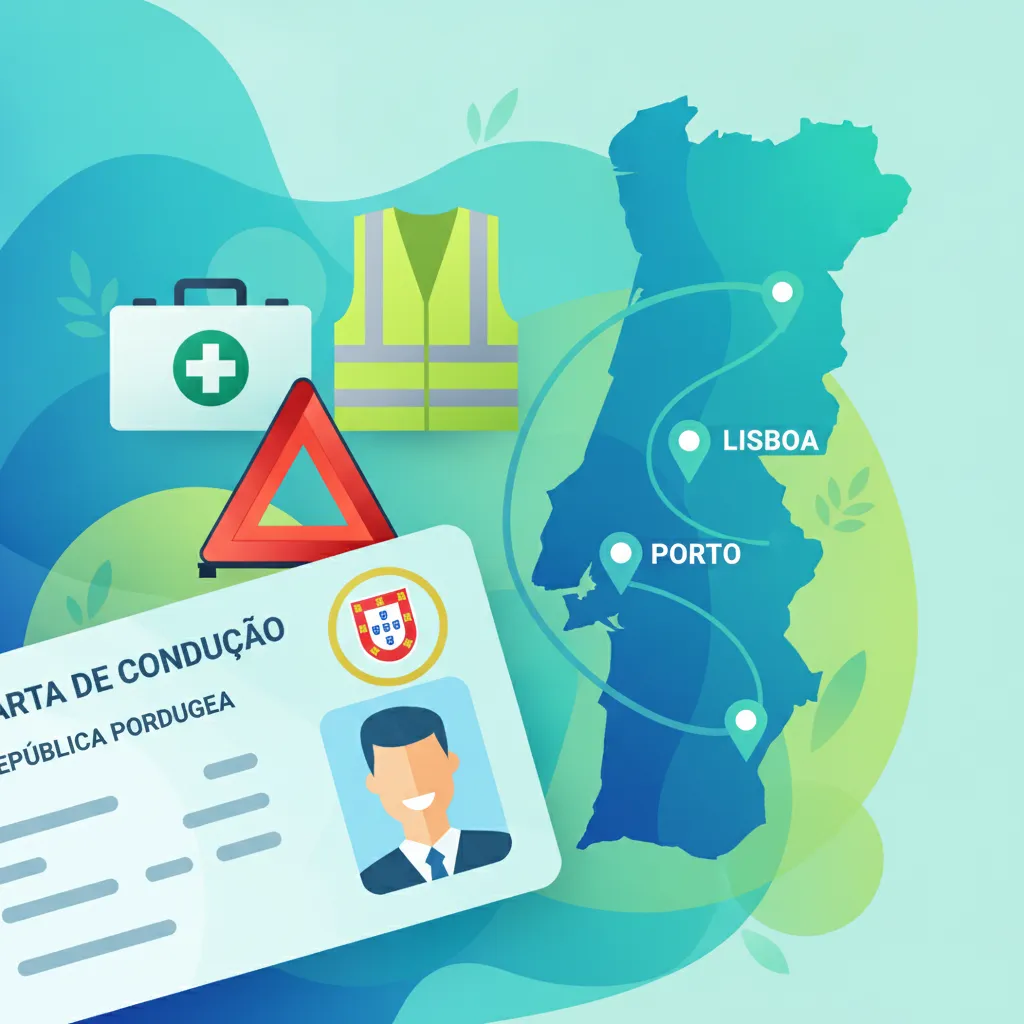
This lesson details the legal standards for Category AM vehicles in Portugal, covering registration, mandatory equipment, and maintenance. Understanding these requirements ensures your moped or light quadricycle is fully road-legal and safe to operate. Mastering these foundational rules is essential for both your theory exam success and responsible daily riding.
Lesson content overview
This lesson, part of the Driving Theory for Category AM: Mopeds and Light Quadricycles in Portugal course, provides a comprehensive overview of the legal and procedural requirements for registering Category AM vehicles in Portugal. It details all mandatory equipment that must be present and fully functional to ensure a moped or light quadricycle is roadworthy and complies with national safety regulations. Understanding these requirements is essential not only to avoid legal penalties but, more importantly, to ensure safe operation on public roads.
Vehicle registration is a fundamental legal process in Portugal that officially records a vehicle in the national database. This process establishes clear ownership, verifies technical specifications, and confirms compliance with essential safety and environmental standards. For operators of Category AM vehicles, which include mopeds and light quadricycles, proper registration is the cornerstone of legal road use.
Legal registration provides crucial proof of ownership, preventing disputes and ensuring accountability. It authenticates that a vehicle meets the specific regulatory standards set for its category, contributing to overall road safety. Furthermore, registration facilitates the tracking of vehicles for taxation, insurance, and law enforcement purposes, ensuring that all vehicles operating on public roads are identifiable and properly regulated.
When a moped or light quadricycle is first placed on public roads in Portugal, it must undergo an initial registration. This typically involves submitting an application to the Institute of Mobility and Land Transport (IMT, I.P.), accompanied by various documents. These usually include proof of purchase, the vehicle's conformity certificate, and identification of the owner. Upon successful registration, the vehicle is issued a unique registration number and associated documentation.
Purchase and Documentation: Acquire the vehicle and receive necessary documents from the seller, such as the declaration of sale and the Certificate of Conformity.
Application to IMT: Submit an application for vehicle registration to the Instituto da Mobilidade e dos Transportes (IMT, I.P.).
Tax Payment: Pay the applicable vehicle tax (Imposto Único de Circulação - IUC) and potentially other associated fees.
Issuance of DUA: Receive the Documento Único Automóvel (DUA), which serves as the vehicle's registration certificate and title.
License Plates: Obtain and affix the legally compliant license plates to the vehicle.
When a Category AM vehicle is sold or changes ownership, the registration records must be updated through a transfer of ownership process. This ensures that the vehicle's legal owner is correctly reflected in the national database. Both the seller and the buyer have responsibilities in this process, which typically involves submitting a joint application to the IMT, often facilitated by a Conservatória do Registo Automóvel. The buyer must also ensure that the Documento Único Automóvel is updated to their name.
Always verify that the previous owner has cleared any outstanding vehicle taxes or fines before finalizing the transfer of ownership. This ensures you inherit a clean record.
The primary document proving a vehicle's registration and ownership in Portugal is the Documento Único Automóvel (DUA), often referred to simply as the "certificate of registration" or "vehicle title." This crucial document consolidates information about the vehicle, including its technical characteristics, the owner's details, and any associated liens. Carrying a valid DUA, or a certified copy, is mandatory when operating a vehicle on public roads.
Beyond registration, every Category AM vehicle in Portugal must be equipped with a specific set of devices and components that are not only present but also fully functional. This mandatory equipment is crucial for the vehicle's roadworthiness, ensuring it can operate safely and interact predictably with other road users. Failure to maintain any of these components can compromise safety and lead to significant legal penalties.
The lighting system of a moped or light quadricycle is paramount for visibility, both for the driver to see the road and for other road users to see the vehicle. Portugal's road code imposes strict regulations on the type, functionality, and use of various lights.
Category AM vehicles must be equipped with functional headlights, comprising both a low beam (médios) and, where specified for the vehicle type, a high beam (máximos).
Using high beams incorrectly, particularly when approaching or following other vehicles, is dangerous and subject to fines, as it can temporarily blind other drivers, leading to accidents.
These lights communicate the vehicle's presence, braking intentions, and direction changes to other road users, particularly those behind or to the sides.
Additional components for enhancing visibility in challenging conditions.
At least one functional rear-view mirror (espelho retrovisor) is mandatory for all Category AM vehicles in Portugal. This mirror must be adjustable and provide a clear, unobstructed view of the traffic behind the vehicle. While side mirrors are often optional for mopeds and light quadricycles, they are highly recommended as they significantly reduce blind spots and improve overall situational awareness, especially when changing lanes or preparing to turn.
The tires (pneus) are the only part of the vehicle in direct contact with the road, making their condition critical for grip, braking, and handling.
A reliable braking system (sistema de travagem) is paramount for safety. Category AM vehicles must have functional front and rear brakes (if applicable to the specific vehicle design) that meet minimum performance standards. Both brakes must operate effectively, allowing the driver to slow down or stop the vehicle safely and promptly. Regular inspection and maintenance of brake pads, discs/drums, and hydraulic fluid are crucial to ensure optimal braking performance.
A functional horn (buzina) is a mandatory safety device, capable of emitting a sound of at least 70 decibels. The horn serves as an auditory warning signal, allowing the driver to alert other road users of potential danger or their presence in situations where visual cues might be insufficient. Its use should be sparing and only when necessary to prevent an accident, not to express frustration.
To ensure ongoing roadworthiness, Category AM vehicles in Portugal are subject to mandatory periodic technical inspections, known as Inspecção Periódica Obrigatória (IPO). These inspections are conducted at authorized centers to verify that the vehicle continues to meet safety and environmental standards.
The IPO is a comprehensive check of a vehicle's critical components, including its braking system, lighting, steering, suspension, tires, and exhaust emissions. Its purpose is to identify any defects or wear that could compromise the vehicle's safety or environmental impact. By mandating regular inspections, the authorities aim to keep unsafe or polluting vehicles off the road, contributing significantly to overall road safety and environmental protection.
The frequency of IPOs for Category AM vehicles is legally defined:
During the inspection, technicians systematically examine all mandatory equipment and critical systems. If the vehicle passes, it receives an inspection certificate (ficha de inspeção). If it fails, the owner is given a limited period to rectify the identified defects and present the vehicle for a re-inspection.
Keep your vehicle well-maintained between IPOs. Regular checks of lights, tires, brakes, and mirrors can prevent failures and ensure a smooth inspection process.
Failure to comply with vehicle registration or mandatory equipment requirements in Portugal can result in serious legal consequences, affecting both the vehicle owner and the driver. These penalties are designed to deter non-compliance and reinforce the importance of road safety.
The Portuguese Road Code (Código da Estrada) specifies a range of penalties for various infractions:
Understanding the rules also involves knowing when and how to apply them based on dynamic road conditions.
The strict regulations surrounding vehicle registration and mandatory equipment are not arbitrary. They are designed with a clear objective: to maximize road safety for all users. Properly registered vehicles are accountable, and their technical standards are verified, reducing the risk posed by uninspected or illegally modified vehicles. Functional equipment ensures that drivers can see, be seen, and control their vehicles effectively, minimizing the potential for collisions. From clear signaling to effective braking, every piece of mandatory equipment plays a role in fostering a predictable and safe driving environment.
For anyone operating a moped or light quadricycle in Portugal, mastering the details of vehicle registration and mandatory equipment is non-negotiable. It ensures compliance with the law, avoids hefty penalties, and most importantly, safeguards your life and the lives of others on the road. Regular maintenance, understanding the conditional use of lights, and preparing for periodic technical inspections are essential responsibilities for every Category AM driver.
Explore all units and lessons included in this driving theory course.
Lesson content overview
Explore all units and lessons included in this driving theory course.
Explore search topics learners often look for when studying Vehicle Registration and Mandatory Equipment. These topics reflect common questions about road rules, driving situations, safety guidance, and lesson level theory preparation for learners in Portugal.
Browse additional driving theory lessons that cover connected traffic rules, road signs, and common driving situations related to this topic. Improve your understanding of how different rules interact across everyday traffic scenarios.
Understand the essential legal requirements for all mandatory equipment on Category AM vehicles in Portugal. This lesson details lighting systems, tires, mirrors, and horns, crucial for roadworthiness and safe operation. Learn what must be functional and why.

This lesson focuses on the optimal use of reflective materials and lighting systems to enhance rider safety. It explains how to apply reflective elements to clothing, helmets, and the vehicle for maximum effect in low-light conditions. Furthermore, it reviews the legal requirements and proper function of headlights, tail lights, and indicators to ensure compliance and improve detectability.

This lesson focuses on the driver's role in monitoring the condition of key safety components. It explains how to check for proper tyre inflation and wear, identify signs of brake problems, and ensure all lights and mirrors are functional and correctly adjusted. This continuous monitoring is a vital part of a professional driver's safety responsibilities.
This lesson provides a comprehensive overview of Portugal's Category AM classification, defining the technical specifications for mopeds and light quadricycles. It explains the legal requirements for obtaining an AM license, including age and examination prerequisites. The content details the operational scope, covering permitted road types, maximum speed limits, and regulations concerning the carriage of passengers.

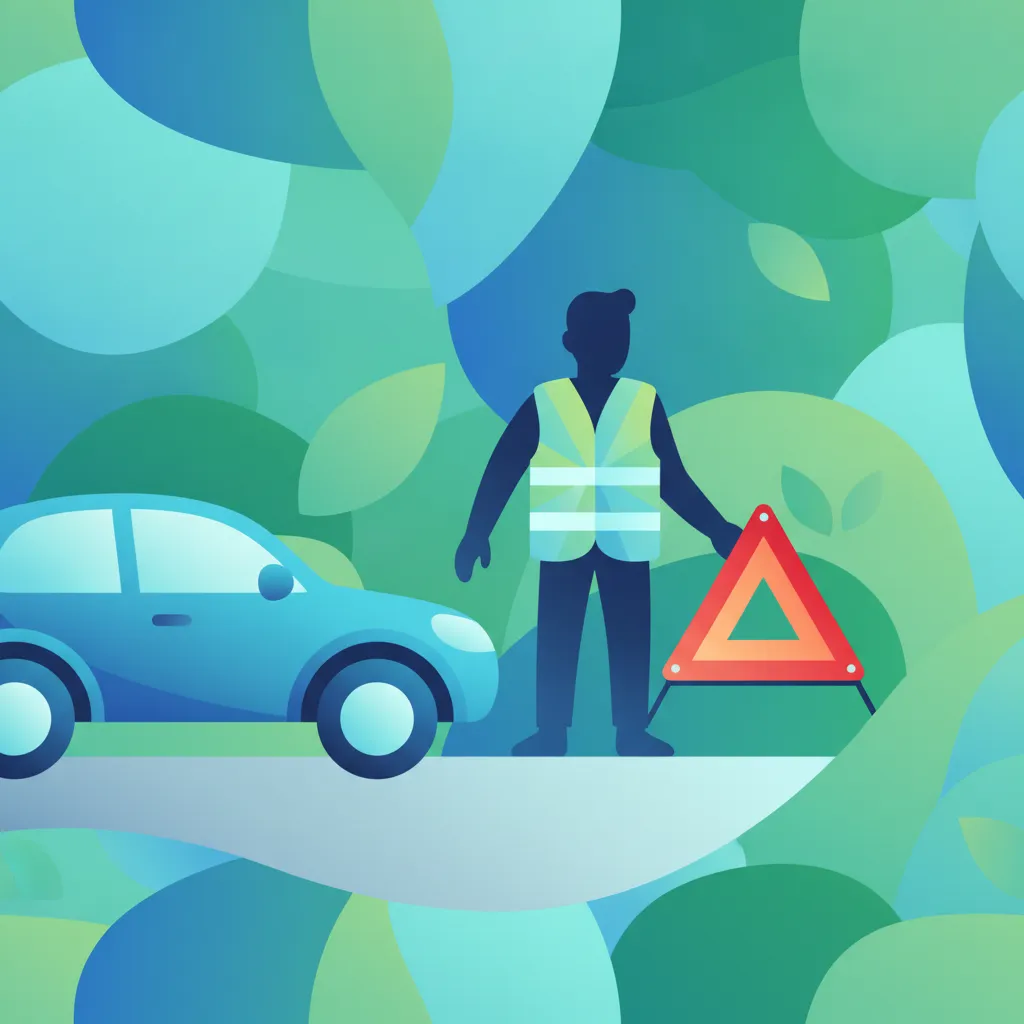
This lesson outlines the safety equipment legally required to be carried in a vehicle in Portugal. It covers the correct use of the warning triangle and reflective vest in the event of a breakdown or accident. Understanding the function and location of this equipment is vital for ensuring safety during a roadside emergency.

This lesson explains the concept of road hierarchy in Portugal and clarifies which roads are accessible to Category AM vehicles. It focuses on the legal prohibitions against using motorways and expressways due to vehicle speed and power limitations. Understanding these operational constraints is crucial for legal compliance and safe route planning, avoiding dangerous traffic environments.

This lesson details the critical documentation that must be carried in a goods vehicle at all times. It explains the purpose of the vehicle registration, technical inspection certificate, insurance, and cargo-specific documents like the CMR. Proper documentation is essential for regulatory compliance and avoiding fines during roadside inspections.

This lesson details the functions of the various lights on a vehicle and the regulations governing their use. It explains the appropriate conditions for using dipped headlights, main beams, and fog lights to maximize visibility without dazzling other road users. The correct use of indicators and hazard warning lights as communication tools is also thoroughly covered.
This lesson provides an overview of the legal obligations regarding equipment and documentation for motorcycles in Portugal. It highlights mandatory items like helmets and lights, registration requirements, insurance obligations, and periodic inspections. The consequences of non-compliance, including fines and penalties, are also discussed to ensure riders understand all regulations.

This lesson underscores the life-saving importance of wearing a certified helmet, explaining its role in impact absorption and the prevention of severe head injuries. It also details the benefits of other protective equipment, such as armored jackets, gloves, and sturdy footwear, in minimizing injury during a fall. The content clarifies the legal mandates and safety standards for protective gear in Portugal.

This lesson provides a comprehensive checklist of all the documentation a professional driver must have available for inspection. It covers the driver's own licence and qualification cards, the vehicle's legal documents, and the paperwork related to the specific load being transported. Having all documents in order is vital for smooth and legal transit.
Navigate the legal requirements for registering Category AM vehicles in Portugal. This lesson covers the registration process, necessary documents like the DUA, and the mandatory Periodic Technical Inspection (IPO) schedule and procedures.
This lesson provides a comprehensive overview of Portugal's Category AM classification, defining the technical specifications for mopeds and light quadricycles. It explains the legal requirements for obtaining an AM license, including age and examination prerequisites. The content details the operational scope, covering permitted road types, maximum speed limits, and regulations concerning the carriage of passengers.
This lesson explains the concept of road hierarchy in Portugal and clarifies which roads are accessible to Category AM vehicles. It focuses on the legal prohibitions against using motorways and expressways due to vehicle speed and power limitations. Understanding these operational constraints is crucial for legal compliance and safe route planning, avoiding dangerous traffic environments.
This lesson introduces the core principles of defensive riding as applied to small, vulnerable vehicles. It teaches riders how to create and maintain a 'space cushion' around them, anticipate the actions of other drivers, and identify potential hazards early. Key techniques such as effective scanning, maintaining a safe following distance, and planning escape routes are explained in detail.
This lesson focuses on the optimal use of reflective materials and lighting systems to enhance rider safety. It explains how to apply reflective elements to clothing, helmets, and the vehicle for maximum effect in low-light conditions. Furthermore, it reviews the legal requirements and proper function of headlights, tail lights, and indicators to ensure compliance and improve detectability.

This lesson focuses on the key duties of an AM vehicle operator, stressing the importance of strict compliance with traffic laws and the adoption of defensive riding principles. It highlights the vulnerability of small vehicle riders and the associated responsibility to protect oneself and others. The content also covers the necessity of regular vehicle maintenance and proper road etiquette to prevent accidents.
This lesson focuses on regulatory signs, which impose legal obligations on road users. It details the specific meanings of key signs such as speed limits, stop, yield, and no-entry, explaining the required action for each. The content also covers signs related to parking prohibitions and mandatory direction, ensuring riders understand these direct commands and the consequences of non-compliance.

This lesson provides detailed guidance for riding in challenging weather conditions. It explains how rain affects braking distances and tire grip, and the importance of using lights correctly in fog to be seen. The content also offers practical advice on appropriate waterproof and high-visibility gear, as well as how strong winds can affect the stability of a lightweight vehicle.

This lesson explains the physics of how tires maintain grip with the road surface, a crucial concept for two-wheeled vehicles. It details the correct technique for cornering, which involves adjusting speed before the turn, selecting a safe line, and leaning the vehicle. The content also discusses common causes of grip loss, such as poor road surfaces or improper rider inputs.
This lesson underscores the life-saving importance of wearing a certified helmet, explaining its role in impact absorption and the prevention of severe head injuries. It also details the benefits of other protective equipment, such as armored jackets, gloves, and sturdy footwear, in minimizing injury during a fall. The content clarifies the legal mandates and safety standards for protective gear in Portugal.
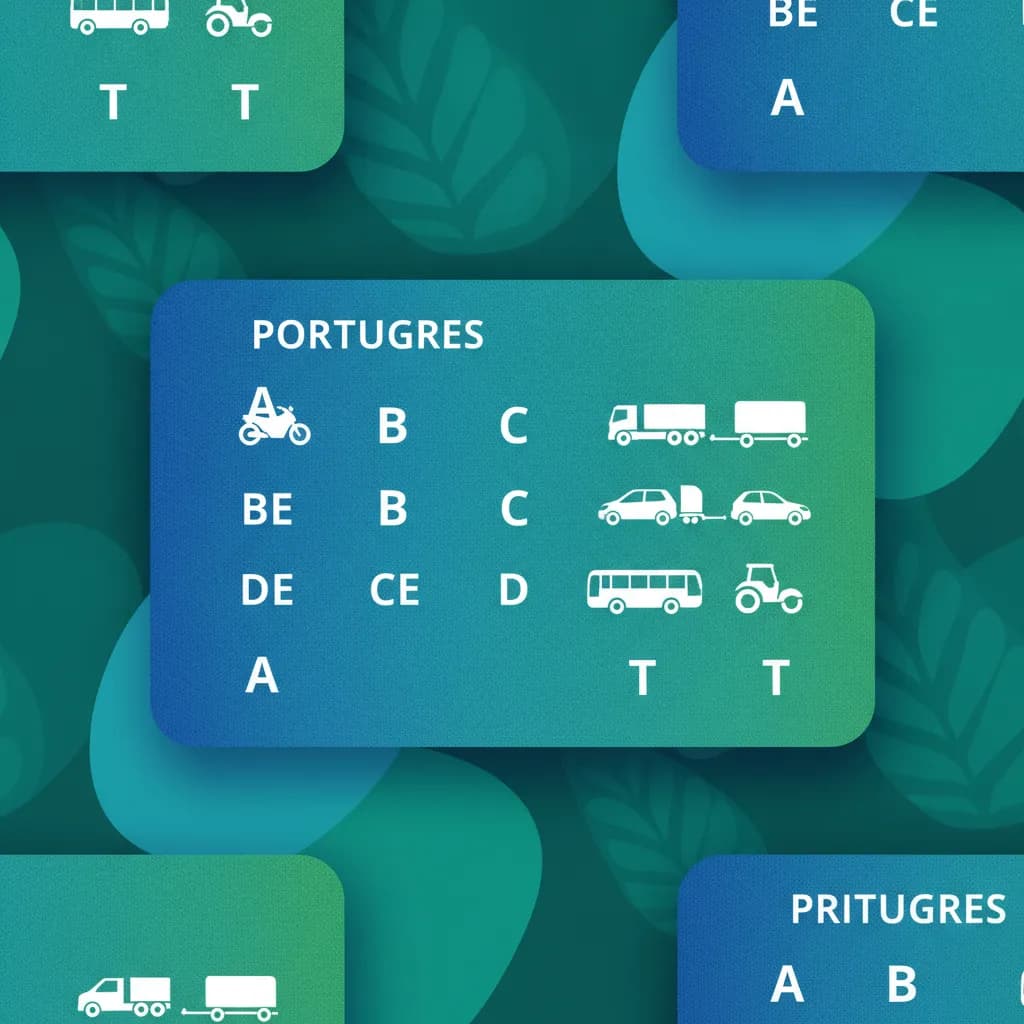
This lesson delineates the structure of the Portuguese traffic code as it pertains to motorcycles, detailing the criteria for each licence category. It explains the age thresholds, compulsory training components, and technical specifications of vehicles allowed under A1, A2, and full Category A. The content also clarifies the administrative steps for obtaining a licence, providing a comprehensive overview of the legal pathway.
Find clear answers to common questions learners have about Vehicle Registration and Mandatory Equipment. Learn how the lesson is structured, which driving theory objectives it supports, and how it fits into the overall learning path of units and curriculum progression in Portugal. These explanations help you understand key concepts, lesson flow, and exam focused study goals.
All Category AM vehicles must be equipped with functional lighting systems, including headlights and tail lights, rearview mirrors, reflectors, and a clearly visible license plate as required by Portuguese law.
Yes, all vehicles must undergo periodic technical inspections according to the schedule set by Portuguese legislation to ensure they remain in a safe, roadworthy condition.
Operating a vehicle without valid registration or missing mandatory equipment can result in fines, the impounding of the vehicle, and potential legal consequences if involved in an accident.
While both fall under the AM category, certain structural requirements may vary. It is important to ensure that all safety devices, such as seatbelts if applicable and lighting systems, meet the specific standards for the vehicle type registered.
Utilize the powerful search tool to refine your Portuguese driving theory practice. Pinpoint questions related to specific traffic laws, road signs, or complex scenarios from the Código da Estrada. Begin targeted revision now to boost your understanding and confidently approach your IMT driving exam.