
This lesson clarifies the legal boundaries of where you can ride your moped or light quadricycle in Portugal. You will learn to identify roads restricted to Category AM vehicles, helping you plan safe routes and comply with traffic legislation.
Lesson content overview
Driving a Category AM vehicle in Portugal, such as a moped or a light quadricycle, comes with specific responsibilities and limitations that are crucial for safety and legal compliance. One of the most fundamental aspects to master is the concept of road hierarchy and understanding which roads are permissible for your vehicle type. This lesson will provide a comprehensive guide to Portugal’s road classification system and detail the legal prohibitions against Category AM vehicles using certain high-speed roads.
Road hierarchy refers to the systematic classification of roadways based on their primary function, design speed, and expected traffic flow. In Portugal, as in many countries, roads are categorized to ensure efficient movement of different types of traffic while maintaining safety standards. For drivers of Category AM vehicles, understanding this hierarchy is not just a theoretical exercise; it is fundamental for safe route planning, avoiding dangerous traffic environments, and adhering to traffic law.
Portugal's road network is structured into various categories, each designed to accommodate specific types of vehicles and travel speeds. This classification helps in managing traffic, setting appropriate speed limits, and indicating permissible vehicle types.
The main categories include:
The core logic behind road hierarchy is safety and efficiency. Higher-order roads are designed for vehicles capable of sustaining higher speeds, providing uninterrupted flow, and requiring specific driver skills. Conversely, lower-order roads are built for mixed traffic, lower speeds, and more frequent stops. The system ensures that vehicles are matched to appropriate road environments, preventing dangerous speed differentials and minimizing collision risks. For Category AM drivers, this means operating within road types where their vehicle's capabilities align with the expected traffic conditions and design parameters of the road.
Category AM vehicles, encompassing mopeds and light quadricycles, are distinct from cars and motorcycles due to their inherent design limitations concerning speed and power. These characteristics directly influence where they can legally and safely operate on Portugal's road network.
A Category AM licence permits the operation of two main vehicle types:
These speed and power constraints are critical. They define the operational envelope within which these vehicles can safely integrate with other traffic. Exceeding this envelope by attempting to use roads designed for much faster vehicles poses significant risks.
The limited speed and acceleration of Category AM vehicles make them inherently unsuitable for high-speed traffic environments. On roads where the minimum required speed is high, a moped or light quadricycle would become an obstruction, forcing faster vehicles to brake or swerve unexpectedly. This creates dangerous speed differentials, which are a leading cause of severe accidents on motorways and expressways.
Furthermore, the smaller size and lighter weight of these vehicles offer less protection in a collision. Placing them in environments with fast-moving, heavy vehicles dramatically increases the risk of severe injury in an accident. Thus, the legal restrictions on their road access are primarily safety measures, designed to protect both the AM vehicle operator and other road users.
In Portugal, specific road types are legally off-limits to Category AM vehicles due to their speed and power limitations. These prohibitions are strictly enforced and are crucial for ensuring road safety and efficient traffic flow.
Motorways, known as Autoestradas (A) in Portugal, are completely prohibited for Category AM vehicles. This prohibition applies to all motorways, regardless of location or time of day. The design speed of motorways (typically 120 km/h) is far beyond the maximum capability of any moped or light quadricycle, creating a severe speed mismatch that is extremely hazardous.
Entry points to motorways are clearly marked with distinctive signs.
If you encounter a motorway sign while driving a Category AM vehicle, you must take an alternative route. Attempting to enter or travel on a motorway is a serious violation that carries significant penalties and poses an immediate danger to yourself and other road users.
Expressways, or Itinerários Principais (I), are also generally prohibited for Category AM vehicles, particularly sections with explicitly signed minimum speed limits that exceed the vehicle's capability. While some expressways might have characteristics similar to national roads in certain sections, their primary design intent is for faster traffic.
Entry points to expressways are also clearly indicated.
It is essential to pay close attention to accompanying signs, especially minimum speed signs, which will definitively indicate if a section of an expressway is unsuitable for your vehicle. Even without an explicit 'no mopeds' sign, a minimum speed requirement that you cannot meet automatically prohibits your entry.
Minimum speed signs are regulatory signs that indicate the lowest speed at which vehicles are allowed to travel on a particular road section. These signs are circular, blue, with a white number indicating the speed in km/h.
If you encounter a minimum speed sign that indicates a speed higher than your Category AM vehicle's maximum legal speed (e.g., a 50 km/h minimum speed sign for a moped restricted to 45 km/h), you are legally prohibited from entering that road section. These signs are critical for maintaining uniform traffic flow and preventing dangerous obstructions. Ignoring them not only results in legal penalties but significantly increases the risk of collisions.
While motorways and expressways are restricted, Category AM vehicles have access to a wide range of other road types in Portugal. These roads are generally more compatible with the speed and capabilities of mopeds and light quadricycles, allowing for safe and legal travel.
National Roads (Estradas Nacionais - N) form the backbone of regional travel in Portugal and are generally permitted for Category AM vehicles. These roads connect towns and cities, often passing through various environments from rural areas to the outskirts of urban centers. Speed limits on national roads vary, but are typically within the range that Category AM vehicles can legally and safely navigate (e.g., 50 km/h in built-up areas, 90 km/h outside).
When traveling on national roads, it is crucial to stay to the right, allow faster traffic to overtake safely, and be aware of your surroundings, especially at intersections and when approaching built-up areas.
Interregional roads (Estradas Interregionais - II) and Urban Roads (Vias Urbanas - E) are also open to Category AM vehicles.
Residential Roads (Vias Residenciais - R) and local access roads, including yards and intersections (U-R), are fully accessible to Category AM vehicles. These roads are designed for very low speeds, local access, and often have a high presence of vulnerable road users. Mopeds and light quadricycles fit well into these environments, where their agility and smaller size can be an advantage.
Successful and safe driving with a Category AM vehicle depends not only on theoretical knowledge but also on practical application of road hierarchy rules, careful route planning, and situational awareness.
Before embarking on any journey, especially for longer distances, meticulous route planning is essential.
Utilize Navigation Apps: Many modern navigation apps offer options to avoid motorways or include specific modes for mopeds. Always double-check the suggested route for any prohibited sections.
Check for Prohibitory Signs: Even with a pre-planned route, always pay attention to physical road signs. Temporary signs or newly implemented restrictions might not be updated on your navigation system immediately.
Consider Road Conditions: Factor in the condition of smaller roads. While legally permitted, some national or interregional roads might be narrow, poorly surfaced, or have steep gradients that could challenge a low-powered vehicle.
Proper route planning ensures you stick to legal roads and avoid unexpected dangerous situations, which is particularly important for Category AM vehicles that cannot easily adapt to high-speed environments.
Your ability to quickly and accurately interpret road signs and markings is paramount.
Road markings, such as solid white lines indicating no overtaking zones or lane usage arrows, also provide crucial information that helps you position your vehicle correctly and safely.
Road hierarchy rules remain constant, but environmental and vehicle-specific conditions can further influence safe travel.
Ignoring road hierarchy rules, especially the prohibitions on motorways and expressways, carries serious legal penalties and significantly elevates the risk of accidents.
Violating road access restrictions for Category AM vehicles can result in:
Beyond legal repercussions, the safety risks are paramount. A Category AM vehicle on a motorway is extremely vulnerable due to the massive speed differential. This can lead to rear-end collisions, dangerous evasive maneuvers by other drivers, and severe accidents that could result in serious injury or fatality. The legal intent behind these rules is fundamentally about preventing such tragic outcomes.
Several common misunderstandings can lead AM drivers to inadvertently violate road hierarchy rules:
Always err on the side of caution. If you are unsure about a road's suitability, choose an alternative route that you know is permissible for Category AM vehicles.
Understanding specific terms related to road classification and vehicle types is crucial for Category AM drivers in Portugal.
Let's consider how these rules apply in practical driving situations for Category AM licence holders in Portugal.
Scenario: Approaching a Motorway Entrance
Scenario: Encountering a Minimum Speed Sign
Scenario: Riding in Heavy Fog
Understanding road hierarchy and vehicle limitations is a cornerstone of safe and legal driving for Category AM licence holders in Portugal.
Explore all units and lessons included in this driving theory course.
Lesson content overview
Explore all units and lessons included in this driving theory course.
Explore search topics learners often look for when studying Understanding Road Hierarchy and Vehicle Limitations. These topics reflect common questions about road rules, driving situations, safety guidance, and lesson level theory preparation for learners in Portugal.
Browse additional driving theory lessons that cover connected traffic rules, road signs, and common driving situations related to this topic. Improve your understanding of how different rules interact across everyday traffic scenarios.
Understand where Category AM vehicles like mopeds and light quadricycles can legally and safely travel in Portugal. Learn about specific prohibitions on motorways and expressways, essential for safe route planning and compliance with Portuguese traffic law.
This lesson focuses on the specific skills required for driving on high-speed motorways. It details the procedures for safely merging onto and exiting the motorway, maintaining proper lane discipline, and adhering to variable speed limits. The content also provides rules for safe overtaking and managing the vehicle's stability at high speeds.
This lesson explains the unique set of rules that apply to motorway driving to facilitate safe, high-speed travel. It covers the correct procedure for entering and exiting the motorway, principles of lane discipline (keeping left unless overtaking), and the rules for safe overtaking. The lesson also clarifies the proper use of the hard shoulder or emergency lane for genuine emergencies only.

This lesson focuses on the specific skills and regulations for motorway driving. It covers correct lane usage for HGVs, safe procedures for overtaking slower traffic, and the rules for using the hard shoulder or emergency refuge areas. Maintaining consistent speed and awareness of surrounding traffic is key to motorway safety.
This lesson focuses on the specifics of riding on motorways, covering speed management, lane discipline, and safe entry and exit strategies. Riders will learn how to choose appropriate lanes, maintain safe following distances at high speeds, and execute overtaking safely. The impact of wind and understanding Portuguese motorway signage are also addressed.
This lesson teaches drivers to recognize and adhere to access restrictions commonly found on the road network. It covers signs indicating weight, height, and width limits for structures like bridges and tunnels. Understanding these restrictions is vital for effective route planning and avoiding costly damage or fines.

This lesson explains the regulations governing the use of dedicated bus lanes, including operational hours and priority rules at junctions. It clarifies which other vehicles may use these lanes and under what circumstances. The content also discusses traffic signal priority systems and the legal implications of improper bus lane usage.
This lesson explains the purpose and rules of reserved lanes, such as those designated for buses, taxis, or cyclists. It covers how to identify these lanes through signage and road markings, and details the specific times they may be in operation. Drivers will learn when they are permitted to enter these lanes and the penalties for unauthorized use.
This lesson provides a clear breakdown of the legal speed limits for different categories of goods vehicles in Portugal. It covers the maximum speeds permitted on motorways, dual carriageways, rural roads, and within built-up areas. Adhering to these specific limits is a fundamental aspect of safe and legal professional driving.
This lesson provides guidance on driving safely through roadwork zones. It covers the importance of obeying temporary speed limits, navigating narrow lanes and contraflow systems, and being highly aware of workers and machinery. A professional driver's vigilance is essential for preventing accidents in these potentially hazardous areas.
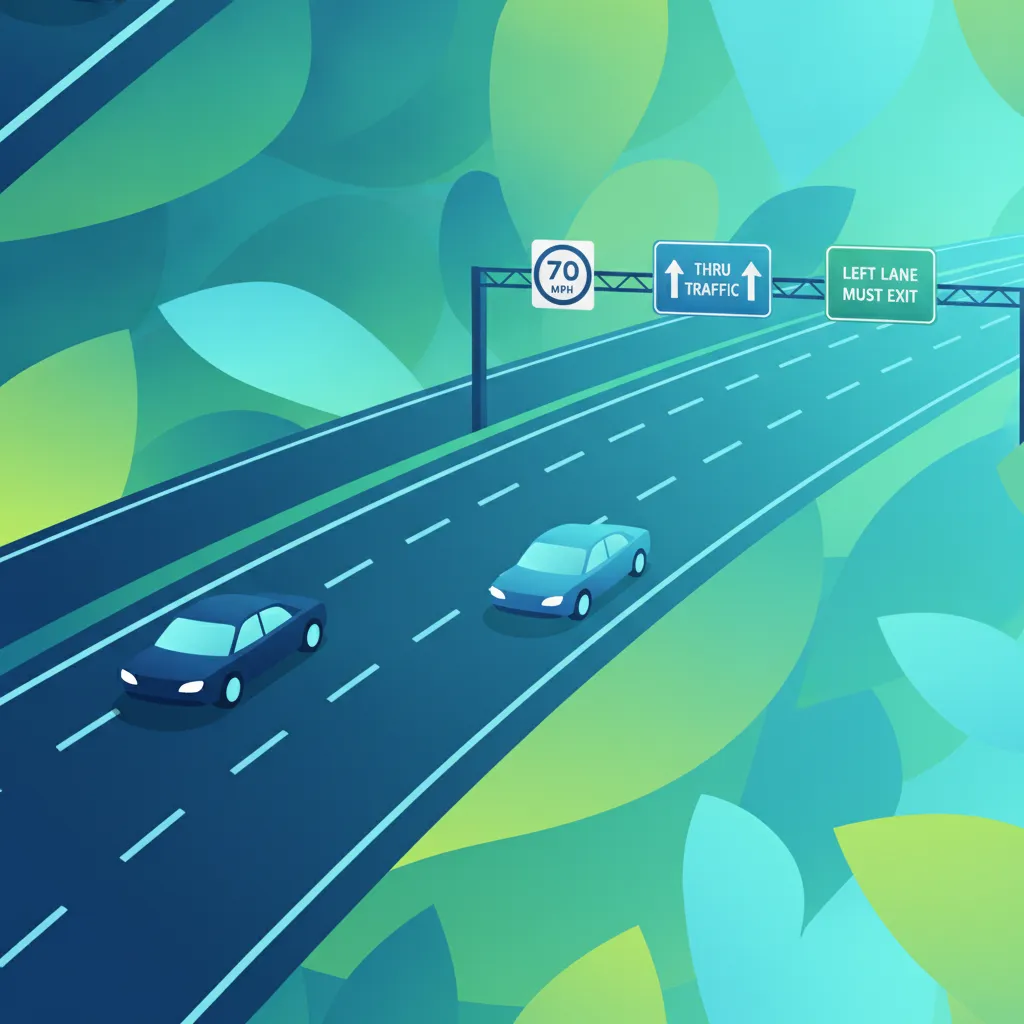
This lesson details the rules of lane discipline and the procedures for safe overtaking. It explains how to maintain correct lane positioning and how road markings and signs define where overtaking is allowed or forbidden. The lesson emphasizes the importance of the mirror-signal-manoeuvre routine and ensuring sufficient space and visibility before attempting to pass another vehicle.
Explore the Portuguese road hierarchy and how vehicle limitations for Category AM drivers impact safe travel. This lesson covers road classification, speed differentials, and essential safety advice for navigating different road types within legal limits.
This lesson introduces the core principles of defensive riding as applied to small, vulnerable vehicles. It teaches riders how to create and maintain a 'space cushion' around them, anticipate the actions of other drivers, and identify potential hazards early. Key techniques such as effective scanning, maintaining a safe following distance, and planning escape routes are explained in detail.
This lesson addresses the ethical and social aspects of operating a moped or light quadricycle. It encourages riders to adopt a responsible attitude that contributes positively to the road safety culture through courteous and respectful behavior. The content also touches upon the rider's role in minimizing environmental impact and promoting safe coexistence with all other road users.

This lesson focuses on the optimal use of reflective materials and lighting systems to enhance rider safety. It explains how to apply reflective elements to clothing, helmets, and the vehicle for maximum effect in low-light conditions. Furthermore, it reviews the legal requirements and proper function of headlights, tail lights, and indicators to ensure compliance and improve detectability.

This lesson explains the function of warning signs, which are designed to alert drivers to potential dangers ahead. It covers a wide range of signs indicating hazards like sharp bends, slippery surfaces, and the presence of schools or pedestrian crossings. The content stresses the importance of adjusting speed and increasing alertness in response to these warnings to maintain safety.
This lesson addresses the specific hazards associated with riding next to rows of parked vehicles. It highlights the primary risk of car doors being opened unexpectedly ('dooring') and teaches riders to maintain a safe lateral distance. The content also explains how to anticipate other dangers, such as cars pulling out without warning or pedestrians emerging from between vehicles.

This lesson specifically addresses the significant danger posed by the blind spots of larger vehicles. It identifies the 'no-zones' around trucks and buses where a moped can become invisible to the driver. The content provides clear instructions on how to manage lane position, avoid lingering in blind spots, and execute overtaking maneuvers safely to ensure visibility.

This lesson focuses on the critical skill of managing speed within complex urban settings. It explains that driving at the speed limit is not always the safest option and teaches riders how to adjust their speed based on traffic density, pedestrian activity, and visibility. The content reinforces the principle of always being able to stop safely within the distance you can see to be clear.
This lesson focuses on the psychological aspects of safe riding, helping riders recognize and manage high-risk behaviors. It discusses the dangers of distraction, particularly from mobile phones, and the influence of peer pressure and overconfidence. The content encourages the development of a mature risk assessment mindset and emphasizes the importance of riding only when physically and mentally fit.
This lesson examines the hierarchy of road users defined by Portuguese law, emphasizing the right-of-way principles that apply to motorcycles. It covers priority at intersections, the rules governing roundabouts, and how motorcyclists must act upon these regulations when sharing space with larger vehicles. Understanding these priority rules is vital for avoiding conflicts and reducing accident risk.

This lesson explains the physics of how tires maintain grip with the road surface, a crucial concept for two-wheeled vehicles. It details the correct technique for cornering, which involves adjusting speed before the turn, selecting a safe line, and leaning the vehicle. The content also discusses common causes of grip loss, such as poor road surfaces or improper rider inputs.
Find clear answers to common questions learners have about Understanding Road Hierarchy and Vehicle Limitations. Learn how the lesson is structured, which driving theory objectives it supports, and how it fits into the overall learning path of units and curriculum progression in Portugal. These explanations help you understand key concepts, lesson flow, and exam focused study goals.
No, Category AM mopeds and light quadricycles are strictly prohibited from driving on motorways and expressways. These roads are reserved for vehicles capable of maintaining higher minimum speeds that mopeds cannot achieve.
Look for regulatory road signs at the entrance of roads, such as the circular sign with a red border depicting a forbidden vehicle type or signs indicating motorways. Knowing these sign categories is a key part of your theory exam.
Yes, understanding road hierarchy helps you plan routes that prioritize safety and legality. Always avoid roads where your vehicle's speed and power limitations would pose a risk to you or other traffic.
Light quadricycles follow similar access rules to mopeds. While they can travel on most urban and secondary roads, they must always adhere to the specific speed limits and local traffic restrictions posted on those routes.
Utilize the powerful search tool to refine your Portuguese driving theory practice. Pinpoint questions related to specific traffic laws, road signs, or complex scenarios from the Código da Estrada. Begin targeted revision now to boost your understanding and confidently approach your IMT driving exam.