
This lesson explores the essential principles of defensive riding specifically for mopeds and light quadricycles in Portugal. By learning to manage your space and anticipate the actions of other road users, you will become a more confident and safer rider. This topic is a critical component of your Category AM preparation, helping you navigate urban traffic with greater situational awareness.
Lesson content overview
Operating a small vehicle, such as a moped or a light quadricycle, on Portugal's roads comes with unique challenges and responsibilities. Due to their smaller size, lower stability, and reduced protection compared to cars, these vehicles are inherently more vulnerable. This lesson, part of your Driving Theory for Category AM: Mopeds and Light Quadricycles in Portugal, focuses on mastering defensive riding techniques to minimize risks and ensure your safety, as well as the safety of others.
Defensive riding is a proactive approach to driving that involves anticipating potential hazards, understanding how other road users might behave, and taking preventive measures to avoid accidents. It’s about creating a safety buffer around yourself and being constantly aware of your surroundings, allowing you to react effectively to unexpected situations. By applying these principles, you can significantly reduce the likelihood of collisions and ride with greater confidence.
Defensive riding is a mindset and a set of skills designed to compensate for the inherent vulnerability of small vehicles. It's about taking control of your safety by not relying solely on the correct actions of others, but by preparing for potential errors. The core logic is straightforward: by actively mitigating risks, you enhance your chances of avoiding accidents and responding effectively when dangers arise.
This crucial topic interweaves with other essential aspects of safe riding you've encountered in earlier lessons. It builds upon the importance of visibility strategies, which ensure you are seen by other road users, and complements proper road positioning, which helps you command your space on the road. Effective defensive techniques also leverage your understanding of brake and acceleration control, enabling you to execute necessary maneuvers smoothly and safely.
Small vehicles offer agility and efficiency, but they also expose riders to greater risks in traffic. Unlike car drivers, moped and light quadricycle operators do not benefit from a protective metal cage, airbags, or crumple zones. This lack of physical protection means that even minor incidents can have severe consequences for the rider. Therefore, adopting a defensive riding posture is not merely advisable; it is essential for survival on the road.
Defensive techniques help you predict and react to hazards that larger vehicles might simply absorb or ignore. These include sudden braking by the vehicle ahead, unexpected lane changes by other drivers, opening car doors, or pedestrians stepping into the road. By mastering defensive riding, you learn to read the road environment, anticipate potential dangers, and position yourself to avoid them before they escalate into an emergency.
Several fundamental principles underpin effective defensive riding. These are interconnected strategies that, when applied together, create a robust safety framework for riders of mopeds and light quadricycles. Each principle plays a vital role in enhancing your situational awareness and reaction capabilities.
The concept of a space cushion is paramount in defensive riding. It refers to a clear zone of space that you maintain around your vehicle at all times. This buffer acts as your personal safety net, providing critical reaction time and maneuvering room should an unexpected event occur. For a moped or light quadricycle, which has limited stability and protection, this space cushion is even more vital than for larger vehicles.
A well-maintained space cushion allows you to brake, swerve, or accelerate to avoid hazards without colliding with other vehicles or obstacles. You must constantly adjust your speed, lane position, and following distance to preserve this buffer, adapting to changing traffic conditions and road environments.
The protective zone of space maintained around a vehicle at all times, providing reaction time and maneuvering room.
Situational awareness is your comprehensive understanding of the traffic environment and potential threats. It involves continuously scanning your surroundings to foresee potential dangers before they fully materialize. For a moped or light quadricycle rider, this means not just observing what is directly in front of you, but also being aware of what is happening to your sides, behind you, and further down the road.
Hazard anticipation is the active process of predicting what might happen next based on your observations. This enables you to make early decisions and initiate avoidance maneuvers well in advance. For example, recognizing that a car ahead might suddenly turn without signaling, or that a parked car's door could open unexpectedly, allows you to adjust your position or speed preemptively. This proactive approach is a cornerstone of preventing accidents.
Effective scanning is a systematic process of checking mirrors, blind spots, and the road ahead to gather relevant information about your environment. It prevents "tunnel vision," where you only focus on what's directly in front of you, and helps you detect potential hazards in time. This is especially important for small vehicle riders who can easily be overlooked by drivers of larger vehicles.
Rearview Mirror Check: Glance at your rearview mirror every 5-8 seconds to know what's behind you.
Side Mirror Check: Regularly check your left and right mirrors for vehicles approaching from the sides.
Head Checks: Before changing lanes, merging, or turning, always perform a quick head check (looking over your shoulder) to confirm your blind spots are clear.
Forward Scanning: Keep your eyes moving, scanning 10-15 seconds ahead to identify potential hazards, traffic flow changes, and road conditions.
Peripheral Vision: Utilize your peripheral vision to detect movement and changes in your immediate surroundings.
By implementing a consistent scanning routine, you prevent being surprised by vehicles in your blind spots or sudden changes in traffic.
Safe following distance is the distance you maintain behind another vehicle that is sufficient to stop safely without colliding if the leading vehicle brakes abruptly. This provides you with crucial reaction time to respond to unexpected stops or slowdowns. For mopeds and light quadricycles, with their potentially slower acceleration and sometimes less powerful braking systems compared to cars, a generous following distance is imperative.
The "two-second rule" is a common guideline:
For mopeds and light quadricycles, especially those with limited braking power or in adverse conditions, it is advisable to extend this to a three or four-second rule.
Planning escape routes involves proactively identifying clear paths to move into if a hazard suddenly emerges. This ensures you have a quick and safe way to react to sudden obstacles, dangerous situations, or emergency braking by other vehicles. Instead of simply stopping in the middle of traffic, you should always have a mental "Plan B" for where you can go.
Continuously assess adjacent lanes, shoulder space, and upcoming road features that could serve as an escape path. For example, if you see brake lights illuminating sharply ahead, your immediate thought should be not just to brake, but also to identify if there's an open lane to your left or right, or a safe shoulder you could briefly use to avoid a collision. This constant assessment of your surroundings turns potential traps into manageable situations.
Visibility management is about ensuring that you, as a rider, and your small vehicle are clearly seen by other road users, while also ensuring you can clearly see the road yourself. Given the smaller profile of mopeds and light quadricycles, other drivers can easily overlook them, especially in busy traffic, at dusk, or in poor weather conditions.
To enhance your visibility:
By actively managing your visibility, you reduce the likelihood of other road users inadvertently colliding with you.
Let's delve deeper into some of the core concepts to provide a more comprehensive understanding of their practical application.
A space cushion is not just the distance in front of you; it encompasses a protective zone all around your vehicle. This holistic approach ensures you are shielded from multiple angles.
Maintaining these cushions actively manages the risks from all directions, greatly enhancing your safety on Portuguese roads.
Situational awareness goes beyond simply seeing; it involves interpreting what you see and anticipating its implications.
Never assume other drivers see you or will act logically. Always be prepared for the unexpected.
Beyond the basic routine, effective scanning means constantly processing information.
The two-second rule is a minimum and must be adjusted based on various factors.
Constantly think about "what if" scenarios and identify your options.
Adhering to Portuguese traffic laws is a fundamental aspect of defensive riding. These regulations are designed to promote safety and help prevent collisions. Ignoring them not only puts you at risk but can also lead to legal penalties.
| Rule | Applicability | Legal Status | Rationale | Correct Example | Incorrect Example |
|---|---|---|---|---|---|
| Maintain a safe distance from the vehicle ahead | All road types, any speed | Mandatory | Allows sufficient reaction and braking time for the rider to avoid a collision. | Rider stays 2-3 seconds behind a car in motion on a dry urban road. | Rider follows within half a second, having to brake sharply to avoid a rear-end collision. |
| Use mirrors and perform head checks before changing lanes | When intending to change lanes, merge, or turn. | Mandatory | Prevents collisions with vehicles in blind spots; ensures the path is clear. | Rider checks mirrors and looks over their shoulder before merging onto a new street. | Rider merges into traffic without checking blind spots, nearly colliding with a car. |
| Ensure visibility to other road users (lights and clothing) | Daytime and nighttime, all conditions. | Mandatory | Reduces the risk of the small vehicle being overlooked by other drivers. | Rider uses dipped beam headlights, wears a reflective vest, and has functional taillights at dusk. | Rider rides at night with no lights or with dark, non-reflective clothing, making them hard to see. |
| Keep minimum lateral clearance from larger vehicles | When traveling alongside cars, trucks, buses, or parked vehicles. | Mandatory | Prevents being caught in blind spots, allows room for evasive action, avoids doors opening. | Rider stays at least 1.5 meters away from a parked car and 1 meter from a moving bus. | Rider rides directly next to a large truck, risking being hit if the truck swerves or turns. |
| Adjust following distance and speed in adverse weather | Wet, icy, foggy, or low-visibility conditions. | Mandatory | Increased stopping distances and reduced visibility necessitate greater safety margins. | Rider doubles their following distance and reduces speed in heavy rain or fog. | Rider maintains the same speed and gap in heavy fog as they would on a clear, dry day. |
Several dangerous practices are often observed among small vehicle riders. Being aware of these common violations can help you consciously avoid them.
Defensive riding is not a rigid set of rules; it's a dynamic approach that requires constant adaptation to changing conditions. The environment, your vehicle's state, and the presence of other road users all influence the specific techniques you should employ.
Understanding the direct links between your actions and their potential consequences reinforces the importance of defensive riding.
Defensive riding techniques are indispensable for anyone operating a moped or light quadricycle in Portugal. The core principles revolve around actively creating and maintaining a space cushion around your vehicle, continuously employing effective scanning to develop acute situational awareness and hazard anticipation, always maintaining a safe following distance, and proactively planning escape routes for unexpected events.
Crucially, visibility management is a constant responsibility, achieved through proper lighting, reflective clothing, and strategic lane positioning to avoid the blind spots of larger vehicles. These techniques are not static; they demand constant adjustment based on varying conditions such as weather, light levels, road types, vehicle load, and the presence of other vulnerable road users. Adhering to Portuguese traffic regulations, which mandate safe distances and visibility measures, forms the legal backbone of these safety practices. By embracing and applying these defensive principles, you not only reduce your risk of accidents but also contribute significantly to the overall safety of Portugal's roads.
Explore all units and lessons included in this driving theory course.
Lesson content overview
Explore all units and lessons included in this driving theory course.
Explore search topics learners often look for when studying Defensive Riding Techniques for Small Vehicles. These topics reflect common questions about road rules, driving situations, safety guidance, and lesson level theory preparation for learners in Portugal.
Browse additional driving theory lessons that cover connected traffic rules, road signs, and common driving situations related to this topic. Improve your understanding of how different rules interact across everyday traffic scenarios.
Understand the specific risks and vulnerabilities faced by moped and light quadricycle operators in Portuguese traffic. Learn how to anticipate and mitigate common road hazards to enhance your safety and awareness while driving.
This lesson focuses on the psychological aspects of safe riding, helping riders recognize and manage high-risk behaviors. It discusses the dangers of distraction, particularly from mobile phones, and the influence of peer pressure and overconfidence. The content encourages the development of a mature risk assessment mindset and emphasizes the importance of riding only when physically and mentally fit.
This lesson addresses the specific hazards associated with riding next to rows of parked vehicles. It highlights the primary risk of car doors being opened unexpectedly ('dooring') and teaches riders to maintain a safe lateral distance. The content also explains how to anticipate other dangers, such as cars pulling out without warning or pedestrians emerging from between vehicles.

This lesson specifically addresses the significant danger posed by the blind spots of larger vehicles. It identifies the 'no-zones' around trucks and buses where a moped can become invisible to the driver. The content provides clear instructions on how to manage lane position, avoid lingering in blind spots, and execute overtaking maneuvers safely to ensure visibility.

This lesson focuses on the critical skill of managing speed within complex urban settings. It explains that driving at the speed limit is not always the safest option and teaches riders how to adjust their speed based on traffic density, pedestrian activity, and visibility. The content reinforces the principle of always being able to stop safely within the distance you can see to be clear.

This lesson provides actionable strategies for riders to increase their visibility to other motorists. It details the effectiveness of wearing brightly colored or reflective clothing and explains the correct use of vehicle lights, including daytime running lights. The content also covers how strategic lane positioning can help a rider remain conspicuous and avoid being overlooked in complex traffic situations.

This lesson emphasizes the development of defensive riding strategies through continuous risk assessment and situational awareness. It teaches techniques for scanning the environment, maintaining safe following distances, and anticipating potential hazards. The importance of a proactive riding attitude and creating safety margins is highlighted to promote a habit of anticipatory riding.
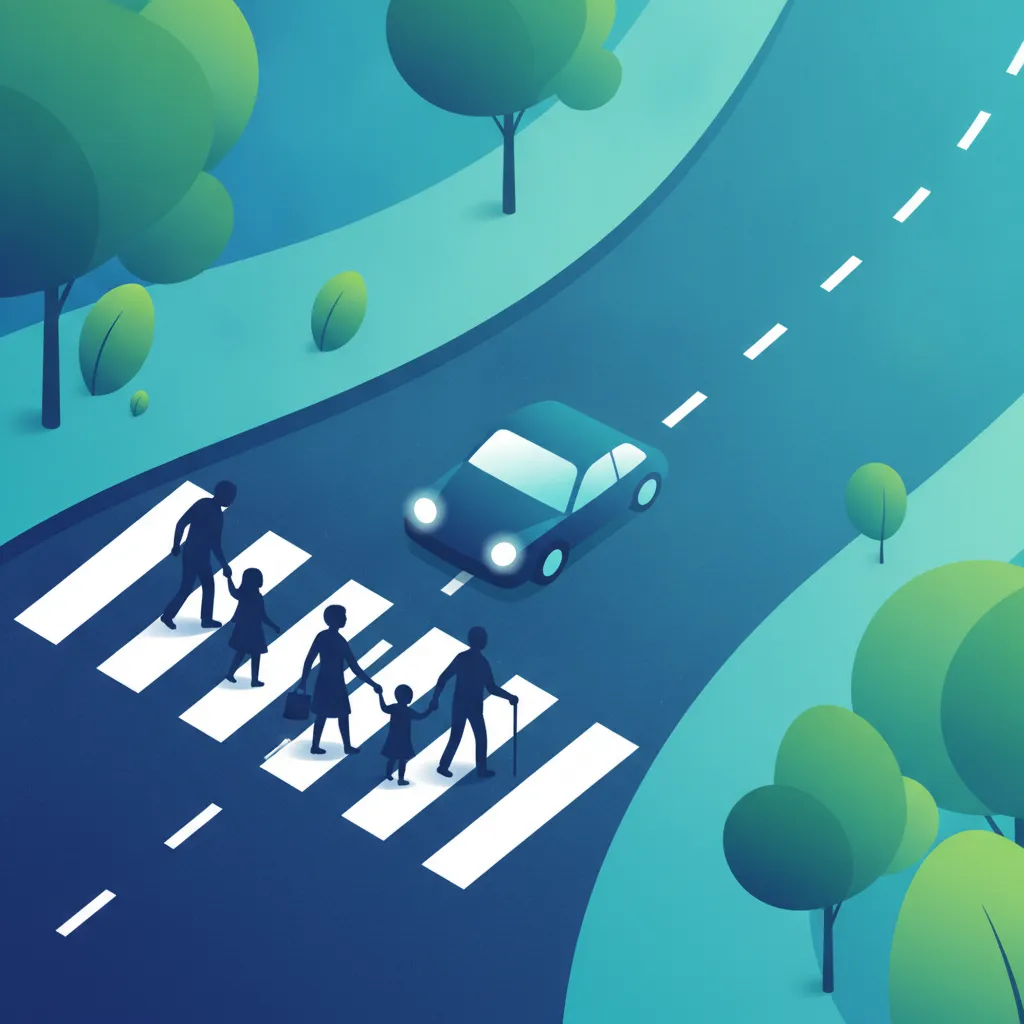
This lesson explores the various types of pedestrian crossings found in Portuguese urban areas, such as zebra crossings. It emphasizes the rider’s responsibility to yield to pedestrians, the importance of reducing speed, and maintaining a safe passing distance. Strategies for anticipating pedestrian behavior and ensuring visibility are discussed to prevent incidents.
This lesson addresses the ethical and social aspects of operating a moped or light quadricycle. It encourages riders to adopt a responsible attitude that contributes positively to the road safety culture through courteous and respectful behavior. The content also touches upon the rider's role in minimizing environmental impact and promoting safe coexistence with all other road users.
This lesson explains the function of warning signs, which are designed to alert drivers to potential dangers ahead. It covers a wide range of signs indicating hazards like sharp bends, slippery surfaces, and the presence of schools or pedestrian crossings. The content stresses the importance of adjusting speed and increasing alertness in response to these warnings to maintain safety.
This lesson teaches a systematic approach to safely navigating intersections. It covers the importance of reducing speed on approach, conducting thorough visual checks (observation), and selecting the appropriate lane for the intended direction. The content also details how to assess gaps in traffic before proceeding and correctly apply priority rules to avoid conflicts with other vehicles.
Explore the critical driving theory concepts of maintaining a safe space cushion and developing advanced situational awareness. Learn how to position yourself effectively and stay visible to other road users, essential for moped and light quadricycle safety.

This lesson teaches riders how to position themselves optimally within a lane to maximize visibility and safety. It covers the pros and cons of different positions within the lane, taking into account traffic flow and upcoming hazards. Strategies for maintaining a safe lane position that enhances rider visibility are discussed in detail.
This lesson specifically addresses the significant danger posed by the blind spots of larger vehicles. It identifies the 'no-zones' around trucks and buses where a moped can become invisible to the driver. The content provides clear instructions on how to manage lane position, avoid lingering in blind spots, and execute overtaking maneuvers safely to ensure visibility.
This lesson addresses the specific hazards associated with riding next to rows of parked vehicles. It highlights the primary risk of car doors being opened unexpectedly ('dooring') and teaches riders to maintain a safe lateral distance. The content also explains how to anticipate other dangers, such as cars pulling out without warning or pedestrians emerging from between vehicles.
This lesson provides actionable strategies for riders to increase their visibility to other motorists. It details the effectiveness of wearing brightly colored or reflective clothing and explains the correct use of vehicle lights, including daytime running lights. The content also covers how strategic lane positioning can help a rider remain conspicuous and avoid being overlooked in complex traffic situations.
This lesson focuses on the psychological aspects of safe riding, helping riders recognize and manage high-risk behaviors. It discusses the dangers of distraction, particularly from mobile phones, and the influence of peer pressure and overconfidence. The content encourages the development of a mature risk assessment mindset and emphasizes the importance of riding only when physically and mentally fit.
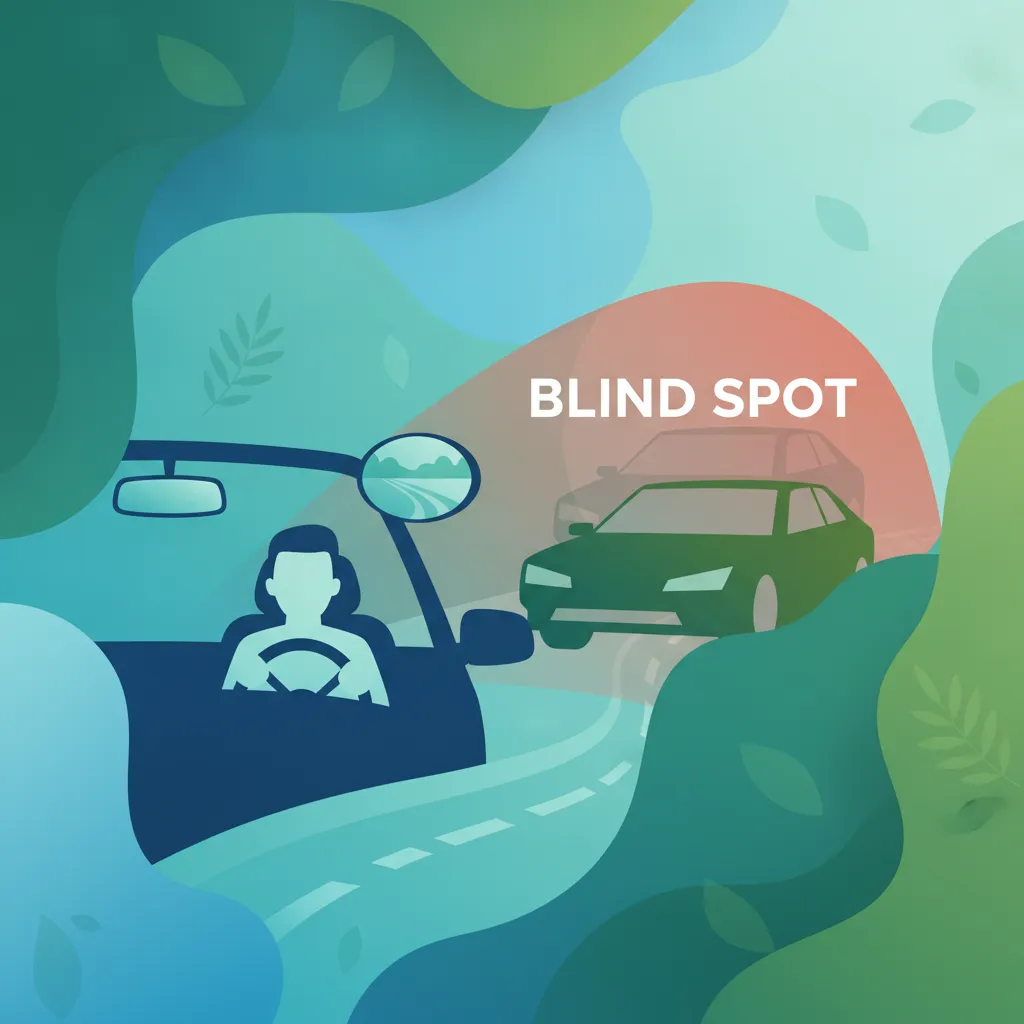
Focusing on blind spots, this lesson explains the areas where riders may become invisible to drivers of larger vehicles. It discusses how to assess and avoid these zones, especially during overtaking or when riding alongside other vehicles. Techniques for positioning oneself safely and ensuring visibility to other drivers are provided to reduce collision risk.

This lesson examines how to manage space when riding near heavy vehicles such as trucks and buses. It covers creating and maintaining protective space, avoiding squeeze points, and accounting for wind turbulence. Appropriate lane positioning and awareness of truck turning paths are discussed to enhance safety in these situations.

This lesson focuses on the specific skills needed for controlling a moped at very low speeds, such as in heavy traffic or when making tight turns. It explains how to maintain balance through a combination of subtle throttle, clutch, and rear brake inputs. The importance of looking where you want to go and maintaining a relaxed but correct posture is also emphasized for maximum stability.

This lesson focuses on riding safely on two-way roads and narrow lanes where space is limited. It emphasizes maintaining lane discipline, using the road edge when appropriate, and anticipating oncoming traffic. Techniques for safe passing, speed control, and positioning to maximize visibility and minimize collision risk are provided.

This lesson focuses on the optimal use of reflective materials and lighting systems to enhance rider safety. It explains how to apply reflective elements to clothing, helmets, and the vehicle for maximum effect in low-light conditions. Furthermore, it reviews the legal requirements and proper function of headlights, tail lights, and indicators to ensure compliance and improve detectability.
Find clear answers to common questions learners have about Defensive Riding Techniques for Small Vehicles. Learn how the lesson is structured, which driving theory objectives it supports, and how it fits into the overall learning path of units and curriculum progression in Portugal. These explanations help you understand key concepts, lesson flow, and exam focused study goals.
A space cushion allows you enough time and distance to react to sudden changes by other drivers, such as braking or lane changes. By maintaining a buffer, you compensate for the lower acceleration and protection of a moped, significantly reducing your accident risk.
As an AM rider, you are more vulnerable and less visible. Choosing the right road position ensures that car drivers can see you in their mirrors and that you have an escape route if a vehicle ahead stops unexpectedly or performs an illegal maneuver.
Effective hazard identification involves constant scanning of the road ahead, checking mirrors, and looking for clues like brake lights, turning signals, or vehicle movement. Anticipating that others may not see you is the core of defensive riding.
Many theory exam questions test your ability to make safe choices in hazardous situations. Understanding these principles helps you quickly select the correct answer in scenario-based questions that describe potential conflict points.
Utilize the powerful search tool to refine your Portuguese driving theory practice. Pinpoint questions related to specific traffic laws, road signs, or complex scenarios from the Código da Estrada. Begin targeted revision now to boost your understanding and confidently approach your IMT driving exam.