This lesson explores the critical dangers of the blind spots associated with larger vehicles like trucks and buses. You will learn practical strategies to maintain visibility and position your moped safely, ensuring you stay out of hazardous 'no-zones' while navigating Portuguese roads.

Lesson content overview
Riding a moped or light quadricycle in Portugal's diverse traffic environments requires acute awareness, especially when sharing the road with larger vehicles like trucks and buses. These larger vehicles have significant areas around them where their drivers cannot see smaller road users. These unseen zones, often called "no-zones" or blind spots, pose a critical safety risk for moped riders. This lesson will equip you with the essential knowledge and techniques to understand, avoid, and safely navigate around these dangerous areas, ensuring your visibility and safety on the road.
Blind spots, or "no-zones," are areas around a truck or bus where the driver's view is obstructed by the vehicle's own structure. Due to their sheer size and configuration, large vehicles have much larger blind spots than standard cars. For a moped rider, entering these zones can mean becoming completely invisible to the driver of the larger vehicle, leading to extremely hazardous situations, especially during lane changes, turns, or braking.
No-zones are specific areas where a large vehicle driver has limited or no visibility. It's crucial for moped riders to understand where these zones are located to actively avoid them:
Never assume a large vehicle driver has seen you, even if you can see their mirrors. If you cannot see the driver's face in their mirror, it is highly probable they cannot see you.
For mopeds and light quadricycles, the implications of these blind spots are profound. Our smaller size makes us particularly vulnerable. If a moped is within a larger vehicle's no-zone, the driver might:
Understanding these risks is the first step in applying defensive riding techniques to ensure your safety. Portuguese law explicitly mandates that riders avoid positioning themselves within the blind zones of larger vehicles.
Lane positioning is not just about staying within your lane; it's a dynamic strategy to maximize your visibility to other drivers, especially when sharing the road with larger vehicles. For moped riders, proper lane positioning is a critical defensive riding technique.
Maintaining a position within your designated lane that strategically maximizes your visibility to other drivers and provides an escape path, especially when near larger vehicles.
The goal is to place your moped where the driver of a larger vehicle is most likely to see you in their mirrors. This often means moving slightly within your lane to achieve a more prominent position.
Many moped riders mistakenly:
Overtaking a large vehicle requires careful planning and execution to avoid entering its blind spots. It's one of the riskiest maneuvers for a moped rider if not done correctly.
The minimum longitudinal distance (along the road) and lateral distance (across the lane) required to safely pass a larger vehicle without entering its blind spots, allowing sufficient time for both the rider and the larger vehicle driver to perceive and react to each other's movements.
A safe overtaking maneuver ensures that from the moment you initiate the pass until you are well clear, you remain visible to the driver of the vehicle you are overtaking.
Assess the Situation: Before committing to an overtake, check your mirrors, blind spots, and signal. Ensure the road ahead is clear, and there are no oncoming vehicles or intersections that would make the maneuver unsafe.
Increase Visibility: Position your moped so you are clearly visible in the large vehicle's rear-view mirrors before moving into the adjacent lane. This often means moving slightly to the left within your current lane, but not so much that you obstruct other traffic or enter another hazard zone.
Initiate from a Safe Distance: Do not 'tuck in' behind a large vehicle before initiating an overtake. Start from a position where you have clear visibility of the road ahead and are well out of the large vehicle's rear blind spot.
Accelerate Decisively: Once you begin the overtake, accelerate smoothly and quickly to minimize the time spent alongside the larger vehicle. This reduces your exposure to their side blind spots.
Maintain Lateral Clearance: As you pass, ensure you maintain a minimum safe lateral distance from the larger vehicle. This buffer is crucial in case the larger vehicle swerves or a gust of wind (often caused by large vehicles) pushes your moped.
Clear the Front Safely: Only return to your original lane (or move into the next lane) when you can see the entire front of the overtaken vehicle in your rear-view mirror. This ensures you are well clear of their front blind spot.
When overtaking, be mindful of the "wind shadow" or turbulence created by large vehicles. This can affect your moped's stability, so maintain a firm grip and be prepared to adjust.
Defensive riding is a mindset and a set of strategies designed to anticipate hazards and proactively reduce risk. When it comes to managing blind spots, defensive riding is paramount for moped riders. It's about taking responsibility for your own visibility and safety.
This lesson builds directly on foundational defensive riding concepts. The principles of hazard perception, maintaining a safe space cushion, and being seen are all crucial elements when interacting with large vehicle blind spots. Your ability to integrate these techniques will determine your safety when riding a moped or light quadricycle in traffic.
Portuguese traffic law, in alignment with European directives, emphasizes the responsibility of all road users to ensure safety, particularly for vulnerable users like moped riders. Specific regulations dictate how riders should interact with larger vehicles to mitigate the risks associated with blind spots.
Violation of these principles not only endangers your life but can also lead to legal penalties under Portuguese traffic law, as they constitute unsafe riding practices.
The size and risk of blind spots can change dramatically based on environmental factors and the specific vehicle. A good moped rider always adapts their strategy.
Understanding the direct cause-and-effect relationships between your actions and potential outcomes is fundamental to safe riding.
Your proactive choices in managing blind spots are directly correlated with your safety and the safety of others on the road.
Mastering the management of blind spots is a cornerstone of safe moped riding for your Category AM licence in Portugal. By understanding and consistently applying the principles outlined in this lesson, you significantly reduce your risk of accidents involving larger vehicles.
By internalizing these concepts, you not only improve your chances of passing your driving theory exam but, more importantly, you develop the practical skills necessary to ride safely and confidently on Portuguese roads.
Explore all units and lessons included in this driving theory course.
Lesson content overview
Explore all units and lessons included in this driving theory course.
Explore search topics learners often look for when studying Managing Blind Spots of Larger Vehicles. These topics reflect common questions about road rules, driving situations, safety guidance, and lesson level theory preparation for learners in Portugal.
Browse additional driving theory lessons that cover connected traffic rules, road signs, and common driving situations related to this topic. Improve your understanding of how different rules interact across everyday traffic scenarios.
Learn about the dangerous 'no-zones' around trucks and buses, and how to position your moped to ensure visibility and safety on Portuguese roads. Essential theory for AM licence holders.
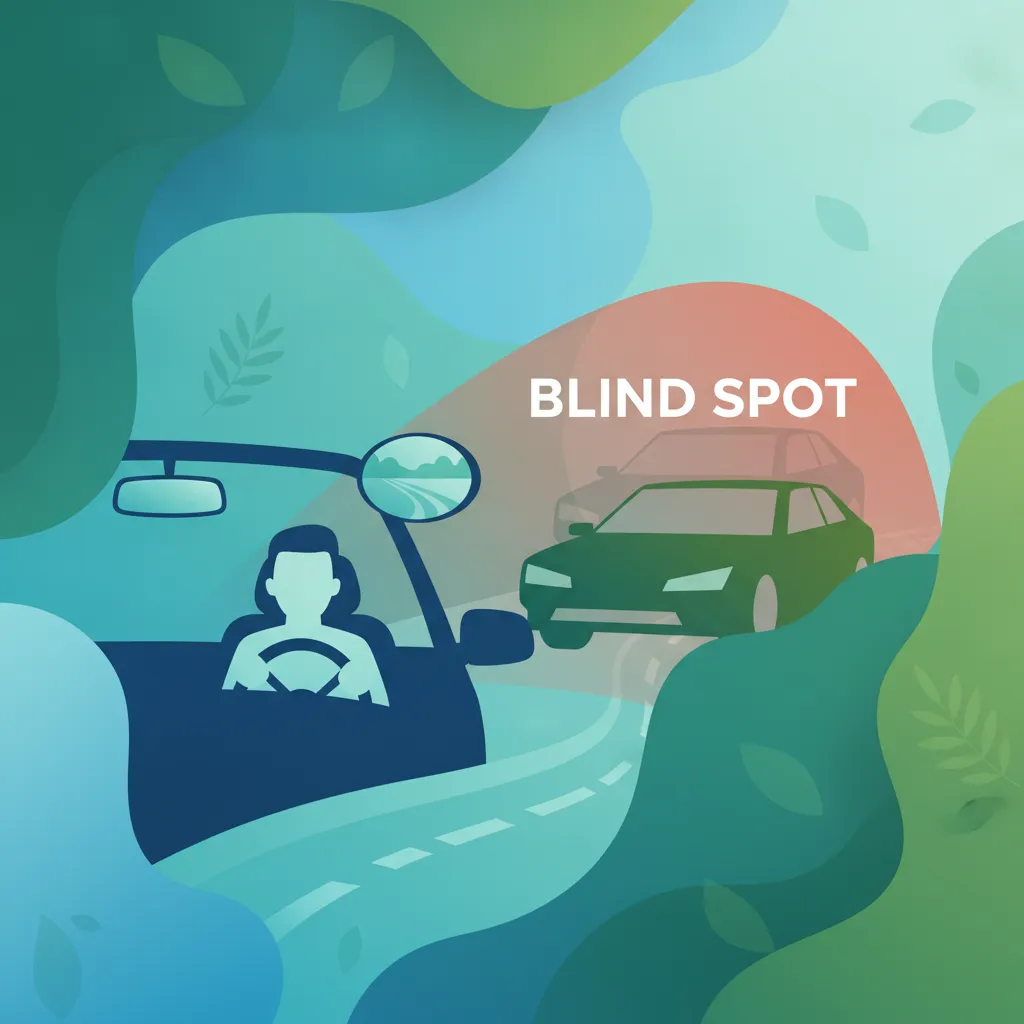
Focusing on blind spots, this lesson explains the areas where riders may become invisible to drivers of larger vehicles. It discusses how to assess and avoid these zones, especially during overtaking or when riding alongside other vehicles. Techniques for positioning oneself safely and ensuring visibility to other drivers are provided to reduce collision risk.
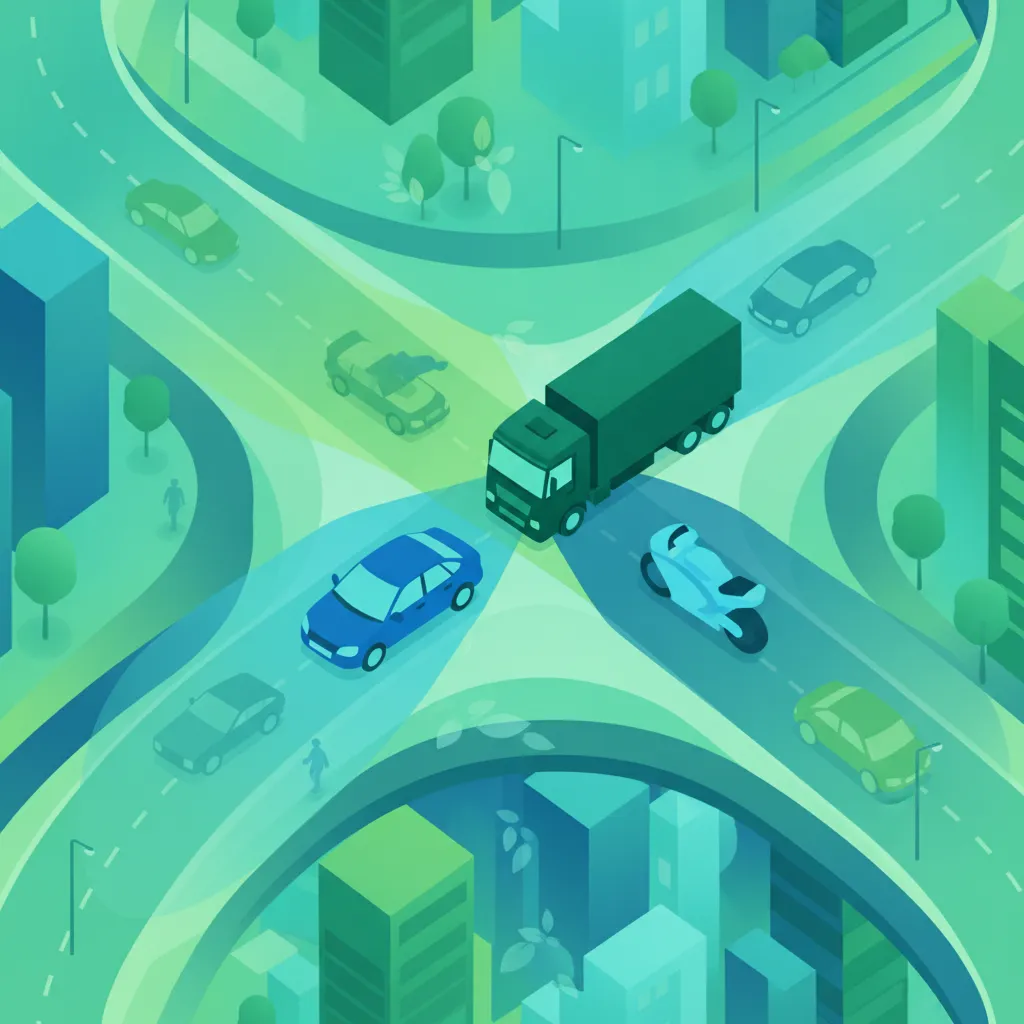
This lesson maps out the significant blind spots—or 'no zones'—to the front, sides, and rear of a heavy goods vehicle. It explains how these blind spots change depending on the vehicle's configuration, such as when pulling a trailer. Proper mirror setup and scanning techniques are taught to minimize these areas of no visibility.

This lesson provides essential safety guidance for interacting with large vehicles like buses and trucks. It emphasizes the importance of staying out of their extensive blind spots and allowing extra space due to their long stopping distances and wide turning circles. The content also offers advice on how to safely overtake such vehicles and navigate around public transport stops.

This lesson addresses the specific challenges of driving alongside motorcyclists and large vehicles such as trucks and buses. It highlights the reduced visibility of motorcyclists and the extensive blind spots (no-zones) around heavy vehicles. Drivers will learn to provide extra space, anticipate wide turns, and adjust for factors like spray and wind turbulence.

This lesson provides actionable strategies for riders to increase their visibility to other motorists. It details the effectiveness of wearing brightly colored or reflective clothing and explains the correct use of vehicle lights, including daytime running lights. The content also covers how strategic lane positioning can help a rider remain conspicuous and avoid being overlooked in complex traffic situations.

This lesson examines how to manage space when riding near heavy vehicles such as trucks and buses. It covers creating and maintaining protective space, avoiding squeeze points, and accounting for wind turbulence. Appropriate lane positioning and awareness of truck turning paths are discussed to enhance safety in these situations.
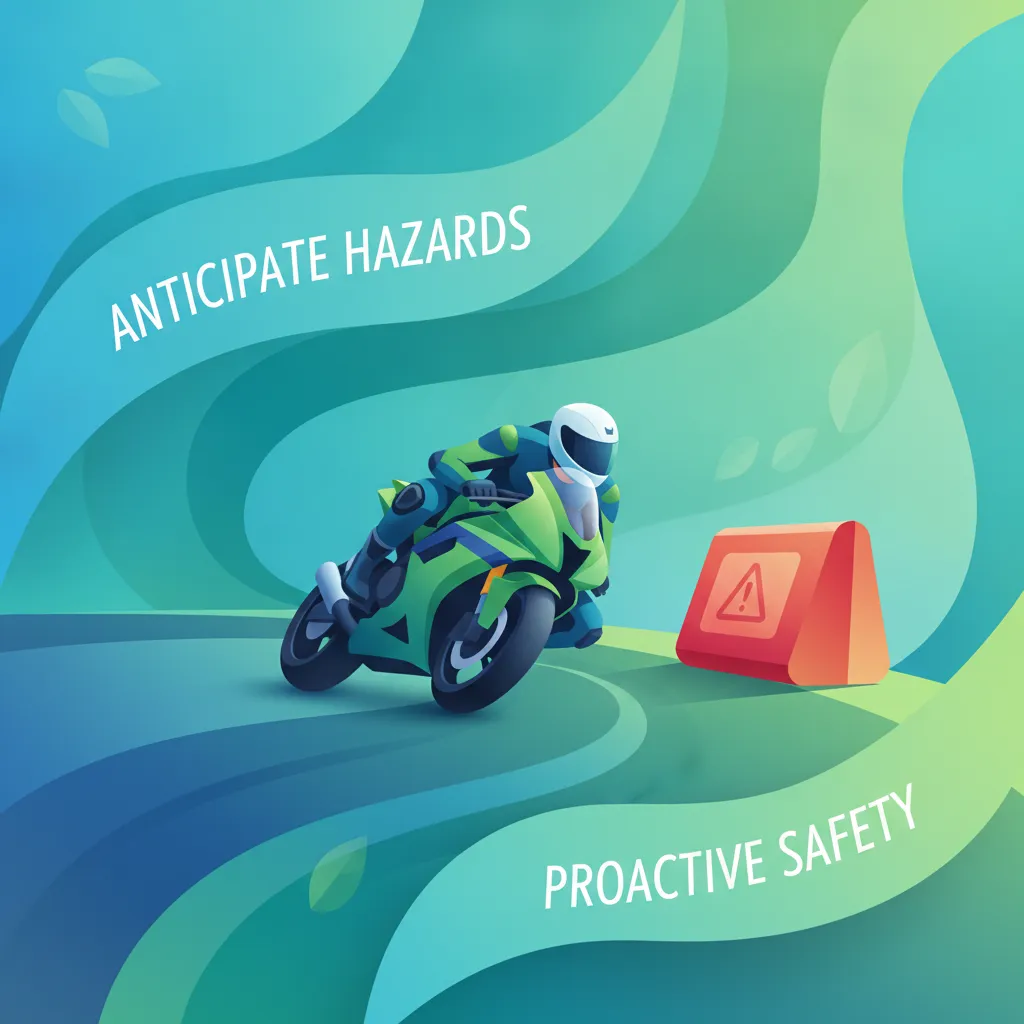
This lesson introduces the core principles of defensive riding as applied to small, vulnerable vehicles. It teaches riders how to create and maintain a 'space cushion' around them, anticipate the actions of other drivers, and identify potential hazards early. Key techniques such as effective scanning, maintaining a safe following distance, and planning escape routes are explained in detail.
This lesson provides a comprehensive guide to understanding and mitigating the risks posed by blind spots. It details how to correctly adjust all mirrors to maximize the field of view. The content stresses the need for a continuous, systematic pattern of mirror checks combined with direct observation before any maneuver.

This lesson focuses on the optimal use of reflective materials and lighting systems to enhance rider safety. It explains how to apply reflective elements to clothing, helmets, and the vehicle for maximum effect in low-light conditions. Furthermore, it reviews the legal requirements and proper function of headlights, tail lights, and indicators to ensure compliance and improve detectability.
This lesson explains how the large dimensions of passenger vehicles influence their handling and maneuverability. It details the concept of turning radius and identifies the significant blind spots around the vehicle. The content emphasizes the critical importance of correct mirror adjustment to maximize visibility and reduce operational risks.
Understand the step-by-step process for safely overtaking trucks and buses. This lesson covers essential theory on maintaining visibility, proper lane positioning, and safe clearance distances.
This lesson provides essential safety guidance for interacting with large vehicles like buses and trucks. It emphasizes the importance of staying out of their extensive blind spots and allowing extra space due to their long stopping distances and wide turning circles. The content also offers advice on how to safely overtake such vehicles and navigate around public transport stops.

This lesson details the steps for performing safe overtaking maneuvers, focusing on judgment, speed differential, and signaling. It covers assessing safe distances, using mirrors, and selecting appropriate lanes for overtaking. Guidelines for overtaking in various traffic conditions are provided to ensure riders can execute this maneuver safely and legally.
This lesson introduces the core principles of defensive riding as applied to small, vulnerable vehicles. It teaches riders how to create and maintain a 'space cushion' around them, anticipate the actions of other drivers, and identify potential hazards early. Key techniques such as effective scanning, maintaining a safe following distance, and planning escape routes are explained in detail.

This lesson provides a detailed guide to the rules and safety considerations for overtaking. It covers how to assess if an overtake is necessary and safe, considering factors like road markings, visibility, and oncoming traffic. The correct procedure, from initial checks and signaling to returning safely to the lane, is explained in full.
This lesson addresses the specific challenges of driving alongside motorcyclists and large vehicles such as trucks and buses. It highlights the reduced visibility of motorcyclists and the extensive blind spots (no-zones) around heavy vehicles. Drivers will learn to provide extra space, anticipate wide turns, and adjust for factors like spray and wind turbulence.
This lesson focuses on the specific skills required for driving on high-speed motorways. It details the procedures for safely merging onto and exiting the motorway, maintaining proper lane discipline, and adhering to variable speed limits. The content also provides rules for safe overtaking and managing the vehicle's stability at high speeds.
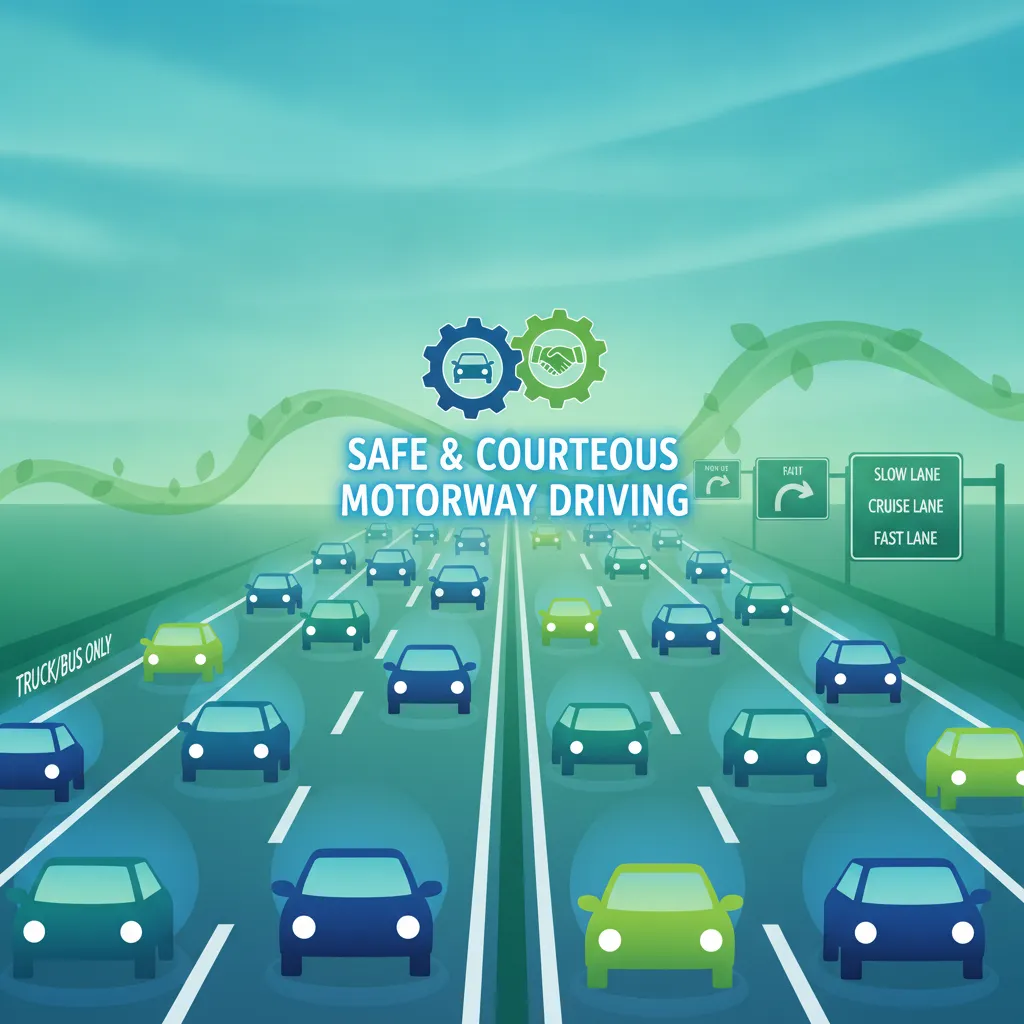
This lesson explains the unique set of rules that apply to motorway driving to facilitate safe, high-speed travel. It covers the correct procedure for entering and exiting the motorway, principles of lane discipline (keeping left unless overtaking), and the rules for safe overtaking. The lesson also clarifies the proper use of the hard shoulder or emergency lane for genuine emergencies only.
This lesson examines how to manage space when riding near heavy vehicles such as trucks and buses. It covers creating and maintaining protective space, avoiding squeeze points, and accounting for wind turbulence. Appropriate lane positioning and awareness of truck turning paths are discussed to enhance safety in these situations.
This lesson explains the concept of road hierarchy in Portugal and clarifies which roads are accessible to Category AM vehicles. It focuses on the legal prohibitions against using motorways and expressways due to vehicle speed and power limitations. Understanding these operational constraints is crucial for legal compliance and safe route planning, avoiding dangerous traffic environments.
This lesson addresses the specific hazards associated with riding next to rows of parked vehicles. It highlights the primary risk of car doors being opened unexpectedly ('dooring') and teaches riders to maintain a safe lateral distance. The content also explains how to anticipate other dangers, such as cars pulling out without warning or pedestrians emerging from between vehicles.
Find clear answers to common questions learners have about Managing Blind Spots of Larger Vehicles. Learn how the lesson is structured, which driving theory objectives it supports, and how it fits into the overall learning path of units and curriculum progression in Portugal. These explanations help you understand key concepts, lesson flow, and exam focused study goals.
A truck or bus driver has limited visibility to their sides and directly behind them. If you are in a blind spot, the driver may decide to change lanes or turn without ever seeing you, which can lead to a collision where the moped is effectively crushed.
A good rule of thumb is that if you cannot see the driver's face in their side mirrors, they likely cannot see you either. Always try to stay positioned where you are visible to the driver at all times.
Yes, road safety and safe interaction with other vehicles, including blind spot awareness, are fundamental components of the IMT curriculum and frequently appear in theory exam scenarios.
Ensure you have clear visibility ahead, signal your intention early, and complete the maneuver as quickly and safely as possible. Never linger alongside a large vehicle, as their path can change unexpectedly.
Utilize the powerful search tool to refine your Portuguese driving theory practice. Pinpoint questions related to specific traffic laws, road signs, or complex scenarios from the Código da Estrada. Begin targeted revision now to boost your understanding and confidently approach your IMT driving exam.