This lesson covers the fundamental priority rules you must follow when navigating intersections on your moped or light quadricycle. By understanding the standard priority to the right and how specific signs modify these rules, you will be prepared for the theoretical exam and safer on the road. This is a critical step in mastering the traffic dynamics within the Portuguese road network.

Lesson content overview
Understanding who has the right of way at an intersection is fundamental to safe driving and a critical component of the Category AM driving theory curriculum in Portugal. Intersections are common points of conflict on the road, where the paths of multiple vehicles converge. Correctly applying priority rules ensures smooth traffic flow, prevents collisions, and protects all road users, especially vulnerable ones like moped and light quadricycle riders. This comprehensive lesson will clarify the key priority rules, from the default "priority to the right" to the mandatory obedience of signs and signals, preparing you to confidently navigate any junction.
Priority rules establish a clear hierarchy for vehicle movement, dictating which vehicle or road user has the right to proceed first. This system is designed to minimize uncertainty and reduce the risk of accidents at points where different traffic flows meet. In Portugal, these rules are strictly enforced and are crucial for the safety of moped and light quadricycle riders, who are more exposed in potential collisions.
The underlying logic of priority rules is to provide predictability. When drivers know what to expect from others, they can react appropriately, whether that means yielding, stopping, or proceeding with caution. This lesson builds upon your existing knowledge of traffic signs and road markings, integrating those elements into practical scenarios for determining right of way.
At any intersection in Portugal where there are no traffic lights, no stop signs, no yield signs, and no specific road markings indicating priority, a universal default rule applies: priority to the right (prioridade à direita). This means you must yield to any vehicle approaching the intersection from your right-hand side.
This rule is straightforward but often misunderstood. It applies even if you are on what appears to be a larger or busier road, provided there are no other control devices. The rationale is to simplify decision-making in the absence of explicit instructions, ensuring that at least one clear rule governs vehicle movement. Failing to observe priority to the right is a common cause of side-impact collisions, which can be particularly dangerous for AM category vehicles.
Always assume 'priority to the right' at uncontrolled intersections unless a sign or signal explicitly states otherwise. Develop the habit of scanning both left and right as you approach any junction.
The rule of priority to the right is specifically for uncontrolled intersections – junctions completely devoid of regulatory signs, traffic lights, or road markings that would otherwise dictate priority. It's most commonly encountered on quieter residential streets or rural roads.
When approaching such an intersection, you must slow down and prepare to stop. Look to your right first for any approaching traffic. If there is a vehicle coming from your right, you must allow it to pass before you proceed. Once the path is clear, you can enter the intersection cautiously, continuing to check for other road users. This rule also applies if both vehicles arrive at roughly the same time; the one on the left yields to the one on the right.
Many drivers mistakenly believe that larger vehicles automatically have priority, or that vehicles on a seemingly "main" road always have precedence. These assumptions are incorrect and dangerous without explicit signs. The rule of priority to the right does not discriminate based on vehicle size or presumed importance of the road. Another frequent error is extending this rule to situations where it doesn't apply, such as when specific signs or traffic lights are present, or misunderstanding its interaction with pedestrian crossings. Remember, pedestrians at a designated crossing often have their own specific right of way, which must always be respected.
One of the most unequivocal directives at an intersection is the Stop sign (Sinal de STOP). When you encounter this sign, your obligation is absolute: you must bring your vehicle to a complete and full stop.
The Stop sign is an octagonal, red sign with white lettering. Its purpose is to ensure that drivers pause, fully assess the intersection, and only proceed when it is completely safe to do so, yielding to all other traffic. This rule is designed to prevent collisions at high-risk junctions, where visibility might be limited or where conflicting traffic flows require a clear pause point.
Upon seeing a Stop sign, begin to reduce your speed well in advance. As you approach the intersection, you will typically find a white stop line painted across your lane. You must stop completely before this line. If there is no stop line, you must stop at a point where you have a clear view of the intersecting road without entering it or obstructing cross-traffic.
Once stopped, look thoroughly in all directions – left, right, and straight ahead – for any approaching traffic, pedestrians, or cyclists. Only when the way is entirely clear, and you can proceed without causing another road user to brake or swerve, should you slowly move forward. Do not rush; take your time to ensure safety.
Rolling through a Stop sign without coming to a complete halt, stopping after the stop line, or ignoring the sign altogether are serious traffic violations in Portugal. These actions significantly increase the risk of a collision, especially for moped and light quadricycle riders who may be less visible to other drivers. Even in low-traffic conditions, the mandatory stop must be observed. The law does not permit "rolling stops" or assuming the intersection is clear without a full stop and observation.
Less demanding than a Stop sign but equally important is the Yield sign (Sinal de Ceder Passagem). This triangular sign with a red border and white background instructs you to slow down and be prepared to stop if necessary, giving way to traffic on the intersecting road.
The Yield sign's purpose is to facilitate the continuous flow of traffic on the priority road while requiring drivers on the yielding road to exercise caution. Unlike a Stop sign, a full stop is not always mandatory; you only need to stop if there is actual traffic on the intersecting road that you must yield to.
When you see a Yield sign, reduce your speed sufficiently to be able to stop safely if traffic approaches on the intersecting road. Actively scan the intersecting road for vehicles, pedestrians, and cyclists. If there is traffic approaching from either direction that has priority, you must slow down or stop to allow it to pass. If the intersecting road is clear, you may proceed without stopping, maintaining a safe speed.
The decision to stop or proceed without stopping requires careful judgment of speeds and distances. As an AM rider, always err on the side of caution. It is safer to stop and wait than to misjudge a gap and pull out into the path of an oncoming vehicle.
A frequent mistake is treating a Yield sign exactly like a Stop sign, stopping completely even when there is no traffic to yield to. While being overly cautious is better than being reckless, it can also disrupt traffic flow unnecessarily. Conversely, some drivers ignore Yield signs when traffic appears light, failing to slow down or prepare to stop, which is dangerous. The key is to assess and react: slow down, check for traffic, and yield only if required by actual conditions.
Some roads are designated as priority roads, meaning that traffic on them generally has the right of way over traffic on intersecting roads. These roads are typically main arteries or through routes, and their priority status is indicated by specific signs.
The Priority Road sign (A21) is a distinctive square sign with a yellow center and a white border, typically displayed at the beginning of a priority road and reiterated after major intersections. When you are riding on a road marked with this sign, vehicles entering from side roads are generally required to yield to you, often indicated by a Stop or Yield sign on their approach.
Being on a priority road grants you the right to proceed without having to yield to traffic from intersecting side roads, unless otherwise directed by traffic lights or other specific signs. This doesn't mean you can drive carelessly. You must still be vigilant, anticipate potential hazards, and be prepared for other drivers to make mistakes.
Even on a priority road, you must always obey traffic lights and yield to pedestrians at marked crosswalks. Your priority is over intersecting vehicle traffic, not absolute.
It is equally important to recognize when your priority road status ends. This is indicated by the Priority Road End sign (A22).
After passing a Priority Road End sign, you should revert to observing the default priority rules (like priority to the right) or any new signs or signals that appear at subsequent intersections. Failing to recognize the end of a priority road can lead to dangerous assumptions about right of way.
A common error is assuming absolute immunity from yielding when on a priority road. This is incorrect. Traffic lights always override priority road signs, and pedestrians at marked crossings always have priority. Furthermore, some drivers on side roads may fail to observe Stop or Yield signs, so vigilance is key even when you technically have the right of way.
At intersections equipped with traffic lights, these signals always supersede all other priority rules and signs, including Stop signs, Yield signs, and Priority Road signs. Traffic lights provide a clear and dynamic control over traffic flow, eliminating ambiguity.
When approaching a traffic light controlled intersection, your primary duty is to obey the light signal displayed for your lane.
Green Light: Proceed through the intersection if it is safe to do so and the path ahead is clear. Be aware of pedestrians and vehicles turning across your path.
Yellow Light: Prepare to stop. You must stop if you can do so safely before the stop line. Only proceed if you are too close to the intersection to stop safely.
Red Light: You must come to a complete stop behind the stop line and remain stopped until the light turns green. Do not enter the intersection on a red light under any circumstances.
Flashing Yellow Light: Proceed with caution, as if approaching an uncontrolled intersection. Be prepared to yield. This usually indicates that the lights are not operating normally, or it's a specific caution signal.
The rationale behind traffic lights overriding all other priority rules is to provide a single, unambiguous control system. This is particularly important in complex or high-volume intersections where the default rules would be insufficient to manage traffic safely.
Imagine an intersection with a Priority Road sign, but also traffic lights. If the traffic lights were ignored, chaos would ensue. The lights are designed to manage peak flow and ensure safety at different times, effectively taking over the role of priority determination from static signs or default rules. Therefore, your first and foremost attention must be to the traffic light signals. Ignoring a red light because you believe you have priority from a sign is a grave offense and extremely dangerous.
Navigating intersections safely involves more than just memorizing rules; it requires situational awareness and adapting to various conditions.
Mastering priority rules at intersections is a cornerstone of safe Category AM riding in Portugal. These rules are designed to prevent conflicts and ensure predictable traffic flow.
By diligently applying these rules and maintaining a defensive riding approach, you will significantly enhance your safety and the safety of others on the road.
Explore all units and lessons included in this driving theory course.
Lesson content overview
Explore all units and lessons included in this driving theory course.
Explore search topics learners often look for when studying Basic Priority Rules at Intersections. These topics reflect common questions about road rules, driving situations, safety guidance, and lesson level theory preparation for learners in Portugal.
Browse additional driving theory lessons that cover connected traffic rules, road signs, and common driving situations related to this topic. Improve your understanding of how different rules interact across everyday traffic scenarios.
Explore advanced scenarios and specific regulations for priority at complex intersections in Portuguese driving theory. Understand nuances beyond basic rules for safer navigation in challenging traffic situations.

This lesson focuses on the crucial 'priority from the right' rule, which applies at intersections lacking any signs or signals. It details the procedure for approaching such junctions, including reducing speed, performing visual checks, and being prepared to yield to traffic approaching from the right. Mastering this rule is essential for safety in residential areas and on rural roads.
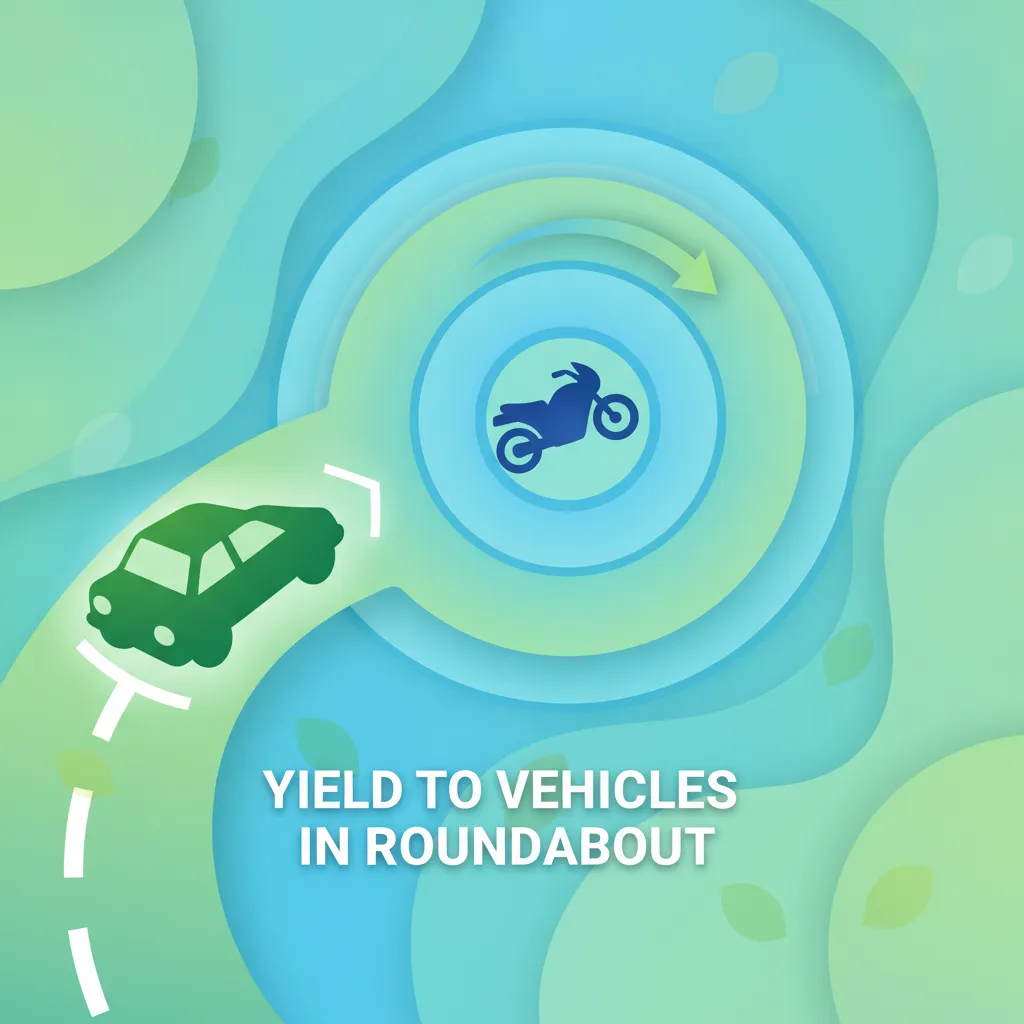
This lesson provides a step-by-step guide to navigating roundabouts in Portugal. It emphasizes the primary rule of yielding to traffic already circulating within the roundabout before entering. The content covers correct lane selection based on the intended exit, proper use of indicators for exiting, and managing the complexities of multi-lane roundabouts.
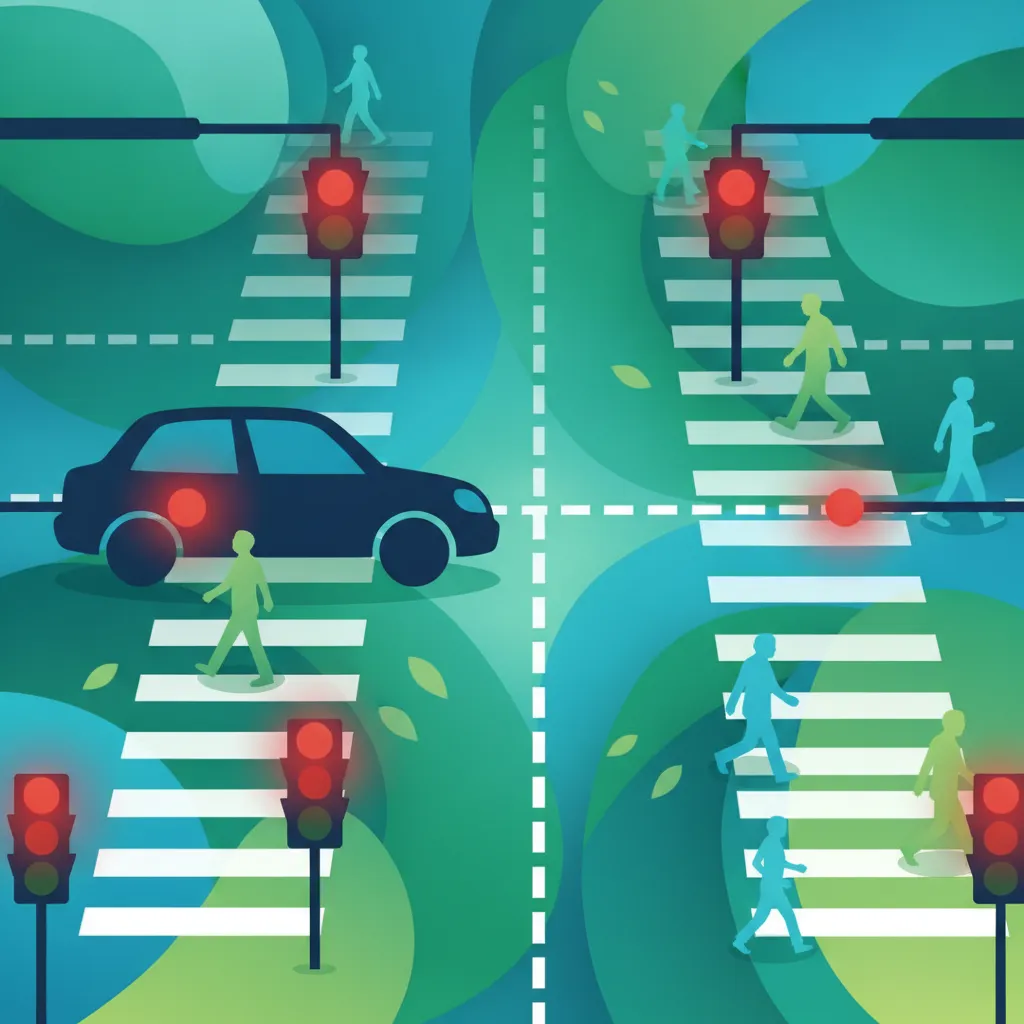
This lesson teaches a systematic approach to safely navigating intersections. It covers the importance of reducing speed on approach, conducting thorough visual checks (observation), and selecting the appropriate lane for the intended direction. The content also details how to assess gaps in traffic before proceeding and correctly apply priority rules to avoid conflicts with other vehicles.
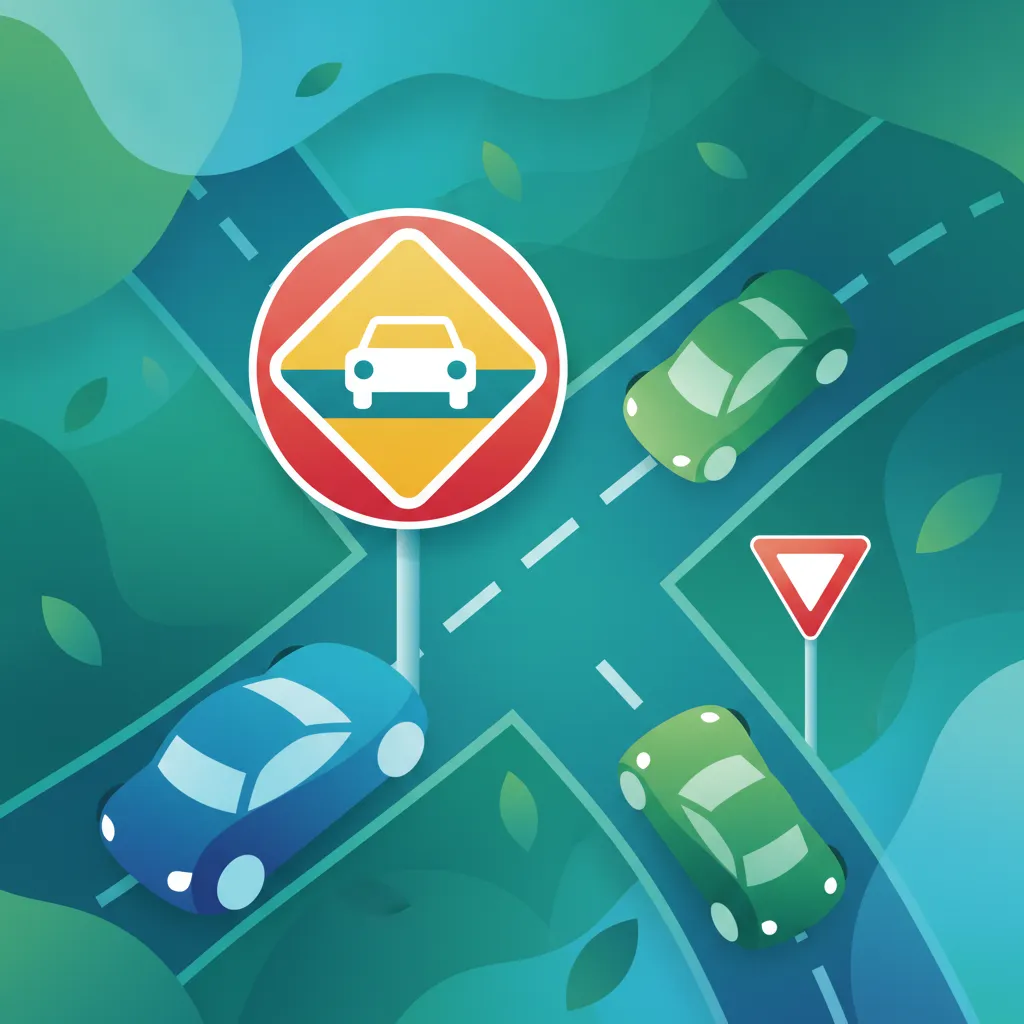
This lesson explains how to recognize priority roads and understand the associated right-of-way privileges. It covers the specific diamond-shaped sign that indicates a priority road and the sign signaling its end. Drivers will learn their responsibilities when traveling on a priority road and the correct procedure for yielding when entering one from a secondary road.
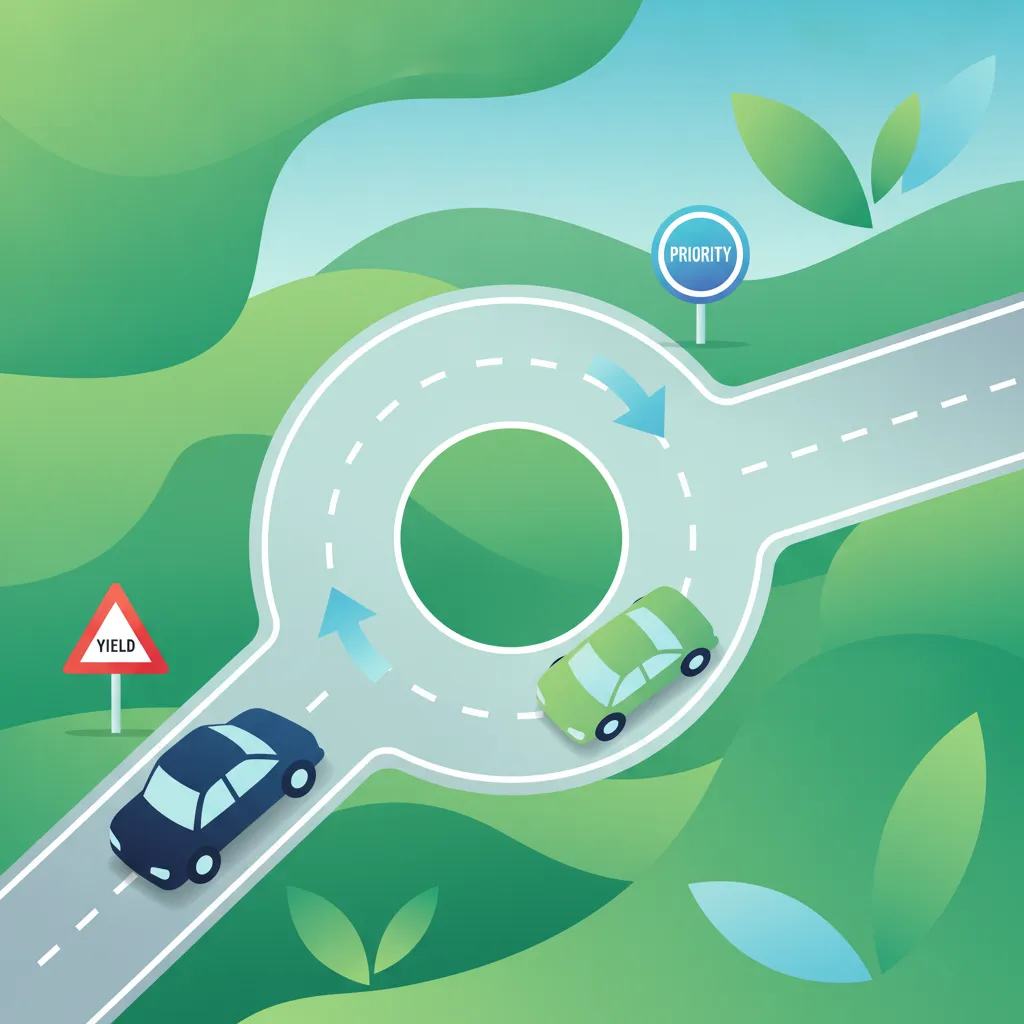
This lesson delves into the specific priority rules governing intersections and roundabouts in Portugal. It clarifies the hierarchy of signs such as stop and give-way, as well as the rules for entering and navigating roundabouts. Motorcyclists will learn how to position themselves correctly for exits and yield appropriately to ensure safe negotiation of these common traffic features.
This lesson establishes the foundational principles of right-of-way that govern traffic interactions. It explains the hierarchy of traffic control, where signals from a police officer override all other signs and rules. The content clarifies how to proceed at intersections controlled by stop signs, yield signs, and on priority roads, forming the basis for safe junction navigation.
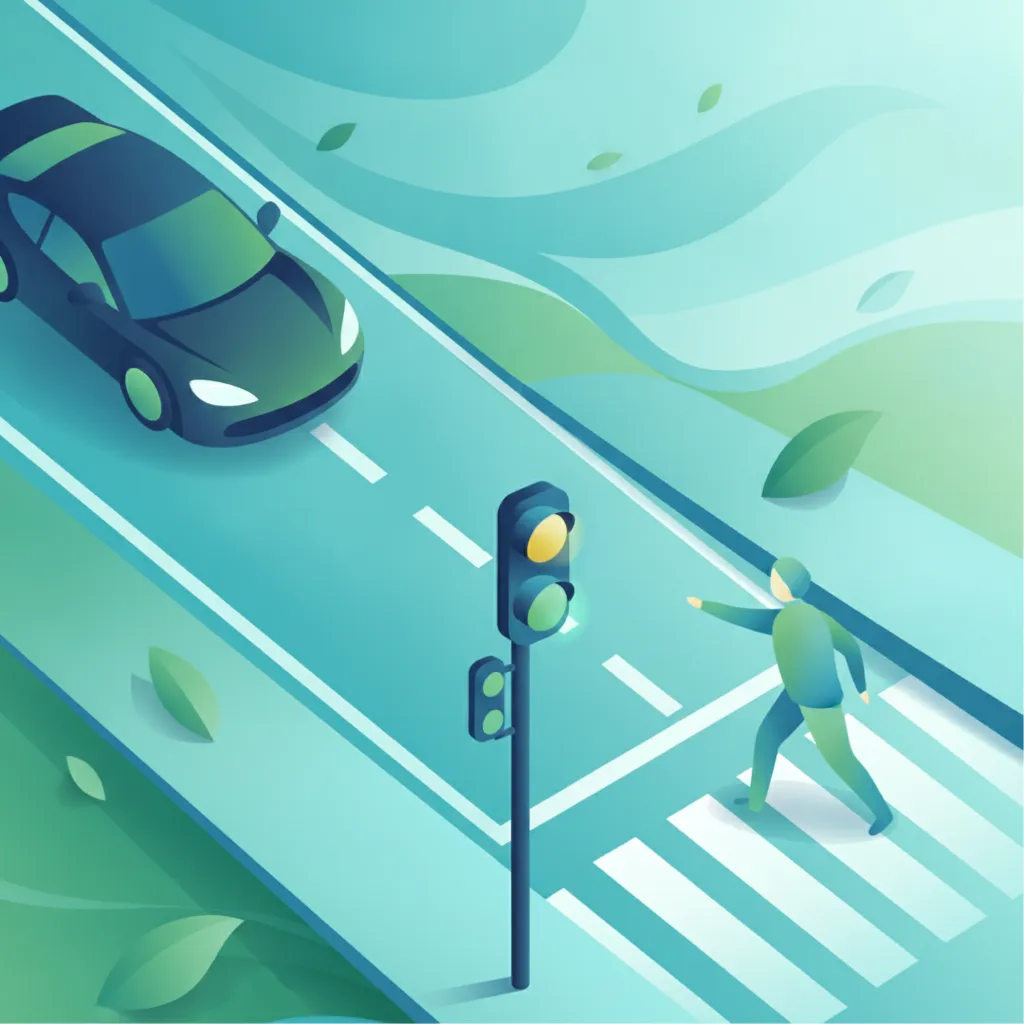
This lesson covers procedures for safely approaching and navigating various intersections, including those controlled by traffic lights and signs. It emphasizes correct lane positioning, visibility, and anticipating the actions of other road users. Riders will learn how to interpret intersection markings and signals to ensure a safe passage through all junctions.
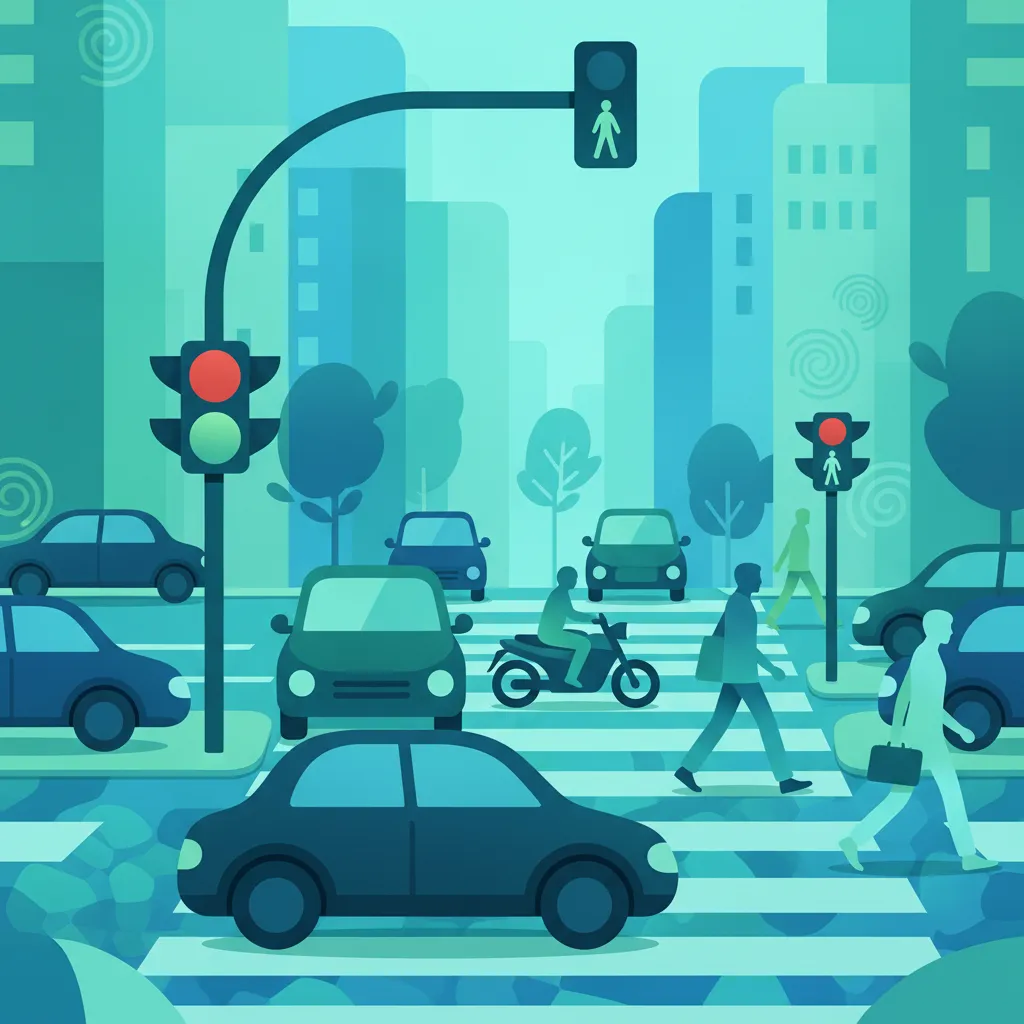
This lesson details the universal system of traffic light signals and their specific applications in Portugal. It clarifies the meaning of red, amber, and green lights, as well as flashing signals and directional arrows that control turning movements. Correctly interpreting these signals is fundamental for safely navigating controlled intersections and ensuring smooth traffic flow.
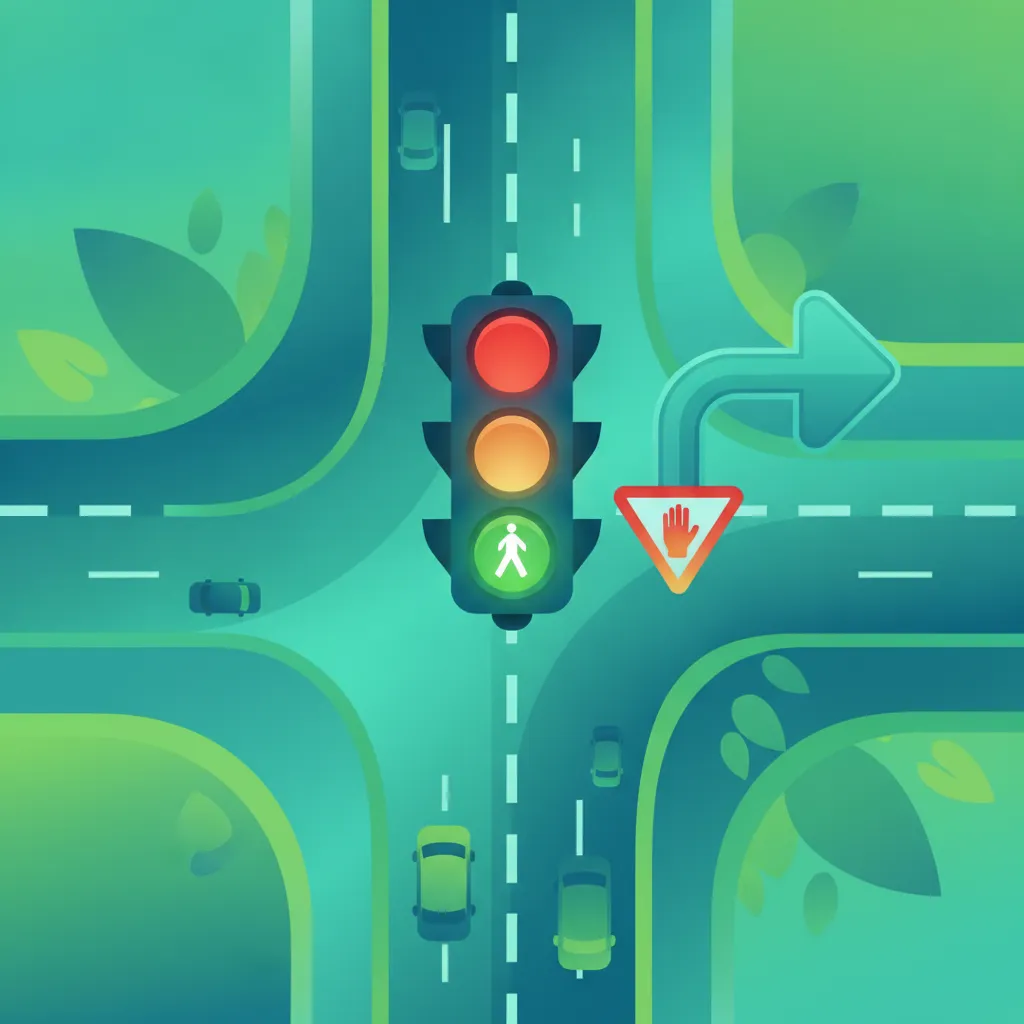
This lesson teaches riders to interpret traffic lights and signals, understanding their impact on priority and right-of-way. It covers standard traffic light phases, flashing amber situations, and pedestrian crossing signals. The lesson also explains how to respond to priority signs at intersections, ensuring compliance with Portuguese traffic signal standards.
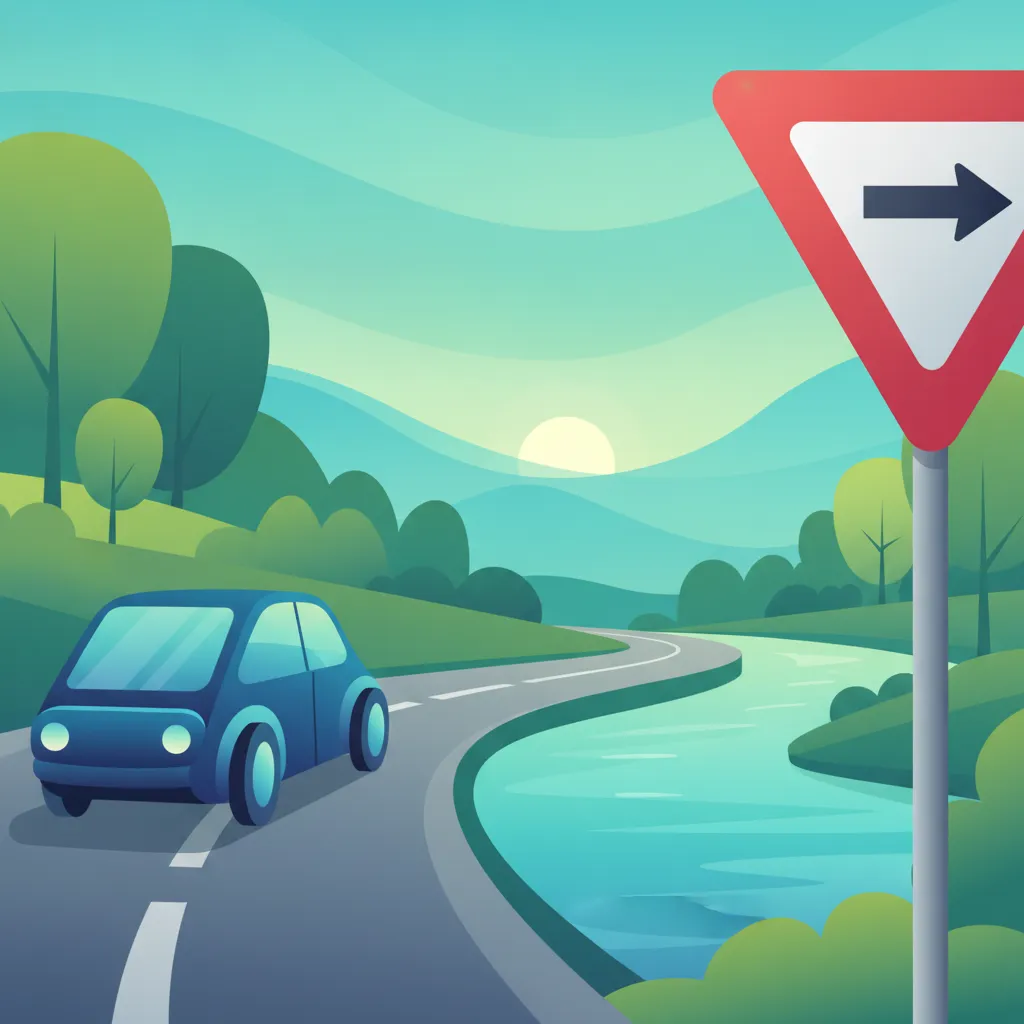
This lesson serves as a summary of how to interpret various road signs that dictate right-of-way at intersections. It reinforces the distinct actions required for stop signs (complete stop) and yield signs (give way). The lesson also covers signs that illustrate the layout of a junction and indicate which direction the priority road follows, ensuring drivers can make correct and safe decisions.
Learn about frequent errors drivers make regarding priority rules at intersections in Portugal. This lesson focuses on understanding and avoiding these mistakes to improve road safety and driving competence.
This lesson focuses on the crucial 'priority from the right' rule, which applies at intersections lacking any signs or signals. It details the procedure for approaching such junctions, including reducing speed, performing visual checks, and being prepared to yield to traffic approaching from the right. Mastering this rule is essential for safety in residential areas and on rural roads.
This lesson teaches a systematic approach to safely navigating intersections. It covers the importance of reducing speed on approach, conducting thorough visual checks (observation), and selecting the appropriate lane for the intended direction. The content also details how to assess gaps in traffic before proceeding and correctly apply priority rules to avoid conflicts with other vehicles.
This lesson establishes the foundational principles of right-of-way that govern traffic interactions. It explains the hierarchy of traffic control, where signals from a police officer override all other signs and rules. The content clarifies how to proceed at intersections controlled by stop signs, yield signs, and on priority roads, forming the basis for safe junction navigation.
This lesson delves into the specific priority rules governing intersections and roundabouts in Portugal. It clarifies the hierarchy of signs such as stop and give-way, as well as the rules for entering and navigating roundabouts. Motorcyclists will learn how to position themselves correctly for exits and yield appropriately to ensure safe negotiation of these common traffic features.
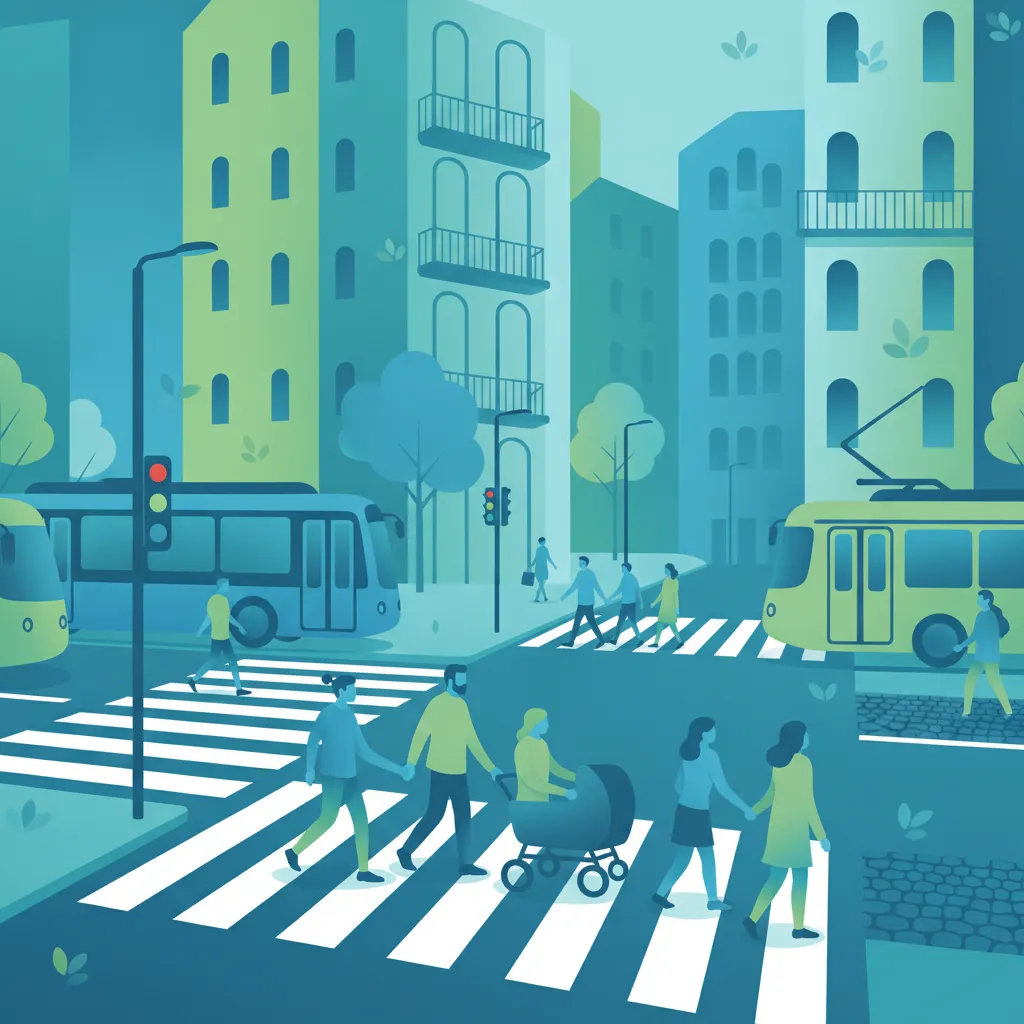
This lesson explains the different types of pedestrian crossings and the specific legal obligations for drivers at each one. It emphasizes the requirement to stop for pedestrians at marked zebra crossings and to obey signals at light-controlled crossings. The content also provides guidance on anticipating pedestrian movements to ensure their safety in all situations.
This lesson provides a step-by-step guide to navigating roundabouts in Portugal. It emphasizes the primary rule of yielding to traffic already circulating within the roundabout before entering. The content covers correct lane selection based on the intended exit, proper use of indicators for exiting, and managing the complexities of multi-lane roundabouts.
This lesson covers procedures for safely approaching and navigating various intersections, including those controlled by traffic lights and signs. It emphasizes correct lane positioning, visibility, and anticipating the actions of other road users. Riders will learn how to interpret intersection markings and signals to ensure a safe passage through all junctions.
This lesson explains how to recognize priority roads and understand the associated right-of-way privileges. It covers the specific diamond-shaped sign that indicates a priority road and the sign signaling its end. Drivers will learn their responsibilities when traveling on a priority road and the correct procedure for yielding when entering one from a secondary road.
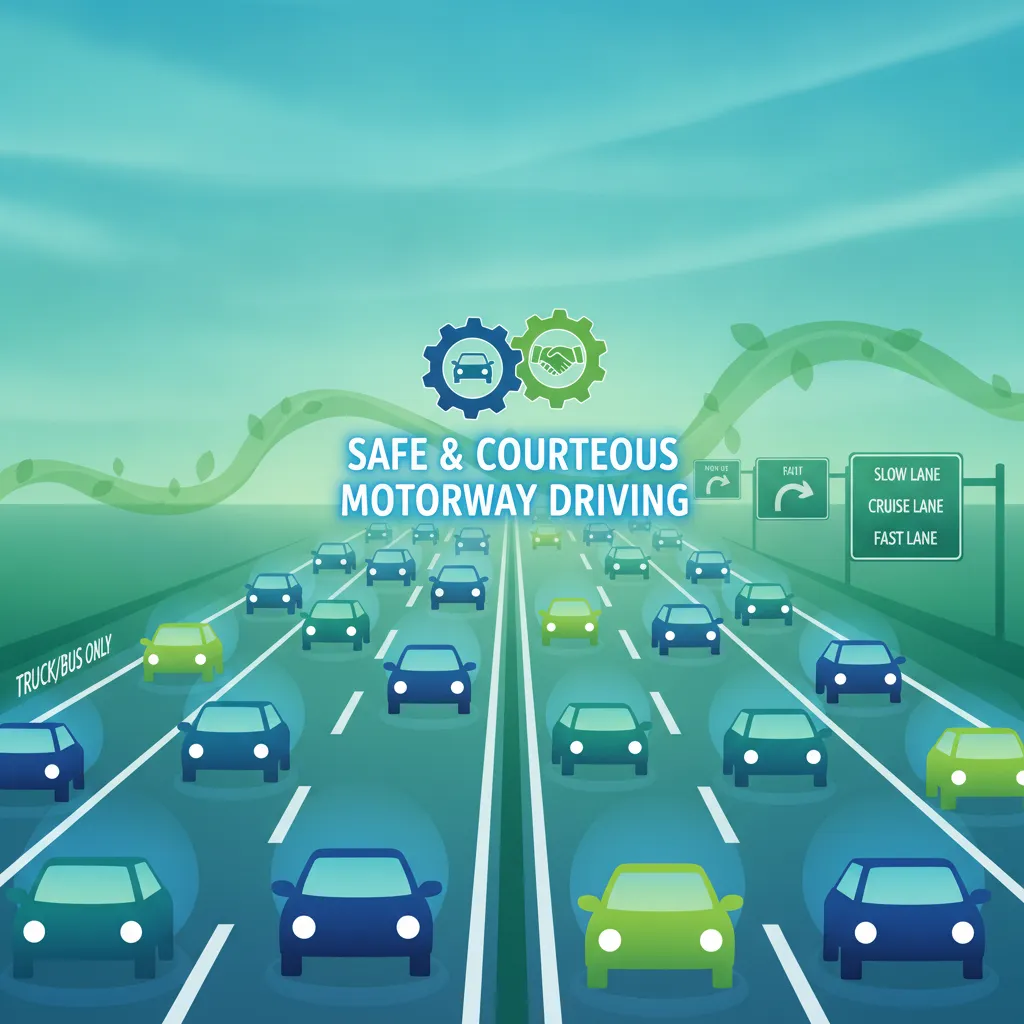
This lesson explains the unique set of rules that apply to motorway driving to facilitate safe, high-speed travel. It covers the correct procedure for entering and exiting the motorway, principles of lane discipline (keeping left unless overtaking), and the rules for safe overtaking. The lesson also clarifies the proper use of the hard shoulder or emergency lane for genuine emergencies only.
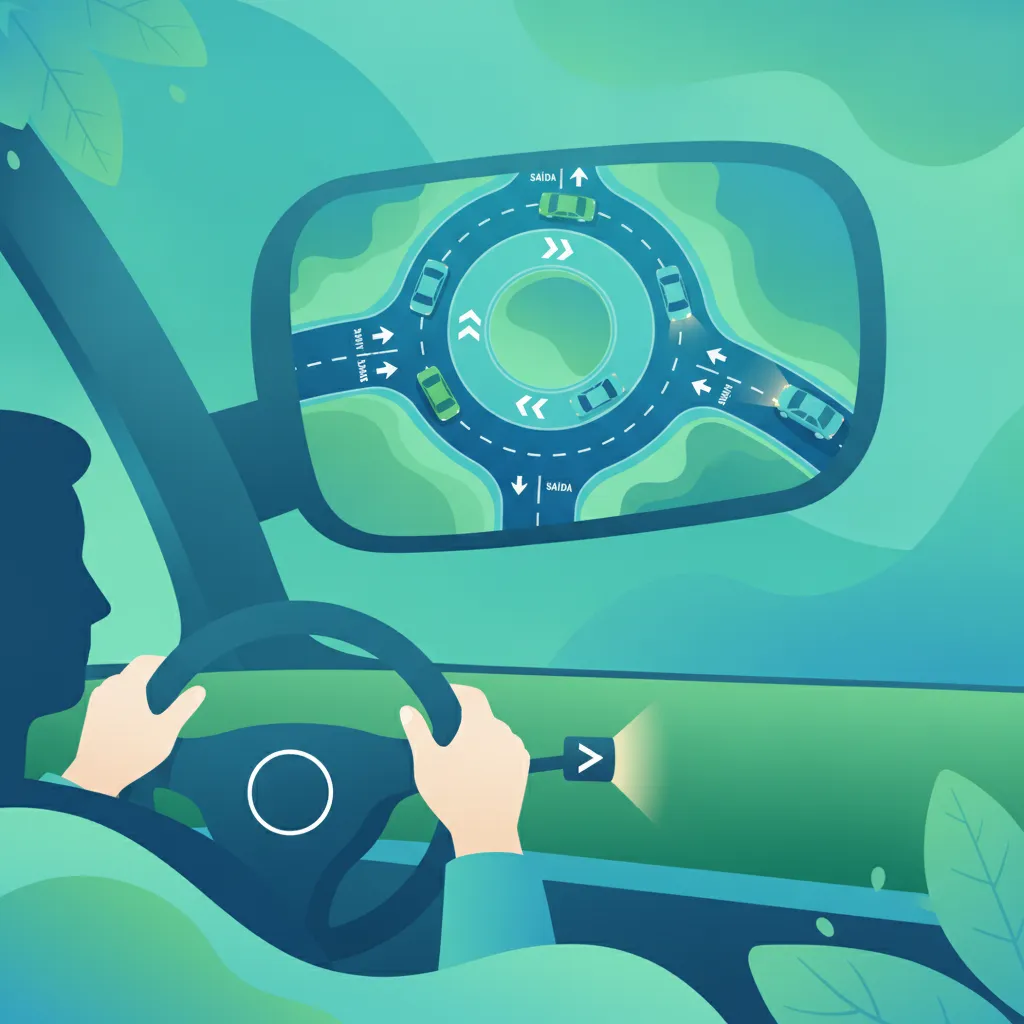
Focusing on roundabouts, this lesson teaches riders how to correctly enter, circulate, and exit these traffic features. It covers lane selection based on the intended exit, maintaining appropriate speed, and using signals to indicate intentions. The lesson also addresses the importance of yielding to circulating traffic and positioning oneself safely to avoid collisions.
Find clear answers to common questions learners have about Basic Priority Rules at Intersections. Learn how the lesson is structured, which driving theory objectives it supports, and how it fits into the overall learning path of units and curriculum progression in Portugal. These explanations help you understand key concepts, lesson flow, and exam focused study goals.
In the absence of traffic signs, markings, or signals, the general rule is priority to the right. This means you must yield to vehicles approaching from your right at an intersection.
No, a Yield (Cedência de Passagem) sign means you must give way to traffic on the other road, but you do not need to come to a complete stop if there is no cross-traffic. You only stop if necessary to ensure safety and allow others to pass.
A Stop sign requires a complete halt of your vehicle, regardless of whether other vehicles are present. A Yield sign only requires you to slow down and stop only if you need to let other vehicles pass before proceeding.
No, the fundamental priority rules defined in the Código da Estrada apply to all vehicles on the road, including mopeds and light quadricycles. You must always adhere to signs and the right-hand priority rule.
Utilize the powerful search tool to refine your Portuguese driving theory practice. Pinpoint questions related to specific traffic laws, road signs, or complex scenarios from the Código da Estrada. Begin targeted revision now to boost your understanding and confidently approach your IMT driving exam.