This lesson details the critical obligations for AM licence holders when approaching and navigating pedestrian crossings in Portugal. By mastering these rules, you will gain the knowledge necessary to ensure the safety of vulnerable road users, a core competency required for both your theory exam and everyday riding.

Lesson content overview
As a rider of a moped or light quadricycle, understanding your responsibilities at pedestrian crossings is fundamental for road safety, particularly in Portugal. This lesson will detail the legal obligations, practical techniques, and crucial safety considerations required to navigate these vital areas. Pedestrians are among the most vulnerable road users, and your correct conduct at designated crossings is paramount to preventing accidents and ensuring the smooth, safe flow of traffic.
Pedestrian crossings are specific points on the road designed to allow pedestrians to cross safely. As an AM license holder, it's crucial to recognize these areas and understand the absolute priority pedestrians hold there.
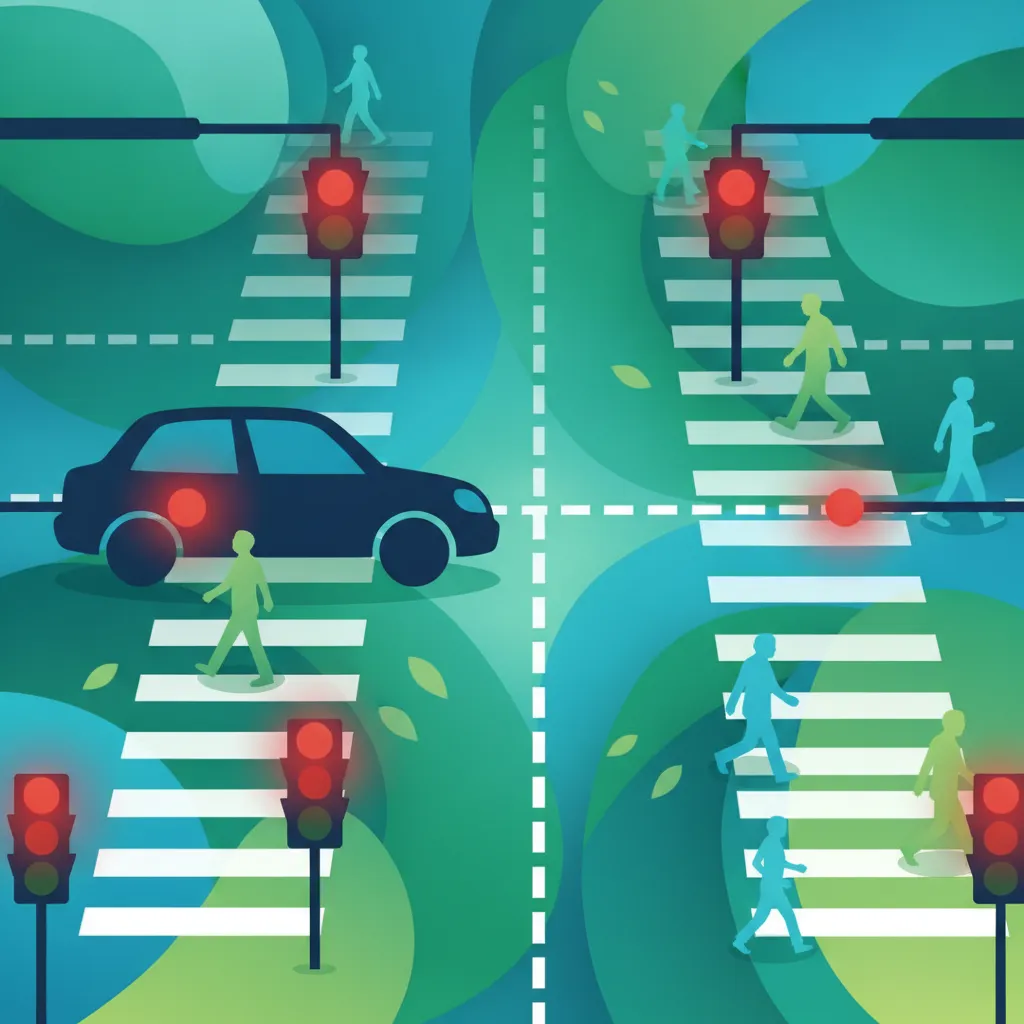
A pedestrian crossing, commonly known as a zebra crossing (or "passadeira de peões" in Portuguese, often simply called "zebras"), is a marked area on a road where pedestrians have the legal right to cross. These are typically identified by distinctive white parallel lines painted across the road, often accompanied by specific pedestrian symbols or signage. Unlike crossings controlled by traffic lights, zebra crossings rely on driver awareness and yielding to ensure pedestrian safety.
Yielding to pedestrians at designated crossings is not merely a courtesy; it is a legal requirement and a cornerstone of road safety. Pedestrians have no protective barrier like a vehicle provides, making them highly vulnerable to serious injury in a collision. Your responsibility as a rider is to actively anticipate their presence and be prepared to stop, ensuring they can cross without fear or risk. This act of yielding directly prevents accidents and fosters a safer environment for everyone.
Always assume a pedestrian might step onto a crossing, even if they appear to be looking away or distracted. Proactive caution saves lives.
In Portugal, the right-of-way hierarchy clearly prioritizes pedestrians at zebra crossings over motorized vehicles, including mopeds and light quadricycles. This means that if a pedestrian is already on the crossing or is clearly about to step onto it, you, as the rider, must stop and allow them to cross safely. Failure to do so is a serious traffic violation and significantly endangers the pedestrian. This rule applies regardless of your speed, the time of day, or your proximity to the crossing.
The legal privilege of having immediate use of a roadway, intersection, or other traffic area. At zebra crossings, pedestrians are granted right-of-way over vehicles.
Approaching and navigating pedestrian crossings safely requires a combination of speed management, correct vehicle positioning, and a defensive riding mindset. These elements work together to ensure you can react appropriately to any situation.
Effective speed management is perhaps the most critical aspect of safe conduct at pedestrian crossings. You must significantly reduce your approach speed well in advance of the crossing. This allows you ample time to:
The stopping distance required for your moped or light quadricycle increases dramatically with speed. A slower approach gives you a larger margin for error, especially if road conditions are less than ideal. There is no specific speed limit for zebra crossings, but the law requires you to travel at a speed that allows for safe stopping in all circumstances.
Approaching a pedestrian crossing at high speed dramatically reduces your reaction time and increases the risk of a collision if a pedestrian unexpectedly steps out.
When approaching and stopping at a pedestrian crossing, your vehicle positioning is crucial for both your visibility of pedestrians and their ability to see you.
Defensive riding is about anticipating potential hazards, and at pedestrian crossings, this means anticipating pedestrian behavior.
In Portugal, the rules surrounding pedestrian crossings are strict and are enforced to protect vulnerable road users. Understanding these mandatory yielding obligations is crucial for every rider.
The legal framework in Portugal dictates that drivers and riders must yield to pedestrians at zebra crossings. This is a non-negotiable rule. The obligation to stop applies when:
There is no requirement for traffic lights or a crossing guard for this rule to apply. The mere presence of the zebra stripes denotes the pedestrian's priority. Failing to adhere to this rule is considered a serious traffic offense and carries significant penalties.
Several common mistakes or violations occur at pedestrian crossings, often due to a lack of awareness or misjudgment. Being aware of these can help you avoid them.
Safe riding at pedestrian crossings is highly dependent on adapting your behavior to prevailing environmental and road conditions. These factors can significantly impact visibility and your moped's or light quadricycle's stopping capabilities.
Adverse weather conditions demand increased caution and significant adjustments to your riding.
Riding at night or in low-light conditions (dusk, dawn) adds another layer of complexity to pedestrian crossing safety.
The standard low-beam headlight setting designed to illuminate the road ahead without dazzling other road users, essential for safe driving at night and in low visibility.
The context of the road type can also influence your approach to pedestrian crossings.
While all pedestrians are considered vulnerable road users (VRU), certain groups require even greater care and consideration due to their unique characteristics.
Riders must show increased consideration for pedestrians with disabilities.
Mastering safe conduct at pedestrian crossings is a vital skill for all moped and light quadricycle riders in Portugal. By adhering to these core principles, you significantly contribute to road safety and fulfill your legal obligations.
By internalizing and applying these principles, you will be a safer, more responsible rider, contributing positively to road safety for all.
Explore all units and lessons included in this driving theory course.
Lesson content overview
Explore all units and lessons included in this driving theory course.
Explore search topics learners often look for when studying Pedestrian Crossings and Yielding Obligations. These topics reflect common questions about road rules, driving situations, safety guidance, and lesson level theory preparation for learners in Portugal.
Browse additional driving theory lessons that cover connected traffic rules, road signs, and common driving situations related to this topic. Improve your understanding of how different rules interact across everyday traffic scenarios.
Learn your legal duties at pedestrian crossings in Portugal. Understand how to safely approach, yield to pedestrians, and protect vulnerable road users, ensuring compliance with traffic laws.
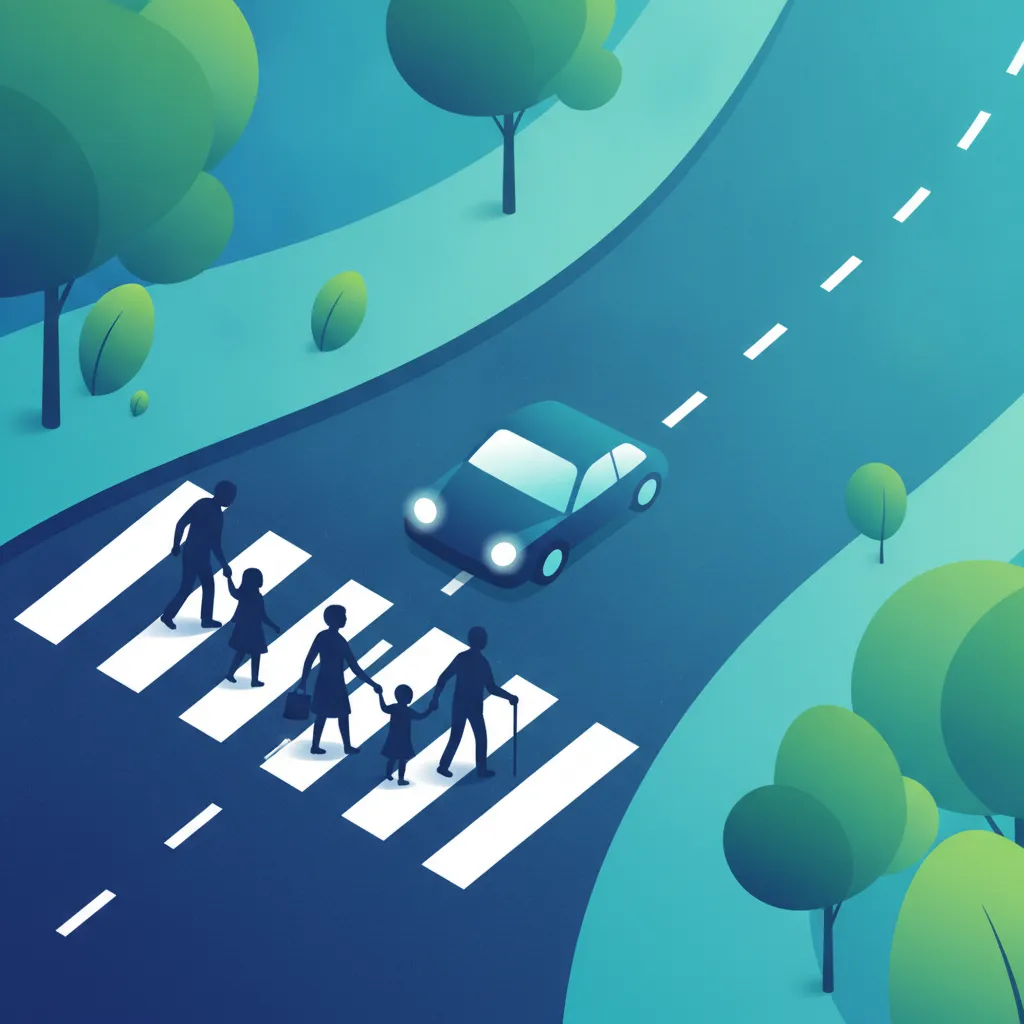
This lesson explores the various types of pedestrian crossings found in Portuguese urban areas, such as zebra crossings. It emphasizes the rider’s responsibility to yield to pedestrians, the importance of reducing speed, and maintaining a safe passing distance. Strategies for anticipating pedestrian behavior and ensuring visibility are discussed to prevent incidents.
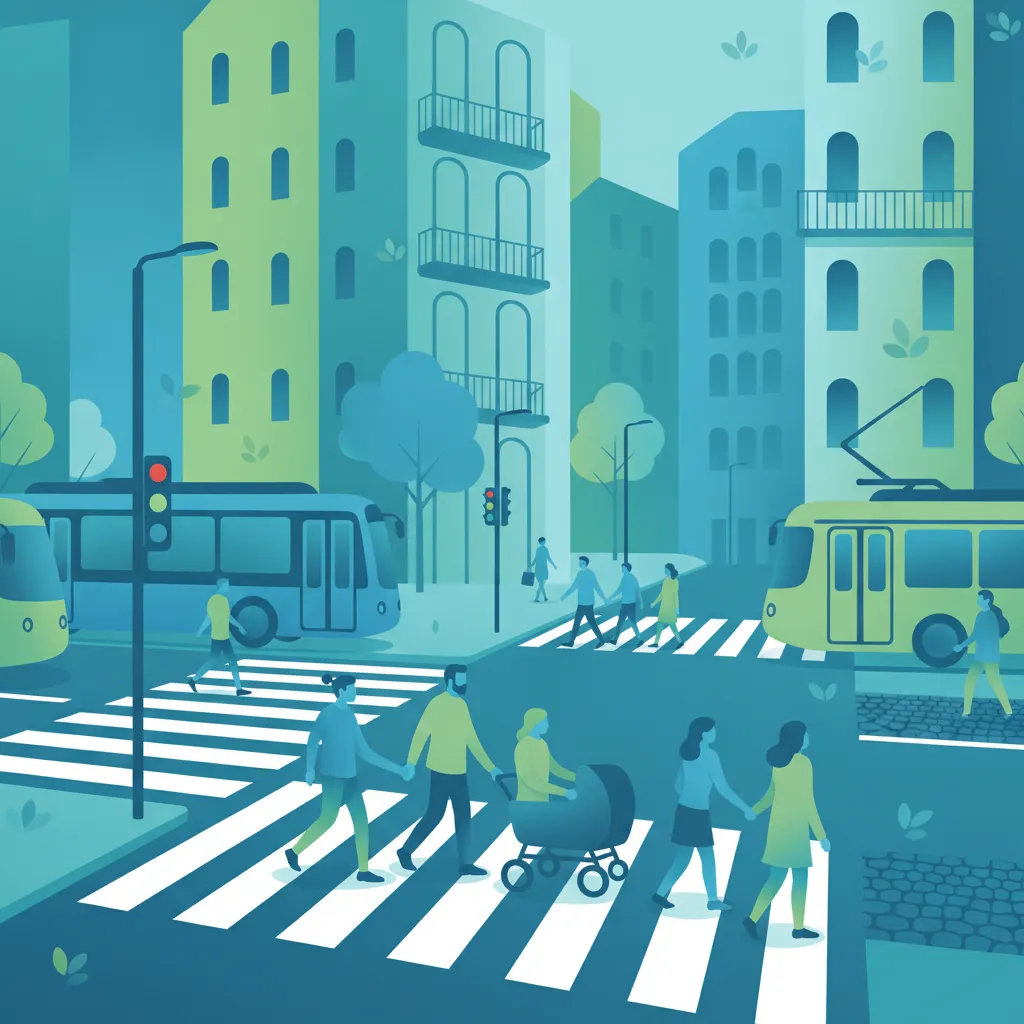
This lesson explains the different types of pedestrian crossings and the specific legal obligations for drivers at each one. It emphasizes the requirement to stop for pedestrians at marked zebra crossings and to obey signals at light-controlled crossings. The content also provides guidance on anticipating pedestrian movements to ensure their safety in all situations.
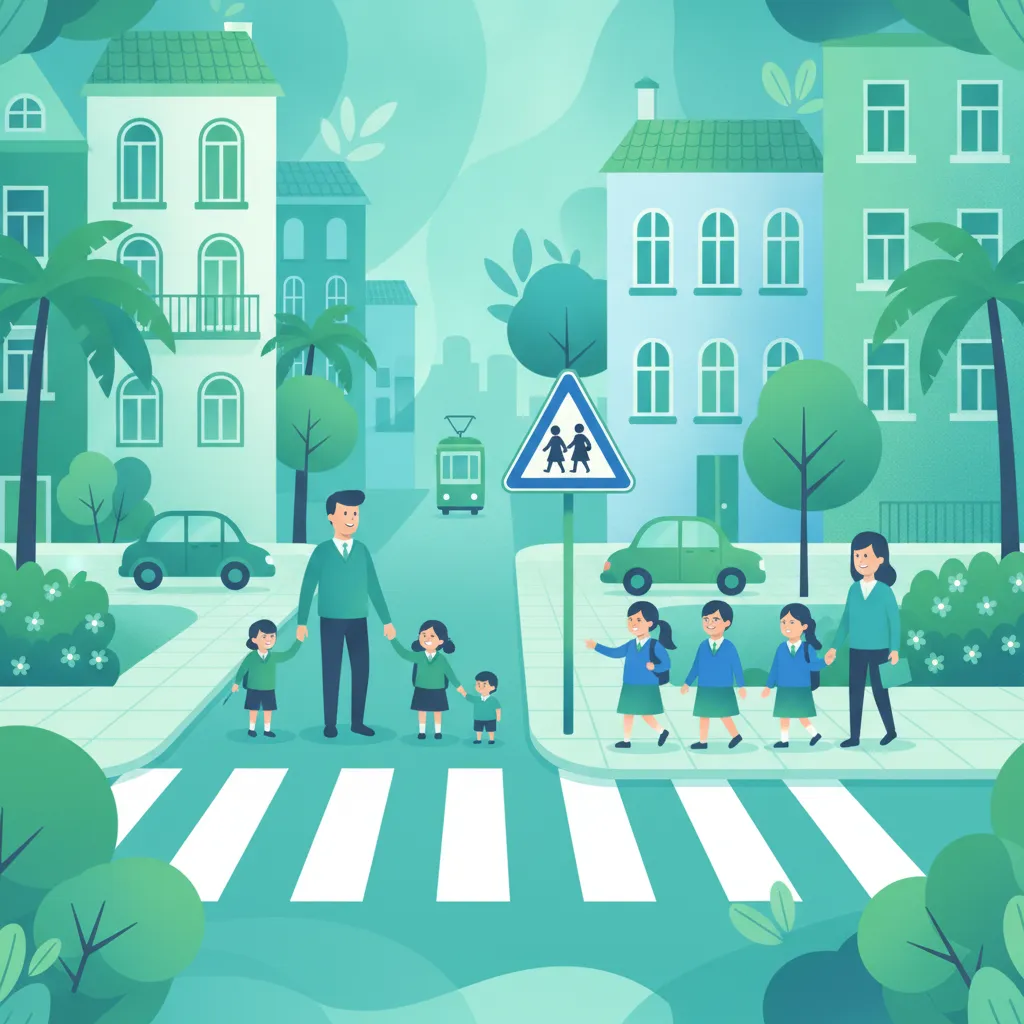
This lesson provides a detailed overview of the legal requirements and safe driving practices for school zones and pedestrian crossings. It covers mandatory speed limits, the meaning of various signs and signals, and the importance of yielding to pedestrians. The content stresses heightened awareness due to the unpredictable nature of children's behavior near roads.
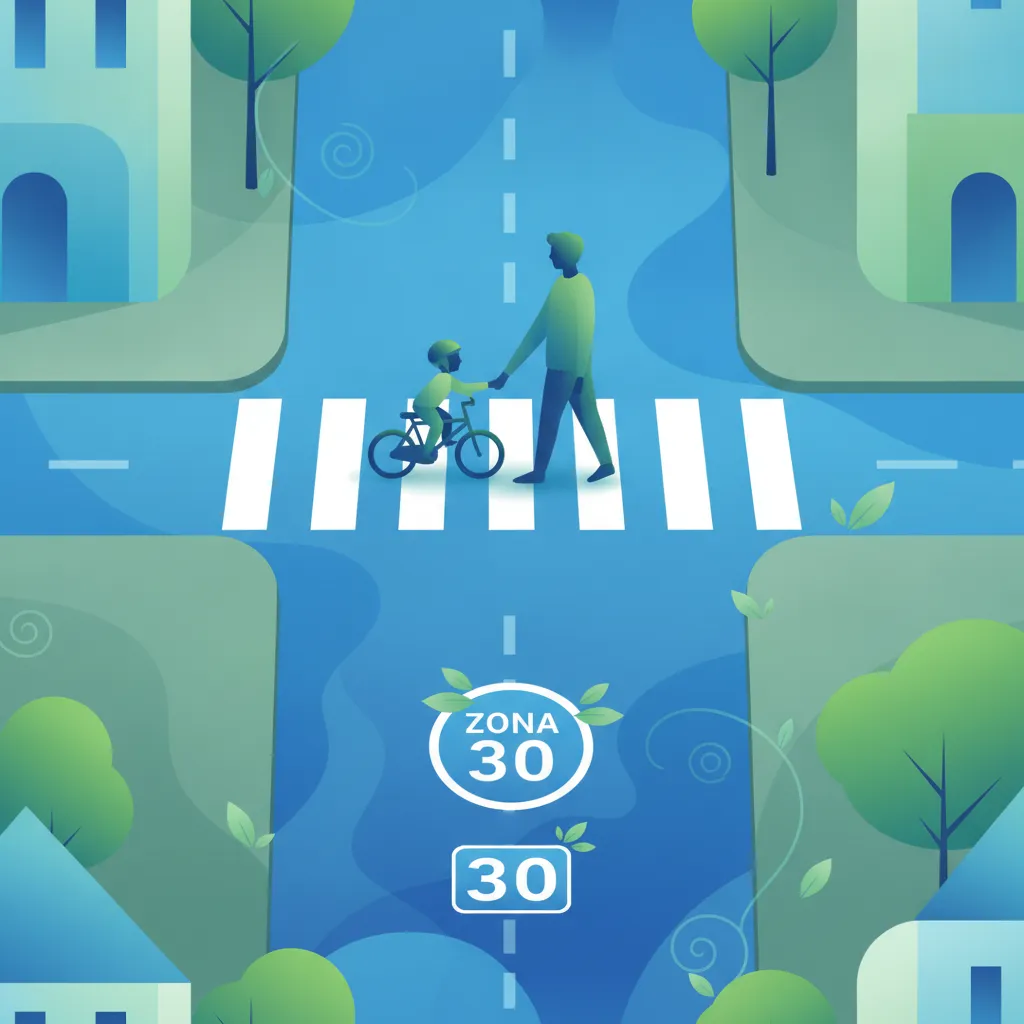
This lesson highlights road markings specifically designed to enhance the safety of vulnerable road users. It focuses on pedestrian crossings (zebra crossings), markings indicating school zones, and symbols for bicycle lanes or shared routes. The content stresses the heightened duty of care and specific actions, such as yielding or stopping, that drivers must take in these designated areas.

This lesson establishes the essential priority rules for safely navigating intersections in Portugal. It explains the default 'priority to the right' rule applicable at uncontrolled junctions and clarifies the absolute requirements of stop and yield signs. The content also teaches riders how to recognize signs indicating a priority road, ensuring they can correctly determine who has the right of way.
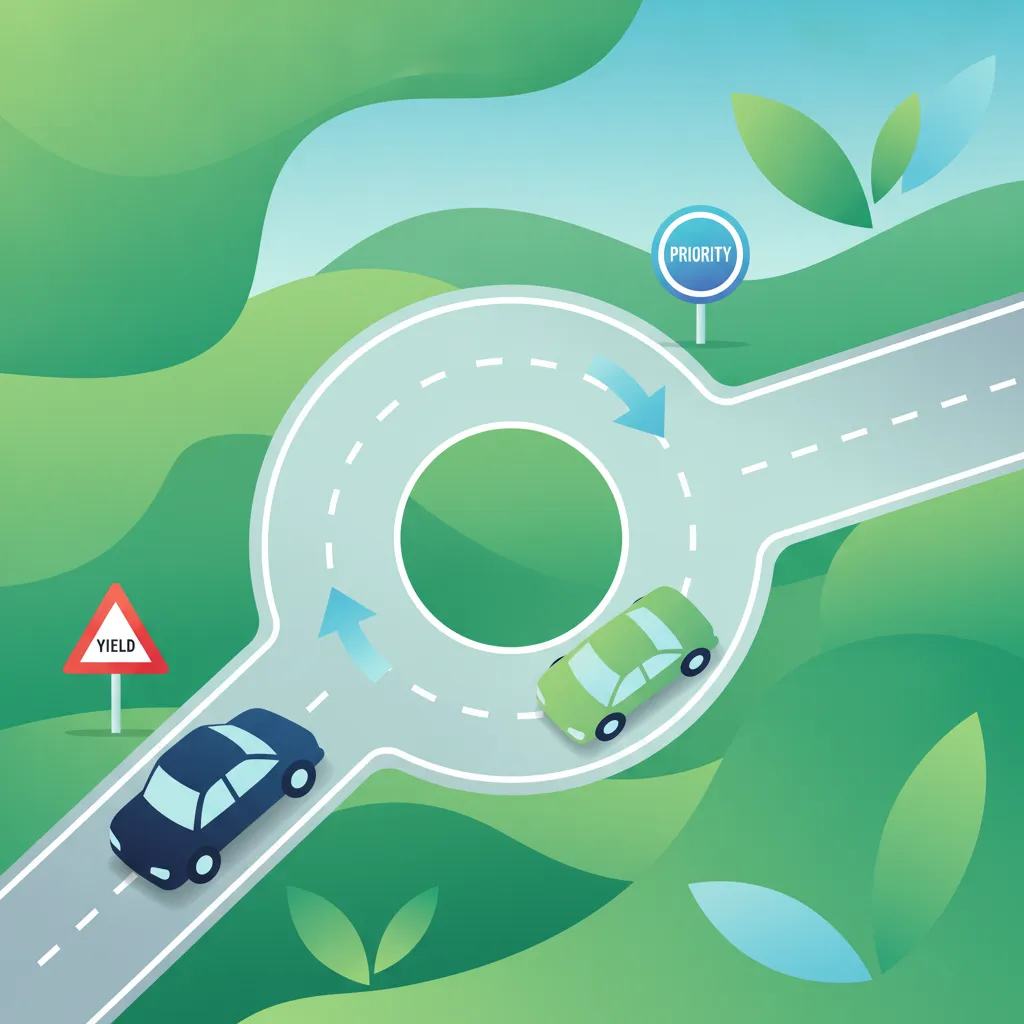
This lesson delves into the specific priority rules governing intersections and roundabouts in Portugal. It clarifies the hierarchy of signs such as stop and give-way, as well as the rules for entering and navigating roundabouts. Motorcyclists will learn how to position themselves correctly for exits and yield appropriately to ensure safe negotiation of these common traffic features.

This lesson addresses the heightened risk of interaction with pedestrians and cyclists around bus stops. It explains right-of-way regulations and the importance of vigilance, particularly when turning or pulling away from the curb. The content provides strategies for anticipating the actions of vulnerable road users to prevent conflicts.

This lesson focuses on safe interaction with cyclists on the road. It covers the identification of dedicated bicycle lanes and the rules regarding cyclist priority in various situations. Key topics include maintaining a safe lateral distance when overtaking cyclists and the importance of checking blind spots for them before turning or changing lanes.
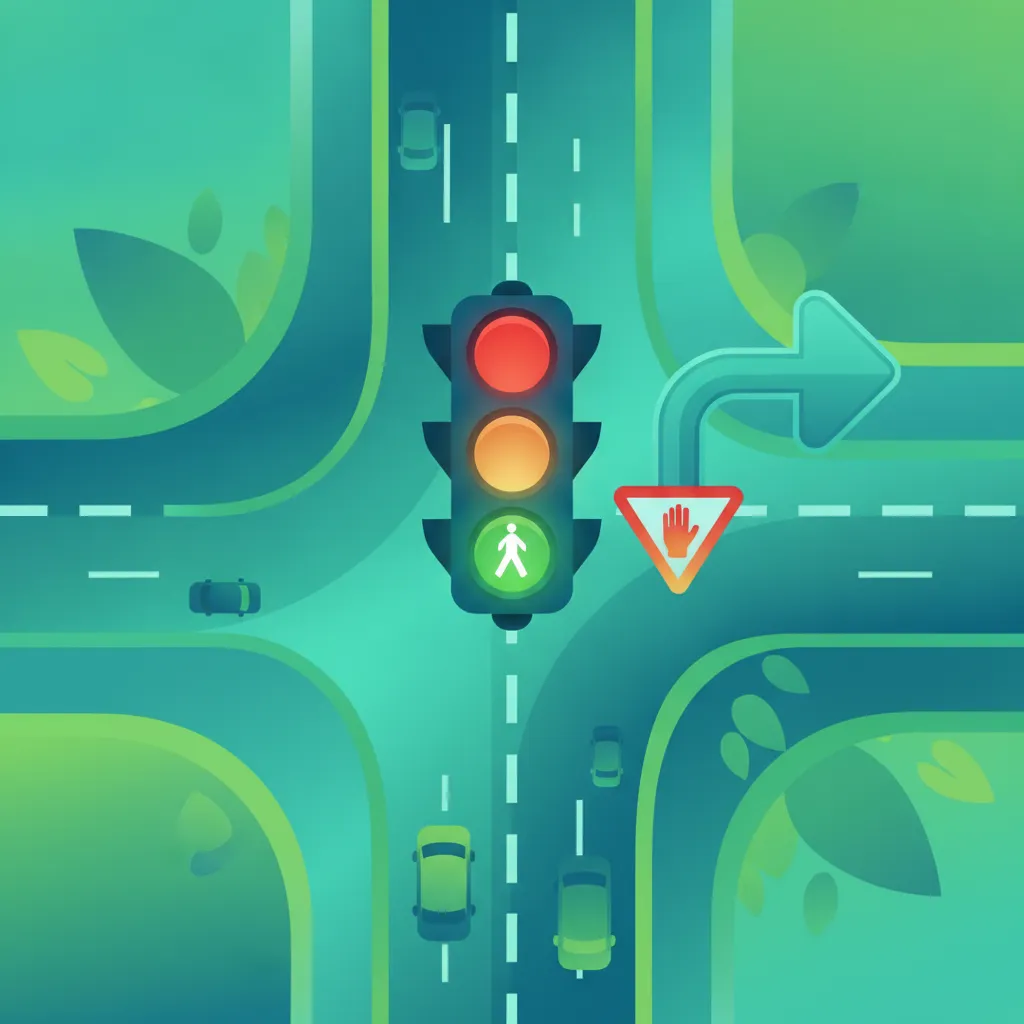
This lesson teaches riders to interpret traffic lights and signals, understanding their impact on priority and right-of-way. It covers standard traffic light phases, flashing amber situations, and pedestrian crossing signals. The lesson also explains how to respond to priority signs at intersections, ensuring compliance with Portuguese traffic signal standards.

This lesson focuses on the crucial 'priority from the right' rule, which applies at intersections lacking any signs or signals. It details the procedure for approaching such junctions, including reducing speed, performing visual checks, and being prepared to yield to traffic approaching from the right. Mastering this rule is essential for safety in residential areas and on rural roads.
Discover how weather, low light, and different road types affect your approach to pedestrian crossings. Learn essential strategies for safe riding in diverse conditions as per Portuguese driving theory.
This lesson explores the various types of pedestrian crossings found in Portuguese urban areas, such as zebra crossings. It emphasizes the rider’s responsibility to yield to pedestrians, the importance of reducing speed, and maintaining a safe passing distance. Strategies for anticipating pedestrian behavior and ensuring visibility are discussed to prevent incidents.
This lesson explains the different types of pedestrian crossings and the specific legal obligations for drivers at each one. It emphasizes the requirement to stop for pedestrians at marked zebra crossings and to obey signals at light-controlled crossings. The content also provides guidance on anticipating pedestrian movements to ensure their safety in all situations.
This lesson provides a detailed overview of the legal requirements and safe driving practices for school zones and pedestrian crossings. It covers mandatory speed limits, the meaning of various signs and signals, and the importance of yielding to pedestrians. The content stresses heightened awareness due to the unpredictable nature of children's behavior near roads.

This lesson focuses on the optimal use of reflective materials and lighting systems to enhance rider safety. It explains how to apply reflective elements to clothing, helmets, and the vehicle for maximum effect in low-light conditions. Furthermore, it reviews the legal requirements and proper function of headlights, tail lights, and indicators to ensure compliance and improve detectability.

This lesson focuses on the critical skill of managing speed within complex urban settings. It explains that driving at the speed limit is not always the safest option and teaches riders how to adjust their speed based on traffic density, pedestrian activity, and visibility. The content reinforces the principle of always being able to stop safely within the distance you can see to be clear.

This lesson teaches riders how to assess and adapt to the increased risks associated with adverse weather and road conditions. It explains how rain reduces tire grip and visibility, requiring lower speeds and gentler control inputs. The content also provides advice for dealing with other challenging conditions such as strong crosswinds, fog, and road surface hazards like potholes or gravel.

This lesson provides actionable strategies for riders to increase their visibility to other motorists. It details the effectiveness of wearing brightly colored or reflective clothing and explains the correct use of vehicle lights, including daytime running lights. The content also covers how strategic lane positioning can help a rider remain conspicuous and avoid being overlooked in complex traffic situations.
This lesson introduces the core principles of defensive riding as applied to small, vulnerable vehicles. It teaches riders how to create and maintain a 'space cushion' around them, anticipate the actions of other drivers, and identify potential hazards early. Key techniques such as effective scanning, maintaining a safe following distance, and planning escape routes are explained in detail.
This lesson teaches a systematic approach to safely navigating intersections. It covers the importance of reducing speed on approach, conducting thorough visual checks (observation), and selecting the appropriate lane for the intended direction. The content also details how to assess gaps in traffic before proceeding and correctly apply priority rules to avoid conflicts with other vehicles.
This lesson highlights road markings specifically designed to enhance the safety of vulnerable road users. It focuses on pedestrian crossings (zebra crossings), markings indicating school zones, and symbols for bicycle lanes or shared routes. The content stresses the heightened duty of care and specific actions, such as yielding or stopping, that drivers must take in these designated areas.
Find clear answers to common questions learners have about Pedestrian Crossings and Yielding Obligations. Learn how the lesson is structured, which driving theory objectives it supports, and how it fits into the overall learning path of units and curriculum progression in Portugal. These explanations help you understand key concepts, lesson flow, and exam focused study goals.
You must stop if the pedestrian is already on the crossing or shows a clear intent to enter it. It is safer to reduce speed and be prepared to stop whenever you approach a pedestrian crossing to ensure full control.
Yes, the obligation to yield to pedestrians on marked crossings is a fundamental rule in the Código da Estrada and applies to all motorized vehicle operators, including those with an AM licence.
In the context of the theory exam, failing to identify the requirement to yield is treated as a serious error. Understanding these rules is critical as they relate to basic safety and accident prevention.
Pedestrian crossings are intended for pedestrians. However, you must always exercise caution. If you see someone on a bike or skateboard, you should act with extreme care to avoid any collision, regardless of the formal right of way.
Utilize the powerful search tool to refine your Portuguese driving theory practice. Pinpoint questions related to specific traffic laws, road signs, or complex scenarios from the Código da Estrada. Begin targeted revision now to boost your understanding and confidently approach your IMT driving exam.