This lesson provides an essential guide to the warning signs used on Portuguese roads, helping you identify potential hazards before they become dangerous. Understanding these signs is a fundamental skill for your Category B theory exam and is critical for your safety as a driver in Portugal. You will learn to recognize specific symbols, grasp their meanings, and adopt the correct defensive driving behaviors for each scenario.
Lesson content overview
Navigating the roads safely requires a keen understanding of traffic signals and signs. Among the most crucial are warning signs, which serve as advance notice of potential hazards, changes in road conditions, or specific situations ahead. Unlike regulatory signs that command or prohibit actions, warning signs alert drivers to exercise caution and adjust their driving behaviour proactively. This lesson explores the various types of warning signs found on Portuguese roads, their meanings, and the necessary responses to ensure your safety and that of other road users.
Warning signs are preemptive communication tools designed to inform drivers about upcoming risks or road conditions that require preparation. Their primary function is to enhance road safety by giving drivers ample time to anticipate hazards and adjust their driving accordingly, rather than reacting suddenly. This proactive approach significantly reduces the likelihood of accidents and helps maintain smooth traffic flow.
Understanding and correctly interpreting these signs is a fundamental skill for any driver. It allows you to modify your speed, select appropriate gears, increase your vigilance, and prepare for necessary maneuvers well in advance. For the Portuguese Category B driving theory exam, mastering these signs is not just about memorizing shapes and symbols; it's about internalizing the underlying safety principles they represent and applying them in real-world driving scenarios.
The effectiveness of warning signs relies on three core principles:
One of the most common hazards indicated by warning signs is an upcoming bend or curve in the road. These signs alert drivers to reduce speed and prepare for steering adjustments to maintain control. Failing to acknowledge these warnings can lead to loss of control, especially at high speeds or in poor weather conditions.
Warning signs for curves are generally triangular with a red border and a black arrow indicating the direction of the bend. They are typically placed some distance before the curve to give drivers sufficient warning.
A sign depicting a single arrow curving to the left or right indicates an upcoming solitary sharp bend. Drivers should interpret this as a need to reduce speed and prepare to steer into the curve.
A sign showing an S-shaped arrow, often indicating two bends in succession, is known as a double curve sign. This means there will be two tight turns one after the other, requiring sustained caution and appropriate speed for both turns.
When you encounter a sharp curve warning sign, your immediate response should be to reduce your speed significantly. The appropriate speed will depend on various factors, including the sharpness of the curve, road conditions, visibility, and your vehicle's capabilities. It is crucial not to assume the posted speed limit is safe for all curves; advisory speed signs, often smaller and rectangular, may accompany warning signs to suggest a maximum safe speed for that specific curve.
Maintain your lane position and avoid sudden steering inputs or harsh braking within the curve itself. Braking should ideally be completed before entering the curve, allowing you to gently accelerate through it if needed, or maintain a constant speed. Looking ahead through the curve helps you anticipate the road's direction and make smooth steering adjustments.
A common misunderstanding is to treat a curve warning sign as a suggestion rather than a mandate for caution. Some drivers might assume the sign indicates a speed limit rather than a need to reduce speed from the prevailing limit. It is critical to remember that these signs indicate a hazard that requires a proactive reduction in speed and increased vigilance, often below the general speed limit for the road.
Steep inclines and declines present unique challenges to vehicle control and performance. Warning signs for steep hills alert drivers to significant changes in gradient, prompting them to prepare for potential shifts in vehicle speed, engine strain, or braking requirements.
These signs are typically triangular with a red border and feature a black depiction of a car on an inclined or declined surface, often accompanied by a percentage indicating the steepness of the gradient.
A sign showing a car pointing downwards indicates a steep downhill ahead. This warning is particularly critical as gravity will accelerate your vehicle, potentially making it harder to control.
Conversely, a sign showing a car pointing upwards indicates a steep uphill ahead. While not as immediately dangerous for loss of control, steep ascents can strain your vehicle and require specific gear selection.
For steep downhill sections, reducing speed is paramount. Relying solely on your foot brake can cause it to overheat and become less effective (known as brake fade). Instead, drivers should use a lower gear to allow the engine to provide braking force (engine braking). This technique helps maintain a controlled speed without overworking the friction brakes.
For steep uphill sections, selecting a lower gear before the ascent begins is advisable. This provides the engine with more torque, allowing the vehicle to climb efficiently without losing too much speed or straining the engine. If you wait until you are already struggling uphill, shifting down can be less smooth and more stressful for the transmission.
A frequent error, especially on downhill sections, is ignoring the need to shift gears and relying solely on the foot brake. This not only risks brake fade but also increases fuel consumption as the engine is not efficiently assisting with speed control. Drivers should always anticipate the need to change gears when approaching marked steep gradients.
Warning signs indicating slippery surfaces are among the most critical, as they alert drivers to conditions where tire traction may be significantly reduced. Such conditions drastically increase stopping distances and the risk of skidding.
These signs are triangular with a red border and typically depict a black car skidding or a car on a wet road surface.
A general slippery surface sign warns that the road ahead may have reduced grip due to various factors like rain, oil, loose gravel, or mud.
Some signs might be more specific, like those warning of icy road conditions, which would typically show snowflakes or ice crystals. While not always present, drivers must be extra cautious in cold weather regardless of signs.
Upon seeing a slippery surface warning sign, drivers must immediately anticipate reduced traction. This requires several adjustments to driving behavior:
A dangerous misunderstanding is assuming that if a slippery surface sign is not present, the road is safe and offers full traction. Many hazards, such as unexpected oil spills, patches of black ice, or fresh rain on a dry road, can occur without a specific warning sign. Drivers must always assess road conditions independently, especially in adverse weather.
Some warning signs specifically highlight areas where vulnerable road users – pedestrians, livestock, or wild animals – are likely to be present on or near the roadway. These signs demand extreme caution and readiness to yield or stop.
These warning signs are triangular with a red border and depict the type of road user expected.
A pedestrian crossing sign warns drivers of a designated area where pedestrians are likely to cross the road. This could be near schools, residential areas, or commercial zones. It's crucial to remember that this sign alerts to a crossing point, not necessarily a general presence of pedestrians.
Animal crossing signs vary depending on the type of animal prevalent in the area. Common examples include signs for livestock (like cattle), wild animals (such as deer or wild boar), or even specific local wildlife. These signs indicate areas where animals frequently cross the road, posing a collision risk.
When approaching a pedestrian crossing sign:
When encountering an animal crossing sign:
A critical misunderstanding is expecting that all pedestrians will use designated crossings. Many pedestrians may cross illegally or at unmarked points, especially in urban areas. Drivers must maintain situational awareness beyond just marked crossings. For animal crossings, some drivers might underestimate the speed or size of animals, or assume they will react predictably. Animals are unpredictable, and a collision can be extremely dangerous for both the animal and the vehicle occupants.
Adhering to warning signs is a legal requirement and a fundamental aspect of safe driving under the Portuguese Código da Estrada (Road Code). While these signs don't always specify a numerical speed limit, they implicitly mandate a responsible adjustment of driving behaviour.
Disregarding warning signs can lead to severe consequences and is a frequent cause of accidents. Common violations and dangerous behaviours include:
The effectiveness and required response to warning signs are highly dependent on contextual factors. Drivers must integrate the information from the sign with real-time conditions.
There is a direct cause-and-effect relationship between obeying warning signs and road safety:
Understanding warning signs is best solidified through practical application. Here are a few scenarios:
Scenario 1: Rural Road with Curves Driving on a winding rural road in Portugal, you see a warning sign indicating a series of sharp curves ahead, with an advisory speed of 40 km/h. Recognizing the sign, you proactively reduce your speed from 70 km/h to 35-40 km/h, shift to a lower gear, and gently steer through the bends, maintaining control and preventing any loss of traction on the potentially uneven surface.
Scenario 2: Mountain Pass Descent You are descending a long mountain pass. A warning sign with a car pointing downwards indicates a steep downhill with a 12% gradient. Instead of continuously pressing the brake pedal, you shift your vehicle into a lower gear (e.g., third gear) to engage engine braking. This keeps your speed controlled without overheating the brakes, allowing for safe navigation of the descent.
Scenario 3: Unexpected Rain on a Busy Street As light rain begins, you notice a slippery surface warning sign. Immediately, you increase your following distance from the vehicle ahead, reducing your speed slightly, and become more aware of potential puddles or oil slicks. You perform all steering, acceleration, and braking maneuvers with extra gentleness, preventing any skidding.
Scenario 4: Approaching a School Zone While driving through a residential area, you spot a pedestrian crossing warning sign, especially pertinent as it's near a school. You slow down significantly, carefully scanning both sides of the road and the crossing itself for children who might be about to cross. You are prepared to stop immediately if a child steps into the road.
Warning signs are an indispensable part of the Portuguese road network, providing crucial advance notice of hazards and changing conditions. Their correct interpretation and the appropriate driver response are foundational for safe and responsible driving. By understanding the specific meanings of signs for sharp curves, steep hills, slippery surfaces, and the presence of pedestrians or animals, drivers can proactively adjust their speed, select appropriate gears, increase following distances, and maintain heightened vigilance.
Failure to respect these signs significantly increases the risk of accidents, loss of vehicle control, and collisions, particularly with vulnerable road users. A comprehensive understanding of warning signs integrates knowledge from regulatory signs, vehicle dynamics, road markings, and general driver behavior guidelines, forming a critical component of the Portuguese Category B driving theory curriculum. Mastering these signs empowers you to anticipate dangers, make informed decisions, and contribute to safer roads for everyone.
Explore all units and lessons included in this driving theory course.
Lesson content overview
Explore all units and lessons included in this driving theory course.
Explore search topics learners often look for when studying Warning Signs. These topics reflect common questions about road rules, driving situations, safety guidance, and lesson level theory preparation for learners in Portugal.
Browse additional driving theory lessons that cover connected traffic rules, road signs, and common driving situations related to this topic. Improve your understanding of how different rules interact across everyday traffic scenarios.
Explore how weather, road type, and vehicle conditions change the meaning and required response to warning signs. Learn to adapt proactively in Portugal's diverse driving environments, from rural roads to busy streets.
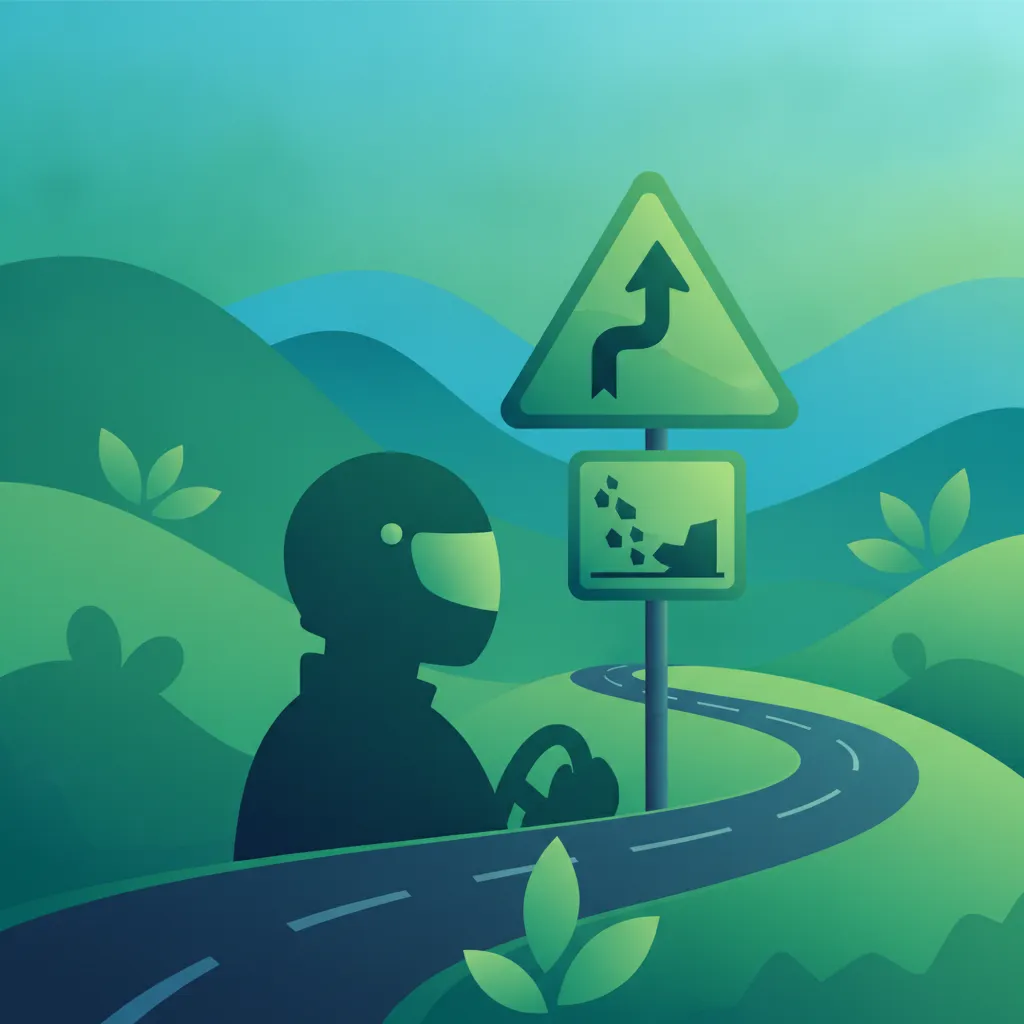
This lesson explains the function of warning signs, which are designed to alert drivers to potential dangers ahead. It covers a wide range of signs indicating hazards like sharp bends, slippery surfaces, and the presence of schools or pedestrian crossings. The content stresses the importance of adjusting speed and increasing alertness in response to these warnings to maintain safety.
Focusing on warning signs, this lesson educates riders on anticipating hazards and adjusting riding behavior accordingly. It includes signs indicating curves, slippery surfaces, pedestrian crossings, roadworks, and other potential dangers. By learning to interpret these warnings, motorcyclists can proactively adjust speed and lane position to reduce accident likelihood.
This lesson provides guidance for driving safely through areas of roadworks, where normal road layouts are altered. It stresses the importance of obeying all temporary signage, including reduced speed limits and lane guidance, to protect both drivers and road workers. Drivers will learn to anticipate sudden stops, narrowed lanes, and be aware of potential surface hazards within the construction zone.

This lesson focuses on signs and road markings that indicate the direction of traffic flow. It covers how to identify one-way streets, understand lane-specific directional arrows, and navigate areas with reversible or contraflow lanes. Correct interpretation of these indicators is essential for preventing collisions and maintaining the intended traffic circulation pattern.

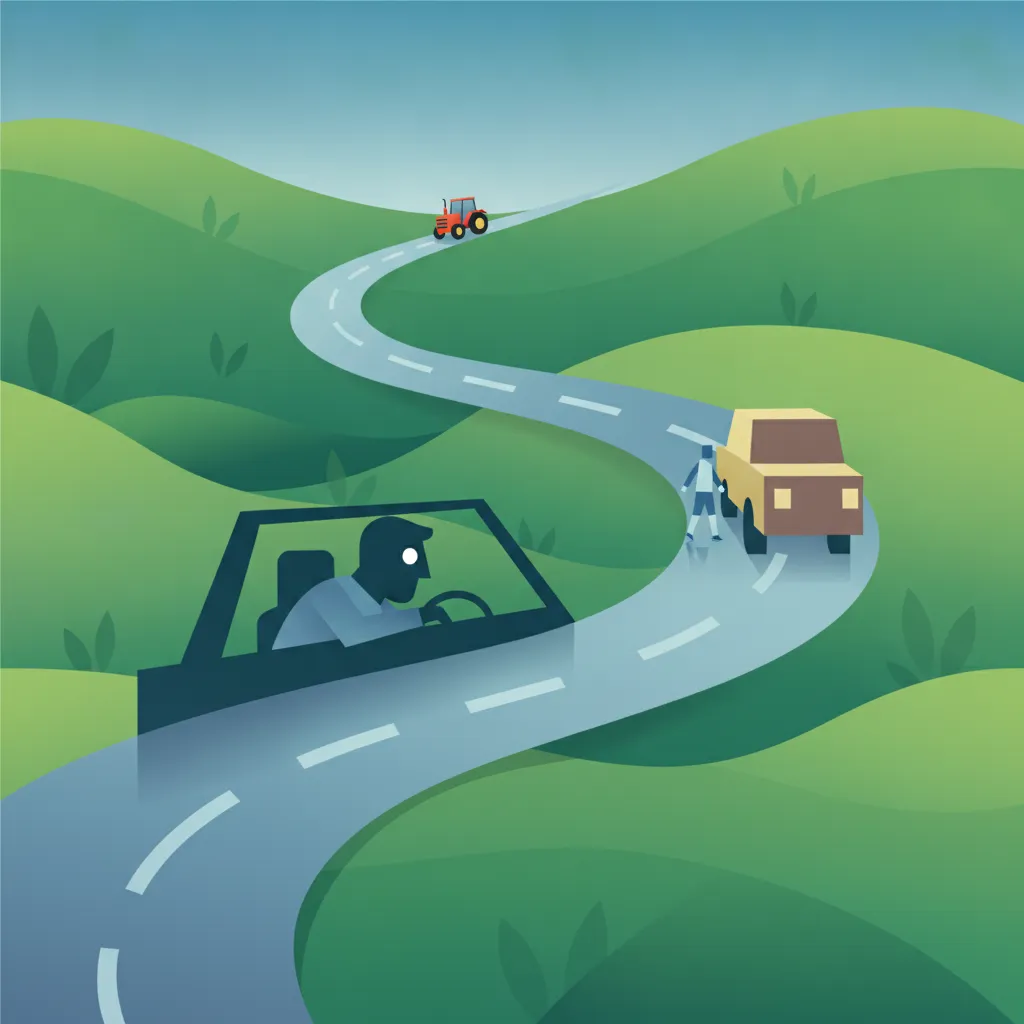
This lesson highlights the distinct risks associated with driving on rural roads, which often lack the safety features of major routes. It prepares drivers to anticipate and manage hazards such as sharp bends, limited visibility, poor road surfaces, and encounters with slow-moving agricultural vehicles or animals. Adapting speed and road positioning are emphasized as key defensive techniques.

This lesson details the functions of the various lights on a vehicle and the regulations governing their use. It explains the appropriate conditions for using dipped headlights, main beams, and fog lights to maximize visibility without dazzling other road users. The correct use of indicators and hazard warning lights as communication tools is also thoroughly covered.
This lesson introduces the principles of hazard perception, a key skill for proactive and defensive driving. It teaches techniques for systematically scanning the environment, identifying potential risks before they develop into immediate dangers, and planning escape routes. By improving their ability to anticipate the actions of others, drivers can significantly reduce their risk of being involved in a collision.

This lesson focuses on adapting driving techniques for wet and foggy conditions, which significantly reduce visibility and tyre grip. It explains the phenomenon of aquaplaning and how to avoid it by reducing speed and ensuring proper tyre condition. The correct use of headlights, fog lights, and increasing following distances are presented as essential safety measures.
This lesson focuses on identifying and responding to temporary signs commonly found in construction zones or during road incidents. It covers signage indicating detours, lane closures, temporary speed limits, and the presence of road workers. Adherence to these temporary instructions is critical for ensuring the safety of both drivers and on-site personnel.
This lesson focuses on regulatory signs, which impose legal obligations and restrictions on drivers. It covers signs that indicate speed limits, prohibit entry or parking, and mandate specific directions or lane usage. Understanding these signs is essential for legal compliance and maintaining safe, orderly traffic flow on all roads.
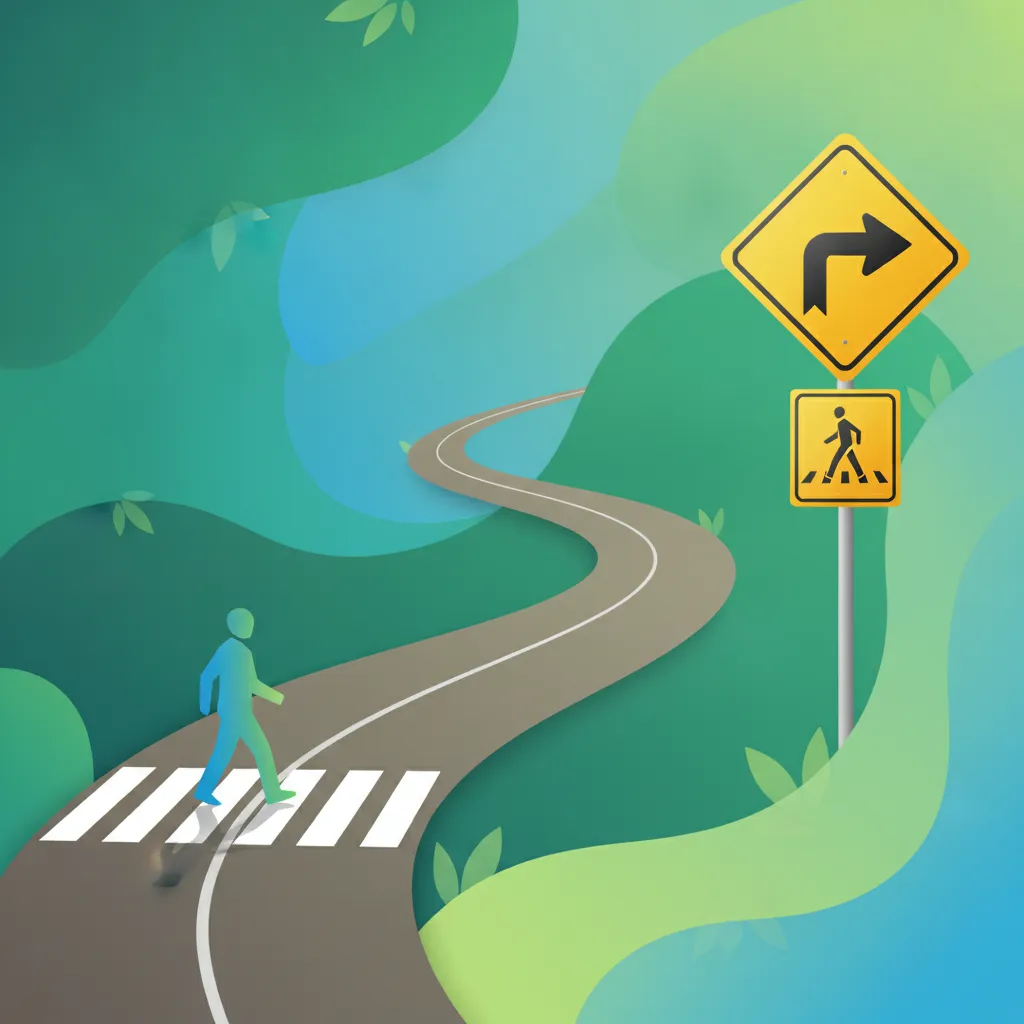
Learn the specific meanings and critical responses for warning signs indicating pedestrian crossings and animal traffic in Portugal. Understand how to protect vulnerable road users and avoid collisions.
This lesson explores the various types of pedestrian crossings found in Portuguese urban areas, such as zebra crossings. It emphasizes the rider’s responsibility to yield to pedestrians, the importance of reducing speed, and maintaining a safe passing distance. Strategies for anticipating pedestrian behavior and ensuring visibility are discussed to prevent incidents.

This lesson explains the different types of pedestrian crossings and the specific legal obligations for drivers at each one. It emphasizes the requirement to stop for pedestrians at marked zebra crossings and to obey signals at light-controlled crossings. The content also provides guidance on anticipating pedestrian movements to ensure their safety in all situations.
This lesson highlights road markings specifically designed to enhance the safety of vulnerable road users. It focuses on pedestrian crossings (zebra crossings), markings indicating school zones, and symbols for bicycle lanes or shared routes. The content stresses the heightened duty of care and specific actions, such as yielding or stopping, that drivers must take in these designated areas.
This lesson explains the function of warning signs, which are designed to alert drivers to potential dangers ahead. It covers a wide range of signs indicating hazards like sharp bends, slippery surfaces, and the presence of schools or pedestrian crossings. The content stresses the importance of adjusting speed and increasing alertness in response to these warnings to maintain safety.

This lesson focuses on the rider's responsibilities at designated pedestrian crossings. It clarifies the legal requirement to give way to pedestrians on or about to step onto a zebra crossing. The content emphasizes the need to approach all crossings with caution, be prepared to stop, and scan for pedestrians to ensure their safety as vulnerable road users.

This lesson provides a detailed overview of the legal requirements and safe driving practices for school zones and pedestrian crossings. It covers mandatory speed limits, the meaning of various signs and signals, and the importance of yielding to pedestrians. The content stresses heightened awareness due to the unpredictable nature of children's behavior near roads.
Focusing on warning signs, this lesson educates riders on anticipating hazards and adjusting riding behavior accordingly. It includes signs indicating curves, slippery surfaces, pedestrian crossings, roadworks, and other potential dangers. By learning to interpret these warnings, motorcyclists can proactively adjust speed and lane position to reduce accident likelihood.
This lesson focuses on safe interaction with cyclists on the road. It covers the identification of dedicated bicycle lanes and the rules regarding cyclist priority in various situations. Key topics include maintaining a safe lateral distance when overtaking cyclists and the importance of checking blind spots for them before turning or changing lanes.
This lesson teaches riders to interpret traffic lights and signals, understanding their impact on priority and right-of-way. It covers standard traffic light phases, flashing amber situations, and pedestrian crossing signals. The lesson also explains how to respond to priority signs at intersections, ensuring compliance with Portuguese traffic signal standards.
This lesson focuses on signs and road markings that indicate the direction of traffic flow. It covers how to identify one-way streets, understand lane-specific directional arrows, and navigate areas with reversible or contraflow lanes. Correct interpretation of these indicators is essential for preventing collisions and maintaining the intended traffic circulation pattern.
Find clear answers to common questions learners have about Warning Signs. Learn how the lesson is structured, which driving theory objectives it supports, and how it fits into the overall learning path of units and curriculum progression in Portugal. These explanations help you understand key concepts, lesson flow, and exam focused study goals.
In Portugal, most warning signs are triangular with a white background, a red border, and a black symbol. This distinctive shape helps you identify them quickly even from a distance, signaling that you must prepare for a hazard ahead.
No, warning signs do not mandate a stop, unlike a STOP sign. However, they are an instruction to reduce speed, increase your attention, and be prepared to take action or stop if the hazard manifests in your path.
Regulatory signs usually dictate specific rules like speed limits, prohibitions, or obligations and are often circular. Warning signs are triangular and alert you to potential dangers on the road, rather than imposing a specific legal command.
The exam may present signs in different lighting or weather conditions to test your perception. It is crucial to recognize the symbols clearly, as they are the primary indicator of the specific hazard, such as a pedestrian crossing or animal presence.
Utilize the powerful search tool to refine your Portuguese driving theory practice. Pinpoint questions related to specific traffic laws, road signs, or complex scenarios from the Código da Estrada. Begin targeted revision now to boost your understanding and confidently approach your IMT driving exam.