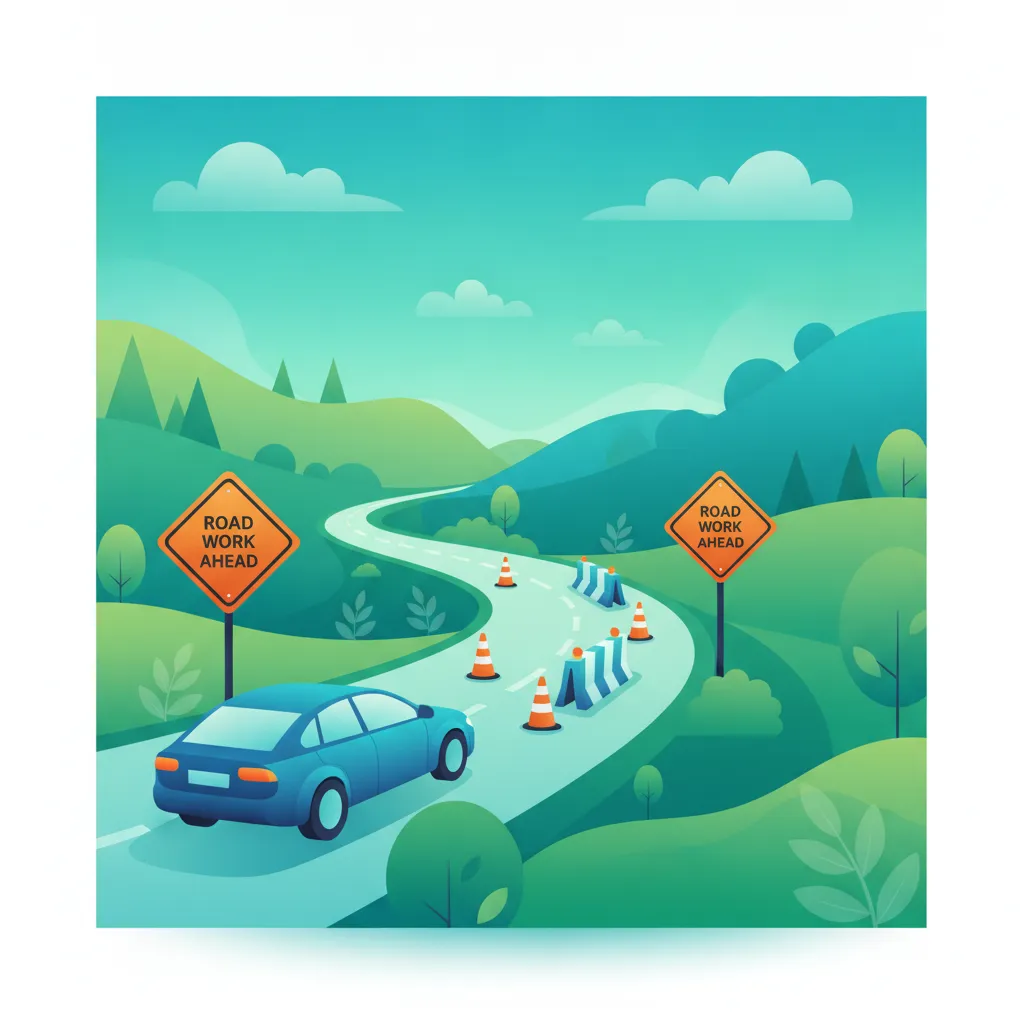
This lesson guides you through interpreting temporary road signs and safety signals found in construction zones and road work areas. Understanding these indicators is vital for navigating safely on Portuguese roads and is a frequent topic in the Category B theoretical exam. By the end of this lesson, you will be able to respond correctly to temporary lane changes, reduced speed limits, and directions given by site personnel.
Lesson content overview
Navigating Portuguese roads requires constant vigilance, and this is especially true when encountering temporary signs. These vital signals, often present in road work zones or at the scene of an incident, provide dynamic, immediate instructions that drivers must prioritize for the safety of everyone. This lesson delves into the specifics of identifying and correctly responding to temporary signs, ensuring you are well-prepared for your Portuguese Category B driving theory exam and safe driving in Portugal.
Temporary signs play a paramount role in traffic management by addressing immediate safety concerns and guiding drivers through altered road conditions. Unlike permanent signs, which regulate static environments, temporary signs communicate urgent changes caused by construction, maintenance, accidents, or other unforeseen events. Adherence to these temporary instructions is not merely a recommendation; it is a critical legal obligation designed to protect drivers, passengers, road workers, and equipment. Understanding their specific meanings and the hierarchy they hold over permanent signage is fundamental to safe driving, especially within the context of the Portuguese Código da Estrada.
One of the most crucial principles regarding temporary signage is its superiority over permanent road signs. When a temporary sign conflicts with a permanent sign, the temporary sign always takes precedence. This rule exists because temporary signs are installed to address current, dynamic hazards or traffic control needs that permanent signs cannot foresee.
Drivers must always obey temporary signs, even if they appear to contradict permanent regulations or directions. Failing to do so can lead to dangerous situations, accidents, and legal penalties under Portuguese traffic law.
For instance, if a permanent sign indicates a maximum speed limit of 70 km/h, but a temporary sign in a road work zone imposes a limit of 30 km/h, drivers are legally required to reduce their speed to 30 km/h. This immediate adaptation is vital for managing traffic flow safely around worksites or incident scenes.
Temporary signs are easily distinguishable by their unique colors, typically a yellow or orange background with black symbols or text. This distinct coloring immediately alerts drivers to the temporary nature of the regulations or warnings. The Portuguese road sign system classifies these temporary signs, predominantly within categories that mirror permanent signs but with specific codes or designs indicating their temporary status.
These signs are crucial for guiding traffic around obstacles or through altered road layouts. They dictate changes in lane use, direct drivers onto alternative routes, or indicate where lanes merge.
Practical Meaning: When you encounter a B8-1 sign, it means the road ahead is impassable or subject to significant disruption, and you must follow the indicated alternative route. This detour may involve turns that contradict your intended permanent direction, but it is mandatory to follow it.
Associated Rules: Drivers must adhere strictly to the detour route, even if it leads them temporarily away from their original path. Ignoring a detour sign can lead to driving into a closed area, encountering hazards, or causing further traffic disruption.
Practical Meaning: This sign warns drivers that one or more lanes are about to be closed. Upon seeing a B8-2, drivers should prepare to merge safely into the available open lane(s) well in advance of the closure point.
Associated Rules: It is imperative to merge early and safely, using appropriate signaling. Do not wait until the last moment, as this can cause sudden braking, traffic jams, and potential collisions. Always check blind spots before changing lanes.
Practical Meaning: Similar to lane closure signs, the B8-3 sign alerts drivers to a situation where multiple lanes converge into fewer lanes. Drivers should anticipate a merge and adjust their speed to allow for smooth integration with traffic in the adjacent lane.
Associated Rules: The "zip merge" principle often applies, where drivers from both lanes take turns merging, but it's crucial to yield if a temporary yield sign is present or if directed by workers. Maintaining awareness of surrounding traffic is key.
These signs function as warnings, alerting drivers to potential hazards or changes in the road environment specifically related to ongoing work. They are generally triangular with a yellow background, black border, and black symbol.
Practical Meaning: This is one of the most common temporary warning signs. An A7-2 sign informs you that there are road works in the immediate vicinity. This means you should expect workers, machinery, changed road surfaces, temporary speed limits, or altered lane configurations.
Associated Rules: Upon seeing this sign, drivers must reduce their speed, increase their following distance, and be prepared for sudden changes in traffic flow or road layout. Vigilance is critical to react to any unfolding situation.
Temporary speed limits are frequently imposed in road work zones to enhance safety. They are usually circular with a yellow background, black border, and the speed limit in black.
Practical Meaning: This sign indicates the absolute maximum speed allowed in the temporary zone. Even if the permanent speed limit is higher, you must not exceed the speed displayed on the B8-5 sign. These limits are set to account for reduced lane width, uneven surfaces, the presence of workers, or other hazards.
Associated Rules: Strictly adhere to the temporary speed limit. Reduced speeds are vital for increasing reaction time and minimizing the severity of potential accidents. Police frequently monitor and enforce these temporary limits rigorously.
Always scan ahead for the end-of-temporary-restriction sign (often a white circular sign with a diagonal black line or the return to the permanent speed limit sign) before resuming normal speeds.
These signs specifically highlight the presence of vulnerable road users: the workers themselves. Their safety is paramount.
Practical Meaning: A B38-7 sign means there is a worker (flagger) ahead who is directing traffic. This worker's signals—which might include stop/go paddles, hand gestures, or flags—override all other traffic signals and signs.
Associated Rules: You must be prepared to stop and yield to the flagger. Follow their instructions precisely and courteously. Their role is to ensure the safe passage of vehicles and the safety of the work crew. Ignoring a flagger's directions is a serious offense and extremely dangerous.
Just like their permanent counterparts, temporary stop and yield signs are used to manage priority at specific points within work zones.
Practical Meaning: A temporary R4 sign demands a complete stop before proceeding, even if no immediate traffic is visible. This is often used to control access to narrow sections of road work or at intersections that are temporarily reconfigured.
Associated Rules: You must bring your vehicle to a full halt. Check for workers, oncoming traffic, and other hazards before safely proceeding.
Practical Meaning: A temporary R5 sign means you must give way to traffic on the road you are entering or crossing, or to workers operating in the immediate vicinity. You must slow down and be prepared to stop if necessary, proceeding only when it is safe to do so without impeding other road users or workers.
Associated Rules: Prioritize vehicles already on the main flow and any road workers. Yielding ensures smooth traffic flow and worker safety in congested or altered zones.
In addition to signs, road markings can also be temporary. These are typically painted in a different color (often yellow or orange) or have a temporary adhesive quality.
Practical Meaning: Temporary road markings, such as broken white lines for lane changes, solid lines for no-crossing zones, and arrow markings, guide drivers through altered road layouts. They indicate temporary lanes, merges, or areas to avoid.
Associated Rules: Drivers must follow these temporary markings meticulously. Ignoring them can lead to driving into dangerous areas, confusion, or collisions, especially if they guide traffic around hazards or into specific paths.
To ensure safety and legal compliance, always observe these fundamental rules when encountering temporary signs and road works:
In Portugal, temporary signs are legally binding. Disobeying them can result in significant fines and penalty points on your driving license, in addition to the inherent safety risks.
Failing to comply with temporary signs is a leading cause of accidents in work zones. Here are common mistakes and the correct actions:
Driving through areas with temporary signs requires extra vigilance and adaptation based on prevailing conditions:
autoestradas often involve larger-scale detours and may require merging over longer distances. Speed limits are typically reduced more significantly due to higher initial speeds.Compliance with temporary signs is a matter of both personal safety and legal responsibility. The cause-and-effect relationship is clear:
Explore all units and lessons included in this driving theory course.
Lesson content overview
Explore all units and lessons included in this driving theory course.
Explore search topics learners often look for when studying Temporary Signs and Road Works. These topics reflect common questions about road rules, driving situations, safety guidance, and lesson level theory preparation for learners in Portugal.
Browse additional driving theory lessons that cover connected traffic rules, road signs, and common driving situations related to this topic. Improve your understanding of how different rules interact across everyday traffic scenarios.
Learn to identify and obey temporary road signs, detours, and lane closures specific to road work zones in Portugal. Essential knowledge for safe driving and understanding Portuguese traffic law.
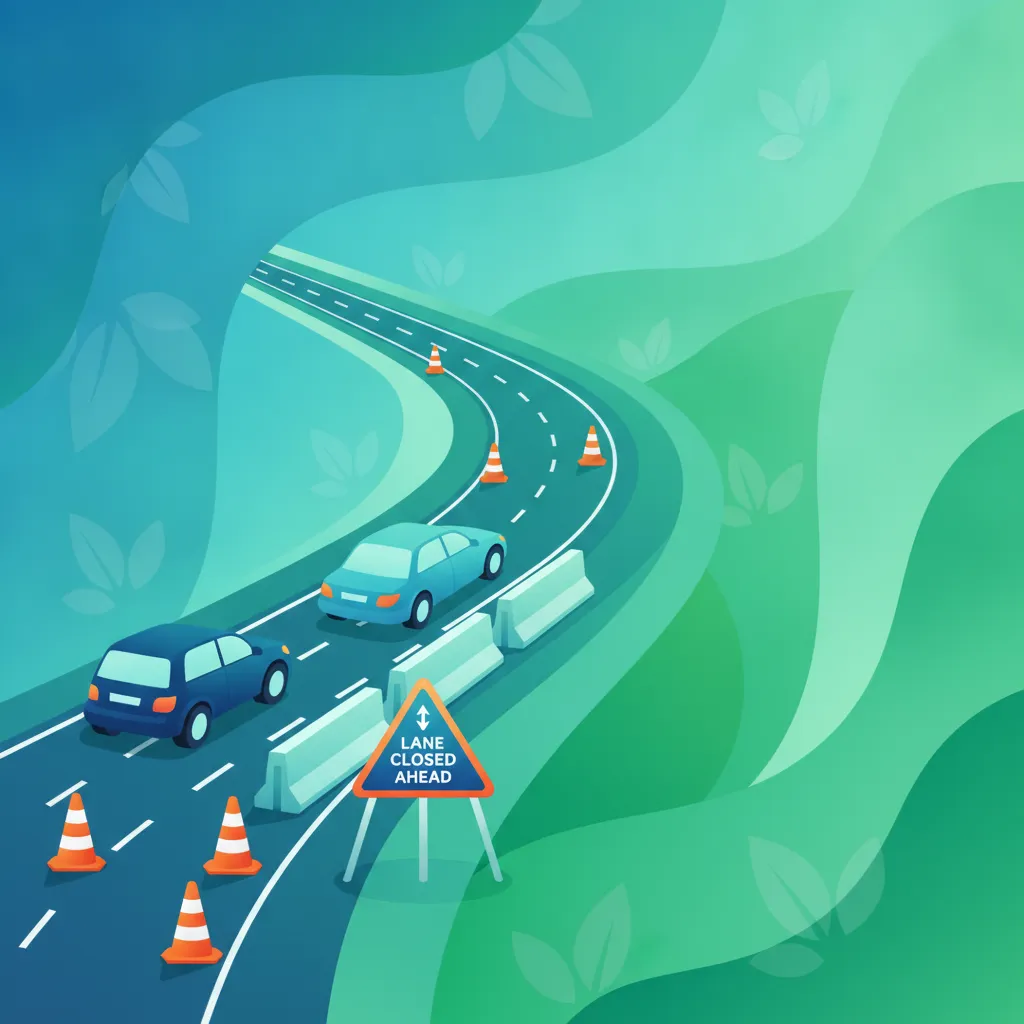
This lesson provides guidance for driving safely through areas of roadworks, where normal road layouts are altered. It stresses the importance of obeying all temporary signage, including reduced speed limits and lane guidance, to protect both drivers and road workers. Drivers will learn to anticipate sudden stops, narrowed lanes, and be aware of potential surface hazards within the construction zone.
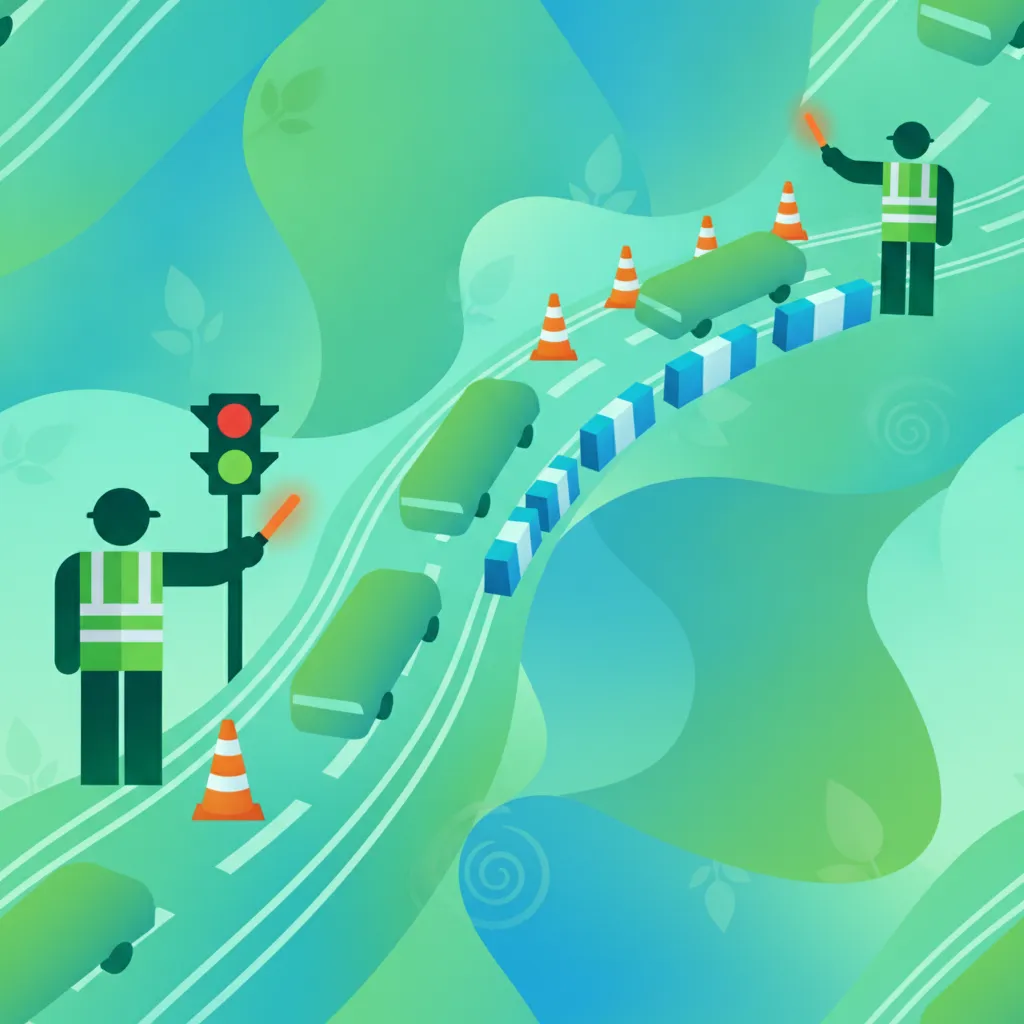
This lesson provides guidance on driving safely through roadwork zones. It covers the importance of obeying temporary speed limits, navigating narrow lanes and contraflow systems, and being highly aware of workers and machinery. A professional driver's vigilance is essential for preventing accidents in these potentially hazardous areas.

This lesson introduces warning signs, designed to alert drivers to potential hazards ahead. It details the meanings of signs indicating sharp curves, steep hills, slippery surfaces, and the possible presence of pedestrians or animals. Proper interpretation of these signs allows drivers to adjust their speed and increase their vigilance to navigate potential dangers safely.
This lesson focuses on regulatory signs, which impose legal obligations and restrictions on drivers. It covers signs that indicate speed limits, prohibit entry or parking, and mandate specific directions or lane usage. Understanding these signs is essential for legal compliance and maintaining safe, orderly traffic flow on all roads.

This lesson provides a detailed explanation of longitudinal road markings, including solid, broken, and double lines. It clarifies the rules for each type, specifying when changing lanes or overtaking is permitted or prohibited. Additionally, the lesson covers markings for road edges, stop lines at intersections, and pedestrian crossings to ensure correct driver positioning and action.
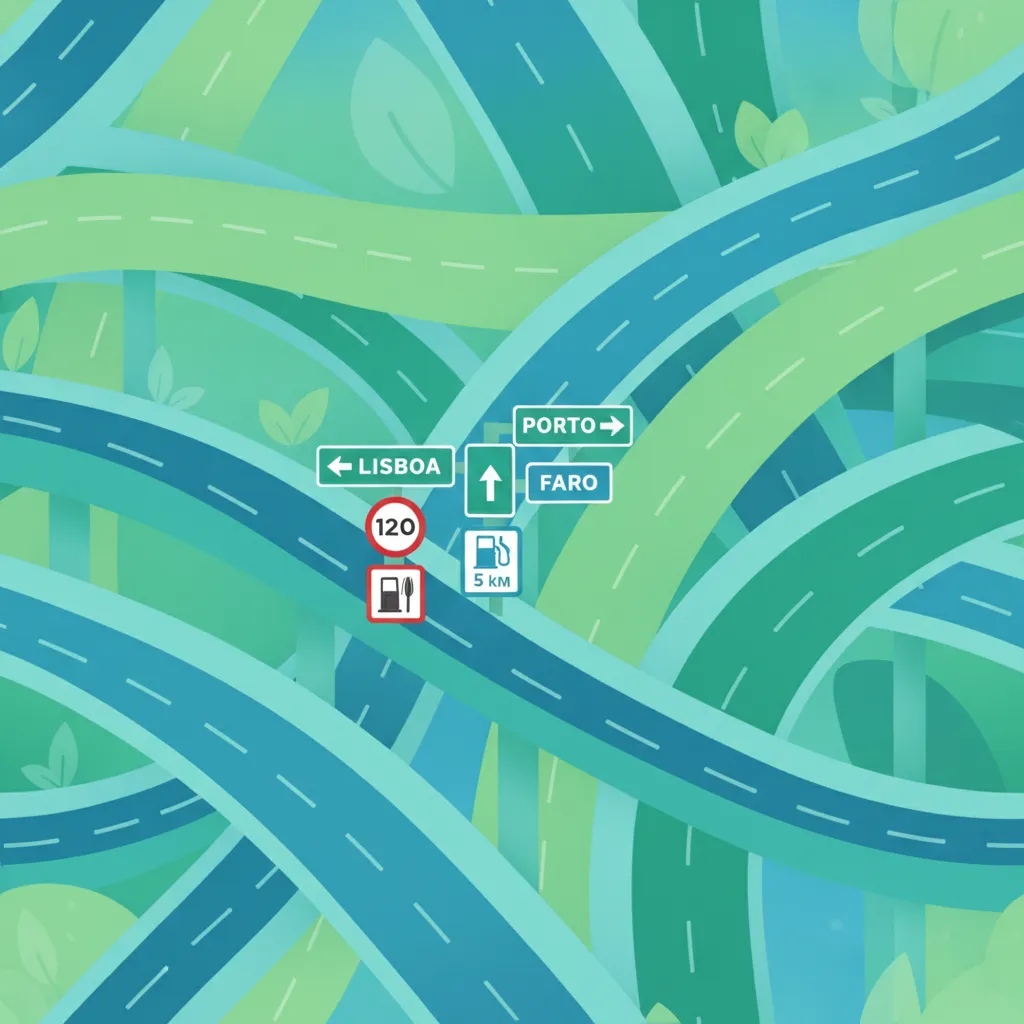
This lesson explains the function of information and direction signs, which provide essential guidance for navigation. It covers how to read signs indicating destinations, distances, route numbers, and the location of services such as fuel stations and rest areas. These signs are crucial for efficient route planning and making timely decisions on motorways and other complex road networks.

This lesson highlights road markings specifically designed to enhance the safety of vulnerable road users. It focuses on pedestrian crossings (zebra crossings), markings indicating school zones, and symbols for bicycle lanes or shared routes. The content stresses the heightened duty of care and specific actions, such as yielding or stopping, that drivers must take in these designated areas.

This lesson explains the function of warning signs, which are designed to alert drivers to potential dangers ahead. It covers a wide range of signs indicating hazards like sharp bends, slippery surfaces, and the presence of schools or pedestrian crossings. The content stresses the importance of adjusting speed and increasing alertness in response to these warnings to maintain safety.
This lesson focuses on interpreting the various markings painted on the road surface. It differentiates between solid and broken lines, explaining the rules for changing lanes and overtaking. The content also covers the significance of stop lines at intersections, pedestrian crossing markings (zebra crossings), and directional arrows that guide drivers into the correct lanes.
This lesson focuses on regulatory signs, which impose legal obligations on road users. It details the specific meanings of key signs such as speed limits, stop, yield, and no-entry, explaining the required action for each. The content also covers signs related to parking prohibitions and mandatory direction, ensuring riders understand these direct commands and the consequences of non-compliance.
Understand the critical rule that temporary signs always override permanent signs in Portugal. Essential for navigating road works, incidents, and ensuring legal compliance and safety.
This lesson focuses on regulatory signs, which impose legal obligations and restrictions on drivers. It covers signs that indicate speed limits, prohibit entry or parking, and mandate specific directions or lane usage. Understanding these signs is essential for legal compliance and maintaining safe, orderly traffic flow on all roads.
This lesson introduces warning signs, designed to alert drivers to potential hazards ahead. It details the meanings of signs indicating sharp curves, steep hills, slippery surfaces, and the possible presence of pedestrians or animals. Proper interpretation of these signs allows drivers to adjust their speed and increase their vigilance to navigate potential dangers safely.

This lesson focuses on signs and road markings that indicate the direction of traffic flow. It covers how to identify one-way streets, understand lane-specific directional arrows, and navigate areas with reversible or contraflow lanes. Correct interpretation of these indicators is essential for preventing collisions and maintaining the intended traffic circulation pattern.
This lesson provides guidance for driving safely through areas of roadworks, where normal road layouts are altered. It stresses the importance of obeying all temporary signage, including reduced speed limits and lane guidance, to protect both drivers and road workers. Drivers will learn to anticipate sudden stops, narrowed lanes, and be aware of potential surface hazards within the construction zone.
This lesson focuses on identifying and understanding road signs that directly impact passenger vehicle operation. It covers signage for bus lanes, height and weight restrictions, and prohibited movements. The content also explains the meaning of temporary signs used for diversions or roadworks that may affect planned routes.
This lesson focuses on regulatory signs, which impose legal obligations on road users. It details the specific meanings of key signs such as speed limits, stop, yield, and no-entry, explaining the required action for each. The content also covers signs related to parking prohibitions and mandatory direction, ensuring riders understand these direct commands and the consequences of non-compliance.
This lesson provides guidance on driving safely through roadwork zones. It covers the importance of obeying temporary speed limits, navigating narrow lanes and contraflow systems, and being highly aware of workers and machinery. A professional driver's vigilance is essential for preventing accidents in these potentially hazardous areas.

This lesson serves as a summary of how to interpret various road signs that dictate right-of-way at intersections. It reinforces the distinct actions required for stop signs (complete stop) and yield signs (give way). The lesson also covers signs that illustrate the layout of a junction and indicate which direction the priority road follows, ensuring drivers can make correct and safe decisions.
This lesson provides a detailed explanation of longitudinal road markings, including solid, broken, and double lines. It clarifies the rules for each type, specifying when changing lanes or overtaking is permitted or prohibited. Additionally, the lesson covers markings for road edges, stop lines at intersections, and pedestrian crossings to ensure correct driver positioning and action.
This lesson details the universal system of traffic light signals and their specific applications in Portugal. It clarifies the meaning of red, amber, and green lights, as well as flashing signals and directional arrows that control turning movements. Correctly interpreting these signals is fundamental for safely navigating controlled intersections and ensuring smooth traffic flow.
Find clear answers to common questions learners have about Temporary Signs and Road Works. Learn how the lesson is structured, which driving theory objectives it supports, and how it fits into the overall learning path of units and curriculum progression in Portugal. These explanations help you understand key concepts, lesson flow, and exam focused study goals.
Yes, in the Portuguese Código da Estrada, temporary signs—usually yellow-backed—override permanent signage. If a temporary speed limit is placed over a permanent one, you must follow the temporary instruction.
You must treat the person managing traffic as a priority signal. If the paddle shows red or a stop sign, you must come to a complete halt until given a clear signal to proceed, regardless of any other lights or signs.
No, speed limits in road works are determined by the specific risk and temporary signage installed at the site. Always look for the temporary circular speed limit signs that define the speed for that specific zone.
Temporary signs supersede road markings. If a temporary lane change sign directs you to move into a lane where the road paint suggests otherwise, you must obey the temporary sign.
Utilize the powerful search tool to refine your Portuguese driving theory practice. Pinpoint questions related to specific traffic laws, road signs, or complex scenarios from the Código da Estrada. Begin targeted revision now to boost your understanding and confidently approach your IMT driving exam.