This lesson provides a vital overview of the signs and road markings that dictate traffic flow on Portuguese roads. By mastering these indicators, you will be able to navigate complex junctions, one-way streets, and reversible lanes with confidence, a core competency for your Category B theory exam.

Lesson content overview
Navigating the complex network of roads safely and efficiently requires a thorough understanding of traffic direction indicators. These essential visual cues, including specific road signs and markings, are designed to organize vehicle flow, prevent collisions, and ensure predictable movement for all road users. In the context of the Portuguese Driving Theory – Category B Comprehensive Course, mastering these indicators is paramount for passing your exam and, more importantly, for safe driving on Portuguese roads.
This lesson delves into how traffic direction is managed through various visual signals and legal regulations, covering everything from permanent one-way streets to dynamic lane configurations. By interpreting these indicators correctly, drivers can anticipate traffic movements, avoid dangerous situations, and comply with the Código da Estrada (Road Code).
The core purpose of traffic direction indicators is to impose order and predictability on road networks. Without clear guidance on permitted directions of travel, chaos would ensue, leading to frequent conflicts and accidents. These indicators serve several critical functions:
Understanding the rationale behind these rules helps drivers appreciate their importance and adhere to them diligently, contributing to overall road safety and efficiency.
A one-way street is a roadway where traffic is legally permitted to travel in only a single, designated direction. These streets are common in urban centers, historical areas, or where road infrastructure is narrow, simplifying navigation and minimizing conflict points.
One-way streets are indicated by specific road signs and, often, by the arrangement of parking, street furniture, and road markings.
The most common sign for a one-way street in Portugal is a blue square sign featuring a large white arrow pointing in the permitted direction of travel (similar to sign H1a). You might also encounter signs like D1a (a blue circular sign with a white arrow) indicating a mandatory direction to proceed. Additionally, multiple small arrows painted on the road surface or a series of signs pointing the same way reinforce the one-way rule.
When encountering a one-way street, it is imperative to:
Attempting to enter a one-way street from the wrong direction is a serious offense in Portugal and carries significant penalties, not to mention the extreme danger it poses to yourself and other road users.
Sometimes, one-way systems are temporary, implemented during roadworks, special events, or emergencies. These will typically be indicated by temporary orange-backed signs that supersede permanent signage. Always pay close attention to such temporary indicators.
Lane-specific direction arrows are road markings painted directly onto the road surface within a lane. These arrows indicate the only permitted direction of travel or turning movement from that specific lane. They are crucial for organizing traffic flow, especially at intersections, and preventing conflicts between vehicles.
Common types of lane arrows include:
When approaching an intersection or a section of road with lane-specific arrows, drivers must:
Ignoring lane arrows can lead to traffic disruptions, near misses, or even collisions, as you might inadvertently cut across the path of another vehicle following its designated arrow.
Always check your mirrors and signal your intentions well before changing lanes, ensuring you are in the correct lane for your desired direction before reaching the point of no return.
Reversible lanes, also known as tidal flow lanes, are traffic lanes where the direction of travel can be changed to accommodate varying traffic demands at different times of the day. They are often found on busy urban arteries, bridges, or motorways (autoestradas) where traffic flow is heavily imbalanced, such as during morning and evening rush hours.
The direction of a reversible lane is typically controlled by overhead electronic signals or temporary signage. These signals indicate whether the lane is open for use in your direction, closed, or open for opposing traffic.
Reversible lanes are typically marked with special lane lines, such as solid white lines on both sides, to distinguish them from regular lanes. Signage near the entry and exit points will also provide information on operating times or conditions.
Using reversible lanes safely requires constant vigilance:
Entering a reversible lane when it is operating in the opposite direction is a critical violation that carries a very high risk of a head-on collision, often at high speeds, making it one of the most dangerous driving errors.
A contraflow lane is a dedicated lane that allows traffic to travel in the opposite direction to the normal flow of the main carriageway. These lanes are usually reserved for specific users, most commonly cyclists (contraflow bike lanes) or public transport vehicles (contraflow bus lanes), to provide more direct routes or bypass congestion.
Contraflow lanes are clearly marked with distinct road markings and signage. For example, a contraflow bike lane on a one-way street might have bicycle symbols painted on the road surface, possibly with specific lane coloring or dashed lines. Accompanying signs will indicate "Bus Only" or "Cycling Lane" and often show a direction arrow.
For standard motor vehicles (Category B drivers), the rule is simple:
Contraflow lanes enhance safety and efficiency for vulnerable road users or public transport but demand extra caution from other drivers to prevent accidents. Motorists inadvertently entering a contraflow lane risk fines and, more importantly, endangering the authorized users of that lane.
In situations like roadworks, accidents, or temporary events, traffic flow may need to be temporarily diverted or even reversed on a section of road. These temporary arrangements are sometimes informally referred to as "duck backs" when the usual direction of travel is temporarily reversed.
These temporary changes are almost always indicated by distinct orange-backed signs, cones, barriers, and temporary road markings. The orange color signifies a temporary condition and demands immediate attention from drivers. These signs will clearly show the new direction of travel with arrows, or inform drivers of diversions.
When encountering temporary traffic management:
Failing to adhere to these temporary directions can lead to serious incidents, as you might drive against traffic, into an active work zone, or onto a closed section of road.
Adhering to traffic direction indicators is not merely a suggestion; it is a mandatory legal requirement under the Código da Estrada. Violations can lead to fines, penalty points, and dangerous road conditions.
Always Follow Indicated Directions: Traffic must proceed only in the direction shown by directional road signs and lane markings. This rule applies universally across all public roads where such indicators are present.
H1a) with an arrow pointing right, a driver correctly turns right and continues in that direction.C1) at the start of a one-way street and attempts to enter against the flow of traffic.Use Reversible Lanes Correctly: Vehicles are only permitted to use reversible lanes during the times and in the direction indicated by active signals or temporary signage.
Adhere to Lane-Specific Arrows: Drivers must strictly follow the movement permitted by lane-specific arrows painted on the road. No movements prohibited by these markings are allowed.
Respect Contraflow Lane Restrictions: Contraflow lanes are reserved for designated users (e.g., cyclists, public transport) and must not be used by regular motor vehicles unless explicitly permitted by signage.
Mistakes related to traffic direction indicators are among the most dangerous and can lead to severe consequences. Being aware of these common pitfalls can help drivers avoid them.
The interpretation and application of traffic direction rules can vary slightly depending on various external factors.
áreas urbanas) tend to have more complex networks of one-way streets, lane-specific arrows, and contraflow lanes due to dense traffic and limited space. Motorways (autoestradas) are more likely to feature reversible lanes to manage peak commuter flows.Traffic direction indicators are fundamental to maintaining order, safety, and efficiency on Portuguese roads. From permanent one-way streets and lane-specific arrows at intersections to dynamic reversible lanes and specialized contraflow lanes, each indicator plays a crucial role in guiding drivers and preventing conflicts.
By strictly adhering to these signs and markings, understanding their purpose, and anticipating the actions of other road users, you contribute to a safer driving environment for everyone. Always remain vigilant, especially in areas with complex directional changes or temporary traffic management, to ensure you comply with the Código da Estrada and drive responsibly.
Explore all units and lessons included in this driving theory course.
Lesson content overview
Explore all units and lessons included in this driving theory course.
Explore search topics learners often look for when studying Traffic Direction Indicators. These topics reflect common questions about road rules, driving situations, safety guidance, and lesson level theory preparation for learners in Portugal.
Browse additional driving theory lessons that cover connected traffic rules, road signs, and common driving situations related to this topic. Improve your understanding of how different rules interact across everyday traffic scenarios.
Explore advanced traffic direction rules in Portugal, focusing on reversible lanes, contraflow systems, and temporary diversions. Understand how these dynamic indicators manage traffic flow and ensure safety in complex road situations beyond basic one-way streets.

This lesson details the universal system of traffic light signals and their specific applications in Portugal. It clarifies the meaning of red, amber, and green lights, as well as flashing signals and directional arrows that control turning movements. Correctly interpreting these signals is fundamental for safely navigating controlled intersections and ensuring smooth traffic flow.
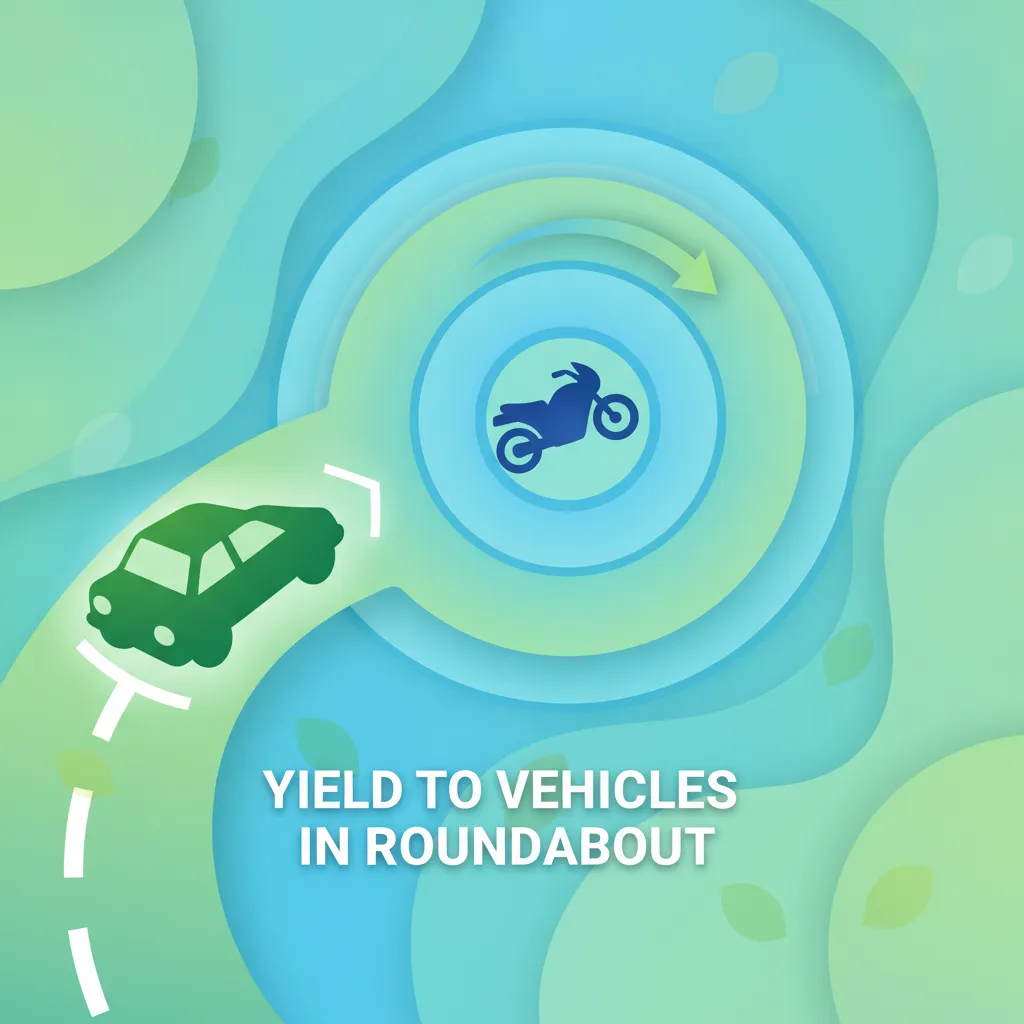
This lesson provides a step-by-step guide to navigating roundabouts in Portugal. It emphasizes the primary rule of yielding to traffic already circulating within the roundabout before entering. The content covers correct lane selection based on the intended exit, proper use of indicators for exiting, and managing the complexities of multi-lane roundabouts.
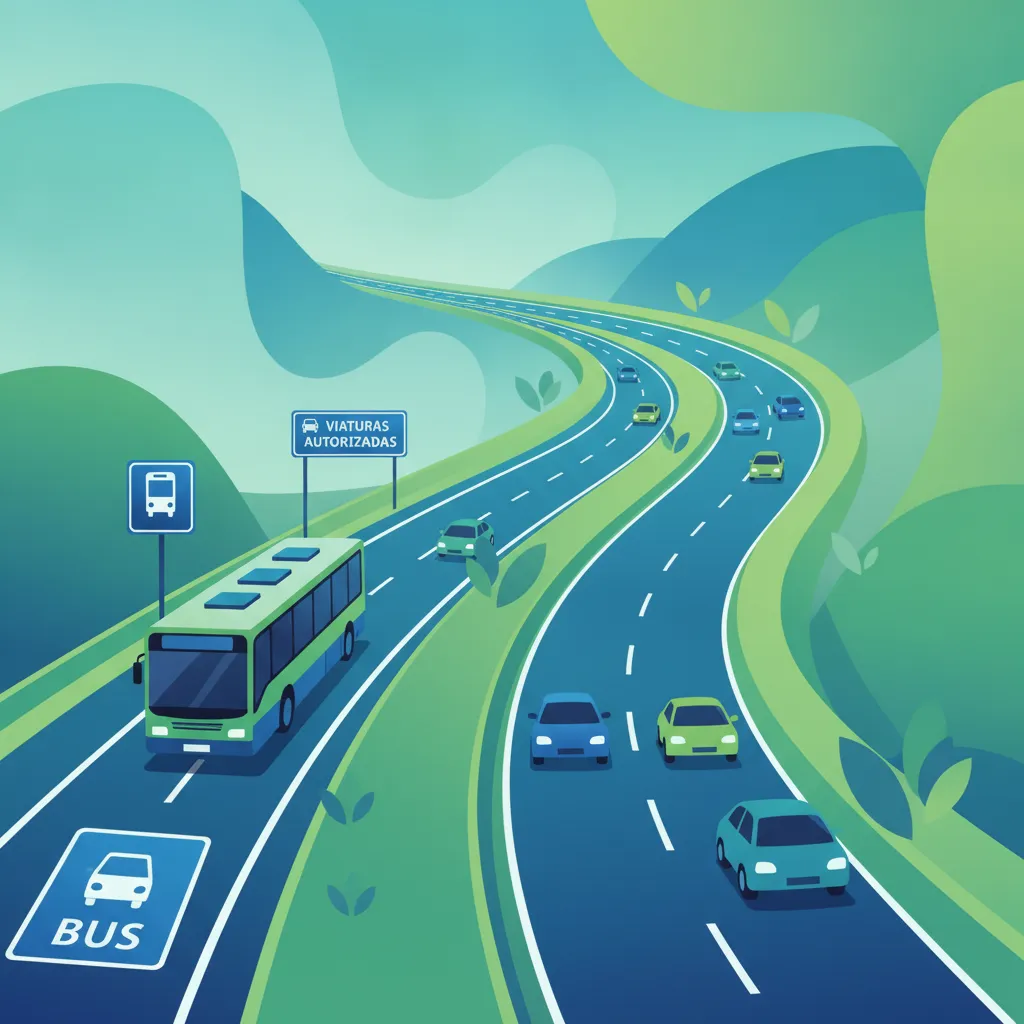
This lesson explains the purpose and rules of reserved lanes, such as those designated for buses, taxis, or cyclists. It covers how to identify these lanes through signage and road markings, and details the specific times they may be in operation. Drivers will learn when they are permitted to enter these lanes and the penalties for unauthorized use.
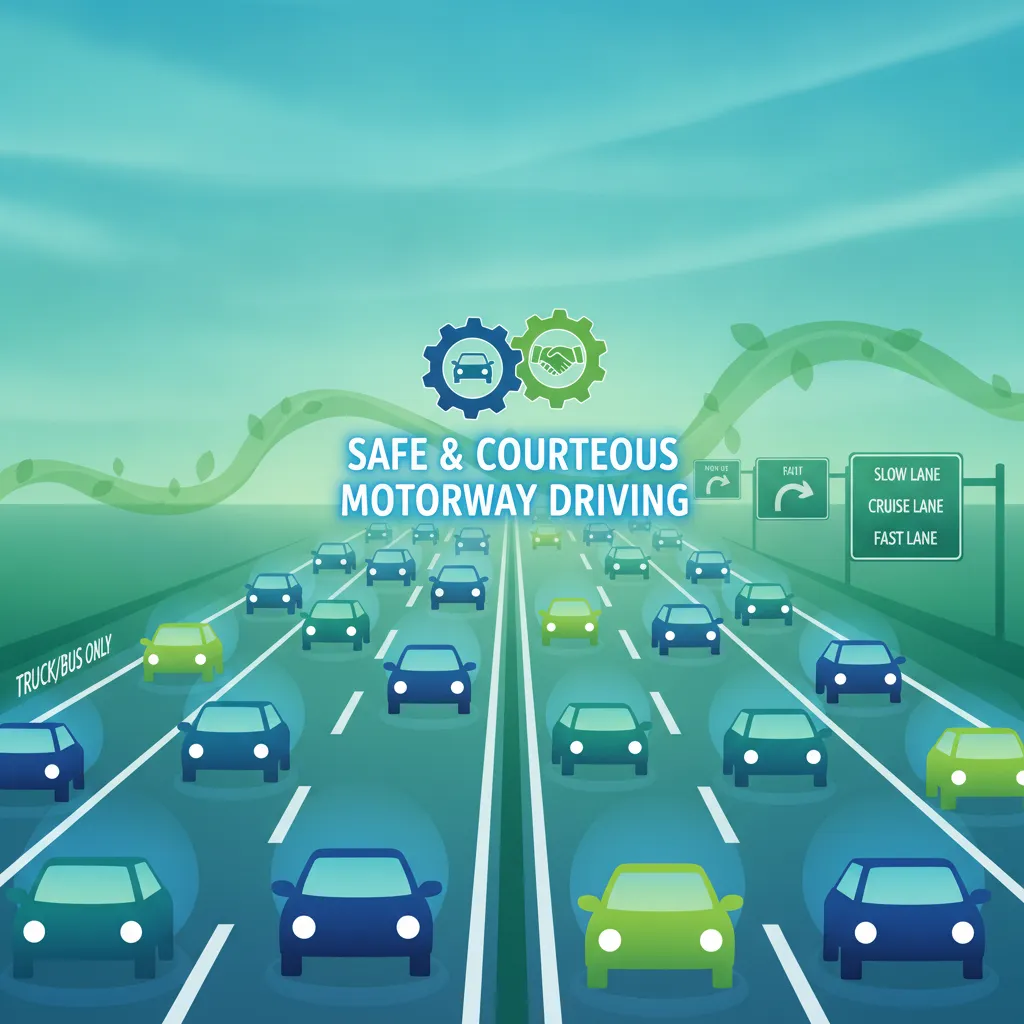
This lesson explains the unique set of rules that apply to motorway driving to facilitate safe, high-speed travel. It covers the correct procedure for entering and exiting the motorway, principles of lane discipline (keeping left unless overtaking), and the rules for safe overtaking. The lesson also clarifies the proper use of the hard shoulder or emergency lane for genuine emergencies only.

This lesson explains the regulations governing the use of dedicated bus lanes, including operational hours and priority rules at junctions. It clarifies which other vehicles may use these lanes and under what circumstances. The content also discusses traffic signal priority systems and the legal implications of improper bus lane usage.

This lesson details the rules of lane discipline and the procedures for safe overtaking. It explains how to maintain correct lane positioning and how road markings and signs define where overtaking is allowed or forbidden. The lesson emphasizes the importance of the mirror-signal-manoeuvre routine and ensuring sufficient space and visibility before attempting to pass another vehicle.

This lesson provides a detailed explanation of longitudinal road markings, including solid, broken, and double lines. It clarifies the rules for each type, specifying when changing lanes or overtaking is permitted or prohibited. Additionally, the lesson covers markings for road edges, stop lines at intersections, and pedestrian crossings to ensure correct driver positioning and action.

This lesson details the systematic process for changing lanes and merging with traffic, particularly when entering a motorway from an acceleration lane. It emphasizes the critical importance of the mirror-signal-blind spot check routine. The content also explains how to judge a safe gap in the traffic and adjust vehicle speed to merge smoothly and without disrupting the flow.

This lesson focuses on the specific skills required for driving on high-speed motorways. It details the procedures for safely merging onto and exiting the motorway, maintaining proper lane discipline, and adhering to variable speed limits. The content also provides rules for safe overtaking and managing the vehicle's stability at high speeds.

This lesson provides a detailed overview of the legal requirements and safe driving practices for school zones and pedestrian crossings. It covers mandatory speed limits, the meaning of various signs and signals, and the importance of yielding to pedestrians. The content stresses heightened awareness due to the unpredictable nature of children's behavior near roads.
Learn how road markings, such as directional arrows and lane lines, guide traffic flow and dictate lane usage on Portuguese roads. This lesson clarifies how to interpret these markings for safe navigation and compliance with the Código da Estrada.
This lesson provides a detailed explanation of longitudinal road markings, including solid, broken, and double lines. It clarifies the rules for each type, specifying when changing lanes or overtaking is permitted or prohibited. Additionally, the lesson covers markings for road edges, stop lines at intersections, and pedestrian crossings to ensure correct driver positioning and action.
This lesson focuses on interpreting the various markings painted on the road surface. It differentiates between solid and broken lines, explaining the rules for changing lanes and overtaking. The content also covers the significance of stop lines at intersections, pedestrian crossing markings (zebra crossings), and directional arrows that guide drivers into the correct lanes.

This lesson examines the meaning of various road surface markings and lane dividers, explaining how they guide motorcycle positioning. It distinguishes between solid and broken lines, the significance of lane width, and legal considerations for lane use. Emphasis is placed on maintaining appropriate lane discipline and positioning to ensure visibility and reduce conflict.
This lesson focuses on regulatory signs, which impose legal obligations and restrictions on drivers. It covers signs that indicate speed limits, prohibit entry or parking, and mandate specific directions or lane usage. Understanding these signs is essential for legal compliance and maintaining safe, orderly traffic flow on all roads.
This lesson explains the purpose and rules of reserved lanes, such as those designated for buses, taxis, or cyclists. It covers how to identify these lanes through signage and road markings, and details the specific times they may be in operation. Drivers will learn when they are permitted to enter these lanes and the penalties for unauthorized use.
This lesson details the rules of lane discipline and the procedures for safe overtaking. It explains how to maintain correct lane positioning and how road markings and signs define where overtaking is allowed or forbidden. The lesson emphasizes the importance of the mirror-signal-manoeuvre routine and ensuring sufficient space and visibility before attempting to pass another vehicle.
This lesson explains the function of information and direction signs, which provide essential guidance for navigation. It covers how to read signs indicating destinations, distances, route numbers, and the location of services such as fuel stations and rest areas. These signs are crucial for efficient route planning and making timely decisions on motorways and other complex road networks.
This lesson details the universal system of traffic light signals and their specific applications in Portugal. It clarifies the meaning of red, amber, and green lights, as well as flashing signals and directional arrows that control turning movements. Correctly interpreting these signals is fundamental for safely navigating controlled intersections and ensuring smooth traffic flow.
This lesson explains the unique set of rules that apply to motorway driving to facilitate safe, high-speed travel. It covers the correct procedure for entering and exiting the motorway, principles of lane discipline (keeping left unless overtaking), and the rules for safe overtaking. The lesson also clarifies the proper use of the hard shoulder or emergency lane for genuine emergencies only.

This lesson highlights road markings specifically designed to enhance the safety of vulnerable road users. It focuses on pedestrian crossings (zebra crossings), markings indicating school zones, and symbols for bicycle lanes or shared routes. The content stresses the heightened duty of care and specific actions, such as yielding or stopping, that drivers must take in these designated areas.
Find clear answers to common questions learners have about Traffic Direction Indicators. Learn how the lesson is structured, which driving theory objectives it supports, and how it fits into the overall learning path of units and curriculum progression in Portugal. These explanations help you understand key concepts, lesson flow, and exam focused study goals.
Directional arrows indicate the mandatory direction you must follow when driving in that lane. If you are in a lane with a right-turn arrow, you are legally required to turn right and cannot proceed straight.
One-way streets are often identified by a specific rectangular blue sign with a white arrow. Road markings like solid white lines paired with specific directional arrows also signify that traffic is flowing in only one direction.
If you are in a lane with clear directional arrows, you should have changed lanes earlier if your destination required a different movement. Crossing solid lines to change lanes at an intersection to bypass a mandatory direction is a serious traffic violation.
The theory exam often uses images of intersections where your path depends on correctly interpreting these markings. Failing to recognize them leads to incorrect lane positioning, which is a common cause of test failure and real-world traffic accidents.
Utilize the powerful search tool to refine your Portuguese driving theory practice. Pinpoint questions related to specific traffic laws, road signs, or complex scenarios from the Código da Estrada. Begin targeted revision now to boost your understanding and confidently approach your IMT driving exam.