
This lesson provides a comprehensive breakdown of the statutory speed limits applicable across different road types in Portugal. By understanding these legal requirements, you will ensure compliance with the Código da Estrada and gain the confidence needed to handle varied traffic conditions. This knowledge is essential for both passing your Category B theory exam and ensuring safety on the road.
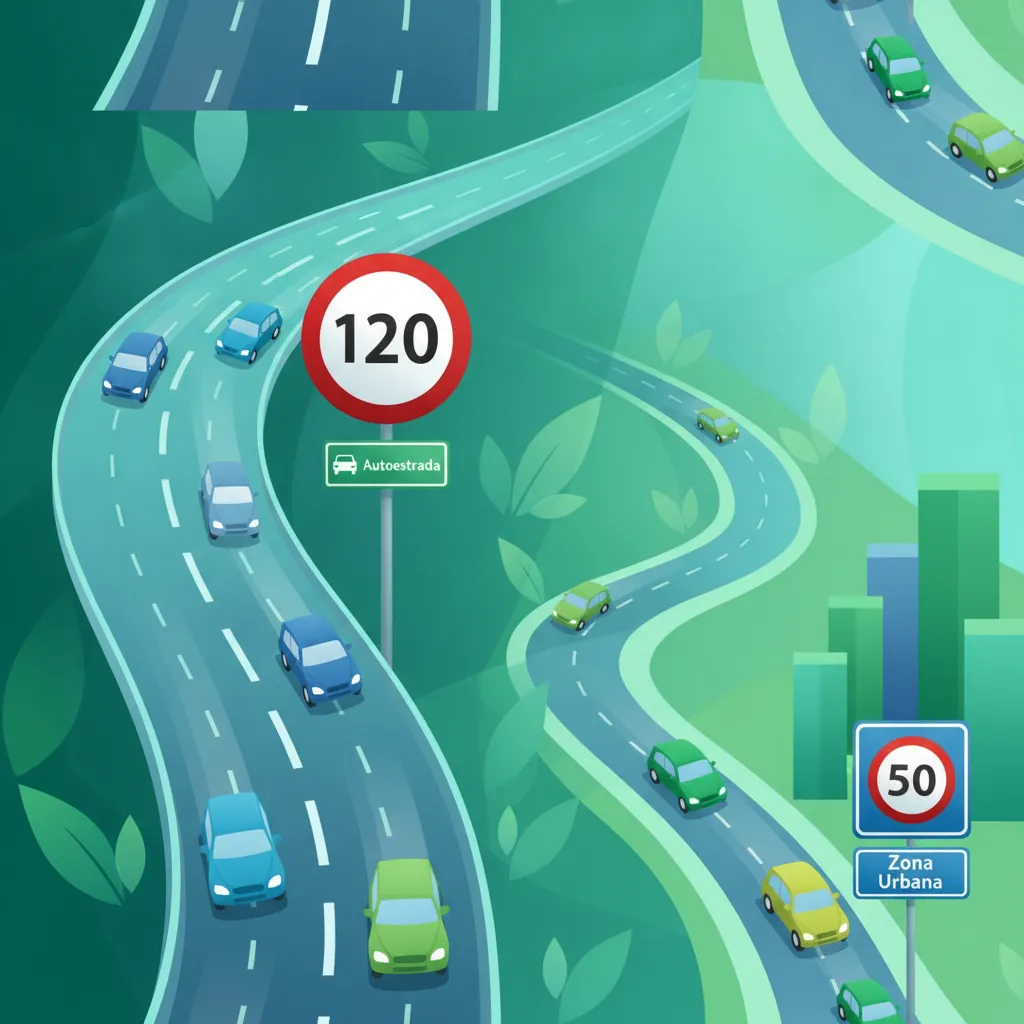
Lesson content overview
Navigating the roads of Portugal safely and legally requires a comprehensive understanding of statutory speed limits. For individuals undertaking the Portuguese Driving Theory – Category B Comprehensive Course, mastering these regulations is not merely about avoiding penalties; it is a fundamental aspect of responsible driving, ensuring the safety of all road users and contributing to efficient traffic flow. This lesson provides a detailed overview of the maximum legal speeds applicable on various road types across the country, serving as a cornerstone for effective speed management.
Speed limits are not arbitrary numbers; they are carefully calculated maximums designed to mitigate risks inherent to different road environments. They account for factors such as road geometry, potential for conflicts with other road users, sight distances, and traffic density. Adhering to these limits significantly reduces the likelihood and severity of accidents by providing drivers with adequate time to perceive hazards, react, and bring their vehicles to a safe stop. Compliance with speed limits is a core component of the Código da Estrada (Portuguese Road Code) and is essential for passing your theoretical driving examination.
Remember that speed limits represent the maximum allowed speed under ideal conditions. It is always the driver's responsibility to adjust their speed to what is safe and appropriate for the actual prevailing road, traffic, and weather conditions, which may often be lower than the posted limit.
In Portugal, default speed limits apply when no specific speed limit signs are present. These defaults vary significantly based on the type of road. It is crucial to be able to identify the road type you are on to apply the correct default speed limit. These limits are legally binding and must be strictly observed.
Built-up areas, known as zonas urbanas in Portuguese, are characterised by residential or commercial development, street lighting, and a higher density of pedestrian and cyclist activity. The speed limit for these areas applies from the moment you encounter the sign indicating the start of an urban area (often a white rectangular sign with the name of the locality, sometimes accompanied by a street lamp symbol) until you pass the sign indicating the end of the built-up area.
The default speed limit within any built-up area in Portugal is 50 km/h. This lower limit is necessary due to the increased probability of unexpected hazards, such as pedestrians crossing, vehicles entering and exiting driveways, and frequent intersections. Drivers must be particularly vigilant and prepared to stop quickly in these environments.
An urban zone characterised by residential or commercial development, street lighting, and higher pedestrian activity. The default speed limit is 50 km/h unless otherwise signposted.
Rural single carriageways, often referred to as Estradas Nacionais (National Roads) or Estradas Secundárias (Secondary Roads), are non-urban roads typically consisting of one lane per direction without a physical central separation. These roads often connect towns and villages and can have varying conditions, including curves, gradients, and limited sight distances.
The default speed limit on rural single carriageways in Portugal is 90 km/h. This limit allows for reasonable traffic flow while acknowledging the potential hazards of two-way traffic on an undivided road. It is important to note that even at 90 km/h, conditions such as sharp bends or uneven surfaces may require a further reduction in speed for safety.
A non-urban road with one lane per direction, typically without a physical central separator. The default speed limit is 90 km/h unless otherwise signposted.
Dual carriageways, or Estradas com Separador Central, are roads designed with distinct lanes for traffic travelling in opposite directions, separated by a physical barrier or wide median. These roads generally offer better safety features than single carriageways due to the separation of opposing traffic flows. They typically have at least two lanes in each direction.
The default speed limit on dual carriageways in Portugal is 100 km/h. This higher limit reflects the improved safety design of these roads compared to rural single carriageways. However, drivers must remain aware that dual carriageways are not motorways; they may still have at-grade intersections, direct property access, and variable design standards that necessitate careful driving.
A road with separate lanes for each direction of travel, typically with a physical central separator and usually at least two lanes per direction. The default speed limit is 100 km/h unless otherwise signposted.
Motorways, known as Autoestradas in Portugal, are high-capacity roads specifically designed for high-speed travel with controlled access. They feature multiple lanes per direction, grade-separated junctions (no cross-traffic), and strict entry and exit points. Motorways are built to the highest safety standards, allowing for the highest default speed limits.
For Category B vehicles (passenger cars), the default speed limit on motorways in Portugal is 120 km/h. While this is the maximum speed, it is crucial to remember that lower limits may be posted in certain sections, such as near urban peripheries, at interchanges, or in construction zones. Drivers of other vehicle types (e.g., heavy goods vehicles, vehicles with trailers) will have different, lower maximum speed limits.
A high-capacity, controlled-access road designed for high-speed travel, featuring multiple lanes per direction and grade-separated junctions. The default speed limit for Category B vehicles is 120 km/h unless otherwise signposted.
While default speed limits provide a general rule, specific traffic signs can override these defaults, either permanently or temporarily. These posted limits are always mandatory and must be obeyed. They are typically indicated by circular signs with a red border and a black number on a white background, representing the maximum speed in km/h.
Temporary speed limits are often implemented in response to specific, transient conditions that make the default speed unsafe. These are usually indicated by yellow-backed signs or standard signs mounted on temporary supports. Common scenarios for temporary limits include:
These temporary limits are legally binding for the duration they are displayed and must be strictly adhered to.
Certain areas inherently pose higher risks to specific road users, necessitating permanent lower speed limits than the default for that road type. Examples include:
Effective speed management involves understanding not just the numbers, but the principles behind them. Differentiating between various types of speed limits and their implications is vital for safe and legal driving.
The hierarchy is clear: always obey posted speed limit signs. If no signs are present, follow the default limit for the road type.
It is critical for drivers to distinguish between the maximum legal speed and the safe driving speed:
For example, driving at 120 km/h on a motorway may be legal, but it is not safe in heavy rain or dense fog. Responsible drivers always adjust their speed downwards from the legal maximum when conditions are anything less than ideal. This concept is explored further in Lesson 6.2, "Safe Speed Adjustment."
Understanding common pitfalls can help new drivers avoid violations and unsafe situations.
A frequent error is continuing to drive at 50 km/h (the built-up area default) long after passing the 'End of Built-Up Area' sign (Fim da Zona Urbana). This leads to unnecessarily slow driving on rural roads where the default limit is 90 km/h, potentially impeding traffic flow and frustrating other drivers. Always be attentive to the signs that mark the transition between urban and rural environments.
Some drivers may believe that if a rural single carriageway appears straight and clear, they can exceed the 90 km/h limit. However, rural roads can present unexpected hazards such as slow-moving agricultural vehicles, animals, hidden entrances, or sudden changes in road surface. Adhering to the 90 km/h limit or a lower posted limit is essential for safety.
Temporary speed limits in construction zones are often disregarded by drivers who perceive them as mere suggestions. These limits are legally binding and exist to protect both road workers and drivers from increased risks. Violations in these zones often carry higher penalties due to the heightened danger.
It's a common mistake to assume that all multi-lane, separated roads are motorways with a 120 km/h limit. Remember, a dual carriageway (Estrada com Separador Central) has a default limit of 100 km/h, while motorways (Autoestradas) have a 120 km/h limit. Always check for specific motorway signs or the presence of grade-separated junctions to confirm the road type.
The legal speed limit is the absolute maximum, but it rarely represents the safest speed. Drivers must continuously assess their environment and adjust their speed accordingly, often well below the posted limit.
Adverse weather significantly reduces grip, visibility, and stopping capability:
The design of the road itself can dictate safe speed:
Your vehicle's state also influences safe speed:
In areas with pedestrians, cyclists, or children, even the default urban limit of 50 km/h may be too high. Be prepared to reduce your speed drastically, particularly near:
Exceeding the speed limit in Portugal carries significant legal penalties, which vary depending on the severity of the infraction and the type of road. Penalties can include:
Beyond legal repercussions, the most critical consequence of speeding is the increased risk of accidents, injuries, and fatalities. Higher speeds mean longer stopping distances, less time to react to hazards, and more severe impacts in the event of a collision.
Understanding these key terms is crucial for interpreting road signs and regulations correctly:
Let's consider some real-world situations to solidify your understanding of speed limits in Portugal.
Scenario 1: Entering a Residential Zone
Scenario 2: Transitioning from Urban to Rural Road
Scenario 3: Navigating a Construction Zone
Scenario 4: Motorway Driving at Night
Understanding speed limits is just the first step. For a complete grasp of speed management, you should also review:
Applying this knowledge in practice is crucial for your theoretical exam and for becoming a safe driver.
Explore all units and lessons included in this driving theory course.
Lesson content overview
Explore all units and lessons included in this driving theory course.
Explore search topics learners often look for when studying Speed Limits by Road Type. These topics reflect common questions about road rules, driving situations, safety guidance, and lesson level theory preparation for learners in Portugal.
Browse additional driving theory lessons that cover connected traffic rules, road signs, and common driving situations related to this topic. Improve your understanding of how different rules interact across everyday traffic scenarios.
Explore how posted signs and temporary regulations modify default speed limits in Portugal. Learn when and why to drive below the legal maximum for safety, covering conditions like weather and road type.

This lesson teaches the crucial skill of selecting a safe and appropriate speed that considers the prevailing conditions. It explains why the legal speed limit is often not the safest speed in adverse weather, heavy traffic, or poor visibility. Drivers will learn to assess the environment and modify their speed to maintain control and allow for adequate stopping distance.
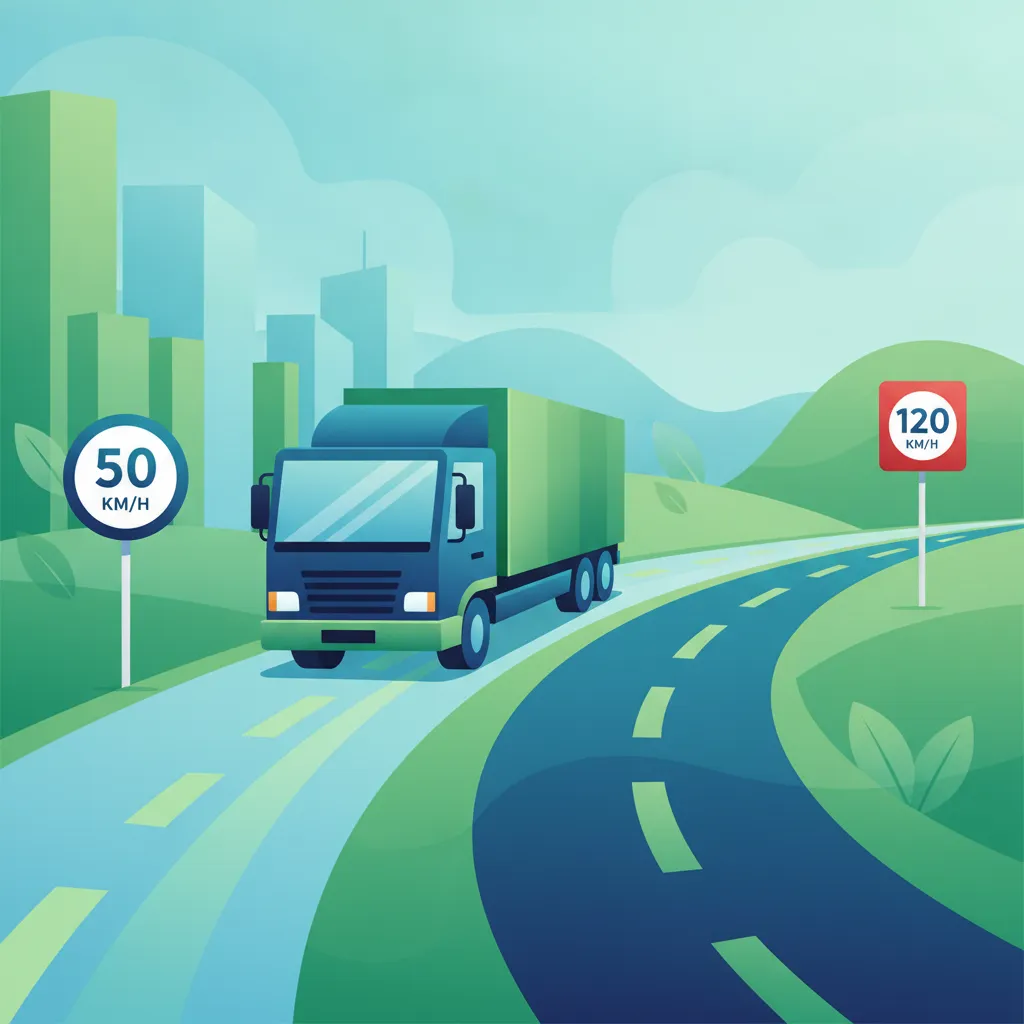
This lesson provides a clear breakdown of the legal speed limits for different categories of goods vehicles in Portugal. It covers the maximum speeds permitted on motorways, dual carriageways, rural roads, and within built-up areas. Adhering to these specific limits is a fundamental aspect of safe and legal professional driving.
This lesson focuses on the specifics of riding on motorways, covering speed management, lane discipline, and safe entry and exit strategies. Riders will learn how to choose appropriate lanes, maintain safe following distances at high speeds, and execute overtaking safely. The impact of wind and understanding Portuguese motorway signage are also addressed.

This lesson focuses on the critical skill of managing speed within complex urban settings. It explains that driving at the speed limit is not always the safest option and teaches riders how to adjust their speed based on traffic density, pedestrian activity, and visibility. The content reinforces the principle of always being able to stop safely within the distance you can see to be clear.
This lesson focuses on the specific skills required for driving on high-speed motorways. It details the procedures for safely merging onto and exiting the motorway, maintaining proper lane discipline, and adhering to variable speed limits. The content also provides rules for safe overtaking and managing the vehicle's stability at high speeds.
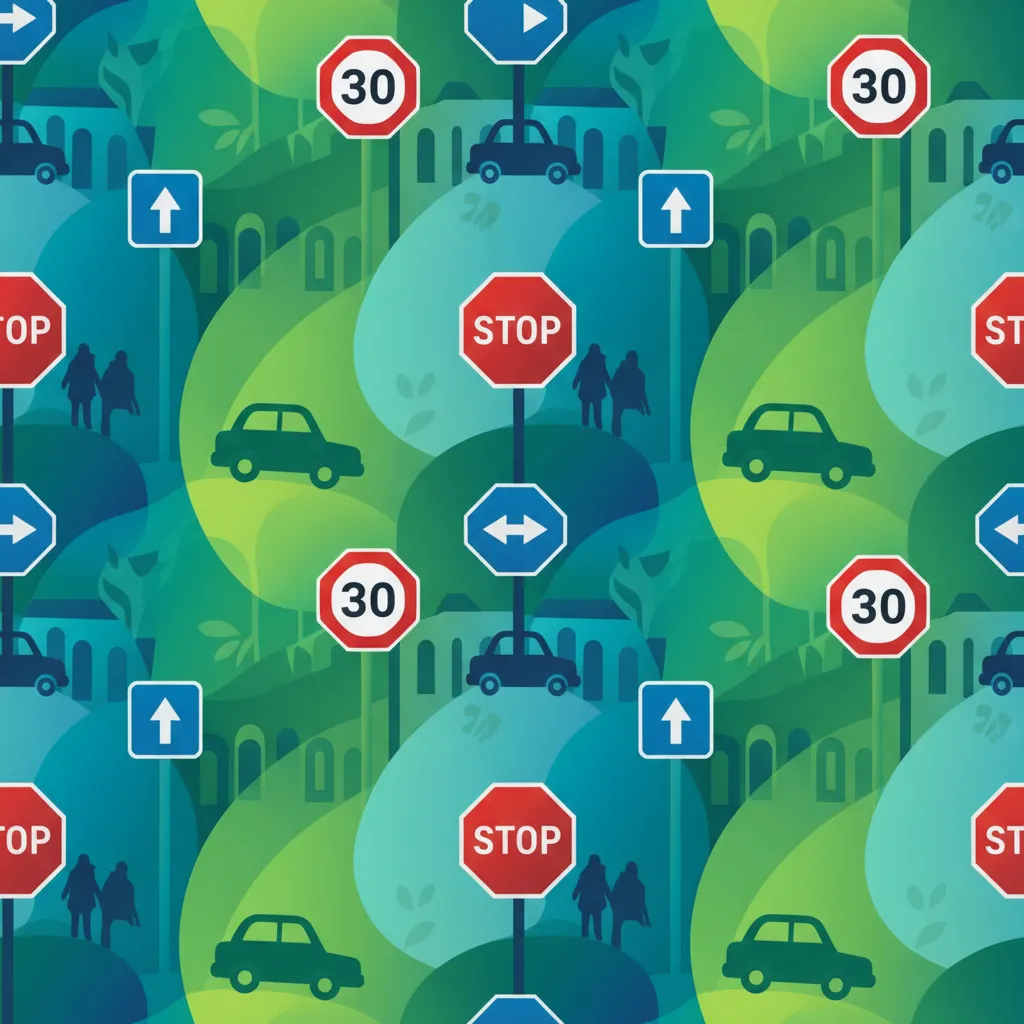
This lesson focuses on regulatory signs, which impose legal obligations and restrictions on drivers. It covers signs that indicate speed limits, prohibit entry or parking, and mandate specific directions or lane usage. Understanding these signs is essential for legal compliance and maintaining safe, orderly traffic flow on all roads.
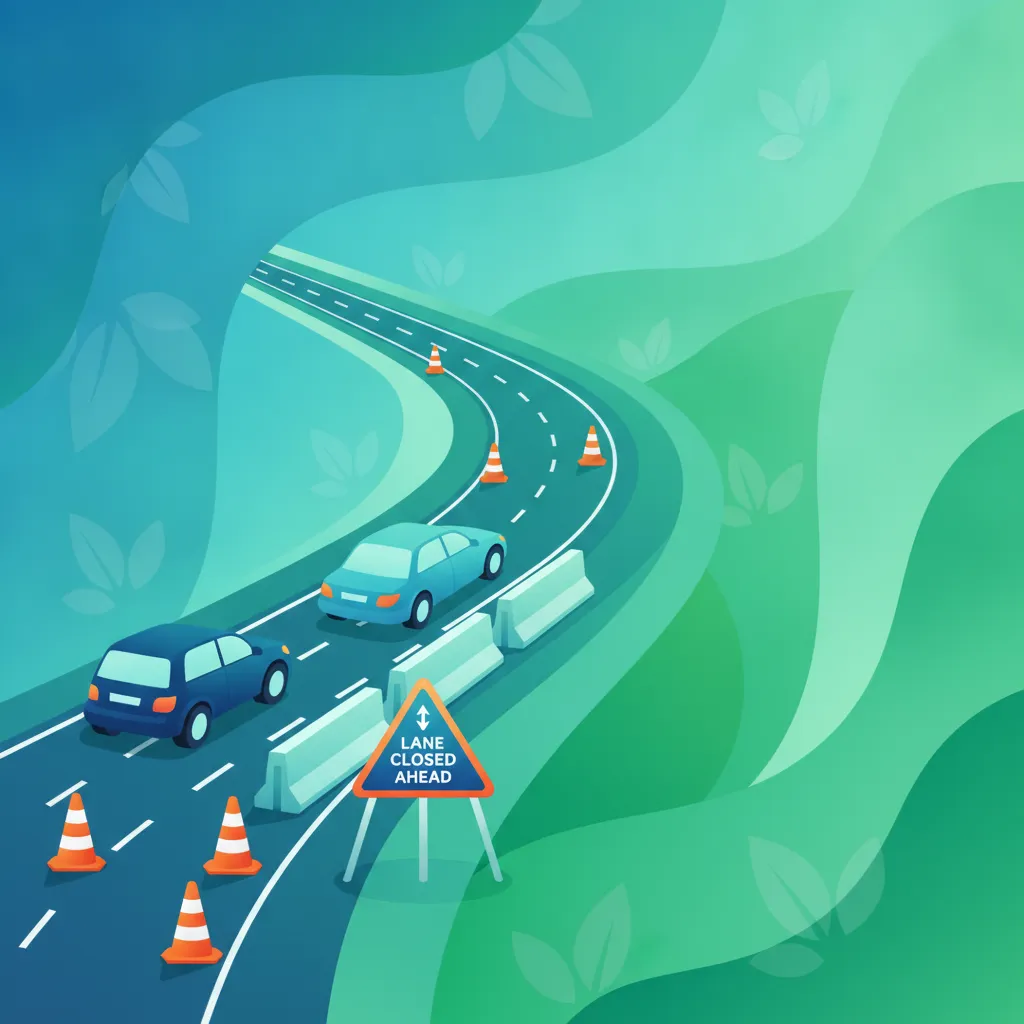
This lesson provides guidance for driving safely through areas of roadworks, where normal road layouts are altered. It stresses the importance of obeying all temporary signage, including reduced speed limits and lane guidance, to protect both drivers and road workers. Drivers will learn to anticipate sudden stops, narrowed lanes, and be aware of potential surface hazards within the construction zone.
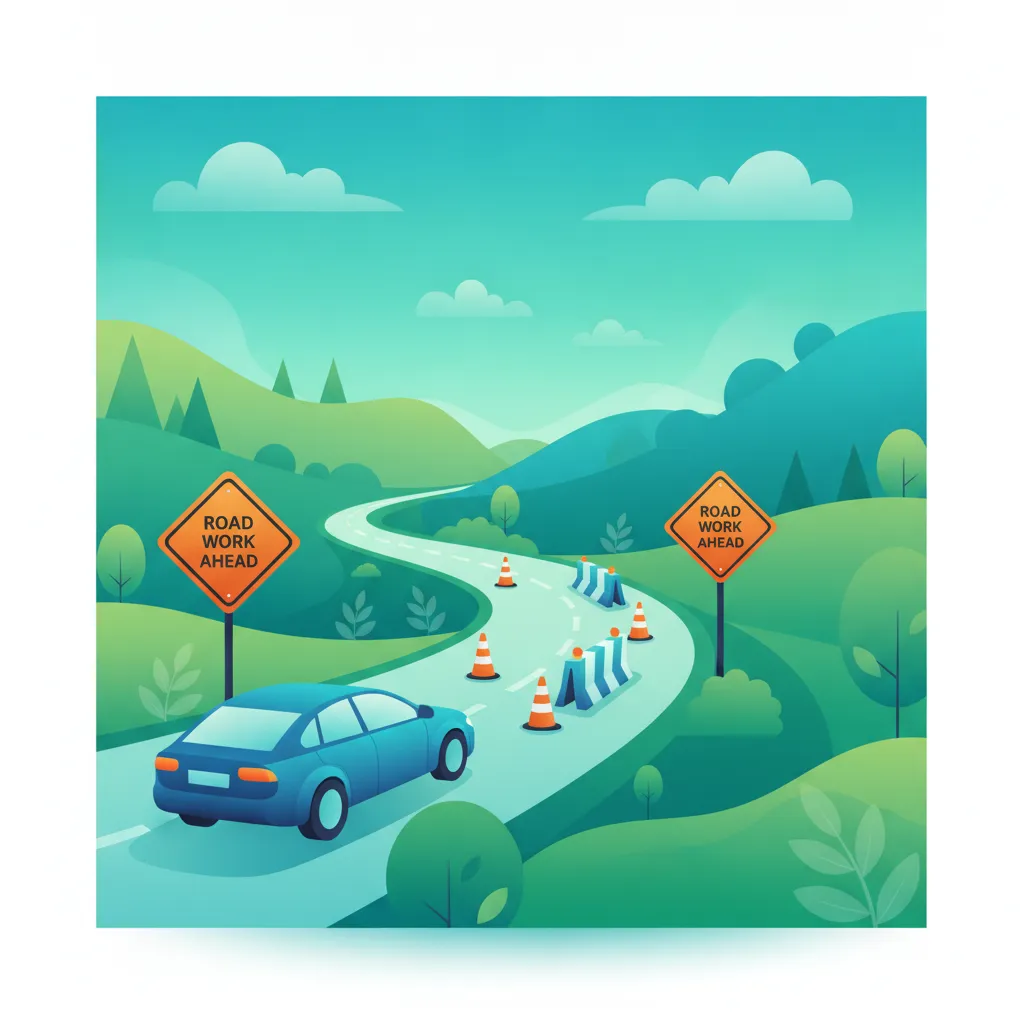
This lesson focuses on identifying and responding to temporary signs commonly found in construction zones or during road incidents. It covers signage indicating detours, lane closures, temporary speed limits, and the presence of road workers. Adherence to these temporary instructions is critical for ensuring the safety of both drivers and on-site personnel.

This lesson provides a detailed overview of the legal requirements and safe driving practices for school zones and pedestrian crossings. It covers mandatory speed limits, the meaning of various signs and signals, and the importance of yielding to pedestrians. The content stresses heightened awareness due to the unpredictable nature of children's behavior near roads.
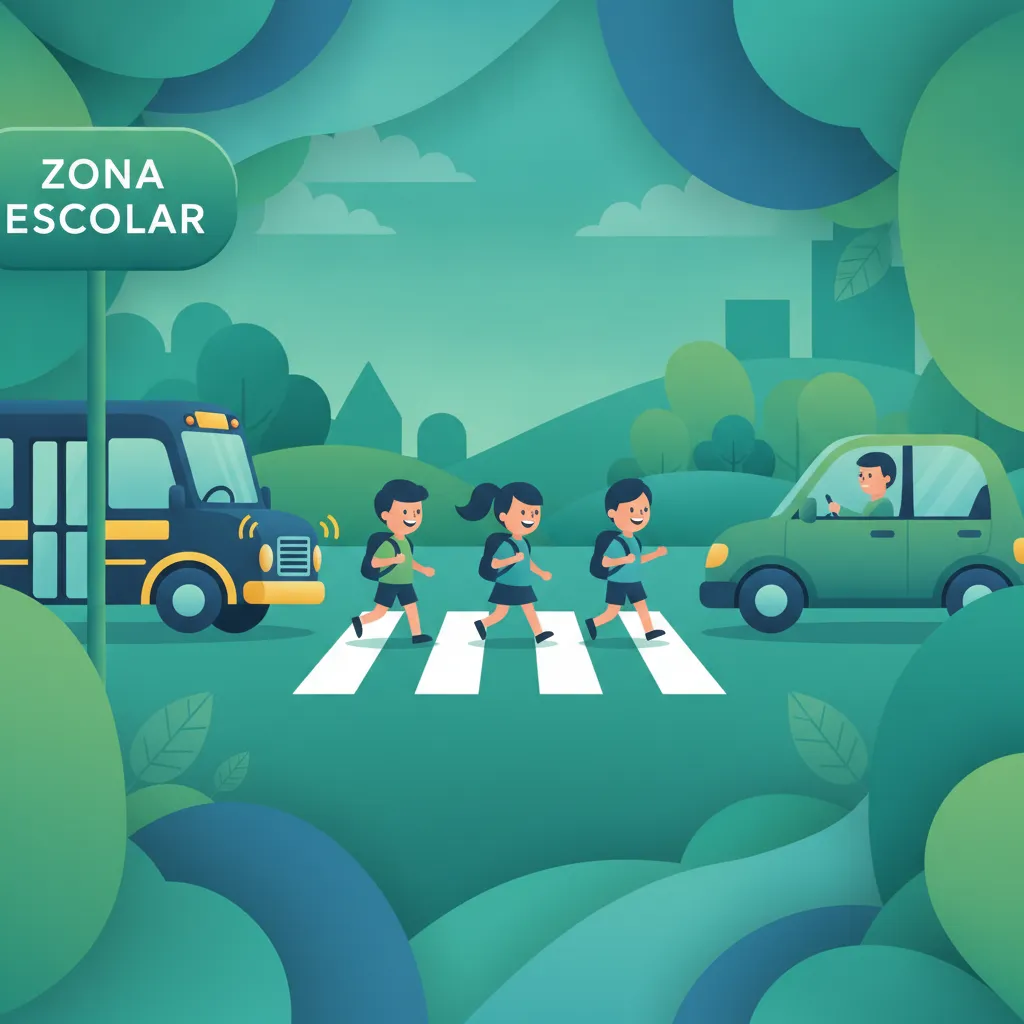
This lesson details the special precautions drivers must take when navigating school zones. It highlights the reduced speed limits that are often in effect during specific hours and the importance of being vigilant for children crossing the road. The content also covers the rules for stopping for school buses when their lights are flashing, to ensure the safety of boarding and alighting students.
Understand the distinct default speed limits for different Portuguese road types: urban areas, rural single carriageways, dual carriageways, and motorways. Learn the legal basis for these varied limits and their impact on driver behaviour.
This lesson provides a clear breakdown of the legal speed limits for different categories of goods vehicles in Portugal. It covers the maximum speeds permitted on motorways, dual carriageways, rural roads, and within built-up areas. Adhering to these specific limits is a fundamental aspect of safe and legal professional driving.
This lesson focuses on the specific skills required for driving on high-speed motorways. It details the procedures for safely merging onto and exiting the motorway, maintaining proper lane discipline, and adhering to variable speed limits. The content also provides rules for safe overtaking and managing the vehicle's stability at high speeds.
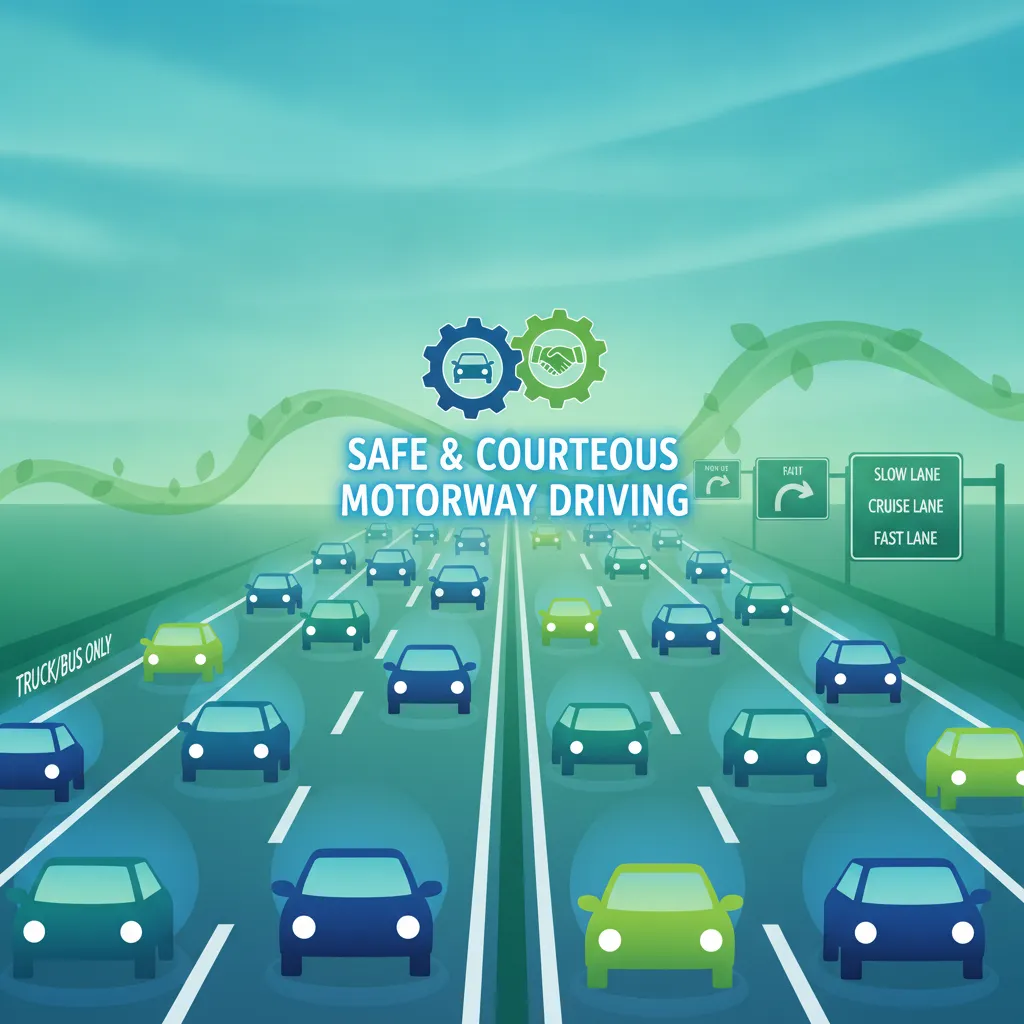
This lesson explains the unique set of rules that apply to motorway driving to facilitate safe, high-speed travel. It covers the correct procedure for entering and exiting the motorway, principles of lane discipline (keeping left unless overtaking), and the rules for safe overtaking. The lesson also clarifies the proper use of the hard shoulder or emergency lane for genuine emergencies only.
This lesson focuses on the specifics of riding on motorways, covering speed management, lane discipline, and safe entry and exit strategies. Riders will learn how to choose appropriate lanes, maintain safe following distances at high speeds, and execute overtaking safely. The impact of wind and understanding Portuguese motorway signage are also addressed.
This lesson teaches the crucial skill of selecting a safe and appropriate speed that considers the prevailing conditions. It explains why the legal speed limit is often not the safest speed in adverse weather, heavy traffic, or poor visibility. Drivers will learn to assess the environment and modify their speed to maintain control and allow for adequate stopping distance.
This lesson focuses on the critical skill of managing speed within complex urban settings. It explains that driving at the speed limit is not always the safest option and teaches riders how to adjust their speed based on traffic density, pedestrian activity, and visibility. The content reinforces the principle of always being able to stop safely within the distance you can see to be clear.

This lesson highlights the distinct risks associated with driving on rural roads, which often lack the safety features of major routes. It prepares drivers to anticipate and manage hazards such as sharp bends, limited visibility, poor road surfaces, and encounters with slow-moving agricultural vehicles or animals. Adapting speed and road positioning are emphasized as key defensive techniques.
This lesson addresses the challenges of operating a large vehicle on rural roads, which often feature narrow lanes, sharp bends, and poor surfaces. It covers techniques for speed adaptation, gear selection for gradients, and maintaining lane position. The content emphasizes heightened awareness for hazards such as farm vehicles and animals.

This lesson focuses on the specific skills and regulations for motorway driving. It covers correct lane usage for HGVs, safe procedures for overtaking slower traffic, and the rules for using the hard shoulder or emergency refuge areas. Maintaining consistent speed and awareness of surrounding traffic is key to motorway safety.
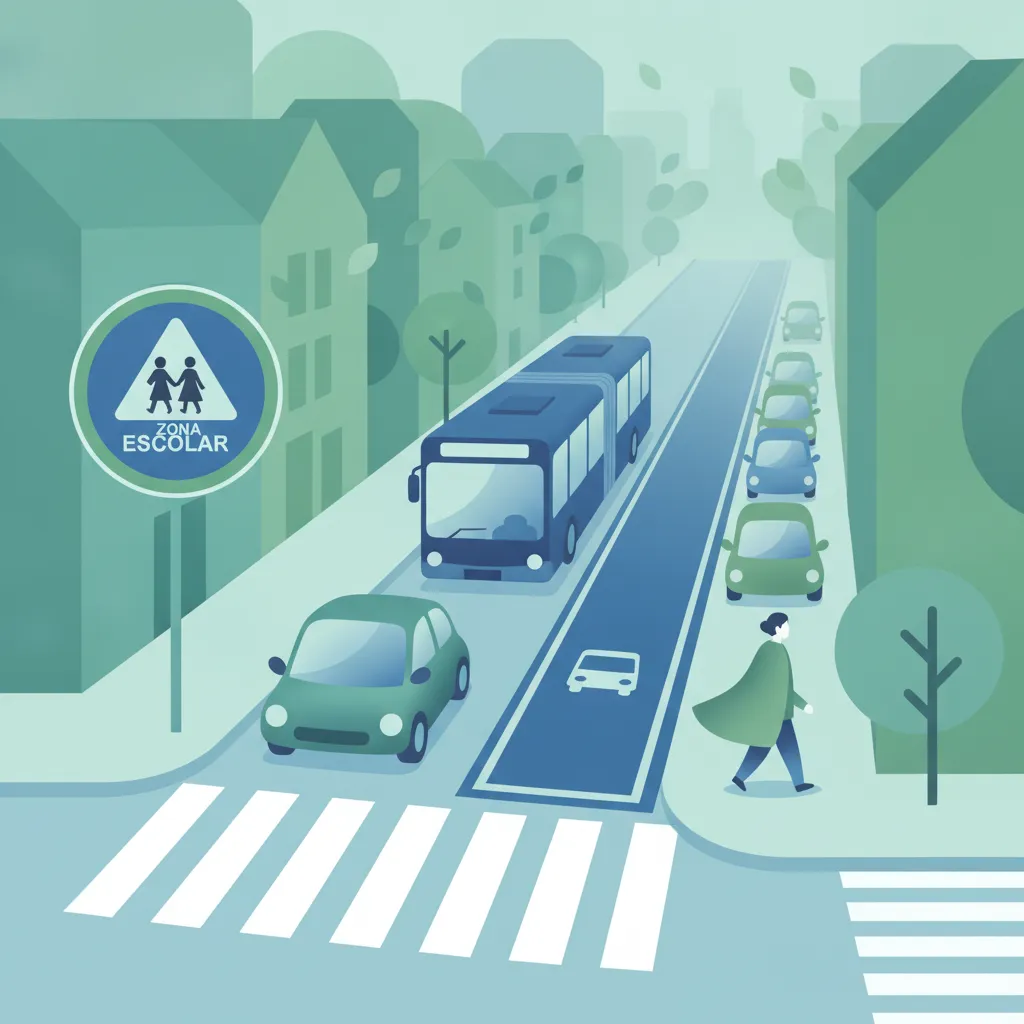
This lesson focuses on special zones within urban environments, such as school areas, bus lanes, and residential streets, where specific traffic rules apply. It covers reduced speed limits, restricted lane usage, and heightened pedestrian activity. Riders learn to recognize these zones and adjust their riding behavior to ensure safety for themselves and others.
Find clear answers to common questions learners have about Speed Limits by Road Type. Learn how the lesson is structured, which driving theory objectives it supports, and how it fits into the overall learning path of units and curriculum progression in Portugal. These explanations help you understand key concepts, lesson flow, and exam focused study goals.
The general speed limit for light vehicles in built-up areas is 50 km/h, unless specific signage indicates a different limit or a lower zone limit.
No. While the maximum speed for cars on motorways is 120 km/h, different categories of vehicles have their own specific maximum limits set by the Código da Estrada.
Always look for regulatory speed limit signs. These signs override the general default speed limits and apply until the end of the restricted zone or until another sign indicates a change.
While the statutory limits apply to all, new drivers must always exercise extra caution and strictly adhere to all posted speed limits to avoid probationary period penalties.
Utilize the powerful search tool to refine your Portuguese driving theory practice. Pinpoint questions related to specific traffic laws, road signs, or complex scenarios from the Código da Estrada. Begin targeted revision now to boost your understanding and confidently approach your IMT driving exam.