
This lesson teaches you how to look beyond the legal speed limit to determine the safest speed for any given situation. By understanding how environmental factors and road conditions influence control, you will develop the decision-making skills needed for the Portuguese Category B theory exam.
Lesson content overview
Driving safely on Portuguese roads, and indeed anywhere, is about more than just knowing and obeying the posted speed limits. It's about a crucial skill known as safe speed adjustment – the ability to select an appropriate speed that accounts for the prevailing conditions, ensuring control, adequate stopping distance, and the safety of all road users. This lesson will delve into why the legal maximum speed is often not the safest speed and how to dynamically assess your environment to make responsible speed choices.
The concept of safe speed adjustment is central to responsible driving. While speed limits provide a statutory maximum, they assume ideal conditions. Real-world driving rarely offers such perfect scenarios. Therefore, adapting your speed to actual conditions is paramount for preventing accidents and ensuring smooth, controlled vehicle operation. This dynamic decision-making interconnects with concepts like stopping distances, hazard perception, and overall driver responsibility, all crucial for the Portuguese Category B driving theory exam.
The legal speed limit is the absolute maximum speed permissible under the law for a given road segment, typically indicated by road signs. These limits are set to standardize traffic flow and enhance safety under ideal conditions. For example, a motorway might have a limit of 120 km/h for light vehicles, while urban areas are often restricted to 50 km/h.
However, the safe speed is the speed at which you, as the driver, can maintain full control of your vehicle and stop within the distance you can see to be clear, given the current conditions. This speed can, and often should, be significantly lower than the posted legal limit. Believing that the speed limit is always the correct or safest speed, regardless of weather, traffic, or road conditions, is a common and dangerous misunderstanding. For instance, while a sign might permit 80 km/h, heavy rain or dense traffic could necessitate traveling at 50 km/h or less.
Stopping distance is the total distance your vehicle travels from the moment you perceive a hazard to the moment it comes to a complete stop. This critical measurement is directly affected by your speed and is a cornerstone of safe speed adjustment. Stopping distance is comprised of two main components: reaction distance and braking distance.
Reaction distance is the distance your vehicle covers during your reaction time – the interval between you perceiving a hazard and initiating the braking action (e.g., moving your foot from the accelerator to the brake pedal). This distance increases proportionally with speed and varies based on driver alertness, fatigue, and distractions. On average, a driver's reaction time is around 1.5 seconds, but this can fluctuate.
Braking distance is the distance your vehicle travels from the moment you apply the brakes until it comes to a complete stop. Unlike reaction distance, braking distance increases exponentially with speed. For example, doubling your speed quadruples your braking distance. This distance is also heavily influenced by road surface conditions (dry, wet, icy), the condition of your vehicle's tyres and brakes, and the vehicle's weight.
Understanding these components is vital: a longer stopping distance means you need to start braking earlier, which, in turn, requires driving at a speed that allows for this extended distance.
Dynamic speed adjustment is the ongoing, proactive process of modifying your speed based on a real-time evaluation of all relevant factors. It requires constant vigilance, anticipation, and decision-making throughout every phase of driving. This isn't a one-time decision at the start of a journey but a continuous assessment. As conditions change, so too must your speed. This continuous assessment is fundamental to maintaining safety margins and responding appropriately to unforeseen circumstances.
To determine a truly safe speed, drivers must consider a multitude of factors that affect vehicle control and stopping capability. These factors often interact, demanding a holistic approach to speed management.
Hazard perception is the ability to recognize potential dangers early and adjust your driving behavior preemptively. This includes scanning the road ahead, anticipating actions of other road users, and identifying potential risks like children playing near the road, vehicles merging, or unexpected roadworks. Proactive hazard perception allows you to reduce speed gradually, avoiding sudden emergency braking situations. Waiting until a hazard is imminent before reacting significantly compromises safety. For instance, slowing down when you see a "school ahead" sign, even if no children are immediately visible, is a demonstration of good hazard perception.
The road surface condition significantly affects your vehicle's traction, which is crucial for both steering and braking.
Drivers must adjust their speed downward in adverse road conditions, even if well below the posted speed limit, to maintain control and ensure sufficient stopping distance. Assuming a dry road limit is safe on a wet road is a critical error.
Traffic density and flow refer to the volume and speed of surrounding vehicles. In heavy traffic, maintaining a safe speed often means matching the flow of traffic, even if it is slower than the posted limit, and ensuring adequate following distance. Trying to maintain a speed significantly higher than the average traffic flow can lead to unsafe overtaking maneuvers, frequent lane changes, and abrupt braking, increasing the risk of collisions. Conversely, driving excessively slowly in fast-moving traffic can also be dangerous if it causes other drivers to make erratic maneuvers.
Visibility range is the clear distance ahead that a driver can see. It can be severely limited by adverse weather conditions like fog or heavy rain, or by factors like nightfall, twilight, or even sharp curves and crests. When visibility is reduced, you must decrease your speed to ensure you can stop within the visible distance. Headlights improve visibility for you, but they do not compensate for the overall reduction in range; your ability to react to unseen hazards ahead is still compromised. For example, if fog reduces your visibility to 30 meters, your speed must be low enough to stop your vehicle within that 30-meter range.
The total weight carried by your vehicle (passengers, cargo, or a trailer) and the mechanical condition of its components (tyres, brakes, suspension) directly impact its performance and stopping capability.
Drivers must account for these factors by reducing their speed, particularly when carrying a full load or towing, and ensuring their vehicle is in good working order. Ignoring the impact of load on braking performance is a common oversight that can lead to accidents.
Weather conditions such as rain, snow, ice, strong winds, and even bright sunlight can significantly affect road safety. Each condition uniquely impacts a vehicle's handling, traction, and stopping ability, demanding specific speed adaptations.
Drivers must always reduce speed in adverse weather conditions to maintain control and safety. A common error is maintaining speed during light rain, assuming it has no impact on safety, when in fact, the road is most slippery at the start of a rainfall due to oil and dirt mixing with water.
The Portuguese Código da Estrada (Road Code) clearly outlines the legal obligations drivers have concerning speed. It emphasizes that obeying maximum speed limits is only one part of the equation; adjusting speed to conditions is equally, if not more, important.
Drivers are legally required not only to obey posted speed limits but also to adjust their speed to current road, traffic, and weather conditions. This applies to all road types at all times when conditions deviate from the ideal. The rationale is to ensure vehicle control, adequate stopping distances, and the safety of all road users. For example, even if the motorway limit is 120 km/h, the law mandates reducing to 80 km/h or less if heavy rain or strong winds make higher speeds unsafe.
A critical legal principle is that a driver must always be able to stop their vehicle within the distance that is clear ahead. This "stopping distance visibility rule" is particularly crucial when visibility is reduced (e.g., fog, night driving, heavy rain, or approaching a blind curve). It's a continuous obligation to prevent collisions with unseen hazards. This means if you can only see 50 metres ahead due to fog, your speed must be such that your total stopping distance does not exceed 50 metres.
Drivers must maintain a safe following distance to the vehicle ahead, allowing sufficient space for safe braking if the vehicle in front suddenly slows or stops. This rule applies in all driving situations. A common guideline in dry conditions is the "2-second rule," where you pick a fixed point on the road and ensure at least two seconds pass from when the vehicle ahead passes it to when your vehicle reaches it. In adverse conditions (wet roads, ice, fog, heavy loads), this following distance must be significantly increased – often to 3, 4, or even more seconds.
While the focus is on safe speed, it is equally important to remember that you must never exceed the maximum speed limit indicated by road signs or general regulations for the road type. This is a mandatory legal requirement for general safety and regulatory compliance. Violations lead to legal penalties, including fines and points on your driving licence. For instance, in residential zones, the limit is typically 50 km/h, and you must not exceed this, regardless of how light the traffic is.
Several common errors related to speed adjustment lead to dangerous situations and accidents.
A frequent mistake is driving at the posted speed limit during heavy rain, fog, or on slippery roads. This ignores the reduced tyre grip and significantly increased stopping distance, dramatically raising the risk of hydroplaning, skidding, and collisions. Similarly, maintaining normal speed during nightfall, despite reduced visibility, is dangerous.
Many drivers underestimate how much stopping distance increases with speed and adverse conditions. They rely on late braking when an obstacle appears suddenly, rather than adjusting speed preemptively through effective hazard perception. This often results in potential collisions due to insufficient braking distance. For instance, assuming standard stopping distance is sufficient on wet or icy roads is a dangerous misconception.
Failure to increase following distance on slippery roads or in heavy traffic is a major cause of rear-end collisions. Drivers often assume a standard following distance is always sufficient, disregarding the longer braking distances required under poor conditions or when the vehicle is loaded.
Understanding safe speed adjustment is best reinforced through practical examples:
Scenario: Motorway in Heavy Rain
Scenario: Residential Area with School
Scenario: Rural Road in Thick Fog
Scenario: Heavy Vehicle with Load
Safe speed adjustment is more than just a recommendation; it is a fundamental pillar of defensive driving and a legal obligation under the Código da Estrada. Drivers must constantly assess a wide range of factors – including weather, road conditions, traffic, visibility, and their vehicle's state – to determine the most prudent speed at any given moment. Remember that the legal speed limit is a maximum, not a target. By mastering dynamic speed adjustment, you enhance your control, increase your reaction time, minimize stopping distances, and significantly reduce the risk of accidents, contributing to safer roads for everyone in Portugal.
Explore all units and lessons included in this driving theory course.
Lesson content overview
Explore all units and lessons included in this driving theory course.
Explore search topics learners often look for when studying Safe Speed Adjustment. These topics reflect common questions about road rules, driving situations, safety guidance, and lesson level theory preparation for learners in Portugal.
Browse additional driving theory lessons that cover connected traffic rules, road signs, and common driving situations related to this topic. Improve your understanding of how different rules interact across everyday traffic scenarios.
Learn how weather, traffic density, road surface, and visibility impact safe driving speeds. Understand why legal limits are not always sufficient and how to adjust dynamically on Portuguese roads.

This lesson teaches riders how to assess and adapt to the increased risks associated with adverse weather and road conditions. It explains how rain reduces tire grip and visibility, requiring lower speeds and gentler control inputs. The content also provides advice for dealing with other challenging conditions such as strong crosswinds, fog, and road surface hazards like potholes or gravel.

This lesson focuses on adapting driving techniques for wet and foggy conditions, which significantly reduce visibility and tyre grip. It explains the phenomenon of aquaplaning and how to avoid it by reducing speed and ensuring proper tyre condition. The correct use of headlights, fog lights, and increasing following distances are presented as essential safety measures.
This lesson introduces the 'two-second rule' as a simple and effective method for establishing a safe following distance in good driving conditions. It explains the rationale behind this rule, linking it directly to average reaction and braking times. The lesson also emphasizes the need to extend this gap to three or more seconds in wet, icy, or low-visibility situations.

This lesson explains how adverse weather conditions like rain and fog compromise visibility and vehicle control. It provides clear guidance on reducing speed, increasing following distance, and using lights and wipers effectively. The content also covers the phenomenon of hydroplaning and how to prevent loss of traction on wet roads.
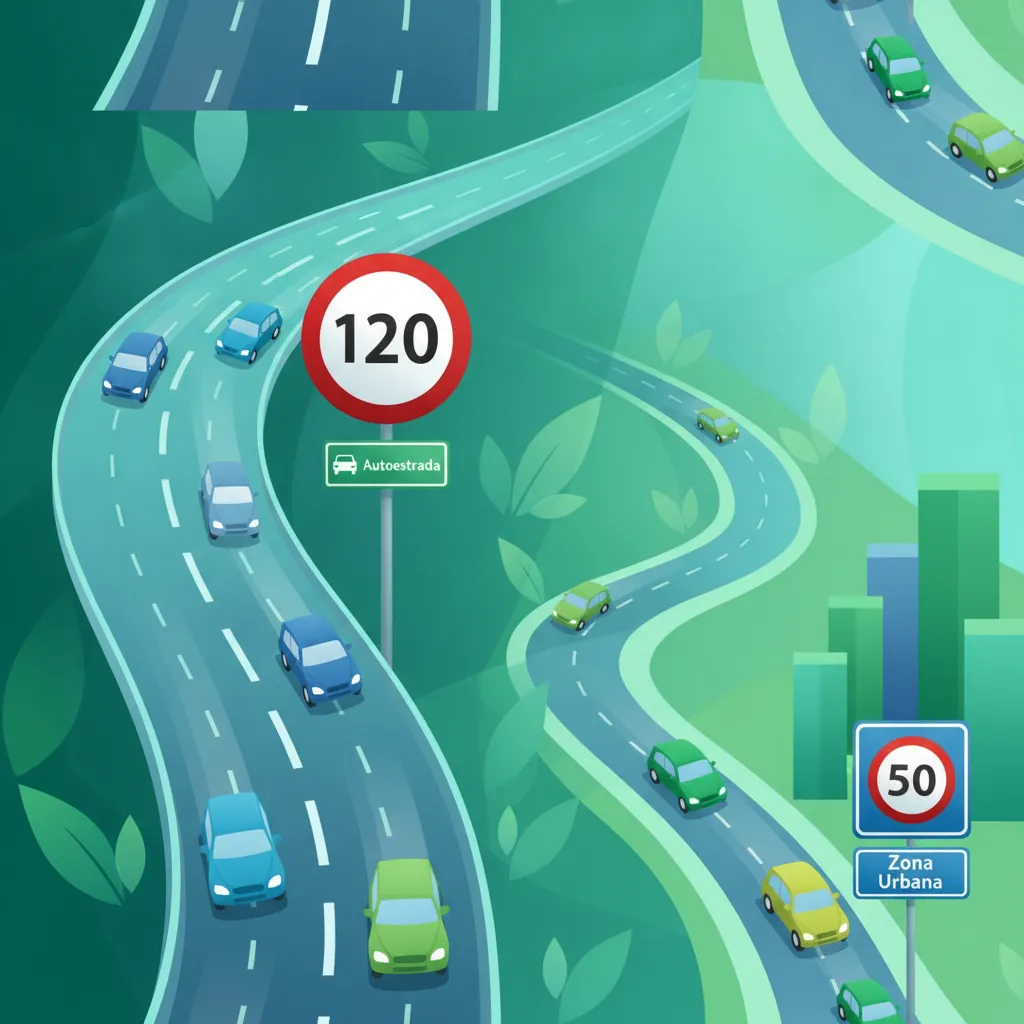
This lesson provides a clear overview of the statutory speed limits applicable on various types of roads in Portugal. It covers the default limits for built-up areas, single carriageways, dual carriageways, and motorways. Understanding these legal maximums is the first step in managing speed effectively and avoiding penalties for speeding.
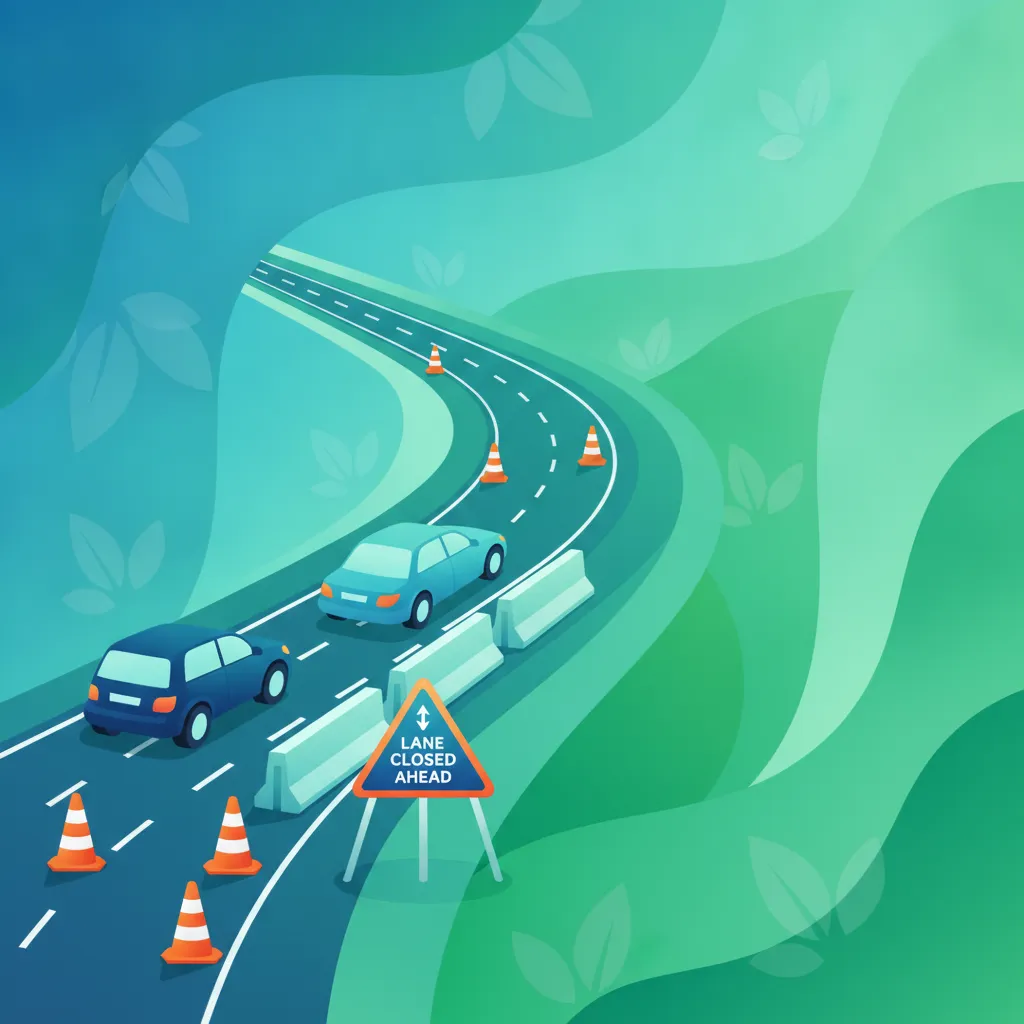
This lesson provides guidance for driving safely through areas of roadworks, where normal road layouts are altered. It stresses the importance of obeying all temporary signage, including reduced speed limits and lane guidance, to protect both drivers and road workers. Drivers will learn to anticipate sudden stops, narrowed lanes, and be aware of potential surface hazards within the construction zone.
This lesson focuses on the specifics of riding on motorways, covering speed management, lane discipline, and safe entry and exit strategies. Riders will learn how to choose appropriate lanes, maintain safe following distances at high speeds, and execute overtaking safely. The impact of wind and understanding Portuguese motorway signage are also addressed.
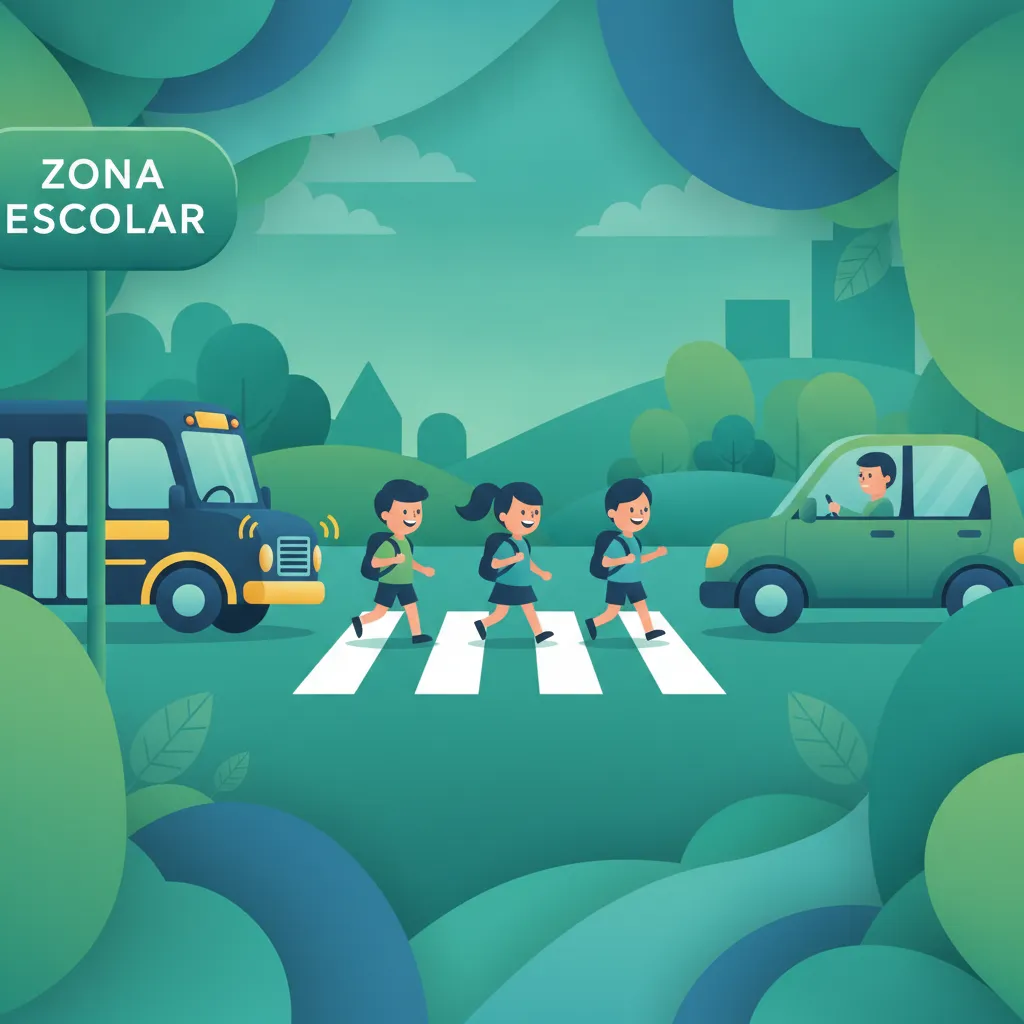
This lesson details the special precautions drivers must take when navigating school zones. It highlights the reduced speed limits that are often in effect during specific hours and the importance of being vigilant for children crossing the road. The content also covers the rules for stopping for school buses when their lights are flashing, to ensure the safety of boarding and alighting students.

This lesson provides strategies for safe driving after dark, addressing challenges like reduced visibility and headlight glare. It details the correct situations for using main beams (high beams) and the importance of dipping them for oncoming or followed vehicles. Techniques for minimizing the effect of glare and being aware of less visible hazards like pedestrians are also covered.

This lesson provides a detailed overview of the legal requirements and safe driving practices for school zones and pedestrian crossings. It covers mandatory speed limits, the meaning of various signs and signals, and the importance of yielding to pedestrians. The content stresses heightened awareness due to the unpredictable nature of children's behavior near roads.
Explore the legal requirements under the Portuguese Código da Estrada regarding safe speed, including stopping within visible distance and maintaining safe following distances. Understand driver responsibilities beyond posted limits.
This lesson introduces the 'two-second rule' as a simple and effective method for establishing a safe following distance in good driving conditions. It explains the rationale behind this rule, linking it directly to average reaction and braking times. The lesson also emphasizes the need to extend this gap to three or more seconds in wet, icy, or low-visibility situations.

This lesson focuses on the practical application of maintaining a safe gap from the vehicle ahead. It explains time-based rules for calculating following distance and how to adjust this gap for adverse weather or poor visibility. Developing excellent hazard perception and anticipation skills is key to avoiding emergency braking situations.
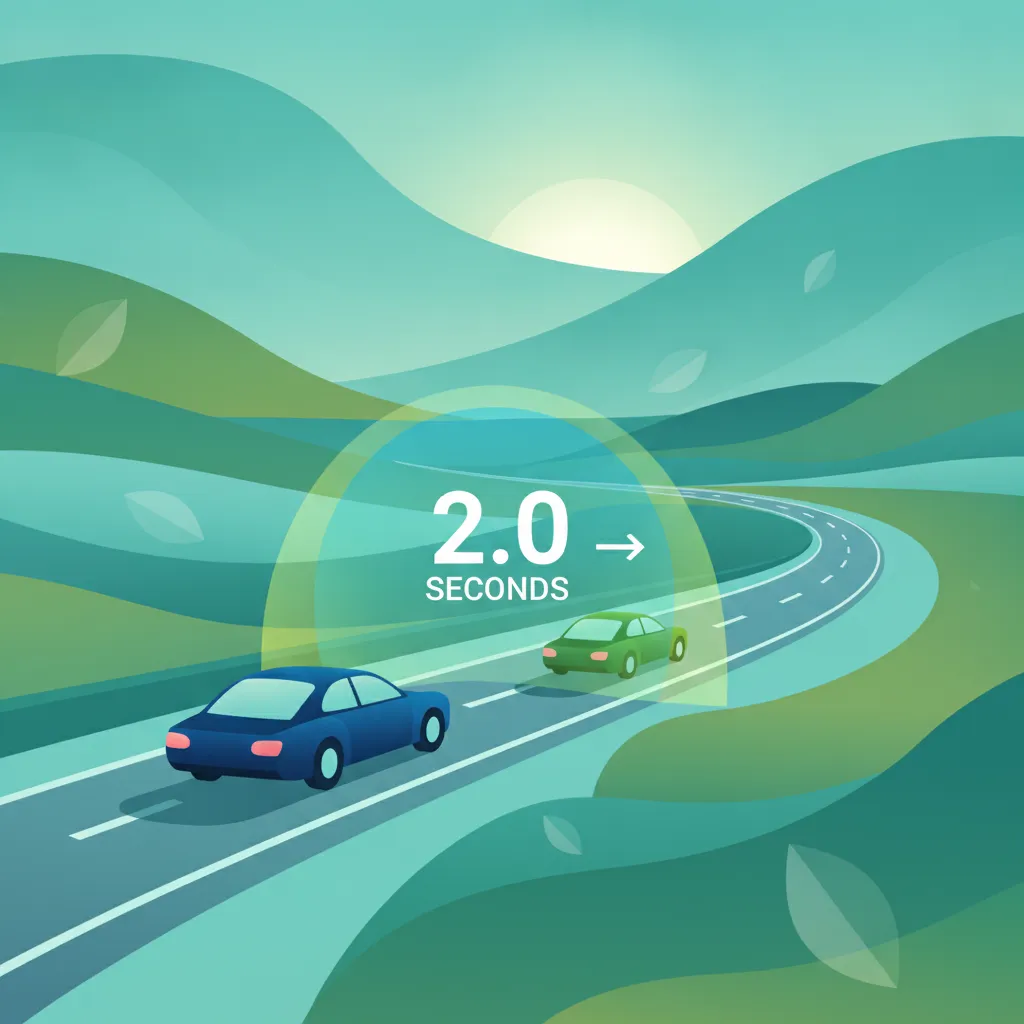
This lesson explains the critical need for maintaining a safe following distance to compensate for the longer stopping time of a heavy vehicle. It introduces time-based following distance rules and describes how to adapt them for different speeds, road conditions, and weather. The content highlights the dangers of tailgating and provides strategies for proactive collision avoidance.
This lesson details the fundamental legal obligations every driver must follow under the Código da Estrada. It covers adherence to speed limits, traffic signals, and road signs, as well as the mandatory use of safety equipment like seatbelts and child restraints. The content also emphasizes the importance of maintaining driver attentiveness and the strict prohibition of using mobile phones while driving.
This lesson provides a detailed overview of the legal requirements and safe driving practices for school zones and pedestrian crossings. It covers mandatory speed limits, the meaning of various signs and signals, and the importance of yielding to pedestrians. The content stresses heightened awareness due to the unpredictable nature of children's behavior near roads.
This lesson provides a clear overview of the statutory speed limits applicable on various types of roads in Portugal. It covers the default limits for built-up areas, single carriageways, dual carriageways, and motorways. Understanding these legal maximums is the first step in managing speed effectively and avoiding penalties for speeding.
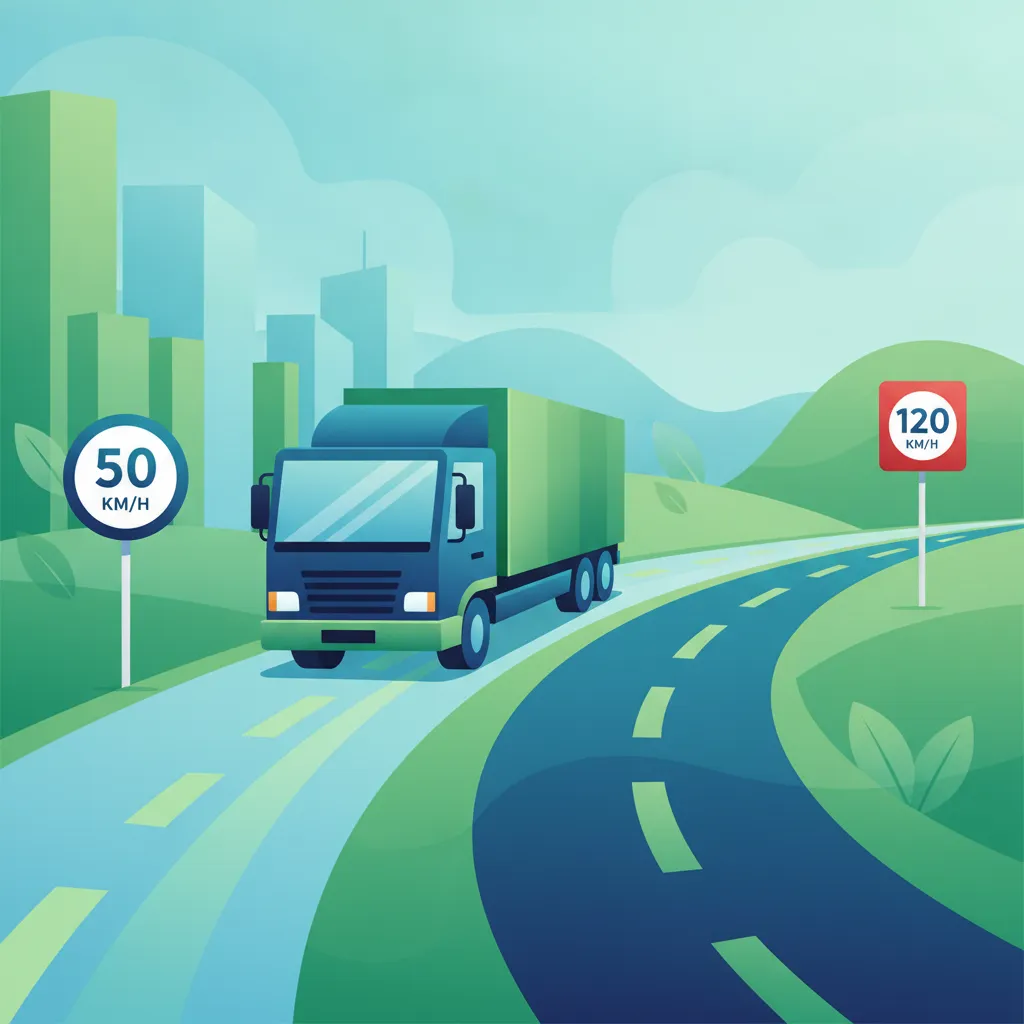
This lesson provides a clear breakdown of the legal speed limits for different categories of goods vehicles in Portugal. It covers the maximum speeds permitted on motorways, dual carriageways, rural roads, and within built-up areas. Adhering to these specific limits is a fundamental aspect of safe and legal professional driving.

This lesson covers the specific rules and legal responsibilities that apply when a vehicle is in a loading or unloading zone. It details regulations regarding parking, time limits, and the driver's role in ensuring a safe environment for themselves and others during cargo handling. Compliance is key to efficient and lawful logistics operations.
This lesson breaks down the concept of total stopping distance into its two key parts: the distance travelled during the driver's reaction time (thinking distance) and the distance the vehicle travels while braking. It explains how factors like speed, driver alertness, tyre condition, and road surface dramatically influence these distances. This knowledge is vital for understanding the consequences of driving too fast or too close.
This lesson details the special precautions drivers must take when navigating school zones. It highlights the reduced speed limits that are often in effect during specific hours and the importance of being vigilant for children crossing the road. The content also covers the rules for stopping for school buses when their lights are flashing, to ensure the safety of boarding and alighting students.
Find clear answers to common questions learners have about Safe Speed Adjustment. Learn how the lesson is structured, which driving theory objectives it supports, and how it fits into the overall learning path of units and curriculum progression in Portugal. These explanations help you understand key concepts, lesson flow, and exam focused study goals.
The legal speed limit is the maximum allowed under ideal conditions. You must reduce your speed if weather, visibility, traffic density, or road surface quality makes the maximum limit dangerous for your vehicle control.
Low visibility, such as during heavy rain or fog, significantly reduces the distance you can see ahead. You must lower your speed so that you are able to stop within the distance you can clearly see to be empty.
Yes, the Portuguese theory exam often includes scenario-based questions where you must select the safest driving response. Recognizing that you must slow down when road conditions deteriorate is a core competency.
While your reaction time remains a human factor, higher speeds mean you cover more distance during that reaction period, significantly increasing your total stopping distance. Lowering your speed gives you more time to react to hazards.
Utilize the powerful search tool to refine your Portuguese driving theory practice. Pinpoint questions related to specific traffic laws, road signs, or complex scenarios from the Código da Estrada. Begin targeted revision now to boost your understanding and confidently approach your IMT driving exam.