

Lesson content overview
Driving a heavy goods vehicle (HGV) in Portugal, under the Category C licence, presents unique challenges, particularly concerning the amount of road space these vehicles occupy. Due to their considerable size, weight, and dimensions, HGVs interact with traffic dynamics in ways that differ significantly from passenger cars. This lesson explores the critical aspects of road space occupancy, how it impacts traffic flow, and the precise positioning strategies professional drivers must master to ensure safety and efficiency on Portuguese roads. Understanding these principles is fundamental for minimizing disruption, preventing accidents, and adhering to the Código da Estrada (Road Code).
The sheer physical presence of a heavy goods vehicle demands a different approach to driving. Unlike smaller vehicles, an HGV's dimensions – its length, width, and height – mean it consumes a larger proportion of any given lane or road cross-section. This "footprint" isn't merely static; it expands and contracts dynamically as the vehicle moves, turns, or experiences load shifts.
The vehicle envelope refers to the total outer dimensions of an HGV, encompassing its length, width, height, and any protrusions such as mirrors or extended loads.
Static Envelope: This describes the vehicle's dimensions when it is stationary. For example, a standard HGV can be up to 2.55 metres wide. On a typical 3.5-metre wide lane, this leaves only about 0.475 metres of clearance on each side, a significantly smaller margin compared to a passenger car. Drivers must be acutely aware of this static envelope to maintain adequate distance from roadside obstacles, parked vehicles, and fixed structures like bridges or tunnels.
Dynamic Envelope: This concept is crucial for goods vehicle drivers. The dynamic envelope accounts for the vehicle's dimensions when in motion, incorporating factors like sway, especially when trailers are attached or when the load shifts. Even slight lateral movements, particularly at higher speeds or during turns, can cause the vehicle or its trailer to temporarily extend beyond its static width. Ignoring this dynamic aspect can lead to unintended encroachment on adjacent lanes or collisions with other vehicles or objects.
Professional drivers must internalize the concept of their vehicle's envelope to predict its movement accurately and ensure adequate clearance from all surrounding elements. Failing to account for the dynamic envelope is a common misunderstanding that can lead to hazardous situations, particularly in multi-lane traffic or during tight manoeuvres.
Effective lane positioning is fundamental for HGV drivers. It involves the precise lateral placement of the vehicle within its designated lane, maintaining safe distances from lane markings and other road users. Correct positioning not only ensures the HGV stays within its legal bounds but also significantly influences the safety and fluidity of traffic for everyone else.
The general principle for HGV drivers on most roads is central positioning. This means aligning the vehicle's centre line with the centre of the lane, providing an approximately equal safety margin on both sides.
While central positioning is the default, certain conditions require offset positioning, where the HGV intentionally places itself closer to one side of the lane. This is not about carelessness but strategic defensive driving.
Narrow Lanes: When a lane is too narrow to comfortably accommodate an HGV's full width plus sway, drivers might need to slightly encroach on an adjacent lane (if it's safe and clear) or position closer to the centre line to avoid a curb or barrier. This requires careful judgment and, often, signalling to alert other drivers.
Roundabouts and Turns: As discussed later, navigating roundabouts or tight turns often necessitates an offset position to ensure the entire vehicle, especially the rear, can clear the turn without mounting curbs or colliding with street furniture. This might involve taking a wider line or temporarily using more than one lane.
Vulnerable Road Users: When passing cyclists or pedestrians, HGV drivers should adopt an offset position further away from them, giving them a wider safety margin. This is a crucial defensive strategy to protect vulnerable road users.
Roadside Obstacles: If there's a temporary obstruction like roadworks, parked vehicles, or debris on one side of the lane, drivers should offset their vehicle to create a safe buffer from the hazard.
It is essential that any deviation from central positioning is a deliberate and well-signalled manoeuvre, communicating intentions clearly to other road users.
The sheer size and the necessary positioning of an HGV inevitably have a profound impact on traffic flow. This impact can be direct, causing immediate adjustments for other drivers, or indirect, influencing the overall speed and density of traffic over a longer stretch of road. Professional HGV drivers must constantly anticipate and mitigate these effects.
A poorly positioned HGV can cause significant disruption. For instance, if a large vehicle drifts too close to one side of its lane, it effectively narrows the perceived or actual usable width of the lane. This can:
Conversely, correct and predictable lane positioning by an HGV driver promotes smooth traffic flow. When an HGV maintains a central position and consistent speed, it provides sufficient space for other vehicles to overtake safely and predictably. This reduces the need for sudden adjustments, allowing traffic to move more fluidly.
The indirect impact of an HGV's presence is also significant. The large size of these vehicles can intimidate smaller vehicle drivers, affecting their decision-making. For example:
Professional drivers must constantly be aware of these indirect effects and drive defensively. This includes maintaining appropriate following distances, using signals early and clearly, and being mindful of how their vehicle's presence affects the psychological comfort and safety of other road users. The goal is to minimize disruption and promote a harmonious coexistence on the road.
Roundabouts can be particularly challenging for heavy goods vehicles due to their large turning radius and length. Mastering roundabout navigation for HGVs requires careful planning, precise positioning, and clear communication. The objective is to negotiate the roundabout safely without encroaching on other lanes or obstructing other road users.
When approaching a multi-lane roundabout in an HGV, several considerations come into play:
Exiting a roundabout safely is as critical as entering it.
Common errors include cutting across multiple lanes to reach an exit quickly or failing to signal in time, which can lead to sideswipe collisions or block the flow of vehicles already exiting. Patience and precision are key.
Multi-lane roads, particularly motorways and dual carriageways, are designed for higher speeds and efficient traffic flow. For Category C goods vehicles, strategic lane positioning is crucial to maintain safety, comply with regulations, and minimize disruption to faster traffic.
In Portugal, as in many European countries, HGVs generally have restrictions on lane usage on multi-lane roads.
Rightmost Lane Preference: The Código da Estrada typically mandates that goods vehicles, especially those with a maximum authorized mass (MAM) over 3,500 kg, must occupy the rightmost lane unless overtaking. On motorways with three or more lanes, they are often restricted from using the leftmost lane.
Overtaking Strategy: When an HGV needs to overtake a slower vehicle, the manoeuvre must be executed efficiently and safely. This means:
Lane Discipline: Professional drivers must maintain a consistent lane position and avoid prolonged use of middle or left lanes without actively overtaking. This practice, known as lane discipline, is vital for preventing traffic congestion and allowing faster vehicles free passage. Unexpected or abrupt lane changes without adequate warning are dangerous and can cause severe accidents.
Stopping an HGV on motorways or dual carriageways is generally prohibited within the traffic lanes.
Adherence to the Código da Estrada is paramount for HGV drivers in Portugal. The regulations pertaining to road space occupancy are designed to enhance safety and ensure the efficient flow of traffic.
Understanding common violations and actively practicing correct behaviours is vital for professional HGV drivers.
Encroaching on Adjacent Lane:
Stopping in the Fast Lane (or any traffic lane):
Improper Roundabout Exit:
Late Overtaking Signal:
Blocking Intersection:
Safe HGV driving requires constant adaptation to changing conditions and contexts.
| Condition | Variation in Principle | Reasoning |
|---|---|---|
| Adverse Weather (rain, fog) | Significantly increase following distance; position more centrally to avoid splashing other vehicles with water/debris. | Wet and slippery surfaces drastically increase braking distances. Central positioning reduces the amount of spray thrown onto other drivers, maintaining their visibility and mitigating road hazards. Fog reduces visibility for everyone, demanding slower speeds. |
| Nighttime | Use dipped beams (low beams) to avoid glare; be extra vigilant for unlit obstacles or vulnerable road users. | Dipped beams are legally mandated to preserve the night vision of oncoming drivers and those in front. Reduced visibility at night requires heightened awareness for hazards that might be missed in daylight. |
| Urban Areas | Adopt highly defensive lane positioning; be prepared for frequent stops, turns, and interactions with pedestrians. | Narrow streets, frequent intersections, and a higher density of vulnerable road users require precise and cautious positioning to prevent conflicts and ensure safety. |
| Heavy Load | Anticipate increased sway and reduced manoeuvrability; position farther from lane markings and curbs. | Heavy or unstable loads can cause significant lateral movement (sway) of the vehicle or trailer, especially during turns or over uneven surfaces. Extra clearance provides a buffer against accidental encroachment. |
| Vulnerable Road Users Present | Adopt a more central lane position to provide them with a wider margin when overtaking or passing. | Pedestrians, cyclists, and motorcyclists have limited protection and manoeuvrability. Creating extra space around them is a critical defensive measure to prevent collisions. |
Understanding the cause-and-effect relationships inherent in HGV road positioning reinforces the importance of correct driving practices.
An HGV driver is approaching a four-lane motorway in Portugal. The vehicle is fully loaded and capable of maintaining motorway speeds, but not faster than other heavy vehicles.
A fully loaded tractor-trailer is navigating a large three-lane roundabout in an urban area and intends to take the third exit.
An HGV driver needs to turn right from a main road into a narrow urban street.
Mastering road space occupancy and its impact on traffic flow is not just a matter of compliance with the Código da Estrada; it is a cornerstone of professional HGV driving in Portugal. By diligently applying the principles of vehicle envelope awareness, precise lane positioning, strategic roundabout navigation, and disciplined multi-lane road etiquette, goods vehicle drivers can significantly contribute to road safety and the efficiency of the entire transport network. Always remember that the size of your vehicle demands extra vigilance, clear communication, and a proactive, defensive driving approach to ensure a harmonious coexistence with all other road users.
Explore all units and lessons included in this driving theory course.
Lesson content overview
Explore all units and lessons included in this driving theory course.
Browse additional driving theory lessons that cover connected traffic rules, road signs, and common driving situations related to this topic. Improve your understanding of how different rules interact across everyday traffic scenarios.
Learn the specific rules and best practices for driving Category C goods vehicles through roundabouts in Portugal. This lesson covers correct lane selection, signalling, and positioning to ensure safe and efficient circulation around junctions.
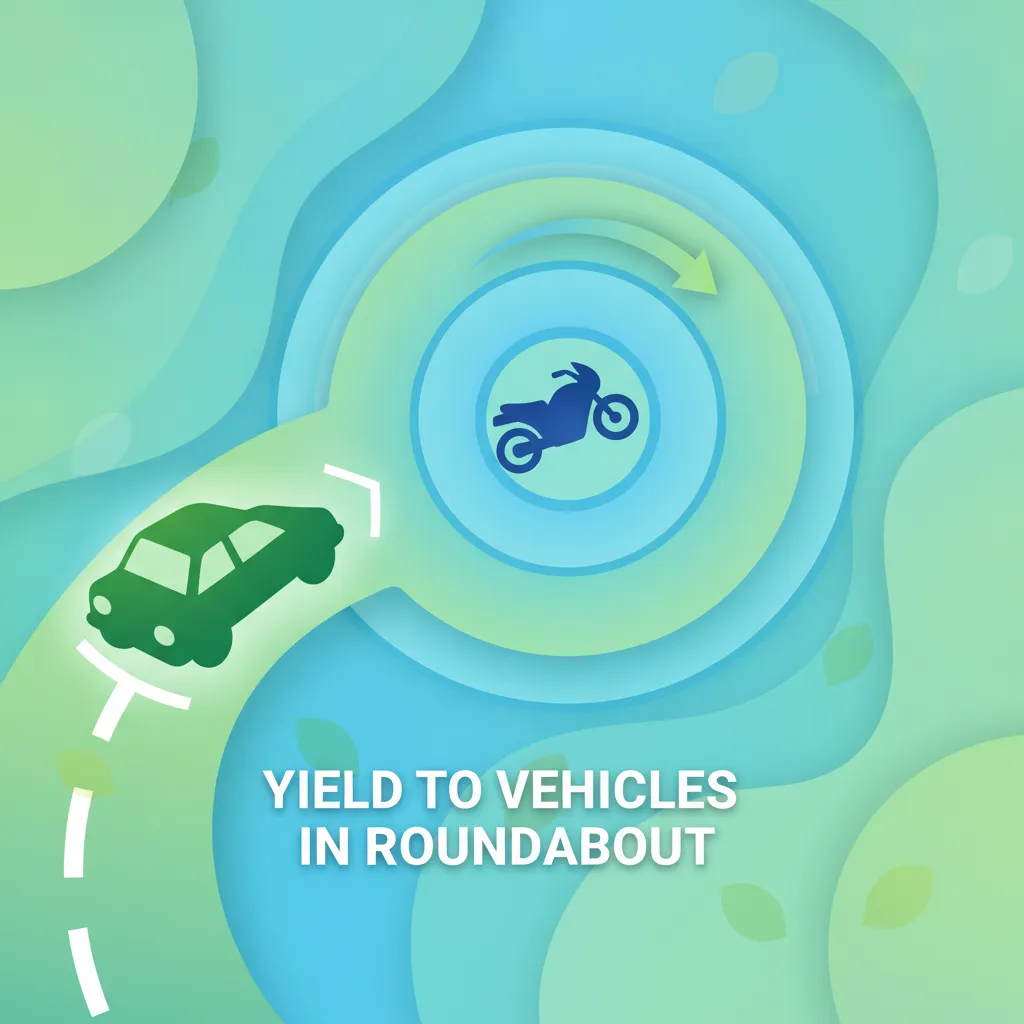
This lesson provides a step-by-step guide to navigating roundabouts in Portugal. It emphasizes the primary rule of yielding to traffic already circulating within the roundabout before entering. The content covers correct lane selection based on the intended exit, proper use of indicators for exiting, and managing the complexities of multi-lane roundabouts.

This lesson emphasizes the importance of strict lane discipline for heavy vehicles. It covers how to maintain a central position in the lane, the correct procedure for signaling and checking before a lane change, and how to navigate multi-lane roundabouts. Proper lane discipline enhances safety and improves traffic flow for everyone.

This lesson provides clear instructions for navigating roundabouts, a common feature on Portuguese roads. It explains the crucial rule of yielding to traffic already circulating and how to select the correct lane based on the intended exit. The content also covers the proper use of indicators when entering and before exiting the roundabout to communicate intentions to other drivers.

This lesson focuses on the specific skills and regulations for motorway driving. It covers correct lane usage for HGVs, safe procedures for overtaking slower traffic, and the rules for using the hard shoulder or emergency refuge areas. Maintaining consistent speed and awareness of surrounding traffic is key to motorway safety.

Focusing on roundabouts, this lesson teaches riders how to correctly enter, circulate, and exit these traffic features. It covers lane selection based on the intended exit, maintaining appropriate speed, and using signals to indicate intentions. The lesson also addresses the importance of yielding to circulating traffic and positioning oneself safely to avoid collisions.

This lesson addresses the challenges of operating a large vehicle in congested urban areas. It teaches techniques for navigating narrow streets, positioning for loading bays, and executing tight turns with minimal impact on other traffic. A high level of situational awareness and anticipation is required for these environments.
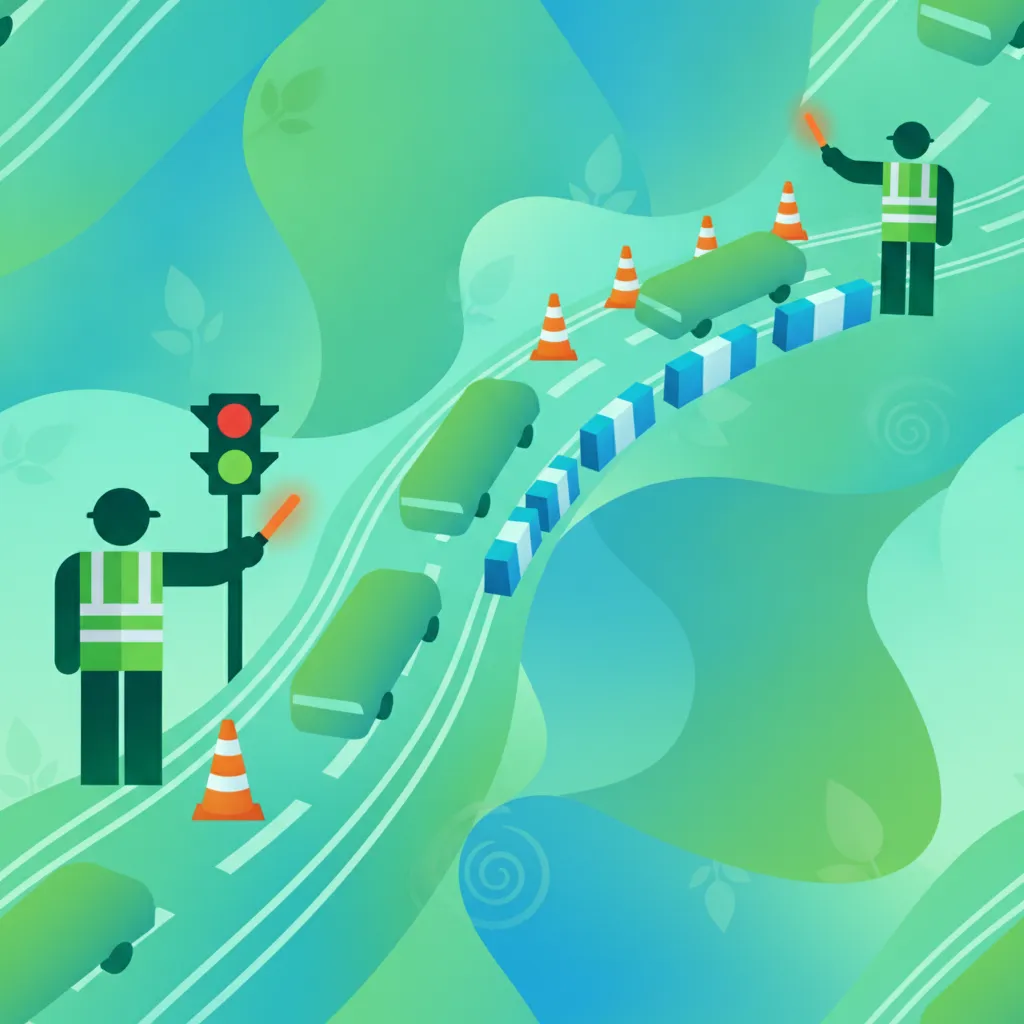
This lesson provides guidance on driving safely through roadwork zones. It covers the importance of obeying temporary speed limits, navigating narrow lanes and contraflow systems, and being highly aware of workers and machinery. A professional driver's vigilance is essential for preventing accidents in these potentially hazardous areas.
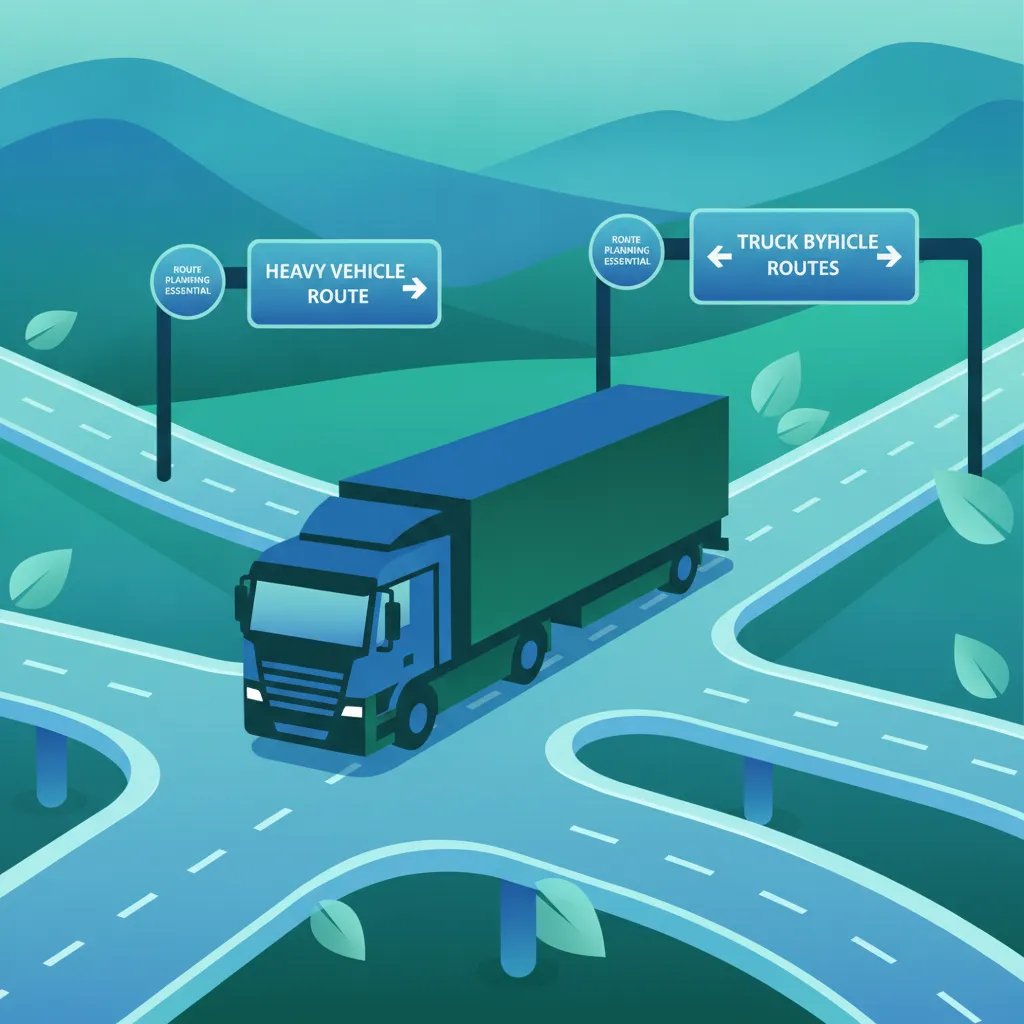
This lesson teaches the process of planning a route from start to finish for a heavy vehicle. It covers using specialized HGV navigation systems, considering factors like road restrictions, toll costs, low emission zones, and delivery time windows. Effective route planning improves efficiency, saves fuel, and enhances safety.

This lesson addresses the unique challenges of driving a large vehicle on rural roads. It teaches how to approach sharp bends, position the vehicle for maximum visibility, and deal with poor or unpaved surfaces. Drivers will also learn how to interact safely with agricultural machinery and other common rural hazards.

This lesson addresses the specific challenges of driving alongside motorcyclists and large vehicles such as trucks and buses. It highlights the reduced visibility of motorcyclists and the extensive blind spots (no-zones) around heavy vehicles. Drivers will learn to provide extra space, anticipate wide turns, and adjust for factors like spray and wind turbulence.
Understand the essential driving theory for Category C vehicles on multi-lane roads and motorways. This lesson details correct lane usage, overtaking protocols, and maintaining safe distances to ensure smooth traffic flow and road safety.
This lesson emphasizes the importance of strict lane discipline for heavy vehicles. It covers how to maintain a central position in the lane, the correct procedure for signaling and checking before a lane change, and how to navigate multi-lane roundabouts. Proper lane discipline enhances safety and improves traffic flow for everyone.
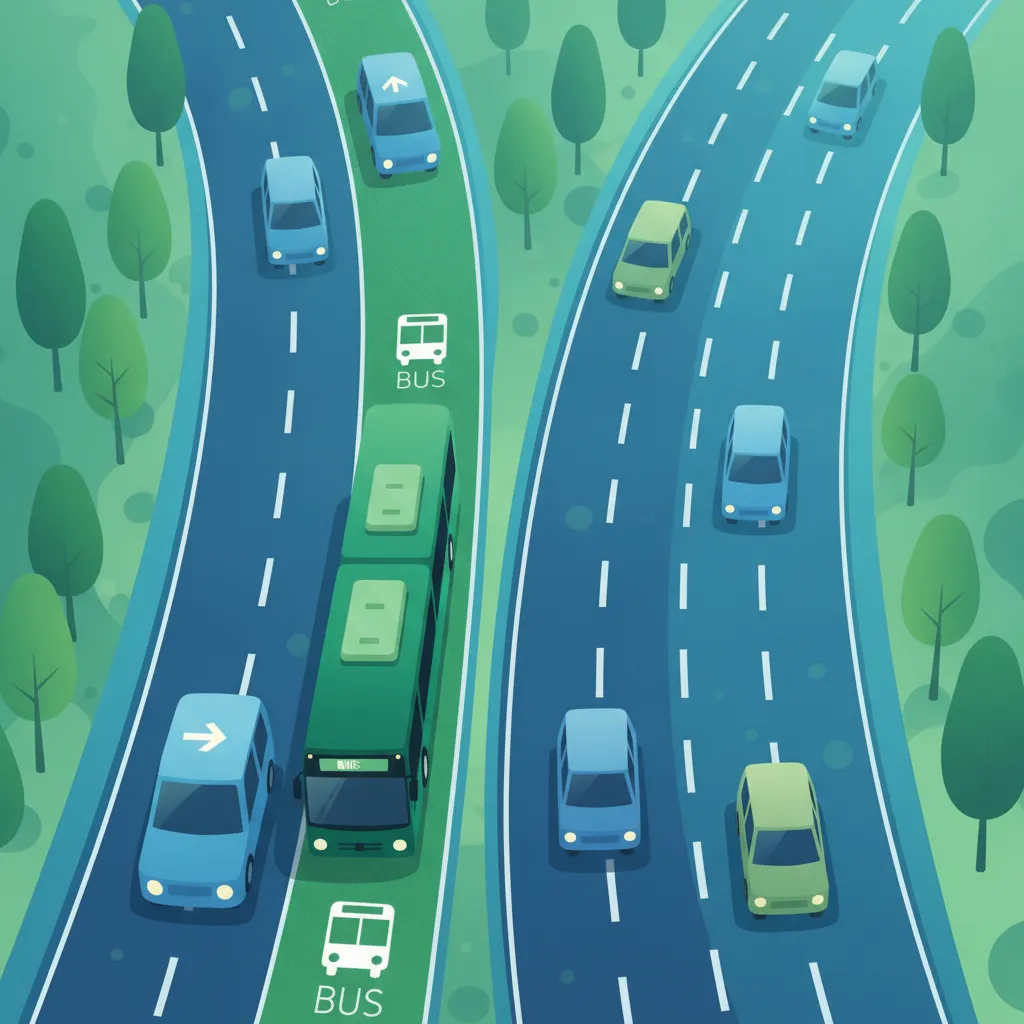
This lesson reinforces the importance of strict lane discipline for large vehicles. It details the rules for using dedicated bus lanes, including entry and exit points and operational time restrictions. The content also covers the procedures for safely changing lanes and overtaking in a multi-lane environment.
This lesson explains the purpose and rules of reserved lanes, such as those designated for buses, taxis, or cyclists. It covers how to identify these lanes through signage and road markings, and details the specific times they may be in operation. Drivers will learn when they are permitted to enter these lanes and the penalties for unauthorized use.
This lesson focuses on the specific skills and regulations for motorway driving. It covers correct lane usage for HGVs, safe procedures for overtaking slower traffic, and the rules for using the hard shoulder or emergency refuge areas. Maintaining consistent speed and awareness of surrounding traffic is key to motorway safety.

This lesson details the rules of lane discipline and the procedures for safe overtaking. It explains how to maintain correct lane positioning and how road markings and signs define where overtaking is allowed or forbidden. The lesson emphasizes the importance of the mirror-signal-manoeuvre routine and ensuring sufficient space and visibility before attempting to pass another vehicle.

This lesson provides a detailed explanation of longitudinal road markings, including solid, broken, and double lines. It clarifies the rules for each type, specifying when changing lanes or overtaking is permitted or prohibited. Additionally, the lesson covers markings for road edges, stop lines at intersections, and pedestrian crossings to ensure correct driver positioning and action.

This lesson explains the regulations governing the use of dedicated bus lanes, including operational hours and priority rules at junctions. It clarifies which other vehicles may use these lanes and under what circumstances. The content also discusses traffic signal priority systems and the legal implications of improper bus lane usage.
This lesson provides guidance on driving safely through roadwork zones. It covers the importance of obeying temporary speed limits, navigating narrow lanes and contraflow systems, and being highly aware of workers and machinery. A professional driver's vigilance is essential for preventing accidents in these potentially hazardous areas.

This lesson covers the specific rules and legal responsibilities that apply when a vehicle is in a loading or unloading zone. It details regulations regarding parking, time limits, and the driver's role in ensuring a safe environment for themselves and others during cargo handling. Compliance is key to efficient and lawful logistics operations.

This lesson focuses on the specific skills required for driving on high-speed motorways. It details the procedures for safely merging onto and exiting the motorway, maintaining proper lane discipline, and adhering to variable speed limits. The content also provides rules for safe overtaking and managing the vehicle's stability at high speeds.
Utilize the powerful search tool to refine your Portuguese driving theory practice. Pinpoint questions related to specific traffic laws, road signs, or complex scenarios from the Código da Estrada. Begin targeted revision now to boost your understanding and confidently approach your IMT driving exam.