
This lesson explores the critical relationship between cargo placement, center of gravity, and vehicle handling for Category C goods vehicles. You will learn how to distribute weight to maintain stability and comply with safety standards required for the Portuguese theory exam.
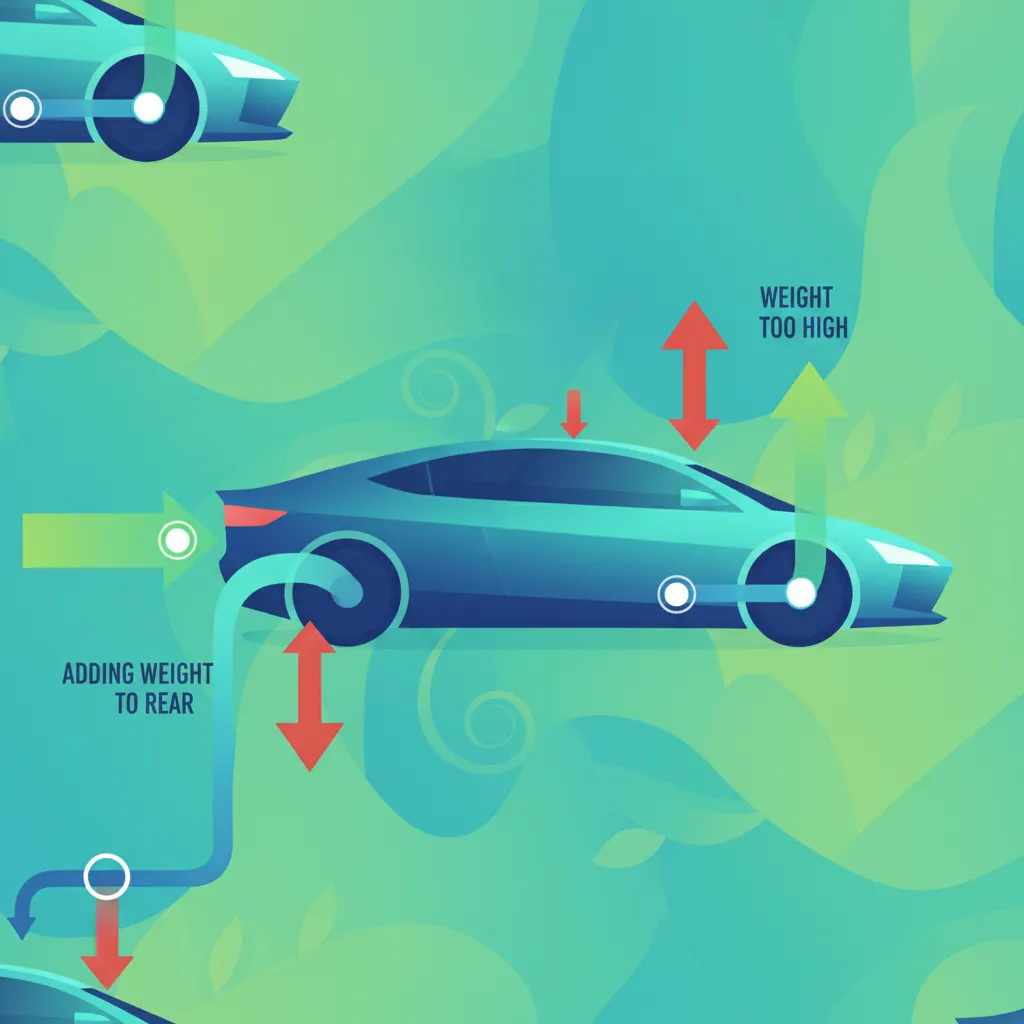
Lesson content overview
Transporting goods safely and efficiently demands a thorough understanding of how cargo affects a vehicle's dynamics. For drivers of Category C goods vehicles in Portugal, mastering the principles of load distribution and the concept of the center of gravity (COG) is not just a matter of compliance, but a fundamental aspect of road safety. This lesson delves into these crucial concepts, explaining how proper cargo placement prevents accidents, improves handling, and ensures the longevity of your vehicle.
The Center of Gravity (COG) is arguably the most critical factor influencing a vehicle's stability. It represents the hypothetical point where the entire weight of the vehicle and its load is concentrated and acts downwards. Imagine trying to balance an object on your fingertip; that balance point is its center of gravity. For a goods vehicle, the COG determines how stable it will be during various maneuvers, affecting its propensity to roll over or lose control.
The single point where the total weight of a vehicle, including its cargo, is considered to act. It dictates the vehicle's overall balance and stability.
In a goods vehicle, the COG is not fixed; it shifts with every change in load, fuel level, or passenger weight. A lower COG generally translates to greater stability, as the vehicle has a broader base of support relative to the height of its weight. Conversely, a higher COG significantly reduces stability, making the vehicle more susceptible to tipping, especially during turns or on uneven terrain.
The center of gravity has both longitudinal (front-to-rear) and lateral (side-to-side) components.
Maintaining the COG within the vehicle's wheelbase and track width, and as low as possible, is paramount for safe operation.
Effective load distribution is the strategic arrangement of cargo to achieve and maintain an optimal center of gravity. This proactive approach ensures the vehicle remains stable, predictable, and safe to operate under all conditions. Ignoring these principles can lead to dangerous situations and significant legal penalties.
The most fundamental rule of load distribution is to keep the COG as low and as centered as possible. This means:
A vehicle with a low and centered COG will exhibit better handling characteristics, reduced body roll during turns, and improved braking efficiency, directly contributing to a safer driving experience.
Longitudinal load distribution focuses on balancing the cargo weight between the front and rear axles. Improper longitudinal distribution can lead to:
Cargo should be distributed to ensure that each axle bears a weight proportional to its design capacity, ideally keeping the COG within the wheelbase of the vehicle.
Lateral load symmetry means distributing the weight evenly from side to side. Any significant imbalance can cause:
When loading, always strive to place equal weight on both the left and right sides of the vehicle's cargo area.
Understanding and adhering to axle load limits is a non-negotiable requirement for all goods vehicle drivers. These limits represent the maximum permissible weight that each individual axle or group of axles is legally allowed to support. In Portugal, as with other EU nations, these limits are strictly enforced to protect road infrastructure, ensure vehicle integrity, and safeguard all road users.
The maximum permissible weight that an individual axle or a group of axles on a vehicle is legally allowed to carry. Exceeding these limits is a serious offense.
Each goods vehicle, depending on its type, configuration (e.g., rigid truck, articulated vehicle, trailer), and design, will have specific limits for its front axle, rear axle(s), and possibly for groups of axles (e.g., tandem axles). These limits are distinct from the vehicle's Maximum Authorized Mass (MAM), which is the total permissible weight of the vehicle and its load. It is crucial to comply with both the MAM and individual axle load limits.
Exceeding axle load limits carries severe risks and penalties:
To ensure compliance, drivers must know their vehicle's unladen weight, the weight of their cargo, and their vehicle's specific axle load limits. Using weighbridges before a journey, especially with varied or heavy loads, is a recommended practice.
The proper distribution of cargo directly impacts a goods vehicle's stability and its resistance to rollover, particularly when subjected to dynamic forces during movement.
Vehicle stability refers to its ability to maintain an upright position and resist tipping over. A high COG or uneven load distribution significantly reduces this stability, increasing the rollover risk.
When a vehicle turns, centrifugal force pushes its weight outwards. If the COG is too high, this outward force creates a large "overturning moment," which can cause the inner wheels to lift off the ground, leading to a rollover. Similarly, uneven lateral loading can cause one side of the vehicle to become significantly less stable.
Rollovers are among the most dangerous types of accidents for goods vehicles, often resulting in severe injuries, fatalities, and extensive damage to the vehicle and cargo.
While static load placement is crucial, a vehicle in motion is constantly subject to dynamic loads. These are forces generated by the vehicle's movement that act upon the cargo, potentially causing it to shift or become unstable.
If cargo is not properly secured, these dynamic loads can cause it to shift, altering the COG unpredictably. A sudden shift can destabilize the vehicle, leading to a loss of control, an accident, or damage to the cargo and vehicle. This emphasizes the critical link between load distribution and effective cargo securing methods.
Adhering to specific loading rules is paramount for the safe operation of Category C vehicles and for compliance with Portuguese traffic regulations (Código da Estrada). These rules directly translate the theoretical principles of load distribution and COG into practical actions.
Action: Always load the heaviest items onto the floor of the vehicle's cargo area. If multiple layers are necessary, ensure the heaviest layer is at the very bottom. Rationale: This practice effectively lowers the overall center of gravity, significantly enhancing vehicle stability and reducing the risk of rollover, especially during cornering or emergency maneuvers. Correct Example: Stacking heavy pallets of bricks directly on the truck bed, with lighter boxes placed on top. Incorrect Example: Placing heavy machinery on high shelves or the upper deck of a double-deck trailer, while lighter items are on the floor.
Action: When loading, aim to distribute the total cargo weight as evenly as possible along the length of the vehicle, particularly between the axles. Avoid concentrating the entire load at the extreme front or rear. Rationale: This prevents overloading any single axle, maintains balanced handling, and ensures optimal braking performance across all wheels. It helps keep the longitudinal COG within safe limits. Correct Example: Distributing cargo so that approximately equal weight rests over the front and rear axles (considering their individual limits), preventing excessive pressure on one point. Incorrect Example: Concentrating all heavy goods directly over the rear axle, which can lift the front wheels, impair steering, and overload the rear axle.
Action: Ensure that the weight of the cargo is distributed equally from side to side across the vehicle's width. Rationale: Lateral symmetry prevents the vehicle from leaning, ensures even tire wear, and maintains predictable handling. It keeps the lateral COG centered, crucial for stability on turns and sloped roads. Correct Example: Loading two heavy machines, one on the left side and one on the right side, balancing each other's weight. Incorrect Example: Placing all heavy cargo on one side of the vehicle, causing a noticeable lean and difficult steering.
Action: Before and during loading, verify that the weight on each individual axle (front, rear, and any tandem axles) does not exceed its legally prescribed maximum limit. Rationale: Adhering to axle load limits is a mandatory legal requirement in Portugal to prevent damage to roads, protect vehicle components from premature failure, and maintain vehicle safety. Exceeding these limits can lead to significant fines and legal repercussions. Correct Example: Using a weighbridge or calculating load distribution carefully to ensure no axle is overloaded, even if the total vehicle weight is within limits. Incorrect Example: Assuming that because the total vehicle weight is below the Maximum Authorized Mass (MAM), individual axle limits are also respected.
Misunderstanding or neglecting proper load distribution principles can lead to several common loading mistakes, each with serious safety implications for goods vehicles. Professional drivers must be acutely aware of these pitfalls to avoid accidents and legal issues under Portuguese road law.
While static loading rules are fundamental, the real-world conditions during transit for Category C vehicle operations introduce dynamic variables that amplify or mitigate the effects of load distribution. Drivers must consider these factors when planning their journey and adjusting their driving style.
Adverse weather dramatically impacts how a vehicle handles its load:
The type of road significantly influences the demands placed on load distribution:
The specific configuration of a goods vehicle alters load distribution considerations:
Improper load distribution directly impacts braking distance and vehicle maneuverability, posing increased risks to vulnerable road users (pedestrians, cyclists, motorcyclists). A vehicle with a high or poorly distributed load may take longer to stop, or be less able to swerve to avoid an unexpected obstacle, potentially leading to severe consequences in urban environments or pedestrian crossings.
For every professional driver of Category C goods vehicles in Portugal, understanding and applying the principles of load distribution and center of gravity is non-negotiable for safety, legality, and operational efficiency. Always remember these core tenets:
By internalizing these principles, goods vehicle drivers contribute significantly to road safety for themselves and all other road users, ensuring the secure and compliant transport of goods across Portugal.
Explore all units and lessons included in this driving theory course.
Lesson content overview
Explore all units and lessons included in this driving theory course.
Explore search topics learners often look for when studying Load Distribution Principles and Center of Gravity. These topics reflect common questions about road rules, driving situations, safety guidance, and lesson level theory preparation for learners in Portugal.
Browse additional driving theory lessons that cover connected traffic rules, road signs, and common driving situations related to this topic. Improve your understanding of how different rules interact across everyday traffic scenarios.
Understand the critical relationship between load distribution, the center of gravity, and vehicle stability for Category C vehicles. Learn how dynamic loads and road conditions impact rollover risk and safe driving practices in Portugal.

This lesson examines the physics behind vehicle stability and the common causes of rollovers in heavy vehicles. It discusses the dangers of dynamic loads, such as liquids in tankers, and the importance of speed management in curves. Drivers will learn to recognize conditions that increase rollover risk and how to mitigate them.

This lesson explains the principles of safely loading a vehicle to avoid negatively impacting its stability and handling. It covers the importance of even weight distribution, respecting the vehicle's maximum load capacity, and properly securing all items. The dangers of unsecured loads, both inside the cabin and on external racks, are highlighted as significant safety hazards.

This lesson focuses on the critical importance of distributing weight correctly across the vehicle's axles. It explains how improper loading can negatively affect vehicle stability, handling, and braking effectiveness. Learners will understand how to comply with legal axle load limits to ensure safety and prevent excessive wear on the vehicle and roads.

This lesson addresses the unique challenges of driving a large vehicle on rural roads. It teaches how to approach sharp bends, position the vehicle for maximum visibility, and deal with poor or unpaved surfaces. Drivers will also learn how to interact safely with agricultural machinery and other common rural hazards.

This lesson details the regulations and proper application of passenger restraints, including seat belts and child safety seats. It explains the principles of safe luggage storage and how correct load distribution is critical for maintaining vehicle stability. The content also provides guidance on managing standing passengers to ensure their safety during transit.

This lesson focuses on the specific skills and regulations for motorway driving. It covers correct lane usage for HGVs, safe procedures for overtaking slower traffic, and the rules for using the hard shoulder or emergency refuge areas. Maintaining consistent speed and awareness of surrounding traffic is key to motorway safety.
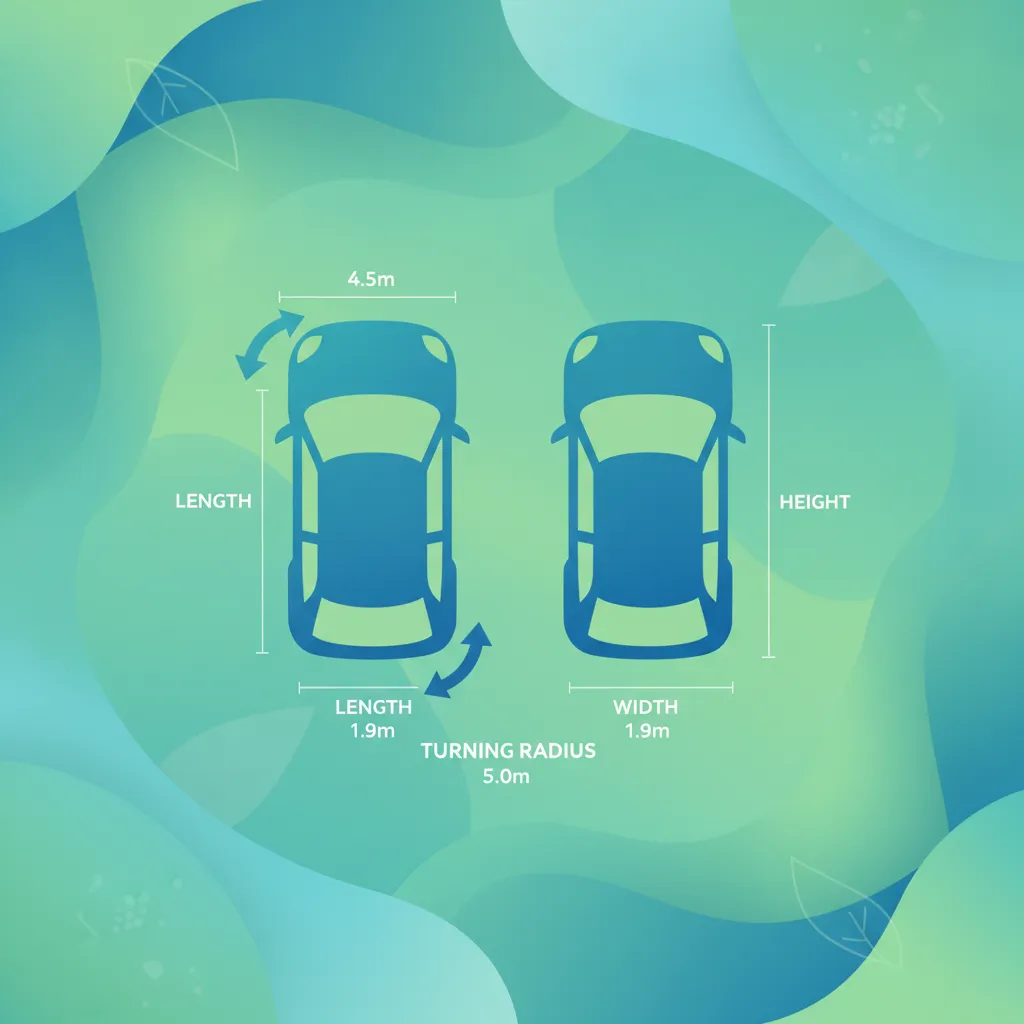
This lesson focuses on the physical dimensions of goods vehicles and their direct impact on driving. It covers legal limits for length, height, and width, and explains dynamic concepts like turning radius and off-tracking. A thorough understanding of these dimensions is essential for navigating urban areas and avoiding collisions.

This lesson emphasizes the importance of strict lane discipline for heavy vehicles. It covers how to maintain a central position in the lane, the correct procedure for signaling and checking before a lane change, and how to navigate multi-lane roundabouts. Proper lane discipline enhances safety and improves traffic flow for everyone.
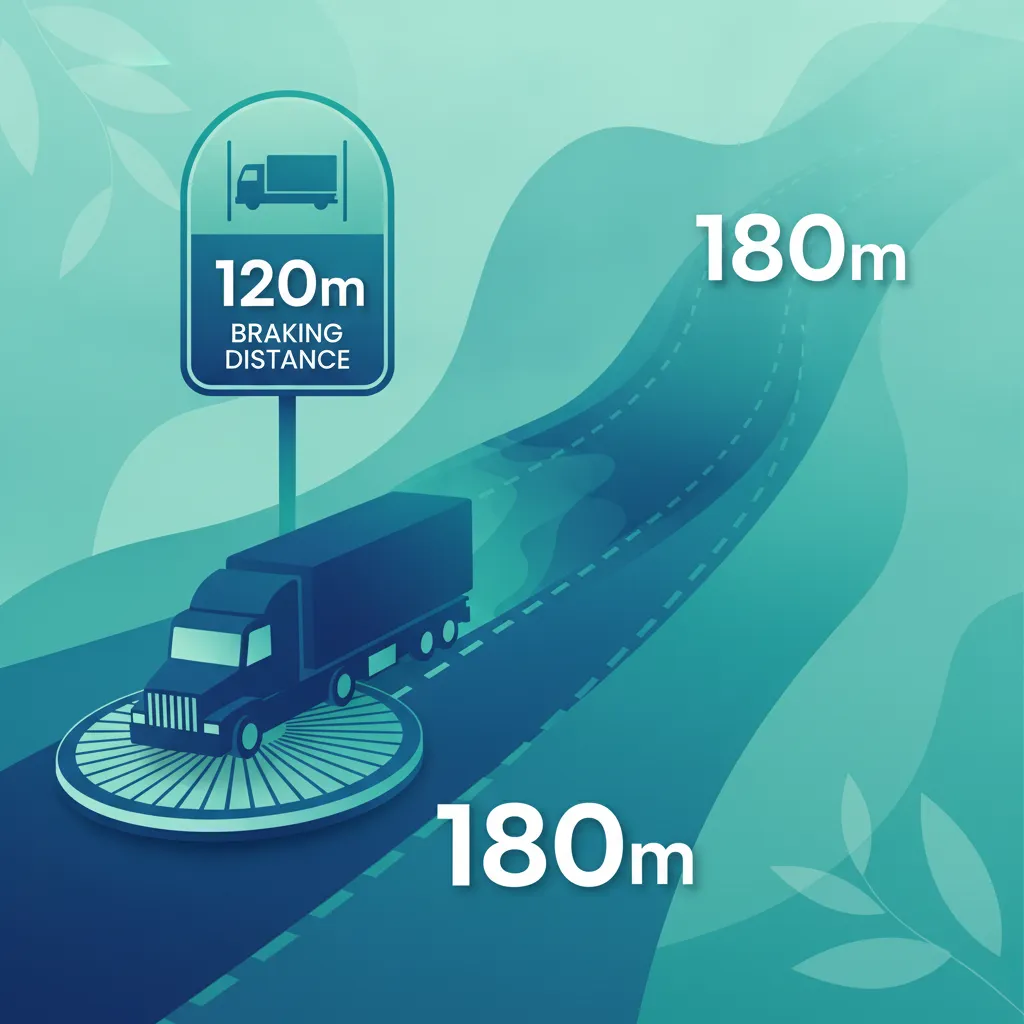
This lesson explains the physics behind braking a heavy vehicle, emphasizing the significant increase in stopping distance caused by a heavy load. It breaks down the components of total stopping distance, including perception, reaction, and braking distance. Drivers will learn why maintaining a larger safety margin is non-negotiable.

This lesson explains the critical dynamic of off-tracking, where the rear wheels follow a tighter path than the front wheels in a turn. It also covers front-end swing-out on some vehicle types. Drivers will learn the techniques to safely navigate sharp corners and junctions without striking curbs, signs, or other vehicles.
Learn the specific rules and legal requirements for axle load limits in Portugal for Category C vehicles. Understand the severe consequences of overloading, including vehicle damage, impaired performance, and legal penalties.
This lesson focuses on the critical importance of distributing weight correctly across the vehicle's axles. It explains how improper loading can negatively affect vehicle stability, handling, and braking effectiveness. Learners will understand how to comply with legal axle load limits to ensure safety and prevent excessive wear on the vehicle and roads.
This lesson explains the principles of safely loading a vehicle to avoid negatively impacting its stability and handling. It covers the importance of even weight distribution, respecting the vehicle's maximum load capacity, and properly securing all items. The dangers of unsecured loads, both inside the cabin and on external racks, are highlighted as significant safety hazards.

This lesson covers the specific rules and legal responsibilities that apply when a vehicle is in a loading or unloading zone. It details regulations regarding parking, time limits, and the driver's role in ensuring a safe environment for themselves and others during cargo handling. Compliance is key to efficient and lawful logistics operations.

This lesson provides a clear breakdown of the legal speed limits for different categories of goods vehicles in Portugal. It covers the maximum speeds permitted on motorways, dual carriageways, rural roads, and within built-up areas. Adhering to these specific limits is a fundamental aspect of safe and legal professional driving.

This lesson focuses on the structural and legal restrictions placed on the road network. It explains how to identify limits on bridges and in tunnels, and the consequences of ignoring them. Proper route planning based on these restrictions is a key skill for preventing accidents and infrastructure damage.
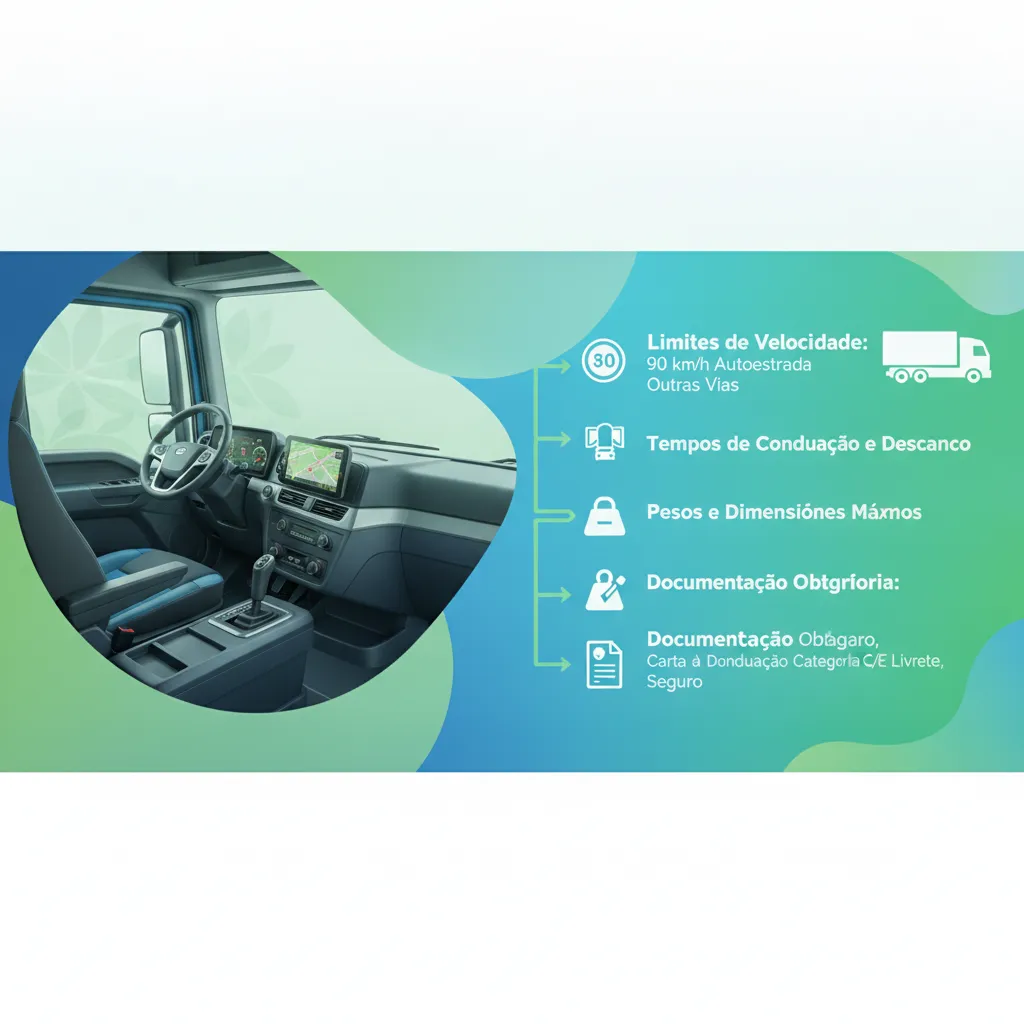
This lesson provides a detailed overview of the Portuguese legal framework governing goods vehicles. It covers key articles of the Código da Estrada relevant to vehicle classification, weight limits, and dimensions. Drivers will learn to identify their legal obligations and understand the role of enforcement authorities in ensuring road safety and compliance.
This lesson focuses on the physical dimensions of goods vehicles and their direct impact on driving. It covers legal limits for length, height, and width, and explains dynamic concepts like turning radius and off-tracking. A thorough understanding of these dimensions is essential for navigating urban areas and avoiding collisions.
This lesson explains the physics behind braking a heavy vehicle, emphasizing the significant increase in stopping distance caused by a heavy load. It breaks down the components of total stopping distance, including perception, reaction, and braking distance. Drivers will learn why maintaining a larger safety margin is non-negotiable.
This lesson focuses on the specific skills and regulations for motorway driving. It covers correct lane usage for HGVs, safe procedures for overtaking slower traffic, and the rules for using the hard shoulder or emergency refuge areas. Maintaining consistent speed and awareness of surrounding traffic is key to motorway safety.

This lesson teaches drivers to recognize and adhere to access restrictions commonly found on the road network. It covers signs indicating weight, height, and width limits for structures like bridges and tunnels. Understanding these restrictions is vital for effective route planning and avoiding costly damage or fines.
Find clear answers to common questions learners have about Load Distribution Principles and Center of Gravity. Learn how the lesson is structured, which driving theory objectives it supports, and how it fits into the overall learning path of units and curriculum progression in Portugal. These explanations help you understand key concepts, lesson flow, and exam focused study goals.
A high or improperly placed center of gravity significantly increases the risk of the vehicle tipping over, especially when taking corners or performing sudden maneuvers. Keeping the load low and centered is vital for vehicle stability.
If the load is concentrated at the rear, it can reduce the traction of the front steering wheels during braking. Proper weight distribution across axles ensures that the braking force is effective and the vehicle remains controllable.
Dynamic loads are forces that change during movement, such as liquid cargo sloshing or shifting heavy items. The theory exam often tests your understanding of how these shifts affect the vehicle's balance and the necessary speed adjustments required.
The law mandates that cargo must be loaded to ensure the vehicle’s stability and prevent hazards to other road users. Failure to distribute weight correctly can lead to fines, penalties, and severe safety risks.
Utilize the powerful search tool to refine your Portuguese driving theory practice. Pinpoint questions related to specific traffic laws, road signs, or complex scenarios from the Código da Estrada. Begin targeted revision now to boost your understanding and confidently approach your IMT driving exam.